
We’ve previously discussed the vulnerabilities of global internet infrastructure, but today we’ll focus on subsea data cables in the Persian Gulf.
Global data traffic depends on undersea cables that carry massive amounts of information between continents. Iran has now decided it wants the ability to control and charge for data traffic moving through the region (mirroring its stance on shipping through the Strait). Many Gulf countries built separate subsea infrastructure, so all of them are exposed to disruption.
These vulnerabilities will likely push more communications toward satellite systems like Starlink, but that opens a whole new set of challenges. Another reminder of the fragility of globalization.
Transcript
Hey all, Peter Zeihan here, coming to you from the winery of Tenuta Oderisio in, where am I? Abruzzo in Italy. Today we’re going to talk about a little thing in the Persian Gulf called data cables. Now, for those of you who have ever sent an email, there’s got to be a way for you to access the internet, for the information packets to get from X to Y to Z, and eventually to where you need them to go.
Now, there’s a number of ways you can do this. You can piggyback on the telephonic network. That’s a relatively new method using, say, 5G or 4G signals. Older school. For those of you who are Gen X or boomers, you remember, of course, modems where it went over the telephone lines that were physical at the time rather than wired.
But if you want to go across the planet, there’s this little problem called the ocean, and there is no cell signal that is strong enough to get across. So you have to do one of two things. Number one, you bounce up to a satellite with something called Starlink, which is really the only model that does it right now, which has a cost and a hardware issue.
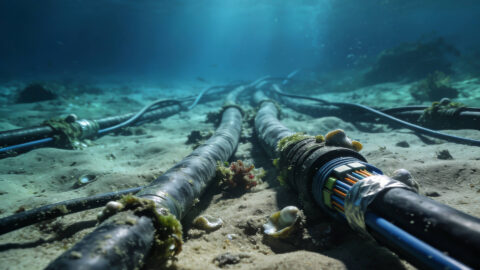
Or you send it into the telephone network, and eventually it gets to a launching point on the coast and loads into a data cable that crosses the ocean to a spot on the other side. I think it’s loaded into their telephonic network, these data cables, there’s literally thousands of them, and the big trunk ones just carry a huge amount of data.
Typically, one of them that crosses the ocean carries more data or has more capacity carry data than all of the telephonic systems just 25 years ago. Now, what is going on in the Persian Gulf is that the Iranians, who are trying to assert control and sovereignty over the Strait of Hormuz in order to get control of the oil trade, are not limiting their ambitions to that.
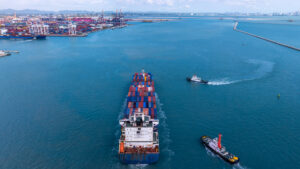
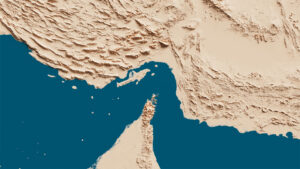
They’re going after container ships, they’re going after Bulgars, they’re going after food carriers, and they’re going after the internet cables. And they’re now saying that they think they should be able to charge a transit feed for any data flowing in and out of the Persian Gulf. Now you look at a map of the Persian Gulf, and you’ve got a lot of Arab countries on the western side Kuwait, Bahrain, Saudi Arabia, gutter, the United Arab Emirates and Oman.
But something that everybody forgets is all of these countries really don’t like one another, and some of them would just flat out hate one another. So they, whenever possible, try not to make their national infrastructure dependent upon what happens in the next country. Over. So the United Arab Emirates, for example, doesn’t have a data cable that crosses Saudi Arabia and goes up to Jordan and into Israel and then on to Europe.
And no, no, no, their only access is out into the Persian Gulf through the Strait of Hormuz on a subsea cable. The same for Kuwait, the same for gutter, the same for Bahrain. Which means that if you take a country like the UAE, which is actually reasonably well run and not nearly as medieval and thudded like, say, Saudi Arabia, they’re completely vulnerable to this sort of blackmail.
And if you play this forward into a world, you have to realize that data cables can’t be defended and they can’t dodge. So anyone who decides they want to go after them can really sever them in a day if they want to. So the transmission system that we have become used to, that we don’t think of as a globalized thing, is actually one of the most hyper globalized aspects of physical infrastructure that exists on the planet today.
And in the Strait of Hormuz right now, we are getting a glimpse of what to come when data connections that are allowed upon physical connections simply aren’t going to be viable long term. And that only leaves satellites. And that starts a different conversation about sovereignty and space and the ability to defend that sort of network. Because Starlink is already in the thousands of satellites, that already makes it more populous and orbit in terms of number of satellites than everything else put together, that is also not sustainable, but we’ll deal with that on a different day.