
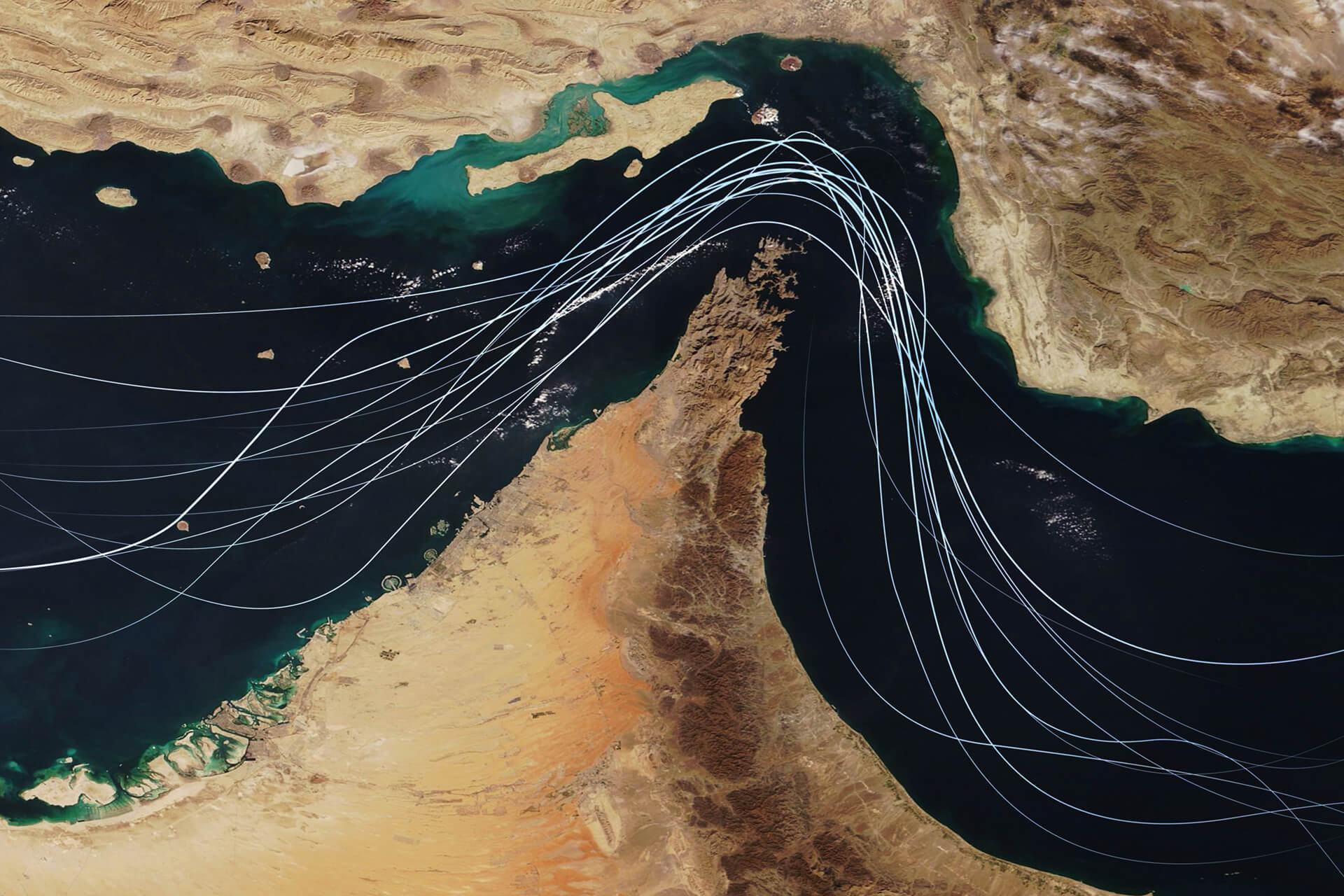

All right, time for a status update on Persian Gulf shipping. Tanker traffic is slowly resuming, and Gulf producers are gradually restarting exports…but let’s not go counting chickens quite yet.
Global energy flows remain constrained, and exports won’t fully recover for some time. Most of the traffic is the previously stranded cargo flowing out, rather than new tankers entering. And Iran has emerged from this new arrangement with greater influence over the Strait.
Transcript
Hey all, Peter Zeihan here. Coming to you from Colorado. It is the 29th of June, and let’s chat about the status of the Persian Gulf, because so much depends upon it. We’ve had on again, off again violations of the steel by both the Iranians and the United States. One of them hit something and the other one hit something or retaliation. At the moment, they’ve both agreed to disagree and not shoot at each other.
So technically, the Strait of Hormuz is open if you’re the Americans and it is closed if you are the Iranians. As a result, cargo movements have been very, very slow to pick up. We’ve probably had about 20 tankers a day on average this past week leave, and that is starting to finally drain the stranded ships that are within the Persian Gulf.
Keep in mind, there were over 1000 that were stranded when the war began and had been there for three months, and that has meant that a fair amount of crude, maybe 35 million barrels, has gotten out. In addition, a number of the Gulf states are incrementally restarting oil exports. The most progress has been made in Saudi Arabia, where there are at least four tankers as of the weekend that were loading successfully.
Gutter is more of a question mark, and in the case of the United Arab Emirates continuing to use their report, which is actually outside of the Strait of Hormuz on the Gulf of Oman, Kuwait influx, no real information and Iraq doesn’t look like its movement at all. Some people are saying that, okay, look, we’re getting back to normal, but but not really.
You see, the the Saudis have a bypass pipeline that they cranked up well above design specifications, and it made up for over 90% of their previous exports. And so they were shipping things out through the Red sea. So shipping things now from Ross Tonnerre on the Persian Gulf is just taking some of the stress the off of that transit line. Is that not actually adding any new crude?
The same more or less is going for the United Arab Emirates. We are getting this one shot deal from the stuff that was locked up that can get out, but very, very few tankers are coming in for what I’ve been able to sell over the weekend. You’re talking about less than 15 ships transited into the Persian Gulf, and only about half of those were tankers.
Keep in mind that before the war, somewhere between 100 and 150 ships transited each way each day, which means, as a result of the peace deal, the only country that is currently sending ships back and forth through the Strait without restriction is Iran. And I can’t underline enough about how this deal so lopsided serves Iran’s purposes. The Iranians are talking openly now about the regimen, about how they’re going to charge fees or tolls or whatever you want to call it to what’s going on.
And even Oman, which is, you know, technically not. Iran is talking about how they’re looking forward to coordinating with the Iranians to make that happen. So the most important waterway in the world for energy flows is right now only fully open for business. If you’re Iranian. And the Iranians and others now are working on how to charge everyone else for the pleasure of using it, with that deal supposedly being enforced by the US Navy.
So this is an ongoing, catastrophic economic and strategic event for the world as a whole, for the United States specifically.
And we still don’t have a good read on when the fields in the region are going to be getting back up to full production. Probably not this year. All right. That’s everything for me. See you tomorrow.