
So, you want to bypass the Strait of Hormuz, huh? Good luck finding a replacement route or pipeline that matches the 20 to 22 million barrels of oil that used to transit daily.
The UAE and Saudi Arabia have pipelines capable of transporting roughly 1.6 and 7 million barrels per day, respectively. Despite being the best alternatives, they come with long expansion timelines or vulnerability to strikes. There are a few other routes that pass through Syria and Turkey, but those are either too risky or too small.
Transcript
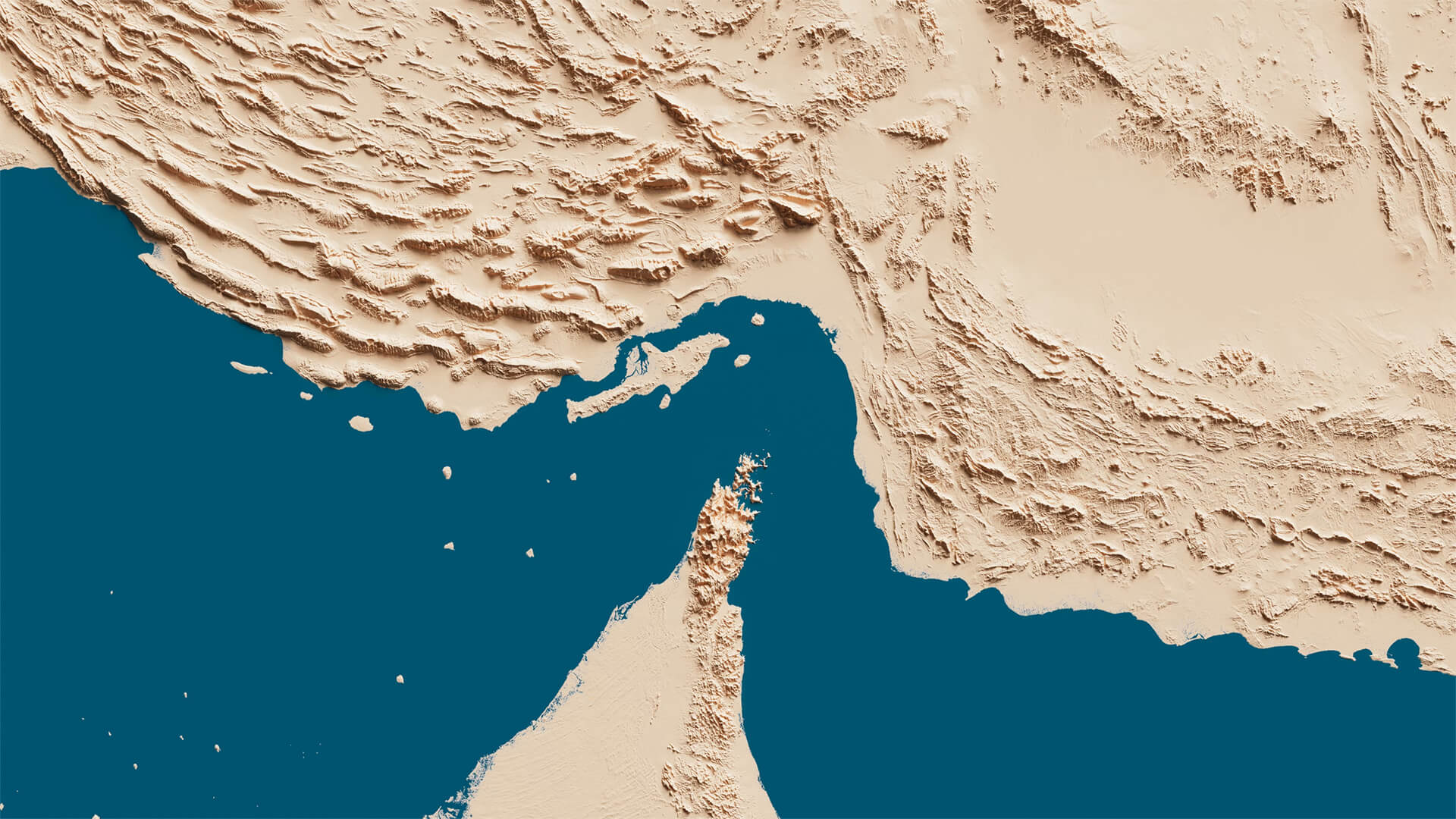
Hey, everybody. Peter Zeihan here. Coming to you from Colorado. And today we’re going to talk about the bypass options for the Strait of Hormuz. Started. Hormuz, of course, is one of the world’s most important waterways. It is the gateway that tankers use to enter and exit the Persian Gulf. The Persian Gulf produces for export roughly 20 to 22 million barrels per day of oil and products, and under normal circumstances, almost all of that flows through the Strait of Hormuz aren’t really great options.
Otherwise, Iran is all mountainous. You’re not going to go that way. Iraq is a sectarian disaster and it has no other waterway access. It would have to go north through Turkey, which is mountainous. Saudi Arabia is a desert kingdom which is huge, and so crossing its distances are problematic. The Kuwaitis and the Qatari have no options at all.
And that just leaves the United Arab Emirates, which at least does border the other side of the Strait of Hormuz. But it has to go up and over some complicated geography. Anyway, there are four options that people are talking about, three of which exist in some way. So number one, you’ve got the pipeline that starts in the United Arab Emirates on the Persian Gulf and goes up and over some of that complex geography down to the port of Fujairah, carries about 1.6 million barrels per day.
The Emirates have fast tracked expansions. They hope to have another 300,000 of capacity sometime later this year, and then maybe they even will double it over time by laying a parallel track. It’s expensive, especially building it fast, but that doesn’t mean it can’t happen. And the Emirati certainly realized that unless they get another option, they’re kind of hostage.
Anything that happens between or among Israel, the United States and Iran. Number two, the big one, the Petro line. This is a line that starts in the eastern provinces of Saudi Arabia and their major oil producing region, and just shoots west, straight across the desert until it hits the Red sea at a place called Yanbu. they started construction on this during the Reagan administration.
Everyone in this area has been worried about the Strait of Hormuz for a very long time, and it’s operational has been for a couple of decades. In fact, over the last ten years, the Saudis have incrementally increased its capacity from 4 million barrels a day to 7 And they had never really tested it. So until this conflict, we were still thinking it was at four.
They have proven that with 30 to 45 days notice, they can ramp it up to seven, which from an engineering point of view is pretty impressive. There’s now talk of laying another parallel pipe and maybe increasing this by another two or even 3 million barrels per day over the next few years. There’s two problems with that. Number one, of course, is this is a big project over a large period of distance.
And then second, just getting to Yanbu is only half the problem. The Saudis have built a number of refineries up and down the Red sea coast that are not connected by pipeline. And so the old strategy was to take tankers from the Persian Gulf, Salem, all the way around the Arabian Peninsula, going through Hormuz, through Bob Deb off the coast of Yemen, and then supplying these refineries by sea, which I always thought was remarkably stupid.
Anyway, at the moment, the plans aren’t for these pipelines to support these other refineries, just to get it to the coast to open up some maritime options. Option three is for Iraq. Iraq has two different while producing zones. It’s got one in the which is the big one in the Shia Arab zone. And it’s got one in the north in the Kurdish Right now, all of the crew that comes out of the southern fields is exported by water through a couple of offshore loading platforms. They have. And all of that has basically been reduced to zero by the conflict. So the idea is you have a Western line that goes out to a city called Banias in Syria.
This pipeline technically exists, but it was shut down in the 1950s and has never been turned back on. And so if this route is going to be explored, all of that equipment has to be 100% replaced. And you’re talking about a project conservatively is going to run $8 billion. 20 might be a better guess. And it’s not clear that the Iraqis have the financial wherewithal or the engineering skill to do this themselves.
So you’re talking about bringing in companies from the outside and having to pay them, and that means it’s not going to happen this year or next year or this decade, and maybe not next decade. This would be a big project. In addition to the fact that about 40% of the route is going to be going through Syria, which until recently has been in a brutal, decade long civil war, and we’re just kind of counting the moments until the second phase of that civil war starts up.
Not to mention that Banias on the coast is a different sectarian group than the majority of Syria. So it’s going to go through the Kurdish zone, and then it’s going to go through the Arab zone, and then it’s going to go through the Alawite zone. I wouldn’t invest in that if it were up to me personally. Final option also kind of exists.
It’s the northern route that goes from Kirkuk, which is the oil capital. The Kurdish zone north into Turkey takes a dog leg going straight west to the Mediterranean port of Chian. And Chian is kind of in that elbow of the Mediterranean, where Turkey almost meets Syria. That pipeline has been operating for the last ten years at about half a million barrels per day.
It was built to spec back in the 80s at 1.6 million barrels per day. But disputes between the Turks and the Kurds, much less the Turks and the Arabs in Baghdad, have meant that it’s always operating at a lower capacity. It’s not clear if it can handle that 1.6 anymore. Anyway, there’s problems with all of these pipelines. It takes a while to build them.
They’re expensive. The Emiratis are showing that they can be fast tracked, but the Emirati one is probably the simplest over all. But the bigger problem is it doesn’t really solve the issue. I mean, yes, you can bypass Hormuz. And yes, that is important. But keep in mind the weapons systems we’ve seen deployed around the world in just the last six months.
In the case of the Ukrainians, they’re now regularly striking industrial targets across Russia that are a thousand miles and more from Ukrainian territory. The Iranian weapon systems are not nearly as complicated, but they’re still striking things that are 500 miles away without a problem. And most of the infrastructure that we’re talking about here is within that 500 mile range.
And so the Iranians can just program in what they want to strike, whether it’s a pumping station, part of the pipe itself, the loading facility, the tankers, a cluster of the loading facilities and go to town. Specifically, they’ve already hit Fujairah, the Emirati option, and Yanbu the Saudi option. And to think that they can’t hit any of these spots with today’s technology, much less the technology they will command when this construction is finished is just silly.
Really. The only option for a bypass pipeline that might, might, might be resistant or immune to what the Iranians can do today, much less tomorrow, is the Turkish option, because the Iranians do not want to pick a fight with a superior local military power like Turkey. So that is really the only thing that works. But that one of the three that are operational is by far the smallest of the three.
The petrol line is not a solution, the pipeline is not a solution. And honestly, anything that’s going to depend upon Syria instability is probably not an option. That just leaves the Chian pipe, which at the moment is maxed out theoretically at 1.6 million barrels per day. Operationally probably half that. And if the decision was made to double, triple or more of that, you’re talking about a project that’s in the tens of billions of dollars because eastern Turkey is not flat.
So none of these really work. They’re going to generate a lot of talk. The Trump administration already has their fingerprints all over them. Like this is going to be a quick and easy fix. It is not you can take that to the bank.