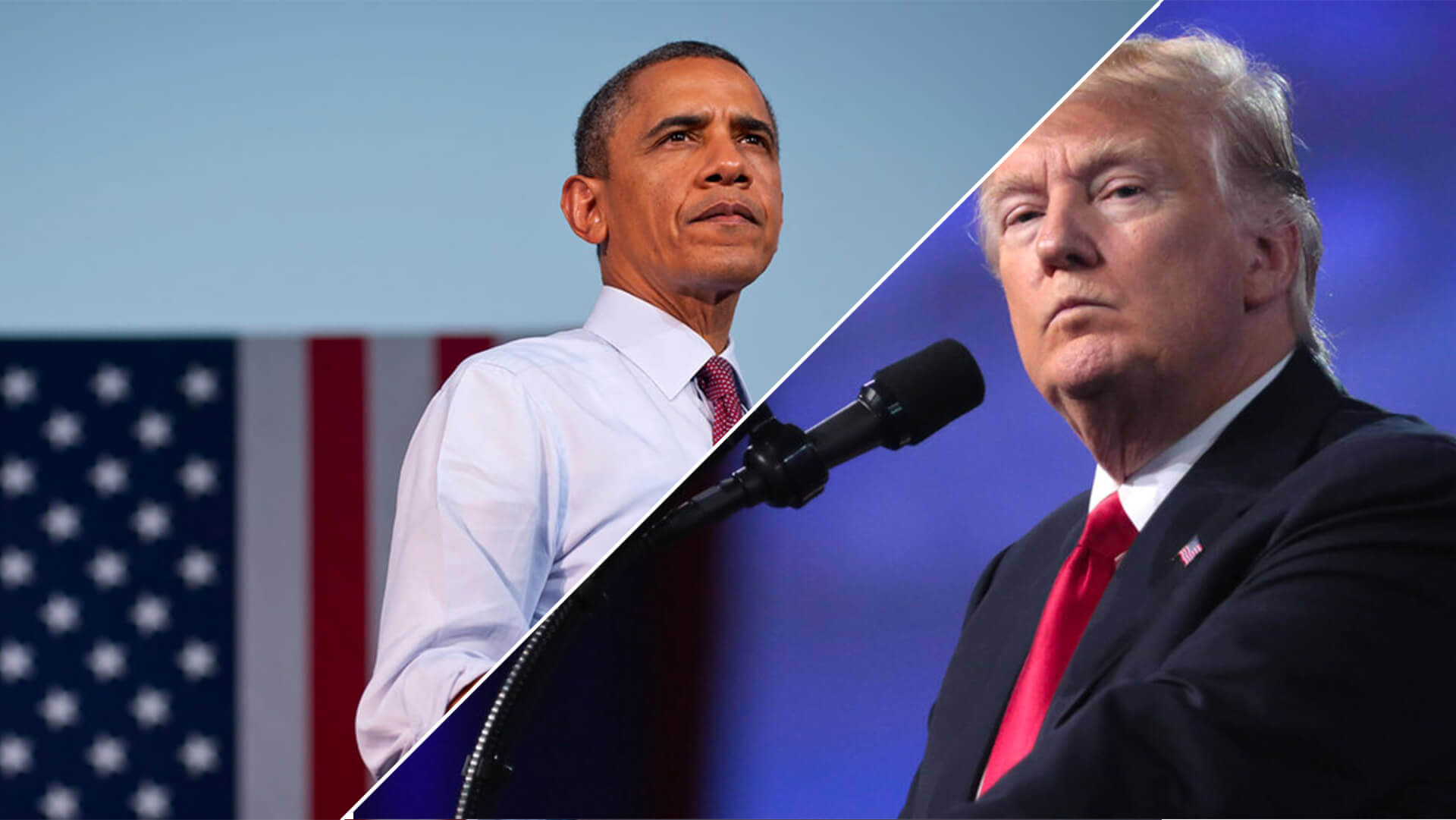

The Obama and Trump administrations have both made deals with Iran. There are some glaring differences between the two, so let’s see which deal came out on top.
Obama’s Joint Comprehensive Plan of Action (JCPOA) failed to address Iran’s missile program or its support for regional proxy groups, but limited Iran’s access to frozen assets, maintained broader sanctions, required inspections of nuclear facilities by the International Atomic Energy Agency, and sought to create a regional balance of power. Trump’s deal is substantially weaker, as it allows Iran to sell oil freely and access the U.S. financial system with limited oversight, lacks long-term safeguards on Iran’s nuclear program, and leaves Iran without a proper framework to engage with the region.
Transcript
Hey everybody. Peter Zeihan here, coming to you from Colorado. Due to popular demand. I’m going to do today. Compare and contrast of an agreement called the JCPoA, which I don’t remember what it stands for now, but it was the Obama era deal with Iran versus what the Trump administration has just done. Let’s start with the review of JCPoA.
It is held up as kind of the landmark example of how to not negotiate with a difficult country like Iran. There were insufficient safeguards. Most of the issues that really mattered to the United States were not addressed. It was considered kind of the first stage of a series of negotiations to try to normalize relations with the Iranians. And as such, it was ultimately abandoned.
And most independent observers looking back on it now, ten years on, would give it a degrade in terms of its overall quality. So why is that? There are a number of things in the bilateral relationship that matter. Obviously, there’s a lot of things we disagree about, but near the top of the list are sectarian groups that are on sponsors to foment chaos throughout the region and its missile program, which is designed to not simply threaten Israel but ultimately broader American interests.
And in time, maybe even the United States and JCPoA addressed neither of those at all. But neither did the Trump administration. There’s not a single word about any of that in the very short napkin deal that Donald Trump put his name on so famously in Versailles. That’s piece one. Piece two is finance. The United States controls the global financial system, and almost all commodities are almost exclusively settled in US dollars.
That means the United States has eyes on any transaction that uses any dollars. And honestly, on almost all trade period. Because if you’ve got two countries that don’t have a lot in common executing a trade deal like say, I don’t know, Oman selling crude oil to Korea, the Omanis don’t have anyone and they don’t want anyone, and the Koreans don’t have any Omani dinars and they don’t want any.
And so what they do is they take their dinars. I think it’s called a really not sure offhand. Maybe I should have picked Mexico anyway. Exchange them for U.S. dollars on the international exchange, and then it goes back to one when it hits Korea. And in doing it that way, the United States actually gets two points of view on every individual transaction.
Anyway, Iran had been under a degree of sanctions for decades. And so the Obama team offered up progressive relief from sanctions in exchange for cooperation on the other big deal nuclear issues. And so to that end, the first stage was unlocking some of the cash as an act of goodwill that Iran and had frozen all these years came out to something like, I don’t remember the name or number off the top of my head.
No WiFi here about, let’s call it $20 billion. I think that’s about what it was anyway. 20 to 30. Anyway, that was loaded up into pallets and flown to Tehran, which is something that Obama’s critics screamed bloody murder. You’re flying cash pallets of cash. And the response, which was accurate, was that access to the financial system, which would have allowed Iran to sell its crude on the open market and get all the cash direct and use it for whatever it wants?
That would have required loosening up the sanctions in a way that the Obama team didn’t want to grant right off. That was probably for phase two or phase three or phase four. So the only option was to fly some of Iran’s cash. That was Iran’s. Anyway.
Anyway, it was an awkward deal that really had bad optics, but it was probably the best. Could it be done at the time? In contrast, the Trump deal just gives a very similar amount of cash in the 20 to $30 billion that is frozen directly to Iran in US dollars and grants them full access to the US financial system and allows Iran to sell whatever it wants to on the international market and earn US dollars that are not under US jurisdiction or monitoring or in any sort of temporary account, so we can watch where it’s spent.
It’s basically gave her on everything that’s been demanding since 1979. Which brings us to the nuclear question. That was the big achievement of the Obama deal. Is it committed Iran to IAEA inspections? IAEA is the UN bureau that monitors everybody’s nuclear power plants and makes sure that you’re not taking some of the fuel and turn it into what would go into a bomb.
The Trump deal does mention nukes, but it says it’s all subject to a 60 day deal, and there’s no restrictions on them at the moment. In addition, the Iranians felt that they wouldn’t be attacked because they had a nuclear program. Now they know they need to have a nuclear bomb to have a deterrent. So we’ve basically incentivized them to build a nuke.
Well, whereas the Obama deal, while there were multiple rounds and we were only in the first round, was definitely weak and insufficient and a bad deal. It’s nothing compared to the strategic abdication that the Trump administration has just done on financial and nuclear issues.
The core logic for the Obama deal, and you can you can argue with it, is that if you’re going to withdraw yourself from a broader region that you have been managing for decades. Unless you just want to let the chips fall where they may, you need to do one of two things. Number one, you have to appoint a deputy or a new regional hegemon to take your place, a country that you trust enough and that has enough capacity to hopefully do things more or less in the way that you would.
And There was no one. There is no one in the region that checks those boxes for the United States. Israel isn’t trusted, and besides, its power projection is limited in a sustained way. Sure, it can bomb someone, but it can’t hold territory except in Lebanon, Saudi Arabia. The military is a joke. Turkey is on the wrong side of Iraq.
There’s just no one. Which leaves us with option two. You have to set up a regional balance of power that self regulates so that the region’s problems stay the region’s problems. And that was the approach the Obama team seized upon. And that required a degree of normalization of Iran so it could act as a normal power. The Trump administration’s deal is basically a wash your hands and walk away and what happens, happens.
And so things like the war in Lebanon, things like the human rights disasters that are Saudi Arabia are the sponsors of terror, that are the Guthrie, Qatari, whatever. And everything Iran does in his infamous for just like it’s left.
So yeah, the Obama deal will go down as the quintessential example of a grade D statecraft, a horrible deal that didn’t take all that many American interests into account. But we’ve all been through school, and we all know there’s a grade below D, and that’s where we are now.