
Civita is living proof that places facing decline can adapt and overcome by drawing on their unique identity. This hilltop town-turned-tourist destination is a microcosm of Italy itself.
Faced with demographic challenges, Civita was forced to get creative to save its way of life. By charging a visitor tax, Civita was able to fund restoration projects and preserve this beautiful place.
Italy’s demographic crisis is only worsening, but success stories like Civita are a glimmer of hope.
Maurizio says ciao!
Transcript
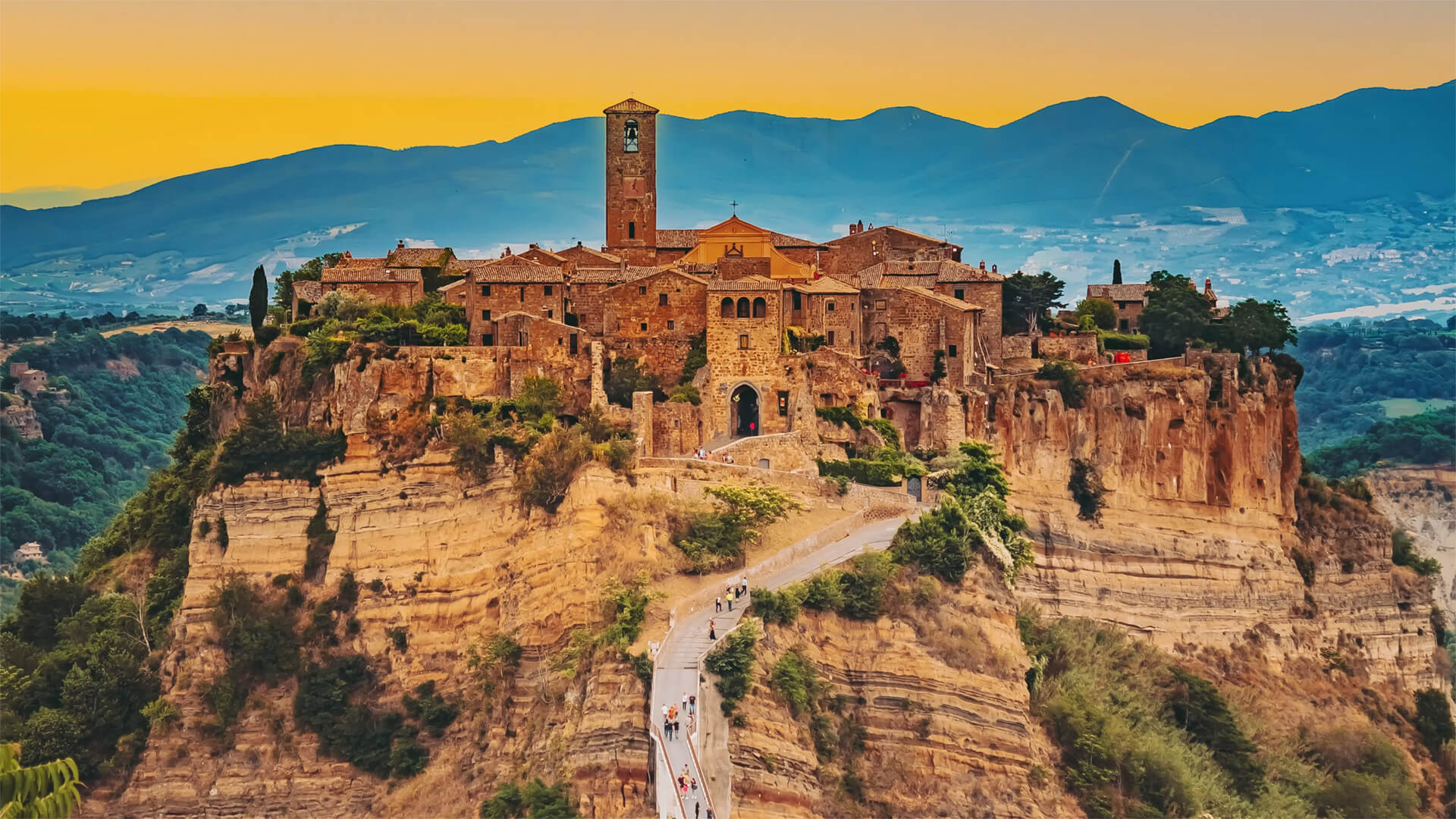
Hey everybody, Peter Zeihan here, coming to you from Civita, Italy. And today we’re going to talk about Vita. And Italy is kind of Italy in microcosm. It was founded by the Etruscans, 2500 years as a hilltop town for defense. And because they could watch trade routes in the time since, it’s of course, changed hands, it does bene times as Italy has changed systems, and in the modern day it’s kind of actually facing a rough patch.
As you’ll see in some of these pictures, it’s perched on the side of cliffs that are slowly eroding, and the country’s moniker these days is come see it before it’s gone.
So many people have now visited that them simply tracking dirt out of the city has dropped the level of the main square by about a foot in the last six years.
In addition, demographically, the city looks a lot like Italy. Italy has the lowest reproduction rate in Europe, with less than 1.15 children per woman. And here in Cheviot, there’s really only about a dozen permanent residents left, and some years up to a million tourists come through again. Italy is number two destination for tourism Europe after France itself.
that’s really what’s been keeping the system alive. In fact, if you go through Italy as a whole, whether it’s Rome and Vatican City or Venice, these are countries that have been tourist destinations now for the better part of eight centuries. And it looks on the surface like there’s really not much hope there. The buildings date back, in some cases 2000 years.
There was an earthquake in the 1600s that the city really had never recovered from, But that doesn’t mean they’re gone. And it doesn’t mean they’re going to be gone soon. In the case of Covid, they instituted a €5 ahead tax a few years ago, and that has made this the only tax free municipality in the entirety of Italy.
And they’ve used that income to do things like do Geological survey’s and reforest the hillsides around them to slow the rate of decline to almost nothing.
Yes, they’re thronged by tourists. But as you can see behind me, on the one street there really is, everybody lives on the up and the out. So in the day to day operations at home, they don’t really suffer at all.
It’s an interesting study about how resilience is really just an exercise and reimagining what it is to be stubborn. And in the case of both Italy and Vita, we have an area that realizes by the norms of the age things don’t look very good. And so
They’re finding ways to turn their challenges into things that allow them to survive in the way of life that they want. Which, of course brings us to the bridge. The bridge was simply an issue of stubbornness, where they decided to make the investment that was necessary to protect themselves. When geography that self tried to cut them off the bridge brought revenue, revenue bought time, time brought a strategy, and the whole place is now holding together, and everyone is fighting to maintain the way of life that they’ve all wanted all along.
It’s a nice story, and if you ever happen to be in the area, come visit Vita. And best of all, you should really look up my buddy Marisa. He maintains a restaurant with one table, and every second you’re in there, it’s glorious.