
Building Out the Power Grid: Large Power Transformers

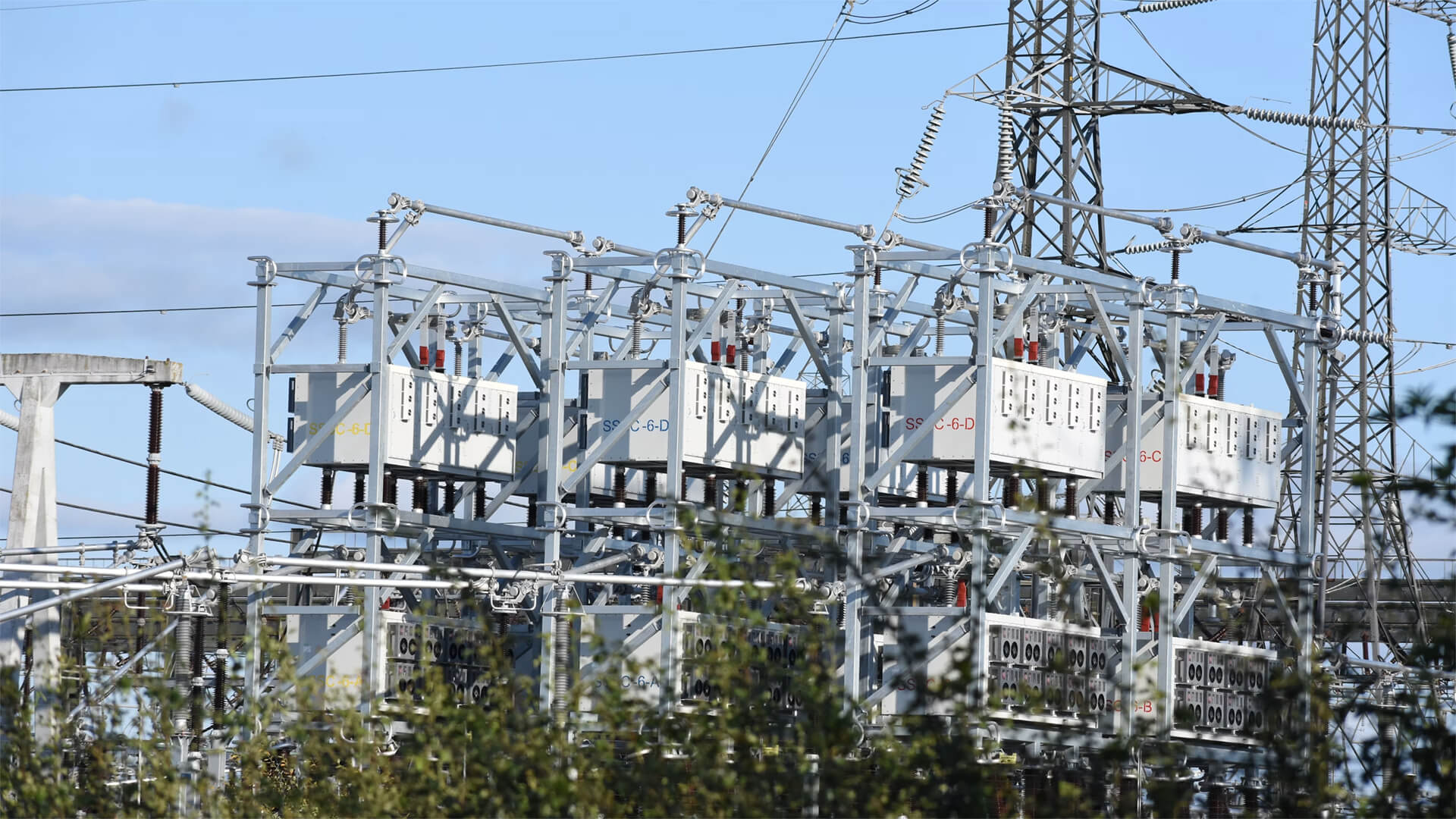
An electrical station with transformers

There are three major obstacles to expanding the U.S. electrical grid: generation capacity, permitting, and large power transformers (LPTs). Let’s focus on LPTs today.

Reindustrialization will require a massive expansion of electricity generation (and that’s without further data-center growth). Large power transformers are essential for transmitting and distributing electricity, and most of the existing LPTs have already hit their expected lifespan. So, if the U.S. has any kind of shot at reindustrialization, it needs to replace all the aging equipment and add more LPTs, despite years of backlogs.

Transcript

Hey, everybody. Coming to you from my tent in Yosemite. It’s raining outside. So I decided that discretion being the better part of valor, I’d take a nap. But first, I want to talk to you about the American grid. As you all know, we need to build out the grid as quickly as possible, as large as possible. And as I’m sure most of you have heard, a lot of people are unsure of how we’re going to do that. 

We’ve got three primary obstacles. The first is generation capacity. Assuming for the moment that the data center boom ends today. The United States needs to expand its grid by approximately 50%. And that’s obviously a lot. It took a half century for us to do the last 50% expansion. So to do that in a short period of time is going to be very, very difficult. 

With the data center expansion. You’re talking about a doubling or tripling or a quadrupling. And so anyone who tells you that data centers are the wave of the future clearly hasn’t done the math. There is no version of physics or the United States where that is possible. So this idea that this data center boom is not near its peak and is not a bubble. 

You know, regardless of what you think about the financing for data centers and the profit centers for data centers and the applicability of data centers, there just is nowhere near enough power, and there won’t be without a significant change in their design. Okay. All of that’s one. The number two problem permitting, it’s difficult to build large industrial infrastructure in a first world country because lots of people already have interests and they sue to protect them. 

But one of the real problems we have in the United States is permitting is that the local, state and federal level for power generation and any asset is typically managed at the local level within a specific electric district. Unless you’re in a place like say, oh, I don’t know, North Carolina, where I believe it’s Duke energy is really big. 

Most of these districts are like at the county level, maybe even smaller. And getting everything through, getting the capital lined up and getting all the permits, just taxes, staff that in many cases doesn’t exist in number. Keep in mind that U.S. electricity generation in the last couple of years had been stagnant since the late 80s. So a lot of the institutional knowledge has been lost, or very, very few people alive today that were proving data centers that last go around. 

But the third problem is probably the most significant, because if you decide that you really need something, you know, money can solve a lot of problems. And if you decide you need something, you can always speed the permitting by various means. But the third problem is something really can’t be rushed, and that is the presence of large Transformers large power Transformers LPTs, if you want to use the acronym. An LPT is basically something that is on the grid rather than in the power plant, and it steps up and steps down the electricity for transmission and distribution. 

They weigh 100 to 400 tons. And it’s a perfect example of one of those mid tech but high skill industries and products that the United States is basically outsourced. Very, very few of them are made in the United States at all. We import about 80% of what we use and get this. The average transformer, the average LPT in the United States right now that’s operational is about 40 years old. 

And these things typically last about 40 years. So not only do we need at least 50% more, probably more than that. We also have to overhaul and replace the entire grid supply of LPTs. The volume required here is immense. And the problem is that not a lot of places make these things at scale. 

And right now, there’s a backlog of 3 to 5 years based on which model you’re looking for. Even distribution transformers now have a backlog of over a year. So the real decision here to expand the grid should have been made five years ago. But, you know, here we are. Anyway. Most of the Transformers the United States imports comes from four places Mexico, Germany, Japan and China. 

And the Trump administration has picked trade fights with all of them. Although at the moment relations with the Mexicans are probably the best among the four. And that’s great. So if anyone is looking for a just brilliant lever to use against the United States and trade talks, LPTs are an excellent choice because we’re entering a stage where not just the United States is going to be unable to expand its grid unless it really gets some things moving. 

It’s not going to be able to maintain the grid it has. And that has horrible implications for absolutely everything. Remember, 50% increase is what we need. If we’re going to reindustrialize in a way that prepares us for deglobalization. So this is banded right together with all of those other issues that I follow that suggest that without some significant change in federal policy, we are simply not going to have the products we’re used to. 

The United States is a services economy. It’s a brain economy, and it relies on imports for a lot of its manufactured products. Now, you can argue whether that was smart or stupid to do in the first place. That’s where we are now. And now that deglobalization is here, we absolutely need to reindustrialize and you can’t do any of that work without power.

How To Ban Diesel Exports

Large Red Tanker Ship Docks at an Oil Terminal

A ban on American crude or diesel exports isn’t going to improve energy security; if anything, it will reduce domestic production. The problem lies in geography.

Most U.S. production and refining is concentrated in places like Texas and Louisiana, which are quite far from the demand centers in California and the Northeast. So for crude, export bans would oversaturate producing regions and discourage drilling. For diesel, the bans are futile without expanding infrastructure and changing the transport systems.

Export bans only make sense if paired with major changes to accompany them.

Transcript

Hey everybody. Peter Zeihan here, coming to you from Colorado. And today I wanted to talk about something that has been in the news a lot of late, and that is bans on exports of energy products from the United States. There’s two topics here, one that’s old and one that’s new. The old one is about exporting crude in general, and the newer one is about diesel specifically. So let’s start with the older topic, then move to the newer. 

So here’s the problem. The United States is a physically large country, while places like Canada and China and Russia are larger, most of those countries are completely uninhabitable. Whereas the United States has a relatively broad population distribution across its entire territory. So a lot of internal American economic issues, especially when it comes to energy, are based on distribution. The mechanics of how we move things from A to B determines what our economic policy should be. And then whenever we deviate from that, we generate problems for ourselves. So start with oil. Obviously the bigger players are Texas, Louisiana, New Mexico, a little bit of Alabama, a bunch out of North Dakota, some out of Colorado, little bit out of California, and then places like Ohio and the Appalachians, Pennsylvania. And that’s great because we’ve got people in all of those places. But our densest population footprints in places like the American Northeast or Florida or the bulk of California, are not proximate to where the energy is produced. So you need to pipe it, the crude, from wherever it’s produced to a refinery. In places like the American Gulf Coast, you get these natural concentrations because Texas is all one political unit. So they can build pipelines without too much of a problem. They don’t have to go to federal authorities for permits or anything like that for the most part. And so you get these huge concentrations of crude in places that may have people, but aren’t necessarily enough people to consume the crude. So Texas, for example, produces more than enough crude for not just Texas, but the entire American West Coast, which doesn’t have a lot. 

So when you start talking about a crude export ban, what you’re saying is we’re going to create these massive pools of oversaturation in certain markets. And when you do that, without the infrastructure in place to ship the crude easily to where the people live, then all you’ve done is really disincentivize the crude producers from producing. So if you were to do a crude oil export ban tomorrow and have no mitigating policies, you would see crude production in places like North Dakota and Texas fall off a cliff very, very quickly because they produce far more crude than they can use locally. We also don’t have enough refining capacity in the country as a whole to process everything that we produce. So the only way to then square the market is to reduce supply. And that means the United States goes from exporting somewhere between 20 and 25 million barrels a day, to probably something closer to 10 to 15 million barrels a day over a couple of years. 

And it would happen that fast, because the vast majority of American oil production these days comes from the shale fields, and most shale wells generate somewhere around 70% of their total output over the 25 year lifespan in the first 12 months. So it would happen very, very quick, and the result would be less energy security rather than more. 

Something similar happens with refining and diesel fuel. Again, there are some dense concentrations of refineries where we turn crude oil into fuels that we use with, again, the Texas-Louisiana section being the densest. We’ve got secondary centers that are roughly matched to demand in places like the Midwest. But when you look at California and especially the American Northeast and certainly Florida, there’s just nothing. And the United States decided a century ago, more than a century ago, to favor truck transport over train and especially ship. Even though they’re much more efficient, especially for the American geography, which means we have a large built in demand for diesel fuel. Even though our geography argues that we should be doing other things. Anyway, this all combines. So if we were to have a diesel ban tomorrow, again, you would have a catastrophic change in prices in Texas and Louisiana, where diesel prices would go through the floor because of oversaturation. And the only way to fix that is to reduce diesel runs. And all of a sudden, the United States has less diesel than it had before. 

Now, of course, the Trump administration, being the Trump administration, is now openly discussing how to make this happen, the diesel ban, specifically. The energy secretary, Chris Wright, is against it because he knows energy economics. And the Interior secretary, Doug Burger, is against it because it used to be the governor of North Dakota, one of the states that would be oversaturated. So he understands what’s going on. But every time that those two have tried to inject a little bit of economic rationality and reasonable forecasting into the white House, they’ve been slapped down and they will be on this situation to. Now does that mean that an oil export ban or a diesel ban are just uniformly bad ideas? No, no, no, that’s not what I’m saying. I’m saying if you think you can do a once and done policy and then move on, that is stupid because that will guarantee that the problem gets worse. And we reduce not just global supplies, but American supplies of these things. 

What you have to do is pair a ban, if that’s what you want to call it, with other things. So, for example, on the crude oil front, most of the crude that is produced by the US shale fields is super light and super sweet. It’s not viscous at all. It has very few contaminants. And that is not what the American Refining complex is designed for, because going back to the 1970s, we became convinced that the world had run out of this sort of light, sweet, crude. And so we started retooling our refineries to work on ever dirtier, ever thicker crude. Shale revolution came along in the mid 2000s, changed the math for the United States. But the refineries have been slow to shift because they’re the most advanced refineries in the world. And they spent 100s of billions of dollars getting ready for the world that then ultimately for the United States didn’t happen. So what happens is the United States exports the light, sweet stuff and imports heavy, dirty stuff. So if you want an oil export ban to mean something without damaging American energy security, you have to force the refineries to change what they do to use local crude. And if you do that, then all of a sudden we have the flow through that we need for fuels, and then it’s a distribution problem. 

If you want to look at the diesel situation, it’s somewhat similar. If we get these dense concentrations of supersaturation, the only way to fix that is to improve distribution. And that means product pipelines. Right now, we really only have one, the Colonial Pipeline that takes refined fuels from the Gulf Coast up to the American Northeast. And that’s it. Everything else is shipped by rail or more likely, truck. So what you have to do is build a nationwide distribution system, or maybe even mandate the creation of refineries in places where there aren’t concentrations of them. Or here’s a crazy idea maybe ship it by water and amend the interstate commerce act or the Jones Act so it’s easier to move stuff around the continental United States. 

Bans by themselves sound good. Because it means that the stuff will be trapped here, but it’s trapped in the wrong places. It’s still a distribution problem, and a distribution problem means you have to address the distribution system. And unless and until you do that, the conversation is just in the wrong place.