

Both Serbia and Brazil just had major elections, but neither is likely to change much. Unfortunately, these are two countries bound by their respective geographies, and it will require much more than an election to alter their trajectories.
Transcript
Hey, everybody. Peter Zeihan here. Coming to you from a foggy Colorado, it is the 26th of October, and we had a whole host of fun things over the weekend. A couple big elections that I want to talk about.
The first one was in Serbia. Now Serbia is a Balkan country stuck in the middle of the Balkan Peninsula. It is right along the Danube and has served as a choke or a springboard for navigation and commerce throughout the region for centuries now. It used to be part of the former Yugoslavia, if you remember that one from the Cold War, which broke up at the end of the Cold War and triggered a combination of war, civil wars and secessionist wars and ethnic cleansing that killed a minimum of 150,000 people, probably a lot more based on whose numbers you’re using.
Anyway. A guy by the name of Vučić, yes, that is mispronounced because there are way too many accents on that name. Basically lost. He’s been in charge for most of the past 30 years, directly or indirectly, or as president or as Prime minister, and he has now been kicked out of the party by a group called Student List. One of the fun things about Serbia is it has had a very, very active actually, this is the entire former Yugoslavia, very, very active student political movement and not like student movements in the United States, like the Young Republicans, that just kind of pop up in their adjuncts to the parties or in, say, South Korea, where they just like to protest, no, no, no, these guys actually have heft and they form coalitions that actually are designed to and often do, influence who gets elected and sometimes even run their own candidates as they did. This time the group is called Student List. And it’s not just a bunch of young kids or professors. It includes, for example, a former central bank chief. Anyway, Student List has won the elections very cleanly, Vučić has already accepted the results, and so they’re going to be forming a new government now with a majority of the seats in the parliament. Serbia has always kind of had its position of one foot in the west and one foot in the east. The Serbs are Slavs, and so they have always kind of served as a position for a Russian power projection into the region, up to and including during the civil and the genocidal wars in the former Yugoslavia in the 1990s. The question that everyone in Europe is having is now that the Vučić is gone, whether or not there’s going to be more pro-European orientation and a more anti-Russian orientation. And I wouldn’t bet on that.
A couple of things to keep in mind. Number one, the population is Slavic, Serbs are Slavs. And so there is a degree of ethnic connection to the Russians. It doesn’t mean that they have to do what the Russians say, but to think that they’re just going to ignore it for the purposes of a domestic political election is a bit of a stretch. Second, what little this election has been about foreign affairs. It really hasn’t touched on changing foreign affairs. This is an election about domestic reforms and economic restructuring and removing some of the corruption from the system. You know, all issues we’ve heard before and moving on. Keep in mind that since the Yugoslav wars ended, Serbia’s kind of been on the outside. Every other member of the former Yugoslavia is well on its way to EU and NATO membership, and several of them have already made it. Serbia has just kind of been stuck in the 1990s, and it’s just had a hard time figuring out what it wants. And if all it’s going to do is channel Russian or Chinese influence, that really doesn’t take them very far, especially now that Bulgaria and Romania and Slovenia and Croatia are all in the EU already, and even places like Albania, God have made it into NATO. Anyway, their foreign policy push for the Student List is to finish the negotiations with the EU and then put it to a referendum, which, you know, duh, but that’s about all they have discussed as regards to the West, the position on, say, the Ukraine war is no sanctions on Russia and pushing for an end of the war. Not exactly a break with where we’ve been. So if you were looking for this to be a big shift, it only is if you’re interested in domestic Serbian politics, if you’re looking at the broader international field, they either are sticking with more or less where the previous government was, or they have to make it up still, it’s a new government. We’re probably not going to find out this year, but don’t expect radical changes.
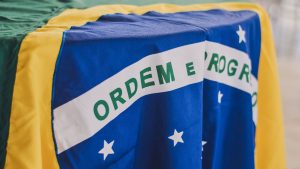
The other big one was in Brazil, where we had a bit of an upset. We had two people running Bolsonaro, who was the son of the previous Bolsonaro, who was president, and Lula, who is the same guy who was president before and before and before. This is an election that has been like fingernails on a chalkboard for me, because we’ve had Lula versus a Bolsonaro now for basically this century. And Brazil is a country that’s a little difficult to operate because there’s an uplift on the coast and all the people and all the economy is in the inland. And so getting the infrastructure to get everything out to the coast is always been a royal bitch. And over the last 25 years, they have built more infrastructure to make it a little bit easier. But it’s still kind of difficult. And so you get this giant country with just under 200 million people I believe, that just punches way below its weight in regional affairs, much less global affairs. But everyone is convinced it’s the shit. It is not the shit. It is not shit either. But it’s not great. And an election between basically the same two cults isn’t going to do anything. I’m not a fan of either of them. The Bolsonaro family is the group that says that the real problem with the Nazis is that they were just too soft on the domestic foes. God. And then Lula is, at best a poor manager, who’s not been very good at using the tools of the state to actually push economic development. He spent a lot of money on a lot of things in Brazil for its class, you know, large, diversified developing countries, has by far the highest debt of that class. According to their numbers, it’s 82% of GDP, according to the IMF it’s probably closer to 100%. And that is arguably not survivable. That will almost certainly require a debt restructuring, probably during this next term. And we haven’t had a large developing country go down the debt tubes for quite some time now. And now that everyone in the world is facing some sort of debt crisis, this could very well be the country that ticks off that crisis. Or if it gets ticked off somewhere else. This is a country that is looking at a very, very deep problem. The Lula team has never been good at finances. The Bolsonaro team is not going to let go. And so basically we have been in this tug of war that’s kind of like the US culture war for about 15, 20 years, and it is going to continue.
So I hate to say it, despite all the talk in both of these countries and around both of these countries about what a landmark election this was, it really wasn’t. It’s just the next step along the road in countries that were trapped by their geography. Not a whole lot has changed. Sorry.