
Oil prices are going crazy, and the current price of ~$105/barrel doesn’t even account for all the additional costs incurred along the way.
Additional costs were once only a few dollars per barrel, but they have risen to over $40 in some cases. This has been caused by the Russian sanctions and Iranian attacks in the Persian Gulf, which have forced sea-to-sea transfers, increased tanker costs, and jacked up insurance costs.
Oil markets are continuing to become more regionalized, and the now-widening price differences could eventually turn into supply disruptions if we don’t get this shit-storm sorted out soon.
Transcript
Hey all, Peter Zeihan here, coming to you from Colorado. And today we are going to chat a little bit about how oil is priced, because it makes a big difference in where we are with the world starting to spin apart. Normally everything from the production at the wellhead to the transport to maybe initial processing to getting on a boat is all kind of lumped into the price. And so in the cases of the Persian Gulf, that’s coming out to about $105 a barrel, recording this on the 18th of October, but that’s not necessarily the price that you pay. That’s the price that you pay when you pick it up. But if you have to pick it up through some sort of convoluted system, that’s a surcharge. You can have surcharge, insurance costs. And then of course you have to get it to your end destination. Usually all of that combined is minor is only 2 or $3 a barrel. But that’s not the situation we’re in right now. We’ve got a couple of major things going on.
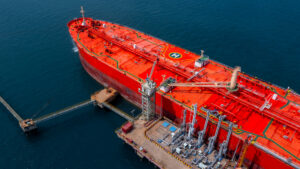
First of all, because of the existence of the shadow fleet in Russia, crude is no longer transported by its shortest possible route by pipeline from, say, the western Siberian fields to Europe. Instead, it’s loaded onto tankers and the black and the Baltic Sea. It goes around Europe. Sometimes it goes around Africa. It certainly goes around Southeast Asia in order to reach India and China. That adds a journey that’s roughly the distance of sailing all the way around the planet. That’s a surcharge. In addition, because you need more tankers to take the same amount of crude to their destination because you’ve got this long route, all of a sudden tanker rates start going up. And then, of course, the second big thing is what’s going on in the Persian Gulf, with the Iranians hitting tankers going to and from the Persian Gulf and occasionally hitting infrastructure elsewhere in the region. That means that the Saudis, the Emiratis, the Kuwaitis, the Qataris are all loading up crude on their own tankers, turning off their transponders, sailing dark into the Arabian Sea and then doing a sea-to-sea transfer to other tankers, which means even more tankers are used, and they’re doing so in a way that causes insurance rates to shoot up. So basically what we’re looking at is on a global basis, most of this long haul transport has added at least $25 a barrel to the price of crude that you don’t see in the daily metrics, but the people on the receiving end have to pay it. In India and especially China and Japan, in many cases, especially if you’re talking Persian Gulf crude that has now surpassed $40 a barrel. I mean, simply doing that little shuttle out of the Persian Gulf into the sea-to-sea transfer, typically it’s 20 to 25, and that assumes that nobody is shot at that week, and everyone’s been shot at at every week for the last 30 weeks.
Anyway. If you’re lucky enough to be in an area where this isn’t relevant, like, say, West Texas, you’re selling crude on the international market for about $100 and your transport costs are minimal. Sometimes it gets a little bit too safe. So, for example, West Canadian Select out of Alberta is selling for only $75 because it’s just piped to the mid-continent part of the United States. So you can have countries that are not anywhere near the danger that do profit, like, say, the United States, and that don’t profit from the change in circumstances like Canada.
Anyway, I could do a thousand videos on how all gets weird when you start messing with things, but the bottom line is, we’ve seen a severe break in the security environment that allows the market to function, and even without the Ukraine war getting any worse. And you know, shocker, it’s getting worse. We’re looking at these price differences widen massively. And by the time we get to the end of the year, unless something is resolved politically, we’re going to be looking at outright breaks in supply lines.