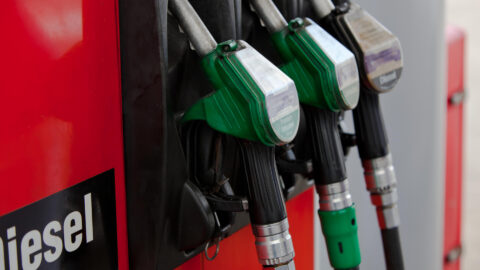

A U.S. diesel ban could have reverberating consequences for the Russian energy sector, following the sustained attacks by Ukraine. Russia is now relying on places like Kazakhstan, Belarus, and India to supplement its fuel supplies.
The Russians rely on diesel to transport damn near everything, so shortages will directly impact their military capabilities. Should the U.S. move forward with removing its diesel from the global market, the Russians won’t have long to come up with a solution.
Transcript
Hey all, Peter Zeihan here, coming to you from Toronto, specifically Queen’s Harbor. Anyhow, I wanted to put my $0.02 on a discussion that’s been happening for the last few days, and that’s a diesel export ban here in the United States. Now, we’ve already done a core video. We’ll link to it here about the economics of that and why it would work or not. But there’s another consideration, because the country that used to be the world’s largest exporter of diesel fuel, Russia, is now an importer because of all the damage the Ukrainians have been inflicting upon the Russian refining complex. It’s part of the reason why Donald Trump at the moment doesn’t like Ukraine. He goes back and forth. Anyway, they have been forced to import diesel from Kazakhstan, Belarus and India, which, while they are exporters, are not huge exporters. Right now, the shortage in Russia is probably in excess of about 1.5 million barrels a day of oil equivalent, and that number has probably gone up in the last two weeks, because the Ukrainians really have been doubling down on the attacks. Diesel is a big deal in the United States because we transport everything by truck, but the Russians aren’t too far behind. Primary transport in Russia is really two ways rail or truck. And the further away you get from Moscow and Saint Petersburg, the more likely you are to move from an electric train to a diesel train, and the more like you are to move to truck, because the road network is basically local, clustered around population centers. In addition, most jets, whether they’re civilian or military, use a similar cut from the refining stack. So while we might not have an official shortage of jet fuel, something to consider in the Russian context. But more importantly, most of the military hardware that the Russians are using in the Ukraine war, especially tanks and the supply trucks are going to be using diesel as well.
Remember that since March, we have a new type of drone category that the Ukrainians are using memory drones, where basically the drone gets over an area, looks around it, looks into a decision tree that you’ve loaded into it, maybe some silhouettes, maybe a map and picks its own targets, which means that anything within about two, maybe even 300km of the front is getting hit by these drones all the time. And as you take out the fuel trucks, you basically snarl every aspect of the Russian attack. So anything that the Russians have been doing now has been done with low amounts of fuel, and with the United States possibly about to remove the last remaining large supply and the global standards, that leaves the Russians completely high and dry.
I’m not suggesting that this is the point where the war turns. There’s just too many moving parts. But if we actually go a six month period or more where the Russians don’t have enough fuel to keep their system operational from a military point of view, then we really have entered a new phase in this conflict.