
It’s one thing for high-tech, expensive strike systems to break through defenses, but when cheap and simple drones can inflict widespread damage…that’s a whole other can of worms.
Having the ability to hit hard-to-defend civilian infrastructure with these low-tech drones means that countries like Saudi Arabia and Russia have to rethink everything. They’re not just changing how their military operates during wartime, but fundamentally shifting how their economy functions from the ground up.
Transcript
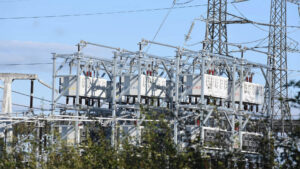
Hey all, Peter Zeihan here, coming to you from Colorado. And today we’re going to talk about a new sort of targeting system that has been used in multiple theaters or new targeting criteria would probably be a better way to phrase that. Over the weekend in the late part of last week, we had the Houthis of Yemen starting to attack Saudi Arabia’s civilian airline system, specifically the Riyadh International Airport, where at a minimum, 12 people were killed, probably closer to 30 and several hundred people were injured. Looks like a plane was hit. One of the terminals with passengers was hit. And then in Russia, the Ukrainians have started targeting data centers. Data centers are very easy to disrupt. They’re very large targets. They’re hard to miss, and they require absolutely massive amounts of climate control or the chips melt down. So you put a hole in the roof, that kind of ruins the entire experience for everyone. In addition, the Russians cannot make any, any, any of the semiconductors that go into even a circa 1999 data center. So this is 100% imported hardware that they can’t replace without spending a great deal of money.
According to the Houthis, anything that’s in Saudi Arabia is a viable target because they’re in a general war with anyone who’s on the other side of the Palestinians or the Iranians. And they, over the last decade, have really been not particularly picky about what they attack in the first place. Ukraine is a lot more discerning from their point of view. Data centers are part of the infrastructure that allows Russia to be a modern state, and the data centers handle military logistics and weapon designs, which are true. So they see it as a viable military target in its own right, in addition to the fact that it’s an important civilian piece of infrastructure.
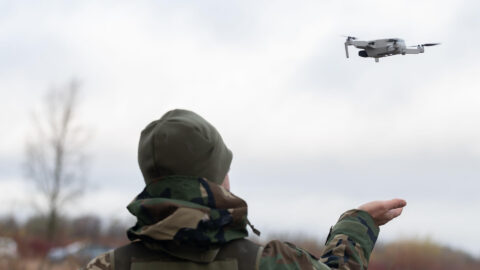
The bottom line for both of these is that normally when you’ve got drones going against military targets, there’s a degree of electronic warfare in play that scrambles the signals. So if you’ve got a long range drone coming in, you can scramble the signal. Then the pilot loses control of the drone and either Peter pans or crashes or hovers and does basically no damage. Or you can kinetically intercept it with, say, bullets or missiles or whatever it happens to be. That is not in play with these two target sets. Until now, the Saudis and the Russians have not put up electronic warfare around these sort of assets. For one, if you put electronic warfare around your entire economy, you won’t have an economy anymore. It’s simply too big to protect. And specifically for the airport, if you have E-W that’s meaningful, you’re going to have a hard time landing planes. The bottom line is here is that these weren’t fancy drones. Over the last eight months, I’ve done quite a few videos talking about how the advances in drone warfare allowed them to bypass E-W. That didn’t apply here. These are relatively unguarded, mostly civilian targets, which means that what the Houthis and the Ukrainians have done is eminently replicable across the entirety of Saudi Arabia and the vast majority of Russia. Both of their systems now have more than enough range. So the Iranians are providing the Houthis with the weapons to do this. They can hit anywhere in Saudi Arabia. The Ukrainians are, for the most part, producing their own drones. They have already demonstrated that most of them have a range of at least 300km, some upwards of 1600km. So everything that’s basically within 100km of Moscow and significantly more is all within range, which means it is time for us to start noodling, fast hopefully, about what a post drone economy can even be. Because if everything within 600 miles of an enemy is civilian infrastructure that you either have to protect or write off, then the entire industrial age needs to find a new way to operate. We are not ready for this. No one is ready for this.
Perhaps the biggest problem that I see here is that the drones that were used were not sophisticated at all. They don’t have that advanced technology that’s being developed this year in it. These are just plain Jane weapons platforms that are very, very cheap. Nothing, nothing in the input stream for them is under any degree of sanctions. And if you wanted to sanction it, you’d have to sanction basically every single phone maker, computer maker. In most electronics makers, you’re talking about chips that are not just legacy, but all the hardware in them could have been assembled with parts from RadioShack 15 years ago, was RadioShack still around 15 years ago. You get the point. That’s before you consider the more advanced stuff that is coming up, like the memory drones out of Ukraine that can even get through jamming now.
So we’re now in a situation where all of the crude out of Saudi Arabia is being threatened not just by advanced drones, but by basic ones. And the entire supporting economic structure has now, basically the genie’s out of the bottle, the seals been cracked. In the case of Russia, it’s not just about the shadow fleet in the market, it’s about the wheat markets, about the sunflower market. It’s about the iron ore market. It’s about the aluminum market. It’s about the timber market. All of these are now easily targeted systems with where we are with drone manufacturing on just a regional basis.
It doesn’t take a huge amount of imagination to come up with a military conflict in somebody else’s backyard, where drones become part of the problem, and all of a sudden the entire industrial infrastructure is in play. I’m looking at you, Northeast Asia. Anyway, that’s it from now. See you guys next time.