
While the fallout from the Ogallala Aquifer running dry will be rough, it’s nothing in comparison to what will happen in the Punjab region of northern India.
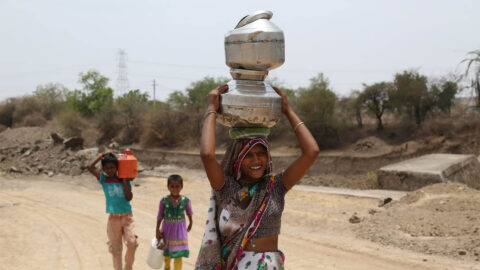
This region has relied on this aquifer for roughly 70 years. Between extensive drilling and mass amounts of individual extraction points, they’d be lucky to get another 15 years out of it.
When that dries up, expect to see a water-driven food shortage for hundreds of millions of people throughout India. However, the consequences facing the aquifer in part 3 are even worse…
Transcript
Peter Zeihan here, still in Slide Canyon, doing the second part of the video on fossil water. Give you an idea of why I’m walking off trail. This is what they call the slide. The mountain just gave way and slid forward and came all the way down to the bottom and had enough momentum that it worked partway back up the other side. We’re gonna go around this not over it, because we’re not stupid.
Okay. Part two, we were talking in part one about the Ogallala watershed and how that area is about to become a no-agricultural zone. There are two other parts of the world. The first one is in the Punjab in northern India. This is an area that has been doing industrial water extraction for the better part of 70 years. But when I say industrial water extraction, I’m not just talking wells here. I’m talking localities who have used things like aid money to drill their own wells. And things were going very, very aggressively. And we were looking at depletion within 30 to 40 years. That was before solar power, because now anyone can buy like a two kilowatt solar system and have a small pump for their own personal use. And so we now have added literally millions of new taps into the aquifer. And we’re now looking at the entire thing being drained in probably less than 15 years, maybe as little as ten.
This was already one of the most depleted aquifers on the planet, far more so than the Ogallala. Whereas the Ogallala supports tens of millions of people, the one in Punjab supports hundreds of millions of people. So we are looking at a water driven calorie deficit in India within a decade or two, that is just simply difficult to wrap your mind around. And it is nothing compared to the third one.