

France isn’t the only one with a protest problem; India is joining in on the fun, too. With fertilizer shortages, voting reforms, and the educated youth frustrated with limited opportunities, Modi and the government have their hands full.
Typically, India could absorb the shock of any one of these challenges, but with all three happening at once, we could be looking at a big shake-up for the Indians.
Transcript
Hey everybody. Peter Zeihan here, coming to you from Colorado. Well, it’s a little windy. We’re going to go down. We’re going to talk today about India. Specifically, we’ve been seeing mounting protests throughout the country that in times have involved millions of people. It’s a big deal even for India. Now India has a very robust ability to absorb huge protest, prolonged protests. But we might be hitting a breaking point here.
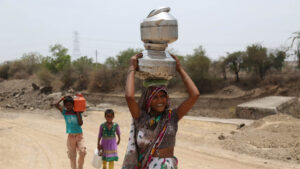
We’ve got three things going on. First, let’s start with the big picture long term. We’ve got a war in the Persian Gulf. And even though from time to time, crude is getting out of the region. Finished products aren’t. Because the stability that is required to operate the facilities in the Persian Gulf to process natural gas and to make fertilizer. They just can’t come online unless the security situation is completely addressed. And that has not happened. We’re not even starting to turn those things on yet. Well, India isn’t simply a major consumer of Middle Eastern crude. It absolutely requires the nitrogen and the urea and the other inputs that are necessary to make fertilizer. And it is easily the single largest consumer of fertilizer inputs and finished fertilizer from the Persian Gulf. Remember, we’re talking here about a country of about 1.5 billion people. So they need every little bit of productivity they can to feed their population. And that’s before you consider the inefficiency of the Indian transport system. A lot of food rots before it gets to where it needs to go. So they need to grow even more. Second, we kind of have a spy versus spy thing, if you remember Mad Magazine. The way voting works in India is you’ve got your normal middle class or upper class or even lower class voters that go to the polls and do their thing. But there is a class of people in India that people might have at one point called untouchable. Primarily urban. Primarily desperately poor, uneducated, illiterate. But they can still vote. And there are basically bankers or vote brokers who go out and gather these people together and give them a little bit of money and tell them who to vote for. Well, there is now a voting reform going on at the national level to remove about 15% of the registered voters from the voting rolls. And I guarantee you, not all of those people are dead. Basically, we’ve got two forms of corruption clashing: the vote brokers on one side and the government led by the BJP and Prime Minister Modi on the other side. And the argument from the BJP seems to be something like, hey, when you were corrupt, for us it was okay. But now if you were to be in corrupt for other people it’s a problem. So we’re going to be corrupt and change the voting system. Needless to say, when people who are corrupt start to argue with people who are corrupt, anyone who gets caught in the crossfire is collateral damage. And so these protests have gotten a lot bigger. So we’ve got rural protests over fertilizer issues and urban protests with the desperately urban poor.
On top of that, something that you may have heard of called the cockroach protests. Loved names like that. Anyway, here we’ve got urban educated people who basically want things from the government as regards services and educational opportunities and job opportunities. And so they’re protesting. And in the last few months, they’ve managed to get a number of concessions out of the government. And the government was under the opinion that if we give them these things, it will go away. Well, it just emboldened them. So we’ve got young-educated people, young-desperately poor people, and farmers all causing havoc at the same time. And under normal circumstances, India would probably be able to deal with any one of these without too much of a problem. Two’s a bit of a challenge. Three all of a sudden we’re talking about a regime shaking event.
So how’s it going to shake it out? This is India. India is politically very loud. Louder than I would say the entire Western Hemisphere put together. So I can’t offer an opinion for you. I can just say that the normal things that produce stability in India at the moment are offline, and have actually inverted to cause instability. So you should expect this to get significantly worse before it gets better. About the only thing I can tell you that might calm things down is we don’t have a major election this week.