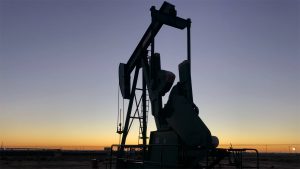


As Persian Gulf and Russian exports collapse, global prices will rise, which should benefit the U.S. and Canada. However, if exports are halted to keep gasoline prices down, then North America would become oversupplied. This would effectively cap oil prices near production costs, despite the rest of the globe facing shortages and rising prices.
This means the producers wouldn’t see much upside, with refiners becoming the only real winners (even though they still have to retool to use that domestic light crude).
Transcript
Hey all, Peter Zeihan here, coming to you from Colorado. And today we’re doing another one of our Open-Ended series on winners and losers in the Iran war. And today we’re talking about energy markets, specifically in North America, where the two big players are the American shale patch and Canadian producers primarily, although not exclusively, in Alberta. All right, first things first. Let’s get an understanding from where we were the day before the war.
U.S. shale output is at record levels, and by itself is the single largest producer of crude in the world. But most of that crude is light and sweet. The issue is that in shale formations, there’s not a big pool of crude for you to stick a straw into. It’s tiny, microscopic little packs, and so you drill into it, inject liquid which cracks the rock. You inject sand, which then goes into the cracks. You pull the water out and the sand keeps the cracks propped open. So the facility then generates its own pressure as this stuff drains up. And because of that, the oil never migrated through a rock formation. So it’s very pure. It’s, very light, very sweet, low viscosity.
Canada’s oil sands are very different. It’s basically Bitterman, or oil sand where you’ve got a relatively porous rock and the petroleum is migrated through a lot to kind of almost make it a sludgy gel. So it’s very thick and very heavy, and some of the crazy stuff is actually solid at room temperature. So they have to often inject steam in order to make it liquid so they can pump it up.
Sometimes they literally electrify it, sometimes they strip mine it. Anyway, it’s a lot more energy intensive than what happens with U.S. shale, but in both cases, the cost per barrel is pretty high. It’s rare that it’s, under 30. Sometimes it’s over 60. So in both shale patches and the, Albertan oil sands, if prices are too low for too long, a lot of the work just stops.
Anyway, on the surface, with having the Persian Gulf go away right now, we’re at 10 to 12 million barrels a day off line. even if the war ends tomorrow, that will remain that way for at least three months, because these fields can’t just be flipped back on. Some of them will take at least two years, probably more.
And that assumes no additional damage, which, considering the path we’re on right now, is a laughable, scenario. We’re probably looking at the bulk of the 22 million barrels per day that comes out of here never coming back, or at least not within a decade. In that scenario, oil prices have nowhere to go but up and starting strongly, strongly, strongly.
So. So it would appear that US shale and the Canadian shale patch are big winners here mid term. Because, you know, if the price of oil doubles or more and you production costs don’t change and you have access to the world’s largest market and you’re nowhere near the the shooting, it seems like all positives, right? Wrong. Because when oil prices go up, there’s another piece in play here.
First the Ukrainians are taking out basically the western half of the Russian oil complex. They’ve already destroyed the ability of the Russians to export through the Baltic. They’re going to be working on the block very soon. That’s at least 3 million barrels a day of Russian crude, maybe as much as five. That simply isn’t going to come back either.
So we’re looking at Persian Gulf crude and Russian crude disappearing from the market at the same time, which will send prices even higher, which again, is great for Canada shale. Right? Wrong. Because I don’t know if you guys noticed this, but the American president, Donald Trump, is pretty populist. And if we start getting $10 gasoline in places that you know, aren’t California, there’s going to be a bit of a rebellion.
And this is something that Trump doesn’t have to stretch the law to deal with. Back in 2015, when shale oil was new, there was a big debate in Congress over solar and wind versus oil exports, what was necessary to push the American energy complex forward. And the compromise that was reached was that we would allow oil exports that used to be illegal, and we would subsidize the development of solar and wind, and to make sure that we had a stopgap, the president was given the authority without having to go back to Congress, without having to even have a hearing to end U.S. oil exports if market conditions argued for problems.
However, he defines that, which means that the 5 million roughly barrels a day of crude that the United States exports right now could go to zero with the stroke of a pen. And if we enter in a situation where the American internal oil market gets really expensive, to the point that it becomes a political problem for Trump and an economic problem for the country, you bet your ass he’s going to do that.
So now we’re looking at a scenario where Persian Gulf crude and Russian crude and American crude all go offline at the same time, sending prices sky high. So this sounds like it would be great for the Canadians, right? Wrong. Because most of the crude that Alberta produces is shipped south to the United States, and it can really only be refined in refineries that the United States operates.
They do have a one pipeline that isn’t doing very well, by the way, called Trans Mountain, that goes out west to British Columbia. That one pipeline will obviously be filled up to its capacity in this scenario, and anyone can get the crude out that way. We’ll be able to sell to the global market at a high price. But with that one exception, most of this is actually probably going to be seen energy prices in the United States and Canada going down.
Because in a scenario where you can’t export, we’re in an environment of super saturation. And as long as you can produce crude in the United States and Canada for $60 a barrel, that’s pretty much as high as prices can go when you’re in such a huge surplus situation. So we get a situation in North America where prices are kind of capped at 60 to 70.
We get a price situation in the rest of the world where 200 is a good day, and that’s where we are. That doesn’t mean that there are winners in the North American energy complex. It’s just not in production. It’s in processing. You see, the restriction on U.S. exports doesn’t apply to crude, refined products just to raw crude itself.
So if you operate a refinery and you have export options, you can export your naphtha, your crude or your gasoline, your diesel, whatever it happens to be to the wider market at inflated prices was just one little glitch. U.S. refiners for the last 30 years have steadily retooled their entire complex to run on heavy, sour, imported crude, for example, from Canada.
But with the United States locking itself off, most non-Canadian sources of heavy crude are simply not going to be available anymore, and they’re going to be forced to deal with the light sweet that comes out of American fields. Now, this can be done. The modifications are easy. They’re actually going to be dumbing down the refineries to run on higher quality crude.
But in the process of doing that, they’re writing off a lot of capital investment. At the same time, they have to invest in a different kind of fractionated system. It’s not that that’s particularly expensive. It’s not. But that takes a long time. But it is definitely going to cut into the rate in which they can benefit from these situations.
And in the meantime, they’re probably going to be having runs that are going at significantly lower efficiencies than they would prefer. In the long run. It’ll be great. In the long run, they’ll be making more money, but they have to get to the long run first. So for the first year or two, there’s going to be a lot of stress on their hardware before they can change over some of the infrastructure.
So again, just as we’ve discussed with almost every other country, the conventional wisdom that a lot of people saw in the first couple of weeks of the conflict really doesn’t apply. As soon as something happens, there’s a reaction and oftentimes it’s the second, third, and even fourth order effects that are the ones that really stick. That’s definitely how it is with this topic.