
I normally do not attempt to link climate change to local events, but current storms in the central Pacific demand we take a fresh look.
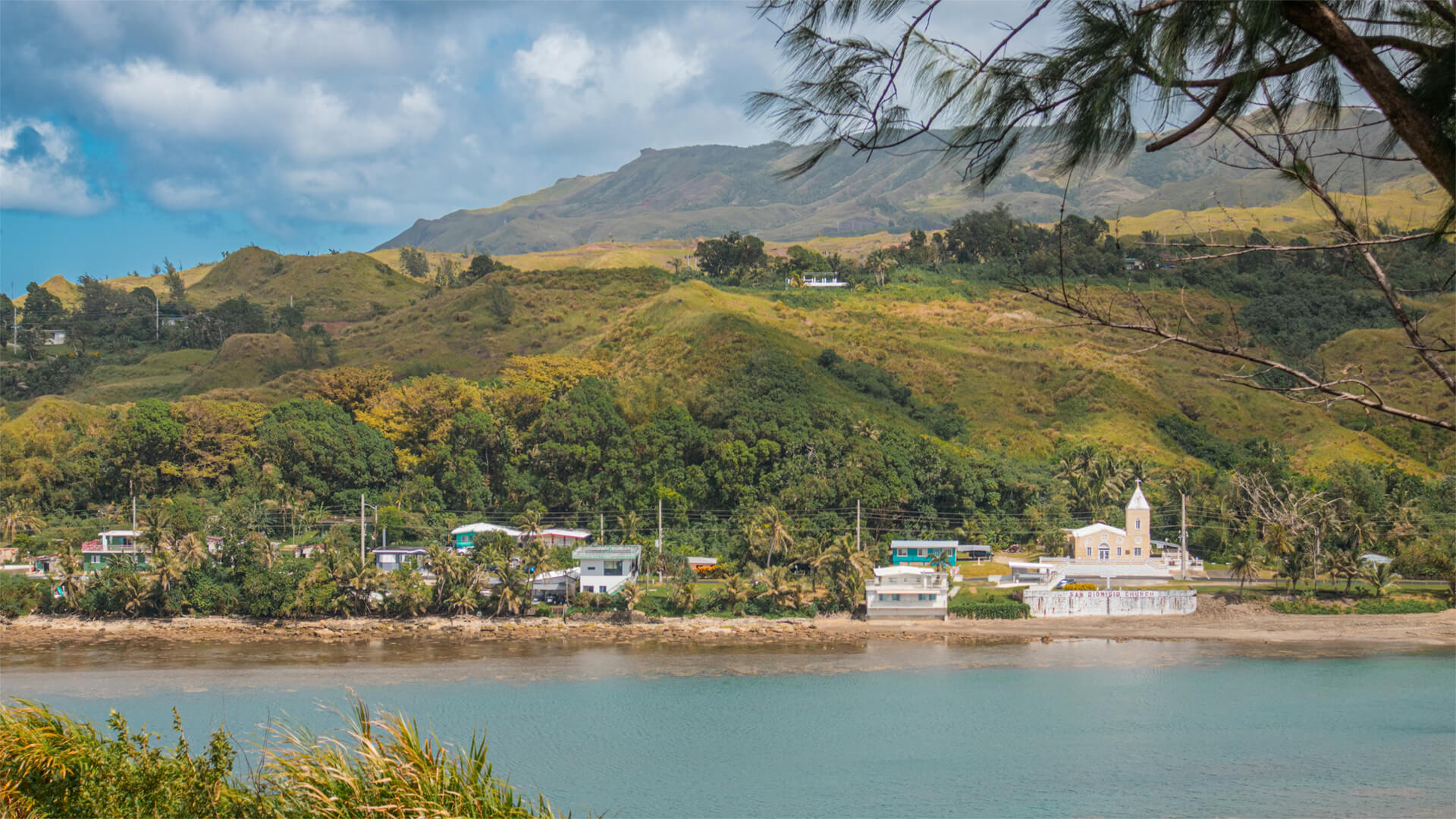
Guam is a critical military base for projecting U.S. power across Asia. Guam’s strategic power comes from its location, but that leaves it subject to extreme weather. And climate change is causing the frequency and intensity of major storms to increase. This could eventually lead to Guam being periodically unusable or even permanently untenable.
Climate change isn’t just an environmental issue; it is a strategic consideration that everyone needs to have on their radar…including the U.S. military.
Transcript
Hey, everybody. Peter Zeihan here. Coming to you from Washington state near Walla Walla. Today we’re going to talk about something that’s a little weird. Military preparedness and climate change. We all know that things are shifting. And the question is, of course, how that affects things at the zip code level. Saying that the planet is warming, saying that storms are getting stronger, saying that frost free days are getting longer.
We can talk about these things in general terms, but it’s really difficult to apply that to what happens in your own backyard, because weather and climate are not the same thing. Weather is what’s happened to you right now or tomorrow. Climate are broad bands, so it’s very difficult except as to speak in the broadest possible terms. But we’ve got an event going on in the Central Pacific, in Guam and the Mariners that, allow these two to kind of interact in a way that is unfortunately very specific.
The issue is we have a super typhoon that’s a class 4 to 5 hurricane that they just called typhoons in the Pacific. That is striking, the Mariana Islands, which includes the U.S. military facilities in Saipan and Guam, specifically, now, Guam is the premier American leaping off point for pretty much all of Asia. The advantage of having Guam and the American stack is that it’s American territory, so we don’t have to worry about negotiating with anyone.
And it’s a couple thousand miles off from the mainland, so there’s really no good weapon systems that can reliably project power to it. The Chinese might, for example, be able to hit it with a missile, but that’s not the same as being able to do an easy amphibious landing. In fact, it’s questionable whether the Chinese ships that could do it landing can even reach that far in the first place.
So if you can take care of the missile defense issue, it’s perfect to project power everywhere from northern Japan to the Strait of Malacca. Well, it’s getting hit by class 4/5, hurricane slash typhoon right now.
And that means they’ve reduced themselves to what they call emergency services, which is U.S. Navy speak for. Oh my God, please don’t ask us to do anything right now because we can’t even go outside.
Under normal circumstances. Guam gets hit by a typhoon. Not a super typhoon, just a typhoon. About every 7 to 9 years. And this is the second super typhoon that has hit it in seven years. And it was still recovering from the damage of the last one, which was in 2020 or 2019. Can’t really remember. Anyway, the flooding is already extreme, and it’s only going to get worse in the next 24 hours. Although by the time I’ve seen this video, we’ll know what it looks like anyway. It’s pretty nasty. Also, this is shaping up to be a super El Nino year on top of that. And while people like me who live in Colorado, it’s kind of a mixed bag. If you are in the Central Pacific, your chances of getting hit by a typhoon are roughly triple.
So here we have a tiny little footprint of island in the South Pacific that is critical for American power projection throughout the entire Asian theater. It’s obviously sea level. So you’ve got that problem, but the weather is basically pummeling it over and over and over again. And with the direction things are evolving, that will probably happen more and more often.
Now, going from flooding and damage to the inability to function there, those are two very different things. But if you look at a map of the region, you will notice that there is nothing else around. As a rule, the islands in this part of the world are low and coral base, so it doesn’t take much flooding to do immense damage.
There is no alternative here. So it’s not just an issue of rebuilding after it may, in a few years, be about having to abandon the Guam facility and finding a different way to project power. At a minimum, that would require a different sort of hardware, or simply writing off entire military strategies for dealing with things like, say, Taiwan.
So the danger is real. The danger is here. The damage is real, the damage is here. But there is no good substitution for what we use Guam for. It’s, there’s no really other place to plant a flag and project power from. And this is just going to be the nature of this part of the world for at least the rest of the century, or until we invent a new sort of naval warfare.