
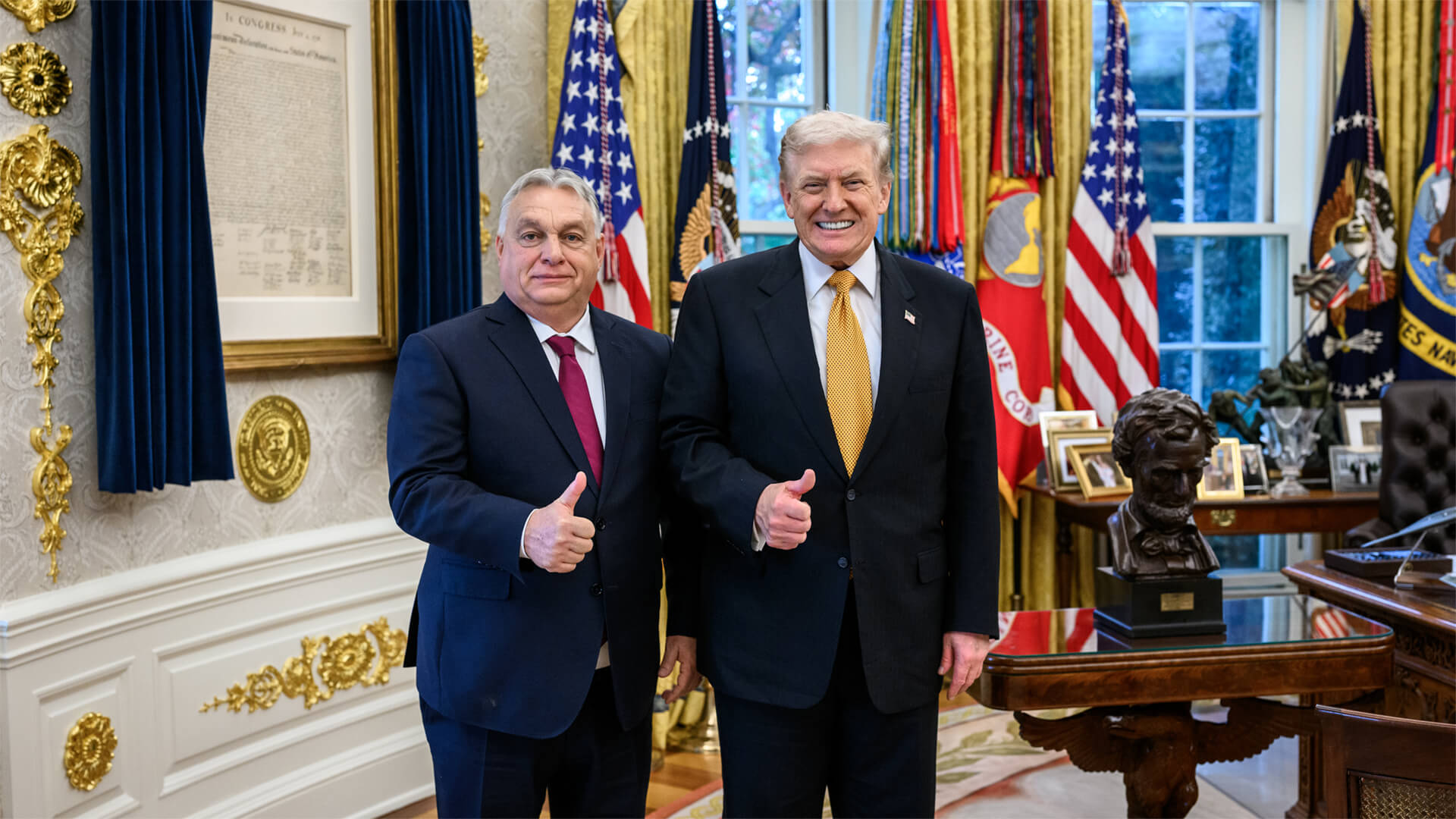

A new era is beginning in Hungary. A blowout in the latest election has removed Viktor Orbán from power and ushered in a new government led by Péter Magyar. The Hungarians aren’t in the clear quite yet, after all, Orbán was in power for 16 years. So, it will take a bit to remove his cronies from…everywhere.
This election will likely lead to Hungary realigning with Europe and reducing Russian and Chinese influence. Sure, plenty of hurdles remain, but this is a step in the right direction for returning to broader EU unity.
Transcript
Hey, all. Peter Zeihan here. Coming to you from Colorado. It is the 13th of April, and we’ve just had elections in Hungary that have generated an overwhelming result, overthrowing the government of Viktor Orban and ushering in a new era. Let’s talk about how we got to where we are and then talk about what it means. So, Orban is what he calls himself and a liberal Democrat.
The idea that Hungary should have votes, but they should really only be for him. And in his 16 years of power, he steadily modified the system to ensure that he could rule as long as possible. He also struck an unofficial alliance with the Chinese government and the Russian government, working from the theory that Hungary doesn’t have any choice but to be a NATO and the European Union, and since it doesn’t have a choice, it might as well benefit from those memberships. But it needs to establish relations with hostile powers beyond the EU and NATO in order to counterbalance them. So, yes, Hungary’s in NATO. Yes, it’s arguably the most integrated European state into manufacturing across the union. But, he doesn’t like elections.
He doesn’t like independent courts. He likes the idea of sharing a state intelligence with the Russian government so it can work on anti European projects. And he helps transform the embassies for Moscow and Beijing in Budapest into giant Intel hubs, complete with espionage teams and signals monitoring. Anyway, so as a rule, the European Union doesn’t much care for Orban and his colleagues.
Had to see him gone. But let’s talk about how he stayed in power for so long so you can get an idea of what’s next. The Hungarian electoral system is nearly unique in how it runs. There’s aspects of it that reflect what we’ve seen elsewhere, but the way they were put together is really different. So step one, you vote for a party.
So if the party gets 20% of the votes, they get 20% of a certain number of seats, just like the Netherlands, just like, say, France. Step two, you also vote for a candidate who’s representing your local district, kind of like the United States.
Step three is if in the local elections, in the district elections, you lose, so you get 20% of the vote and the winner gets 40%. Those votes pour back into the proportional representation system. That first vote for parties. And in doing it this way, it really guarantees that the largest party gets a supermajority in the parliament.
So in the last elections, not the ones that were, yesterday, the ones that were a few years ago.
Fidesz, which is Orban’s party got, like 50, 47% of the vote. We got almost 70% of the seats. He did this. Orban did this to guarantee that once he controlled the public relations side of things, once the state to control the media, which meant that he controlled the media when the, courts were consolidated with cronies that he had appointed, he would be able to basically make sure that even if you only got 40% of the vote, he’d still far and away dominate.
Well, that worked until it didn’t. The problem is, is under Orban, not only is Hungary a bit of a pariah in European circles, actively working against how most Europeans define their security because of the Ukraine war. He also, because he could put cronies everywhere, turn Hungary into by far the most corrupt state in the European Union.
And if you know anything about the Balkans, like Romania and Bulgaria, you know that that’s a strong statement. So basically, people had had enough and they showed up in droves. We almost had 80% turnout. And Fidesz did not turn out to be the largest party anymore. Now it’s this new group, and basically cleaned up.
They won both of those rounds, and then the leftover votes combined to give them even more. So they ended up with enough seats in the new parliament to over turn really anything that has happened in the last 16 years, including the ability to, on a whim, amend the Constitution. So, step one, this is a big defeat for the Chinese and the Russians.
Those embassies are going to be slimmed down very quickly. You don’t even need an Act of Parliament for that. You just need an decision from the Prime Minister. Step two or reintegration of Hungary into European norms, including things like, say, the, Ukraine war is going to be at the top of the list.
The new prime minister guy by the name of, Peter Magyar, has made it very clear that this election was about rejoining the European family.
That will be very easy. And then step three, and this will take a lot more time, is basically getting all of Orban’s cronies out of the system now with a two thirds majority won’t be hard, but there’s been 16 years of consolidation under an illiberal system, and it affects the Supreme Court and the Constitutional Court and all of the regulatory bodies.
It’s just it’s just going to take some time. If they get this all done in a year, I’d be really surprised. And keep in mind that while this new guy is named Peter. So, you know, I have high hopes. He’s never had a job like this before. He basically came out of the European Parliament. And so we’ll see. He’s a bit of an unknown, but he’s got plenty of tools to work with.
The next thing to consider is that we’re going to have a change in European politics here, because all of a sudden, the single biggest problem the Europeans have had in achieving internal consolidation is gone. With Brexit. The Brits were gone and the Brits were always moving slow in a lot of things.
Now, with a pro-Russian voice gone, you can probably have a lot more consolidation on foreign policy and security policy. And at a time when the Europeans are doubling, tripling and more their defense budgets, that’s really important, especially with the Russians, developing more and more drone technologies every day. Now, that doesn’t mean it’s going to be smooth sailing.
One of the things that people forget about Europe is it’s not one place. It’s not even five places. And there are elements of old Europe that long predate World War Two that still hold sway in the minds of many people. If you go back to the world before World War One, we had a number of major powers in Europe.
We had Russia, we had Turkey, we had France, we had Germany, we had United Kingdom, and we had something called the Austro-Hungarian Empire. Italy is in there, too. Now, the Austro-Hungarian Empire did not survive World War One and has never been resurrected. But those territories are still there, and the people who identified as part of that region still think of themselves as something that’s not European and not French and not Turkish, not the rest, but their own thing. And the core of the Austro-Hungarian Empire was this little three state area involving Austria, Hungary and Slovakia. And if you look at their biggest cities, Vienna brought to Slava and Budapest, they’re in a really tight cluster. So this little zone has always had a bit of a chip on its shoulder and has always chosen to do things kind of their own way.
So Austria is kind of a South Carolina of Europe, from an ethnic and racist point of view. If you want to kind of look at it that way, the Hungarians were always the junior partner. They thought they should get more. And then the Slovaks kind of got brought along for the ride.
Now, at the moment, both the Austrians and the Hungarians have relatively new governments that are seeing things from a pan-European point of view. The problem at this moment now is Slovakia. A year ago, two years ago, three years, relatively recently, they, reelected a guy by the name of Robert Fico, who has kind of a similar outlook on all things European and NATO to Viktor Orban, complete with the de facto under the table alliance with Vladimir Putin of Russia.
He is now a loan for a country that really can’t veto too much. And he doesn’t have the backing of a decade plus of consolidation in his system, but he is still a voice from a different perspective who doesn’t necessarily see things the European way. So this is a big step for a lot of reasons. But don’t expect it to start a fundamentally new chapter of what Europe is, because all of the institutions of Europe, which were designed around consensus, still require consensus.
We just now have one more voice on the majority side. That’s not always enough.