Iceland and Norway Ponder EU Membership

Flag of the European Union

As Trump has been screaming into the void about acquiring Greenland, the wheels over in Iceland and Norway are starting to turn.

Both countries have much of what Donald Trump says he wants out of Greenland: Arctic access, deepwater ports, and mineral resources. And as the U.S. becomes more transactional and predatory, Norway and Greenland are now considering EU membership to add a bit more security.

EU membership would be costly and heavily regulated, but when the strategic calculus shifts as much as it has under Trump 2…moves like this need to be considered. This goes to show how much trust in U.S. leadership is fading (even amongst America’s historically closest allies).

Transcript

Hey everybody, coming to you from a bright sunrise here in Colorado. Peter Zeihan here. Today we’re going to talk about the Greenland fallout in Europe. Not so much about relations with the Europeans and about how that’s really changed the nature of the relationship. I mean, when your primary security guarantor strikes threaten to invade one of you. That’s a big deal. But instead, the countries that now think that they might be in trouble and are starting to change their strategic policy. 

And that comes down to Iceland and Norway. Norway has about 5 million people. Iceland like one tenth of that, Nordic countries on the North Atlantic that are a little chilly, that have good relations with the Danes and until now, very good relations with the United States as well. But when they look at the things that Donald Trump was demanding, he’s like, we need have Greenland in order to prevent Russia and Chinese from entering the Arctic. 

We need to have Greenland in order to have a port up in the Arctic. We need to have Greenland for the critical materials. We need to have Greenland for the resources. You know, Greenland has almost none of those things, but Iceland and Norway do. And they are lightly populated, especially Iceland, which basically has under three quarters million people, three quarters of them in the area around the capital, Reykjavik. 

The rest of the country is open and there are multiple, multiple, multiple deepwater opportunities. There’s a lot of zones where they know they’ve got minerals, but they have it mined because of the climate and they have a huge access to continental shelf. We might have to do this one later. We’ll see how it goes. And huge fishing reserves. 

If the United States was going to want a North Atlantic bastion on the Arctic, it would absolutely be Iceland. Or maybe even Norway. And because Iceland has so few people, it doesn’t even have an army and has relied upon the United States for its defense. Going back 70, I got two cold. 

Finishing this one up inside. Yeah. So Iceland doesn’t really have a defense force in any meaningful sense because it doesn’t have a population, much less a population that’s capable of controlling its own territory, much less the wider seabed around it. It’s an island in the middle of kind of nowhere. And so what we’re seeing in both Norway and Iceland now is a renewed debate, especially at the parliamentary level, about joining for the first time, the European Union. 

European Union does have a defense clause, but it has no military decision making power. Just basically says that we all hang together, and if somebody threatens one of us, we’re all kind of have a meeting about it and nothing really big, but it puts you in a group with 450 million people, with an economy that’s three quarters of the size of the United States. 

And the idea is that there’s strength in numbers. And now when the rubber hits the road, that might not be worth anything. But if you were Iceland and Norway and you’re currently on the outside of the EU and you’ve been relying on NATO for your security, and by NATO, I mean the United States, and all of a sudden, the United States is saying all of the things that it wants. 

You have, it’s forcing a change in mindset. The primary reason that these two countries have not joined the European Union until this point is cost and regulation. If they joined, they be two of the richest members, and they would be paying far more into the European Union budget that they would ever get back. But if all of a sudden NATO is led by a nation that is predatory when it comes to the Europeans on issues of resources and territory and ports in the Arctic, then all of a sudden, all of the math that they have relied upon for decades has gone out the window, and they need to consider new options. 

The fact that this conversation is even happening is kind of a shock, because even in the depths of the financial crisis back in the 2000, when Iceland was imploding, they still didn’t seriously consider going to the European Union even when they thought they would get money back. So it gives you an idea of how much the mindset has changed among countries in northern Europe that until now were the firmest allies the United States has ever had. 

And all of a sudden, they’re all considering alternatives.

Belgium Seizes Shadow Fleet Vessel

Flag of Belgium

The Belgian government has seized a tanker of the shadow fleet. With the United States, India, and now the Europeans intervening, it is only a matter of time – months at most – before the entire fleet is shut down.

Transcript

Hey everybody Peter Zeihan here. Coming from Colorado, it is the 1st of March. And today we’re going to talk about Belgium. Earlier today the Belgian government grabbed a Russian shadow tanker and escorted to port and opened a criminal investigation, all in one. I’ve been watching the Shadow fleet for, well, almost four years at this point. The primary way that countries like Venezuela, Iran and Russia have been earning oil income while under sanctions. 

They put out a bunch of really old ships. They fake their papers, they give them fake insurance policies, and then they sail kind of under the radar. Of late, the United States has gone after the Shadow Fleet. That was involved with Venezuela. 

And now we have had several instances where Russian shadow tankers have been grabbed, some by the United States, one by France, which was then summarily released because the French quote, didn’t know how to prosecute, which made them look really stupid. 

But the Belgians apparently have figured it out, and they’ve already opened prosecution. Now, I don’t say positive things about Belgium often, but weather is awful. The food isn’t that great. The beer is questionable. The Dutch part of Belgium is in the north. The French part is in the south. They don’t interact. They rarely have a government. Yet here they have all their ducks in a row. 

So, you know. Kudos, Belgium. What this means is if we can have a small state, Belgium is not a power player. Going after the shadow fleet, then there’s really no excuse for the bigger countries to go after it, as well as countries that are closer to Russia, like, say, the Baltics. Sweden. So, we are seeing a cracking in the shadow fleet, left, right and center number one, the United States broke the seal when it went after, about ten shadow vessels that were taking Venezuelan crude. 

Number two, we now have the Europeans gearing up to do the same. The Brits look like they’re on the verge, for example, of jumping into this. And because of the channel, that’s pretty much everything that matters. And you get the Belgians and the Danes and the Dutch and Swedes. 

Then all of a sudden the Baltic Sea is shut down. Third, the war going on in Iran. Iran feared that this was going to happen. And so they moved a lot of the crude that they had in storage onto floating cargo ships, basically tankers that don’t have a destination yet and something like 200 million barrels. That’s a big chunk of the shadow fleet and all of a sudden they can’t leave the Persian Gulf because of the war. 

They’re just floating there. And it’s only a matter of time before the U.S. Navy decides to go and confiscate all of them. And when that happens, the Shadow Fleet will well and truly be dead. And the way that something like 4 million barrels a day has been getting to market over the last couple of years simply withers and dies. 

So kudos, Belgium. The Europeans are probably going to line up behind them within a matter of days and weeks, and the US Navy will be going after the Shadow Fleet undoubtedly, within a couple of weeks. The US Navy only really has enough ordnance on station for two weeks of the current tempo. But here we are in day two, and they’ve already obliterated the Iranian Air force and Navy. So there’s really nothing that Iran can do to protect the shadow fleet. 

They’re just basically sitting in a bathtub of the Persian Gulf. So we’re looking at the entire shadow fleet being wrapped up here in a matter of weeks to a few months, which will generate an entirely new energy market on a global basis.

Panama Boots China from the Canal

Photo of a ship in the panama canal

Panama has taken control of the port facilities previously run by a Chinese company after the courts ruled the original contracts were secured through bribes. This move reaffirms U.S.–Panama relations, as a U.S. ally is now operating the ports.

While the ports weren’t a direct military threat, they are strategically significant. So, removing China from the equation makes Chinese activity in the region that much more difficult, especially as the U.S. Navy begins to step away from its role as global protector of the sea lanes.

This move is a great example of using legal pressure to reshape outcomes and affirm U.S. soft power. While I’m not sure this administration can replicate this success elsewhere, let’s see how well the U.S. can sustain and expand power across Latin America.

Transcript

Hey all, Peter Zeihan here. Coming to you from Colorado, today is the 24th of February. And the news is that the government of Panama has just formally taken control of the series of ports that used to be run and owned by the Chinese. This is something that has been an irritant in US Panamanian relations for a few years. Basically. The Chinese subsidize their shipping system and then go into places to buy up infrastructure. 

There are a lot of people in America who feel this is a security risk. It really isn’t. These facilities didn’t have the ability to hold military assets of any meaningful size, but that doesn’t mean that they’re not strategic anyway, because the Panama Canal is the primary connection between the Pacific and the Atlantic, and unless you’re in a really big ship, that’s just how you’re going to get from A to B, and for cargo that is destined from the East Asian Rim to the U.S. East Coast, pretty much all users Panama. 

Anyway, the Trump administration threw a bit of a fit, shortly after it came into office, started legal proceedings within Panama. Last month, the Panamanian courts basically ruled that the Chinese bribed their way into getting the contract, which is absolutely true. And so therefore, it was void. Today was the day that the Panamanian government took formal control of the facilities from the Chinese. 

The Chinese a bitch and moan and bitch and moan. But at the end of the day, under legal consequences, they were shepherded out of the building and it is now under the operational control temporarily of a company called Maersk, which is based in Denmark, which is a country that, despite all of the problems between the United States and Denmark over the Greenland issue, remains an ally. 

Fun, fun, fun. 

Anyway, the question is, what’s next? China’s entire position in the Western Hemisphere is based on one very stupid assumption that the United States will actively keep the seas safe for Chinese shipping and allow the Chinese to establish whatever economic footprint they want in the Western Hemisphere. This is dum dum dum dum dum, but it has always been the basis of all Chinese decision making. 

The idea that we don’t have a global navy, we just have a lot of little ships that are close. The Americans have a global navy, so it’s up to the Americans and their global navy to allow us to penetrate into the wider world. It’s always a stretch, and this is a great example of showing how it all falls apart with nothing more than a little bit of legal action. 

The question now is, what is the United States going to do with this? It’s not that Panama isn’t important on its own, but it’s only one piece of a broader environment in the overall region. We’ve seen a military side of the strategy now with Venezuela. We’re seeing basically a functional boycott in places like Cuba. But really, if you want to talk about American power projection in the Western Hemisphere, the Panama example is far more important because it’s one thing to knock off a government you don’t care about, it’s another to get a government to do it for you to reshape its policies in your direction simply because you asked. 

Soft power is not dead, apparently. Not even in the Trump administration. But the presence of Maersk tells you that it’s always easier to do it if you’re not a dick about it. So future topics are absolutely going to be Mexico centric, because that’s where the real money is in the American economic relationship in the hemisphere. But we’re probably also going to see things in Ecuador, Peru, Argentina and Brazil, all of which have, for various reasons, butted up to the Chinese in order to get the cash. 

Whereas the United States is the strategic guarantor of everything that matters in the region. We’re not there yet. The big problem that we’re facing is that when the Trump administration came in, it gutted the National Security Agency or, excuse me, the National Security Council. It gutted the State Department. And it winnowed down a lot of things in the Defense Department as well. 

And then the Commerce Department was not simply winnowed down. It was then given the task of enforcing the most complicated tariff regime in human history. We’ve now had over 6000 tariff changes in the last year. And a lot of this is going to be based on diplomacy and economic activity. And there aren’t a lot of personnel in the United States to craft, to advise, and then ultimately to carry out the policy. 

So strong start on Panama. The question is, how deep can this go and how much can it be replicated? As for the Chinese, their options are kind of limited here. The screenplay screenplay screamed, but at the end of the day, it was a domestic court ruling. And if the Chinese pressure a Latin American country to go against its own courts because it might be pro-American or anti-Chinese, you know, that doesn’t exactly resonate in Brasilia and Buenos Aires and the rest, it doesn’t mean that the U.S. policy couldn’t use a lot of work and a bit of a facelift when it came to diplomacy. 

But hey, when you’ve got the tools, you’ve got the tools.

Strike Targeting Problems in Ukraine

Imagine of a drone firing missiles

The U.S. is pressuring Ukraine to avoid striking specific Russian energy infrastructure. As you could imagine, this all has to do with American economic interests.

Chevron and ExxonMobil have a stake in major Kazakh oil projects, which flow through Russia to be exported. Ukrainian strikes on any related infrastructure risk harming those American energy companies’ bottom line, and that simply will not do (even though Trump stopped providing military aid to Ukraine over a year ago).

Transcript

Hey all, Peter Zeihan here. Coming to you from Colorado. The news this week in Kazakhstan, of all places, is that the United States is starting to point its finger at Ukraine about the targets it’s supposed to attack in Russian territory. The issue is that over the last several months, Ukrainian drones have gotten more effective with better range and more explosive capacity and better accuracy. 

And they’re now regularly targeting Russian infrastructure, several hundred kilometers. On the other side of the international border. And several of those attacks have struck an area called Novorossiysk, which is an oil loading facility on the Russian part of the Black Sea. The issue that apparently the American government has is upstream of that pipeline on the other side of another international boundary with Kazakhstan. 

We have some investments by American super majors, and those super majors have gone to the U.S government and said, hey, hey, hey. And so the U.S government has gone to Ukraine, said no, no, no. The two projects in question are called Tengiz and Cash are gone. Now. Tengiz is the original foreign direct investment project by Western companies into the former Soviet Union. 

So old that actually predates the fall of the Soviet Union, was negotiated under Gorbachev. And then Kazakhstan got it and it became a Kazakh project. It is a consortium that involves, Chevron, which has a 50% share. ExxonMobil, which has a 25% share, and then a series of local and Russian firms, it produces about what’s called 700,000 barrels a day. 

On a good day, considerably below where it was supposed to be. But the problem with that project is the pipeline. C, the pipeline, comes out from Kazakhstan, goes around the Caspian Sea, crosses into Russia, and then uses a lot of old repurposed Soviet section. So it’s kind of jigsaw together before it gets to another SEC. And so the Russians have insisted that they be able to put their crude into the pipeline as well. 

So while you do have a signal field that does produce a large volume, it’s kind of capped at what it can do because the Russians demand access to the pipe for the rest of the capacity. The second project, kasha gone is much more difficult. It’s offshore. It’s in the Caspian Sea. You only have one American company involved. 

That’s ExxonMobil. They have about a one sixth share. It’s not doing nearly as well, but even it is getting up over a 400,000 barrels a day. So you put it together. You’re talking over a million barrels a day. This is this is real crude. And the overseas terminal can handle it. And then some. But it’s impossible for the Ukrainians to attack the Russian energy infrastructure that ends in overseas without it also being perceived by American companies that it’s impinging upon their, economic interests. 

And so the Ukrainians are basically told, go attack something else. And that is exactly how the Ukrainians have interpreted it, not don’t attack energy infrastructure like the Biden administration used to tell them, don’t attack energy infrastructure for which American interests are involved. How this is going to go is going to get really interesting because when something loads up at an overseas port, you don’t necessarily know what it’s loading up with. 

And as soon as Ukraine started going after shadow fleet tankers, more and more tankers are refusing to even go to Novorossiysk. So this is one of those six and one half dozen another. How do you define it? How are you going to enforce it? But the bottom line is, is that the United States is no longer contributor to Ukraine’s military defense. 

And in the way it used to be. It used to be that the United States was the majority of the military aid and provided very little economic aid. They left that to Europe after a year of Donald Trump. The United States is still providing no economic aid, but is now providing no military aid at all. So how talks evolve among the Ukrainians, the Americans and the Russians is going to termine how the Ukrainians decide to leverage their military technology here. 

There are a number of ways that the Ukrainians could go after pumping stations on different projects for, say, the Druze, the pipeline that used to bring in lots of crude into Germany. 

But those attacks target facilities that supply crude to Hungary and Slovakia, which are two countries in Europe that are extraordinarily pro-Russian at the moment, to the point that they’re even shutting off fuel and electricity deliveries to Ukraine because they want to make sure they can still get Russian oil flowing through Ukraine. 

So it’s we’re still dealing here with the detritus of the Soviet collapse, because it’s not just one empire anymore. 

It’s 25 different countries across Central Europe. In the former Soviet Union proper. All of them have chunks of infrastructure that were designed for a different air and a different political reality. And Ukraine is just in the unfortunate part of being in the middle of it. 

While under attack. There’s no such complications. However, further north, there’s another major pipeline system, the Baltic Pipeline network, that terminates near Saint Petersburg, which is just as big as what’s going on in over a sec. And as we’ve seen in recent months, that two is now within range of Ukrainian drones. More importantly, we have the Europeans that are in the process of negotiating how to go after the shadow fleets directly. 

So we could actually have a number of NATO countries, ten of them who border this littoral, who could all of a sudden all decide on the same day because they tend to coordinate policies, that no more. And then you’ve got to have Denmark, Britain, Norway, Sweden, Finland, Estonia, Latvia, Lithuania, Germany and Poland all at the same time. 

Same. Nope. It’s over and there is no way to redirect that crude somewhere else. And if you want to talk about something that’s going to hit Russia’s bottom line, that’s the way to do it. And now the Ukrainians are in a position where they may be forced to concentrate all of their long range attacks on one specific system. 

I would not want to be running that system.

The Iran War: Interceptors and a Costly Mistake

A Shahed Saeqeh-2 variant drone | Wikimedia Comons: https://en.wikipedia.org/wiki/Shahed_drones#/media/File:Saegheh_(4).jpg

Attacks have intensified, with Iranian drone and missile strikes heading towards the Arab Gulf states. Many of these states rely on costly U.S. interceptors, and with stockpiles dwindling, energy infrastructure could become exposed. Marco Rubio told Congress that the conflict could intensify over the next 5 weeks, so stay tuned.

Transcript

Hey everybody. Peter Zeihan here, coming to you from Colorado at home. I’m about to head to the airport just a little early anyway, overnight, day four of the war, we’ve had significantly more attacks. A lot of drones, a lot of drones, and quite a few missiles as well. The pattern that has erupted now, makes maybe me think that the Trump administration hadn’t thought this all the way through when they launched their attack a few days ago. 

The issues targeting, the Iranians can’t really go after U.S. vessels because they don’t have the guidance that’s necessary. And the Israelis are a long way away. So there’s plenty of times to detect and shoot down drones and missiles, especially drones. But for the Arab side of the Persian Gulf, the story is different. So, what we’ve got going on is instead of going after the Israelis or the Americans, the Iranians are going after the Bahrainis and the Kuwaitis and the Emiratis and the Saudis. 

And all of these countries have purchased us Patriot missile systems and even some fads. But those interceptors are expensive. And the hundreds of thousands of dollars and the showerheads that are being thrown against them are less than 50,000. So in order to reliably shoot down a projectile, you often have to shoot more than one, interceptor. 

And best guess, and it is a guess, is that the beginning of the conflict, the collective Arab side of the Gulf probably had over 2000 interceptors, but they’ve already intercepted over 1000 things coming at them. So we’re already getting to a point where the, cupboard is getting a little bare. And it seems that the Americans are not replenishing any of those stocks in order to pressure the Arabs to join the war more directly. 

But honestly, there’s not a lot they could bring to the table. Only the United Arab Emirates and Saudi Arabia even have an air force. It’s worthy of the name. And the pilots are inexperienced and few. And honestly, they would probably get in the way, as we saw yesterday when the Kuwaitis accidentally shot down a trio of American jets. 

What this means is very soon, probably within a week, the Gulf eyes are going to have to decide to just not shoot down the heads at all and focus on the ballistic missiles that can cause more damage and have more accuracy. And in doing that, you will see waves of Shaheds be able to start targeting energy assets, whether it’s loading platforms or refineries or even the fields themselves, pumping stations. 

And that’s, you know, that’s going to be more than 10 million barrels a day in the direct crosshairs, perhaps as much as 20, based on how things are going at the time. And in the meantime, Strait of Hormuz is closed, insurance companies and sold all insurance. So nobody’s coming or going. So we may be getting that energy crisis sooner than we thought. 

The easy way around this of course, is develop cheaper interceptors. And there’s only one country in the world it has that, that’s Ukraine. And we are seeing very clearly that the United States’s decision a year ago to cut off military connections, has a big price, the Brits who still have relations with Ukrainians that are good in the military sphere, have repositioned several Ukrainian assets, including Ukrainian staff, into the Gulf to help shoot down some of these projectiles, but give you an idea of how little, the United States has invested in this technology. 

Fifth fleet headquarters in Bahrain, got hit in the second day of the war on the radar dome. Got blown up, which kind of surprised me that something got through to an actual military base. And then I realized that there was no point defense at the base, something that the Ukrainians have been doing around their cities as a matter of course. 

So, the American decision to not engage the Ukrainians, where they have been defending themselves against Russian launched Iranian showerhead drones now for three years. This is where the knowledge base sits in the world to defeat this technology, as having a real price, because that technology, those tactics, that experience hasn’t filtered up to the US military and then down to US military deployments. 

And now the United States is facing the source of the Shaheds head on, and all it has is expensive interceptors that exist in a limited number, which makes it very, very strange that the Shahed facilities that are building the drones in Iran still haven’t been targeted. But more on that as we move forward with the war. 

Okay, finishing this one up from the airport lounge in Denver. The other big news is that yesterday morning, the secretary of State Rubio, testified to Congress to comply with the War Powers resolution, notifying Congress of what was going on. biggest thing that has come out of that is that, he said that the United States actually went significantly heavier attacks in the days and weeks to come, and that he expected the entire conflict to last 4 to 5 weeks. 

Now, this is not vacation Congress. This is not battle plans. So there is absolutely no reason to expect the Trump administration and the Defense Department to follow that to the letter by any stretch of the imagination, which is kind of interesting. The story that’s being told to Congress. We’ve got a number of senators and reps on both sides of the aisle who are pretty angry at the idea that this conflict has happened at all, and we’re expecting a bipartisan war. 

Powers Act resolution which aims to restrict, the American military’s ability to prosecute the operation moving forward. The chances of that passing are pretty good, but the chances of it being a veto proof majority are almost zero at this point, barring something significantly, jarring happen in the next 48 hours. All right, that’s it for today. 

Bye.

Buying Time With Drugs

Ozempic semiglutide injection

I hate to say it, but we still haven’t located the fountain of youth. Unfortunately, that means there’s no current medical breakthrough that will meaningfully reverse the global demographic problem.

It’s probably too late for all the boomers in our lives, but there is one class of drugs that could potentially improve long-term health: GLP-1s (aka Ozempic). These reduce obesity and inflammation by mimicking the hormone that slows stomach emptying and makes you feel full for longer. However, these drugs are too new and expensive to count as a solution.

Some countries are going to be worse off than others, especially those that lack a large enough young generation to replace retirees. At the end of the day, the only proven way to extend healthy, productive lives is a lifelong investment in health.

Transcript

Hey, all Peter Zeihan here. Coming to you from a slightly chilly Colorado. Today we’re taking a question from the Patreon page. And specifically, are there any medications out there in anti-aging or anti Alzheimer’s that I think are going to change the math when it comes to global aging, specifically in the American and the Chinese context? Short version is no longer version. 

There is something called monoclonal antibodies. The idea is it destroys or inhibits the growth of the, the bad cells in the brain, basically, that contribute to dementia and Alzheimer’s specifically. But they are fabulously expensive and they really are do a job of what they say they do. According to the literature, which is all glow, it only reduces cognitive decline by like 30% over an 18 month period, which is not enough, really, to move the needle in any meaningful way. 

The problem is, is starting about age 59 or 60, we all start going through a cognitive and physical decline, and it really accelerates at age 62 to 63. And then that’s one of the reasons why we retire at age 65, and why a lot of people take early retirement before that. So if you really want to solve this problem from a demographic issue, a labor force issue, a tax receipt issue, you have to extend the age of retirement well past 65, at least to 70. 

And you need a medical treatment that allows people to be productive for all of that extended period. Remember, people are already starting to slip before age 65. There’s also an issue of timing. Remember that the baby boomers, the largest generation in American history, are mostly retired already, and the youngest ones are already 60. So you’re talking about less than one quarter of the cohort. 

If the drugs were ready today, could have their working lives extended for a few years. For most of them, it’s already too late. And the next generation down Gen X, it’s my generation. There just aren’t enough of us to really move the needle, even if we all could work an extra five years. And I assure you, we do not plan to. 

As for the rest of the world, the situation is actually far worse because in the United States at least, our baby boomers had kids. We know those as the millennials. And maybe these technological leaps, these drugs that don’t yet exist, will exist by the time it’s time for the millennials to retire. That’s another 20 years from now. But for the rest of the world, there really isn’t a millennial cohort. 

So the people who are retiring right now in Japan and China and Korea and Taiwan and Germany and Italy and all the rest, you know, this is it. And so if the drugs aren’t ready today, it’s already too late. Now, there is one, one medication out there that may, may make a difference. And that’s this class of drugs that is represented broadly by Ozempic. 

The idea that you can have people lose a lot of weight real quickly. Well, you know, being overweight, having cardiovascular disease, having heart congestions, that’s not good for your health. And if these drugs do end up working in the long run, as advertised, they can reduce inflammation throughout your body and keep your body weight down. Well, there might be a conversation to be had there, but these medications are new. 

They’ve only been around 2 or 3 years for any practical data, and we just don’t know what the long term impacts, good or bad, will be. So even if they were immediately one tenth the cost that they are right now because they’re very expensive. And even if we could apply them at mass, and even if they were 100% positive with no side effects, very doubtful for all of those things, it’s still only a maybe because we just don’t know yet. 

But for the Americans and the Chinese, where their equivalent of the baby boomers already one foot into retirement, no, it’s too late. We don’t even have a drug that’s on the horizon at the moment. That looks like it can solve the problems that we need to. About the only approach you can take is what they’ve been doing in Korea into a lesser degree in, say, Scandinavia, where they focus on human health from birth. 

The reason why the Koreans and the Swedes and the rest in that class live so long is they get a lot of exercise, they have a very good diet, and they have a high standard of emotional living writ large. It’s not very sexy, requires a fair amount of elbow grease and you have to start young. But that is still the only and best way to extend life that we’ve figured out so far.

The U.S. Inches Towards Iran Conflict

Flags of the United States and Iran blending. Licensed by Envato Elements

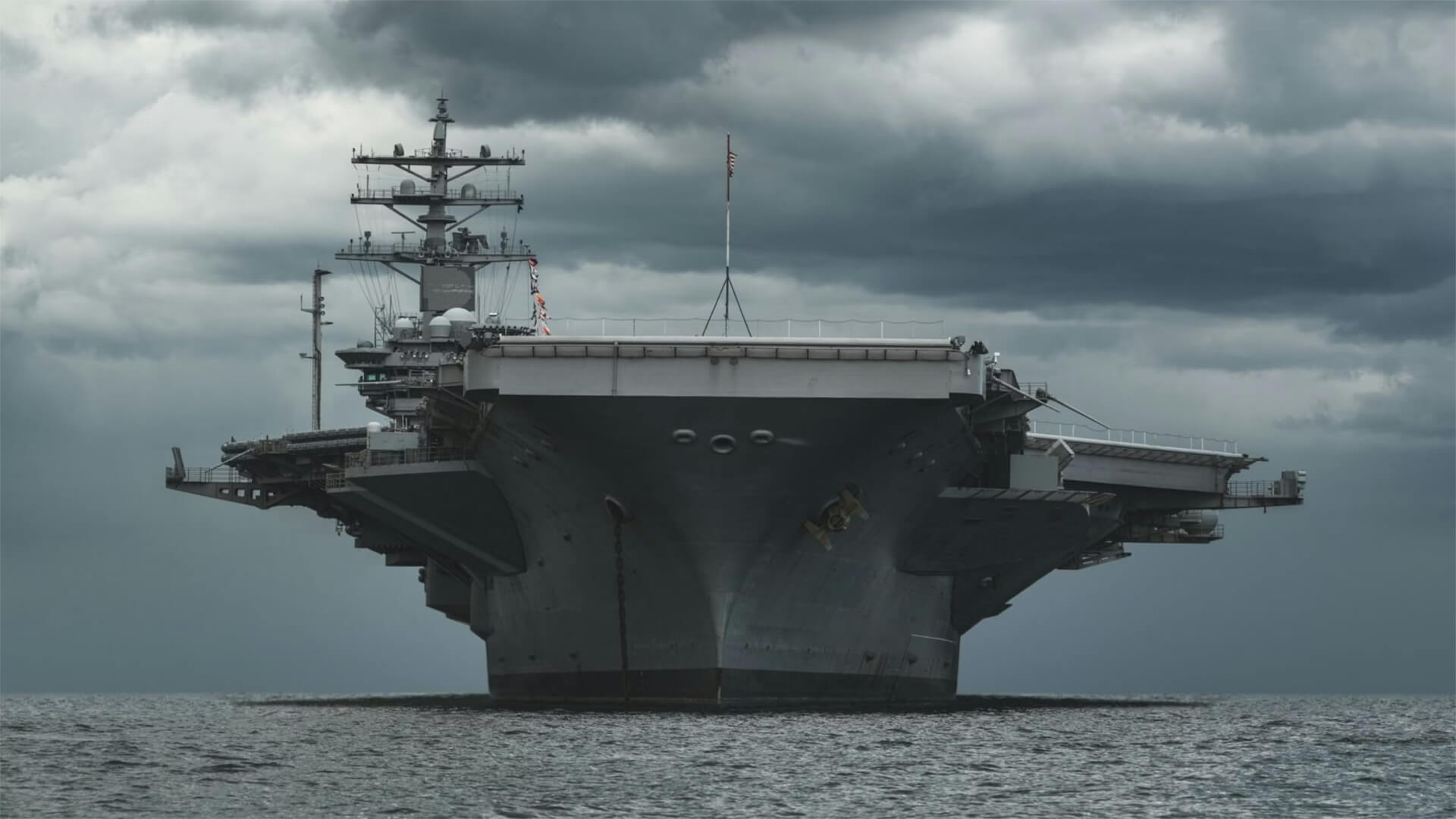
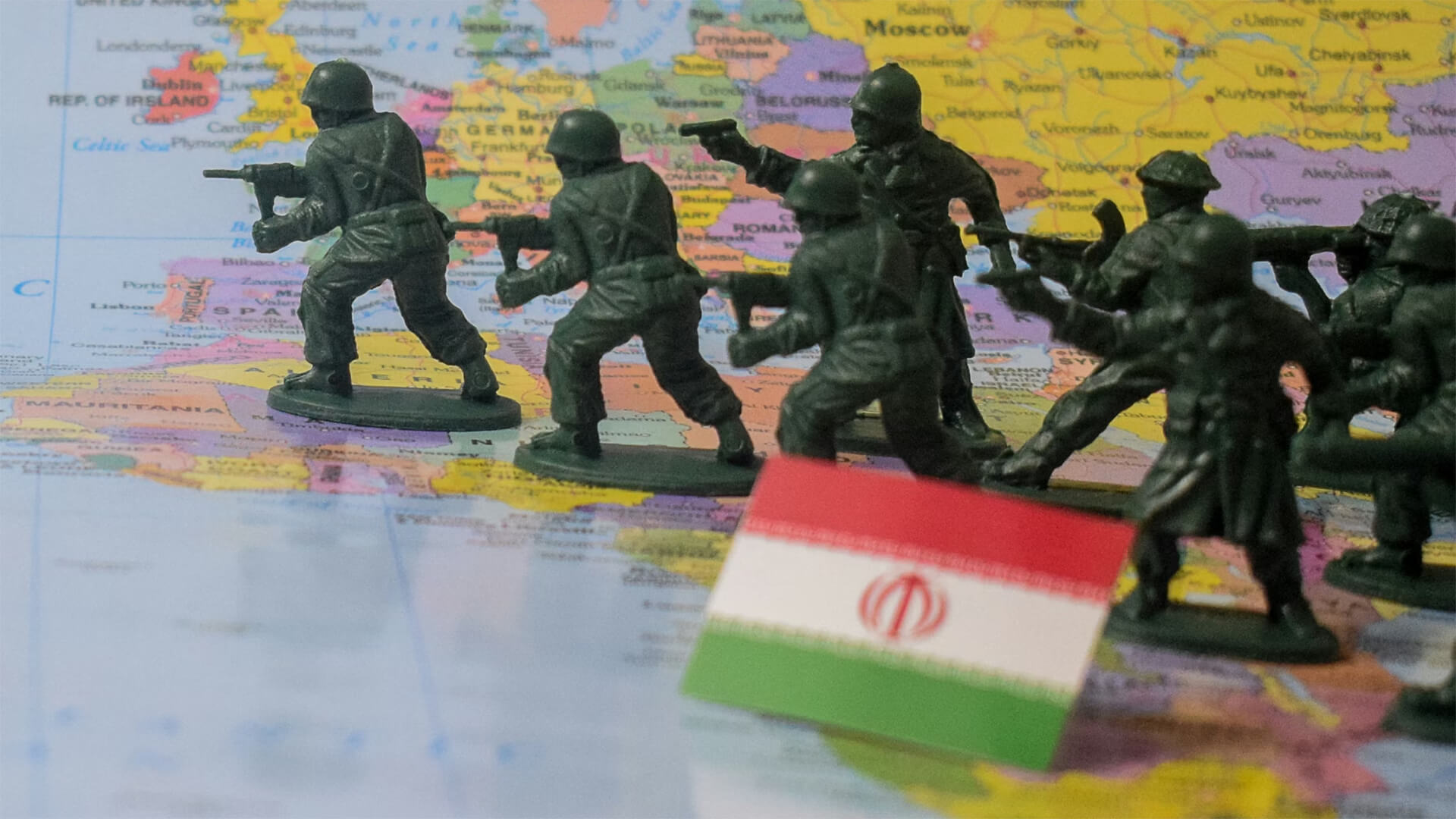
U.S. strikes against Iran appear imminent, with two aircraft carriers being positioned in the Persian Gulf. Trump has presented Iran with negotiation terms that would effectively end Iran’s status as a regional power, so it’s no surprise that negotiations have stalled.

The terms laid out by Trump would end Iranian nuclear enrichment, force them to give up long-range missile capabilities, and stop supporting regional paramilitary groups. Spoiler alert: that’s Iran’s entire strategy and security model. Any conflict would likely start in the air, then move to targeting strategic assets like Kharg Island. Once that happens, Iran would be crippled.

Outside intervention would be unlikely, and removing Iranian oil from global markets wouldn’t be the end of the world. The main concern would be destabilizing the region and risking the formation of new terror groups, although things like that take time.

Transcript

Hey, everybody. Peter Zeihan here, coming to you from Colorado. It’s the 23rd of February, and we’re going to talk about Iran, because what the United States has been moving into the region in terms of military hardware gives us a good idea of the, type of strike that the Trump administration is considering. The headlines are that one third of all currently deployed U.S. naval assets are in the region, which is really a bad way to look at it, because the Middle East, it’s in the middle. 

It’s between things. So it’s really not strange to have a lot of stuff there because it’s coming and going. So let’s talk about more specifics. The USS Abraham Lincoln, which is one of the Nimitz super carriers, is off the coast of Oman. And that’s a country on the southeastern corner of the Arabian Peninsula, right at the mouth of the Gulf. 

So if the United States wanted that carrier in the Gulf would take a day or two wherever it needs to go. Second, the USS Ford, which is the newest of our super carriers, by far the largest, most powerful military platform humanity has ever created is currently in the Eastern Mediterranean. It was sighted this morning off the coast of Crete. 

Crete is an island that’s in the southeastern part of the Greek territory. So it could be going through Suez in a day or two if it wanted to. In addition, there’s at least 60 aircraft in Jordan. If there was going to be a strike, we’re now basically looking at the capacity of hitting hundreds of targets in a very short period of time and suggesting an air war with a duration of a month or less, probably closer to a week or two. 

If you want to do anything more, you’re gonna need a lot more supply ships in the area, for replenishing bombs and missiles and whatnot. But it does look like the Trump administration is preparing for a scenario where the Iranians are utterly incapable of striking back at US forces, so they decide to attack Israel. Air go, all of jet aircraft that are in Jordan. 

There’s a handful of F-35, so you can see them from satellite imagery, and the rest are basically there to intercept drones as they’re going through. This is a significantly larger deployment into Jordan than what they had, during the last assault last year when they attacked the nuclear program end Iran with mixed results. This is intended to drop a lot more ordnance on a lot more places. 

And considering that even if all they do is go after the nuclear program, where there may be 50 sites, they’re going to have a lot more, subsidiary strikes in the areas to take out command and control and air defense in the rest. The question, of course, is whether the Iranians can do much about this. And the answer is no. 

Not only did American and Israeli strikes over the last year really gut the air defense network over Iran. No one has been able to step in and replace the equipment. Your options are Russia or China. The Chinese stuff, to be perfectly blunt, is really shitty. And the Iranians are really not interested in getting it unless it’s the only thing that’s on offer. 

They’d rather have offensive weapons to serve as retaliation than defensive weapons that really aren’t going to do anything. As for the Russians, the Russians are locked down in the Ukraine war and can’t make enough jets to replenish their own supplies. So while there have been a number of contracts signed to get things like the su 35, which is a fighter bomber jet, to Iran, the Russians just don’t have any to give. 

So the only thing that the Russians have been able to provide is some relatively low tech, anti aircraft systems called verbals, which are MANPADs, shoulder launch kind of things. You can use those to take out helicopters, maybe some very low flying jets, but not the sort of strikes that the United States is going to be making. 

They’re more about making a statement of solidarity than anything else, because any of the equipment that the Russians could provide is already in use. And as the Israelis and more recently the Ukrainians have proven, even the top notch Russian stuff like the S-400 really isn’t as hot as the Russians have tried to make it sound these last 30 years. 

And if they can’t stand against Ukrainian MiGs, they’re certainly not going to stand against American F-35s. So as to the goal here, remember that the Americans are demanding that the Iranians shut down their missile program, their nuclear program, and shut down all funding to paramilitaries throughout the region, which is basically the equivalent of them demanding that the United States shut down the Marine Corps, the Army, their entire air force, and decommission the Navy. 

So from the Iranian point of view, if they do this, they’re done as a strategic power. And so what we will probably see is the two of them heading to a collision. And if Trump gives the order, we will have a gutting of a lot of the industrial base in Iran. And it basically just becomes a sea. The state kind of like North Korea, but with not as many sharp, pointy sticks to point at everybody else. 

This would destroy their economic capacity to wage meaningful war, because right now, oil income is 90% of their earnings, in 90% of that oil income comes from one spot. And the idea that this administration in this moment is not going to take advantage of that, is pretty slim. 

I do want to point out one really weird thing about this, though. Iran doesn’t export a lot of crude anymore. Between sanctions and more importantly, their own idiotic approach to foreign investment that basically penalizes anyone who’s interested in investing in the country. Iran’s oil sector has been in a nosedive for the last several years after degrading for a generation. 

So total exports out of Iran are really only about a million barrels a day. And if the export infrastructure is just, disrupted, you know, it’s not going to come back anytime soon. The market can five that right now. And in a post Iran scenario, what’s going to happen is more or less what’s been happening in a pre Iran scenario. 

And that Oman and Kuwait and Bahrain and the United Arab Emirates and especially Saudi Arabia will be able to send their crude not to the United States for net exporters, but to the East Asian rim where the vast majority of it goes for China. So, ironically, we’re in a situation here where the strategic. 

What’s the word I’m looking for overhang of the United States not liking Iran in a run that like in the United States, that goes back to 1979, it’s kind of outdated. And an economic strategy point of view. No longer is Middle Eastern crude supporting the American ally network. It’s supporting China. And so we’re now in this weird situation where strategic thinking in the United States hasn’t caught up yet. 

And we’re considering going to war with a country that has no impact on our ability to fight whatever’s next. Whether you think that’s worth it or not, of course, do your own strategic math. But the old argument that we need to keep oil flowing from the Persian Gulf to support the allies against the Soviet Union, that became outdated more than ten years ago, and now it’s it’s kind of funny that it’s still driving decision making really anywhere. 

And I don’t mean that as a pure critique of the Trump administration. That’s a critique of Tehran as well. They just haven’t moved on either.

China’s Alleged Nuclear Test

nuclear bomb with a mushroom in the desert

The Trump administration has accused China of conducting a small nuclear test in 2020. The claim is that a seismic event was detected in Western China around that time. A lot is going on here, so let’s unpack it.

A nuclear blast creating that small of a seismic reading would have to be from a small weapon in a massive underground containment facility. However, developing a weapon that small and testing it doesn’t add up. So, could there be a political rationale for raising this accusation now?

One theory is that the Trump administration wanted justification for restarting U.S. nuclear testing (which has no military support) to garner leverage in negotiations. The Cold War showed us this is a fairly strange path to go down, but we’ll just have to wait and see what comes of this.

Transcript

Hey all. Peter Zeihan here coming  to you from Colorado. Super windy day today. So we’re doing this one inside. Well that hair is out of control, isn’t it? Anyway, today we’re talking about the US government’s, the Trump administration’s accusation against China that the Chinese did a unofficial and banned, nuclear test back in 2020. They’re saying that somewhere out in western China, which is the, Chinese testing grounds, that there is a subterranean explosion five, six years ago, which the Chinese blew up a bomb that is in contravention of pretty much every nuclear treaty that has left. 

And there aren’t a lot of those left. This one’s quizzical. So we’re going to look at the technical aspects of that more than say yay or nay. 

There is a worldwide detection system for seismic activity primarily designed to detect earthquakes and help forecast where the aftershocks are going to go to help with things like disaster recovery. 

Because of this, all of these sensors have been basically double tasked to also look for underground nuclear explosions because they send out something somewhat similar. And the US government is saying that something in the range of a 2.75 on the Richter scale was registered, 2.7 times is a really, really, really low. That’s like fracking levels of earthquakes, something that is largely undetectable to humans who are standing directly above it. 

And if this was indeed a nuclear explosion, it would be something in the tens of, tons not even reaching a kiloton. Even if that was true and it was a nuke, the only way that you would have been able to contain it without, you know, some sort of activity is to have an underground cavity that is probably at least 100ft on a side and at least, six, seven, 800ft deep. 

The, the physical stress on any sort of construction at that depth is immense. And it’s not clear that that is within the Chinese technical capacity. And even if it was, it’s unclear what a bomb of that size would achieve for the Chinese. Most modern bombs are in the tens to hundreds of kilotons or more likely in the megaton range. 

If you’re talking city flatness and bombs of that size are actually below the range of most conventional explosives. And when you consider that conventional explosives are an order of magnitude easier to manufacture and store, not much in use because you have to worry about fallout. It’s difficult to see why there might be a need for a bomb of that size that is so tiny. 

A nuclear bomb of that size, about the only thing that might, might, might, might, might make sense is if you were to use it as a kind of a bunker buster, because the shockwave that comes off of a nuke is significantly different from the shockwave that comes off of a conventional penetrator weapon, and it might do more damage to things that are subterranean and hardened. 

But the only things that are subterranean and hardened at scale are, ironically, the Chinese nuclear system. And it’s difficult to see the Chinese researching the development of a weapon that they would then use on themselves. Anyway, lots of questions. There is not a single arms control expert on the planet who thinks that this was an actual nuclear explosion. 

And these are a very, moralistic, idealistic and loud crowd. And they’ve been angry at the last several American administrations for basically letting all the nuclear control treaties of the Cold War, post-Cold War era lapse to the point that, the last big one just lapsed last month. So the question is, what is going on here? If if if the Chinese are testing in violation of norms and treaties, then obviously that’s a big deal for any number of reasons. 

But this was from 5 or 6 years ago, so it’s difficult to see a immediate implication of it. Second, there is a theoretical possibility that you would do something like this on a trigger mechanism rather than the general nuke, just to see if your plutonium still works. But since it’s so mechanically simple, and relatively inexpensive to spin down the plutonium and separated in a centrifuge, it’s difficult to say how that would make sense. 

The Chinese are in the business of expanding their arsenal, not maintaining a set number of pieces like the United States. So again, it doesn’t make much sense. The only other theory that is out there that if I heard, is that the US administration under Donald Trump, wants to restart testing of nuclear weapons. This is something that has no support within the US military community, because it’s designed to fight a conventional fight. 

We don’t maintain an arsenal of tactical nuclear weapons anymore. Really haven’t since the Cold War. We only have the strategic city flatness, and if those are used, it’s not really a military question. It’s a purely political question about whether you want to risk nuclear Armageddon or not. It’s primarily a deterrent force because the US conventional capabilities are so far and above. 

What any potential threat could be. And if it’s a paramilitary threat, like we say we encountered in the global war on terror, you’re not going to solve that with nukes. So the leading theory is that Donald Trump personally wants to be able to blow up some nukes as examples to push negotiations forward. Now, Trump has not said that personally. 

This is something that has leaked out through the administration. I don’t know if I should take it serious or not. But the idea of setting off nukes as a negotiating point doesn’t strike me as a particularly effective negotiating strategy. Unless, of course, the people on the other side are doing that already. And before you discount of that, keep in mind that that was part of the logic during the Cold War is that one side would innovate a new nuclear weapon, demonstrate it, and then the other side would go set off a test immediately to prove that their nukes still worked, and then develop their own weapon. 

And the cycle would repeat until we got to Gorbachev and everyone realized that, hey, maybe this isn’t the best way to carry out negotiations. So no firm conclusions here. What? The only thing that is clear is the administration really is pushing this line is not shared any information with the wider world that would suggest that was actually a nuclear test that actually happened. 

Obviously, there are classified intelligence gathering techniques that are not being shared here. But again, the Trump administration has been pretty liberal with sharing those bits of information whenever it serves a political purpose. So a lot of weird little mysteries here. And the only explanation makes any sense is this is coming directly from the white House for reasons that until they are revealed, remain unseen.

U.S. Boots on the Ground in Nigeria

Silhouetted soldier against a black background

Following the Christmas Day U.S. airstrike on a jihadist target in northern Nigeria, the U.S. has deployed 100 troops, more so advisors, to train local counterterrorism forces in Nigeria.

This is important for several reasons. Nigeria is Africa’s most populous country and a dominant power in West Africa. Russian influence has stretched across Africa and into Nigeria, so U.S. involvement could help counteract that. And this marks a significant shift for the Trump administration, as the U.S. will get firsthand insight into Nigeria rather than relying upon speculation.

We’ll see what Washington does with the information gleaned from the boots on the ground, but U.S. policy in West Africa could be reshaped in the coming months.

Transcript

Hey all, Peter Zeihan here. Coming to you from Colorado. Today is the 17th of February, and the news is that 100 U.S. troops have just arrived in Nigeria to help train local forces in anti-terror operations. It’s the first batch. Another hundred or 200 is expected to come in the next several days to weeks. Why Nigeria? Why now? What matters? So if you go back to Christmas season, December, the big story that was making the rounds in MAGA was that Nigeria was massacring Christians and oh my God, we got to stop them. 

And so on Christmas Day, Donald Trump bombed a, jihadi, stronghold in northern Nigeria. First time we’ve done military operations in Nigeria. The Nigerian government internally was kind of pissed off because this is a country of 230 million people. It has dozens of ethnicities. The northern part of the country is more Islamic and drier than the South, which is more Christian and tropical. 

But, the militants that have been operating in the north, they don’t care who they, kidnap, they kidnap anybody, so most of this was just a collective MAGA, fabrication, which, you know, we’ve seen a few of those before. But this time it resulted in the United States actually bombing someone, which is generally not a good reason to do it. 

Anyway, the Nigerian government was really pissed off. But rather than be pissed off in public, they said, you know, you’re right. We do have a militancy problem. Why don’t you come help? And Trump did. Now these are not combat troops. These are advisers, but they are now getting enmeshed into, this situation in Abuja. And further north, and we’ll see what happens. 

This matters for three reasons. Number one, Nigeria, 230 million people. Significant energy producer, based on the day, exporting somewhere between 1 and 3 million barrels a day, although it’s pretty chaotic. So it’s usually on the lower end of that. 

It is the clear superpower of West Africa. It is the most populous nation on the continent. It matters in a great many ways, and in times when Nigeria is able to hold itself together, it projects power to an entire neighborhood. And in areas when it’s not able to hold it together, it falls into civil war. So anything that helps Nigeria hold itself together is generally good for the region and US power production regardless. 

Number two, we are seeing some of the outcomes of the Ukraine war on another continent here. So one of the things that the Russians did right when the Ukraine war was getting going is they tried to stir the pot everywhere they could to cause as much chaos. And civil conflict as they possibly could. And in the Sahelian region, that’s the dry area that’s south of the Sahara Desert, but north of the tropical belt. 

They targeted the French position and they basically went in under the guise of counter terrorism, counter Islamic terrorism. They encouraged Islamic terrorism to continue. And cut deals with regimes that were in the process of having coups. We called it the coup belt for a while, to push the French out. The French have now left all of French West Africa, Burkina Fastow, Mali, countries like that. 

And so we now have these, arrangements of pro-Russian tinpot dictators that are basically raping their country and running mining interests for the Russians, whereas the militant groups have been able to spread beyond those countries into places like northern Nigeria. So anything that pushes back of that tide is generally a good thing too. And again, consolidation Nigeria is probably the best bet at this point because the first line of defense, the French forces in the region are now gone. 

Sorry, U.S. forces for that matter. So that’s number two. Number three. 

The Trump administration just put it into a position where it has now has sent forces into an area specifically with the goal of finding out what’s going on. That’s the first time that’s happened in this administration. Usually they just rely upon rhetoric and whatever circling through the conspiracy sphere. Now we actually are going to have a couple hundred troops interfacing with the Nigerians on a daily basis, getting a feel for what is a very, very complex country and a very, very complex security environment that doesn’t match the story that you hear on the web. 

What they do with that information is going to be really, really interesting. I don’t mean to suggest the United States has, like, immense interest in this region, but as a rule, anything that holds Islamic terror at bay and keeps them in worthless territories is a good thing. If this is able to penetrate into central or, God forbid, southern Nigeria, then we’ve got a very different situation where the entire region would become unmoored. 

So, you know, kudos if this works out. But right now the government of the United States is still very, very, very early in a fact finding stage. And once they have the information in front of them, they will then have to make a decision and balance against what we are hearing in the MAGA sphere, which is largely the opposite of what is actually happening. 

That’s going to be an interesting conversation that will happen a few months from now.

Ukraine Goes on the Offensive

A ukraine soldiers patch/flag on their uniform

Starlink cut service to Russian forces along the front line, leaving these troops largely isolated. Ukraine has taken advantage of the situation by launching localized offensives and reclaiming a nice chunk of land.

The Ukrainians remain outnumbered. However, since Russian units are scattered, isolated, and unable to communicate, they are left vulnerable. So, organized Ukrainian offensives are finding success…for now.

The Russians will likely adapt, or the Ukrainians will come face-to-face with entrenched units and minefields, but Ukraine has regained the offensive momentum for the time being.

Transcript

Hey all, Peter Zeihan here. Coming to you from Colorado. Today is the 18th of February, and the news is a significant change in the battlefield in Ukraine. We did a video talking about how Starlink had been unofficially siding with the Russians in many ways until they got caught out and basically accused of several dozen counts of second degree murder. 

And so they have cut off, connections to their Starlink receivers throughout the front region, this time emphasizing the Russian side of the operation. And what we’ve discovered in the last 96 hours is that the Russian forces in the area were completely dependent upon Starlink for communication among themselves, and that communication is functionally stopped. Now, keep in mind that drones today are either first person drones that can be jammed or on a, tether, a fiber optic tether that has a limited range. 

And so the best way to jam is to have an electronic warfare unit in Ukraine needs to become the best in the world. That by far, far better than the United States. Which means that normal types of radio communications simply don’t work if you’re relatively close to the front. And now the Russians have been cut off completely. 

And even though the Ukrainians are outmanned and outgunned, they have gone on the offensive and captured about 50mi² over the course of the last several days. I doubt it’ll last. It’s only a matter of time before the Russians come up with backup plans, or the Ukrainians hit those massive minefields that stopped their assaults a couple of years ago. 

But it does allow, in the short term at least, the Ukrainians could, to completely liquidate Russian positions while on the offensive. Normally, you only attack and location if you enjoy about a 3 to 1 ratio. In vantage in troop numbers. The Ukrainians are doing it with far less than that, sometimes even being outnumbered. But because they’re able to isolate the Russian forces in detail, they’re able to completely wipe them out. 

Keep in mind that over the course of the last year, we’ve seen the Russian tactics change considerably. So instead of big massed assaults, assaulting, Russian positions, they sneak in 2 or 3 at a time and pepper the area through until a few of them survive. And then reinforcements can come in. That means you’ve got lots, dozens, hundreds, maybe thousands of little spots where there’s two, three, 4 or 5, ten Russians holding the position and against a coordinated Ukrainian attack that still enjoys drones and communications. 

They don’t have much of a chance at all. So I doubt this will last very long. But for the moment, the Ukrainians are pushing forward in a way that they haven’t been able to for a couple of years, and their critics said was never possible again. But here we are.