
Everyone is always so worked up about bear attacks while I’m out backpacking. The problem is that people are referencing the rise in bear attacks in Japan, as if it’s the same here in the U.S. The reality is that unless you come across a grizzly without your bear spray, you’ll probably be just fine.
Transcript
Hey everybody. Peter Zeihan here, coming to you from the Canadian Rockies in Alberta. Just out for a morning stroll. Today we’re going to do kind of a public service announcement slash question from the Patreon crowd. And it’s, do I worry about wild animals when I’m out backpacking for extended period of time, specifically bears, because there have been reports of hundreds of attacks of bears throughout Japan, especially in northern Japan this last year, which I think is more than what has happened in the decade previous. Short version is no, I don’t. And a couple of big reasons that separate the North American experience from the Japanese experience.
So first, the physical human topography. In the United States, even in small towns, you tend to have an urban core surrounded by a suburban zone, surrounded by an exurban zone. And then outside of that, ranches and farms. That’s not the Japanese experience. Japan is a very rugged archipelago. So in many cases, the mountains come right down to the small enclave that is home to the urban zone. So the bears are used to being right up against the edge of human habitation, even in the best of times. Second, the Japanese physical footprint for humanity has evolved quite a bit in the last 30 years as their demographics have failed. Keep in mind that Japan, demographically, is the oldest society right now, with the highest proportion of senior citizens, and the population has been shrinking for the last 20 years. And as you age, you live differently. So, you know, your 20s. It’s all about hostel vacations. In your 30s, it’s all about single family homes so you can raise your kids in your 60s. It’s all about starting to downsize. And by the time you hit your 70s and 80s is where the population bulge in Japan is, you’re starting to need to live closer to one another in order to get services. And so the elderly tend to move out of the farms and the ranches and out of the exurbs and even out of the suburbs into the city core, where there’s a communal living facility where they can get assistance. And so what we have seen over the last 20 years is the steady abandonment of the outer edges and even kind of the outer core of a lot of urban zones throughout Japan. And that has left the bears with new territory to claim. Bears tend to be pretty territorial. Even if you relocate them a couple hundred miles, they’re likely just to run back within a week.
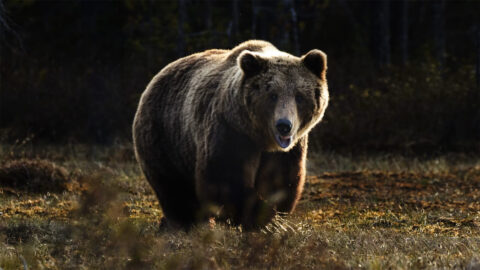
So in the United States, when bears come across a human settlement, there’s progressively more noise and more activity and more alien environment. With all these artificial constructions and above all else, humans to scare them away. Human activity, whether it’s a car or some guy just yelling at them, that doesn’t happen in a lot of northern Japan anymore. This is the part of the country that has faced the steepest demographic crisis. A lot of young people have relocated to major cities like Osaka or Tokyo. And so the Outer Rim, which comes right up against the mountains, has been abandoned. And the bears, bit by bit, explore this new zone, claim it as their own. And so when they do run across a human, they don’t see the human as an alien environment. They see it as an intruder and attacks can happen. The bears also have no problem breaking into a house, and there’s been plenty of examples of bears breaking into find the pet food and then eating the pet to, that just doesn’t happen in the United States. In the United States, interactions between bears and humans have usually ended with the bear being scared off. Black bear, you basically make yourself big and loud and they run off. That doesn’t work as well with an Asian bear. Which brings us to the third thing. There’s different species. American black bears are basically big raccoons. They’re primarily scavengers. That’s why they call them trash pandas in Colorado. So if you keep your trash in your garage and you have a locked trash box, you only put it out the day that gets picked up, you’re more or less going to be fine. Oh yeah. Fun. Random fact black bears love baby diapers. Very strange. Anywho, the bears in Asia, in Japan are called Asian bears. Different species, a lot more aggressive. Making noise, especially in an area that they don’t feel threatened in, is more likely to trigger an attack than it is to make them run away. Of course, there are lots of different kinds of bears around the world, so, for example, the bear you should worry about in North America is the grizzly bear range starts in Wyoming and works north throughout the Canadian Rockies. They’re much bigger. They’re much more aggressive. They’re still omnivores, like all bears, but they’re perfectly capable of hunting. And if you come across a grizzly bear in the wild, the best thing is to stop, look down and slowly back away and just hope that it’s not interested in you. If you do get charged, don’t make yourself big and loud. That’ll just piss it off. Don’t shoot it with a gun. That’ll just piss it off more. I mean, these things are half a ton, the small ones, so that’s not going to stop at all. Your best bet is bear spray, which is basically a capsicum spray that stuns them because they’ve got really sensitive eyes and noses. Like I was saying earlier, the Grizzlies are Wyoming North, so there’s actually a really dense concentration of them right where I am right now.
And, and I don’t have any bear spray on me. So, you know, maybe, maybe this is a good time to turn around.