
Finding Rare Earths in Japanese Mud

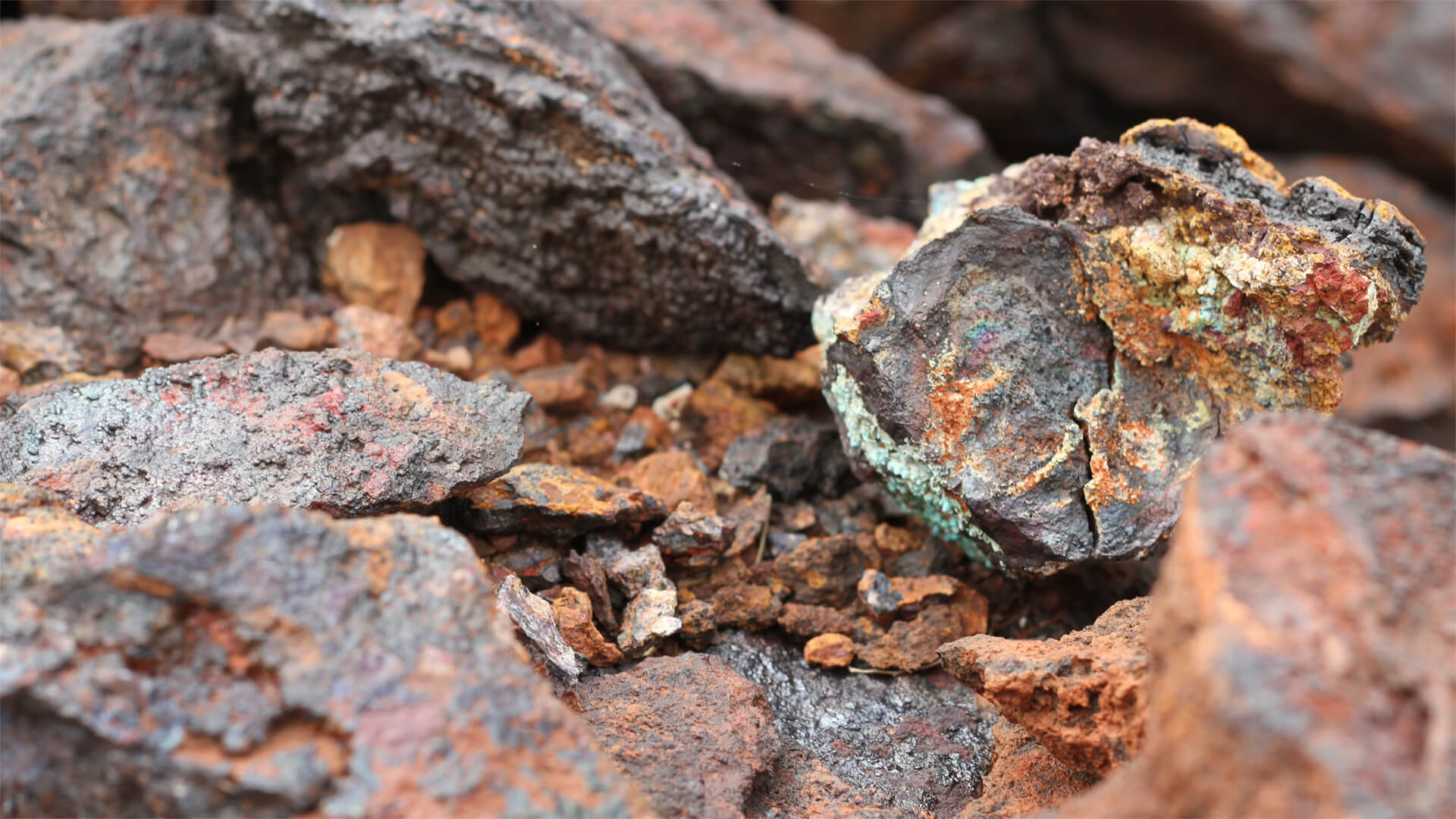
A close up photo of colbat rocks

Japan has identified a large rare earth deposit of its own, but it’s not going to change global supply dynamics. Here’s the situation.

Rare earths are typically a byproduct, so the bottleneck isn’t ore access; it’s processing capacity. And China has a monopoly on the processing. Japan may have found a massive deposit, but that’s just step one. The deposit is located near Minamitorishima Island, under 8km of water, and extraction just isn’t economically viable as of now.

This is just another example of Japan having to get creative with the hand it’s been dealt.

Transcript

Hey all, Peter Zeihan here. Coming to you from Colorado, several people have written on the Patreon page asking about the new Rare Earth project that the Japanese are poking into offshore. It’s called the Minamitorishima, I think way too many syllables. Anyway, the idea is that it has significantly higher concentrations of rare earths and some of the production sites around the world today. 

And is this something that is going to change the math of rare earth production? Probably not. Let’s start with how we do it now. Rare earths are not something we use in large volumes. Like, your car probably has less than a 10th of a gram of the stuff in it. But that doesn’t mean it’s not critical. 

It changes the electrical properties of a lot of things. And so we’ve got, I think, 13 different rare earths that we use in different concentrations, in different things, just in microscopic amounts, typically. Well, what that means is there really, until recently, hasn’t been anything called a rare earth mine. What you do is you produce something else. Iron ore, copper, silver, for example. 

And then you take the tailings and you process the tailings that might have a higher concentration of, these things, which sends it through several hundred vats of acid over several months and from somewhere from a half a tonne to several tons. After that amount of time and that amount of acid, you get one ounce of the stuff. So it’s really available in very small volumes. Now, the, the mud that they have dredged up from meto Minamoto or Ashima, has a reasonably high concentration somewhere in the range of 6 to 8000 parts per million, which, compared to a lot of the mines out there, is pretty low. But if you compare it to the handful of mines that have popped up in recent years as part of this kind of geopolitical scramble, for the stuff, some in China, mountain passes the United States, for example. 

It doesn’t compare all that great, the richest rare earth mine, if you want to use that term, is in South Africa, and it’s about ten times the concentration of what the Japanese are dredging off the seafloor. Mountain pass is probably about 4 or 5 times the concentration. It is richer than some of the clays that the Chinese are mining. 

But you got to remember when you’re talking about South Africa, a mountain pass or, China, you can basically drive a truck to it and put a shovel on the ground and start doing it. The mean a meter or Cima deposit, while huge, absolutely huge, is at the bottom of the seafloor on the abyssal plain under eight kilometers of water. 

So you have to bring it up and then dry it and then start the processing. So you’re already talking about costs that are on average, in order of magnitude higher than anything, anywhere else. About the only thing about meter millimeter or Cima, that is really interesting is the concentration variation. There’s two different kind of buckets for rare earths, lights versus heavy. 

And most of the deposits in the world are for the light ones, and the heavy ones are the really rare ones. Whereas the Japanese on this abyssal plain have found one where it’s about a 5050 split. But in order for it to be economically viable, you’d have to see the price of these things not go up by a factor of 2 or 3 or 5 or 10, but probably 50 or 100, in order to justify economically the infrastructure. 

And at the moment, there’s no sign that that’s going to happen, because, again, rare earths are a byproduct of other mining. And the limiting factor is not not, not not the actual access to the or the limiting factor is the processing capacity, which the Chinese basically have a lock on at the moment. 

We are seeing that change in pollutants, places like Mountain Pass are building it out, and there are a number of countries out there, Australia, Malaysia come to mind, that have some of these facilities dormant. 

But for them to be economically viable, the price of the stuff has to go up. So the Chinese will continue to have the leverage until such time as countries decide to kind of marry national security to their economic decision making on these things. And if that happens, this will all kind of work itself out in a year or two. 

And even in that scenario, I really don’t see the Japanese stuff coming to the forefront. Just keep in mind that the Japanese, among the major powers are the least resource rich country in the world. And so they will be always trying out new technologies and new places to see what they can make work. And most of them will never pan out. 

But, they have to try. And every once in a while generates, big advances and things like efficiency, which is one of the reasons why Japan is the most energy efficient of the major countries in the world, because it’s been forced to by its geography, kind of think of what’s going on with railroads in that category.

Japan Sees the Writing on the Wall

Flag of Japan over mount fuji

Japan’s ruling Liberal Democratic Party just won a two-thirds majority in the lower house. This gives Prime Minister Takaichi a rare personal mandate and practically total control of the government for the next few years.

Now that the PM can act decisively, we could see changes in the U.S.-Japan relationship. Japan is still facing the same core problems: demographic decline, debt, and forever out of reach of its old economic weight. At the same time, the U.S. alliance is growing shakier by the day; we’re not in the danger zone yet, but Japan is beginning to see the writing on the wall.

So, Japan could begin the process of constitutional change to loosen military constraints, but that’s not going to come overnight. Japan isn’t breaking away, just getting ready for the alliance to weaken.

Transcript

Hey all, Peter Zeihan here. Coming from Colorado, it is, February somehow 60 degrees. Anyway, today we’re talking about the recent elections over the weekend in Japan. The Liberal Democratic Party, which is the largest party by far in the country, got a two thirds majority in the lower house of the diet, meaning that Prime Minister Takahashi has basically everything she needs to run the government, however she wants for at least the next couple of years. 

Politics in Japan aren’t really policy or party based. The more personality based and the first hurdle that any new leader has to achieve is a personal mandate. And she has now done that in spades. This doesn’t happen very often in Japan. Usually we have seen a series of successive weak governments that are never able to get that mandate. 

The last leader of the LDP, the last prime minister who was able to secure that sort of personal mandate, was a guy by the name of Shinzo Abe who ruled for about a decade, and he was Takahashi’s, mentor. So, she’s learned from the best. The question, of course, is what she will do with it. Japan today. 

Japan ten years ago. Japan 20 years ago. Japan 30 years ago has always had the same two big problems. The first is demographics and the debt that comes from that. The country basically saw its birth rate collapsed before World War two and has been the oldest demographically speaking country in the world for several decades. They’ve managed to slow that decline. 

So about another dozen countries are now aging faster than them, but they are still aging, and they are still the oldest. And that means consumption in this country is really not possible in any meaningful way, because there just aren’t enough young people, to do it. That leaves them dependent on exports. But after the 80s and the 90s and a series of trade conflicts with the rest of the world, most notably with the United States, they’ve basically re domiciled their economy. 

So if you’re going to exports from something from Japan, you actually take your industrial plant to the country you want to export to build it there, operate it there, employ people there, sell to people there. And the connections between Japan proper and the rest of the world economically are actually just limited to energy. Pretty much these days. It actually, as a percent of GDP, trades less than the rest of the world, than the United States does. 

Even, that doesn’t mean that all is good. It means that you’ve got a Japan that really can’t grow. They can still advance, they can still update, and they still have influence. But there are never going to be the economic weight that they used to be. And that limits some of their options. The second problem, of course, is relations with United States. 

Japan, throughout the Cold War into the post-Cold War era, has maintained the second most powerful expeditionary navy in the world, second only to the United States. And it’s been the American Japanese alliance that has been the cornerstone of not just the American position in the Pacific, but of Japan’s existence as a major power. The question that the Japanese are starting to ask in the age of Trump two is whether that has legs under Shinzo Abe in Trump won a free trade deal with a security add on was negotiated, in which the Japanese basically gave in on every irritant in the bilateral relationship. 

And Trump two comes in and says that that deal was stupid. And he actually specifically said it was a Biden deal, which was hilarious. Anyway, the Japanese are thinking that, you know, if if we give the Americans everything that they want and they’re still not satisfied, should we give the Americans any thing that they want? We’re not to the point that the alliance is in formal danger, or we’re not to the point where that is part of the debate in Japan. 

But when the Japanese see what the Trump administration has done to even firmer allies, countries like Denmark, they have to be wondering how long this can last. It doesn’t mean a war is imminent, much less inevitable. But Japan is starting to lay the groundwork for going its own way, whatever that happens to mean. 

And without the American partnership with Tokyo, the American position in the Pacific, it goes from unassailable to something significantly less robust. The process for that happening would require probably a constitutional change, because the alliance with the Americans and not having an independent military structure that’s hardcoded into the Constitution that the Americans wrote for the Japanese. After the last time we had a tussle at the end of World War Two, now the new government can start that process. 

They now have a two thirds majority in the lower house of the diet, which is where constitutional amendments start. But then it has to pass through the upper house and the upper house is a little bit like the U.S. Senate. 

Half of it is reelected every three years. And unlike the lower house, where the Prime Minister can declare fresh elections whenever he or she wants, can’t do that for the upper house. 

It’s only on the schedule. And we just had elections in the upper house in 2025, so you have to wait till 2028. So barring a really significant change in the political environment and relations with the Americans, it’s difficult to imagine the upper house just amending the Constitution in the direction of Japan being a more independent power without something dramatic happening. 

And that is at the moment, not in the cards. Granted, two months ago, I would have said that the Americans willing to walk away from the entire Western alliance in order to grab a chunk of ice cap wasn’t in the cards either. So the Trump administration is perfectly reserves its right to throw all of this into the shitter at the first opportunity. 

How the Japanese respond to that, of course, is going to be the issue. And at least for the Prime Minister, she now faces no meaningful opposition in making day to day policy. So the Japanese response to whatever happens can actually be pretty quick.

Japan’s Debt Crisis Is Just the Beginning

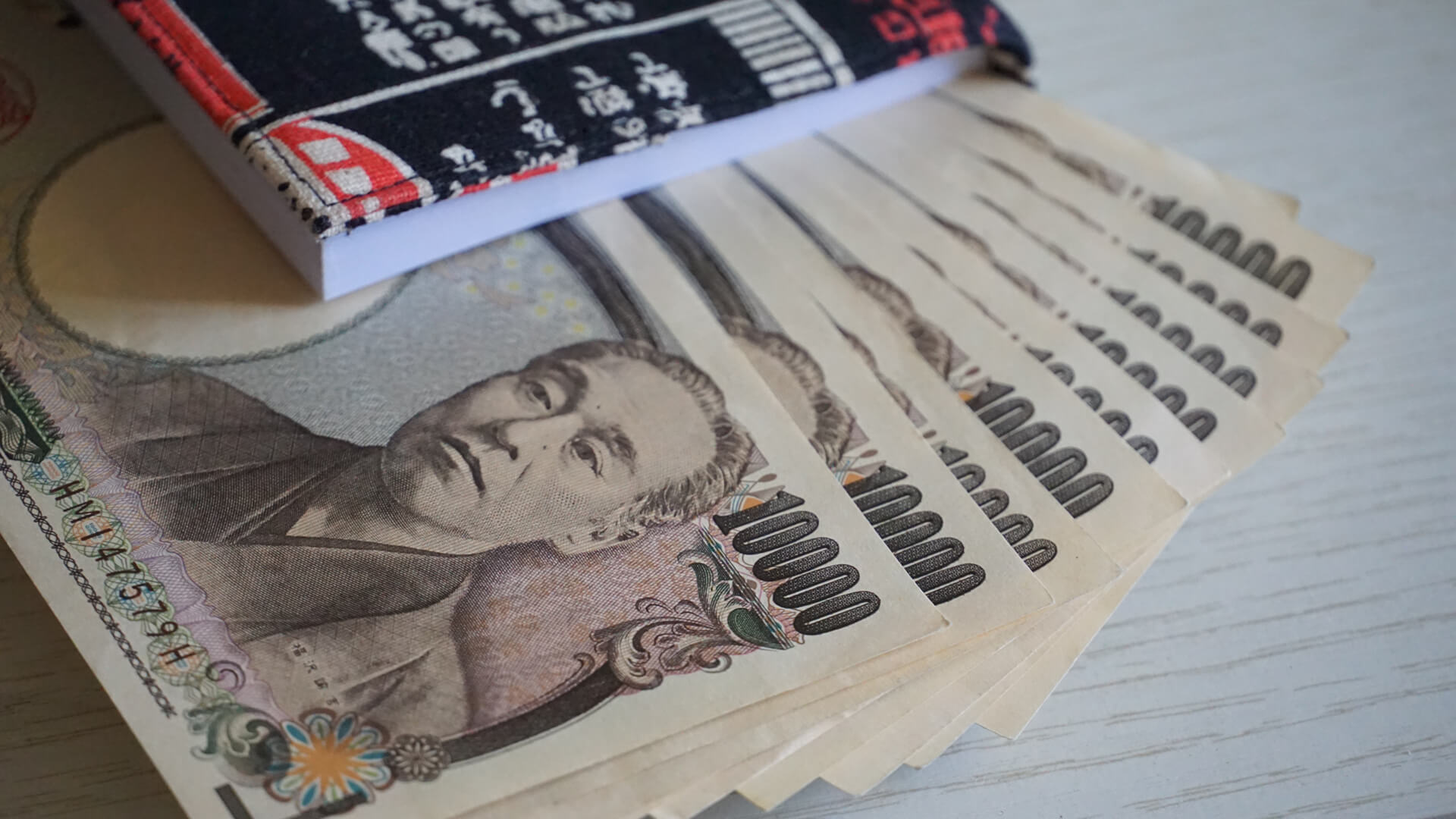
Photo of Japanese Yen

Japan has a…special way of measuring deficits, leaving true borrowing understated by excluding major obligations like pensions and local government debt, and counting planned bond issuance as income. But Japan isn’t the only country facing debt issues.

Japan has run an annual deficit of 7-10% for decades, making it the most indebted country in modern history. The U.S. and Europe are on a similar trajectory, though. The U.S. has interest payments that rival defense spending, thanks to the demographic situation. Europe has the same people problem, a weaker tax base, and has to ramp up defense spending to deal with Russia.

While Japan might be first through the gate, this is a global issue. Budget cutting alone isn’t going to solve any problems, but existing economic models simply can’t square this circle.

Transcript

Hey all, Peter Zeihan here. Coming to you from home in Colorado. Whether it’s craps on inside. Anyway, a lot of people have written in about what’s going on with financial markets specifically Japan. For those of you who don’t follow this sort of thing, there’s been a bit of a challenge in the bond market recently. We’ve got a number of countries ranging from the United States to Germany to Britain, that are issuing record amounts of debt. 

That’s something that’s only going to continue in the future. But, we had a scare when it came to Japan specifically recently. So I thought it was worth digging into that a little bit. Japan doesn’t run their numbers in a normal way. So normally it’s like here in the United States or really in any other advanced country, if you spend more than you take in in taxes, you issue bonds which are sold on the international market, and that generates debt that goes into your overall stock. 

And the figure that we normally go for is, deficit spending as a percent of GDP, which based on your country, can be anywhere from 1 to 10% based on the circumstances. As a rule, whenever that number is higher than your economic growth for the year, your debt load is going to increase and it will put pressure on your economy. 

Year after year after year, growing, growing, growing, growing. And in the United States and a lot of advanced countries, we now have debt levels that are over 100% of GDP, which has reached the point that it is a constant drag. So in the United States, interest payments on that debt is one of our biggest outlays. We spend as much as that we do on defense, and is absolutely making economic activity for everybody higher because it increases borrowing costs. 

So the difference between, say, a 4% and a 6% mortgage is a mortgage payment that’s about 50% bigger. So you can see how that could really hurt really, really fast. Japan. Japan does their numbers differently. According to the IMF, their deficit spending is roughly 2 to 3% of GDP on any given year. But the IMF follows the Japanese way of producing the statistics, and it doesn’t count inter government transfers as potential debt. 

And they also count things like Social Security payments or what we would call them here as income, as opposed to something that needs to be put into a box and really shouldn’t affect the math at all. The Japanese say that their deficit spending is in the vicinity, typically of 4 to 5% of GDP, which, considering they’ve averaged less than 1% growth for the last 35 years, is really, really bad. 

But that’s also not very honest, because when the Japanese do their budget, if they’re doing deficit spending, they don’t count that as deficit spending because it was planned. So if they’re issuing bonds, they actually count that as income. So their core deficit spending doesn’t count at all according to them. They only counted as deficit spending if it’s a supplemental budget that they have to do later in the year for, say, construction or stimulus or whatever it happens to be. 

So in reality, Japan’s budget deficit has been in the 7 to 10% range for almost 30 years now. And so their total national debt as a percent of GDP, everything accrued is about 230 to 240% of GDP, well over double what we have here in the United States. And that doesn’t count local government debt, and it doesn’t count pension arrears, and it doesn’t count the bankrupt nature of their social security network. 

You throw that all in your somewhere between 400 and 500% of GDP, making Japan by far the most indebted country in modern history. Which isn’t to say that the rest of us are not catching up. The four most prolific spenders for administrations in American history are Barack Obama. Trump won Biden and now Trump two. And each one has spent more than the last. 

So, for example, despite the personnel gutting of the federal government, early last year in the Trump administration’s second term, we’re actually now spending more on the government than we ever have before. And that’s before you consider increases to spending for things like homeland security, defense. So we’re absolutely moving in the wrong direction. We’ve been north of 5% of GDP spending for over a decade now. 

Not just Covid, but overall. And we’re showing no sign of going the other direction. Part of this, like with Japan, it’s a pension issue. We’ve had the baby boomers go from the biggest taxpayers we’ve ever had to the biggest tax takers we’ve ever had as they retire. That’s something that’s not going to improve for at least the next 10 or 15 years, until they pass on. 

And the new generation, my generation, Gen X, are the retired class because we’re a small number, elsewhere in the world, the situation is also getting worse. Specifically, in the case of Europe, they have the same demographic problem that we have here in the United States that we have in Japan. But unlike the United States, where we have a large cadre of millennials who are filling out the numbers and in time will repair the tax base. 

Most European countries don’t have a population bloc of size in that number. So you’re just looking at the numbers getting worse and worse and worse and worse every year. Unless you just decide to liquefy old people somehow, which would be just as complicated. In addition, after 70 years of slimming down the defense budgets, especially in the last 30 years in the post-Cold War era, we’re now in a situation where the Europeans are actually facing a hot war, at the same time that the Trump administration is threatening to withdraw American support. 

So we’re seeing these countries needing to build a more normal military force. And that does not mean expanding their military spending from 1% to 2% of GDP, or even 5% of GDP. Like the Trump administration has recently arm twisted them to do. They need to get closer to 10 to 30% of GDP, because they need to build up the institutions, in many cases from almost scratch in the next few years to prepare for a war with the Russians. 

That is very, very expensive. And the only way they can do it is by basically ignoring all of their budget and deficit laws that are entrenched in the eurozone formation. Bottom line is, there’s a huge amount of debt out there already, and all signs point to getting bigger and bigger, and bigger. even if there’s sufficient political will to cut the budgets in places where perhaps you can find some fat to trim the structural nature of the environment demographically and strategically, is arguing for far bigger deficits moving forward. 

Does this mean we’re going to have a debt crisis? I don’t know. We haven’t had a real country have a real debt crisis in a long time, and certainly not in the current era we’re in, where the United States is by far the largest economy, which means I also can’t tell you what will happen on the other side of this. 

All I know for certain is the combination of globalization and rapid aging means that the economic models that underline everything that we understand about finance, capitalism, socialism, fascism, whatever you want to call it, they’re all based on the population getting bigger, and that is no longer true. So we are going to have to find a new economic model. 

And in that sort of environment, I don’t know what is going to happen with debt. I can only point to an example that Japan has provided us in the past, something called Tokyo Side, where basically the emperor just walks out, waves his scepter around, declares that every debt is null and void, and everyone starts over. That would liquefy everyone’s savings account. 

It would liquefy everyone’s mortgage and would literally be a disruptive event. But at the moment, that is really the only model that makes any sense. That doesn’t mean that you should plan for that, however. So.

Lessons From Japan’s Demographic Collapse

A Japanese elderly couple at a crosswalk

Japan has been dealing with long-term population decline for decades, and the latest report on births per woman dropping to 1.15 confirms that. However, there are some lessons we could all learn from Japan.

Japan is no longer the fastest aging society, but it remains the world’s oldest. So, they’re putting in the legwork to buy themselves some time. They’ve shifted production toward allied countries with stronger demographics and built themselves a strong navy, enabling them to project power should the need arise.

But the Japanese aren’t the only people getting older. This is a global issue, and the timing couldn’t be worse. As the world deglobalizes, societies that are unable to adapt and secure trade access through strong alliances will struggle to survive. And the next generation of kids (however small that cohort might be) will be studying those countries in the history books.

Transcript

Hey everybody. Peter Zeihan here. Coming to you from the basement I grew up in. That sounds odd. It makes. It sounds like I was chained to a radiator for 15 years. No, that is not what happened. I just happened to be visiting my parents in Iowa. And I’m coming from the basement because the wind chill outside is zero right now, and that is not going to happen. 

Okay. Today is the 14th of January. And the big news is that Japan has recently released its newest demographic assessment of its country. They do this every year, after the United States. Japan is generally considered to have some of the best statistical capacity for their government in the world. And so I tend to trust their data quite deeply. 

They’re now saying that births per woman is 1.15, and anything under 2.1 suggests that your population is actually falling. And Japan’s is it is the, oldest demographic in humanity right now. But it is no longer, the world’s fastest aging. They’ve made some advances in health care. They’ve extended the ability, of the working age, in order to keep the workforce kind of stable, although it’s only had a mixed results. 

Made a little bit easier for people to have children. But still terminal. Terminal, terminal. But, they have slowed the decline to the point that they are no longer the world’s fastest aging society, and they haven’t been for well over a decade. Countries that are aging significantly faster than Japan include and are not limited to Korea, Taiwan, Singapore, China, China, according to official statistics, has a birth rate that is now lower than Japan’s but unofficial statistics. 

It’s maybe half that, but that’s a different topic for another day. Also some developing countries, Chile and Colombia and Latin America, even though they’ve have a very large young population, the birth rate has fallen off a cliff in the last ten years. In Southeast Asia, places like Thailand are aging faster. And in Europe, Italy, also probably Poland’s pretty close, although it might be neck and neck. 

And Ukraine is near the bottom, mostly because of the war. Anyway, the bottom line is that you can buy a little bit of time, but it’s really hard to turn the ship around once you drop below 2.1 and really no country yet that is slipped below has ever gone back up. So what does this mean? Well, number one, Japan, because it is an archipelago island nation. 

They don’t need to spend the same style, in defense. Not in terms of cost, but in terms of manpower. So if you’re a land power, you need an army. And Japan probably couldn’t field an army right now if it needed to. But it can easily field a navy. So even that might cost a little bit more and certainly more power per soldier or sailor. 

It could they can still have a projection based military system. And in this case, Japan has the second most powerful navy in the world in projection terms, which is about right size to what they need. They might need to do a little bit more as trade breaks down, but they’ve already changed their economic structure to relocate industrial plant into allied countries that have better demographics, like, say, Mexico in the United States or Indonesia and Myanmar. 

That’s issue one. So even though that they’re aging, they’re not aging as fast as a lot of countries around them, and they’ve got some military options that no one else can consider. Second big issue is that the demographic bomb is not limited to the rich world at all. China, by most definitions, remains some version of a developing country. 

And they arguably have by far the lowest birth rate in the world. And that fact that we’re seeing some countries in Southeast Asia and even in Latin America now dropping below half of replacement level, gives you an idea of just how deep this is. In fact, the country in the world that has seen the largest drop in the birth rate in the last 35 years is none other than Yemen. 

They’re still above replacement, but barely. But they’ve gone from eight children to a woman to two children per woman, like 35 years. So this is something that is coming for everyone. The question now, from my point of view, is how this integrates with globalization in general. Because if you start breaking down international supply chains, then some of the things that allowed industrialization to kick in and large portions of the world suddenly become up for grabs. 

In the case of manufacturing, that means if you are participating in a multi-state manufacturing system, all of a sudden that is useless. And so you have an older population that doesn’t consume as much and maybe can’t adapt as quickly, suddenly have to change their industrial base in order to function. Second problem is, of course, agriculture. 

Pesticides come from one place, herbicides from another, farm equipment from another part for farm equipment, typically from yet another. And then there’s three types of fertilizer potassium, nitrogen and phosphorus. Oh, Anyway, oftentimes those come from different places as well. You break down supply chains, and all of a sudden the food supply is a problem. One of the things, one of the hallmarks of globalization is anything can be traded. 

And so you can take countries that pre 1945 couldn’t grow a lot of food and had a limited population or couldn’t access iron ore and so couldn’t industrialize it. Suddenly everyone could get everything. You break down those links, not all goes away. You do that on top of a demographic decay and you get combination of deindustrialization events, the population events, and maybe even civilizational events. 

So, shit’s getting real. We are getting very close to the edge. And not just because of the Trump administration, although the Trump policies are certainly moving things forward, but a country like Japan that has managed to slow the decline right size their military for the options they’re going to need, and that has wide access to the Pacific and can convoy their own trade if they need to. 

They’re going to be fine. So if you get along with Japan and the United States, you have the basis for starting whatever is next. I’m not saying everything is going to be hunky dory. But you’ll live in a security environment that is more favorable and you’ll have an economic access. That means that you’re not going to suffer the worst. And of course, if you don’t get along with those two countries and you happen to be in the Pacific Basin, then, well, students will study you 50 to 100 years from now as a great example of what to never do.

World’s Largest Nuclear Plant Coming Back Online in Japan

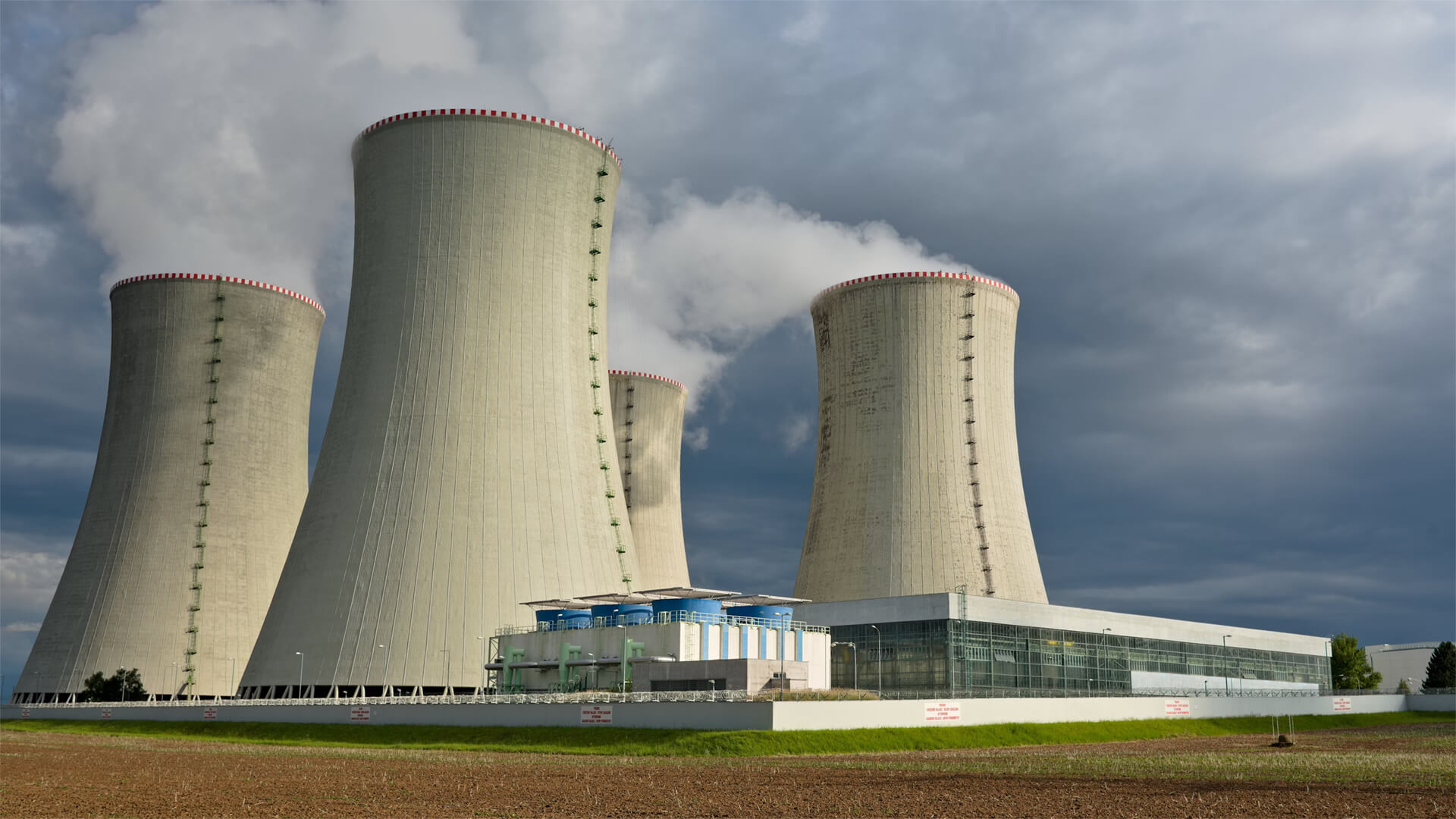
Photo show three nuclear power plant reactors

Japan is restarting the world’s largest nuclear power plant, after a 15-year shutdown following the Fukushima disaster. Nuclear power used to account for over 30% of Japan’s national electricity, so seeing these reactors come back online restores a key pillar of Japan’s energy system.

Japan’s mountainous terrain forced each region to establish large, redundant energy systems; therefore, the return of nuclear power gives Japan surplus capacity and flexibility in an otherwise stagnant environment.

With the global energy trade growing more unreliable by the day, Japan is now better positioned than most to weather the storm.

Transcript

Hey all, Peter Zeihan here. Coming to you from Colorado. Windy day. Today we’re and talk about the energy system in Japan because the Japanese just turned back on the world’s largest nuclear power plant. Now, if you remember roughly, what’s it been 15 years ago now? Almost. There was a really bad earthquake in the Sendai region of Japan, which generated a Sunni army which flooded a large power plant that happened to be on the coast. 

Note to self, don’t put up nuclear power plant on the coast on a fault line. Anyway, because of the partial meltdown, because of the damage, because of the radiation leak. Because it’s nuclear power. The Japanese shut down every single nuclear reactor they had until they could complete a series of safety tests. And a lot of those power plants didn’t do so well on the first round. 

Anyway, fast forward 15 years later, more and more of them are opening back up. And now this new large one is as well. Which means I think it’s a good time to talk about what the power system in Japan looks like, because it is giving the Japanese a lot of options that other countries don’t have. So Japan is an archipelago, lots of islands, some bigger than others. 

But what all of their cities have in common is they’re backed up against really, really rugged terrain, mostly mountains, and a pretty steep ones at that. This is shaped the political culture of Japan going back since the emergence of the Japanese, ethnicity well over a millennia ago. And it means that most Japanese, in a manner somewhat similar to Germans, having a local identity more than a national identity, from many points of view, because they’ve basically spent time immemorial competing with one another, but oftentimes having a hard time reaching one another. 

So you have a very, very strong local customs, traditions and identities. What that means for the power system is that you can’t link together two prefectures in Japan with power, infrastructure, because the terrain is too difficult. This is not linking Iowa and Minnesota together. You have to go up and over mountains to get from one little enclave on the coast to the next one. 

And what that means is each major city in Japan, you shouldn’t think of it as a city. You should think of it as its own thing, its own almost country from an infrastructure point of view. So if you have to do that, you can’t rely on piping in wiring and power from your neighbor. So you need excess supply. 

So you build power plants that you expect to never use. You do ones that burn coal or natural gas. You have your nuclear power plants. Maybe you do a little solar, wind or tidal if you’ve got the right environment for it, maybe even put up an oil burner, which is something that usually not even third world countries would do. 

But the point is, if one of them goes out, you have a backup plan. Now, since the Sendai earthquake, Japan has taken one of those pillars of its energy security nuclear and just taken it completely offline. It used to be 30 to 35% of national demand. That is now coming back in a very big way. At the same time, the Japanese economy over the course of the last 30 years has been fairly stagnant, so power demand hasn’t moved too much. 

So you have this large oversize energy system for each individual part of Japan, and they’re now getting one of their major sources back. So if you fast forward a few months, a few years into a world that is more disconnected, where things like energy trade are not nearly as reliable, all of a sudden the Japanese have a lot more options than other countries. 

Yes, they still have to import the vast majority of their energy, but they don’t really care where they get it from, and now they don’t really care what it is. So even in a world where energy supplies break down as long as there’s something that works, the Japanese are going to be okay. And that’s a lot better than what I can say about a lot of the countries out there.

How Was Trump’s Trip to Asia?

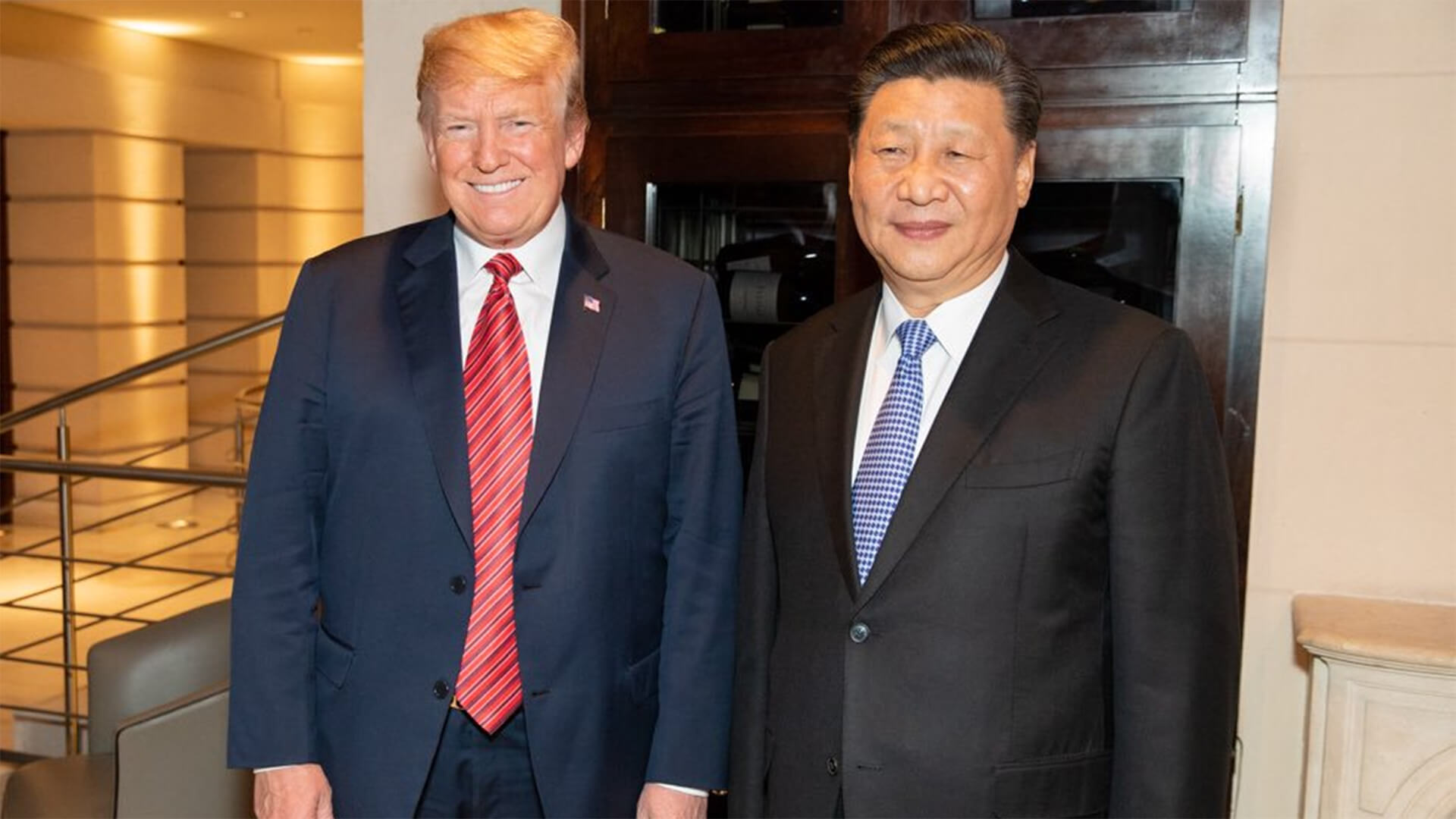
Donald Trump and Xi Jinping at the G20 Summit

President Trump has wrapped up a whirlwind trip to Asia; he met with several key regional leaders—including Japan’s new prime minister Sanae Takaichi and Chinese president Xi Jinping, participated in summits, and crafted some new deals (at least he said he did).

The United States is pivoting away from China and focusing on younger, faster-growing countries in Southeast Asia. This transition has been anything but smooth; wild tariff policies and inconsistent messaging are keeping things…interesting. The Trump administration has made a temporary truce with China, but let’s not expect that to hold very long. Deals with other countries will be nice if they happen, but until I see someone other than President Trump confirm them, I won’t get my hopes up. South Korea is the only tangible progress I’ve seen so far, with $150 billion in US investment in exchange for lower tariffs.

Transcript

Hey all. Peter Zeihan here coming to you from Colorado. Today, I gonna give you a quick breakdown of what happened in Asia last week. Donald Trump had multiple summits in Southeast Asia and Northeast Asia, up to and including a one on one with, the chairman of the Chinese system, Jinping. So. We’re in the midst of a major transition in the United States in terms of trading partners. 

And whether you think it’s for strategic reasons like the, the micro group and Trump seems to think or you think it’s for demographics reasons, which is kind of my general feel, there’s not a lot of disagreement, as to what’s happening as opposed to why it’s happening. So what’s happening from my point of view, is that the northeastern Asian countries, most notably China, are aging into not just obsolescence but national dissolution. 

And so the trade relationships with countries like China, have to go to zero more or less. Anyway. Now, if you want to do that earlier for political reasons, there’s some complications there. But, we’re going to get to the same places. It’s a question of time frame. On the opposite side of the ledger is Southeast Asia, where the demographics are broadly healthy and the relations with the United States are broadly positive. 

So it makes sense. You want these relationships to grow over time because they can. And if you choose to, denigrate those relationships, you’re making a political choice to punish yourself economically. So the relationships from a tariff point of view under Trump have been, in a word, erratic, with multiple times threats on the Chinese going up to 100% tariffs, and sometimes actually being there, but at the same time, in Southeast Asia, some of the codified tariffs that the Trump administration has put in place, not negotiation tactics, actually codified tariffs are some of the highest in the world, which is directly been penalizing American companies that have been working to move their trade exposure, away from China, since Covid. Anyway, Trump was known in Southeast Asia, met with a lot of the Asean leaders and hammered out a series of deals, most notably with Indonesia, Malaysia, Vietnam and Cambodia. And really across all of them, the the core issue is that these really were only deals as declared by, Donald Trump himself. 

And none of the four countries are really talking about them in the same way. Most of these deals never even had a text released or even a press statement from the hosting government. So it’s all very much in progress. Basically, the approach that Trump seems to be taking is that our trade deficit in goods has been imposed on us. 

And his unfair, but our trade surplus in digital goods has been earned. And so therefore it is fair. If you don’t accept that, you can have tariffs. And needless to say, there’s a lot of countries who find that general negotiating position to be unfair. And so there hasn’t really been any meaningful progress made on the talks. A lot of little details have been popped up like, say, rare earths exports from Malaysia as being a big deal. 

But, you know, Malaysia already exported rare earths to the United States. They just put a limit on the exports to the world, not just the United States. So they would have enough of themselves. None of this has really been changed. And the country that is probably, from my point of view, the most important to the United States mid term as a trade partner would be a Vietnam and more technically technologically advanced than the Chinese are. 

They have over a, you know, workforce. It’s almost 100 million people. If you’re looking to plug gaps, it’s a country you want to plug them with. And we really didn’t get a meaningful deal out of these agreements. Moving up to Northeast Asia, there does seem to be more progress with the Japanese and the Koreans. The Koreans are in a desperate position because the demographics are so bad, and they realize that if they can’t maintain a working relationship with the United States of the kind of screwed as a country. 

So they were willing to give a lot more and we actually got our most detailed deal yet. Out of all the trade negotiations between the Trump administration and the rest of the planet just came out of Korea just a few days ago. That doesn’t mean it’s done. Basically promises that the North Koreans are going to dump, over $150 billion of investment to the United States, which I would argue they were going to do anyway. 

But now it’s codified. And then in exchange, they got a lower tariff rate. This is really the first deal we’ve seen out of the white House that actually has numbers to it. Now, it remains to be seen whether it can be done, because some of the numbers involved are pretty big for a country the size of South Korea, which has under 50 million people, but still progress. 

And then the final deal, with the Chinese will come back to that. Now, before you think that I’m just like, Trump’s an idiot and he doesn’t know how to negotiate, he certainly doesn’t understand trade. Let’s look at this from the Chinese side, because Chairman XI Jinping went to Asean almost immediately after Trump was there and talked about multilateralism and unicorns and chocolate and how we’re all one big happy family and signed a trade deal with the Asean countries, a face three day trade deal. 

So while the Southeast Asians and to a lesser degree, the Koreans and the Japanese are looking at Trump like God, when will this end? They’re not looking at gee and think, oh, thank God she was there. No, no. They’re like, you expect us to believe us that you’re the nice guy, the one who’s been bullying us on every issue for the last 30 years, that suddenly we’re going to love you. 

So you look at Trump and they say he doesn’t understand economics or trade and the right and then they look at gee and like he doesn’t understand diplomacy or trade. And the right one of the things to keep in mind about both leaders is both of them have actively circumscribed the type of people that they allow in the early circle to be people who will never even appear to know more about any topic than they do, because they don’t want to be told that they might be wrong. 

So we have these completely ossified Jared autocracies running the two largest countries in the world right now, and it’s showing up and how they’re dealing with every other country. So really all that leaves for today’s topic is how they dealt with one another because she and Trump met directly in Korea. We have a temporary defuzing of the trade tensions. 

There’s no reason on any side to think that this is going to last. But the Americans agreed to reduce the tariff rate. They were charging the Chinese. They removed their threat of an additional 100% tariff. So based on what the product is, the tariff rate from products coming from China, somewhere between 20 and 50%, again, in exchange, the Chinese agreed to limit fentanyl precursor exports to the United States and to start buying some soy. 

So from my point of view, on the outside looking in, the Chinese agreed to do some of the things that they have agreed to do over and over and over these last 15 years in exchange for actual concessions. And if the Chinese actually do what they say they’re going to do this time, it will be the first time that has ever happened. 

Part of the problem that the United States always has in trade relations with the Chinese is there’s rarely any follow up, and there won’t be this time, because that requires a team that is actually staffed out to enforce the trade deals. And even under normal circumstances, where the United States has the Commerce and the Treasury Department of the U.S. Trade Representative’s office dealing with trade issues, that’s a lot to do. 

And this time around, Commerce and Treasury in the USTR aren’t even staffed out. And Trump is handling the negotiations personally. So just as what happened in phase one trade deals between the Chinese and the Trump administration in the first Trump presidency, the Chinese aren’t going to do any of this. And we’ll be right back where we started six months from now. 

And one more thing. One thing that doesn’t change. You know, the more the things change, the more they stay the same. With these adjustments. This last week, we are now in our 540th tariff policy since January 20th. So the ambient chaos that is confusing American traders and manufacturers and consumers. Showing no sign of letting up. There’s no reason to expect that any of these deals are the final version. And until we get, well, maybe, maybe, maybe Korea. So maybe we have one. Until we have a whole raft of those, the back and forth and the ebb and flow continues.

South Korean and Japanese Alliance?

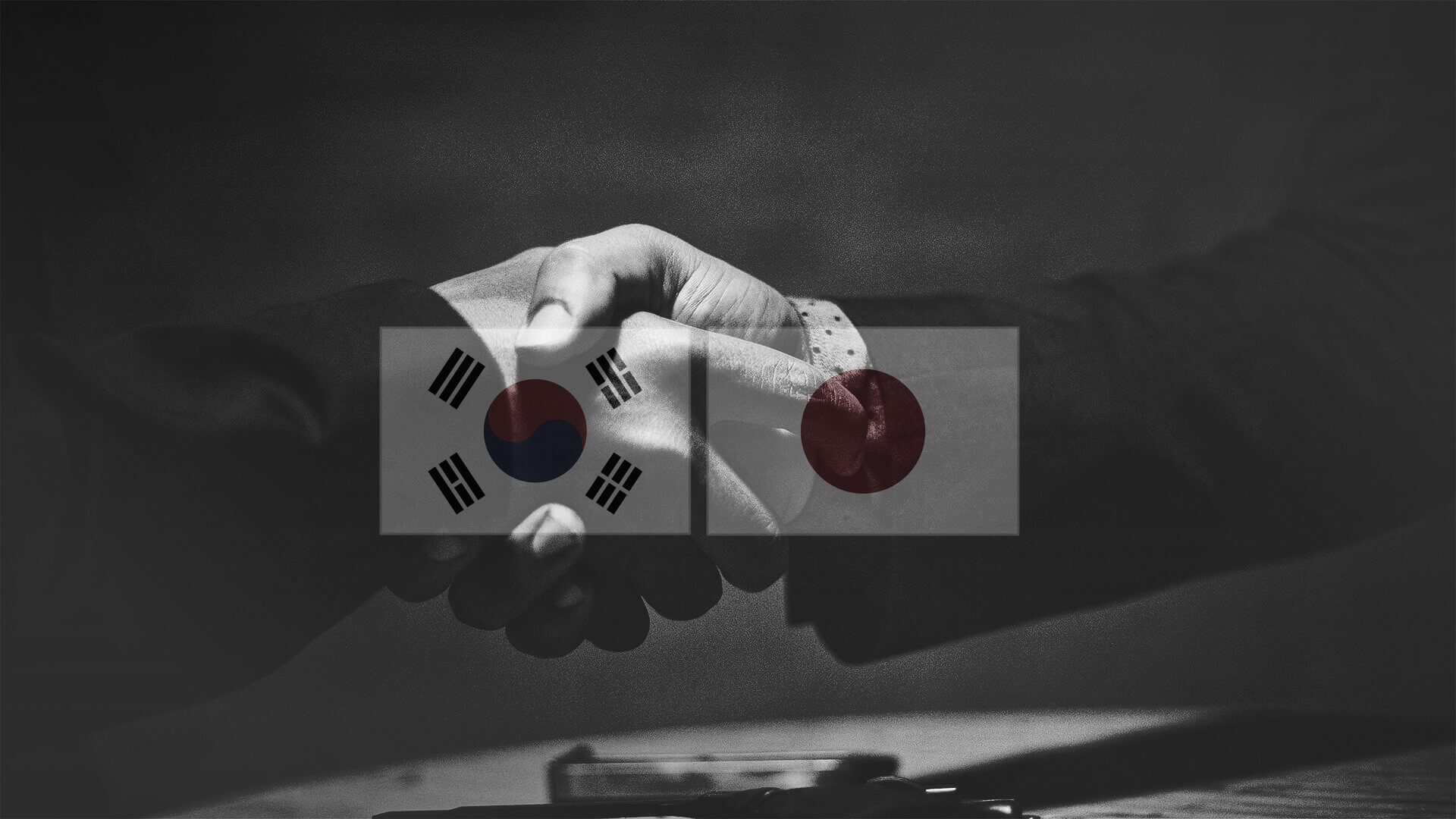
Hands shaking with South Korean and Japan flags over them

We’ve all heard the saying “the enemy of my enemy is my friend,” but I’m not sure if that applies to South Korea and Japan forming an alliance against China.

The animosity cuts deep between South Korea and Japan, so we’re not off to a great start. South Korea’s defense efforts are almost solely focused on deterring North Korea. On the other hand, Japan has built up a capable blue-water navy. However, both powers are heavily dependent upon imported raw materials and exported goods.

That means Japan will likely be able to adapt, but the South Koreans are going to be digging themselves out of a much deeper hole as globalization collapses. So, an alliance between these two is unlikely…but the Japanese may have to reevaluate their options if the current US administration continues to undermine the relationship.

Transcript

Hey, all. Peter Zeihan here. Cody from Tower Pass in the boundary between the Hoover National Forest and Yosemite. Going the other way. Hey, I’m out of shape. Anyway, I’m obviously backpacking, and today we’re gonna take a question from the Patreon crowd specifically. Do I think that the best option for the Koreans and the Japanese is to form a bilateral alliance against China? 

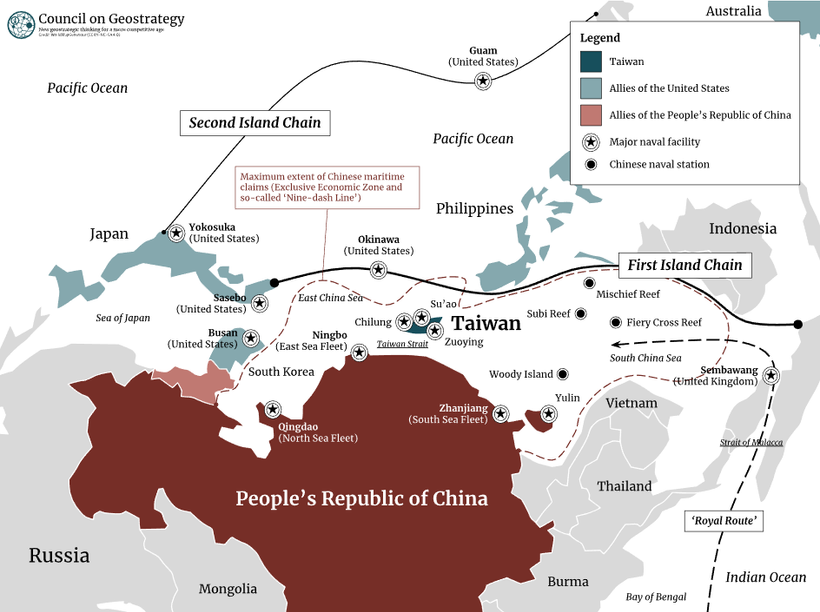
Looking at a map. You got something there? You’ve got an island and peninsula that are off the coast. And if they decided to band together, there’s a lot that they could achieve strategically. However, I don’t see it as very likely. The Koreans. Oh, my God, they hate the Japanese so much. The Japanese have carried out a few genocides in the Korean Peninsula, the most recently during World War two, and they actually forced everyone to change their names. 

And if there’s one country in the world that the Koreans would not want to deal with, it would be Japan. There’s also the problem of longevity of any sort of alliance, and Complementary factors. 

The Koreans spend a lot on defense. Some of the most. If anyone in the world has a percent of GDP, but it’s solely focused on the North Korean threat. And so their navy is very small for a country of their size, very small for a country with their sort of defense spending. And it’s not blue water at all, as opposed to Japan, which doesn’t have to worry about a land invasion at all. 

And so basically, all of their investments in defense, which are significantly lower, have gone into having a blue water navy. In fact, are only four super carriers in the world that are not American flagged. Two of them are Japanese, and they fly American jets. So, the real problem, though, that makes it problematic for the two countries to form a meaningful alliance, is that they’re kind of in the same boat. 

They both are utterly dependent on imports for raw materials, especially energy. They’re both dependent on exports of finished goods. Korea far more in terms of that latter factor than Japan. 

And so when globalization kicks in. They’re both going to need the same things. And only one of them has a navy to go get it. The thing to remember about Japan is Japan has agency. So as relations change economically and strategically and politically around the world, it’s one of the countries that actually has things it can do. So if there’s one country that the United States should go out of its way to try to have a positive relationship in the Asian theater, it would be Japan. 

Unfortunately, we’re moving in the other direction. If you remember back to Trump one, the Japanese very cognizant of their war history with the Americans. Sought out, Trump won to cut a trade deal. That was humiliating. Their goal was to never be on the wrong side of the United States. And they figured if they could cut a deal with Trump Representative MAGA, then they would be good. 

That lasted until Trump two and Trump started to abrogate trade deals, even ones that he negotiated. And while negotiations with the NAFTA countries really have some major economic impact for the United States, the one with Japan has always been more strategic. And so the Japanese found that if they did everything that they thought they needed to do to play, say, Trump, it still doesn’t mean anything. 

And that means we have a country with agency that is evaluating options, and that takes global politics and Asian politics in a very different direction.

Trump Trade Talks: Japan Gets a Deal

Photo of Japanese Yen

Japan is one of the few countries who has been willing to step into the batter’s box and take whatever Trump throws at them. This time at the plate, they were tossed a 15% tariff on Japanese goods (with some big caveats).

Tariffs on some of the most important exports, like cars and semiconductors, have been deferred for future negotiations. Which means Japan will be back at the plate in no time. The Japanese also pledged investment into US infrastructure via state-linked commodity institutions. Trump claims most of the profits will go to American pockets, but the Japanese disagree with that interpretation.

As is the running theme with most of Trump’s “trade deals”, this is predominantly fluff and the real talks are yet to begin.

Transcript

Peter Zeihan here, continuing our series on the new deals that the Trump administration has announced for trade with our major trading partners. Today, we’re going to tackle Japan. The Japanese situation is very similar to the European situation. And then it looks like the Trump administration, Donald Trump personally came up with a few numbers, walked into the room, said, I want this, this and this and this. 

And the Japanese nodded their head and smiled and say, sure. The headline figure for tariffs going, for, for goods coming from Japan. The United States is now 15%. And unlike in Europe, where there’s not a lot of back and forth in manufactured goods, to the degree that industrial substitution might happen with Japan, there’s a fair amount. 

Japan is an industrialized economy that doesn’t have a lot of consumption because of their demographic bomb. And so they export basic goods. Intermediate goods, processed goods and finished goods to the United States. So there’s a lot of room for things to move around if that ends up being the final number for the long term. 

But that’s probably not going to be the final number for the long term. The most interesting piece of the trade deal, as it’s currently been announced, is that on things like cars and semiconductors, those are going to be pushed off to another day. So even the Trump administration is saying that this is the beginning of the negotiations, not the end. 

Here’s the problem. Japan doesn’t make a whole lot of semiconductor, and the United States doesn’t make a huge number of semiconductors. But both of us absolutely dominate certain pieces of the supply chain. So the United States makes the silicon dioxide that basically goes into all of the world’s semiconductors. And we also do almost all of the design. The Japanese do some design, but they absolutely dominate the photo mask, which is, for lack of a better phrase, really fancy sunscreen. 

So when you were throwing the lasers at the chips, you can trim to different depths to achieve different things. These steps are not replicated in either country to the same degree that they would need to be. If you wanted to have a purely national semiconductor supply chain system. So the Trump administration, by pushing this off, is leaving unresolved the question of what the United States is. 

Semiconductor policy is going to be are we only interested in the last step, fabrication, which is what the Taiwanese do? Is that what we want? And we still want to bring in all the inputs that we need from the rest of the world, or do we want to completely indigenous semiconductor system. The first one is $100 billion question that would take 10 to 15 years. 

The second one is a $5 trillion question. That would take 20 to 40 years. And the Trump administration, to this point, hasn’t figured out how it wants to approach that, because that’s a huge tax, no matter which version of the question it’s going to be. And so things with Japan in that regard are being put off. Something similar is happening with drug manufacturing because the Japanese aren’t the ones that make the really cheap drugs. 

They make the more advanced drugs. And if you want to do that at home, you need a whole support chain going up to it. Okay, that’s kind of piece one. Piece two is a promise of investment, unlike the Europeans, where everything is done at the nation state level. And so negotiating with the European Union is a little loosey goosey. 

Japan is a sovereign nation. when you negotiate with Tokyo, you’re negotiating with Tokyo. And Japan is a country that over the course of the last 50 years, has realized that they have a poor system for raw material production and processing. So they’ve built a number of state entities to basically compensate for that. You basically throw state money at entities who are kind of relieve from the normal laws of supply and demand, and go out into the world and make investments that under normal circumstances, Americans wouldn’t make in order to source lithium or oil or whatever it happens to be, according to the terms of the current deal, those institutions will now start investing 

in American infrastructure in order to produce products in the United States. And 90% of the profits from those institutions will go to American entities. So two problems with that. Number one, these Japanese financial institutions that are government linked, they usually go into raw commodity production and processing. That’s not what Donald Trump said they’re going to do. 

He says they’re going to go into high end manufacturing. So already you’re talking about a significant shift in their mission and outside of their normal realm of expertise. The second problem is the idea that the Japanese will provide all of the money, but take hardly any of the profit. That’s a stretch. And as soon as Trump made these announcements, the Japanese like, that’s not what we agreed to at all. 

So unfortunately, in a similar manner to what we have going on with the European situation, this is the start of talks. This is the Trump declaration of what they want. Here we are. When this all started back on April 2nd. We’re now see May, June, July. We’re now three and a half months later. And we’re only now getting the initial declaration of what Donald Trump actually wants to see. 

Now, this is progress. But if you’re talking about the re fabrication of financial entities at the government level in Japan as the starting point for whatever this later deal is going to be, you’re still talking about projects that are going to be realized over the course of a decade or more. Not the sort of thing that can have any impact on things like the trade deficit on any meaningful time frame. 

We are once again, at the beginning of this process. We are nowhere near the end.

Why Japan Needs a US Alliance

The Webinar – The State of Global Energy – is this Friday!

Peter will deliver his analysis and forecasts for regional energy production and his assessment of geopolitical risk—everything from war, to instability and regulatory risk—with an eye on challenges and opportunities facing global production and supply.

Please join us on Friday, May 10th at 12:00 PM EST.

The Japanese have looked into their crystal ball and figured out that a close relationship with the Americans is the only way forward. Before Japan is welcomed in with open arms, they’ll have to prove their worth…

Between trade issues, economic challenges, and demographic crisis, it makes sense that Japan wants to join the AUKUS group (a defense focused coalition made up of the US, the UK, and Australia).

Japan has some big changes to make. While their naval capabilities are solid, they have to make the cultural and political shift toward taking a more active role for themselves and their region. They also lack real world combat experience and have plenty of cybersecurity concerns to overcome. I wouldn’t expect to see the green light anytime soon, but eventual collaboration looks to be in the cards.

Here at Zeihan On Geopolitics we select a single charity to sponsor. We have two criteria:

First, we look across the world and use our skill sets to identify where the needs are most acute. Second, we look for an institution with preexisting networks for both materials gathering and aid distribution. That way we know every cent of our donation is not simply going directly to where help is needed most, but our donations serve as a force multiplier for a system already in existence. Then we give what we can.

Today, our chosen charity is a group called Medshare, which provides emergency medical services to communities in need, with a very heavy emphasis on locations facing acute crises. Medshare operates right in the thick of it. Until future notice, every cent we earn from every book we sell in every format through every retailer is going to Medshare’s Ukraine fund.

And then there’s you.

Our newsletters and videologues are not only free, they will always be free. We also will never share your contact information with anyone. All we ask is that if you find one of our releases in any way useful, that you make a donation to Medshare. Over one third of Ukraine’s pre-war population has either been forced from their homes, kidnapped and shipped to Russia, or is trying to survive in occupied lands. This is our way to help who we can. Please, join us.

TranscripT

Hey everybody. Peter zeihan here coming to you from Colorado. Today we’re going to talk about the recent batch of up to up meetings between the Japanese and the Americans. In mid-April, we had a very large number of contacts up to and including Japanese Prime Minister Kushida, as well as, US President Biden. at issue is the Japanese are angling for a much closer relationship. 

So the back story Japan in the 80s up until the 80s was a huge trade country, but then they had a demographic bomb and a debt crisis at the same time. And over the next 30 years, their competitiveness basically tanked. And so they spent the next 30 years. I don’t want to say gutting, but changing the way their industrial processes worked with as much of the manufacturing as possible. 

Closer to the end, consumers in countries that didn’t face a demographic bomb. And in doing so, they went from one of the most trade weighted heavy countries in the world to one of the least involved with today, only about 10 to 15% of GDP based on where you draw the line. comes from international trade in any meaningful way. 

Toyota says, you know, we build where we sell, and that has basically become the national motto. Now, that requires a degree of openness in the country that you’re trying to sell it. And so when the Japanese over the last 20 years saw the United States becoming more and more isolationist when it came to its economic issues, they’re like, wow, we need to we need to get ahead of this. 

So they reached out to none other than Donald Trump and cut a trade deal from the Japanese point of view, was borderline humiliating. But they knew that that was the price to pay for a long term strategic and economic relationship. And in the aftermath of Trump’s fall, the leadership of Japan has been to the United States to make it clear to Joe Biden that unlike a lot of the other countries that signed trade deals with the Trump administration, Japan wasn’t looking for any changes. 

Something that the Biden administration greatly appreciated anyway. So with that in your back pocket, we can now talk about the relationship moving forward. specifically, the Japanese are angling for membership in a group called Aukus, which is Australia, the United Kingdom and the United States, countries that are now pooling parts of the defense budget. And a lot of the defense technology to build a new generation of weapons. 

the Australian specifically will get out of this nuclear attack subs and medium range air launch cruise missiles, which are, you know, very blimey. And it will tighten what is basically already one of the the tightest security relationships among any three countries in the world. the Japanese would like to get into that. and if you look at what the primary concerns of the anchor steel is China, you can see how that would be a really, really nice fit. 


but it’s not going to happen in the near term. Three problems. Number one, culture after World War two, when the Japanese were recovering from those twin atomic blasts. The Japanese made the very serious and probably very correct decision that we never want to be in a position again where we might even theoretically, be on the wrong side of the United States. 

So we have to have a Navy. We’re an island country. We don’t have a good land network because it’s so mountainous. We have to have a navy just for, normal commerce, maritime for us anyway. And so we’re going to have a naval force. And even today, the Japanese are the second most powerful navy in the world. 

But we have to make sure that that’s cast in a way that will never make the Americans ever blink, that we might be anything other than an ally that does as it’s told. that worked during the Cold War, that worked in the post-Cold War era. But it’s not going to work now, because if the Japanese are going to be part of an alliance with the Australians, the Brits and the Americans, then they need to take some initiative on themselves. 

They need to patrol their own zones. They need to contribute to the greater whole. And that requires a lot more aggressiveness, and especially a culture of having a military that is not looked down on. Basically, in Japan until recently, if you went into the military because people thought that you couldn’t do anything else. that needs to change, because the Japanese do have one of the most technologically advanced systems in the world. 

So, number one, culture cringe. number two. Experience. Part of being a pacifist. No matter what your equipment looks load looks like means that you don’t shoot. And so, since 1945, the Japanese functionally have had no combat experience. And this is going to sound really weird. The war on terror for a lot of countries was an opportunity to get experience interfacing with the United States and get limited combat experience on an issue that, for them was not really top tier. 

So, you know, if something went disastrous, there might be some political fallout, especially with the Americans. But it’s not like Japan would face a threat to the home islands from Al-Qaeda. Well, now that the Americans have wrapped up the war on terror, that opportunity, if that’s the right word, is gone. And the Japanese, if they want to look around and get some practice, you know, you got the Russians and the Chinese, but if there’s a fight with them that is not small scale, that does not have a low risk. 

so it’s not clear how. Aside from drilling, drilling, drilling, drilling with your own forces, with the Americans, with Australia, it’s not clear how they can get that experience before they get to a real fight. The third problem, luckily, is something that is a little bit more short term and a little easier to fix, and that’s cybersecurity. If you are a pacifist and if you believe that military activity is passé. 

Well, you don’t really worry about your information control. And I would argue that aside from the Chinese, where a lot of cryptography is functionally illegal, so the government can hack its own population. The Japanese people are probably the most hacked people on the planet. That’s got to change if they’re going to be part of any sort of deep information and technical sharing, because nobody wants to develop a new nuclear submarine. 

Share the plans with the Japanese and you see it on TikTok the next day. Luckily, there’s plenty of ways to get experience combating that, and I have no doubt that the Japanese are already working on multiple cylinders in order to get that experience built up. But still, that’s not something you do in three months or six months, or nine months or 12 months. 

It’s also your process. So will this happen in some version? I think almost guaranteed. But the question is how fast can the Japanese make? The changes are going to be necessary so that the rest of their would be allies are willing to trust them? That’s not the case here. 

Japan’s Navy Gets Teeth

The Japanese Navy is getting a face lift with the conversion of the Izumo-class destroyers into small supercarriers capable of holding F-35s (compliments of the US).

This marks Japan’s return to full-scale naval aviation and is a reflection of the overall strategic shift in Japan’s military posture. With regional affairs growing more dicey by the day (ahem, China), Japan is straightening out its military posture and looking to play a more assertive role.

Here at Zeihan On Geopolitics we select a single charity to sponsor. We have two criteria:

First, we look across the world and use our skill sets to identify where the needs are most acute. Second, we look for an institution with preexisting networks for both materials gathering and aid distribution. That way we know every cent of our donation is not simply going directly to where help is needed most, but our donations serve as a force multiplier for a system already in existence. Then we give what we can.

Today, our chosen charity is a group called Medshare, which provides emergency medical services to communities in need, with a very heavy emphasis on locations facing acute crises. Medshare operates right in the thick of it. Until future notice, every cent we earn from every book we sell in every format through every retailer is going to Medshare’s Ukraine fund.

And then there’s you.

Our newsletters and videologues are not only free, they will always be free. We also will never share your contact information with anyone. All we ask is that if you find one of our releases in any way useful, that you make a donation to Medshare. Over one third of Ukraine’s pre-war population has either been forced from their homes, kidnapped and shipped to Russia, or is trying to survive in occupied lands. This is our way to help who we can. Please, join us.

TranscripT

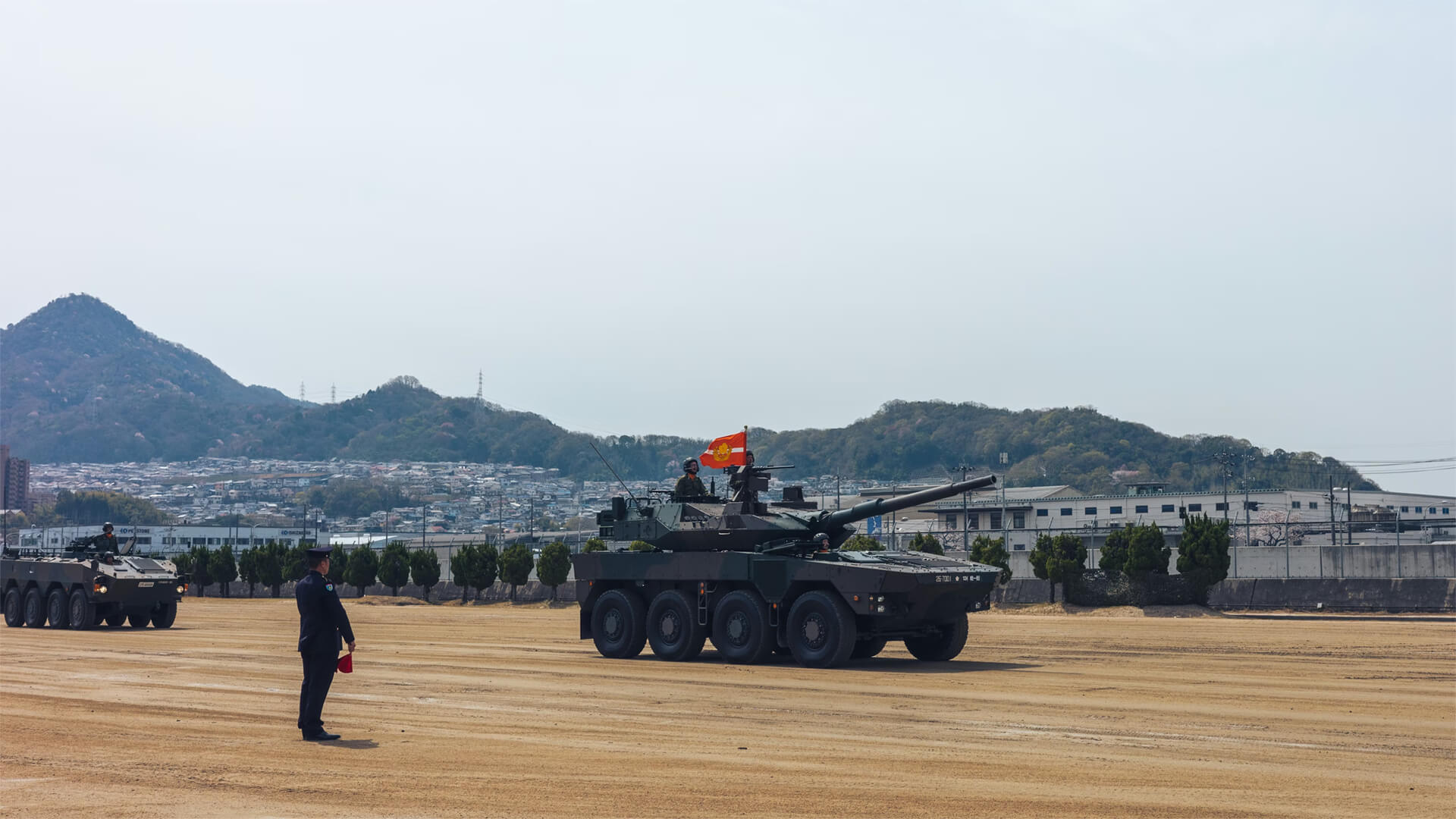
Hey everybody. Peter Zeihan here coming to you from Florida. The news today, we’re in the second week of April, is that the Japanese have released from initial refit a beard, what they call a heavy destroyer. The cargo. It’s part of the Izumi class. this was designed to be a helicopter carrier, right? It’s really a small supercarrier, if you will.

And they’ve now completed the refit so it can take American F-35, of which the Japanese are purchasing about 150, at least a third of which are supposed to be the carrier versions. and there’s definitely going to be more coming. this gives the Japanese full scale naval aviation for the first time since 1945. Keep in mind that the world’s first super carriers or carriers of any type actually are Japanese.

And so this is a skill set that they’re in the process of rebuilding. they’re also doing so hand in glove with the naval superpower, which is the United States. And obviously they’re going to be using a lot of American hardware and training to make this up to speed. So basically this takes Japan and transforms its already blue water navy into a blue water strike, maybe with significant over-the-horizon capabilities.

the Japanese who were doing this happened to over the Americas from a strategic point of view. And the vessels were already sailing together with the American fleets. the cargo will be going for sea trials now for probably about a year, maybe a year and a half before beginning full deployment. And while that is happening, the other of the two sumo class carriers, Mizuho, will now be going for its refit.

critics would say, and I would agree with them, that this was always the plan for the Izumo class. They were only called helicopter destroyers, for purposes of dealing with a population and a region that wasn’t quite comfortable with Japan taking a direct military role in affairs, but that has now turned, the Koreans have gotten quiet.

Everyone else in Asia realizes the Japanese being more fourth, which is actually a good thing. But most importantly, the Japanese population has moved beyond its general feeling to pacifism and the post-World War Two era, realizing that as the Chinese become more uppity that a firmer military position is needed and that requires hardware to accentuate the policy, it.