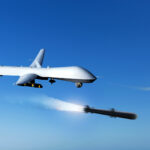


The battlefield of the Ukraine War continues to be transformed by drone innovations. The latest is the (affordable and scalable) modification of existing drones to travel farther and independently identify and strike moving targets.
This has eliminated the notion of a safe rear area, as these drones can strike anywhere and anything. This makes moving troops, fuel, and ammunition much riskier for the Russians. If Ukraine can continue to produce these modified drones at this rate, we’re looking at a much different battlefield in just a few months.
Transcript
Hey all, Peter Zeihan here, coming to you from Italy, Rome. This is the let’s try column there. And we are in the forno de, which I again doubtfully mispronounced. Anyway, continuing with our open ended drone series, there’s a couple of things that are going on in Ukraine that are fundamental breaks with previous military technology in the mid-range drone category, so that’s things that are free flowing roughly 10km to 200km.
So not quite mid-range, not quite short range somewhere in between. Basically you’ve got a two step process. Step one is you have a pilot that kind of directs a drone to an area. And step two, the drone has the capacity with just a little bit of memory and a little bit of optics to kind of look around and pick a target and zoom in on it.
This is already a significant step up from just what the Ukrainians were using two months ago, because it can actually target moving targets now, speed, which this is unraveling and shifting is really crazy. Anyway, what this means is that the concept of a front line from a logistical point of view, is basically collapsed. Used to be that the front line was a real danger zone, where if you were within 20km of it, then the fiber optic drones and the first person drones could target anything and do so in the hundreds of drones per day.
Further back, you’d have things like the American app cams or advanced artillery that maybe came from the French. That would push back the Russians to force logistical support into an area that was more than a couple hundred kilometers from the front, so they’d be out of range, because we all remember from two years ago when the cams arrived in Ukraine.
Then all of a sudden, all of these ammo dumps and airfields started blowing up. So the Russians just moved everything back. Well, with these new pieces of equipment, it’s not individual strikes, it’s not dozens of strikes. It’s hundreds of strikes every day. And they’re targeting everything from individual troops to trucks, which means that the entire logistical tail, not just the depots, the entire logistical tail going all the way back from the front line to wherever the supplies are, is now under threat every day from every angle.
And we’re seeing a de facto collapse and the Russians capacity to even man the area. And so what we’ve seen in the last is 3 or 4 weeks is significant Ukrainian gains in any number of parts of the front, because the Russians can’t bring troops forward, they can’t bring fuel for they can’t bring ammo forward. And if they try, the Ukrainians just dice them up.
So nobody has superiority in this area. But instead of having this shadow zone of 10 to 20km around the front, it’s now stretching halfway to Moscow. And in that sort of environment, the Russians don’t have a strategy, can’t have a strategy, because they’ve always relied on strategic depth to protect them. But that doesn’t work when you can have a free ranging weapon system that’s in the hundreds and very soon in the thousands that’s going over this entire zone, and anything that’s on a road or train is suddenly a target.
This single point advantage isn’t going to last forever. Eventually, countermeasures will be developed, but it’s much more difficult for the Russians to do that than for the Ukrainians. But we’re going to save that topic for another day. Oh, one more thing. It raises the question of how financially viable this is long term for the Ukrainians. And the short answer is extremely.
These are not fundamentally new drones. These are modifications made to existing proven models like the Seth or the dart, for example. Really, all you need to do is plug in a small processor and a moderately sized memory chip, nothing that was considered cutting edge in the last 15 years, so nothing’s under export control are really inexpensive. Total modifications, probably top out, about $100 per drone and in some models no more than 15.
So yeah, they can do this in the tens of thousands per month. No problem at all.