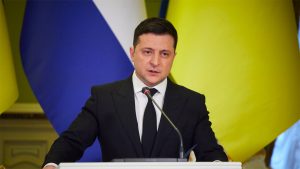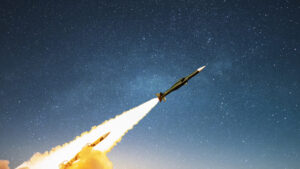
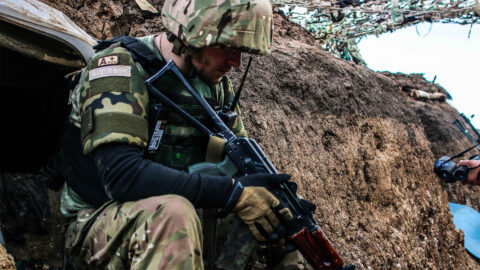

Ukrainian President Zelensky has now dismissed two of the most senior military leaders, Defense Minister Fedorov and Commander-in-Chief Syrskyi. Beyond the speculation of internal power struggles, these dismissals highlight Ukraine’s glaring issues with resource allocation.
This is a multi-vectored war that is constantly evolving, which means the new drone tech is just as essential as the infantry and artillery, and vice versa. So, Ukraine can’t win without either capability. But with limited resources at its disposal, Ukraine has an allocation problem.
Transcript
Peter Zeihan here, coming to you from Colorado. Today is the 23rd of July, and I’m going to attempt to untangle what has been happening in Ukrainian political circles, specifically around the Defense Ministry and the Army.
We’ve had a number of personnel changes over the last several culminating in the last several days of the dismissal of the defense minister, a guy by the name of Fedorov who is a techno guy. He’s in his 30s, big on drones. And Syrskyi who is the commander in chief of the army, a big infantry and artillery guy. This is being spun a lot of ways by a lot of people. Some are saying that it’s a debate between whether drones are the future of Ukrainian military versus the backbone that is currently artillery and infantry. Some are saying it’s personal and it’s really kind of all of the above. The very, very short version is that we’re going through a hot war and battlefield success versus failure generates a lot of changes in personnel, both from mortality and from political decisions that didn’t do enough or you did too much, or you are rising star versus you’re
But really, the core issue is this doctrinal shift between drones and artillery. And what neither side admits is that they can’t fight the war without it.
So in charge of the artillery has very successfully, I might add, held the line in a number of major battles where we expected the Russians just mow over the Ukrainians. But Fedorov with the drones, obviously has remade the face of warfare and given Ukraine not just a fighting chance, but the advantage in many battlefield situations. And to think that one of these will work without the other is very silly.
The problem is, both sets work, both sets are necessary, and both sets require their own procurement chain and manufacturing capability. And it’s not clear that Ukraine has the full capacity to do both of those at the same time with the resources that have. And that’s before you consider the complexity of all of the weapons donations that have come in from the Europeans primarily, and the political complications that come from relationships with the Trump administration right now. So basically, we have our old system led more or less by Syrskyi that is infantry and artillery, and the new system that is led by Fedorov, that is drones and fiber optic cables and computer chips, and each of them requires a huge pipeline of resources, whether that is people or finance or manufacturing capacity.
And the two don’t overlap very much. So when Fedorov became defense minister a few months ago, he’s tried to start switching all of the resources over to his preferred method of war fighting. And Syrskyi kind of had a coronary because there was no way that he could defend the 1000 mile long front without ongoing investments into artillery and artillery shells.
Both of them are right. Both of them are wrong. And now both of them have been fired. So what’s going on now is Zelensky, the president of Ukraine, is attempting to juggle these two factions so that both of them can function because they both need to function. And the reason that the protests in Ukraine in favor of Fedorov are continuing is because they’ve looked at the personnel that Zelensky has put in place of Syrskyi and Fedorov and said that so far there’s been no change.
And that’s true. There’s been no change because Zelensky is trying to balance the interests of two things he absolutely has to have, and the leaders of those two factions hate each other. And the only way they could work together if Zelensky was there personally hand-holding. And this is before you consider the problems with, say, corruption or consider the problems with Russian assassination, or consider competition with other branches of the Ukrainian services.
It’s a really tough situation to be in for everybody. It’s a post-Soviet society. So the pillars of civil society that normally you would rely upon to kind of bulwark the sort of institutional discussion just don’t exist in the same way that they exist in, say, say, Germany or the United States. It’s an ugly situation. I have no idea how it’s going to go, and I am not even going to bother talking about the personalities that are replacing the two principals, because I bet they’re mostly going to be gone within a week or two.
But at the moment we’re more or less in the same position now that we were six months ago. You’ve got these two parallel procurement and warfighting, doctrinally defined institutions, both of which are essential but really just can’t get along and don’t complement each other very well.