
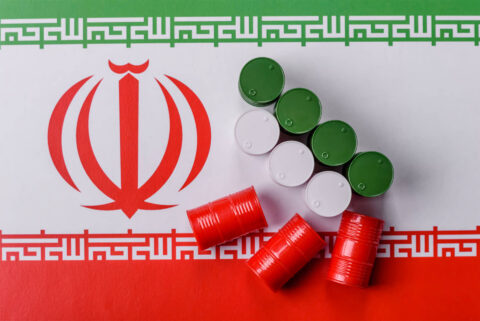

Taking Iran’s Oil is far more complicated and dangerous than Trump has made it out to be. We’re talking about a humanitarian crisis and a full-blown ground invasion to actually control Iranian production.
Iran’s main energy resources are split between the South Pars gas field and Khuzestan. Seizing South Pars is the easier of the two, but the fallout would be horrendous. Controlling Khuzestan would require a ground invasion, fighting both local resistance and the broader Iranian military, forcing the U.S. to stay in the region…sound familiar?
Transcript
Hey all, Peter Zeihan here. Coming to you from Colorado. Donald Trump is going on about taking in other countries oil again, specifically Iran. And, there’s no good way to do it. Let’s just start with that. But it is important, I think, to understand where the stuff is and what that would mean for a potential military occupation.
So there are basically two large concentrations of petroleum in Iran. The first is kind of in the middle part of the Persian Gulf, directly opposite the country of gutter. That’s one of a kind of like a thumb sticking up on the south side of the Gulf. This is what the Iran’s call the South Pars field and the surrounding fields. It’s majority offshore. It is operated by a lot of foreign companies because the Iranians don’t know how to do it themselves. But this is responsible for somewhere between 70 and 80% of the country’s natural gas production. Now, Iran doesn’t really export natural gas in the conventional sense, and almost everything that come from South Pars is fed into the local pipeline network in order to be burned to generate electricity.
So if the United States wanted to take over this zone, it would basically be shutting off the natural gas production because there’s no export capacity. The nearest country would be Turkey. There is a little pipeline there, but you’d have to go through a lot of Iran to get to it. And second, there’s no liquefied natural gas facility like exists on the south side of the Gulf.
So if you take this thing, you’re just shutting it down and triggering, war crimes level of humanitarian disaster as you turn off the power in a country with roughly 90 million people, that’d be bad. The other one is easier in simply because it’s, you know, possible again, not an endorsement here. It’s in the province of Khuzestan, which is in the country’s southwest, hard up against the Iraq border, directly opposite from Basra.
If you remember your war in Iraq days, Khuzestan has 70 to 80% of the country’s oil production. Generates a little bit of waste natural gas here and there, but it’s mostly about the oil. And this is the stuff that basically powers the Iranian economy. Oil from Khuzestan is consumed locally. It’s consumed throughout the rest of the country. It is sent to refineries, the country over, and a lot of it is exported through Kharg Island. Kharg Island is an island off the coast of the northern Gulf. It’s Iranian. And people have been talking about that a lot recently. Donald Trump even knows where it is. And he seems to think that if you take a car, you control the oil industry, too.
No, no, no, you take Kharg, you can shut off Iran’s ability to export, but that doesn’t give you control over production. So if your goal is to take the oil, you have to basically capture all of Khuzestan Province in a little chunks of territory that are adjacent to it. Now, Kazakhstan is interesting for a number of reasons besides the oil.
If you remember back to your, political geography days, Iran is a series of mountain nations, different ethnicities that bit by bit were amalgamated into the whole that we now call Iran or Persia, if you want to use the older term, Khuzestan is an outlier. There because it’s flat, it’s not mountainous.
and the vast bulk of the population are Arabs instead of mountain peoples, or is Aries or Persians. So they are an oppressed minority living in the country, and they live on top of the oil, and they get so little of the money that comes from the oil that this is one of the few parts of Iran that’s actually experiencing population decline, because basically the Iranian government, Tehran, siphons off all the oil leaves, nothing for the Arabs, and they’re just kind of like wallowing in their own poverty.
Before you think, oh, this is a great fifth column to, launch a rebellion against Tehran, keep in mind that the United States has tried that trick specifically before, just on the other side of the river in southern Iraq, where you have a Shia majority that used to be ruled by a Sunni government in Baghdad. And after 20 years. But the only thing that the Shia of Iraq could agree on is that they hated the United States more than everybody else. So I can guarantee you, in the time that the United States has been resting and recouping in the aftermath of the war on terror, we have not gotten any better at nation building. And when we were trying to occupy southern Iraq, which supposedly hit a restive political group that hated the central government that we had overthrown, it didn’t go nearly as well as we had hoped.
And this time, if you do that in Khuzestan, there’s a lot more Iranians with a lot more weaponry and equipment that can be brought to bear, because in the case of Iraq, we overthrew the entire government, were the authority. In the case of Iran, we’d have tens of thousands of American troops on the ground, occupying the local population and then resisting the general forces of the rest of the country.
Anyway, bottom line of all of this. It’s not that I think we can or should take Iran’s oil. Just to give you an idea of what is in play, it’s pretty clear that Donald Trump is planning some sort of ground offensive. He has never deployed troops to an area and not used them. And in this case, we’ve got two loads Marines with, the Marine Expeditionary units on their way. One of them with the Tripoli, is practically local now. They were in Diego Garcia last week. And the other group, the boxer, is approaching Southeast Asia and is expected to be in the Persian Gulf in 2 to 3 weeks.
And of course, the, the airborne forces can be wherever they need to be. So we’re definitely moving forces in the Trump administration is definitely planning on using them. It will definitely be a disaster. And if the Trump administration decides to go after this target specifically, we’re going to be an occupation in the Middle East, just like we were for the bulk of the last 25 years. And we all remember how that went.