
The U.S. shale revolution transformed global energy, but that period of explosive growth is over. Existing pipelines and export infrastructure have reached capacity, meaning future output increases will take a bit of time.
With domestic electricity demand on the rise, U.S. exports will diminish over the coming years. That means America’s ability to offset global energy disruptions is dwindling. Couple that with Asian countries paying premiums for the remaining U.S. LNG, and Europe’s energy picture is only getting worse.
Transcript
Okay. Now. Part three from near the top. Bison peak and all its weird greatness. And then behind me, we’ve got the ten mile range. And the mosquito range. So like quandaries over here and Sherman Sheridan over there. Maybe there…somewhere. Anyway, part three, the United States. Okay. The US shale revolution is different from every other period in energy history, primarily because of the geology.
In a normal Petroleum industry, you’re going to drill through something that’s called a caprock, which is a non-porous rock formation. I got to sit down again so you can see the crown behind me. It’s a non-porous rock formation, ironically. Like these. This is a red granite that oil cannot percolate through, so it builds up pressure behind it. So when you punch through the cap rock, you release that pressure and the well flows, and you maybe get a gusher if you’re lucky.
And even if you’re not, you can always create artificial pressure by pumping water or natural gas or CO2 or something else into the formation to force the oil to the surface. That’s not how a shale revolution well works. In shale, the crude is trapped at the moment of formation into a Petra carbon within the actual rock strata itself. It can’t migrate by definition. So you drill laterally through the formation, have holes in that pipe, and then you pump in pressurized water and sand to crack open the rock. The sand goes into the cracks, and then the little bits of pressure, trillions of little bits of pressure push the water out and back to the surface and it flows by itself.
You can’t do enhanced recovery on a shale. Well, for the most part, there’s some exceptions in there. There’s some gray areas. But anyway, what that means is that instead of the months to years to decades that it takes to bring a conventional well online and then the capital that is required to keep it producing beyond a few years.
Shale is really cheap. It’s up front. All of your costs basically goes into the frack itself, and then you’re done. The downside is that if the shale is in an area where you don’t have existing infrastructure, you have to build a really robust gathering network because you’re going to have a lot more wells traditionally than you will in a traditional field.
You know, there are some of the super fields out there that only have like a dozen wells total. Like that big one offshore in Mexico, which I can’t remember. Cantarell. Cantarell. Ghawar in Saudi Arabia, somewhat similar, whereas you can have dozens, hundreds, thousands of shale wells because they’re only producing a few barrels a day.
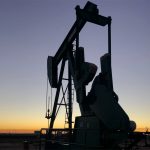
That’s gotten better over time, but overall, the logic still holds. Anyway, the United States has been fortunate to this point in that most of the places where we have shale formations, or at least the ones we’ve tapped so far, we also have preexisting infrastructure. So the Permian Basin in West Texas is the best example because it’s been producing crude for
well over a century. But we only started putting shale wells in there in the early 2000. The Bakken in North Dakota. Same general concept. Anyway, what that means is this infrastructure to gather and especially to transport. The crude has been there for decades. And even though those fields by conventional terms have been in decline for decades, as soon as shale came along. There was all this spare capacity and you could just shove whatever you wanted in there. And it wasn’t until about 15, ten years ago that it got so full that we had to actually build new infrastructure. So if you go back and look at the data in some of the early years, we were adding a million barrels per day plus a couple of years I think we even had 2 million barrels per day. That doesn’t happen anymore because now all of the gathering infrastructure, all the transport infrastructure is completely maxed out. And so for the United States to step in and add more oil or natural gas or whatever into the system, we first have to build an entirely new gathering network and then entirely new trunk lines to take it to the ports, and then, in many cases, new ports in order to load it up and send it overseas or refineries or whatever it happens to be.
So the explosive period of U.S. shale oil and natural gas output is now behind us, and we’re now in an incremental phase. And even if that was not the case for specifically for natural gas, we face another problem. Because of the artificial intelligence era, the United States needs massively more electricity. And that’s before you consider preparing for the end of globalization and all the new manufacturing that we’re going to need, and well-being and building things just uses more electricity than digits and numbers.
So whatever spare natural gas production we have right now, we can’t chill down into liquefied form and export because we need to burn it to generate power locally. So what the United States can do to help the world recover or cope with the Iran war and the Ukraine war has already been done, and you’re only going to get incremental increases in US exports from now on, assuming for the moment we even have stuff to export because our power demand is going through the roof.
At the moment, the Asians are bidding up the prices of things like liquefied natural gas. Now, the reason for that is pretty straightforward. Historically speaking, this is a region, especially in Northeast Asia. So China, Japan, Korea, Taiwan that imports 90% of their energy no matter what the form happens to be. And because they import so much, they have to pay more because they just don’t have any good options within 3000 miles.
And so there’s always been this price premium for anyone willing to ship or natural gas to Northeast Asia. The Europeans have always had an easier time of it because they got stuff from Norway and stuff from Libya and stuff from Algeria and stuff from the Russians and stuff from the Middle East. And so their prices have always been at a significant discount to the, the Asians.
And then, of course, the United States has the cheapest energy in the developed world. Well, now that the US stuff is all spoken for, that premium that the Asians have is probably going to spread to Europe, but it just hasn’t yet. So what we’ve seen this year is the Asians paying through the nose. And because they’re paying premiums, all the natural gas and some of the crude that would have normally gone to Europe has made the long trip all the way to Northeast Asia.
But as the Russians vanished from the scene and the Persian Gulf doesn’t recover, we’re looking at that premium spreading to Europe, and we’re looking at prices coming to Europe that they just haven’t seen for the bulk of these past five years, and they’re not ready for it. And it will lead to more deindustrialization impacts and an energy crisis, especially this winter.
And there’s really not a lot that anyone can do about it except for pray that it’s a mild winter, which has happened in the last five years for the Europeans, thank God. But that is a thin reed to base energy security on.