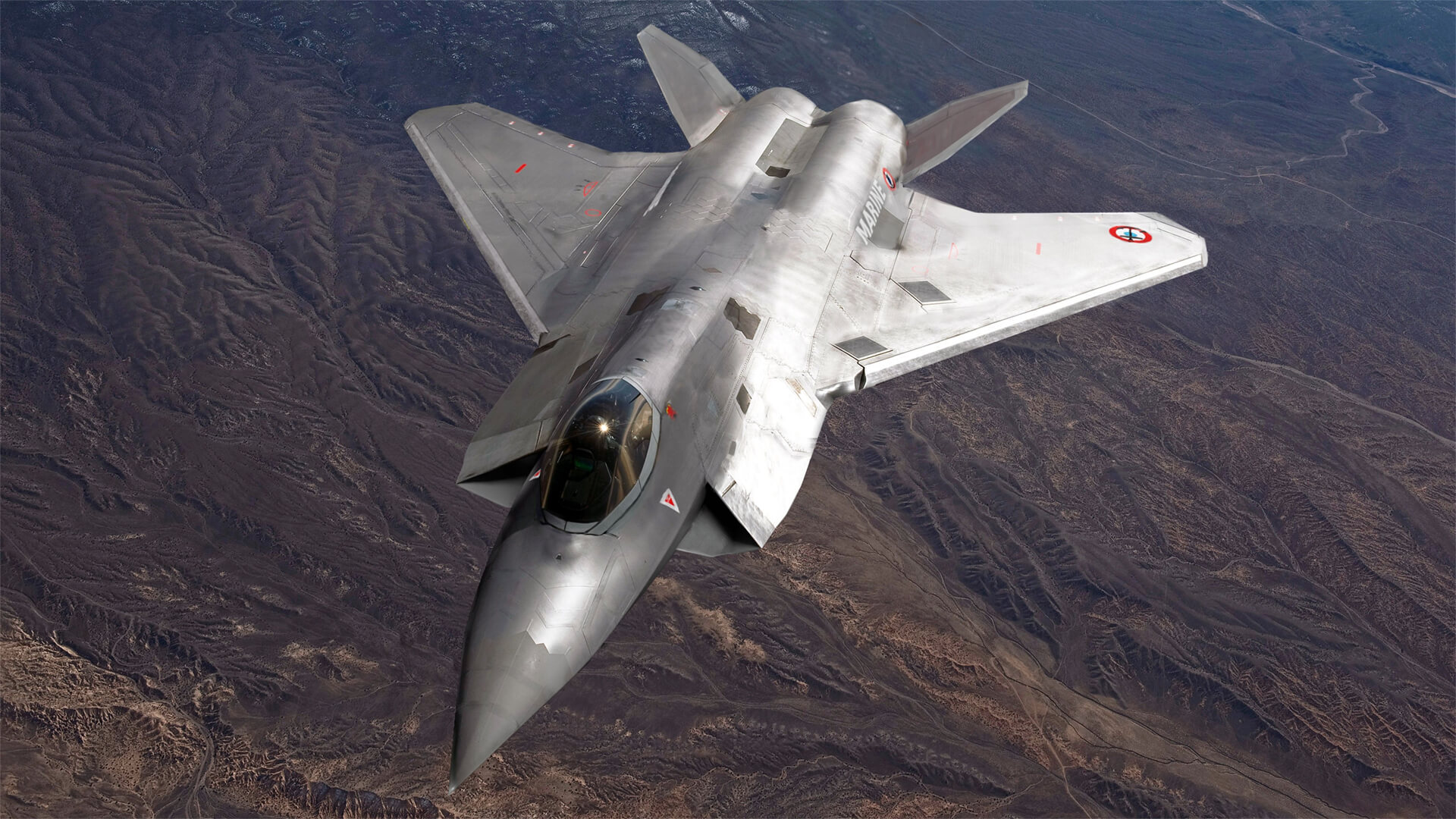

The joint French and German Future Combat Air System (FCAS), a next-generation fighter jet project, has collapsed. Between conflicting national priorities and countless disagreements, the two countries opted to abandon the project.
Transcript
Hey everybody. Peter Zeihan here, coming to you from Colorado. The news is that in early June, the Germans and the French abandoned their effort to build a joint new fighter program. Fifth generation. It’s called the FCS Future Combat Air System. They started working on this, I believe, nine years ago, and it hasn’t gone far. The very short version is that you’ve got a company or a country like France that is very into state control of certain specific types of economic activities and security activities.
And the Germans, who are really good at producing things at scale. It was always going to lead to a bit of a friction. In fact, the Dassault CEO dissolved, being the French aerospace company said, you know, I don’t know why everyone thinks that we might need to work with the Germans, build a fighter jet. We already have the Rafael, which is one of the world’s best fourth generation fighter jets, which is true.
Anyway, they couldn’t decide what to build, where and how to do it. There are some fun stories with Airbus about how they had to build specific kinds of barges to transport wings from one facility in Germany to another facility in Spain, to a third facility in England. It was stupid.
Anyway, doing high and avionics is difficult and expensive and there’s a lot of pieces, but if you have it spread among multiple companies, it becomes a real disaster.
Anyway, they ultimately decided to pull the plug on it last week. Two things that come from this. Number one, this really does put the Europeans behind when it comes to developing a fifth generation fighter jet. Right now, the only real option is the USSf 35, which is not a good match for a number of reasons, most notably range.
And that’s before you consider that the American government, from the European point of view, has really gone off the reservation and has become, if anything, more of a security threat than a guarantor. Put that to the side for the moment. This suggests, with the possible exception of the next generation of Swedish Griffon or the next generation of French Rafael, there really isn’t going to be an indigenous European fifth generation jet.
And that’s either good or bad based who you’re talking to. So much has changed in the world of defense technology with drones in just the last six months, that it’s unclear whether a fifth generation jet is really worth the cost anymore. So yes, this is bad for European integration. Yes, this is bad. If your goal is to have a fifth generation jet at all costs.
But let’s consider the second issue here. If Germany is ever going to be an independent power, it has to have a completely indigenous defense industry. And if this latest operation with the French has now failed, that’s not going to happen soon. Or at least it’s not going to happen with the conventional technologies that we understand. And if the Germans can’t build their own fighter jet, even in partnership with the French, well, then anyone who has a strong air force can prevent the Germans from getting to uppity.
Countries that fall into that category include, are not limited to France, Poland, Sweden, the United Kingdom and Italy. So one of my concerns as the globalization gives away, as populism rises and the supply chains breaks, is that the most powerful economic country in Europe? Germany will eventually become the most powerful military in Europe and start to act like a powerful country with a powerful military.
And every time that’s happened in the past, things have kind of gotten spicy in Europe. Well, if they don’t have an air force that has functional independence, that can only go so far. So it doesn’t mean that Germany is immune to the political ebb and flow that we’re seeing all over the world as a result around economic nationalism, populism.
They certainly still are vulnerable to that. And their political system at the moment is deeply fractured and has a lot of unsavory characters in it. But if they can’t act on it effectively, then all of a sudden I sleep a little bit better. Keep in mind that Germany is in the heart of Europe.
There is no version of a strong Germany that insists in such a way that the neighbors it has are not concerned. But if we can have an economically viable Germany without power projection, that’s a very different discussion. And now, for once, it seems that we’re moving in that direction.
So I applaud this decision, mostly because it helps me sleep a little bit better.