
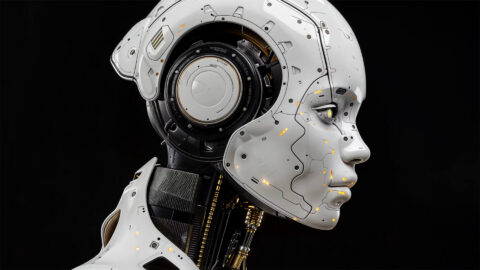

Japan has long been a pioneer in methodologies and technologies to save society from a demographic crisis. Japan’s next endeavour is developing AI-powered robots for industrial, agricultural, healthcare, and logistics applications.
They plan to take Nvidia’s newest GPUs to train an AI model that combines vision, language, and physical action, allowing autonomous operation without constant connection to a data center. This won’t happen overnight, but given Japan’s aversion to immigration, this is an early test case of just how far AI-driven robotics can carry an aging population.
Transcript
Hey, all, Peter Zeihan here, coming to you from Colorado. And today we’re going to talk about Japan. The Japanese government just announced a program to develop its own model for industrial and agricultural and health care robots. In essence, they’re buying a new breed of GPU called a Reuben from Nvidia, which is the American company that is like $1 trillion company or 18 trillion. I don’t know, it’s big. In order to generate their own model. So they’re buying these chips, about 28,000 of them. They’re going to put them in a customized data center that they’re building right now, that’s on the small side, only 140MW. Nothing like the giant hyperscalers we have here in the United States. Anyway, the goal is to iterate a new model that connects vision and language with action so that you can have a robot in an industrial setting or healthcare setting, or an agricultural setting, or a logistics setting that can operate autonomously. So they develop the model, they condense it down, they pack it onto a robot with different hardware and simpler hardware, and then it operates without any sort of oversight from the data center. So starts its life a little bit like a large language model, but with something that is designed to generate a package that you can take and then put into something else, whereas a large language model just goes goes goes goes goes goes goes. Uses the same sort of hardware that the hyperscalers are using. And that’s part of the problem, because the hyperscalers like we want a million of these chips. And so Japan is in line behind all the hyperscalers which have the biggest orders and the deepest pockets. And so Nvidia designs their hardware for the hyperscalers and everybody else, like the Japanese, has to just see what’s on offer and adapt their own systems accordingly.
Now, what is this probably going to look like? First of all, don’t get too excited about time. The Japanese aren’t going to these chips soon. The first chips only started to be produced in June. TSMC only kind of hit their stride in July, and its first real deliveries aren’t going to happen to this fall. And the Americans are in line first, so the Japanese probably won’t get their 27,500, I think, is the number, probably until the second quarter of next year. By then, most of the data centers should be built, and they can begin meaningful operations before the end of next year, but they probably won’t finish the model until right around New Year. So we’re already talking not just 2027, but 2028 before they might be able to start putting this thing into robot brains. And at that point, well, then we can reevaluate. Japan is the world’s oldest society. It’s no longer to the fastest aging, but it’s expecting a workforce shortage of more than 11 million workers as soon as 2030. Now they have a robot strategy in the country, and they’re pretty good at automation already. So they’re starting from a level in this project that is well ahead of everybody else in the world. But that’s because the need is so huge. If Japan is going to continue to be an industrialized, advanced country, they have to find a way to substitute for labor. Now, in the United States and in a lot of other countries, you could always tap the global talent pool and bring in high tech workers.
Japan, however, is one of the world’s most racist societies. So they like robots, but they don’t necessarily like Filipinos or Indians or even Americans. So doing this AI approach is the only one.
Once this is set up, if it works, the robots will probably still have a digital tether back to the data center, but not for operations, because they’re going to have to make decisions right there in front of them. And if they have to wait for the lag, like, you know, when you program something into Claude or ChatGPT, there’s that lag before you get the answer won’t work. All has to operate on site, but it will still be generating training data to go back to the data center to update the model. And then of course, you have software updates like you had with any other hardware.
It’s a very promising project, merging what the Japanese have been doing for the last 40 years with the frontier tech that is being developed only just today. And if it works, we may, may, may, at least in one situation, have a partial, partial solution to what is turning into a global labor shortage, as the population of 100 plus countries is honestly just aging out to the point that we won’t have enough workers to do what we need to get done.
But Japan, they’ve been working on this for a while. They’re using new toys. It looks pretty promising.