
Pakistan, Turkey, and Saudi Arabia are entertaining a NATO-style mutual defense pact. While this alliance might not be practical at this moment, it’s a much different conversation in the long run.
Transcript
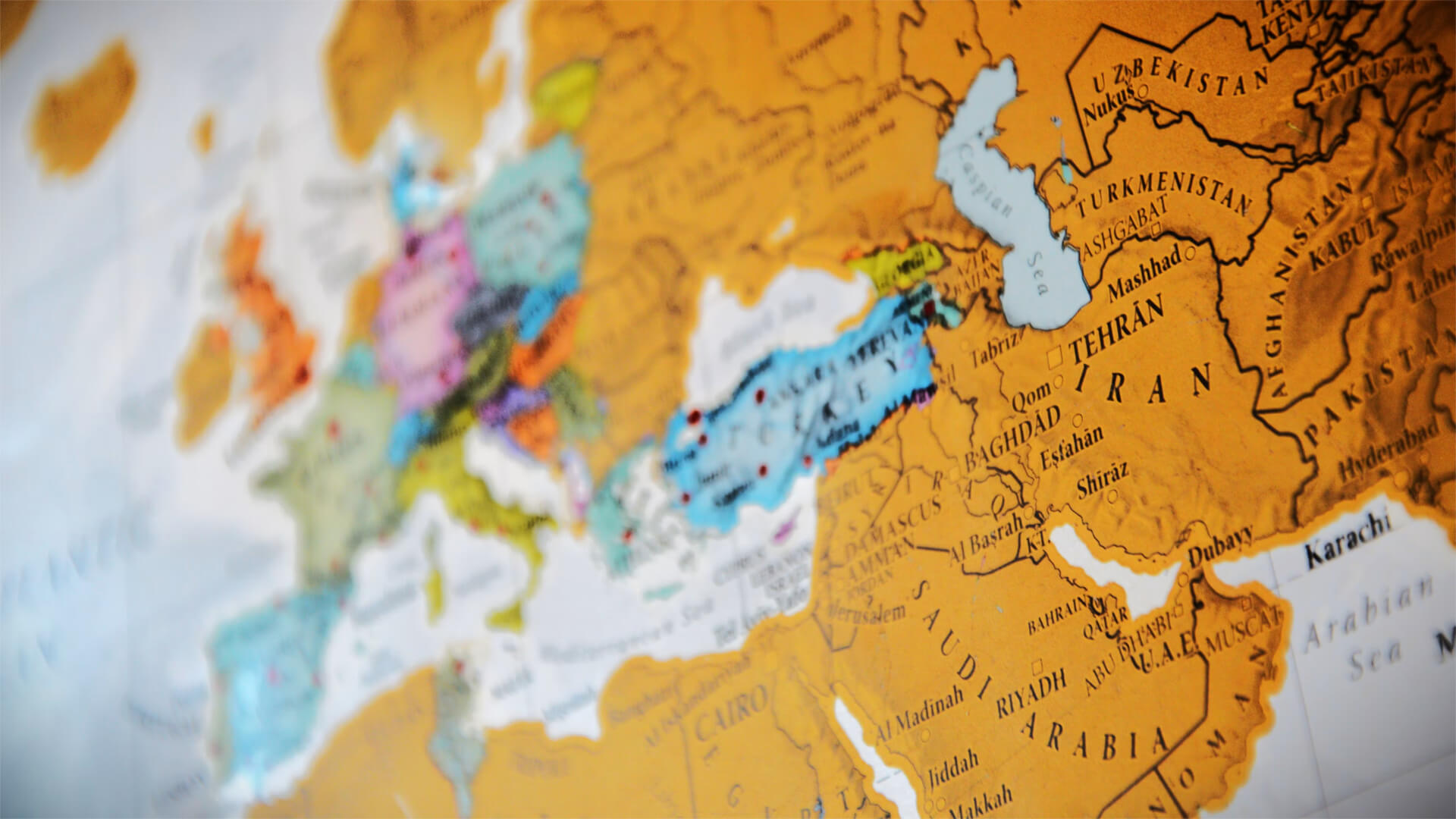
Hey, all. Peter Zeihan here, coming to you from Colorado. It is the 10th of August. And the new news is that over the weekend, representatives of Pakistan, Turkey and Saudi Arabia met in Mecca and basically tried to build the local equivalent of NATO, complete with a joint defense clause where an attack on one of them is an attack on all of them.
Obviously, Iran is the boogeyman in the room at the moment. So let’s talk about how this at this moment in time, is kind of silly, but if you look forward a few years actually makes a lot of sense. So first the silly. Saudi Arabia obviously has been heavily involved in the war with Iran and has had any number of his physical assets for oil production, transport and refining attacked. And it’s been partially flanked by the Houthis, which are basically an Iranian proxy. So there is no part of Saudi Arabia that is safe from the drone and missile attacks the Iranians have been lobbying these last six. The idea that they would want a security pact with a country that’s not the United States makes a lot of sense, because the United States started this war, prosecuted this war without any consultation with the Saudis, and now looks to be getting bored with the war and is likely to just leave. And Saudi Arabia has to figure out how to live with that.
On the other hand, you’ve got Pakistan and Turkey, which, while they don’t necessarily have friendly relations with Iran all the time. They don’t consider it a hostile state in the traditional sense. Yes, they’ve got some security issues. There are ethnic Kurds living in the border region between Turkey and Iran, and both sides try to stir up problems for the other one on the other side of the border. And the Baluchis are the problem on the border between Iran and Pakistan and basically the same math flows. But Iran and Pakistan don’t nearly have the kind of death grip on relations that the Saudis have. And anything from the Iranian point of view that gets anyone else collaborating with or with the United States is generally not a good thing.
The Iranians are a lot like the Russians, in that they may have a lot of power, but they’re certainly not able to dictate a solution. So keeping everybody else broken up makes sense. And this agreement certainly doesn’t work for that. But keep in mind that the other countries have other things going on that the others want nothing to do with.
So Iran is the issue of the moment. But, you know, if you’re in Pakistan, your only issue that matters is India and the Turks and the Saudis want nothing to do with a fight with India. And if you’re in Turkey, you’re either wrestling diplomatically and economically in culture with the Europeans or you’re getting ready for a fight with the Russians. And that is something the Saudis and the Pakistanis want nothing to do with either. So at this moment in history, the idea that this is a tripartite alliance where one of them will bleed for the other two is honestly kind of silly. And the Iranians have already kind of called it that. But if you step back a little bit and take the longer view, the picture changes.
Regardless of why the United States is removing itself from a lot of the Eastern Hemisphere. You can make the argument that I’ve been making for some time that for reasons of demographics and geopolitics, the U.S. is entering a more retrenched phase. You can look at what the Trump administration has done is basically spent most of our long range weapons making it almost impossible for us to fight a real war in the Eastern Hemisphere now.
Regardless of the cause, the United States’ position is the determinant of what happens in the Persian Gulf, is fading very, very rapidly and will probably collapse before the end of this administration, if not the end of this year. That reorders everything. One of the big things that people have forgotten about when they talk about globalization is it allows any local power to project economic and cultural influence on a global basis.
And if you’re a non minor power, like, say, Turkey or Pakistan or Saudi Arabia, that can have an outsized impact on everything. But if you remove the United States in its security guarantor position and its ability to keep the sea lanes safe for everybody, all of a sudden all of these secondary powers have to take care of their own neighborhood. And that forces a reshuffling of priorities domestically and internationally. And so if you look at these three countries, all three of them are Sunni. So there’s that’s a religious extraction of Islam. So there’s already a degree of a cultural link. Saudi Arabia is the world’s largest oil exporter. Turkey and Pakistan are importers. And if you look at the other places where these places might get their energy from, Pakistan might be able to get some from Southeast Asia. But in a deglobalizing world almost all of that crude can be consumed locally. The Turks can get crude from, say, Turkey. But as the Ukraine war continues to heat up in a globalized world, it’s only going to get hotter. All of a sudden that becomes less viable to.
So these three countries in the mid-term are going to be seeing closer and closer security and economic integration anyway. And the idea that today they are laying the groundwork for something that might actually resemble an alliance down the line. Well, we’re now going from pie in the sky to kind of common sense. It won’t work this year, probably won’t work next year, but by the time we get to 2030, we’re going to be in a very different environment, both in the Middle East specifically and in the wider world. And it’s interesting to see countries that have capability, like Pakistan, like Turkey, largest army and NATO like Saudi Arabia, already starting to prepare for a postAmerican world.