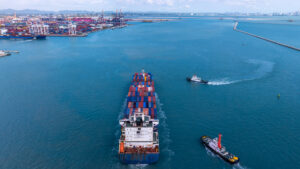
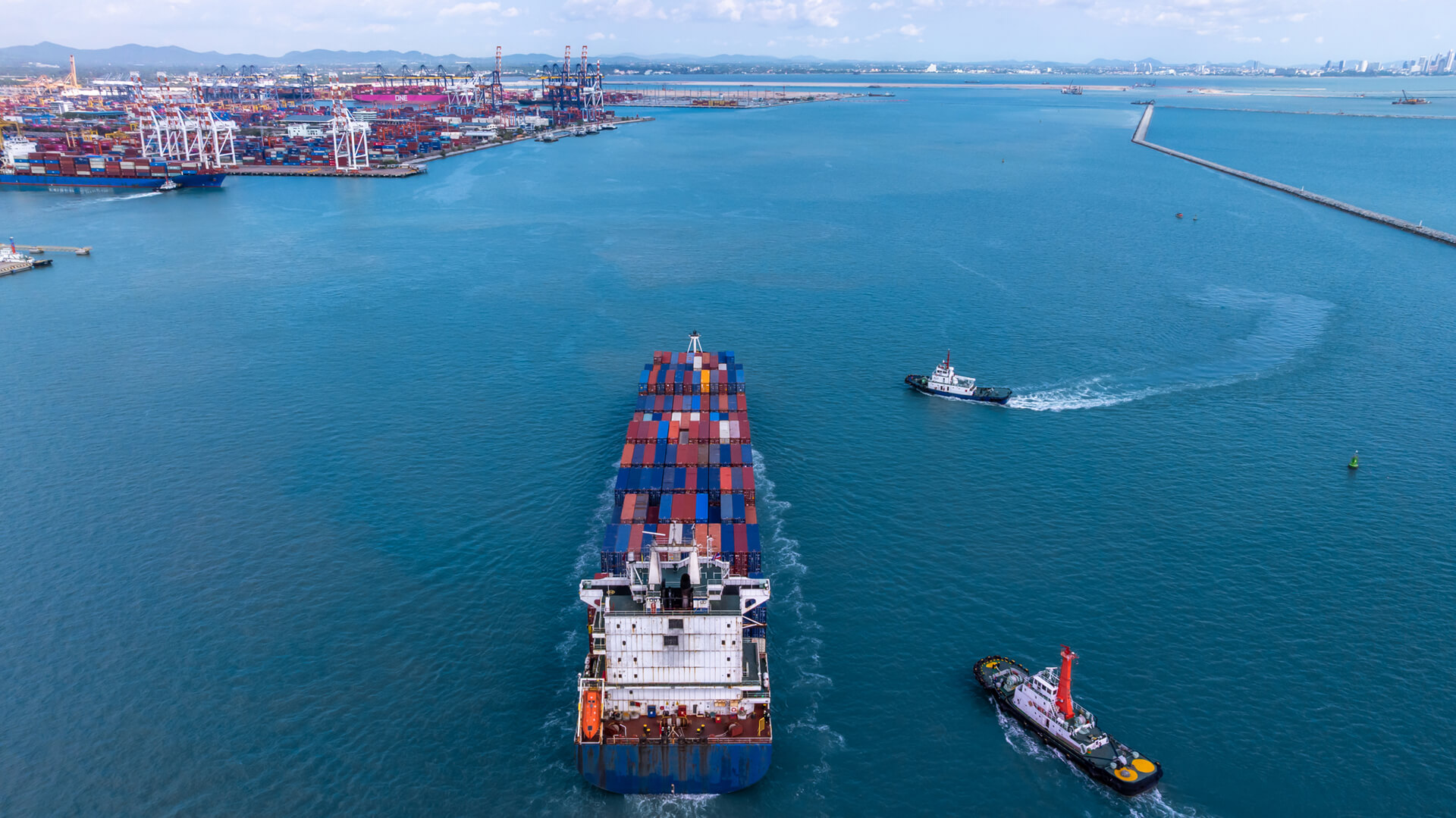

Should Iran manage to turn the Strait of Hormuz into a toll-based waterway, what does the domino effect look like?
There are a handful of straits and chokepoints that will follow suit, including the Bab al-Mandab, Turkish Straits, and Danish Straits (the Strait of Malacca will likely remain open). Each of these has regional players with strong incentives to adopt their own version of the Iranian model. Just another line item pushing us toward a more regionalized world.
Transcript
Hey, all. Peter Zeihan here, coming to you from Colorado’s Front Range, taking a break to talk about Hormuz and what’s next. We’re probably going to have some sort of format before the end of the year where Iran is able to gather charges, whether it’s a service fee or toll, whatever you want to call it, for ships passing through.
Once that happens, there’s going to be a lot of dominoes falling as other states realize that they, too, can demand control of a waterway and gain financial assets from that. Until this point, international law has made it very clear that any naturally occurring waterway cannot be regulated in such a way. So we’re breaking with a century plus of tradition here.
Artificial waterways like the Panama Canal or Suez are exempt because they are fully within sovereign territory. There’s infrastructure that has to be maintained. And so that’s not new. You can charge tolls there. But once Hormuz goes the other direction into something that is regulated, other places are going to follow. And the first one will be the Bab al-Mandab.
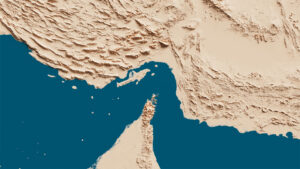
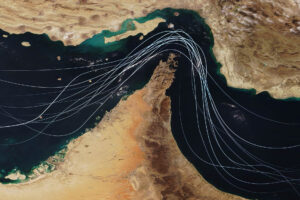
So Hormuz is in the eastern corner of the Arabian Peninsula that connects the Persian Gulf to the Indian Ocean. The Bab al-Mandab is on the southern tip of the Arabian Peninsula, which separates the Red sea from the Indian Ocean. Now, the countries that are clustered around Bab al-Mandab are oddities. One is Djibouti, which in for nearly all intents and purposes, remains a partial French colony. One is one of the remnants of Somalia, which is not exactly what it screams state function. And the last one is Yemen, which is a country only in name. The central government in Sanaa is weak at best. It’s been in and out of civil war really, ever since it’s united back in the 90s, and now the single largest group in the country, the most powerful, and are the Houthi rebels, which are backed by Iran and have been using the Iranian connection to get weapons, most notably missiles and more recently, drones to attack ships in the Red sea.
If we have Iran succeed in Hormuz, the Houthis are absolutely going to try to do the same thing in the Bab, and they won’t be alone as the important thing. Because remember, the Houthis are not a state power. They’re a rebel group. And if they start to have the ability to carve out a little bit, Sanaa, the capital, will certainly follow. And the idea that you’ve got a broken state of Somalia that doesn’t need income is silly. And it’s already the land of pirates, so they already have a way to enforce that, too. And then you’ve got Djibouti, which for all intents and purposes, is in France’s pocket. And if there is any first world power that senses an opportunity here from a changing in the international order, it would be France.
So it very quickly turns into a multi-sided argument/conflict over how to regulate it. And probably what would happen is that all four of these entities would be able to extract value from the Bab, because basically what we’re talking about here with Iran and Hormuz is protection money. You pay us and we won’t attack you. And while the entities of the Bab aren’t as powerful as Iran, you know, the French can send a ship or two. Somalis can always dispatch pirates. And the Yemeni have already proven that missiles are more than enough to cause damage. So there you’ve got two of the places where international energy flows that are going to be facing much higher fees. There’s two others that I want to draw to your attention to. Well, actually, you know, first let’s eliminate one.
Let’s eliminate the Strait of Malacca. Malacca is off the coast of Singapore. It’s between the Malay Peninsula and the Indonesian and Malaysian archipelagos. It’s the busiest waterway in the world. Most of the things that flow out of Hormuz eventually go to Malacca and on to Northeast Asia. And most of the things out of Northeast Asia that don’t cross the Pacific go around Malacca on their way to Europe. So busy, busy, busy busy, busy. But what about Malacca compared to, say, the Bab, is that the states around it are more capable and more importantly, they’re more regularized and they benefit from that trade. So the big three Malaysia, Indonesia, Singapore, these are trading countries. And not only do they benefit from the transoceanic trade that goes through the strait, they are part of a group called the Association of Southeast Asian Nations, Asean. That’s a regional trade grouping where most of that trade goes through the strait, too. So the countries that would suffer the most from some sort of toll regime would be the countries that would be responsible for implementing a toll regime. So, Malacca, I don’t expect to fall into this trap. There have been problems with pirates in the past, but Singapore, Malaysia and Indonesia working together have usually been able to keep a lid on that. I don’t see that changing in the near future. So not there, but the big one that would absolutely flip almost overnight would be Turkey, the Turkish Straits, the Bosporus and the Dardanelles connects the Black Sea to the Sea Marmara, to the Aegean Sea, and on to the Mediterranean and the wider world. The international laws that regulate international waterways were basically built with Turkey in mind at the end of World War One, and they basically say that the Turks cannot regulate this waterway, despite it being the narrowest of the natural ones, and despite the fact that it flows through the largest city in Turkey, which is Istanbul.
The second it becomes apparent that the Iranians can enforce their will on the Persian Gulf. In this way, you can bet your ass at the Turks are going to be doing the same thing. And the Turks have a functional navy. They have a functional army. They can physically interdict every single ship that passes through these waterways without really breaking a sweat. And so you should just kind of file that in as a done deal as soon as something gets regularized in Iran.
And then the fourth one to consider, fifth one consider excuse me, is the Danish Straits. The Baltic Sea empties into the North Sea and onto the Atlantic, and in doing so, it passes through a series of straits that are controlled almost exclusively by Denmark, plus Sweden. Now, these are two countries that haven’t really tried to regulate the strait in modern times. But if you go back to the times before World War one, this was one of the big hullabaloo things in northern Europe. With the Germans ultimately building the Kiel Canal that crosses that narrow little section of northern Germany in order to bypass anything that the Danes could do. As soon as that canal was built, everyone basically stopped paying the sound dues as they were called, and simply it was a free waterway. But once it becomes clear that the rules are changing, expect the Danes to get in on this, because pretty much all Russian commerce that flows out of northern Russia comes out of Saint Petersburg and Vyborg, and then onto a boat and then through the Danish straits. And the Danes have not been happy about that for the better part of a century, and certainly not since the Ukraine war started. And now that Sweden and Finland are no longer neutral countries, you can count on the Scandinavians working as a group. So Norway, Denmark, Finland and Sweden working as a group to enforce some sort of structure on this waterway because it is to their economic and especially national security interests versus the Russians.
Now, if you step back and look at all of these in unison, you see two big patterns. The first is that anything that wants to flow out of the Middle East in terms of oil has to use either Hormuz, the Bab or the Suez Canal. And so all of a sudden, the countries that hold the leverage there have huge leverage when it comes to energy. And if I were them, part of the tolls in my mind would simply mean making sure that I never had to pay for oil again. Just something to think about. And since France has a thumb on that scale, that gets really interesting really fast.
When you’re talking about the Turkish Straits and the Danish Straits, however, the THE issue is Russia, because almost all of their exports in the post Ukraine war environment flow through those two waterways. And all of a sudden you’ve got countries that are in NATO completely controlling their access. That doesn’t mean that deals can’t be cut, but it does mean that Russia’s access to the world as an exporting power becomes limited to just what it can get out through the Pacific. And that is a small fraction of what goes west simply because of the nature of the infrastructure in the distances involved.
Most of the people, most of the refineries, most of the oil flows west, not east. So we get a rewiring of what’s left of global commerce in the scenario. And all of a sudden a lot of these products are trapped regionally rather than being able to go globally. And so the closer you are to these things, the easier it is for you to cut a deal with the powers that hold the knife over the roots. And the farther away you are all of a sudden, you’re talking about needing to find a way to source things that are not coming from these two zones. And for a lot of countries, there aren’t a lot of good options for that.