
A leaked Moscow memo stated that Russian air defenses are being concentrated around the Kremlin. This leaves the broader Moscow region, including refineries and key infrastructure, vulnerable to Ukrainian attacks. And if Moscow is this vulnerable, it gives you an idea of just how bad things are throughout the rest of Russia.
In addition, the Russians are looking to kick off a peripheral mobilization of ~300,000 people. However, all of the recruitment sources carry political risks for the Kremlin. If they depopulate the Far East, it weakens the border with China; if they take non-ethnic Russians and could fuel unrest; or you target immigrant workers and worsen the labor shortage.
Transcript
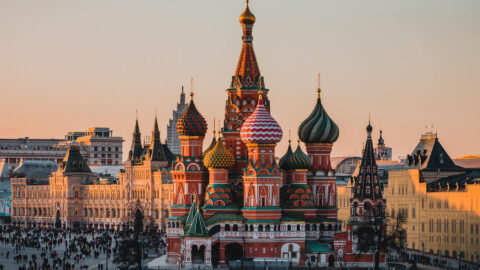
Hey, everybody. Peter Zeihan here, coming to you from Colorado. Today we’re talking about the combination of things that have come out of Russia. We’ve got two things. The first one is that a memo that was being circulated among the Moscow mayor’s senior staff has leaked. And basically they are admitting that even with the government, the national government, the Kremlin, redirecting the bulk of the country’s air defense to the Moscow region, the defenses are so concentrated around the Kremlin itself that they’re not providing enough anti-air defense for the broader metro region, which is the economic and political and cultural hub of the country, which means that refineries which are on the outskirts can’t really be protected at all. And they are expecting the refining system to not simply continue to come under attack. But they’re expecting the city to run out of fuel before the end of the year, and perhaps a lot sooner than that. So they are spitballing ideas of what to do about that. And the leading candidate right now is to break up Russia’s refining complex instead of the 100 odd refineries it has right now, and build a thousand plus that are just much, much, much smaller.
Now, it isn’t so much that this is a good idea because it’s not. You’d lose economies of scale. You’d still have to cluster the refineries around pipelines. So you have like five refineries, smaller refineries, where a bigger one used to be. That doesn’t really solve the problem, but more importantly, it would take years to build out and require lots and lots of equipment that the Russians can’t build and would have to import. So all of a sudden the sanctions come into place. So it’s really not feasible. But the point that the smartest people in the largest and most successful city in Russia are now desperate for options simply to keep the fuel flowing, tells you everything you need to know about the stability of the Russian economy right now. Because this is the capital, this isn’t some far flung province out on the edge. That’s piece one.
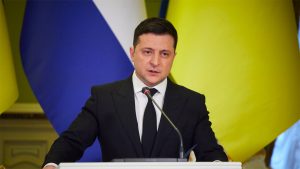
Piece two came out of Kyiv with the Ukrainian President Zelensky sharing some intel that they’ve been garnering on the Russian military system. Apparently, according to Zelensky, the Russians are preparing a fresh what they call peripheral mobilization for this coming September immediately after elections. And when they say peripheral in Russia, what they mean is non-ethnic Russians. Ethnic Russians, according to Russian statistics, are probably about 75% of the population and of course make up the super majority in the major cities, most notably Moscow. But when you move out of the Moscow region, out of the Saint Petersburg region, you’re going to be hitting higher and higher ethnic minority concentrations. And there are several republics, several dozen republics across Russia where non-Russian are either the full majority or the near majority. So far in the war, the Russian government has done everything it can to not pull ethnic Russians into the fight, favoring the forced recruitment of non-Russian ethnics whenever they possibly can, because they’re feeling is if those people rebel, you can just kill them. But if Russians, ethnic Russians rebel and you put them down like the Russians like to, that might spawn more protests in other Russian regions. And if you don’t have the buy in of the Russian population, or at least it’s apathy, then that is how the Kremlin falls, because that’s happened before. Reasonable, reasonable political analysis. The problem, of course, is that this is not the first time the Russian government has done this. It’s done this in three rounds so far in the war to date. And with the Russian government losing somewhere between 25 and 45,000 people a month in this war, the question is, how long can this hold the line before things break?
According to Zelensky’s Intel? And so far, when the Ukrainians have shared things like this on the development of the Russian military, they tend to be right, I’d say 90% of the time. But, you know, some of the details might be fuzzy. The Russians are talking about this peripheral mobilization, about 300,000 people, which would be enough to supply troops to maintain what the Russians have been doing at the last years burn rates for another 6 to 9 months. So it doesn’t really change the math in the long term. It simply allows the Russians to continue to plot on with what they’re doing as to where the people would come from. The greatest hits, where the greatest percentage of the local population would be drawn out, would probably be from the Far East. These are areas that are relatively lightly populated, relatively low urbanization, penetration. And basically the Russian state just goes through and rounds people up when they’re going about their daily business. The second big concentration would be recent passport holders. So there are a lot of people who have moved from Central Asia to Russia because as bad as the economy is in Russia, it’s worse in Central Asia. So especially in places like Tajikistan or Kyrgyzstan, you’ve got several million people over the last 20 years who have moved north. And because they’ve had to get passports, they are in the system. And so basically what the Russians are doing is saying, hey, you’re in the system, we know where you are. Come work in the war because you don’t have a choice anymore. Getting Russian citizenship, the price is dying in Ukraine. The biggest concentration, the biggest numbers are going to be from ethnic republics that are closer to Moscow, that are more densely populated. So you’re talking here about places like Chechnya, Tatarstan, and Bashkortostan, densely populated provinces with reasonably high birth rates, especially compared to the ethnic Russians, where you do have a presence of the Russian state that can basically force people in.
All of these come at certain risks. When you start taking out people from the Far East, you’re depopulating them to the point that there’s an open question about relations vis a vis the Chinese, who have 100 million people just on the other side of the border. When you start going after the people who are recent passport holders, you disincentivize people to come into Russia where there’s a demographic bomb going off in real time even before the war, and you’re losing the workforce, you need to keep the system going. And when you go after groups like Chechnya, Tatarstan, and Bashkortostan, you’re talking about big population centers that if they ever did rebel, it’s not clear whether the Russian state could resist them. A new Chechen war would be as bad for the Russians as what’s going on in Ukraine right now. And if the Tartars or the Bashkirs rebel in any meaningful way, the Russians lose all the infrastructure connections they have to Siberia and Siberia, at the moment, is the only part of the oil complex that is likely to still be exporting a year or two from now. So none of these are good decisions, but it’s not like there’s a better one on offer, and we’re now seeing the entire system start to seize.
Russia, though, is capable of maintaining an incredibly high tolerance for pain, basically suffering as the Russian equivalent of baseball. And none of these by themselves are enough to break the system. But we’re seeing the weight increase at the same time as we’re seeing the Russians start to not just stall on the front, but be turned back. And every major Russian revolution in the past 300 years has been because the Kremlin has lost a military conflict. So you take the social pressures that this mobilization are likely to generate, play that against the battlefield situation. And yeah, this is looking pretty bad for the Kremlin.