
Project Vault, the Trump administration’s initiative to stockpile critical minerals, is just a small step in the right direction. Sure, buying mineral-rich waste helps the U.S. build reserves, but it’s a classic case of giving the man a fish vs. teaching him how to fish.
If the U.S. really wanted to reduce its reliance on China and prepare for a world where access to critical minerals is scarcer, building out its own refining capacity should be the first step. And after that, the U.S. should begin strengthening relations with other countries that could help with supply issues in the meantime.
Transcript
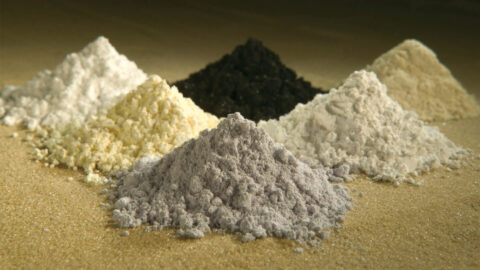
Hey all, Peter Zeihan here, coming to you from Colorado. Today we’re taking a question from the Patreon crowd. Specifically, what do I think of Project Vault? Now, Project Vault is something that was set up by the Trump administration back in February with a couple billion dollars to purchase things like rare materials. Rare earths is the term that always gets tossed around, and it’s in there, but it’s just one of many getting the mining tailings that are rich in these materials and bringing back to the United States and building a stockpile $2 billion for that, which is a lot for basically what is mine waste.
It’s an interesting step, and I’m not saying it’s not an unnecessary one. I’m actually kind of glad this happened, but it really doesn’t deal with the core problem. Key things to remember is that most of the materials that we need for the digital age, things like rare earths, for example, or gallium, are byproducts of other materials processing. So for example, you have a silver mine, you extract the silver.
The waste is rich in things like rare earths, or you are doing aluminum smelting. And one of the byproducts is material that is rich in gallium. So getting those materials into the United States and concentration. Great idea. It’s only step one and not even the smart step. The smart step would just be to build the processing. The problem with the world faces right now is 70% on average of critical materials processing is done in China.
And so basically what the US government is doing right now is buying waste product from Chinese processing and bringing it here, and it’s a step in the right direction. But, you know, honestly, just build the processing, because if we get into a position where the Chinese cut off supply or there’s other some sort of supply disruption, you then have to build the processing anyway, or ship those tailings back to China to be processed.
I mean, even building a reserve of the finished product, the refined metals, does it really take us to far down the road because it’s still being done in China? Until you build that processing, the rest of it doesn’t really matter in terms of sourcing the raw materials. That’s really not that hard. And as we’ve seen with Project Fault, it is already filling up.
But if you want to build a Chinese free system, there are three countries that you really need to focus on because they’ve got robust mining sectors. Number one Canada. So maybe stop calling it the 51st state. Number two Australia. And so maybe stop saying they’re not racist enough to be our friends. And number three is Brazil. And relations with Brazilians are probably at the worst since at least the 1970s.
Right now, bottom line is, without a little bit of diplomacy to secure some of these things, the rest of it’s kind of a rounding error and just continues with the Chinese dependance that supposedly we want to break so badly. So yes, baby, step in the right direction. Maybe we take some bigger ones soon.