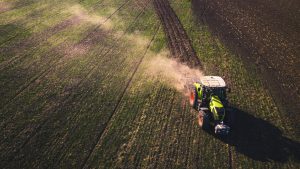
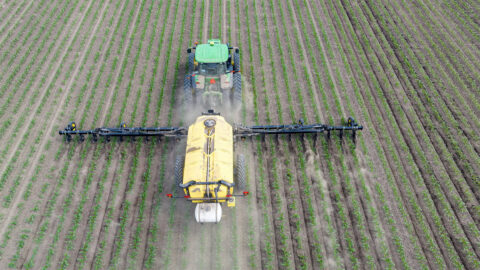

Let’s discuss the vulnerabilities facing global agriculture, caused by unreliable supply chains for the three essential fertilizer categories.
Nitrogen depends on natural gas, and as we discussed yesterday, we’re already seeing plenty of energy disruptions. Phosphate is a bit more insulated from disruptions, but with two-thirds of global reserves in Morocco, we could have some hiccups. The biggest concern is potash, as most potash comes from Russia, Belarus, and Canada. We know the concerns with Russia and Belarus, but disruptions to Canadian exports could significantly impact U.S. food production.
Transcript
Hey, everybody. Peter Zeihan here, coming to you from eastern Yosemite. That is the shepherd’s crest behind me. One of the many geological wonders here in Yosemite that I have no intention of ever climbing. I am at upper McCabe Lake. I would stand and do this and show you more, but it’s really windy. Okay, so today we’re going to talk about a trifecta in problems that are coming to global agriculture specifically because of fertilizer.
Now there are three product categories of fertilizer. Lots of subcategories. But the first one is nitrogen. And nitrogen is for all intents and purposes an energy product. It’s derived primarily from natural gas. So if you are in a country that can’t source its own natural gas easily, you are going to have a real problem once global shipping breaks down. As we discussed in the natural gas video, North America looks pretty good. Southeast Asia looks okay. South America, if you’re in the right spot and everyone else is dependent upon unreliable producers or shipping routes that they can’t control. So even though natural gas seems to be abundant, getting it from where it’s produced to where it needs to be used is going to be problematic. Or you can just not use it for electricity, in which case you can go without. So, you know, tough choice.
The second item is phosphate. And phosphate, for all intents and purposes is a mining product. Now kind of like natural gas. Phosphate comes from a lot of places. In the United States it gets it from Florida primarily, but there’s producers throughout the world. Peru is a big one. Saudi Arabia is a big one. And, one of the reasons I don’t worry about phosphate nearly as much as the others is the world’s largest reserves. Not not producers, but reserves are in Morocco, and it’s occupied territory of Western Sahara, something like two thirds of the total. So even in the worst case scenario, I don’t see it being too difficult to continue production in Morocco. It’s not facing the type of geopolitical stress that a lot of other countries are, but just because there’s more phosphate and more places, and just because you don’t need energy infrastructure to bring it to market, doesn’t mean that it’s everywhere. And it doesn’t mean that you can easily get it within a large countries from A to B. So, for example, not only does South Asia have very little, but in East Asia the Chinese are self-sufficient. In fact, traditionally a large exporter of phosphate. But it’s almost all produced way out west in the secessionist regions. So if anything ever happens where Beijing cracks in terms of political authority. The Han that are 90% of the population have to go without. So, you know, they’ll feel that.
The third item is usually the one where I kind of shortlist the biggest problems long term. And that is potash. Potash is basically potassium. And it is also a mined product like phosphate. But unlike phosphate that is found in dozens of places, potash is not. It’s only in a half dozen. And really, only three of them are large. And those three are in Russia, Belarus and Saskatchewan, Canada. That would suggest to me that as long as the United States relations with Canada are friendly, we don’t have a problem. Of course, NAFTA talks with Canada have yet to begin. And at the time that I left on this trip, the Trump administration had just launched a rather vicious and mean spirited trade war with our northern neighbor. And if the Canadians are ever looking for something to, like, really close down parts of the U.S. economy, people talk about electricity and oil, no that’s not going to do it, but you shut down potash and you have a real problem.
See, the issue is unless you have all three of these synthetic fertilizers in volume, the best you can hope for is a 25% reduction in your ability to grow whatever the crop happens to be. Every crop uses different concentrations of these materials, and every soil type has a different concentration of them naturally. And based on what crop you grow, you will deplete the soil of phosphate or potash or nitrogen or all three. So, if you don’t have these things, a more likely scenario is you’re looking at, at least a 50% reduction in your ability to grow whatever the crop happens to be. Just playing the average. Which means that for any, any agricultural exporter on the planet, you go from being an exporter to an importer. And for everybody else, you go from being an importer to having starvation. So this agriculture, the fertilizer angle, other agriculturally related items have always been at the top of my fear list. There’s a lot of things going on in the world that concern me right now, but there’s durability in certain places, especially when you start talking about geographic and demographic features because they take decades, if not millennia, to change. But when you have a globalized population and globalized agriculture, which has generated 8 billion people, it’s dependent upon the supply lines and the supply chains in order to grow food for those people. And we have never in modern history had more than a 5% surplus. And so now we’re looking down the maw of potentially a 50% deficit. And the only way that you rectify that is with a population adjustment.
Or as everybody else calls it famine.