
The Most Violent Chapter of Israel and Palestine

Buildings in Gaza destroyed from bombings

This topic is going to piss off everyone, regardless of where you stand. So, while you watch today’s video, take comfort in the fact that everyone will be offended. Now, onto Israel and Palestine’s ongoing conflict.

The Israeli invasion of Gaza has reached its most violent period yet. Netanyahu, who has aligned with extremist factions who favor the complete expulsion of Palestinians, is still clinging to his political power. And with no conventional military threats, the Israeli’s can focus all their efforts on Hamas.

Trump has sidelined the American security apparatus, leaving Israel with few external checks. With no one to intervene and both Hamas and Israel leaning further into their stances…there really is no good solution here.

Transcript

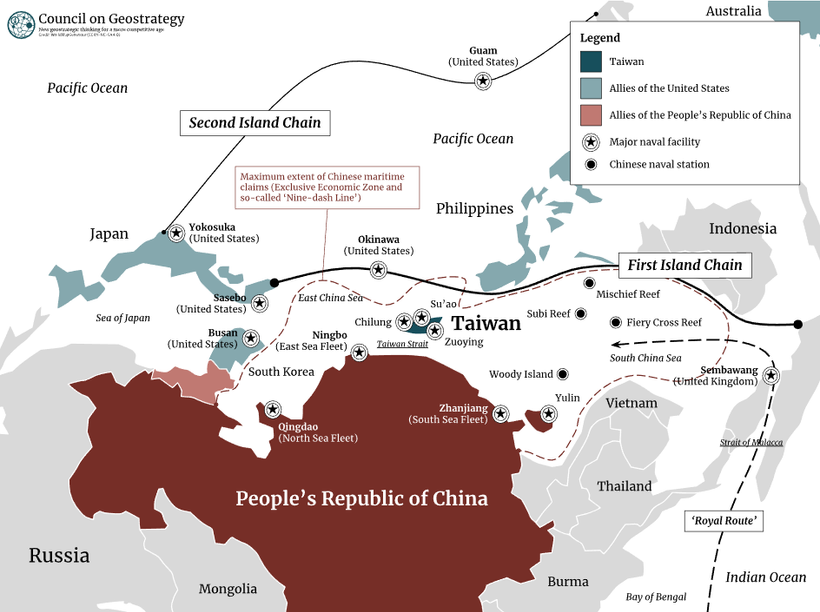
Hey, all Peter Zeihan here. Coming from Colorado today, we’re gonna talk about Israel and Gaza. I’m sure I’m going to piss off everyone in this one. So, you know, if you are not pissed off, that would actually be a surprise. So here we go. The Israelis have launched a major invasion of the Gaza Strip, which is where about half the Palestinians live, specifically focusing on Gaza City, which is the largest urban center in the strip. 

Tanks are involved, artillery is involved, it seems, from what we’ve been able to see, incredibly indiscriminate. They seem to be deliberately attempting to drive people just to flee the area and herd themselves into smaller and more compact zones. Further south. By any definition, this is a horrific conflict, and we’re seeing more violence now in the last two weeks than we have seen at any stage of the Israeli-Palestinian conflict, going back to the 1946, 1947, 1948 period when Israel was created in the first place. 

There are more than a few reports that allies of the Prime Minister, Benjamin Netanyahu, are involved in almost gang activity, in various Palestinian territories, more in the West Bank than in the Gaza Strip. And under normal circumstances, this just wouldn’t fly. Not only would Israeli society not tolerate it, but you’d see a lot of pushback from countries across the world, most notably including the United States. 

We’ve seen that from a diplomatic point of view. We have any number of countries France, the United Kingdom, Australia, Canada who have now recognized Palestine as an independent entity, which from my point of view, is completely pointless because unless you’re willing to change the military facts on the ground, none of this really changes anything at all. 

And I don’t think it will. Now, that said, the only country on the planet that has the ability to militarily intervene in Gaza would be the United States. And there is no appetite in any American administration to do that. So I wouldn’t count on that either. Anyway, why has it gotten so bad? Why is it getting so bad so fast? 

Why are we in this seemingly new chapter and what this region looks like? Five things are going on. First and most importantly, when the initial attack by Hamas, that’s the political slash militant authority that used to rule the Gaza Strip, launched their attack across the border into Israel proper back in October of 2020. Three more Jews died in a 24 hour period than had died since the Holocaust. You can understand the baseline position that a lot of Israelis are coming from. I don’t mean to belittle that in any way, but there’s a lot more going on. 

The second issue is more strategic. Israel has been the superior military power in the region for the better part of the last six years, at least since the 1973 wars. There hasn’t been any force that can stand up to them on the battlefield or in the air. Over the 50s and the 60s and the 70s, they soundly beat all the Arab states in their neighborhood militarily. 

And all that’s been left is paramilitary and irregular forces like Hamas, militant groups, Hezbollah. But the Israelis dare not let down their conventional military guard, because while Hezbollah and Hamas are threats, they are irritants compared to, say, if Egypt decided to roll in with a thousand tanks. Well, that changed relatively recently. We now have a completely different strategic map of the Middle East. 

The Syrian civil war is over and the Assad government is gone. And the replacement government. Yes, it can hold together big. Yes. I wouldn’t call it pro-Israeli, but they certainly don’t want to fight with Israel. It’s more likely they’ll fall into a second civil war that will destroy any military capability of the state. And remember, Israel has already done a few thousand bombing ranges to take out pretty much every arsenal and chunk of equipment that they could find. 

Number two, Iraq is no more as a conventional threat, because of the Americans. Number three, Egypt, as, if anything, an ally. Same with Jordan through peace deals. Number four, Libya, which used to be an irritant, has fallen apart. And number five, Iran was defanged earlier this year in a series of strikes. It didn’t simply set the nuclear program back several months, but basically destroyed Iran’s ability to defend itself with air defense. 

So the strategic picture, for the first time in modern Israel’s history, is calm. I don’t want to use the word safe. This is still the Middle East, but they’re not worried about a conventional invasion from anywhere, which frees them up to deal with some of the unconventional threats that they’ve never really cared for. Ergo, Gaza. Third, politics in Israel are wonky. 

Benjamin Netanyahu is the PM was about to go to prison for bribery and corruption when he was elected last time. And as long as he’s the prime minister, he won’t go anywhere. So he has a vested interest in making the conflict as hard as possible in order to forge a coalition with the real Wackadoo in the Israeli political world, who just want to kill everybody who isn’t a Jew. 

And so that coalition has been sufficiently strong to keep Netanyahu in power, and they do not have a vested interest in seeking a peace agreement, even if that was possible. In fact, many of them see that expulsion of the Gazans from the strip to say the Sinai Peninsula isn’t even something they want because they think that the Sinai Peninsula should belong to Israel as well as long as the West Bank, as long as the East Bank, which includes parts of Jordan, some of them, you actually think they should push all the way to Baghdad. 

And these are the people in charge. So, you have a political alignment in Jerusalem at the moment that is very not just pro-war, but pro slaughter, because they know they can’t just erase 2.3 million Gazans. So they have to make life so miserable that someone, somewhere will take them in. And things have to get a lot worse before a country somewhere around the world, is going to bring in a 2 million people with minimal education and no money. 

Number four politics in the United States. Trump went out of his way when he was building his cabinet to make sure there was no one in the cabinet who could ever tell him something that he didn’t want to hear. And then he basically gutted the national security apparatus of the United States, using people like Tulsi Gabbard, who indirectly or directly worked for the Russians and wanted to destroy it on principle. 

Marco Rubio is the secretary of state and the national security advisor now, and he actually knows what he’s doing. And so Trump has basically shut him and the State Department and the NSC out of the white House so that, there’s no interaction. So the parts of the American national security apparatus, they’re still working aren’t really allowed to report to the president at all. 

And the president decides what types of information get in front of him, while he’s doing everything else he’s supposed to be doing, or comes through Tulsi Gabbard, where it’s usually misinformation. So, President Trump does not have an accurate view of what’s going on in Gaza, much less the rest of the world. And has to compete for everything else he wants to do for his time. 

He hasn’t basically delegated that. So in many ways, we have the general incompetence of the Obama administration, remade. It’s just that Obama didn’t let anyone in the room. Trump has made sure that there’s no one in the room who likes to tell the truth. And that means that the Gaza situation, the Israeli situation, like every situation in the world, is not getting the, the bullet time that it really needs from the American president to make an informed decision. 

So the United States, who would, under normal circumstances, serve as kind of a connector between Israel and the rest of the world, makes things to go too crazy. That’s gone. And it’s really given the Jerusalem government carte blanche to do whatever it wants. 

And finally, while the media is out of control and I don’t mean like the mainstream media, that’s kind of become a joke of late. I mean, like alternate medias and social medias. Two big themes here that are starting to intertwine in a really destructive way. Number one, anti-Americanism, is obviously something that’s always been in the system. 

But over the last 20 years, we’ve seen it become more organized and more conspiracy driven and have better hooks for getting into people’s brains. And rightly or wrongly, there’s a lot of people in that community who see Israel as a front for the United States, or at least as a proxy, or at least as an ally or whatever. 

Everybody makes up their own story, and their propaganda has got a lot more slick of late. And it’s also interfacing with other types of especially the American political issues that just seem weird. So we’ve seen reports recently of the most far left radical, lefty, crazy, commie, socialist, whatever word you want to use. Aspects of this group that are starting to quote people like Marjorie Taylor Greene. 

She is the the CrossFit chick from northern Georgia in the House of Representatives, who we used to go on about Jewish space lasers. She is now being heralded as an anti Israeli viewpoint within the United States. That’s close to the administration and seeing these two things cross is just crazy. Obviously, the second vein is, anti-Semitism of various forms that has been around for a long time, but also now is a lot more slick and organized and coherent. 

And these two things are blending together to make a really powerful narrative that doesn’t have to have facts. That’s part of the general degradation of information communication we’ve had across the world in the last 20 years, where facts and figures go out and the narrative is all that really applies to the situation and every possible way, even before you consider the level of the violence that is going on in Gaza. 

So, if you’re looking for a solution here, I do not have one for you. If there was a solution to the Palestinian situation, we probably would have bumbled into it by accident at some point over the last 60 years. It’s not going to happen now. There is literally no place for the Gazans to go. If they were to be relocated. 

And as long as they are living in Gaza, they are completely dependent upon food aid from the outside world, which the Israelis can turn on or off at a whim. So as a result, we get this not so much of a stalemate, but this extreme increase, of violence. By the Israelis against the Gazans. And before you decide that you want to jump on the bandwagon of condemning the Israelis, keep in mind that Hamas is the one that started this. 

But more than that, Hamas has never, ever had the goal of actually having a two state solution or a modern, independent Palestine. They want a global caliphate where everyone who isn’t Islamic is killed. So, as always with this fight, careful who you condemn. Careful who you cheer for.

Immigration and Tariff Policies Stunt US Economy

Immigrants standing in line in front of an American flag | Licensed by Envato Elements

The Trump-era policies are going full Darth Vader and have the US economy in a chokehold (or force choke for the nerds out there). Today, we’ll be focusing on the policies covering immigration and tariffs.

Nearly all legal (and illegal) forms of immigration have been closed or drastically restricted. This includes high-skilled H-1B visas, which now have six figures in fees; most startups can’t go dropping that kind of dough. Once you mix in all the costly deportations and the retiring baby boomers, the US labor force is drying up quickly.

Tariffs are only adding to the problem. With 10-60% tariffs on imported goods (the Chinese sitting near the top with 50%), we’re beginning to see rapid price increases. Walmart and other retailers are reporting hikes that are only going to get worse.

Fewer workers, higher costs, and not enough domestic investment, all the things you don’t want to hear about an economy. The Fed warns that the only reason a recession hasn’t formally set in yet is because labor demand and the workforce are shrinking at similar rates. That has left the US economy dazed, confused, and highly vulnerable.

Transcript

Hey, all Peter Zeihan here come from Colorado. Today we’re going to, look at the American economic situation, how a number of Trump policies are coming together in the current environment and where we should expect that to take us during the rest of the year. Short version is the picture doesn’t look great. Let’s start with immigration. 

There’s basically four paths to immigration that the Trump administration has, put the crimps on first. You’ve got your illegal, irregular migrants, who cross the border and then try to slip into the system somehow. Number two, you’ve got your people who try to follow the rules and do it legally. Third, you’ve got your folks who come in on a high skilled visa, something like H-1b, to get a specific job sponsored by a specific company. 

And then finally, you got your rich folk that just come because they went to all four of these routes are in collapse. We now have the Trump administration going into churches during services in order to round up Hispanics and kick them out, as well as intervening in courtrooms and going, where they’re having their hearing on things like asylum or even just to see if they’ve done the paperwork. 

Right. And, before the hearing can happen, escorting them out of the country comes out to about 17 grand per person to do extraditions this way. And it strongly preferences people who do not have criminal records because they’re more likely to be out in public. So the original promise of just going after criminals that has long in the past, and we’re basically going against the rank and file of people who came for jobs or to be with families. 

Regardless of what you think about this, from a legal point of view or an ethical point of view, it it has an absolute impact on the job market. We’ll get to that in a minute. Legal pathways, those are pretty much all been closed down. And that is not simply a Trump two thing. That’s also a trump one thing that is also a Biden thing. 

Most of restrictions that Trump won put on legal migration were actually codified by the Biden administration and now than doubled down on. So you wanna come to United States, there’s only two paths left. 

Number one is you get an H-1b visa. That is the visa that like, say, the tech industry uses to bring high skilled people in to help populate their workforces. The number of those being granted is being reduced by about three quarters. And the fee for it is going up to something between $100,000 and $2 million. What that means is not only are far fewer companies going to do it, but the companies that will do it are only going to be the really big ones. 

So your apple, your meta, things like that. And so if you’re a small startup, you’re now stuck with local labor. And as anyone who’s in the tech space will tell you, there is not enough local labor for a tech industry in any country of the world. There’s a global supply, but there’s only enough to man tech sectors in maybe one quarter of the world’s countries, of which the United States has always been the largest market. 

And by severing the United States from that labor pool, you’re basically guaranteeing that the pace of technological change, will arrest, significantly. And we’ll see impacts of that within a month. And then finally, the only other way to get in is a gold visa. Now, Trump’s original idea was a $5 million gold visa that would get you into the country and basically give you residency. 

There were no takers. None. That’s put too fine a point on it. But if you’ve got $5 million to spend for a green card, you don’t need a green card. So they’ve dropped the price now to $1 million. We’ll see if they get any takers from that. It’s pretty steep. Still has to be approved by Congress. 

So basically, almost every path, for bringing migrants, immigrants, vacationers, whatever you want to call it, you know, have to have a bond to travel the United States for tourism, has been severely crimped, if not closed down completely. And it’s leading to the first population reduction in American history. And, from an economic point of view, we’ve got two issues going on that are both really bad. 

Number one, for the first time since Vietnam, the workforce is shrinking. And for the first time in American history, the labor pool is shrinking. What companies are doing is in this sort of environment, they’re letting go their older employees as they retire the baby boomers, and they’re not hiring replacements. Now, that has happened before. But for that to show up in the data this time as a reduction in overall employment numbers, you’ve got to remember the scale here. 

The boomers were, until very recently the largest generation in American history. And the Zoomers at the bottom of the pyramid right now are the smallest generation in history. So for that to register as a collapse in jobs, the numbers is immense. And it’s the opinion of the Federal Reserve that the only reason we haven’t seen a formal recession yet is that the job market and the labor pool are shrinking at the same rate, and that it’s the fastest we’ve ever seen in any era of American history. 

Now, macroeconomic theory tells us that this will generate and, not particularly long order, a very, very crushing recession. But I’m not ready to say that yet. Jerome Powell, the Federal Reserve is not ready to say that yet because there’s so many things in motion. What we do know for certain is it makes the United States much more vulnerable to any sort of shock, because there’s just simply fewer pillars holding up the system. 

Well, we’re getting that shock because of the tariff policy. We’ve got tariffs ranging from 10 to 60% on various countries in the world. The tariffs are on China at 50%, which is where we get a lot of our consumer goods. And so just since September 1st, just in the last two, three weeks, we’ve now seen price increases across the board that will show up in statistics next month most likely. 

But we’re seeing in corporate earnings already, remind you’re that we went in and out and in and out and in and out of these tariffs from when they were, initially applied in April. There were extensions. There were there were holidays, and most of them are now in place. So we’ve really only had them now for about six weeks, but that’s an long enough time to burn through some inventories and jack up prices on shelves. 

So Walmart, writ large, is looking at a 30% increase in prices across the board, with some items being more than double that. Keep in mind that this is when people are still pulling inventory that they built up during those holidays in preparation, so that 30% increase is going to absolutely increase month on month unless and until these tariffs go away. 

So we have a far weaker employment situation. We have far smaller labor force. We have a far less skilled labor force. We are not seeing the industrial investment that would be necessary to replace the manufactured goods that we’re losing access to, and we have tariffs that are making everything more expensive. This will generate an economic adjustment, in the not too distant future. 

The question is how soon, how bad in which sector? If I were a betting man. Usually not, but here we are. I would say the manufacturing is a sector to look at first, because more blanket the tariff structure, the easier it is to relocate manufacturing supply chain steps outside of the country with the tariff structure and just do it somewhere else, because instead of having product going back and forth across borders, which is how we say produce cars, you then have to pay that tariff multiple times per vehicle, whereas if you build the car completely beyond your shores and then bring in the finished vehicle, you only have to pay it once. And we’re seeing that in the investment decisions of companies that will manifest as employment problems next year. I think we’ll have our economic correction far before that, though.

Saudi Arabia and Pakistan Sign A Mutual Defense Treaty

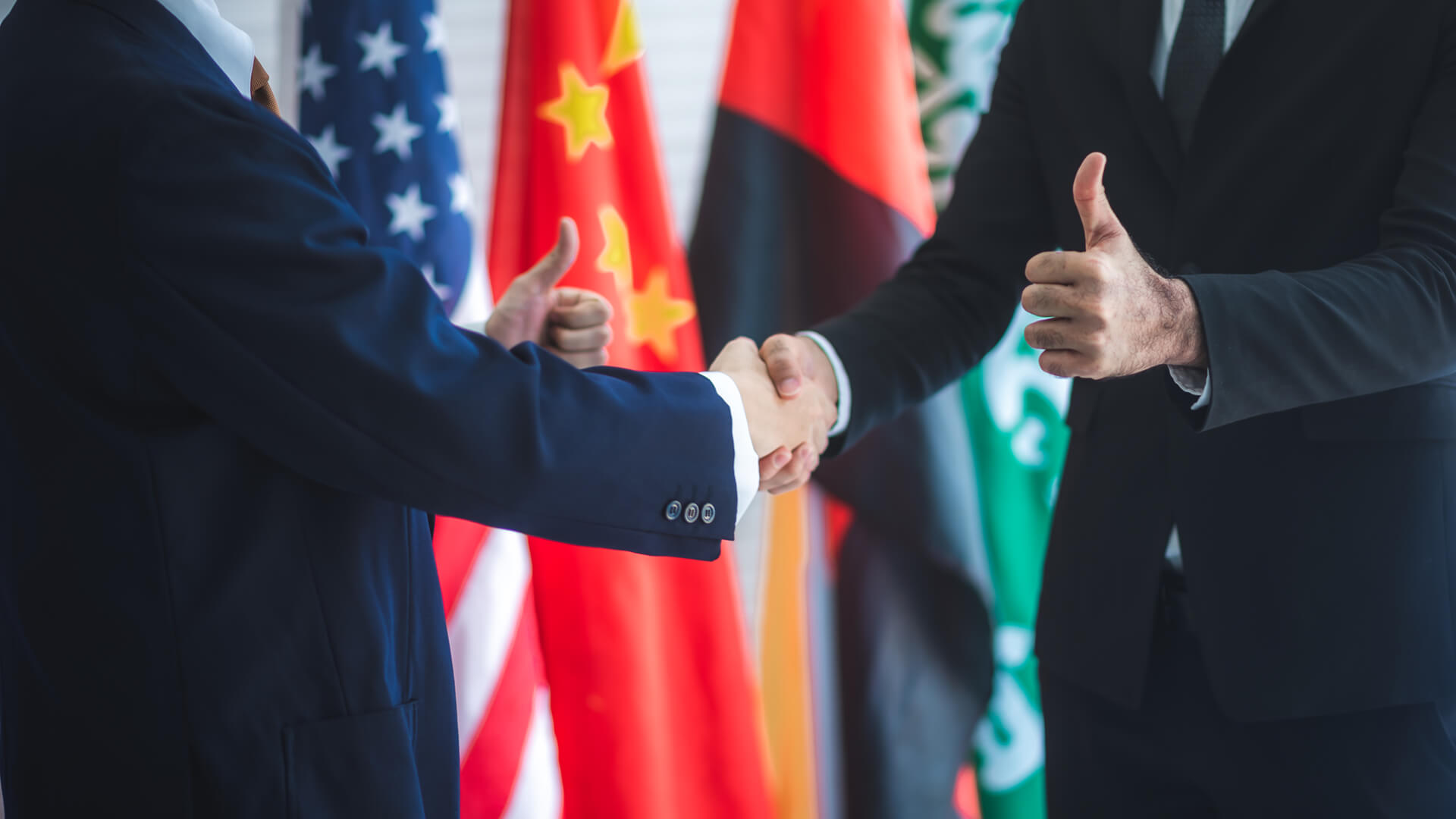
Shaking Hands after Political Negotiation | Photo licensed by Envato Elements

Saudi Arabia and Pakistan signed a mutual defense treaty last week. And no, you’re not the only one thinking, “Hmmm, why would two countries with mismatched security concerns enter into a defense pact?”

The idea that Pakistan would ever launch a nuclear strike on Saudi Arabia’s behalf is far-fetched to say the least. However, buying some influence with a nuclear power and keeping a clear path to acquiring a nuclear weapon from the Pakistanis (should that need ever arise) isn’t the worst idea for the Saudis.

This pact is the first of its kind, breaking from post-WWII norms of only US-led “all for one” alliances. With the US pulling back on its security commitments, more of these pacts are likely to follow. This means we’re entering a period more reminiscent of pre-WWI commitments and alliances, and that should scare the s*** out of everybody.

Transcript

Hey, all. Peter Zeihan here. Coming to you from Colorado. Today we’re going to discuss something that happened on the 17th of September. The Saudi Arabians signed a mutual defense treaty with Pakistan. Now, these two countries do not border one another. And the countries that they consider their number one foes. In the case of Saudi Arabia, it’s Iran. 

In the case of Pakistan, it’s India. Don’t line up. But they have basically tried to convince everybody that if somebody threatened Saudi Arabia that the Pakistanis will nuke them. Well, that would be interesting. A couple things to keep in mind here. Number one, in many ways, Saudi Arabia subsidizes the existence of Pakistan. They provide them with debt relief. 

They provide them with below market prices, oil supplies, most people, myself included, has said that, to some degree, this is to ensure that at the end of the day, if Saudi Arabia really needs a nuclear weapon, that the Pakistanis will be open to the conversation of just selling them one. I don’t think that logic has changed, but the idea that Pakistan will just nukes someone on Saudi Arabia’s behalf. 

That fits with the arrogance of Saudi society, especially the ruling House of Saud, probably does not match reality. Second thing to keep in mind is the relatively unprecedented nature of this. If you remember your history, you go back to World War One. Cross linking alliances of mutual defense were kind of the norm. And if somebody attacked country A and country, he had a alliance with country B, country B would then attack the attacker. 

And that led to World War One being a lot nastier than it needed to be, because a lot of these countries had alliances with one another that they didn’t tell anyone about. So when the defense classes were activated, it was kind of a surprise to everybody. Italy definitely fell into that category since then, people take alliances a lot more seriously. 

Number one, World War one sucked. No one had a good time. And number two, we are now in the nuclear age. So an attack on one on this attack on all has a lot more consequences. So in the world since 1945, when the Second World War ended, no countries have initiated or participated in any sort of all for one, one for all alliance, unless it was initiated by and headed by the United States, which remains the only country in the world that really has large scale global deployment capability. 

Saudi Arabia can barely deploy within its own country, and Pakistan. Everything is obviously on the eastern side of the country, facing down India. Neither of them could get troops to the other in a situation where there was real shooting. So the idea that the first meaningful mutual defense pact with a nuclear angle is between two countries with non-overlapping security concerns. 

I don’t find that very serious. And if nukes were not involved, I wouldn’t even bother talking about it. But nukes are involved, and the United States is getting out of the mutual security business. So places especially like Saudi Arabia that have money suddenly are looking for some alternatives, especially since just a few days ago, the Israelis launched missiles over Saudi Arabia to strike a different Arab country. 

Gutter balling to that here. So you know what that is all about. So we should expect to see more and more things like this. And I’m not saying that any particular one of them is serious. What I’m saying is everyone is experiencing it with things that are new and that under normal circumstances, would just be tossed out out of hand. 

We’re not in that world anymore, and we need to think a lot more about like, what things were like in World War one, when you might have a security deal that you don’t tell anyone about because behind the scenes it gives you some chits. It’s a very different system and one where wars will happen a lot more.

The Pressure Is Dialing Up on Russia’s Oil Network

A russian oil refinery

I’ve been discussing the potential for Russian crude supply shortages and a broader collapse of the Russian oil system since the Ukraine War started…so, is it finally happening?

Ukraine’s recent attacks on Russian energy infrastructure have brought a potential oil crisis within arm’s reach. The Ukrainians are getting smarter, striking critical nexus points and ports; refining capacity is dropping, crude is backing up, and storage capacity is running out. These bottlenecks create pressure in the pipelines and wells, and you can imagine what happens next. Should this extend into the winter, frozen wells could add onto the crisis.

Since much of the energy infrastructure in Russia relies upon Western-tech and labor, that leaves them with few options at resolving these issues in a timely manner (if at all). And then you factor in Ukraine’s strikes on the shadow fleet and things begin to get really spicy.

Transcript

Hey, all Peter Zeihan here come to you from Colorado. And today we’re going to talk about the net effect of all of these recent waves of attacks by drones and by the Ukrainians on energy infrastructure in Russia. Now, this is following up to a video I did a couple of weeks ago talking about how we were starting to see some really very real damage in the energy complex of Russia, with somewhere between 15 and 20% of the refining capacity going offline. 

Since then, the Ukrainians have massively upped their target set, going in and hitting things that are further away. Now, some of these attacks are more political and mine the ones that places like Moscow, where the political elite lives, or Sochi down in the Black Sea, where the political elite vacations. But the far more important attacks, from the two general categories. 

The first one is the Ukrainians are showing that they can hit targets more than a thousand miles away from their borders. Specifically a place called Bashkortostan. It’s a province in western Siberia, eastern European Russia, populated by ethnic Bashkuri, who are, a Turkic minority. Pretty large one in the Russian space. 

But the fun thing about Bashkortostan is it sits at a pipeline nexus that links pretty much all of the southern Siberian energy fields into the European pipeline network. And so if there’s meaningful damage in Bashkortostan and you’re not just looking at problems with refining their production, you’re talking about upwards of 3 million barrels a day that could get locked in. 

And the Ukrainians have figured out that going after a pumping station is a really good idea if you want to disable some of the pumping infrastructure. That’s part one. Part two. Primorsk. Primorsk is a port on the Gulf of Finland, very close to Saint Petersburg. Gulf of Finland an arm of the Baltic Sea. 

It is arguably, Russia’s top export destination. That the Gulf of Finland writ large. Not only is there Primorsk, there’s a place called Ust-Luga. Both of them have been hit recently, and both of them now are operating below half effectiveness. So Primorsk used to export about a million barrels a day. Now it’s about half that Ust-Luga. 

It used to be about 700,000 barrels a day. Now it’s about half that. You put all this together, and the Russians are facing a crisis point in their energy sector that honestly, I’m a little surprised it hasn’t happened to this point. You see, the Russian energy sector has limited export points that are not well linked together. They’ve got a single spot out on the Far East that kind of has its own network and then out on the western side, they’ve got a few ports on the Baltic Sea and the Black Sea, and the rest are piped exports that go through Ukraine or Belarus into Europe proper. 

Those pipelines have now been shut down. That just leaves the maritime ports. And if something happens, that would prevent crude from, say, reaching for some might be able to go to the Black Sea, but none of it could go out to the Far East. So the Russians are losing flexibility within their system. And now that we’ve got roughly three quarters of a million barrels per day of throughput on the Baltic Sea that can’t flow, and now that we have 20% of refining off line, all of a sudden there’s somewhere in the vicinity of about 2 million barrels a day of crude produced that can’t go anywhere. 

Unlike the American system, where there’s massive tank farms in every major city, the Russians don’t have that. They’re used to producing crude, sending it to refineries, having it turned into fuel and consumed locally or exported. And the rest goes to an export point and is exported. If you have friction in that system where the fuel can’t be produced, then the crude has to go somewhere else. 

It has to go to a port, and if the ports can’t take it, pressure builds up back in the pipeline system all the way back to the wellhead, which means if something doesn’t change in just the next 2 or 3 weeks, there’s going to be so much pressure in the system that either we’re going to have a rupture in the pipeline, which would be really, really bad for any number of reasons, or the Russians are going to have to shut down their production sites back at the wellhead and lock in a million barrels a day or more. 

The problem is, it’s already late September. Winter is almost upon us. And if these pipes are shut down, or if those wells are shut in in the winter, the crude will freeze in the wellhead. And if they want to turn it back on, they can’t just flip a switch. They have to re drill the well. And a lot of these wells are either old or were produced with Western technology, which means it has to be done from scratch with what the Russians can do with themselves or import from the Chinese, which isn’t sufficient for the technology required in order to make it all work. 

So we could be three years into this war, finally on the verge of a crude shortage, because the Russians just can’t play. Well, no. Real soon, repairing things like refineries takes time. Especially if you’re talking about this distillation columns that the Ukrainians have been hitting, the pressure testing that is required to make sure the thing doesn’t explode is something the Russians and the Chinese cannot do themselves. 

They import all of that from the West. It’s going to be a problem getting the parts. And in the case of Primorsk, not only did the Ukrainians hit a pumping station, they also had a couple of ghost fleet tankers. So all of a sudden, whatever insurance the Russian government or the Indian government or the Chinese government has been providing to these ships all of a sudden has to be paid out. 

And that hasn’t happened yet. And so, lo and behold, tankers aren’t going to risk in the volume that they need to be going if the pipeline system is going to stay online. We’ve been waiting for all of these things to happen, either one or the other, for three years, and all of a sudden they’re all happening at the same time. 

It’s kind of exciting.

Nvidia Purchases $5 Billion of Intel Stock

Photo of an INtel microchip

Nvidia announced a $5 billion purchase of Intel stock, but it’s not the game-changer that the headlines are making it out to be.

While Intel is America’s biggest chipmaker, it lags behind TSMC’s cutting-edge nodes. Nvidia is just a design firm, so they don’t possess the necessary manufacturing know-how to improve Intel’s capabilities. So, Intel’s need for the right ecosystem and advanced lithography to create the upper echelon of chips remains.

This is just another case of political appeasement. Nvidia has been in hot water with Washington and Beijing, so they’ll do just about anything to cool things down a bit. But hey, $5 billion is $5 billion.

Transcript

Hey, all Peter Zeihan here come from Colorado. And today we’re taking a look at the 18th of September, purchased by Nvidia of roughly $5 billion of stock in American semiconductor manufacturing firm Intel. Now, Intel is by far the largest of the American fab companies. But it gets a bad rap because it’s not TSMC. TSMC, of course, is a Taiwanese based company that is the world’s premier. That makes all the leading processing nodes, especially if it’s below four nanometers. 

Intel is trying to catch up with mixed results. And, in the market, it generally is discounted significantly because it’s not TSMC. And every time they fail to catch up, they get punished. That doesn’t mean it’s not a good company. That doesn’t mean it doesn’t produce a lot of product. 

But if your goal is to make the best of the best, Intel doesn’t do it. 

This is not going to change that. Now, a few weeks ago, the US government under Donald Trump took a 10% share. This will give Nvidia roughly a 4% share. But let’s talk about how semiconductors happen. And then you’ll see that this is not nearly as big of a deal as it might appear at first glance. 

What typically happens is a large consumer of microchips, a Google and Apple, something like that comes to a company like Intel or TSMC, and says that we want to make a new chip that does X, Y, and Z. Here are the parameters we want in terms of performance. And Intel slash TSMC says you’re at the wrong place. You need to go talk to a design firm. 

And so you find a design firm and you jointly put this thing together. All the strategic architecture and then you take that back to your TSMC or your Intel, and then you redesign it again, and you build an instruction booklet that is a few thousand pages of all the steps that are necessary to craft each and every tiny little bit of what goes into each and every aspect of a semiconductor that is then farmed out to an ecosystem that is around the semiconductor fabrication firm, all the companies that build all the individual pieces, all the companies that do all the testing in the incorporation of those pieces into larger chips, motherboards and products. Hundreds of companies involved. And you then get this very thick instruction book, probably several thousand pages. Now, which you hand to TSMC or you hand to Intel. And they use that to follow the instructions to the letter to make the chips. 

Which means a design company like Nvidia partnering with a fab company like Intel. It’s not that it’s a negative, but it kind of misses all the steps in between. Now, Nvidia has been beat around the heads and shoulders first by the American government and most recently by the Chinese government, primarily over its seeming inability and unwillingness to apply technological sanctions and limit their sales to China. 

Nvidia is willing to bend the rules. There’s no argument there, and it seems that in order to placate the Trump administration, they’re putting a what sounds like a big investment, $5 billion into Intel. But this really doesn’t move the needle for anyone. It doesn’t speed up the process. All it does is perhaps give Nvidia an inside track to communicating with Intel in the circumstances, when they decide to build chips that are not cutting edge. 

So it makes a lot of people smile. It makes a lot of people think that, ooh, Intel is going to get better. Nvidia doesn’t have what Intel needs to get better. That would be TSMC. That would be ASML, the company that makes the high end lithography systems. That would be this constellations of dozens, hundreds of mid-tier companies that contribute individual pieces, a lot of which don’t exist in Intel’s network because they’re in Taiwan. 

So it looks nice. And having a few extra billion dollars is never a bad idea if you’re trying to expand your output. But if you’re thinking that this partnership is what is necessary for Intel to turn the page and all of a sudden move up to, say, 2 or 1 nanometer. No, because Nvidia doesn’t have that technology. Nvidia does design, not manufacturing. 

Don’t get the two confused.

The Swiss Are Screwed

Swiss flag over snow capped mpuntains

The Matterhorn, Nestlé Chocolate, and a long-standing history of neutrality, Switzerland has it all. However, the Swiss were too busy enjoying all those comforts and fell asleep at the wheel for the past few decades…

Since the Cold War, Switzerland has assumed that its stockpile of weapons and insulation provided by the EU would protect them. With the Ukraine War creeping closer, the Swiss are realizing much of what they’ve relied upon has been eroding. Their military is weak, banking secrecy has collapsed, trade competitiveness has suffered, and now Trump tariffs are crippling industry.

The Swiss have a couple paths forward, but all options require them to abandon some core component of their belief system (or face economic decline).

Transcript

Hey, all Peter Zeihan here come to you from the Lost Canyon in the Lost Creek Wilderness in Colorado. And today we’re going to talk about Switzerland. Switzerland has some really tough decisions ahead of it in the next few months. Very, very short history of Switzerland, has been a neutral country for quite some time. Has been armed to the teeth quite some time. 

But in the period, especially after World War two and especially after the Cold War system ended, Swiss defense has kind of withered away. You can basically buy an exemption to the draft. Their military recruitment has basically fallen off, and they’ve shut down most of the bunkers that they used to be once famous for. They’ve done this because in the post-Cold War world, we all got along in the European Union, literally surrounds them completely. 

And they fear no invasion from their near neighbors. The Ukraine war was a rude awakening to them, just like all the other Europeans. And now they’re part of the coalition that’s supporting the Ukrainians. But they don’t have enough national defense right now to really be worthy of the name in the traditional sense. It’s number one. Number two, because they’re neutral. 

They have always followed laws their own way. And this made them an offshore banking center. You wanted to launder money, you’d put it there. You were tin dictator. You put it there. No one would ask you questions until a little guy by the name of Barack Obama said, no, we’re not going to do that anymore. We want to tax that money. 

So the Obama administration leaned very, very heavily on the Swiss government and played a part in something called the Financial Action Task Force. And basically, Zurich shut down as international money laundering center. So financial center, but if you want to do something illegal, you probably need to go to Cyprus or Dubai or something like that. So that’s another major industry gone third. 

Now, if you guys have been paying attention the last 30 years, but the eurozone hasn’t had the best time versus the other major economic blocs in the world and Switzerland, their number one trading partner is the collective European Union. And so we saw the Swiss currency gradually go up and up and up and up and up versus the euro, which in trade weighted terms has gone down, down, down, down, down until very recently. 

That means that Swiss industry is broadly uncompetitive, especially in things like agriculture. So that leaves the Swiss with two choices. Number one, subsidize the crap out of it, which is what they do say for their dairy industry. 

It’s beautiful. The farms are amazing, but they’re definitely subsidized and, not cost conscious. Let’s just say that, and then second, the manufacturing has had to get better and better and better, in order to move up the value chain so they can swallow the higher currency. 

So their products are a luxury goods that people will pay for regardless of what the prices. So Swiss watches basically became a national strategy. This led them in the last 30 years to really go into biotech, especially drugs and medications. And that brings us to the current day. Donald Trump has put tariffs on countries that are not based on trade practices, but are based on how much you sell to the United States versus how much the United States sells to you. 

That’s the only fact. Well, that’s one of two factors. The other factor is whether Donald Trump likes you or not. He doesn’t like Switzerland, and the Swiss sell a lot medications and things to the United States. They also sell gold. But Trump loves gold, so he made gold. Carve out. There’s no tax on Swiss gold. 

Anyway, what this means is we now have a 39% tariff. It’s one of the highest out there. And Swiss industry is scrambling and in some cases shutting down because it’s just not viable for them anymore. So the Swiss basically need to do one of three things. Number one, they need to find a way to make Donald Trump like them. 

They couldn’t find a way to make a Barack Obama like them. So I don’t think that’s going to work. Number two, they have to relocate all of their drug manufacturing somewhere else. Trump would obviously like to come to the United States. He has said that we are going to have tariffs on medications coming soon. 

No idea what those numbers are going to be for sure. But the numbers that have been leaked out of the white House suggest somewhere in the 30 to 100% range. So, It’s not clear that the Swiss have an interest of putting in the United States, because that’s only one of their markets, and the sales for each individual market don’t really justify putting it all there. And it you’d lose all your economies of scale if they put some in the EU and some in Japan and some of the United States. 

They’re not sure what to do there, and I blame them. Or third. Shift the political alignments. single largest chunk of Swiss trade is with the European Union. The European Union is a larger entity and can stand up to Trump’s Berlin a little bit better, can get it negotiated a better trade deal. So if, if, if, if the Swiss were to join the EU, that would solve some of their problems. 

Now the Swiss really do not want to do that. They value their neutrality. They value their independence and the independence as not just Switzerland is a state. It goes down at the local level, like the United States has states. They have something called cantons and almost all major decisions in foreign policy and trade and immigration, everything have to pass through approval of each individual canton. 

I mean, this is a country that did not make it legal for women to vote until 1991 because one German canton was holding out. And so for them to join the EU, they would first need to amend their constitutional structure so that this is not how decision making happens in Switzerland, because the EU will never let them in. 

If the Swiss just gum up everything just by being Swiss. So either the Swiss are going to have a catastrophic reduction in their standard of living is industries basically can no longer function in the new environment, or they have to get in bed with the monster that is at the door. And that’s the European Union. Not a great position to be in, but that’s where they are.

Ukraine (And Everyone Else) Develops Glide Bombs

A Russian FAB-3000 with a UMPK guidance kit attached, converting the unguided bomb into a glide bomb | Wikimedia: https://en.wikipedia.org/wiki/Glide_bomb#/media/File:FAB-3000_with_UMPK_kit.png

Ukraine has added glide bombs to its list of military ordnance, enabling Ukraine to send modified dumb bombs up to 100km away. This likely won’t alter the outcome of the war in Ukraine, but the democratization of this technology is setting off alarm bells in the US.

Joint Direct Attack Munitions were the bread-and-butter for the US military, maintaining a multi-decade monopoly on the precision strike technology…but all of that is changing. Now that Ukraine and Russia both have this tech in their hands, it’s only a matter of time before it appears everywhere else.

This is yet another sign of the US stepping back from its role as global protector; meaning American strategic primacy is coming to an end.

You can find more info about glide bomb technology appearing in Russia’s arsenal and the beginning of the proliferation of this tech in the linked video released on March 12, 2024:

Transcript

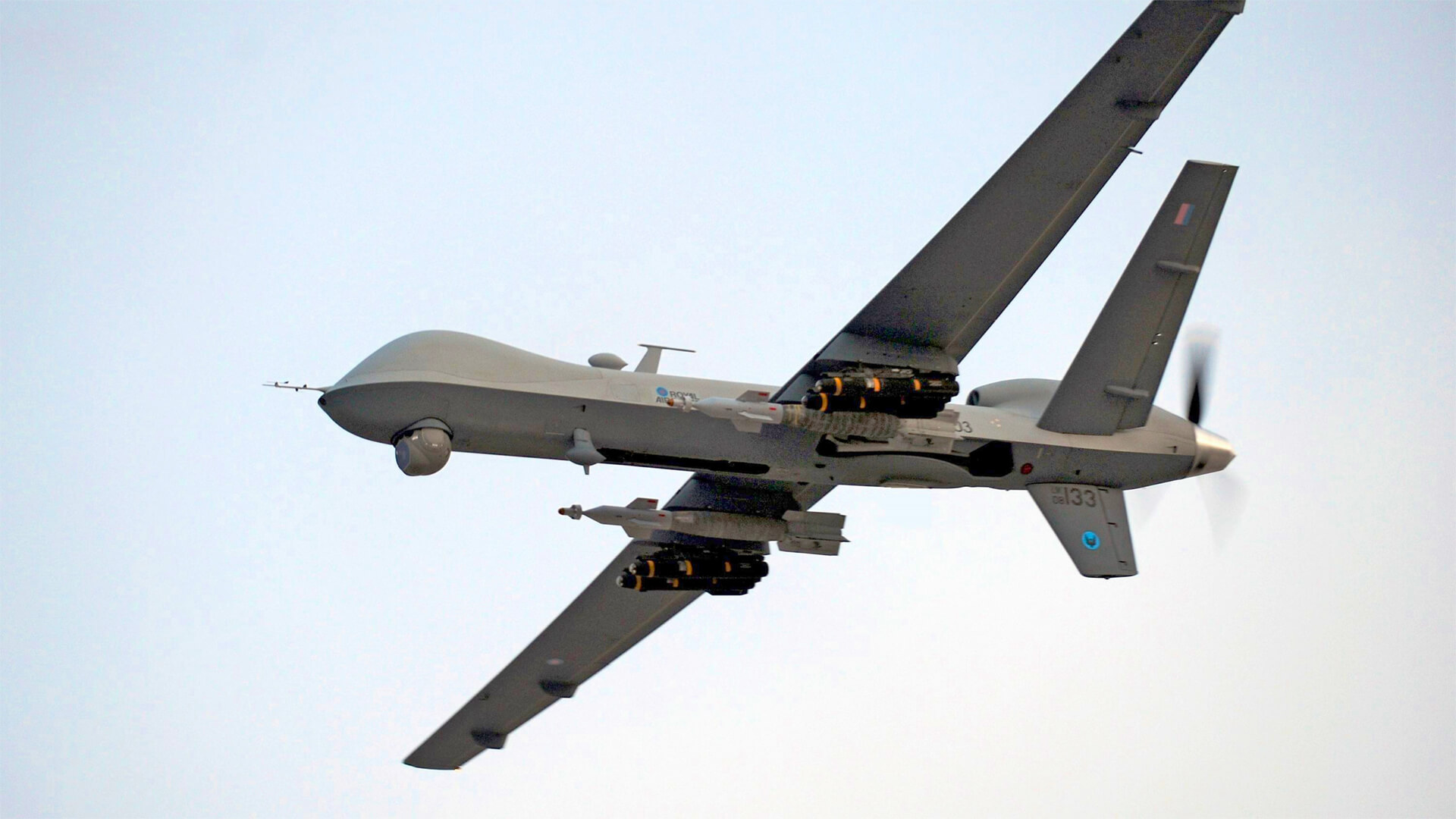
Hey, all Peter Zeihan here coming to you from Colorado. And today we’re going to talk about a change in military tech that just happened in Ukraine. Specifically, there are factions of the Ukrainian military industrial complex that are now putting together glide bombs. Glide bomb is basically when you’ve got an old dumb bomb that you put a guidance kit on. 

It has kind of wings on it. And so instead of dropping it, it kind of glides to the target and the Ukrainian prototypes that are being tested right now indicate that they can go upwards of 100km, about 60 miles, which is well beyond the front lines. 

Why this matters, the Ukrainians have been on the receiving end of glide bombs these last couple of years. The Russians have converted several of their old Soviet bombs, which are typically a much larger than the ones the US uses. We use, 500 pound bombs. Sometimes they use either kilo bombs. Sometimes there’s even a thousand kilo bombs. 

Anyway, they drop them from outside of air defense capability. They drop them from within their air superiority envelope. So they just have basically modified dump bombs coming in that can’t be intercepted. And some of the bigger ones, when they hit, have a blast radius that’s more than a quarter of a mile. 

And so you drop a dozen or so of these in the general vicinity of a fortification, and then Russian forces can then move in. That’s how they’ve been used to this point. The Ukrainians probably won’t be using them the same way because they don’t have the manpower. That’s necessary to penetrate the Russian lines. And there’s multiple layers of minefields as well, making that more difficult. 

So we use it against things like supply depots and, convoys. But the Ukrainians are already doing that with first person drones. So the ability to change the battlefield in Ukraine, by Ukraine, having some of these is probably pretty limited. The targeting sequences are probably just not going to be as robust as it might be for the other side. 

For a country that is more likely to be on the attack, the Ukrainians are typically on the defense. So it’s not that there’s no utility. It’s not. It’s just not a game changer. Also, there’s just the amount of effort that it takes to build one and test it because every prototype is destroyed as opposed to like a first person drone, where you can fly it back and forth without actually having it blow up to make sure it works. 

And you can get new iterations every month. This one will probably take a little bit longer, but it still has a huge impact, just not in Ukraine and everywhere else. The issue here is that the United States has had a de facto monopoly on this sort of technology for decades. We hear we call them Jay Dams, Joint Direct Attack Munitions. 

We took our old Cold War bombs. We put a kit and some things on it and do precision targeting. And through the 1990s, the US had a total monopoly. These were first debuted during the first Iraq War. 

Desert Storm back in 1982 and then have been incrementally upgraded since then. But really, it wasn’t until as recently as five years ago that any other country in the world had their own. 

Well, the Russians developed their own last year, and now Ukraine, a country that is much smaller, with a much smaller technical base and industrial base, has them as well. And if Russia and Ukraine can have them, you know that it’s just a matter of choice before countries like Korea, both of them, Japan, Taiwan, China, Thailand, Vietnam, Singapore, Malaysia, Australia, Canada, pretty much every country in NATO, Brazil, Argentina, Algeria, Israel, obviously, I don’t know if Iran could do it, but the United Arab Emirates could. 

Anyway. The point is, there is a long list of countries where this is no longer a technical barrier. And the technology that the United States has had a complete monopoly on this last generation, which has allowed it to shape strategic environments around the world, is now gone. And it’s only a matter of time, probably months, not even years, before we see copycat versions of the Russian and other Ukrainian versions popping up in a half a dozen different countries, and within five years they will be everywhere. 

Which means if the United States is going to maintain its military posture of having a global position without really any meaningful pushback, it’s going to need new technological tricks to do that. Most likely, combined with the Trump administration’s backing away from every alliance we have, this means that the United States is going to vacate militarily large portions of the planet and just let the chips fall where they may. 

Now, for those of you who’ve been following my work for the last decade, you will know that this was in some version probably going to happen because of American political considerations anyway. But we’re now set up a technological U.S. cannot just leave because it wants to. It’s going to be technologically pushed out from certain areas. And the question now is where first. 

And we just it’s too soon to have an answer to that question. There’s too many decisions that have to be made up at the white House, that color where the map is going to go blue and where it’s going to go red. But bottom line, the era of American strategic primacy with global reach that is now over. 

And it’s now a question about managing the withdrawal and dealing with the consequences of that.

Everybody Wants to Bomb Qatar

Hands holding the flag of qatar in front of a building in the middle east

Israeli airstrikes on Hamas targets in Qatar mark a significant shift in Israel’s positioning in the region. Israel has made it clear that they are willing to strike anywhere, regardless of alliances or presence of US bases…bad news bears.

Qatar may be filthy, filthy rich, but all that money couldn’t buy military aptitude. These strikes caught Qatar with its pants around its ankles, something that rival Arab states weren’t upset about.

However, the bigger story here is that Qatar hosts america’s regional military headquarters, and Israel only gave the US a ten-minute heads up before the missiles started flying. Whatever influence the United States had over Israel military actions has quite simply dissolved. And THAT will be noticed globally.

Transcript

Hey all, Peter Zeihan here comes to you from Colorado. And today we’re going to talk about what went down on September 9th in the Middle East. Specifically, the Israelis dropped a few bombs and missiles on sites in the country of Qatar. That’s a little thumb like thing in the Persian Gulf. Small country, less than a million population going after some Hamas targets. 

Hamas, of course, is the military slash political group that used to run Gaza and is now on the receiving end of the Israeli occupation campaign of Gaza. Three big things. Oh my God, so many things, but three big things that come from this. First of all, let’s talk about Israel. Israel has never, ever, ever bombed anyone in the Persian Gulf. 

I mean, they’ve gone after Lebanon because it’s right there. They go after Syria, especially as it’s fallen apart. And, they’ve gone after Iran most recently in a big way. But the last time they bombed anyone else was like in the 1980s, they took out a nuclear reactor in Iraq. And before that, you’re talking about the Arab-Israeli wars of the 1970s and 1960s. And 1950s. 

This is a significant escalation. There’s been an expansion of their capabilities as they’ve gotten the Joint Strike fighter. They’ve gotten better weapons from the United States that have better range. Looks like what happened is they flew down into the Red sea and launched missiles over Saudi Arabia to hit Qatar. They didn’t do a direct overflight. 

Probably. 

And this level of aggression, this willingness to ramp up this newborn policy of taking action wherever and why ever, is immense. Because, you know, Qatar is a U.S. ally. Saudi Arabia is a U.S. ally. And for the Israelis to be so brazen, this is something that is going to continue until and unless a significant series of countries that includes up to in the United, including the United States, levy some sort of massive economic or military penalty on Israel for acting like this way, at the moment doesn’t seem like that is in the cards. 

And honestly, if you’re in the Persian Gulf, the Arab states of the Persian Gulf, like Qatar or the United Arab Emirates or Saudi Arabia or Kuwait, there’s really nothing you can do. So this is the new norm of Israel just dropping bombs wherever in the region it wants to. And that will cause any number of political complications and strategic complications, because at the moment they’re going after Hamas. 

But there are other militant groups that the Israelis are not big fans of. And should a government in the region become more hostile, the Israelis have now demonstrated that really doesn’t matter what your air defense systems are, the Arab states of the Persian Gulf, Kuwait, Saudi Arabia, United Arab Emirates and Qatar, they have some shiny hardware, but it’s clear they don’t know how to use it very well. 

And as the Israelis discovered with Iran, even if you’ve got stuff that you’ve integrated over decades, it really can’t stand up to the technology the Israelis can bring to bear. So all the royal houses of this region are now on notice. And if they do things that the Israelis don’t like, they can expect visits by explosives. 

The one thing that was really holding back the Israelis before, from doing things like this is the idea if you knock off the government, you could have Sunni jihadists boil up and turn the area into a scarred wasteland that would eventually cause problems for Israel. 

Well, some version of that has happened in Syria and Israel looks just fine. So if the nightmare situation is not something to be avoided, then destabilizing the neighborhood is something they don’t have a problem with. So that not all of that is number one. The Israeli side, number two is the Qatari side. Qatar is a small country. 

doesn’t have a lot going forward except for a big natural gas field, a little bit of oil. And in doing so, it’s become one of the richest countries in the world in per capita terms, because there’s very few people, the locals are the fattest humans in history because the national security program has run by Doha, the capital is to get everybody, heart disease and obesity so that they can’t protest. 

So, I mean, these are a whole country of taboos, that basically do nothing but eat all day, and they’re serviced by a couple to maybe 4 million today, expats who basically take care of their every whim. 

As a result, no shock that they don’t know how to use their own military equipment. But they do have, however, is ambition and arrogance and just supreme levels. The ruling government of the of the ruling family, is convinced that they were ordained by Allah himself to be a major power. And since they were late to the game, they basically went out and cut deals with everyone that nobody else would deal with. 

So the deal with the Muslim Brotherhood, they deal with Hamas, they deal with everybody, in order to prove how important they are. And then they throw a lot of cash at whatever the issue happens to be. So they are on the opposite side of a lot of the other Sunni governments in the region. And so while no one in the region is thrilled that the Israelis have gone and basically proven how powerless that they are in the face of a superior military force, there are a lot of countries, most notably, Saudi Arabia, the United Arab Emirates, that are pointing at and kind of going, because they are not loved at all. 

And seeing them taken down by such a big notch and made to look so incompetent and so impotent, is honestly very rewarding to a great number of people. What impact this will have on Qatari foreign policy moving forward is unclear, but certainly Israel is indicating to them that there’s certain lines they just can’t cross or bombs will fall. 

The government was not targeted. This was all targeted against Hamas groups and the Hamas groups were only kind of sort of taken out because they use longer range weaponry. But we now know with refueling that the Israelis could easily get there and back with more precise weapons. So something to watch for the future. In the meantime, Qatars on notice. 

Third, and perhaps most importantly, is how the United States fits into this, Qatar is the location of Centcom headquarters. This is where the United States coordinates everything throughout the entire region, including the recently closed down wars in Iraq and Afghanistan and a lot of countries in the region and up to and including Israel until very recently and until last week, thought that having Centcom headquarters in Qatar made Qatar bulletproof because the Americans offered an express security guarantee to the country. 

Well, that has proven to be wrong. And we now have a really interesting situation shaping up. Yes, the United States is willing to allow countries to bomb places where it has bases and not do anything that makes the United States look toothless. And for Israel, specifically, Donald Trump is now in a position where he can’t get the Israeli government to do or to not do anything. 

The Americans were notified of the attack less than ten minutes before the missiles flew. No. No way, no way. Enough time to get through the chain of command for Trump to say, call up Benjamin Netanyahu is the prime minister of Israel. Say, don’t do this. So the United States is now being actively ignored by the country, in the region that is supposedly its closest religious demographic and strategic ally in the region. 

That is not a good look for an administration who thinks that it’s tough, and that will have consequences here, there, and a lot of places in between.

The Federal Reserve’s Dilemma

Photo of the building of the US Federal Reserve

The Fed is facing a catch-22. While they would typically lower rates when consumption and growth begin to slow, there are also competing policies that are shrinking the labor force and driving up costs via tariffs. Other countries have faced similar dilemmas due to demographic issues, but the US is in this pickle largely due to policy decisions.

With record deficits and no political will to cut entitlements, cooperation between Trump and the Fed isn’t going to happen. So, the Fed is stuck between a rock and a hard place…

Transcript

Hey all, Peter Zeihan here. Coming to you from a breezy Colorado. This week we have a Federal Reserve meeting in D.C. where they’re going to decide what to do with interest rates. The idea is, if you lower interest rates, you reduce the cost of capital, which spurs economic growth, whereas if you raise interest rates, you dampen demand, which tends to get inflation under control and balancing growth versus inflation. 

That is basically why the Federal Reserve exists and why we have monetary policy in the first place. The real problem the Federal Reserve is facing right now is policy out of the white House. The combination of high and rising tariffs are increasing the cost of operation for American businesses and increasing purchasing costs for American consumers, which is reducing economic growth. 

At the same time, anti migration policies the Trump administration has implemented is shrinking the labor pool to the point that the American population is actually expected to shrink this year for the first time in American history. And that is triggering inflationary pressures throughout the supply chain that are complemented by the tariffs. So tariffs like 50% tariffs on steel, aluminum, copper drastically increase the cost of building for, among other things. 

And so the fed is kind of in a catch 22. The slower growth caused by the tariffs on the consumption side would seem to indicate that it wants to lower interest rates to spark growth, but the higher inflation, because of the tariffs and the immigration policies are raising the cost of everything or raising inflation, suggesting that the Federal Reserve should, if anything, raise rates in order to keep inflation under control. 

And there is no way to win this, there’s no way to make everybody happy and there is no balance to be found. So the Federal Reserve is in a catch 22. Now, this is not a unique situation. If you go back to the last 20 years in Europe and Japan, we’ve had somewhat similar situation, but largely caused by demographic issues as populations age out of the 2030s and 40s and into their 50s, 60s and 70s, consumption naturally goes down and eventually you lose people from the workforce on the tax base altogether. 

And when that happens, monetary policy is not nearly as useful tool. And you’re dealing with exactly these same issues, chronically lower demand and consumption because the population is getting poorer and older and ongoing inflationary pressures as the labor force shrinks. The difference between the European and the Japanese experience and the American experience is in the European. In the Japanese experience, it was primarily a demographic issue, whereas in the American experience, at least so far this year, it’s primarily a policy issue. 

Now, what has happened in the United States in the past is the Federal Reserve chair has sat down with the American president to discuss priorities and what it takes to get what you want. This was most famously done by Federal Reserve chair, former Federal Reserve Chair Alan Greenspan and former American President Bill Clinton back in the 90s, where the discussion was, if you can keep the budget under control, if you don’t do a lot of deficit spending, then I, the Federal Reserve chair, can keep interest rates low and generate a boom which lasted for the better part of a decade. 

Unfortunately, that is not possible this time around, and not just because the president doesn’t like the Federal Reserve chair. The other problem is simply that the fiscal deficit we have today is bigger than we have had at any time in American history, with the exception of a couple of hiccups during war time and getting that deficit under control would require basically eliminating Medicaid and cutting Medicare and Social Security by half. 

That’s how overextended we are. So it leaves the fed in a no win situation. Governance is hard, especially when you’re a quasi independent institution like the Federal Reserve.

Why Trump’s Stance on Canada Makes Sense

Canadian flag flying over Parliament

The Trump administration’s tough stance on Canada isn’t as novel (or as arbitrary) as it may seem.

The US has always been cautious with neighbors on the northern border, from Britain in the past to modern Canada. This view follows the long-standing US strategic view that an independent power on the northern border could pose a security risk.

That caution is wise and should be applied to any potential economic integration as well. Merging the US and Canada might sound nice, but when you lift the hood…not so much. The US would be stuck with the financial burden of caring for Canada’s rapidly aging population.

Transcript

Hey everybody. Hello. From Rock Island Pass at the border between the Hoover Wilderness and Yosemite National Park. Today we’re taking a question from the Patreon crowd as we’re doing this whole trip. What what what what why? Why is the Trump administration hit Canada so much? Is there anything to it or or should we just whinge? That’s actually the specific text of the question. 

Let’s start by saying that there is is something to it and it goes beyond her. The Canadians burning our Capitol, back in the War of 1812. And you Canadians, you cannot pledge innocence from this. You know you did it. Yes. The Brits drove the car pool, but it was Ontarian Abrines that brought the torches to the party and actually burned the white House down. 

Now bigger picture. The United States is a large country that basically has the best parts of the continent. But that doesn’t mean that the United States is alone on the continent. Obviously, Canada is the entire northern frontier and throughout American history. If you go back to before reconstruction, the United States was always concerned that an extra hemispheric power would establish a beachhead somewhere in the vicinity of the North American continent and potentially use it to interrupt American power or maybe even launch an invasion. 

And of course, most recently and from the beginning, actually, Great Britain was the power of concern. Now, I don’t mean to suggest that there was a British invasion imminent or anything like that. Don’t put words in my mouth. I’m going to piss off enough people with this video as it is. But the idea that you can have an independent power right on America’s borders that doesn’t bear some degree of security risk is just silly. 

That doesn’t mean that I think that there’s a war around the corner, that it’s even inevitable. Certainly not imminent, but it’s not a blind policy decision to decide that you actually want all of the continent under a single flag. And both it for those of you to the south of us in Mexico, this applies to you as well. 

Now, that said, I think that the borders between the United States and its neighbors are fine. I’m not worried about an invasion. There’s good buffers, whether it’s, lakes and force in the north or deserts and mountains in the south. The population density of Canada certainly couldn’t do it by itself. Mexico maybe a little bit better. But northern Mexico is such a logistical snarl because of a lack of infrastructure. 

That too, I’m not concerned about. But the bottom line is, is that this didn’t come out of nowhere. This has been part of the American strategic view for 200 years, and to pretend otherwise is being a little bit windy. Now. That said, do I think we should do it? I think candidate even if they ask. No, because it’s bad math. 

When industrialization really got going roughly a century ago, people started moving from the farms and into the cities and they started having fewer kids. And that process was much more intense in Canada than it was in the United States, because I don’t know if you knew this, but can it gets cold in the winter. And so the Canadians basically huddled together in their cities for warmth, and there’s a much higher dense urbanization rate. 

Oh, got a message dense urbanization rate for Canadians than there is for Americans, which means that the Canadians of age are much slower. They’ve also probably played the immigration card as hard as they can. It’s starting to generate social disruption. And so the old Trudeau government and the new government have cracked down on immigration. Quite a bit, basically slowed it to a trickle. 

Oh, Mr. Popular, all of a sudden, which means that Canada is aging much, much, much quicker than the United States. And remember, in the United States, the baby boomers are already two thirds retired. So we know we face an explosion in social welfare payments over the next decade. Canada is ahead of us, and Canada lacks a millennial generation of size comparable to what we have south of the border. 

Which means if we were to do a merger of the Canadian provinces and the American states, it would be up to the United States to pay for the retirement of most Canadian citizens, most notably in Ontario, Quebec, and in the maritime provinces where the demographic decline is most advanced. So from a purely financial point of view, merging the two countries would be economic suicide for the United States. 

Let Canada pay for this. And if that means Canada pays for other things too, great.