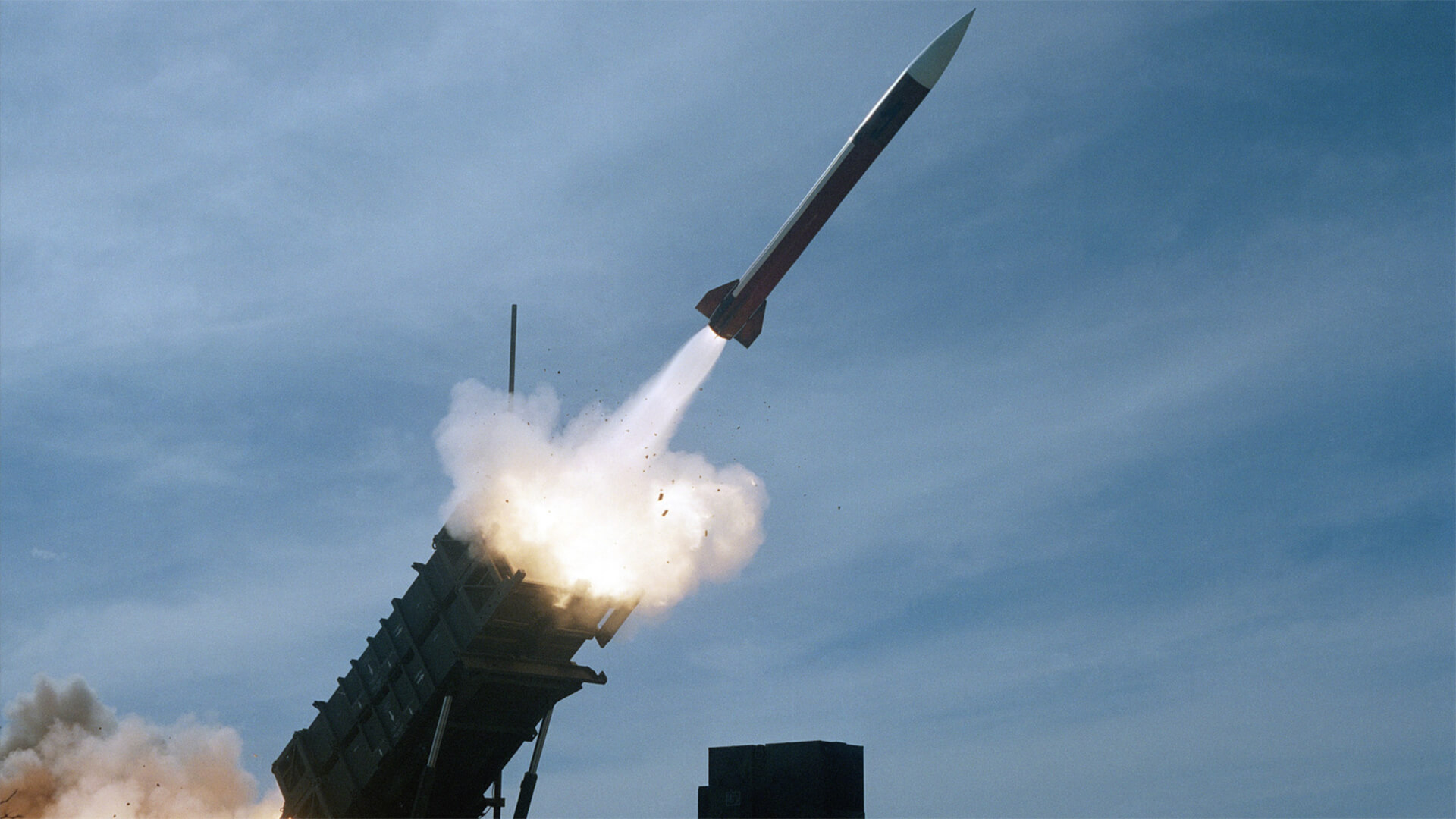

The U.S. is hesitant to allow Ukraine to manufacture Patriot missiles locally, partially to protect U.S. military IP, but more so because it doesn’t want Ukraine to do it better. The reality is that highly sophisticated weapons like the Patriot aren’t the right tool for modern warfare.
Sure, in an American-led globalized system, these weapons are the cream of the crop. But that’s not the world we live in anymore. $4 million price tags and complicated supply chains are no longer viable. Modern wars require cheap weapons that are easy to produce locally at scale, like the drones we’ve seen across the Ukraine War.
Transcript
Hey everybody, Peter Zeihan here, coming to you from near the trailhead of Sherman Sheridan in the Mosquito Range in Colorado. Took me so long to find a place without wind. Anyway, the news today is kind of all over. Specifically, I want to talk about defense contractors. We have a situation where it’s leaking out that the United States Trump administration, Donald Trump specifically, is unlikely to allow Ukraine to license production locally of Patriot missiles. The reasons that were given. The first one that is being said out loud is intellectual property protection, which is reasonable once you hand over the plans so that somebody else can make them, somebody else has the plans. The second one that is being said behind closed doors, that is probably more compelling for Donald Trump, is that if Ukrainians learn how to make these things, they’re going to iterate them and they’ll learn how to make them cheaper, faster and probably better.
And that makes sense, because Ukraine was the node of aerospace and rocketry for much of the former Soviet Union, and that’s been applying those skills in real time to the war technologies that they’ve been developing in the last four years. And obviously, many of their weapon systems, most notably their drones, are now light years ahead of anyone else on the planet, including the United States.
And so to say that they couldn’t apply aerospace and rocketry technology to what is ultimately a rocketry question is obviously silly, but as true as that is and as much as that is likely to be the rationale for Trump ultimately denying the Ukrainians access to the plans. It’s kind of missing the point. We’re at a point here where we’ve got two reinforcing and contrasting trends. The first is deglobalization, and we’re losing access to the global supply chains that allow sophisticated equipment to be made. So, for example, when people talk about AI weapons, they’re probably blowing smoke out their ass. Because the technology just doesn’t exist yet. High end chips. Things below, let’s call it seven nanometers that are etched into silicon. Just can’t deal with heat or stress or shifts in momentum or vibration. You know, all of those things happen a lot when you’re dealing with military equipment. And these supply chains are fragile, so it doesn’t take much of a deglobalization event for them to break completely. Now, military folks get around that by using special materials like gallium when making the chips instead of silicon. The problem is that the gallium supply chain is also very vulnerable. So the idea that the United States is going to be able to keep making these high end weaponry systems is itself kind of a stretch.
Second problem, the United States is unique among all of the major powers in history, and that it basically has a hemisphere to itself. Ever since reconstruction and the Spanish-American War, there really hasn’t been a major power that has a sufficient footprint, much less a native presence in the Western Hemisphere to challenge American security dominance in a meaningful way.
And that has allowed the United States military to develop differently from everyone else’s. Everybody else, whether you’re a naval power or a land power, ultimately you have rivals that are relatively close. And so your military technologies that you develop, the military systems that you field always have a degree of short term desperation built in. The United States has never had to worry about that unless we’re in a long, protracted, hot war like, say, World War Two, we develop our weapon systems based on the idea that the homeland is fundamentally safe and that we just need to project power across the ocean. So our systems tend to be far more durable. They tend to be far more technologically advanced. They tend to be expensive, but they have reach and lethality that nobody else has. Because everyone else is worried about bringing large numbers of relatively disposable things to the fight as soon as possible. All right. We’ll finish this in a minute.
Okay. Had a hard time finding a place without wind. So here we are from the Colorado Intermountain above Fairplay, Kenosha pass. Where was I? Basically, we’re dealing with a changing environment in which the defense systems that were maintained by the global superpower and basically maintained during the Cold War in the post-Cold War era aren’t applicable anymore. The new weapon systems are simpler to build with more basic technology, whereas the more advanced systems that the Americans rely upon require global supply chains. And so we’re going to see a complete overhaul in how we handle defense over the next five, ten, 15 years. And the Patriot missile, while it is today by far the best anti-missile system on the planet, is probably going to lose that position.
If the Ukrainians are even mildly successful, they’re going to be able to drive down the price of the Patriot. Right now, it’s about $4 million a pop. The people who make the patriot of the United States say they’re going to offer a lower tier version that’s about $2 million a pop. The Ukrainians need to get down to that, to a quarter of a million, a pop maximum. Otherwise, it just doesn’t serve the purpose in this new era where you can spam somebody’s defenses with just thousands, if not tens of thousands of attacks. There’s one more thing to keep in mind. The US is the late comer to this technological revolution, in part because of policies out of the white House and personalities and the Defense Department. The United States is not fully engaged in this new era, and is being very slow to embrace drones as the new way of doing things. That’s going to change dramatically as the rest of the world basically skips by the United States, which means the United States is going to discover waves and waves and waves and waves of hostile drones and multiple powers, some of them allies. And it will not have enough patriots for all of its needs. And it certainly won’t have enough patriots for all of its allies. So we’re probably very close to the final delivery of American patriots to anyone, not just Ukraine. And once that happens. Well, pace of anti-ballistic missile technology is going to skyrocket because everyone will be researching an alternative.