Is This the End of U.S. Biofuels?

A green lit gas station with an oil tanker

The U.S. ethanol mandate in the early aughts reshaped American agriculture by tying corn production to fuel production; this saw corn demand double, with roughly half the corn crop now tied to biofuels. So, the case for diverting large amounts of U.S. corn into fuel production is now becoming less clear.

U.S. energy has become independent following the shale revolution. The environmental benefit has been refuted and moving forward, food security will be far more important than biofuels. Allocating large amounts of U.S. corn for fuel production becomes economically and politically difficult when it’s needed (and more profitable) to use for human consumption.

Transcript

Hey all. Peter Zeihan here, coming to you from a snowy Colorado in May. Because that’s what happens in the mountains. Today we’re taking a question from the Patreon crowd, specifically how I see US agriculture evolving over the next several years, specifically in light of the balance among corn and soy and biofuels, with, of course, ethanol being at the top of the list. 

Real quick history lesson for those of you not familiar with the space, the United States has used gasoline and diesel for pretty much everything for transport for the entire industrial age. Until we got to the early 2000, when we got a fuel mandate from the federal government. That said, a certain percentage of most gasoline that you pump has to have a certain percentage of ethanol. 

In most states, it’s in the 10 to 15% range. Now, lots of people have bitched and moan about this for multiple reasons, but basically it took the single largest commodity class that the United States had fuel and cross-referenced it with. The second largest of the United States has, which is row crops, specifically corn. So if you go back to the 80s, a few states in the Midwest, Iowa, of course, did have their own state ethanol mandates. 

But now we had a national one. And from roughly 2004 until today, The total need for corn grown in the United States is roughly doubled, because about half of it is now used for biofuels. Now, that’s not that’s a bit of a blanket statement. The leftover, once you extract the bit that can be turned into ethanol can still be used for animal feed. 

But what it has done is it’s radically changed the agricultural situation of the world’s largest agricultural producer, taking a large chunk of land away from producing stuff for food to instead it being available for fuel that is directly responsible for a lot of the increases around the world. We saw in food prices in the late 2000, because it took ten years for American farmers to produce the volume of crop required, as well as for the United States to build up the infrastructure required. 

Because you don’t take corn to an oil refinery, you have your own ethanol refinery, and then you blend that ethanol in with the fuels at another location. Anyway, in the world that we’re moving into, where agricultural supply chains break down on a global basis, we’re going to be seeing a world that isn’t able to feed itself. And with six or what are we, 7.5 billion people, whatever the number happens to be billions of people. 

And if you have half of the corn crop in the United States going towards fuel instead of human consumption, you can see how this is going to be a problem. It’s just that there aren’t very many countries in the world that have easy access to the inputs, whether it’s the manufactured product, the financial products, or the fertilizer products that are necessary to grow food at scale. 

The United States is by far the largest of them. And if you look at some of the other major producers around the world, most notably China and Brazil, they can’t be agricultural producers without globalization. They import too many of the things that allow agriculture to work. So in a post globalized scenario, if we’re lucky, we’ll only lose a billion people. 

Which brings us back to ethanol. Ethanol is the mandate, because you had a lot of folks in the farm states that were looking for a way to bolster rural incomes in general, and farmers in particular, and the mandate for ethanol and a new one that seems to be being gestating for soy diesel follows similar patterns. But if you remove this, call it conservatively, one third of global food production, then all of a sudden food prices are going to skyrocket. 

And the argument that the United States government should subsidize agriculture to make biofuels kind of falls away. You see, when this all started, the ethanol mandate had a three piece alliance. The farm states obvious environmentalists who thought since it was grown from the ground, it would have a lower carbon footprint. And national security folks who saw this as a way to break our dependance on the Middle East. 

Well, 2026 is not 2000, because now the United States has had the shale revolution. And it’s not just the world’s largest producer of crude oil, and the world’s largest producer of gasoline were the world’s largest exporter of refined product in general. So the national security folks have just kind of faded from this conversation. The environmentalist, who sometimes are a little squeaky with their math, did the math and realize that at best it’s a wash, because the process of growing that amount of corn and moving that amount of corn is actually generating just as much CO2 as what you have to do for gasoline. 

So they went away. So now it’s just the agriculture folks. And if it’s just the agricultural folks, it’s also ultimately going to be about farm income. And if you move into a world where a third of food production falls offline, all of a sudden farmers will be earning less growing food corn for the ethanol mandate than they would growing food for human consumption. 

So regardless of where you are on this equation and what argument you may have had in the past, the macroeconomic situation that led us to doing ethanol at scale is fading pretty quickly. One of the many, many, many outcomes of the Iran wars. We realize just how vulnerable global supply chains were in everything from semiconductors to tractors, because one part of the world produces a lot of the base materials that are used somewhere else. 

That is something that’s going to be reverberating for the rest of the year, and it is something that is really just the tip of the iceberg compared to what is coming. Ethanol was fine in a highly globalized world where there were lots of options. Pretty soon that’s not where we’re going to be.
Global Energy Stressors: Can Anybody Help?

An oil rig on the sunset

Are there any countries that might be able to ease the global energy stress?

Saudi Arabia might be able to ramp up output, but Houthi attacks could take that away in an instant. Producers like Guyana, Brazil, Venezuela, and Canada can only add small, incremental volumes, but most major expansion projects are years away.

So, where does that leave us? The global oil deficit is only going to worsen over the next few months. And with oil market data becoming increasingly unreliable, things are likely already worse than we think…

Transcript

I guess I have a 3.5. This is the backside of that crown. Let’s talk about who might be putting other little volumes in. It’s not a lot. First of all, secondary peak of Bison. Most spare capacity in the world comes from OPEC, specifically from Saudi Arabia or the United Arab Emirates before it left OPEC this year. They’re the only ones who really maintain fields that can turn on off with that in mind. These are all countries that are constrained within, you know, the Saudis would probably be the ones with the best bet. But now that they have to export everything through the Red Sea and the Houthis are regularly attacking ships, most notably tankers, we should actually expect more Saudi crude to go offline rather than come online.

In the Western Hemisphere, we’ve got Guyana, which is a new producer, but their big boost was over the last three years. It’s again only incremental gains, 100,000 here and there, maybe. Venezuela. We, in the best case scenario, now that Maduro has gone might have gotten a fresh million. But now because of the earthquake, if they get half that it’ll be a really good day. Really good year. Brazil no, incremental again. Who am I forgetting? Canada. Canada has audacious plans to massively expand their export capacity, but these plans will not happen this year, next year or the year after. The heavy oil sands of Alberta take years, if not decades, to bring online as well. So the pipeline is only one part of the project.

About the only thing that we might see earlier is that Keystone is being resurrected, and it probably will be built this time, but not this year and probably not next year either. So that’s an issue for 2028, where we might see a half a million to 1 million fresh barrels. That’s not going to help this summer. The only other thing I can think of is Angola.

But Angola is all offshore. It’s all deep and it is failing. So actually the incremental gains that we get out of the Western Hemisphere this year might be enough to compensate for losses out of Angola, but really not much else. It all adds up to a pretty bleak picture for energy markets. I would love to give you pricing advice.

That’s a lie. I’ve no intention of giving you pricing advice, because what’s going on in the markets right now makes very little sense. Keep in mind that oil traders take their price cues from data and the data sucks. Iran doesn’t tell us what they’re producing or what they’re shipping. We’ve got the shadow fleet out of Russia. The Russians aren’t even generating data anymore that you can then look at.

And of course, the Chinese are a bit of a black hole. We know they’ve had a little demand obstruction. We know they’ve had a little fuel switching, but mostly they just don’t publish anything anymore. And it’s unclear if they’re even collecting the data. About the only thing

we can tell is that they have reduced their exports of refined oil product, which has impacted everybody in the Pacific Rim.

And that’s really the end of what we know. Best guess is that the shortage of 10 to 12 million barrels per day is going to go up over the next three months, for the reasons I’ve already talked about. Plus, of course, the Houthis. So the world has significantly less of a buffer now than it did a month ago or three months ago or five months ago.

And at some point that’s going to lead to some sort of market reaction. And when that happens, then we get some of the biggest demand destruction that we’ve seen, at least since the price spikes of 2007 to 2009. So something to look forward to.

Global Energy Stressors: Can Shale Save the World

Close up of shale rock | Licensed by Envato Elements: https://app.envato.com/search/photos/65f10818-30c9-4aa2-8207-5b9626ee65ae?itemType=photos&term=shale

The U.S. shale revolution transformed global energy, but that period of explosive growth is over. Existing pipelines and export infrastructure have reached capacity, meaning future output increases will take a bit of time.

With domestic electricity demand on the rise, U.S. exports will diminish over the coming years. That means America’s ability to offset global energy disruptions is dwindling. Couple that with Asian countries paying premiums for the remaining U.S. LNG, and Europe’s energy picture is only getting worse.

Transcript

Okay. Now. Part three from near the top. Bison peak and all its weird greatness. And then behind me, we’ve got the ten mile range. And the mosquito range. So like quandaries over here and Sherman Sheridan over there. Maybe there…somewhere. Anyway, part three, the United States. Okay. The US shale revolution is different from every other period in energy history, primarily because of the geology.

In a normal Petroleum industry, you’re going to drill through something that’s called a caprock, which is a non-porous rock formation. I got to sit down again so you can see the crown behind me. It’s a non-porous rock formation, ironically. Like these. This is a red granite that oil cannot percolate through, so it builds up pressure behind it. So when you punch through the cap rock, you release that pressure and the well flows, and you maybe get a gusher if you’re lucky.

And even if you’re not, you can always create artificial pressure by pumping water or natural gas or CO2 or something else into the formation to force the oil to the surface. That’s not how a shale revolution well works. In shale, the crude is trapped at the moment of formation into a Petra carbon within the actual rock strata itself. It can’t migrate by definition. So you drill laterally through the formation, have holes in that pipe, and then you pump in pressurized water and sand to crack open the rock. The sand goes into the cracks, and then the little bits of pressure, trillions of little bits of pressure push the water out and back to the surface and it flows by itself.

You can’t do enhanced recovery on a shale. Well, for the most part, there’s some exceptions in there. There’s some gray areas. But anyway, what that means is that instead of the months to years to decades that it takes to bring a conventional well online and then the capital that is required to keep it producing beyond a few years.

Shale is really cheap. It’s up front. All of your costs basically goes into the frack itself, and then you’re done. The downside is that if the shale is in an area where you don’t have existing infrastructure, you have to build a really robust gathering network because you’re going to have a lot more wells traditionally than you will in a traditional field.

You know, there are some of the super fields out there that only have like a dozen wells total. Like that big one offshore in Mexico, which I can’t remember. Cantarell. Cantarell. Ghawar in Saudi Arabia, somewhat similar, whereas you can have dozens, hundreds, thousands of shale wells because they’re only producing a few barrels a day.

That’s gotten better over time, but overall, the logic still holds. Anyway, the United States has been fortunate to this point in that most of the places where we have shale formations, or at least the ones we’ve tapped so far, we also have preexisting infrastructure. So the Permian Basin in West Texas is the best example because it’s been producing crude for

well over a century. But we only started putting shale wells in there in the early 2000. The Bakken in North Dakota. Same general concept. Anyway, what that means is this infrastructure to gather and especially to transport. The crude has been there for decades. And even though those fields by conventional terms have been in decline for decades, as soon as shale came along. There was all this spare capacity and you could just shove whatever you wanted in there. And it wasn’t until about 15, ten years ago that it got so full that we had to actually build new infrastructure. So if you go back and look at the data in some of the early years, we were adding a million barrels per day plus a couple of years I think we even had 2 million barrels per day. That doesn’t happen anymore because now all of the gathering infrastructure, all the transport infrastructure is completely maxed out. And so for the United States to step in and add more oil or natural gas or whatever into the system, we first have to build an entirely new gathering network and then entirely new trunk lines to take it to the ports, and then, in many cases, new ports in order to load it up and send it overseas or refineries or whatever it happens to be.

So the explosive period of U.S. shale oil and natural gas output is now behind us, and we’re now in an incremental phase. And even if that was not the case for specifically for natural gas, we face another problem. Because of the artificial intelligence era, the United States needs massively more electricity. And that’s before you consider preparing for the end of globalization and all the new manufacturing that we’re going to need, and well-being and building things just uses more electricity than digits and numbers.

So whatever spare natural gas production we have right now, we can’t chill down into liquefied form and export because we need to burn it to generate power locally. So what the United States can do to help the world recover or cope with the Iran war and the Ukraine war has already been done, and you’re only going to get incremental increases in US exports from now on, assuming for the moment we even have stuff to export because our power demand is going through the roof.

At the moment, the Asians are bidding up the prices of things like liquefied natural gas. Now, the reason for that is pretty straightforward. Historically speaking, this is a region, especially in Northeast Asia. So China, Japan, Korea, Taiwan that imports 90% of their energy no matter what the form happens to be. And because they import so much, they have to pay more because they just don’t have any good options within 3000 miles.

And so there’s always been this price premium for anyone willing to ship or natural gas to Northeast Asia. The Europeans have always had an easier time of it because they got stuff from Norway and stuff from Libya and stuff from Algeria and stuff from the Russians and stuff from the Middle East. And so their prices have always been at a significant discount to the, the Asians.

And then, of course, the United States has the cheapest energy in the developed world. Well, now that the US stuff is all spoken for, that premium that the Asians have is probably going to spread to Europe, but it just hasn’t yet. So what we’ve seen this year is the Asians paying through the nose. And because they’re paying premiums, all the natural gas and some of the crude that would have normally gone to Europe has made the long trip all the way to Northeast Asia.

But as the Russians vanished from the scene and the Persian Gulf doesn’t recover, we’re looking at that premium spreading to Europe, and we’re looking at prices coming to Europe that they just haven’t seen for the bulk of these past five years, and they’re not ready for it. And it will lead to more deindustrialization impacts and an energy crisis, especially this winter.

And there’s really not a lot that anyone can do about it except for pray that it’s a mild winter, which has happened in the last five years for the Europeans, thank God. But that is a thin reed to base energy security on.

Global Energy Stressors: Europe’s Oil Supply Problem

Oil barrels surrounded by a European flag. Licensed by Envato Elements

As Europe shifts away from Russian natural gas, they have turned to LNG from Qatar to fill the void. Unfortunately, that pivot has brought on its own set of problems.

The Iran War has impacted Qatari exports, leaving the Europeans in a sticky situation. With current storage levels well below average for Europe and Qatar’s force majeure extended to September, the winter months could bring a harsh energy shortage for Europe.

Transcript

Okay, still in bison, peaking on the upper ramparts. That is a McCurdy peak. The double one over there, and I’m now above above Devil’s Playground in just a bunch of really big rocks. Phase two, let’s talk neutral gas, specifically Europe. The Europeans used to get the plurality of their natural gas in piped form from the Russian Federation.

And over the course of the last five years, they’ve been phasing that down to zero. And with a couple of exceptions, they’ve been successful. But that comes at a cost. Not just financial but also security, because things have been so disruptive with the Iran war that the normal path that they had developed to survive in the post Ukraine war environment has been to tap liquefied natural gas from the Persian Gulf, specifically from Qatar.

And Qatar is having some problems. So normally most natural gas in the world, something like 85-90% of it is shipped by pipe. Because it’s a gas, you have to compress it, and it’s difficult to put that into any other form of transport. The one exception, which can get a little ugly from a logistics point of view, by the way, that’s Bison Peak. That’s where we’ll do part three.

A little messy from a logistical point of view is to liquefy it, which basically means you get a metric but ton of electricity, and you operate what is, in essence, a cryogenic freezer and freeze the gas down to something like -270, -300 based on which scale you’re using. And if you do that, it will condense into a liquid.

And then you can put that onto specially designed tankers and send it to any facility that has the technology necessary to regasify it, which isn’t too hard. And then you can treat it like any other normal piped gas within your system. So the Europeans have basically cut Russian pipe gas out and gotten Qatari liquefied natural gas in. One of the reasons this worked is they basically shut down everything in their economy that used natural gas for anything but electricity.

So, for example, the German chemicals industry is basically nosedived, and the combination of switching out supplies and reducing their demand has succeeded. The problem is with Persian Gulf close Qatar’s offline. Qatar got hit very, very hard in the war by Iranian attacks. The specific facility Ras Laffan, that does the natural gas condensation and liquefaction got hit hard. And when the Qataris tried to turn things back on in June, there were several explosions and a lot of people died.

Natural gas is naturally flammable and explosive, and you can imagine what happens with this sort of industrial infrastructure that’s required to turn billions and billions of cubic meters of the stuff into something that you can pour. Since the war began in February, exactly one cargo of Qatari LNG has made it out of the Persian Gulf. That was about three

weeks ago, when we had this nice little moment when traffic in and out of the Gulf reached something like three quarters of what had been pre-war.

We’ve never reached that number again. Most days were less than 10%, with single digits of ships coming or going. There’s no reason to expect that to change anytime soon. It’s going to take a lot more than a cease fire for that to pick back up. And unlike oil, which is relatively easy to produce and store in basically a tank.

Liquefied natural gas, you really can’t do that, especially when there’s a chance that missiles or cruise missiles might hit your storage facility. So Ras Laffan, for all intents and purposes, remains offline. The Qatari this week this, past week declared force majeure extended their force majeure through the end of September. And now we’re talking winter. And right now the winter storage for the Europeans for gas is less than half the normal. It’s the lowest it’s ever been going into a winter. Russian gas is gone, Qatari gas is gone. And as we will talk about in part three, the United States cannot ride to the rescue on this one.

Global Energy Stressors: Kazakh Oil Exports

Flag of Kazakhstan

Global energy markets are all over the place. So, we’re doing a short series on the major energy stressors across the globe and how this all is going to play out. Up first, let’s look at the Ukraine War’s impact on oil exports from Kazakhstan.

Ukraine is ramping up strikes on Russian energy infrastructure, but Kazakhstan depends on those same pipelines, processing facilities, and ports to get its oil out. Exports have already fallen off a cliff, and there’s no reprieve in sight.

Transcript

Hey everybody. Peter Zeihan here, coming to you from the lost wilderness near Denver in Colorado. I am on the lower ramparts of Bison Peak. Bison peaks right over there. That’s my next stop. And today we’re going to stitch together a few things that have come out in this past week that I think are worthy of discussion. First things first. The Kazakhs have published data about how much their exports have been hit by what’s going on with the Ukraine war. Quick recap is that over the course of March through June, the Ukrainians have gotten ever bolder in targeting Russian infrastructure pipes, pumping stations and especially ports. And this really matters for Kazakhstan because it’s landlocked. So it has to use the infrastructure of other people in order to get its stuff to market, by the way. We’re going through the Devil’s Playground area of Bison Peak right now. The key ones are on the Black Sea, specifically Tuapse, and especially Novorossiysk. That is where roughly under normal circumstances, about three quarters of Kazakhstan’s oil exports flow. In addition, the Ukrainians have hit things like processing centers on the Russian side of the Kazakh-Russian border and some of those processing facilities specifically for the Karachaganak field are ones that primarily actually process Kazakh throughput. And without those processing facilities, you can’t pull the sulfur or the natural gas out of the crude stream. And so you can’t put into the normal pipeline network. Anyway, all of these things and more have been hit over and over and over. And according to the Kazakhs, they’ve been looking at a 50 to 70% reduction in output from all of their major fields. So Karachaganak has been hit. The two big ones in the Caspian Sea area are Kashagan, and especially Tengiz and Tengiz actually dates back to the 80s, is the first foreign investment deal ever into the former Soviet Union. The companies that are most affected by this, are Russia’s Lukoil, which is now just an arm of the state, and America’s Chevron and Exxon, the three of those together, the majority of the output here. I’m not counting the Kazakh energy company because it doesn’t do anything it just takes a cut. Anyway, The problem is there are really no good options for the Kazakhs really at all. The in the last month, the Ukrainians have gone from simply attacking physical infrastructure to going after shadow fleet vessels directly both on the Sea of Azov and now in the Black Sea. So I would expect this 50 to 70% drop to be kind of the norm. And this is a country that used to export 2 million barrels a day. And by used to I mean like two months ago. There are really no good alternatives here. Kazakhstan does have a patched together Frankenstein system that exports some crude to China, basically from their eastern and southern regions, but that is typically only a quarter of a million barrels per day. Or on a really, really good day, they might reach a half a million. Everything is really the Black Sea or bust. There is a bypass pipeline in Azerbaijan called the BTC: Baku. Tbilisi Ceyhan starts in Baku. The capital on the Caspian Sea goes through the inner Caucasus zones to Tbilisi, the capital of Georgia, and then on to the Mediterranean port of Ceyhan on the Turkish coast. BTC can handle about a million barrels a day, but it’s primarily an Azerbaijani line and is always at least at half full. So if the Kazakhs were to ship tanker crude across the Caspian Sea, which is its own problem, they could offload at Baku and go to the BTC. But if you take that combined with a Chinese route on a really, really good day, they’re only looking at getting maybe, maybe, maybe, maybe three quarters of a million barrels out. Everything else is going to fall, and it’s highly unlikely that it’s ever going to come back, or at least until such time as the Ukraine war is over. Unlike the Biden administration, that was really hard ass with the Ukrainians about going after Russian infrastructure. The Trump administration really doesn’t care, even though we’re having problems over in the Persian Gulf. And so the Ukrainians are taking out anything they possibly can, and they’ve proven that they can track the tankers that the Russians are using at sea. And now that the ports have been damaged, especially the loading tanks, the tankers can only load up at roughly the pace that the crude is coming in. So it used to be that the tankers would pull up to a dock and you’d have 4 or 5 tanks that were full and they’d all drain down at the same time, and so the tankers could get out of there in just a couple of hours. Now it takes the better part of the day. And with that sort of scenario, the Ukrainians, just using commercial satellite photos know exactly where the tankers are and where to target. So we’re looking at over a million barrels per day going offline, probably permanently. And there’s really nothing we can do about that. That’s piece one.

Why I Don’t Worry About Cyberattacks (for the most part)

A hacker a a computer terminal

Following the cyberattacks in Minnesota, many have reached out regarding cyber threats from a national security perspective.

Most successful cyberattacks don’t target critical national infrastructure; they go after individual organizations. Thanks to the decentralized cybersecurity model adopted by the U.S., there is no single system an attacker can compromise to cripple the entire country.

Transcript

Hey, everybody. Peter Zeihan here come to you from the east, east, west, west side of Bison Peak. On my way down, I got buzzed while I was up here that there’s been a cyber attack in Minnesota effecting at least 30 different municipal districts. The information I have to work with is very limited. I have no bars up here. 

Got garments to me. Anyway, I thought this would be a good time to talk about cyber because we’ve got the the background and we’ve got the teaser. So short version. This is not something I worry about in the traditional sense, not from a nation state point of view. It’s serious issue. Cyber has been becoming more and more of an issue because the tools that are necessary to do cyber attacks have proliferated massively. 

And you can pick up basically a starter toolkit on the dark web for just a couple hundred dollars, and for a few thousand, you can get some really interesting tools. And people have been using those to hack whatever databases they can get into, whatever systems they can, and hold whatever hostage they can. Common attacks are ransomware, where basically you lock up somebody’s database and say, if you don’t pay me X by Y date, I’m just going to delete the whole thing. 

And a lot of folks don’t have sufficient backups, so they really don’t have much of a choice to pay. And you can always tell if you’ve got somebody who’s dedicated to cyber defenses by who pays. Of course, anyone who pays has a vested interest in not telling anyone that they’ve paid, because that’ll tank their stock value or confidence in their institution or whatever it happens to be. 

From what I understand, with Minnesota, that’s not in play. It doesn’t look like any services were interrupted. People are pointing their fingers at Iran because that’s the flavor of the month at the time. I have no way to say that it’s Iran or something else, but I do want to underline when it comes to national security issues, this is something that, while not minor, is not something that I kind of put in my top tier of concerns. 

The reason is the combination of disassociation and concentration when it comes to cyber defense versus cyber offense. Back when computers became a thing back in the 1980s, we had Ronald Reagan and nobody knew what was going to happen with all of this. So there was no institution that kind of take responsibility. So Reagan’s decision was to make the National Security Agency, the NSA, responsible for cyber offense, and their job was to hack everybody all the time, put in backdoors, put in worms, whatever. 

Working from the theory that if we ever get involved in a hot war, or if the other side does cyber against us in a way that kills people, we will have the option to go scorched earth. The idea being that the NSA’s would have access to as much as possible, and they could basically implode opposing systems from the inside so they would never carry data again. 

Not just a hack, but a physical destruction of the hardware down at the node. But defense wasn’t touched because if you wanted to throw a cyber defense umbrella over the entire country, you would need a massive institution. And how would you determine where the line is? Is it the fortune ten companies? 

The fortune 100, the fortune 500? The fortune 5000? Is it everything going down to the mom and pops? And remember mom and pop companies that have employees of 50 or less or half of the employment base? Do you deal with individuals in this way? Do you deal with universities? And rather than try to come up with a solution to that problem, Reagan just everyone else, you’re on your own. 

So every government institution at the local, the state and the federal level, and every company, regardless of size and every individual, regardless of wealth, is responsible for their own cyber defense. You fast forward that to the 2020s, and what it means is the same ease in which people can get hacking tools is also available for people to get defense, and especially encryption tools, and off the shelf encryption tools that just cost like 2030 bucks can’t be hacked by anything shy of a semiconductor taking a couple of years, it doesn’t mean that you’re perfectly safe. 

Human error is undoubtedly the way the most hackers get into systems, but it does mean at this moment, as long as you have a degree of awareness and put a little modicum of effort into it, the advantage really is for the defender. Will that always be the case? I have no idea that the semiconductor industry and software is evolving in very strange positions, and I can’t underline enough that most successful hacks get in because somebody has been sloppy or hasn’t changed their password, or lets them in because of a fishing attack. 

These are all very real concerns, but what it means is, from my point of view, it is impossible for cyber attacks to take down the country because there’s no single defense. There’s no node that an enemy can hack into and take down the whole country, or take down all the power grids. We’ve got thousands of power grids and thousands of water districts across the country. 

You have to hack each of them individually and then everyone around them. When they realize there’s a hack, they usually cut their connections. Part of the reason for that was because of, if you remember back to 2001, 2002, right after nine over 11, we had a power outage in the northeast and in eastern Canada because we had interconnections among our power grids. 

Well, after that event, everybody basically built firewalls, and that worked not just to prevent cascading power failures, but it also worked to prevent cascading hack access. So anyone who wants to take down the United States has to hack literally tens of thousands, if not tens of millions of things to in order to do it. And even the Chinese, at their height before their demographic bomb went off, never had enough people to do that. 

There’s an open question whether AI, as it evolves is going to be more effective as an offensive or a defensive capability. That is part of the handwringing around something called mythos, which is a new clod product that’s anthropic. It’s the company that generates clod because basically mythos is doesn’t have barriers and it hacks things, but it also figures out where the vulnerabilities are so that you can reverse patch everything to. 

Bottom line is this is all evolving, but the physical structure that the United States has set into place often operations concentrated, defensive operations dispersed makes it very easy for individuals or individual companies to get hacked, but functionally impossible to do meaningful damage to the US structures even in a time of war. For what it’s worth, in the world these days, that passes as good news.

The Limits of China’s Military Reach

Chinese soldiers in camouflage fatigues

Despite China’s growing military, it remains constrained by geography and dependent upon U.S. secured trade routes.

Even if China manages to expand its Navy to the point where it can break through the First Island Chain, it still needs to find a way to replace the U.S.-maintained international system. And that’s no easy feat. The Chinese proved they could adapt and buy themselves some time during the Iran War, but it could not avoid the pitfalls associated with being the world’s largest oil importer.

Transcript

Hey, everybody. Peter Zeihan here, coming to you from Yosemite National Park. This is Royal Arch Lake. This is the very first place I ever went camping when I came to Yosemite years ago. So it’s kind of cool to be back almost by accident. Anyway, taking a question from the Patreon page today specifically, why don’t I see the Chinese going all bonsai in their neighborhood? 

Why are they not being more militaristic? I would argue that until eight years ago, when chairman G. Jinping got rid of his last real advisors, he had a very accurate understanding of the world about how China was arguably the country in world history, most dependent upon international trade, and how China utterly lacked the military means in order to protect that trade, even within sight of its own shore. 

Trying to basically faces three layers of problems. Number one, their chief sources of demand, primarily the United States, but to a slightly lesser degree, the European Union are on the other side of continents from them, and they’re broadly hostile. That means unless they can find a consumption source to absorb their goods, their current economic model won’t work at all. 

And since their own demographics are so totally horrid, they know that that consumption boost can’t happen at home and the developing world, writ large, has less than half the consumption power of the United States, and much less the US and the EU put together. So there is no option for China except to maintain some version of the current system. 

And the United States is the one that has a global Navy. That’s problem one. Problem two even if the Chinese could float a navy that was equal to the United States, and right now we outgunned them roughly 15 to 1, they still need to get through the first island chain that is Japan, Taiwan, the Philippines, Indonesia, Malaysia and Singapore. 

It’s not so much that those countries are de facto US allies. In most cases, it’s that if the Chinese are going to project power to the wider world, they have to get past these islands regardless of who controls them. And it’s much, much, much, much, much easier to sink ships, especially commercial ships in a straight than it is to dominate an archipelago. 

You’re talking about a combined population in the zone. That is, Indonesia has 250 million people by itself, so well over half a billion. I don’t think I’ve ever done that math before. Taiwan has about 30. Philippines I think is 70 these days. Lots of people. Well, well, well beyond the capacity of the People’s Liberation Army Navy. That’s what they actually call their navy, as well as the People’s Liberation Army. 

The Chinese Army is not designed to project power and hold territory. It’s mostly for domestic control, which is something that does pretty well. Anyway, so that’s problem two. Problem three. Let’s assume that they can outrun the US Navy and dominate the first island chain. And those are some wishful thinking there that doesn’t solve their problem. 

They still have to get to North America to dominate that commercial base. So have to get to Europe to dominate the commercial base. They still have to get to the Middle East to have energy. The Chinese system, from a strategic point of view, has always been in a bind. And so I’ve always found it hilarious that the official stance of CCP is that the United States. 

Should patrol the world and secure the ceilings on behalf of China. Their official plan is that we can’t do it, so you should do it for us. So no no no no, not a lot has changed. We have had a little bit of color that has come in because of the Iran war, in that the United States bungled everything. 

And the Chinese, I don’t want to say that they bungled or that they had a a home run. It was somewhere in between. It exposed just how vulnerable they were to energy disruptions. And they did showcase through switching for petrochemical inputs and for using EVs, that they could reduce their demands by about 2 million barrels per day, maybe not even quite that much. 

But, you know, that’s a significant volume to reduce your crude by. That’s like, geez. United Kingdom uses about that much, but that’s it. So even after all the fuel switching, even after going over to electric vehicles, even after shutting down some of their refineries, they were still far and away the world’s largest oil importer from all the same places as before. 

Nothing really changed. If I was going to highlight one thing that may be pointed the other way, it’s not so much that the Chinese have more flexibility, it’s that we found out just how dependent other countries were on them. Now, we understand in the United States how much were dependent on the Chinese for manufactured goods. But over the course of this conflict, Korea, Taiwan, Vietnam, Australia, the Philippines all discovered how much they were dependent upon Chinese refined product. 

So, yes, the math really hasn’t changed for China in terms of any sort of major conflict. But we now know that if they do go down, they’re going to be taking the fuel systems of a half a dozen countries that the United States cares a fair amount as a side effect. And the only way to fix that is for these countries to secure their own energy and specifically to develop their own refining base, which for some of these countries is something they gave up on decades ago. 

So it’s not so much that we know that China is in a stronger place. They’re not. So they may have just tethered themselves to a few countries in the meantime.

Leaving the World Behind: Obama vs. Trump

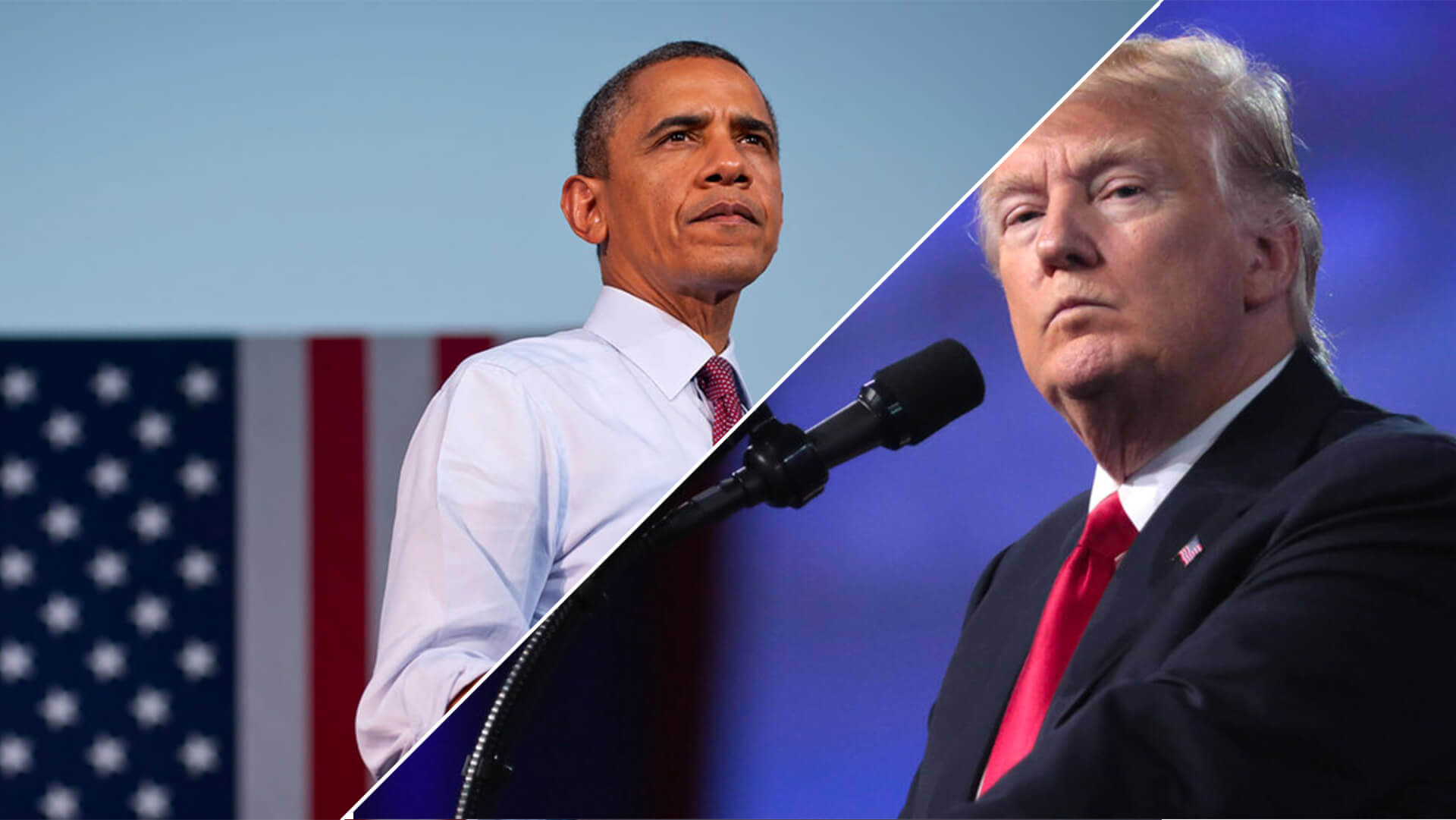
Portraits of Trump and Obama

The Obama and Trump administrations have both made deals with Iran. There are some glaring differences between the two, so let’s see which deal came out on top.

Obama’s Joint Comprehensive Plan of Action (JCPOA) failed to address Iran’s missile program or its support for regional proxy groups, but limited Iran’s access to frozen assets, maintained broader sanctions, required inspections of nuclear facilities by the International Atomic Energy Agency, and sought to create a regional balance of power. Trump’s deal is substantially weaker, as it allows Iran to sell oil freely and access the U.S. financial system with limited oversight, lacks long-term safeguards on Iran’s nuclear program, and leaves Iran without a proper framework to engage with the region.

Transcript

Hey everybody. Peter Zeihan here, coming to you from Colorado. Due to popular demand. I’m going to do today. Compare and contrast of an agreement called the JCPoA, which I don’t remember what it stands for now, but it was the Obama era deal with Iran versus what the Trump administration has just done. Let’s start with the review of JCPoA. 

It is held up as kind of the landmark example of how to not negotiate with a difficult country like Iran. There were insufficient safeguards. Most of the issues that really mattered to the United States were not addressed. It was considered kind of the first stage of a series of negotiations to try to normalize relations with the Iranians. And as such, it was ultimately abandoned. 

And most independent observers looking back on it now, ten years on, would give it a degrade in terms of its overall quality. So why is that? There are a number of things in the bilateral relationship that matter. Obviously, there’s a lot of things we disagree about, but near the top of the list are sectarian groups that are on sponsors to foment chaos throughout the region and its missile program, which is designed to not simply threaten Israel but ultimately broader American interests. 

And in time, maybe even the United States and JCPoA addressed neither of those at all. But neither did the Trump administration. There’s not a single word about any of that in the very short napkin deal that Donald Trump put his name on so famously in Versailles. That’s piece one. Piece two is finance. The United States controls the global financial system, and almost all commodities are almost exclusively settled in US dollars. 

That means the United States has eyes on any transaction that uses any dollars. And honestly, on almost all trade period. Because if you’ve got two countries that don’t have a lot in common executing a trade deal like say, I don’t know, Oman selling crude oil to Korea, the Omanis don’t have anyone and they don’t want anyone, and the Koreans don’t have any Omani dinars and they don’t want any. 

And so what they do is they take their dinars. I think it’s called a really not sure offhand. Maybe I should have picked Mexico anyway. Exchange them for U.S. dollars on the international exchange, and then it goes back to one when it hits Korea. And in doing it that way, the United States actually gets two points of view on every individual transaction. 

Anyway, Iran had been under a degree of sanctions for decades. And so the Obama team offered up progressive relief from sanctions in exchange for cooperation on the other big deal nuclear issues. And so to that end, the first stage was unlocking some of the cash as an act of goodwill that Iran and had frozen all these years came out to something like, I don’t remember the name or number off the top of my head. 

No WiFi here about, let’s call it $20 billion. I think that’s about what it was anyway. 20 to 30. Anyway, that was loaded up into pallets and flown to Tehran, which is something that Obama’s critics screamed bloody murder. You’re flying cash pallets of cash. And the response, which was accurate, was that access to the financial system, which would have allowed Iran to sell its crude on the open market and get all the cash direct and use it for whatever it wants? 

That would have required loosening up the sanctions in a way that the Obama team didn’t want to grant right off. That was probably for phase two or phase three or phase four. So the only option was to fly some of Iran’s cash. That was Iran’s. Anyway. 

Anyway, it was an awkward deal that really had bad optics, but it was probably the best. Could it be done at the time? In contrast, the Trump deal just gives a very similar amount of cash in the 20 to $30 billion that is frozen directly to Iran in US dollars and grants them full access to the US financial system and allows Iran to sell whatever it wants to on the international market and earn US dollars that are not under US jurisdiction or monitoring or in any sort of temporary account, so we can watch where it’s spent. 

It’s basically gave her on everything that’s been demanding since 1979. Which brings us to the nuclear question. That was the big achievement of the Obama deal. Is it committed Iran to IAEA inspections? IAEA is the UN bureau that monitors everybody’s nuclear power plants and makes sure that you’re not taking some of the fuel and turn it into what would go into a bomb. 

The Trump deal does mention nukes, but it says it’s all subject to a 60 day deal, and there’s no restrictions on them at the moment. In addition, the Iranians felt that they wouldn’t be attacked because they had a nuclear program. Now they know they need to have a nuclear bomb to have a deterrent. So we’ve basically incentivized them to build a nuke. 

Well, whereas the Obama deal, while there were multiple rounds and we were only in the first round, was definitely weak and insufficient and a bad deal. It’s nothing compared to the strategic abdication that the Trump administration has just done on financial and nuclear issues. 

The core logic for the Obama deal, and you can you can argue with it, is that if you’re going to withdraw yourself from a broader region that you have been managing for decades. Unless you just want to let the chips fall where they may, you need to do one of two things. Number one, you have to appoint a deputy or a new regional hegemon to take your place, a country that you trust enough and that has enough capacity to hopefully do things more or less in the way that you would. 

And There was no one. There is no one in the region that checks those boxes for the United States. Israel isn’t trusted, and besides, its power projection is limited in a sustained way. Sure, it can bomb someone, but it can’t hold territory except in Lebanon, Saudi Arabia. The military is a joke. Turkey is on the wrong side of Iraq. 

There’s just no one. Which leaves us with option two. You have to set up a regional balance of power that self regulates so that the region’s problems stay the region’s problems. And that was the approach the Obama team seized upon. And that required a degree of normalization of Iran so it could act as a normal power. The Trump administration’s deal is basically a wash your hands and walk away and what happens, happens. 

And so things like the war in Lebanon, things like the human rights disasters that are Saudi Arabia are the sponsors of terror, that are the Guthrie, Qatari, whatever. And everything Iran does in his infamous for just like it’s left. 

So yeah, the Obama deal will go down as the quintessential example of a grade D statecraft, a horrible deal that didn’t take all that many American interests into account. But we’ve all been through school, and we all know there’s a grade below D, and that’s where we are now.

Why Bypassing Hormuz is a Pipe Dream

Satellite image of the Strait of Hormuz

So, you want to bypass the Strait of Hormuz, huh? Good luck finding a replacement route or pipeline that matches the 20 to 22 million barrels of oil that used to transit daily.

The UAE and Saudi Arabia have pipelines capable of transporting roughly 1.6 and 7 million barrels per day, respectively. Despite being the best alternatives, they come with long expansion timelines or vulnerability to strikes. There are a few other routes that pass through Syria and Turkey, but those are either too risky or too small.

Transcript

Hey, everybody. Peter Zeihan here. Coming to you from Colorado. And today we’re going to talk about the bypass options for the Strait of Hormuz. Started. Hormuz, of course, is one of the world’s most important waterways. It is the gateway that tankers use to enter and exit the Persian Gulf. The Persian Gulf produces for export roughly 20 to 22 million barrels per day of oil and products, and under normal circumstances, almost all of that flows through the Strait of Hormuz aren’t really great options. 

Otherwise, Iran is all mountainous. You’re not going to go that way. Iraq is a sectarian disaster and it has no other waterway access. It would have to go north through Turkey, which is mountainous. Saudi Arabia is a desert kingdom which is huge, and so crossing its distances are problematic. The Kuwaitis and the Qatari have no options at all. 

And that just leaves the United Arab Emirates, which at least does border the other side of the Strait of Hormuz. But it has to go up and over some complicated geography. Anyway, there are four options that people are talking about, three of which exist in some way. So number one, you’ve got the pipeline that starts in the United Arab Emirates on the Persian Gulf and goes up and over some of that complex geography down to the port of Fujairah, carries about 1.6 million barrels per day. 

The Emirates have fast tracked expansions. They hope to have another 300,000 of capacity sometime later this year, and then maybe they even will double it over time by laying a parallel track. It’s expensive, especially building it fast, but that doesn’t mean it can’t happen. And the Emirati certainly realized that unless they get another option, they’re kind of hostage. 

Anything that happens between or among Israel, the United States and Iran. Number two, the big one, the Petro line. This is a line that starts in the eastern provinces of Saudi Arabia and their major oil producing region, and just shoots west, straight across the desert until it hits the Red sea at a place called Yanbu. they started construction on this during the Reagan administration. 

Everyone in this area has been worried about the Strait of Hormuz for a very long time, and it’s operational has been for a couple of decades. In fact, over the last ten years, the Saudis have incrementally increased its capacity from 4 million barrels a day to 7 And they had never really tested it. So until this conflict, we were still thinking it was at four. 

They have proven that with 30 to 45 days notice, they can ramp it up to seven, which from an engineering point of view is pretty impressive. There’s now talk of laying another parallel pipe and maybe increasing this by another two or even 3 million barrels per day over the next few years. There’s two problems with that. Number one, of course, is this is a big project over a large period of distance. 

And then second, just getting to Yanbu is only half the problem. The Saudis have built a number of refineries up and down the Red sea coast that are not connected by pipeline. And so the old strategy was to take tankers from the Persian Gulf, Salem, all the way around the Arabian Peninsula, going through Hormuz, through Bob Deb off the coast of Yemen, and then supplying these refineries by sea, which I always thought was remarkably stupid. 

Anyway, at the moment, the plans aren’t for these pipelines to support these other refineries, just to get it to the coast to open up some maritime options. Option three is for Iraq. Iraq has two different while producing zones. It’s got one in the which is the big one in the Shia Arab zone. And it’s got one in the north in the Kurdish Right now, all of the crew that comes out of the southern fields is exported by water through a couple of offshore loading platforms. They have. And all of that has basically been reduced to zero by the conflict. So the idea is you have a Western line that goes out to a city called Banias in Syria. 

This pipeline technically exists, but it was shut down in the 1950s and has never been turned back on. And so if this route is going to be explored, all of that equipment has to be 100% replaced. And you’re talking about a project conservatively is going to run $8 billion. 20 might be a better guess. And it’s not clear that the Iraqis have the financial wherewithal or the engineering skill to do this themselves. 

So you’re talking about bringing in companies from the outside and having to pay them, and that means it’s not going to happen this year or next year or this decade, and maybe not next decade. This would be a big project. In addition to the fact that about 40% of the route is going to be going through Syria, which until recently has been in a brutal, decade long civil war, and we’re just kind of counting the moments until the second phase of that civil war starts up. 

Not to mention that Banias on the coast is a different sectarian group than the majority of Syria. So it’s going to go through the Kurdish zone, and then it’s going to go through the Arab zone, and then it’s going to go through the Alawite zone. I wouldn’t invest in that if it were up to me personally. Final option also kind of exists. 

It’s the northern route that goes from Kirkuk, which is the oil capital. The Kurdish zone north into Turkey takes a dog leg going straight west to the Mediterranean port of Chian. And Chian is kind of in that elbow of the Mediterranean, where Turkey almost meets Syria. That pipeline has been operating for the last ten years at about half a million barrels per day. 

It was built to spec back in the 80s at 1.6 million barrels per day. But disputes between the Turks and the Kurds, much less the Turks and the Arabs in Baghdad, have meant that it’s always operating at a lower capacity. It’s not clear if it can handle that 1.6 anymore. Anyway, there’s problems with all of these pipelines. It takes a while to build them. 

They’re expensive. The Emiratis are showing that they can be fast tracked, but the Emirati one is probably the simplest over all. But the bigger problem is it doesn’t really solve the issue. I mean, yes, you can bypass Hormuz. And yes, that is important. But keep in mind the weapons systems we’ve seen deployed around the world in just the last six months. 

In the case of the Ukrainians, they’re now regularly striking industrial targets across Russia that are a thousand miles and more from Ukrainian territory. The Iranian weapon systems are not nearly as complicated, but they’re still striking things that are 500 miles away without a problem. And most of the infrastructure that we’re talking about here is within that 500 mile range. 

And so the Iranians can just program in what they want to strike, whether it’s a pumping station, part of the pipe itself, the loading facility, the tankers, a cluster of the loading facilities and go to town. Specifically, they’ve already hit Fujairah, the Emirati option, and Yanbu the Saudi option. And to think that they can’t hit any of these spots with today’s technology, much less the technology they will command when this construction is finished is just silly. 

Really. The only option for a bypass pipeline that might, might, might be resistant or immune to what the Iranians can do today, much less tomorrow, is the Turkish option, because the Iranians do not want to pick a fight with a superior local military power like Turkey. So that is really the only thing that works. But that one of the three that are operational is by far the smallest of the three. 

The petrol line is not a solution, the pipeline is not a solution. And honestly, anything that’s going to depend upon Syria instability is probably not an option. That just leaves the Chian pipe, which at the moment is maxed out theoretically at 1.6 million barrels per day. Operationally probably half that. And if the decision was made to double, triple or more of that, you’re talking about a project that’s in the tens of billions of dollars because eastern Turkey is not flat. 

So none of these really work. They’re going to generate a lot of talk. The Trump administration already has their fingerprints all over them. Like this is going to be a quick and easy fix. It is not you can take that to the bank.

The U.S. Can’t Break the (Arctic) Ice

Ice floating in the Arctic Circle

Despite the growing importance of the Arctic, the U.S. continues to move further away from a sustainable operating plan.

The USCGC Healy broke down during sea trials, and the Polar Star is undergoing its own refit, which leaves the U.S. with one operational icebreaker. Clearly there is a hole in U.S. Arctic strategy, and attempting to plug it with the goodwill of Canada and Finland (given strained relations) might leave the U.S without a long-term solution.

Transcript

Hey, everybody. Good morning from Colorado. This is Peter Zeihan. Today we’re going to talk about how the American Arctic strategy collapsed over the weekend. The United States only has a small Icebreaker fleet. And the biggest of them, the Healy, was undergoing high speed trials after a repair cycle, and the engines crapped out. The crankshaft broke. 

There was a bit of a fire and it basically stalled out and had to be towed back to port. We don’t know how long it’s going to take to get it back into operation, but it will be at least the remainder of this year. And this is after a series of other mishaps that involved an engine room fire and a transformer fire. 

The ship has not been doing well since it came on line 20 years ago. Second, you got the Polar Star, which is over 50 years old, and its only job is to run supply runs to Antarctica to supply Fort McMurdo, McMurdo base, if you prefer. That’s it’s only job and it is now completed that most recent cycle and has begun its own refit. 

That just leaves a ship called The Stories. Now, Coast Guard vessels are in that gray area there. It’s a middle branch of the military, but the ships are kind of a civilian military hybrid, oftentimes not for the stores. The stores is a flat out civilian vessel in construction. It’s an oil tug that’s been converted. And it is now the only ship the United States has. It’s an icebreaker. Whether you’re looking at global warming and new routes, whether you’re looking at competition with the Russians or the Chinese, this is basically bad because the United States no longer even has a ship in the game. And the backup plan, while wise under normal circumstances, probably isn’t going to work out. You see, under the Biden and later Trump administration’s Trump to the United States basically signed a series of agreements with the Canadians of the Finns to build icebreakers for. 

You see, we don’t even have a shipyard that can build them anymore. And that would be great, especially now that Finland and NATO. But the two countries that the Trump administration has threatened most directly and most repeatedly are Canada. Canada is not going to help us build an icebreaker fleet that could then circumvent Canadian power in the Arctic. 

And then there’s Denmark. You know, the whole Greenland thing. Finland is a very tight ally of Denmark. And if the United States seizes Greenland, we can basically kiss the entire Scandinavian block a goodbye. So basically, we are looking at a period for at least the next 30 years. We, the United States, does not have a military presence on the waters in the Arctic. 

Whenever there’s ice, we can still sail up there. In the summer, we can still use air power, which is of limited use on the water. But other than that, we’re looking at the United States not even having a tool in the box. And at a time where the world is in churn, to not even be able to play is a real problem. 

And this is something that will resonate well, well throughout the remainder of this century. So, you know. UGG.