China Tries to Build Sand Bases, Again

A desert full of sand

China is out building sand castles again in the South China Sea, and I bet you can guess how it’s going to end.

They’re trying to do something that has already failed. These new sand-based structures will suffer from the same structural problems as last time, so runways will crack and infrastructure will become unstable.

The Chinese are surely assertive and persistent, but larger sand islands just mean a larger failure. Chalk this one up as a costly mistake rather than a serious military threat.

Transcript

Hey, all. Peter Zeihan here. Coming to you from Colorado. some of you have written into the Patreon page asking about China’s new base building thing in the South China Sea. For those of you who haven’t been following, South China Sea is a disputed waterway that is east of Vietnam, west of the Philippines, and south of China. 

Lots of different countries claim it. China has a particularly insane claim where they claim all of it, even though there’s no historical geographic basis for that. But, you know, bygones. Anyway, in bits and pieces over the last 30 odd years, the Chinese have been building artificial islands in this zone and stationing military equipment On them. 

This stopped several years ago. I think it’s been seven years since the last one. And now, as of this week, they’re starting on a newer, larger island in the paracels. So should we care? Short version is. Yes, but usually out of entertainment on this topic. So a few things to keep in mind. South China Sea is not particularly deep to sandy bottom. 

And so what the Chinese do is they bring dredge ships in and pump the sand, and the core will break it up and then pump it into a pile. And that pile becomes an artificial island, and they build infrastructure on it. And I don’t know if any of you ever played with sand as a kid, but this stuff isn’t all that stable. 

And so what happened within 48 months? Most cases within 12 is all of these structures that they built started to settle. And so after a couple of years, after five years, for sure, all the runways they built were useless. Planes couldn’t land on them. And the reinforced hangars they built just started to crack open. And so about seven years ago, they stopped. 

So what’s changed? Well, seven years ago is where Chairman Ji got rid of his last real advisors. And so the advisors who were willing to tell him that. Hey, boss, this is a really stupid plan that is wasting a lot of money. And anyone who knows anything about military tech is laughing at us and hoping we do more of it, so maybe we shouldn’t. 

And they stopped. But seven years ago, that last person who was willing to speak truth to Ji was let go. And in the last seven years, she has been imbibing nothing but his own rancid propaganda. Does this sound like anyone you know? Anyway, so we’re back at it again. And the Chinese seem to think that it. Well, if a small island made out of sand, it was going to sink and crack and be useless. 

I bet a big one will work. And yes, it will work differently. It’ll sink bigger, it’ll crack bigger. It’ll be even a bigger disaster. And I really hope that they make some mid-term military plans based on this, because it’ll be a delightful disaster when the rubber hits the road in any meaningful way. So, am I worried? No, but I have bought some more popcorn.

The Blockade of Iran Begins

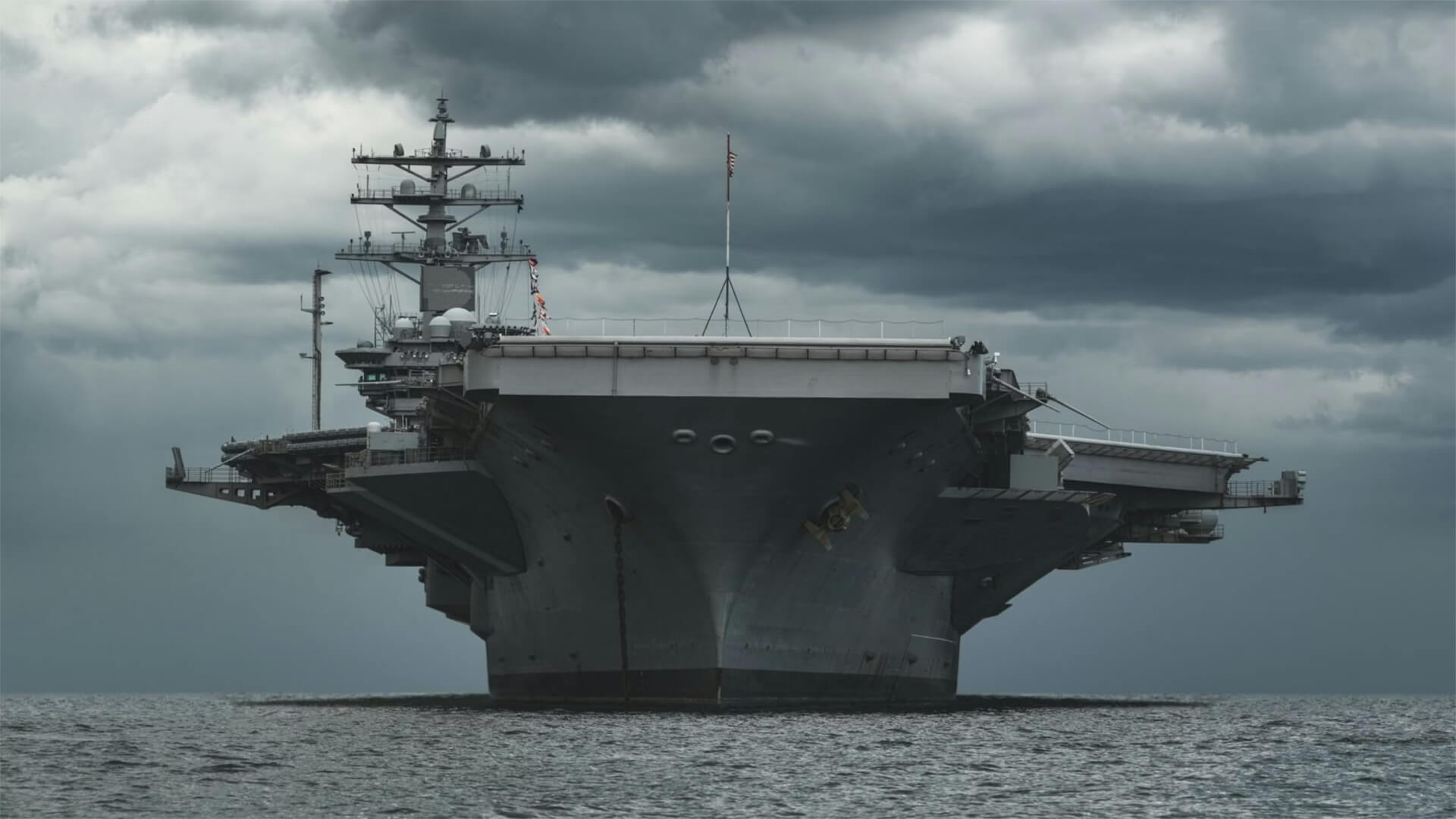
A US aircraft carrier floating in water with dark storms behind

The blockade of Iran has officially begun. The first day was a bit slow, but this remains a monumental move by the U.S.

The most critical component of the blockade is that it finally puts pressure on the group actually controlling things, the Islamic Revolutionary Guard Corps. And since the IRGC gets most of its funding from oil exports and smuggling, the pressure is on.

This is a good thing overall, but it could provoke attacks on nearby Gulf states. And sure, there are several ways to bypass the blockade, but those costly routes add time. A blockade like this can only be effective through sustained enforcement, so we’ll continue to watch the Strait closely.

Transcript

Hey, all Peter Zeihan here coming to you from Colorado. We are on April 15th now. And so happy tax day. But it also means that we’re in the second full day of the American blockade of the Persian Gulf. Specifically, the United States has said that any ship that is planning to dock at any Iranian port or is coming from any Iranian port is not allowed. 

Passage and naval assets, at least in theory, are in position to, potentially board vessels that decide to run the blockade. In the first day, no one really tried. Really. Only one ship came through ignoring the blockade. The United States didn’t do anything, but it was the first day. So, you know, whatever. That could mean anything moving forward. 

What the Trump administration has done is really, for the first time in the conflict, actually put a price on the powers that be in Iran. You see, when the first waves of attacks went in and the bulk of the Iranian leadership was killed, yes, that killed the current decision makers. But when you’ve got a political class of mullahs, it’s 10,000 people. 

Power just went to the next wave. And when it comes to operating in a war scenario, the people who are making the decisions were the IRGC, the Islamic Revolutionary Guard. These guys operate differently because they don’t necessarily garner their power from control of the military or the economy or taxes. Most of their income comes from either oil sales directly or smuggling. 

So when you’re looking to punish these people, the attacks at the United States and Israel did for five weeks did very, very little to actually hurt them. It destroyed large portions of the aboveground Iranian economy. And in a normal state situation, that could have been crushing. But those weren’t the people that, were running the military strategy at the time or now by blockading the ports, however, the 2 million barrels a day that the IRGC was able to export has now gone to zero. 

And their ability to import product, to then control smuggling networks has gone to zero as well. So whether or not this is on purpose or not, the white House has stumbled across a strategy that actually puts pressure on the people who need to be pressured. There are still a thousand questions about how this will be done, whether it really will be done, or if it’s just a truth social post. 

But the fact that the assets are actually in place now is promising. That promising, however, doesn’t mean it’s going to work. Promising doesn’t mean that it’s going to be sustained long enough to make a difference. And that doesn’t mean that it comes with no side effects. Because if you really do start pressuring these people, they will strike. 

And these are the people who control the bulk of the Iranian missile fleets and all of the drones, and have demonstrated over and over and over and over again that they have more than enough capacity to strike any energy asset on the Arab side of the Persian Gulf. That’s above the west side. 

Anyway, the other reason that the blockade seems to me to be a necessary move is hardware. The Iranians don’t have a huge manufacturing base, and almost all of the parts and all of their missiles and all of their drones come from China. And we were in this weird situation throughout the war where the Chinese could ship whatever components in Iran could import whatever components they wanted. 

But the, the strait was shut down to Allied shipping. Now we’re in a situation where that seems to have finally flipped. There are still plenty of drones, thousands of drones, maybe tens of thousands of drones in Iran. So it’s hardly a short cutoff. But it does matter. 

Now there are two things to keep in mind and to watch for in the days ahead. First of all, maintaining a blockade on the Persian Gulf is pretty easy. You put a few ships across the mouth of the Strait of Hormuz. You can see everything without any sophisticated equipment. That’s the easy part. But Iran does have one port, Chabahar, that is out east in the Gulf of Oman, where it turns into the Arabian Sea just shy of the Pakistani border. 

Chabahar would require a separate naval blockade in order to prevent access. And that means American splitting its forces. Otherwise, you can ship in containers full of drones to and they can be trucked elsewhere in the country. 

Second, there’s nothing about the northern or eastern borders of Iran that can be blockaded because it’s land. 

So the Chinese could, rail or truck stuff through Pakistan or Central Asia into northern or eastern, Iran and get things in that way. Now, that takes longer. That is much more expensive. If they started that process today, the first new components aren’t going to arrive in Iran for about three weeks. And there’s a lot of things can go down in three weeks. 

And a situation where basically both sides have been negotiating in bad faith since the very beginning of this process. But those are the things to watch. The naval side of this for the United States is actually pretty straightforward, even if it does require an extra task force to cover Chabahar. But there we are. 

So, next steps. Watch those two places. Watch to see a second phase of negotiations. Watch to see if either side is willing to give in or not. I think we’re well past the point where Donald Trump can simply declare victory and go home, because if he does that, he basically hands Iran control of the Strait of Hormuz, allows them to continue their nuclear program, allows them to continue supporting militant groups throughout the United States. 

Basically, the United States would be in a worse position in that scenario. In the aftermath of the war than it was before. And so many people are now saying that among the Republican Party that I think it really has sunk in doesn’t mean that there’s a good strategy here. But if there is a path to pressuring Iran to do something different, you have to hit the interests of the IRGC. 

And so far, the blockade is the first thing the United States has done that has done that.

The Energy Crisis: Downstream Impacts

Globe shot of energy hubs

The global energy crisis has moved from theoretical to very real. As the last shipments sent before the war begin to arrive, we are now hitting a turning point in the energy crisis.

Rationing and black markets have already sprung up in Asia. Some countries have found ways around the shortage (for now), but that has created new issues for others. The Europeans will feel the heat in the coming weeks, as oil from both the Gulf and Russia disappears.

The U.S. has also lifted sanctions on Russian and Iranian oil that is already in transit, temporarily easing shortages, but undoing years of work to limit export income for these countries.

Transcript

Hey all, Peter Zeihan here, coming to you from Colorado. Yesterday we talked about what was going on with energy markets, primarily in the upstream, dealing with disruptions out of Russia and Iran. Short version. It’s pretty bad. It’s getting worse. Now, I wanted to deal with things that are close to the consumer where it’s pretty bad and getting worse. 

It has now been five weeks, which means that there’s a half a billion barrels of crude oil that hasn’t made it to market 

The final tankers from pre-war shipments from the Persian Gulf arrived in all of Asia last week. The final tankers will arrive in Europe this week and starting next week, the disruptions to from what the Ukrainians are doing to Russian oil exports will start to affect Europe as well. 

A mix of things here. Let’s start with who’s feeling what. Because of the shortages in Asia, we already have widespread rationing and the development of black markets. It’s affecting different countries in different ways. So for example, India has gorged on the thin stream of Iranian crude that’s coming out, and the legalization by the Americans of Russian crude that is out and about. 

And that has allowed them to avoid any sort of direct energy crisis as regards to oil and oil derivatives. However, almost all of their cooking, I should say all. But for about half the population, their cooking is done with propane liquefied petroleum gas that is exclusively produced for them in the Persian Gulf. That has gone to zero. And so now they’re seeing an energy shortage in that regard. 

Places like New Zealand and Thailand and Taiwan and the Philippines and Vietnam are all experiencing degree of energy shortages and rationing. And already the country that is most panic and should be is Korea, because their options are very, very limited and they’re a major industrial player in Japan at the moment, is avoiding this largely because they have access to sources from the Western Hemisphere and a navy that can protect them if it comes to that. 

And at the moment, the Chinese are okay, not because they’re not experiencing energy shortage. They absolutely are. But China has an overbuild of refineries. And so part of their economic model was to build refineries, absorb crude from abroad, refined into fuel, and then export that fuel. And so the way the Chinese have avoided an energy crisis is by stop exporting fuel. 

So at the moment China is okay, but those fuel exports now have stopped arriving in various places and countries like Australia, New Zealand, which used to get their fuel from China, their refined fuel suddenly aren’t. So we have a different sort of rationing and energy crisis. In Europe it’s going to hit them from multiple angles, but they do have a little bit more time. 

Like I said, the last tankers from pre-war Persian Gulf exports arrived this week. So it’s only now that the crunch really begins. The problem will be in 2 or 3 weeks, because they have this weird little setup where Russian crude can’t be bought in Europe, but it’s exported somewhere else, refined a product and shipped back. So we’re now starting the fuze on that, and in three weeks the Russians, will basically be a non-factor in European energy. 

At the same time, the Persian Gulf becomes a non-factor in energy. And it’s going to be a mess all around. A couple other things. Number one, there are more ships leaving the Persian Gulf. We saw 20 to 30 on both Saturday and Sunday, which brings up us to about one fifth of pre-war levels. The difference is Oman, which is the country that controls the southern side of the strait. 

Last week we talked about how the Iranians had set up a tollbooth system and were charging about $2 million per vessel and then kind of sort of escorting, ships through the northern part of the Strait of Hormuz in their territory. Oman is now doing the same thing in the south, basically to tankers, ships, whatever they happen to be are either re flagging or changing the trans front doors to say, Omani owned. 

And Oman has always been kind of the neutral power in the Persian Gulf. The Iranians have always kind of considered it in a different basket compared to Kuwait, Bahrain, Gutter and Saudi Arabia. In the UAE, which are more of the American camp. So far, the Iranians have not targeted these Omani vessels. I’m not saying that they this is a safe path. 

It’s not. But it has allowed some ships to get out. I will underline, however, that almost all of the ships that are using this route are leaving. Very, very, very few are coming in. Those that are typically Iranian flagged using the northern route. So of the two 300 ships that were stuck in the Gulf before, some of them are getting out. 

Nobody’s going back in. And that means that the oil production, even if it continued, even if it wasn’t damaged, still has no place to go. Let’s see. Finally, the big achievement of the Trump administration in this war so far in energy markets has been ending. the sanction system on places like Russia and Iran. They have now lifted fully the sanctions on purchasing what’s already on the water. 

And that has allowed basically the last 4 or 5 years of attempts to isolate the Russians in the last 10 to 15 years of attempting to isolate the Iranians economically, to vanish into the ether. If there’s going to be an effort by the United States or any other country to limit the legal access to these crudes, they’re going to have to start completely over. 

So the last 5 to 15 years of efforts to kind of squeeze these economies is now broken. Now there’s plenty of other things, physical damage, for example, that are drastically affecting both of these markets, primarily the Russians. But it is interesting to say that it took a war launched by Donald Trump on Iran in order to make Iranian oil legal again.

Trump Goes on a Firing Spree

Donald Trump speaking at a podium and looking intense | Photo by Wikimedia Commons: https://upload.wikimedia.org/wikipedia/commons/9/90/Donald_Trump_speaking_at_CPAC_2011_by_Mark_Taylor.jpg

Just because Trump is finally purging some of his administration doesn’t mean that the problems are going away. The core issue still exists: Trump prioritizes loyalty and praise over competency and experience.

Trump even fires people for the wrong reasons. While these officials could be ineffective or downright damaging in their roles, they won’t feel the wrath of Trump until they do something that pisses him off personally or politically.

And the scariest part is that there is no longer a cadre of replacements to pull from, since Trump dismantled the Republican institution.

Transcript

Hey, all. Peter Zeihan here coming to you from Colorado. A lot of people on the Patreon page have asked me what I think of the recent firings by Donald Trump of a couple of his cabinet members, at Department of Homeland Security. Kristi Noem is now gone and has been basically put into a pointless position, to oversee a summit that will probably never happen again. 

And Pam Bondi, the former attorney general now, is also gone. And so the question is this this is the start of a general bloodletting. You know, let me let me start with the simple stuff. Trump is erratic. So I don’t really know. But let me underline that. It really doesn’t matter. The president chooses co-leaders based on his own interests and his own style. 

And we have learned over the past five years that Trump does not want advice. He wants worship. So if you go back to Trump one, he really did not expect that he was going to win. So the Republican Party, specifically the former governor of Oklahoma, helped him staff out the government with people from throughout the Republican establishment. And so he came in with a lot of people that he personally knew her trusted. 

And he proceeded to almost fire all of them during the course of his first administration. He actually cycled through more cabinet secretaries than any other three American presidents in history. What we discovered was that whenever somebody was in the room who offered him good advice, that was usually because they had studied the topic and knew something about it, and that made him feel like he wasn’t the smartest person in the conversation. 

So when he was out of power, he took over the Republican institution, the party itself, and purged it of the research arm and the recruitment arm so that that could never happen again. So when he came in for his second term, there was no longer a pool of talent to draw from. In fact, the Republican Party no longer has a pool of talent to draw from. 

And so he installed people who would tell him what he wants to hear. Or, to be perfectly blunt, just praise him without any reason. And that is the bulk of the cabinet today. And if you look at the senior leadership throughout the government, we still have over a thousand positions that haven’t been filled. Things like, say, the ambassador to Russia or the, surgeon general. 

This is as much by design as anything else. So when you’re hoping that he’ll fire somebody in the cabinet who wasn’t any good at their job, keep in mind that they weren’t picked because they would be good at their job. They were picked because they couldn’t be good at their job. And any replacements going to fall into the same bucket. 

So let’s go through the candidates that are everyone’s talking about that are likely to get fired. I don’t know if they’re going to be, but, that, you know, they’re on the list. First up is at Commerce, Howard Lutton. Now, I have spoken to no one who is in the financial world in New York who has said anything other than he was the most corrupt person in New York. 

And so they all thought he would be a perfect fit for Trump Commerce. And it sounds like that’s exactly what’s gone down. The Trump policy when it comes to tariffs is incredibly erratic. We have now had over 7000 changes to tariff policy. So businesses within the United States just don’t know what the rules of the game are. 

And we’ve seen industrial construction spending steadily drop for the 14 months of the Trump presidency so far, to the point now that if you remove data center construction, we’re actually below where we were for new builds during Covid of all times. It’s getting very, very bad. But for let’s take this as an opportunity. What it seems to be happening is his family is selling access to lightning, specifically at Commerce. 

And lightning is selling his personal access in order to get people exemptions on the tariff list. So a remarkably corrupt setup. Trump knows this. Trump has no problem with this. Trump’s problem with Hutnik is that apparently the big family was very tight with the Epstein group, years ago. And so that has prevented the team issue from fading into the ether. 

So if Mick is going to be fired, it’s not because he’s doing a horrible job at Congress and crushing American economic activity and becoming rich in the process. It’ll be because of child molestation, apparently, or something like that. I really try not to follow Epstein. Okay. Next up, RFK Jr at, Health and Human Services. This guy is a full on nut bag. 

This is the guy who is making up studies in order to say that, vaccines shouldn’t be part of our system. This is the guy that says that the way to fix heart disease is to double your consumption of beef tallow. I mean, he is he is certifiable. And he’s undoubtedly causing massive damage to American health long term because decisions that are made by parents. 

Now, when your kids are young are going to affect their health their entire life. And this is grossly going in the wrong direction. Trump has no problem with that. What Trump has a problem with is that RFK is sucking up a lot of the oxygen in the room, and the Maha group, and they call themselves, Make America Healthy Again is now starting to split with the president because Trump just can’t stand sharing the stage. 

It’s a PR issue. I mentioned that the surgeon general, still hasn’t been filled. It’s been 14 months. It’s one of the most important jobs in the government and the only person who has been appointed. So far is a literal quack. Okay. Moving on. My personal favorite, Tulsi Gabbard. If she’s not a Russian agent, she clearly aspires to be one. 

She is had an anti-American position on every foreign policy question for the last 20 years, and now she’s in a position where she aggregates all of the intelligence that comes in from all of the bureaus and departments, and provides the president with a daily brief. And she, of course, aggressively edits that. So the president can’t possibly be informed. 

Most of the positions she’s taken so far in the administration have been purely pro-Russian, designed to denigrate American power. But that is not the problem that Donald Trump has with her. The problem that he has is that she doesn’t support the war in Iran. And so she actually testified to Congress, one of the few true things she’s ever said, that there is no evidence that Iran was, actively developing a bomb in a way that was any closer to who they had been over the last five, ten, 15, 20 years. 

True. Trump didn’t like hearing that. So now he’s talking about getting rid of her. Next up, Kash Patel at the FBI Patel. He’s one of the candidates for one of the stupidest people in the administration. He has no experience in law enforcement, just like Tulsi Gabbard. No experience in intelligence or management. 

And he’s a conspiracy theorist, and he came in basically knowing nothing about the job. And one of the first things that he did is remove people from counterterror investigations, kidnaping investigations, new color theft investigations, and sent them to Home Depots to arrest day laborers. He has wrecked the training system for the FBI. He’s done incalculable damage to American law enforcement long term at the federal level. 

Trump is aware of all these things. He has no problem with any of these things. His problem with Cash Patel is that he has proven so incompetent that he can’t prosecute Donald Trump’s political foes. Now, this is an impossible ask, because Trump accuses his foes of doing things that they just haven’t done. And I realize that there’s some people in MAGA that are going to scream at that, but tough. 

No facts whatsoever have ever been presented that Trump lost the last election, or that Trump doesn’t get along very well with the Russians. This is the same reason that Pam Bondi was ultimately dismissed because she realized that there was no relevance to these cases, and so she slow walked him and only prosecuted them in order to stay in Trump’s good graces. Kash Patel is basically in the same bucket. And if this is how Trump defines success, he will never be satisfied with anyone who is FBI director or attorney general. Competing with cash Patel for the dumbest person in the administration is Pete Hegseth at defense, the guy who, during his confirmation hearing, proudly proclaimed that he would be the least qualified defense secretary in American history. 

And while he was right, he still hasn’t appointed a chief of staff, so he’s still not even capable of scheduling a meeting among the Joint Chiefs without using their staff, much less the rest of the Defense Department. He’s gone through, and he’s wrecked some of the academy work. He’s certainly interfered with mid-career training. He’s interfered with the promotion process to make sure that no women or minorities are promoted. And as a result, he’s come into clashes with others of the senior staff within the, Defense Department. The big things has happened the last few weeks is that the Army chief of staff was fired because he objected to what Hegseth was doing with the promotions program. 

The chief chaplain was fired because the chaplain thinks that got. Oh, God, this is so awful. The chaplain believes that soldier should have a relationship with their spiritual side, whatever that happens to be. And Trump’s like, unless you’re going to be a crusader, fuck off. We’re now at the point that the Pope and the arch bishop of military services are now taking some pretty strong stances against Hegseth personally. 

And Hegseth is using Crusader language to justify the war in Iran, but having absolutely nothing to do with the manager of the conflict itself. Trump knows all of this, has no problems with any of it. But Trump realizes in his heart of hearts that the Iran war is not going nearly as well as he would like, and Pete Hegseth has now manifested himself as a potential scapegoat. 

So a couple of the firings that Hegseth did over the last week were potential competitors for his job. And so he fired them preemptively. Now, the point of all of this is that it’s not that these people should be fired. Of course they should all be fired. They should have never been selected in the first place. They certainly should have never been confirmed by the Senate. 

But they have been. And if Trump fires all of them, there is zero expectation that we’ll get anyone better. I make part of my living by being in a conference speaker. So I go around the country talking about geopolitics and economics, and where it takes the people in the room, and I try to stick around to see the other speakers. 

And typically you’re going to have a couple of economists and a couple of political speakers. And when you bring in a political speaker, they always try to get someone from both sides that has collapsed in the last year. What we’ve discovered is that there’s no one in the business community or academia or in security studies that believes in anything that Donald Trump is doing. 

There is no Cordray out there for MAGA that is rooted in anything real. It’s just ideology. So I have not been to an event in the last year where anyone has spoken on behalf of the MAGA movement, unless it’s been a direct representative from the administration itself. And most of those guys clearly don’t know what they’re talking about. 

What is evolved over the last 14 months is that the business community has kind of gotten fed up with what’s going on, and is starting to change its mind. The business community has been a core part of the Republican coalition, going back to the last reformation of the Republican Party during the depression, and now they realize it’s finally sinking in, that they’ve been kicked out of the coalition, and they’re only now starting to kind of tack. 

That’s kind of piece. One of all of this is that we’re seeing people who have always thought of themselves as Republican, realizing that they’re just not anymore. The second piece is if Trump decides to fire these people, he then is supposed to replace them. But there are no candidates that are more competent than the incompetent people that he would be letting go. 

And what has changed, in part because the business community is there a handful of Republican senators who have kind of woken up to the danger that Donald Trump is not just to the country, but to the party in? They’re for their own personal futures. It’s a little late to the game, but we haven’t seen any meaningful movement on Trump’s appointees confirmation for months now. 

And so if we get a new defense secretary, a new, attorney general, new FBI director, somebody new at HHS, I’ll say it’s a clean sweep. The candidates aren’t going to be any better. And the willingness of Congress to give him a second chance to run with people who were chosen because they were incompetent is pretty low. So we’re more likely to see more problems at the white House, more inconsistencies, more incompetence. 

And if you look back in the last several months, oh my God, the bar is already really high. But if you look at how Trump has been reacting in public since the Iran war started, you can see he’s very clearly losing his grip and getting frustrated. And the fact that his chief of staff, Susie Wiles, is probably the most competent person in the cabinet, is suffering, unfortunately, from breast cancer and so hasn’t been able to put in the time. 

She has always been kind of the Trump whisperer. And with her and a reduced role, there’s nothing left between Trump and the rest of the world. And that is starting to really show. I call it a failed presidency, but we were already there. We’re now looking at something worse. An old guy who is really frustrated, who has started a lot of problems he can’t solve, even with a good team who has no team at all. 

This is going to get a lot worse before it gets better.

Winners and Losers of the Iran War: Ukraine and Russia

Toy soldiers advance across a map with an Iranian flag in the foreground

The Iran war has slashed oil exports from the Persian Gulf, creating a global supply shortage that’s just starting to hit markets. As prices are driven up and broader economic impacts unfold, winners and losers will begin to emerge.

Russia was enjoying the boost in oil revenues until Ukraine took out a chunk of its energy infrastructure with drone strikes. And those strikes don’t look like they’ll stop anytime soon. Russia’s support for Iran is also garnering political backlash that will weaken Putin’s long-term position. Ukraine is emerging as a winner, as its low-cost drone tech has secured deals with Gulf states to scale production and secure Ukraine’s position as a leader in military tech.

The Iran war is reshaping global alliances in ways nobody could have predicted, so we’ll continue to explore the winners and losers of this conflict in this new series.

Transcript

Hey, all Peter Zeihan here. Coming to you from Colorado. So today we’re going to dive into our open ended series on the impacts of the Iran war on everybody else. We’ve talked about the United States at length and the Persian Gulf countries, of course, but what about everyone else? The region used to export 22 million barrels of crude a day. It is now down to probably something between 10 and 12. So we’re already looking at a shortage of 400 to 450 million barrels that haven’t gotten out, and a lot of that shut in is going to remain shut in for assuming no additional damage. It’ll remain shut in for a minimum of another nine months after the guns stop firing. 

And in the case of some of the Iraqi production, probably well over two years. These aren’t shale wells where you can just turn them on and off. Anyway, that has a lot of, in fact, a lot of people. We are only in the preliminary days of seeing oil prices go up. It was only last week that the last of the oil tankers pre-war from the Persian Gulf made it to Northeast Asia. 

And it’ll be this week that the last make it to Western Europe. So what it was a failure in throughput is now becoming a failure in supply. And we’re going to see that impact all kinds of things. So let’s start with the former Soviet Union, specifically Russia and Ukraine. In the opening days of the war. The conventional wisdom was twofold. 

Number one, there’s no way that Ukraine comes out of this in a better position. The Western world, the whole world is going to be distracted by what’s going on in the Persian Gulf, which for most countries is more significant than what happens in the Russian near abroad. The United States is going to be diverting its weapons system, most notably its missile interceptors, to its own needs in theater, rather than sending them to Ukraine. 

And on the flip side, Russia is going to make mat bank. Oil prices had been moderate until the war started, and now they’re regularly over $100 a barrel. And if you consider that the break even cost for a lot of Russian fields are between 30 and $50 a barrel. And they went from selling hit 60 to 100. 

You know, you’ve seen the profit for Russian oil sales increased by a factor of five or more almost overnight. And that cash coming in is obviously going to remake what Russia can do with the war. Most of their equipment is comes from China, but the China insist on hard currency payments and that requires oil sales. That was the conventional wisdom, and there’s nothing wrong with that. 

But now that we’re five weeks in, we’re seeing a much more nuanced picture with a lot of unexpected upsides and downsides for both sides. Let’s start with the Russians. The Russians have been actively providing intelligence and techniques and hardware to the Iranian government to target the United States’s forces in region. While Donald Trump remains firmly in Putin’s pocket, that is drastically adjusting things in the Defense Department and on Capitol Hill, where we’re seeing significant unrest in the United States with Donald Trump’s policies, in a way that can’t help, the Russians long term. 

More importantly, the Russians and the Iranians are not the only ones with drones. And during the war, the Ukrainians have showcased a new set of hardware with a little bit longer range and have used it to completely destroy the export capacity of Russian oil exports from the Baltic Sea. 

It’s conservative, removing a million and a half barrels a day of exports, maybe up to 2 million, because the Russians can’t really redirect. They don’t have a backup pipeline system. And so what was originally this big windfall has turned into a structural loss for them in terms of oil exports. They’re still earning more money overall. 

But once the Ukrainians are done with the Saint Petersburg region, they’re just going to turn those drones onto the next oil producing and transiting system. And we may not have any meaningful Russian exports from either the Baltic or the Black Sea within three months, or that close second Ukraine itself. The year that the Ukrainians have had to basically operate without American assistance, they’ve used to great effect and innovating into the drone space, specifically encounter, drone technology. They’ve got something called the Brave One, which can fit into a duffel bag. It has limited range. Not a great success rate, maybe 50%, but it only cost 2 to $3000 to make, versus 30 to 50,000 for a Shahed versus 4 million for pack three. 

So Zelenskyy in the last couple of weeks has been all over the Persian Gulf, signing deals specifically with Kuwait and Qatar and United Arab Emirates and Saudi Arabia, each multibillion dollar deals to invest in drone production. The Ukrainian problem this last year hasn’t been innovation. It’s having the cash necessary to buy all the materials to make it. 

Probably half of the industrial plant that they’ve expanded in Ukraine in the last year is not being used because they don’t have the money. Well, say what you will about the gold farmers money is not the limiting factor. So we’re going to be seeing money pouring into these facilities in Ukraine, which is going to drastically increase the defense of Ukraine from the Russians. 

At the same time, they’ll be exporting drones to the Gulf states and the Gulf states will be building their own counter drone factories. So we’re talking about a whole number of countries that five years ago, no one really considered to be at the forefront of military tech. All of a sudden at the forefront of military tech in a way that the United States can’t participate in and isn’t benefiting from. 

So we’ve seen Ukraine and Russia get weird ups and downs in ways that were completely unexpected just a few weeks ago. But perhaps the biggest impact of this is because the Russians are so actively assisting Iranians, is that all of the Arabs of the Persian Gulf are noodling over what’s next for them, vis-a-vis the Russians and the United States. 

And if you remember back to roughly 1985, when Reagan really started pushing hard on the Soviet Union, that was the year that the Saudis decided to drastically open up oil production in order to flood the market and bankrupt what was then the Soviet Union. We now have the beginnings of a second generation of some sort of alliance like that. 

But instead of the United States, it’s the Europeans, instead of NATO, it’s Ukraine. And so we’ve got a number of pieces moving here, building new geopolitical alignments that really look very, very bad long term for Russia. None of this I probably would have guessed two months ago, but here we are.

The End of the WTO

Globe with the World Trade Organization logo

A cornerstone of modern globalization, the World Trade Organization (WTO), is collapsing. Following the Cold War, the post-WWII system needed a legal system to enforce trade rules, so the WTO was born.

But the WTO was slow, and its court-based dispute system couldn’t enforce meaningful penalties. And its requirement for unanimous agreement made new trade deals nearly impossible. So, trade liberalization has stalled for decades.

Without the WTO, the world will revert to regional trading blocs. The issue is that this leaves several regions without balanced economies (you need production and consumption, and only a handful of areas have that). As the WTO falls apart, expect decades of economic instability and conflict.

Transcript

Hey, everybody. Peter Zeihan here, coming to you from Colorado. Today we’re gonna talk about the World Trade Organization or what used to be the World Trade Organization. 

The global rules of trade have evolved a lot over the last 70 years. But the key thing to remember that for the United States, this was never about the trade itself. It was about security. After World War two. The United States drew its allies together and said, look, we will defend you. We will use our Navy to allow your commerce to go to any part of the world. If in exchange, we can control your security policies. And that gave us the Cold War alliance that allowed us to defeat the Soviet Union. But it did come at an economic cost, because the United States basically agreed almost formally to serve as kind of a dumping ground for product. And in the aftermath of World War Two, when the United States economy was basically as large as everybody else has put together, that was a pretty easy, carry. 

But when you fast forward to the end of the Cold War 1992, everyone had grown and the math had changed. Also, the security environment had changed with the Soviet Union gone. The United States was starting to have conversations with itself about what’s next, and while we never carried any of those to fruition, there was a general agreement on both sides of the political aisle. that the old deal needed to be modified because people didn’t necessarily need protection anymore. So the United States was starting to want more economic, benefits from globalization in a way that it just wasn’t concerned with in the 50, 60, 70 or 80s. 

So this translated into the negotiations in the 1990s that birthed what we today know is the World Trade Organization. And the idea is you take all of the broad agreements that we had reached on trade liberalization over the last 40 years. You bundle them into a single pack. And that pact of WTO would have adjudication authority. So if there was a dispute among countries, you would take it to the WTO court, and the court would rule who was violating trade laws and what sort of punishment could be divvied out by the country that had been hurt? 

It’s a really interesting idea and governance. And the idea was that, you know, there were things that were allowed were things that were not allowed, and there had to be an impartial arbiter in order to determine how the disputes would be resolved. ultimately, we had two problems. So number one, it was a court based system. 

So it could take months, typically years to find out what was wrong. And by the time a country would win a court case, it would be able to actually retaliate the core situations that led to that circumstance generally, had changed. Probably the, the best example I can give you is the ongoing dispute between the European Union and the United States over aerospace, with Airbus getting huge amounts of EU subsidies and Boeing also being a defense contractor, which the European saw as subsidies. 

Now, maybe you as an American, I’m with the Americans on this one. But anyway, the point is that every year both sides would sue the other one. And we get these interlocking cases, which as a rule, the United States won. But the conditions, the penalties that were allowed for the United States to then punish the Europeans were typically so mild of the Europeans just sucked it up and moved on. 

So you had a court system that could rule, but it rarely was able to execute a ruling that was of sufficient severity to actually change the political math on the ground in the country where the violation happened. That was part one, part two. And this is what really killed it. The system works on unanimity. So if a single country opposes some extension of a pact, a renewal of a pact, a negotiation, a pact, the terms of a pact, the whole thing dies. 

So since 1998, when the WTO formally took effect, we functionally had no meaningful liberalization of trade ever since. And just this week, Jamison Greer, who’s the U.S. trade representative for the Trump administration, attended the most recent WTO ministerial. And at the end of the day, no one could agree on anything. And this will probably be the final WTO meeting, because at this point, it’s been 28 years. 

And that’s before you consider that the current American administration really just doesn’t care about international trade in the same way that groups before have. Now, will this have consequences? Duh. So step one if the world is completely unbound and unmoored, if the court can’t function at the WTO, if the WTO is no longer a place to negotiate how to prevent a trade war from getting worse, we’re going to have a lot more trade wars. 

That is unavoidable. And in a world where your typical manufactured product has hundreds of intermediate supply chain steps and, that’s going to be pretty rough. And that’s before you consider that, only about half the countries of the world have a young enough demographic to really serve as centers of consumption. So we’re looking at a break of the guns for butter deal that the United States cut under globalization, and then an end to the supply system and the manufacturing system, which has allowed the circulation that has made trade as we know it possible, that will be felt most dearly in manufacturing, because that is where most of the efforts to this point have been put in the negotiations. Second problem is a little bit broader is that if we’re going to move away from a system where trade is globalized, then by default we are going to be moving into a system where trade is regionalized. And if you’re talking about a regionalization of trade, you need to have a balance of industrial plant and consumption. 

And there’s really no part of the world that has that imbalance. In North America. We have the consumption, especially in places like the United States and Mexico. But the industrial plant needs to be roughly double, and you can do that, but you can’t do that in a short period of time. That’s a 30 year project. The Europeans are a little light on the industrial plant and very light on the consumption. 

So they’re in a situation where parts of Europe like, say, Germany, where the industrial plant is huge, have to export everything, but if they can’t export it to East Asia or North America, it has to be consumed locally. And that is going to have a horrific impact on the economies of states that don’t have the industrial plants. So we’re looking at a real problem here for short, medium and long term survival for the European Union on economic grounds. The third chunk is East Asia. North East Asia has more than enough industrial plant, probably twice, maybe even three times what they need in places like China. But these are the places where the demographic bomb is most advanced. This is the part of the world that most needs to export everything they do. 

And without the ability to do those exports, you’re looking at civilization ending events for some of these countries. Before you consider problems with agriculture or energy. The one part of the world where things are kind of in balance is Southeast Asia. The industrial plant is roughly right sized for their population, which is approaching and collectively about a billion people. 

And as a rule, among the countries that are not dirt poor, this is really the demographically youngest part of the country, with places like Vietnam and Indonesia in particular, having really young, energetic, upwardly mobile populations. So in a post WTO, a world, we’re going to see a lot of scrambling as economic models and the political models that are based on them just can’t function in this new system that we’re approaching. 

And really, Southeast Asia’s the only one that’s kind of in balance. That doesn’t mean it’s doom for everybody else, but they’re going to have to find radically different ways to operate in Europe. That means finding an economic model that’s not based on production or consumption. In Northeast Asia, it’s redefining the entire social model. But what it means to be a citizen, what it means to be a ruler. 

Historically speaking, when we had moments like this, we have a lot of conflicts among states within states, and it takes 30 to 40 years for everything to settle. 

I know everybody wants to talk about Iran these days, and there’s a lot going on there, but it’s actually the collapse of the WTO that is ushering in the real change. 

And the fact that most of you probably only heard about this here means that it’s not getting the attention that it really needs, because this is going to undermine the structure politically and economically of the vast majority of the world’s countries. And it’s going to do so real fast.

How to End American Power

Fist raised with an American flag in it | Licensed by Envato Elements: https://app.envato.com/search/photos/939fd782-14f6-41bc-a6c2-37f108609543?itemType=photos&term=american+power&sort=relevance

Trump’s latest statement telling countries to secure their own oil dismantles the very fabric of the global order. We’d be stepping away from the post-WWII system where the U.S. provided security for everyone, so economic growth could be the priority.

Forcing everyone to secure their own resources takes us back about a century, triggering conflicts and competition over resource control. This move weakens America’s global position, as power projection will be challenged and former allies turn into rivals.

This move jeopardizes America’s long-term strategic power and could lead to a collapse…comparable to the fall of the Soviet Union.

Transcript

Hey, all Peter Zeihan here coming to you from Colorado. Today is the 31st of March, and we, we’re having some fun things. On Donald Trump’s truth social account. So the big news is that Trump has said, NATO is pretty much finished, and all of the countries that want crude from the Persian Gulf now need to come and get it themselves and just take it. 

If you read the line which will print here, basically what he’s asking for is a return to the colonial era when each individual country maintained its own independent military forces, especially naval forces, and in doing so, looked after its own, economic issues. 

The reason we do things today, the way we have been for the last 35 years, is we know that that model guarantees inter-state conflict. There’s two big layers to it. The first is that if you maintain colonies, you’re fighting to control those colonies. In the case of the Persian Gulf, this is actually probably one of the easier places to do it, because so much of the population is dependent upon physical infrastructure, like, say, desalination. 

And so maintaining a degree of control is relatively manpower light versus the economic assets you get. You’ll have to manage those populations. You might have to move some of those population. You may have to kill a lot of those populations. But, from a purely technical point of view, it’s not too bad. The second problem is that everyone will have their own preferences as to where the resources go, i.e. home. 

So you are guaranteeing a degree of inter-state conflict among the oil importers, because they will all now need to have their own naval forces in order to secure shipments from point of production in the Persian Gulf to points of consumption, primarily back in Europe or East Asia. 

One of the things that really worked about globalization is we basically told everybody, you don’t need a military anymore because we will take care of that. So if you do maintain a military, it doesn’t need to be big. And if there is a fight, we will defend you and we will take full control of what military forces you do have. 

And what that did is it cleared the board. And every major power in world history, with the exception of Russia, was now, for the first time, on the same side under the NATO flag or the American flag, based on where you were. And the United States basically made all the security decisions, with very little debate, I might add. 

Moving away from that system to a situation where each individual power has their own military and is looking out for their own economic interests, is going to take us back to what we had roughly in 1930 when we were industrialized. And so everyone realized they needed crude oil. 

But now, with a whole new layer of technologies and things like drones, it’s difficult to overstate how much of a tidal shift this is, because American military power for the last 75 years has been based on the concept or the sole decision making. We’re the sole arbiter, and what we say goes, what Trump is now doing is deliberately forcing all of the allies to establish an independent military posture with independent military forces to look after their independent economic needs, because he doesn’t want to do it himself, said so very, very explicitly. 

In that world, we will have taken every major power in world history that still exists today and forced them to move away from the American umbrella and to set up their own independent system. And no matter what version the future holds, we are never going to see eye to eye with all of them in that sort of scenario. 

What part of what made globalization work part of it for the American alliance system work is we removed the military side of the equation from their thinking so they could focus entirely on the economic. And if you want to undo that deal, that’s, you know, there’s a conversation to be had there, but abrogated in this way and basically forcing everybody to take up arms for their own economic issues. 

It’s turning the clock back to the weakest American security has ever been. And that’s in the 1930s. So the situation we have now is we’re not simply guaranteeing more colonial conflicts. We’re not simply guaranteeing more inter-state conflicts. We’re guaranteeing the fastest reduction in American strategic power in our lifetimes and arguably in the history of the Republic. Because while the US military may be first and foremost in the world, especially when it comes to the Navy deliberately ending the basing agreements, deliberately fostering demanding competition is going to land us in a world of hurt. 

Ten, 20, 30, 40, 50 years from now. And we’re only now in the early second year of this administration. There is a lot of time to make this truth social post, which Trump deeply believes is the right thing. There’s a lot of time to make it stick. And if you look at what has happened in the last year with Donald Trump threatening invasion of NATO allies because he couldn’t get a chunk of ice, I’m concerned that we’re already well past the point of no return, and we’re now in a situation where the US military has to figure out how to close down its entire constellation of bases on a global basis and start building contingency plans for fights with all of the countries that have been on our side for the last 75 years, at a minimum, best case scenario, none of those fights happen, but it still means a massive reduction in America’s military global footprint and its ability to project power beyond the Western Hemisphere. So we are at the beginning of the greatest collapse in strategic power that I have seen in my life, the only similar situation that comes even remotely close would be the Soviet collapse, at the end of the Cold War. 

But if you look at the Soviet empire at that time, it was not nearly as global. What the United States has now. Most of their retreats were far closer to home, say the loss of Central Europe, for example, we’re looking here at the United States becoming unwelcome, not just in the Middle East, but in Europe and probably in East Asia. 

And we’re actively pushing to create strategic competitors for a generation or two from now. That is quite possibly the most fucking stupid thing that we could do. And yet here, here we are.

So You Want to Take Iran’s Oil…

Iranian Flag with oil barrels the color of the flag in it | Licensed by Envato elements: https://app.envato.com/search/photos/0866085e-7b36-418f-9531-40faadc100cf?itemType=photos&term=Iran+oil

Taking Iran’s Oil is far more complicated and dangerous than Trump has made it out to be. We’re talking about a humanitarian crisis and a full-blown ground invasion to actually control Iranian production.

Iran’s main energy resources are split between the South Pars gas field and Khuzestan. Seizing South Pars is the easier of the two, but the fallout would be horrendous. Controlling Khuzestan would require a ground invasion, fighting both local resistance and the broader Iranian military, forcing the U.S. to stay in the region…sound familiar?

Transcript

Hey all, Peter Zeihan here. Coming to you from Colorado. Donald Trump is going on about taking in other countries oil again, specifically Iran. And, there’s no good way to do it. Let’s just start with that. But it is important, I think, to understand where the stuff is and what that would mean for a potential military occupation. 

So there are basically two large concentrations of petroleum in Iran. The first is kind of in the middle part of the Persian Gulf, directly opposite the country of gutter. That’s one of a kind of like a thumb sticking up on the south side of the Gulf. This is what the Iran’s call the South Pars field and the surrounding fields. It’s majority offshore. It is operated by a lot of foreign companies because the Iranians don’t know how to do it themselves. But this is responsible for somewhere between 70 and 80% of the country’s natural gas production. Now, Iran doesn’t really export natural gas in the conventional sense, and almost everything that come from South Pars is fed into the local pipeline network in order to be burned to generate electricity. 

So if the United States wanted to take over this zone, it would basically be shutting off the natural gas production because there’s no export capacity. The nearest country would be Turkey. There is a little pipeline there, but you’d have to go through a lot of Iran to get to it. And second, there’s no liquefied natural gas facility like exists on the south side of the Gulf. 

So if you take this thing, you’re just shutting it down and triggering, war crimes level of humanitarian disaster as you turn off the power in a country with roughly 90 million people, that’d be bad. The other one is easier in simply because it’s, you know, possible again, not an endorsement here. It’s in the province of Khuzestan, which is in the country’s southwest, hard up against the Iraq border, directly opposite from Basra. 

If you remember your war in Iraq days, Khuzestan has 70 to 80% of the country’s oil production. Generates a little bit of waste natural gas here and there, but it’s mostly about the oil. And this is the stuff that basically powers the Iranian economy. Oil from Khuzestan is consumed locally. It’s consumed throughout the rest of the country. It is sent to refineries, the country over, and a lot of it is exported through Kharg Island. Kharg Island is an island off the coast of the northern Gulf. It’s Iranian. And people have been talking about that a lot recently. Donald Trump even knows where it is. And he seems to think that if you take a car, you control the oil industry, too. 

No, no, no, you take Kharg, you can shut off Iran’s ability to export, but that doesn’t give you control over production. So if your goal is to take the oil, you have to basically capture all of Khuzestan Province in a little chunks of territory that are adjacent to it. Now, Kazakhstan is interesting for a number of reasons besides the oil. 

If you remember back to your, political geography days, Iran is a series of mountain nations, different ethnicities that bit by bit were amalgamated into the whole that we now call Iran or Persia, if you want to use the older term, Khuzestan is an outlier. There because it’s flat, it’s not mountainous. 

and the vast bulk of the population are Arabs instead of mountain peoples, or is Aries or Persians. So they are an oppressed minority living in the country, and they live on top of the oil, and they get so little of the money that comes from the oil that this is one of the few parts of Iran that’s actually experiencing population decline, because basically the Iranian government, Tehran, siphons off all the oil leaves, nothing for the Arabs, and they’re just kind of like wallowing in their own poverty. 

Before you think, oh, this is a great fifth column to, launch a rebellion against Tehran, keep in mind that the United States has tried that trick specifically before, just on the other side of the river in southern Iraq, where you have a Shia majority that used to be ruled by a Sunni government in Baghdad. And after 20 years. But the only thing that the Shia of Iraq could agree on is that they hated the United States more than everybody else. So I can guarantee you, in the time that the United States has been resting and recouping in the aftermath of the war on terror, we have not gotten any better at nation building. And when we were trying to occupy southern Iraq, which supposedly hit a restive political group that hated the central government that we had overthrown, it didn’t go nearly as well as we had hoped. 

And this time, if you do that in Khuzestan, there’s a lot more Iranians with a lot more weaponry and equipment that can be brought to bear, because in the case of Iraq, we overthrew the entire government, were the authority. In the case of Iran, we’d have tens of thousands of American troops on the ground, occupying the local population and then resisting the general forces of the rest of the country. 

Anyway, bottom line of all of this. It’s not that I think we can or should take Iran’s oil. Just to give you an idea of what is in play, it’s pretty clear that Donald Trump is planning some sort of ground offensive. He has never deployed troops to an area and not used them. And in this case, we’ve got two loads Marines with, the Marine Expeditionary units on their way. One of them with the Tripoli, is practically local now. They were in Diego Garcia last week. And the other group, the boxer, is approaching Southeast Asia and is expected to be in the Persian Gulf in 2 to 3 weeks. 

And of course, the, the airborne forces can be wherever they need to be. So we’re definitely moving forces in the Trump administration is definitely planning on using them. It will definitely be a disaster. And if the Trump administration decides to go after this target specifically, we’re going to be an occupation in the Middle East, just like we were for the bulk of the last 25 years. And we all remember how that went.

Russia Draws American Blood in Iran

Photo of American flag with blood on it and Russian flag next to it

Iran was able to successfully strike Prince Sultan Air Base, which is a U.S. base in Saudi Arabia. And guess who supplied Iran with the targeting data necessary to carry out the strike? The Russians.

The strikes hit an E-3G Sentry, which is one of a limited number of AWACS the U.S. has in operation. These planes are used in drone and missile detection, so losing one of them is devastating. However, the more troubling aspect of this strike is Russia’s involvement.

While Russia has a long-standing tradition of aiding any adversary of America, directly assisting attacks on U.S. forces is a major escalation. Oh, and still no response from the Trump administration on any of this.

Transcript

Hey everybody. Peter Zeihan here, coming to you from Colorado, not a particularly good update from what’s going on in the Iran war. Last Friday, you may remember that there was an attack on Prince Sultan Air Base in Saudi Arabia, which is a U.S. military facility. And in it, several ballistic missiles and drones were able to get through defenses. 

Bad for the obvious reasons, is that if there’s any place that should be defendable, from Iranian weapons systems, it should be a U.S. air base. And clearly, the United States is now running out of interceptors itself. Second, even worse is one of the targets that was hit was in, E3G, which is an Awacs through the large jets that have the big radar dome on the back of them. 

They basically patrol provide information real time information on enemy aircraft, whether it’s a drone or a jet or whatever else. And they can cover about 120,000mi² at a time. The Awacs have been critical for getting early warning on the drones, because you can’t really put a sonar phone out in the water like you can’t see at the edge of Ukraine and then track them for several hundred miles. 

So the Awacs are really the best way we have in order to see these things coming. The United States only has a fleet of 15 of them left, or 14 of them left now, and half of those are down for repairs at any given time. So we’re talking about a significant reduction in the ability of the United States to operate the anti-air operations in anti-missile and anti-drone operations, not just in theater, but on a global basis. 

But the real shitty thing, that came out just yesterday is that we now know conclusively that the Russians are the ones who provided the targeting information. The Russians have a military recon satellite system, and we know that they’ve been providing aid to and Intel to anyone who’s been shooting at the United States for 30 years. But now we have the Russians caught providing real time information on the location of specific aircraft that can then be used by the Iranians to target specific pinpoint within American military facilities in the Middle East. 

It will be interesting to see how the Trump administration chooses to spin this and say, it’s no big deal, because the Russians are our friends or whatever the angle happens to be. But leaving aside for the moment, all of the other angles about this war, about the energy breakdown, not being at the forefront of drone technology anymore, we now have, America’s oldest adversary, deliberately sharing tactical information on American military hardware and personnel and facilities with the Iranians. To the degree that the Iranians are actually able to penetrate and hit things specifically, there there is any number of ways where that’s a very, very negative development. And we have yet to see it being treated seriously by this administration at all.

Can the British Reopen the Strait of Hormuz?

Close up of the British flag

The British-led effort to reopen the Strait of Hormuz by forming a coalition without U.S. involvement is just unrealistic.

Most countries lack the naval power to do this, and even if the coalition could assemble the ships needed, countering Iran’s drones and missiles would be extremely difficult. Protecting shipping and reopening the strait would require naval escorts and control of vast stretches of the Iranian coastline…not something this coalition could achieve.

There’s no path forward without U.S. involvement, and any resolution will inevitably have to be political.

Transcript

Hey, everybody. Peter Zeihan here. Coming to you from Colorado. It’s the what, 2nd or 3rd of April kind of lost track. It’s been a weird year. Anyway, the news we’re going to talk about today is the Brits attempt to build a coalition without the United States to go to the Persian golf and force open the Strait of Hormuz. 

I heard that this meeting was happening. The first thing I did was get a good laugh. Problem number one, the way the global system was set up after World War two is the United States basically told everybody that you barely need a military, and you certainly don’t need a long range Navy. We will take care of all that stuff and allow you to trade with wherever you want in the world, which is something that only the major empires had ever been able to do, even in part before. Now everybody could do everywhere. If in exchange, we can write your security policies. And because of that, most countries gave up having navies at all. 

And while the Trump policy of basic denigrating all of the allies and now abrogating that deal means that they’re all going to be developing their own navies, developing your own navies and having a navy or two different things. And if they all start right now, it’s going to be before the end of the decade, before any meaningful results are generated. 

Which means that instead of looking at what people might want to happen, whether that be the Brits, Donald Trump himself or anyone else, we have to look at what hardware actually exists right now. What could it be? Use. And the answer is almost nothing. There are really only five navies in the world that are worthy of the name the United States, the United Kingdom, France, Japan and China. Of those two of them, France and China have very sharply limited range. Really, there are only three countries in the world with meaningful naval production capability that can reach the Persian Gulf from home. The United States, which is already there, Japanese and the French might be able to, but only if they can use Suez. And that introduces some logistical problems that I think would make it difficult. 

So, number one, if everyone had a navy magically could transform their strike cruisers or whatever else into deepwater platforms, and if they could all reach the Persian Gulf, even then, all of that combined firepower would probably be less than what the U.S. already has on station. So just the volume of ships, the type of ships, the number of ships, just isn’t appropriate for this specific task. 

Second problem. What do you do when you get there? The problem is that the Iranians have established a sort of toll system where ships check in, get their paperwork, stamps, pay their money, and then the kind of class escorted by the Iranians through the Iranian sector of the Persian Gulf, instead of using the normal international lanes in the middle of the Gulf. 

Ships that don’t do that risk coming under attack, but not by Iranian ships, because the Iranians don’t really have a navy, especially not after a month of war with the United States. So you’re talking about things like missiles and drones. Here’s the problem. A lot of these drones have a range of at least a couple hundred miles, the ones that you can actually micromanage. 

The ones that you know, our fire and forget, those are more like 600 miles. So if you’re going to have any sort of meaningful escort in a hot security environment, you don’t simply need to get ships on station to escort, of which there aren’t enough anyway. You also have to be able to either bombard the coastline and most likely occupy it so that there can’t be spotters that could identify potential targets. 

And the scale of that, I don’t think a lot of people have really wrap their minds around. Basically, imagine the coastline of the United States from roughly New York City down to Savannah. That is the length of the coastline in question here for the Iranian side of the Persian Gulf, where these ships are going through. The United States was to deploy its entire army to that zone. 

Might emphasis on the word might be, are you able to occupy enough of that coastline to prevent spotters and launchers? But even that would be a bit of a toss up. But everyone else? No, there just aren’t a lot of countries that have any sort of meaningful amphibious capacity. That’s, a land assault from the sea, at all. 

Much less enough to secure this. So if there is going to be a deal that removes the threat to shipping, it has to be a political deal with Iran. There really is no other option here. And even if there was, the rest of the world combined does not have the naval force to even pretend to enforce it. So we’re in one of those situations where every Joint Chiefs of Staff and every CIA director and every Defense Department secretary has warned every president since 1979 that if you do want to go to war with Iran, there’s a few things that are going to break that there’s really nothing we can do about. 

So make sure you’re okay with those consequences. But the Trump administration, Donald Trump, personally chose to ignore all of those warnings. And so we’re here in a situation where I’m laughing at the Brits for even pretending to have a meeting because there is not a military solution to this problem. The best scenario we have now is that Donald Trump decides, okay, we’re all done. 

We’re pull out of the region completely. And the Iranians just say bygones and move on. And I think we all know enough about the United States and about the Middle East to know that that’s not a particularly likely outcome.