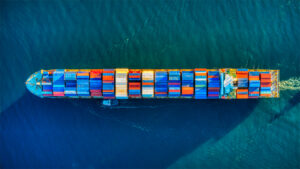


Ukraine has created a system to determine which ships belong to the shadow fleet and which belong to major companies. By sourcing ship identities, transponder data, routes, and ports from these companies, Ukraine can strike unidentified vessels with high confidence.
The result? Roughly 200 shadow fleet vessels have been attacked around the Black Sea and the Sea of Azov. Even if the Russians can replace the downed ships, storage capacity will be overwhelmed by damaged vessels and disrupted ports.
Transcript
Peter Zeihan here, coming to you from Colorado. Today we’re taking a question from the Patreon page. Specifically, it has to do with how Ukraine is targeting Russian ships on the Black Sea, but ignoring others since a lot of countries are just not using the transponders anymore. Great question. The backdrop is we have had the Ukrainians attack about 200 shadow fleet vessels on the Black Sea and the Sea of Azov. During the past roughly two months, and we’re nearing the point where enough damage has been inflicted on the shadow fleet that it’s probably going to stop functioning later this year, which is going to end Russia’s presence as a significant oil exporter. A lot going on, but there are six countries Romania, Bulgaria, Russia, Ukraine, Georgia, Turkey, yeah, six countries on the Black Sea. And how do the Ukrainians know who to attack and whatnot? We will also note that the Russians, from time to time hit a ship that is not Ukrainian. So why are the Ukrainians able to target and the Russians aren’t considering that the Russians are the ones who are the superior military power by most measures?
What happened is about a month ago, the United States government, the Trump administration, transmitted some information to the Ukrainians that they weren’t very happy about. The Ukrainians had been attacking a place called Novorossiysk, which is a significant naval port and commerce port on the Black Sea, on the Russian section. And at Novorossiysk is the terminus for a pipeline called CPC, the Caspian Pipeline Consortium, which transports crude from Kazakhstan, specifically the Tengiz field that is operated by Chevron and Exxon through Russia to that port and then to the wider world.
And the Trump administration was angry that the Ukrainians were attacking what they see as American infrastructure. Russians obviously don’t see it that way anyway. And basically said, stop doing it. Well, what the Ukrainians have done is they’ve contacted every shipping company in the world and said, hey, if you’re operating in the Black Sea, A, tell us the name of the ship be give us their transponder so we can follow them. C, give us their course and D,the ports you expect them to be at and when and if we can confirm that information as part of our operations, we will not attack those ships. And so far, every shipping company in the world is complying except the Shadow Fleet. Shadow fleet runs dark. Shadow fleet doesn’t report, and that’s the whole point.
So what the Ukrainians have basically done, they have mapped out the entire commercial world of shipping in the Black Sea and attacking the ships that don’t report. And so far, attacks on third parties have, I think, single digits while the shadow fleet is taking a complete pounding. Is it enough? Will it last. Well, I mean, really ultimately that depends upon how the Russians pay out their providing insurance for their own shadow fleets. And from what we’ve seen so far, it’s, they’re not paying out. But the Russians take ships that otherwise would be scrapped. So they’re not reducing the global supply of vessels. They’re reducing the global supply of vessels that were on the scrap heap.
There’s going to be some churn as the Ukrainians burn through what the Russians have. But there is an end in sight here. Because if the Russians cannot load cargo, whether it’s grain or crude, eventually the ports just run out of storage facilities, and that cuts down production inland. Just as effective as stopping the shadow Fleet would. So one way or another, we’re getting there. We’re getting there this year. And it’s kind of a minor miracle that it’s all happening without interfering with other shipping in the Black Sea. The Persian Gulf, a completely different situation. Nothing nearly so friendly is happening over there.