
New Russian Tactics: Glide Bombs and Double-Tap

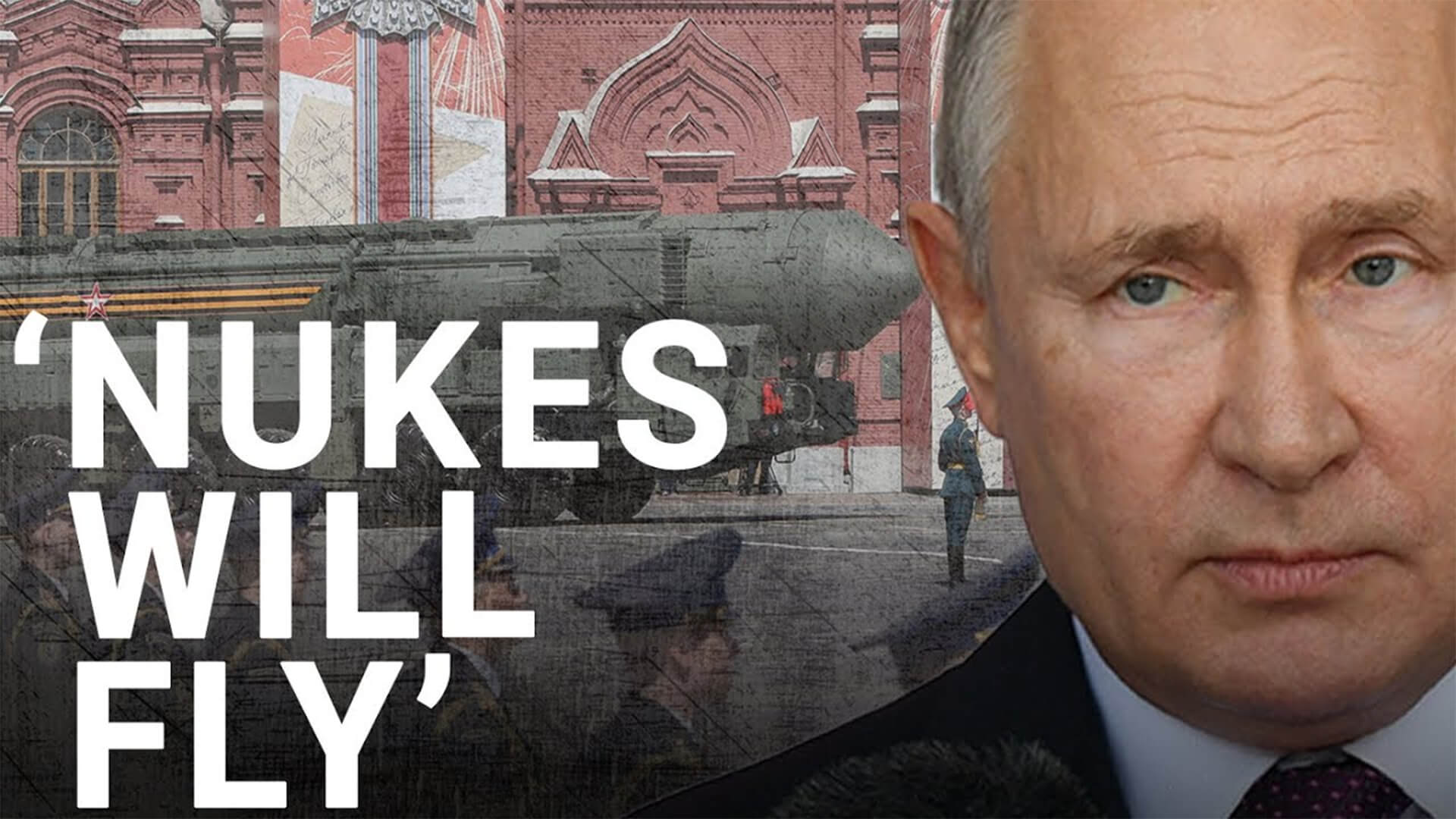
The Russians are employing some new tactics in Ukraine’s Eastern front that are adding to their ever-growing list of war crimes committed throughout this conflict. We’re looking at glide bombs targeting civilian infrastructure and Russia’s ‘double-tap’ method.

The intent behind the Russian glide bombs is to make specific regions in Ukraine uninhabitable. They are achieving this by targeting critical civilian infrastructure like water treatment plants and electricity facilities.

When the glide bombs don’t prove devastating enough, the Russians are also implementing a ‘double-tap’ method. This means they send an initial wave of attacks, wait until emergency services or repair crews can respond, and then send in another wave of attacks to wipe them out.

Here at Zeihan On Geopolitics we select a single charity to sponsor. We have two criteria:

First, we look across the world and use our skill sets to identify where the needs are most acute. Second, we look for an institution with preexisting networks for both materials gathering and aid distribution. That way we know every cent of our donation is not simply going directly to where help is needed most, but our donations serve as a force multiplier for a system already in existence. Then we give what we can.

Today, our chosen charity is a group called Medshare, which provides emergency medical services to communities in need, with a very heavy emphasis on locations facing acute crises. Medshare operates right in the thick of it. Until future notice, every cent we earn from every book we sell in every format through every retailer is going to Medshare’s Ukraine fund.

And then there’s you.

Our newsletters and videologues are not only free, they will always be free. We also will never share your contact information with anyone. All we ask is that if you find one of our releases in any way useful, that you make a donation to Medshare. Over one third of Ukraine’s pre-war population has either been forced from their homes, kidnapped and shipped to Russia, or is trying to survive in occupied lands. This is our way to help who we can. Please, join us.

TranscripT

Hey, everybody! Peter Zeihan here, coming to you from Colorado, where it’s 70 degrees and snowy because mountains. Today, we’re doing a quick update on what’s going on in Ukraine, specifically on the Eastern front, where the Russians are beginning to use a couple of new tactics at a large scale. They definitely fall into the category of war crimes, but so many things that the Russians do these days are. Just to remind everyone, there are over 10,000 documented war crimes committed by the Russians in the conflict so far.

We hit that number well over a year ago. And that’s kind of the number where I stopped paying attention because it’s clear that’s just war crimes for war crimes’ sake at this point. Anyway, these two new ones kind of fall into that category as well. The first one is the use of their new glide bombs, Fab 1500, Fab 1005, 2000.

Basically, weapons that have a metric ton or more of explosive power and sending multiples of them into specific pieces of civilian infrastructure like water treatment plants and electricity-generating facilities with the intent of simply reducing urban populations beyond the ability to have industrial-level technologies. If the Russians keep this up, and they certainly have the weaponry to do it, they will be able to make large, large sections of Ukraine uninhabitable for the population densities that are there now.

The populations around Kharkiv, which is the third-largest city in the country, are the ones most at risk. And where it’s where the Russians have kind of started this shift to just complete obliteration of civilian infrastructure. The second one is something called a double tap. And it’s basically you send your missiles into an area where, you know, there’s a civilian population, and then you wait 30 to 90 minutes and you send another wave of missiles to the same location.

So the first is designed to destroy civilian infrastructure and kill people, and the second is designed to target the repair crews and the emergency services personnel and the aid workers. The idea is, if you can destroy enough of the human capital that allows Ukraine to recover from attacks, then their ability to fight the war might evaporate.

Clearly, these are some pretty nasty attacks. The double taps are something that was inspired by Islamic Jihad and Hamas in years gone by. For those of you who are Middle East buffs, you will remember that there were a lot of suicide bombs that matched this double tap strategy back in the early 2000s. Not much to say about these, except that it’s really hard to fight back against them.

Really? You need to have air superiority and extraordinary air defense and anti-missile coverage if you’re going to prevent these sorts of attacks. And the Russians have proven that they can do these attacks at scale. So the degree to which Ukraine would need external support in order to resist these sorts of assaults is high.
The Limits of Russia’s War Machine

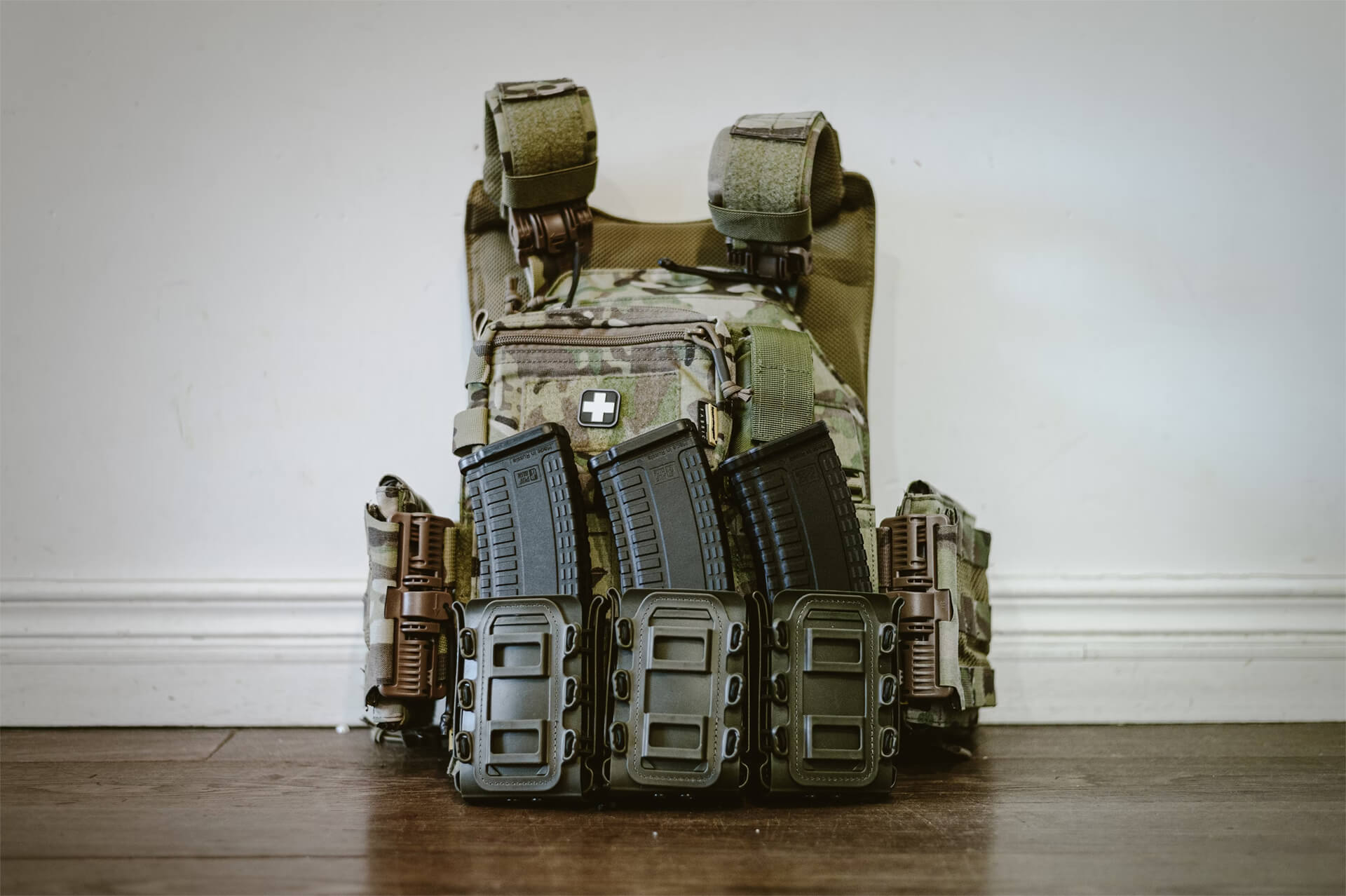
Recent events in the Ukrainian War have shed light on the state of Russia’s ability to resupply its war effort. Even elite Russian troops are being forced to rely on older, reserve equipment—including tanks built well over half a century ago. Moscow’s deep inventory of Cold War-era materiel has kept Russian troops in the fight, but not necessarily fighting: a recent attack by Ukrainian forces in Zaporizhzhia eliminated most of a Russian airborne division fighting in tanks likely older than their fathers.

While Moscow has plenty of old equipment to churn through in its attempt to drag Kyiv back into its orbit, the same cannot be said for its ability to place more bodies on front lines. Russia’s post-soviet demography was already a mess before the war. Combined with hundreds of thousands of casualties due to the war, and estimates of up to a million fighting age men who have slipped out of the country, and Russia is facing a grim inversion of its WWII challenges: while it may have plenty of (aging, derelict) equipment with which to wage war on its neighbors, young men are becoming much harder to find and even harder to replace…

The result? Russia and its war machine have shifted strongly from expansion to maintenance—and all this narrowly balanced against competing Russian economic and political interests. While this does not mean that Russia’s war in limited to Ukraine, it does mean that the timeline for Russian action ends firmly well within the next decade. Does a shortened window of Russian capability mean a decreased likelihood of Russian aggression? Far from it, sadly. The bear’s back is against the wall, and they very much view the Ukraine War (and any follow-ons) as a fundamental war of survival.

Here at Zeihan On Geopolitics we select a single charity to sponsor. We have two criteria:

First, we look across the world and use our skill sets to identify where the needs are most acute. Second, we look for an institution with preexisting networks for both materials gathering and aid distribution. That way we know every cent of our donation is not simply going directly to where help is needed most, but our donations serve as a force multiplier for a system already in existence. Then we give what we can.

Today, our chosen charity is a group called Medshare, which provides emergency medical services to communities in need, with a very heavy emphasis on locations facing acute crises. Medshare operates right in the thick of it. Until future notice, every cent we earn from every book we sell in every format through every retailer is going to Medshare’s Ukraine fund.

And then there’s you.

Our newsletters and videologues are not only free, they will always be free. We also will never share your contact information with anyone. All we ask is that if you find one of our releases in any way useful, that you make a donation to Medshare. Over one third of Ukraine’s pre-war population has either been forced from their homes, kidnapped and shipped to Russia, or is trying to survive in occupied lands. This is our way to help who we can. Please, join us.

TranscripT

Hey everyone. Peter Zeihan here. Coming to you from Colorado. today we’re to talk about the reserves that the Russians are activating to keep fighting the war. at the end of March in Japanese province, the Ukrainians massacred a group of Russian forces that were part of the 76th Guards Air, assault Group. Now, the 76 has been fighting in the war for a while. 

they’ve been defeated a few times, but they’re generally considered some of the better Russian troops. they were part of the, the military formations before the war generally had the best equipment because they were some of the best troops. Well, when they came up against, Ukrainian forces this most recent time, they were fighting in t 55 tanks, which were tanks that were built right at the beginning of the Cold War back in the 50s. 

So these things have been considered by Russian standards, outdated by over a half a century. And yet here they are, being used by the elite forces. they don’t move as fast. They don’t shoot as far their armor’s thin compared to modern tanks. but most importantly, they require four people to operate instead of three. so, you know, much more manpower intensive for much less bang for the buck. 

the fact that these things are in use at all is a bit of an issue for the Russians. So, at the beginning of the war, the Russians had 12,000 tanks, of which about 2000 were in active service. the presence of the T 55 is in the hands of elite groups means that those original 20 tanks are now all, incapacitated or more likely, just flat out destroyed. 

Now, the Russians have very, very deep reserves. There’s another 10,000 to go. But as you dive into the reserves, you’re getting into older and older tanks. or that’s what it would logically seem, actually, they’re starting with the oldest ones first. The issue is that the T 50 fives had no optics. They predate optics. And so when you want to bring a new tank into service, you can throw some cheap optics and actually get it through the refurbishment process fairly quickly, where if you have a newer tanks, it’s 72 or something newer. 

Those had optics, but it’s been 30 years that they’ve been in storage, and so all the seals have gone and the wiring is bad. And so you need to replace something that was already there, as opposed to slap something aftermarket on it on the first place. that requires more advanced equipment, a lot of which the Russians don’t have anymore. 

And so the 270 twos and newer tanks take a lot more effort to refurbish. So the Russians are starting with the old, old, old tanks. but the bottom line here is that the entire pre-war tank, reserve is gone. And now everything that they put on is something that they’re having to update. the same goes true for soldiers, based on whose numbers you’re believing. 

That’s somewhere between 550,000 and 750,000 Russians have been killed or incapacitated by the conflict so far. Well, that is the entire pre-war army. And the Russians are having to put new people, recently drafted people into the field with minimal training. and this is now meaning that there is a problem with inflows. now, the Russians have not had a problem doing kind of a silent draft where anywhere between 15 and 45,000 people are, unofficially drafted every month. 

the Russians have flows of people to spare. but the source is not bottomless. At the beginning of the war, the Russians had about 8 million men in their 20s. Well, if you’ve killed roughly 600,000 or killed in capacity and 600,000 and another million of fled, you’re now down to about 6.5 million left. So if you look at the number of tanks that they’ve got in reserve, you look at the number of men in the 20s that they’ve got left. 

They can keep up this piece. They’ve been going for the last two years for probably another 5 to 8 years. And when that happens, they’re out of a gear. And they’re out of men. So that’s how long roughly the Russians have that they continue this war and any follow on wars. so we really are looking at the twilight of the Russian system here. 

But it also means that since there’s no longer resources that can be shuffled from other places in the Russian Federation, the Russians are now dependent upon this throughput for refurbishment, for training, for equipment coming from other countries in order to just to fight the war in the first place. So the situation in Ukraine for the Ukrainians isn’t great, but the Russians have now run out of stuff to reposition and they’re dependent upon that throughput. 

And that means economic and political factors, both in Russia and abroad, now massively affect the pipeline that allows Russia to keep men and equipment. And the front in the first place. So we need to watch the Russian space and the adjacent countries much more closely now than we have, because there’s no longer any depth to what the Russians can do. 

As soon as they get something, they throw it into the front, because if they don’t, the front gets empty. So it may feel that the Russians in the last month or so have had a bit of momentum. And they have, but they haven’t been able to capitalize on the breaking of the other Deka front. And in fact, the front has become static again. 

And so the Russians are doing attacks, like with the 76, to try to try to find a weak point, and the troops are just getting cut up and they just can’t maintain this pace forever. But we’re still looking at another 5 to 8 years. Okay, that’s it for me. Take care. 

Apparently A Cessna and Elbow Grease Is All Ukraine Needs

The Ukrainians are getting creative and finding ways to launch longer-range attacks on Russian infrastructure. We’ve already seen strikes on pipeline nexuses and chemical complexes as deep as Samara and Tatarstan.

Attacks like these hold significant economic implications for the Russians, as any disruptions to these oil facilities could be devastating. The issue isn’t so much that Ukraine is poking holes in Russian air defense, but perhaps exposing that there…Isn’t any.

Attacks like these will likely prove to be a growing challenge for Russian security and economic stability as the conflict continues.

Here at Zeihan On Geopolitics we select a single charity to sponsor. We have two criteria:

First, we look across the world and use our skill sets to identify where the needs are most acute. Second, we look for an institution with preexisting networks for both materials gathering and aid distribution. That way we know every cent of our donation is not simply going directly to where help is needed most, but our donations serve as a force multiplier for a system already in existence. Then we give what we can.

Today, our chosen charity is a group called Medshare, which provides emergency medical services to communities in need, with a very heavy emphasis on locations facing acute crises. Medshare operates right in the thick of it. Until future notice, every cent we earn from every book we sell in every format through every retailer is going to Medshare’s Ukraine fund.

And then there’s you.

Our newsletters and videologues are not only free, they will always be free. We also will never share your contact information with anyone. All we ask is that if you find one of our releases in any way useful, that you make a donation to Medshare. Over one third of Ukraine’s pre-war population has either been forced from their homes, kidnapped and shipped to Russia, or is trying to survive in occupied lands. This is our way to help who we can. Please, join us.

TranscripT

Hey everyone. Peter Zeihan here, coming to you from Colorado, got a fresh dusting overnight because, you know, April, it’s April 2nd in the news in the last 3 or 4 days is that the Ukrainians have demonstrated a significantly longer range for weapons systems launched from Ukraine proper. specifically, the Ukrainians have been able to hit targets with their new drones that are in the, locations of Samara and Tartus stand.

now, these are more important than a lot of these in pieces of infrastructure that Ukrainians have been hitting with their drone campaign recently. Samara is a major pipeline nexus where a lot of the crude that comes in from southwestern, Siberia gets processed or redirected to European or Black Sea markets. And Tatarstan is even deeper within the Russian Federation, in Siberia proper.

and it is also a major chemicals and refining complex. So the significance here is pretty, pretty strong. the issue is throughput. The Russians don’t have a lot of storage. The country’s really big, and the most of these systems were built in the imperial age under the Soviets. So they were designed to supply the empire. Well, now that, the empire has gone its own way, and most of the former Soviet republics and, former Soviet satellite states are getting their crude and natural gas from somewhere else.

The Russians are completely dependent now for income on getting this crude out to the wider world. That means getting to the black on the Baltic Sea, because they can’t really use the pipes to go into Germany anymore. So when you think of that, and then you look at notes like some are in tartar, stand, we have a problem.

Because if these are interrupted, especially Samara, which is a nexus, then the crude has nowhere to go. There’s not a backup system when these clusters get taken offline, for whatever reason, pressure builds up in the pipe. Back to the wellhead. Now, this could be worse. the facilities that are in southwestern Siberia, especially places like Tarter stand in Bucharest on it, doesn’t get so cold there in the winter that the well heads freeze.

But now that the Ukrainians have demonstrated the ability to strike over 1000km from their border, it’s only a matter of time before they start aiming for targets that are north of Moscow instead of south of Moscow. And if those pipeline accesses go offline, then you’re talking about the well heads in northwestern Siberia actually freezing shut. And a lot of the stuff just goes offline forever because if the wellhead freezes shut, you have to drill it.

And you can only re drill in the Arctic summer. And that only lasts for about 3 or 4 months a year. So, that’s kind of piece one. Piece two is what’s going on in Totters on Thomaston because it is a combination of producing zone and chemical zone. A lot of these chemicals are what allows the Russian agricultural system to work.


And a lot of this stuff is exported to China. So what the Ukrainians are demonstrating is the capacity to identify targets that move up the value added chain, not just going after raw crude, not just going after refined product, but even downstream products, like chemicals manufacture. so the economic hit to the Russians from this continues to climb.

And now it’s really just an issue of whether or not the Russians have the capacity of getting meaningful air defense of the hundreds of facilities that they have across European and Western Siberia and Russia in order to stymie these attacks in the first place, because they’re clearly not moving fast enough on the front in order to disrupt these drones launching.

And this is a very, very cheap way to do it. These things cost more than, say, the Iranian Shi’ite drones. But you’re still talking about well, well, well, well under $1 million a pop. Whereas a refinery that handles 100,000 barrels a day is going to run, you know, $1 billion on a good day. So the disruption here is real.

It is getting bigger. And we’re getting to the point where it’s time to start thinking about what happens when Russian crude and materials processing goes offline in some form, because we’re only in the early days of this Ukrainian campaign. And now that they found a soft spot, you can guarantee they’re going to hit it over and over and over and over.

Quick addendum, there is very clear footage coming out of toddler son of a small passenger plane. Think of something like the size of a Cessna, maybe a little bit bigger, flying and ramming into, a munitions factory that builds drones for the Russian military. specifically the Shaheed type that have been causing the Ukrainians so many problems.

Now, it’s not so much the significance of this attack as attacking a factory floor with a 50 to 100 pound bomb. You know, let’s let’s call it huge, say 300 pounds, isn’t going to cause enough damage to really take anything off line. The issue is that it got there. It flew over 1000km through Russian airspace. that means one of two things.

Either number one, the Ukrainians now have kits that they can smuggle into Russia, modify a plane at an airfield within Russia and launch like that, which would be from an internal security point of view and a technical point of view, just a disaster for the Russians or the Russians have absolutely no anti-aircraft coverage in the core of the country, where most of the infrastructure is and most of the people live, no matter what the outcome here is, this is a disaster for the Russians, because there’s no doubt that the Ukrainians will be now be doing it at scale, because it’s clear the Russians can’t stop them.

A Conversation with The Times

Here’s my Frontline interview with Times Radio from last week. We discussed the war in Ukraine and global security, specifically looking at what could unfold in Russia due to this conflict.

“Putin is running out of time and allies as the west doubles down on shutting Russia out of the global economy and corruption erodes his military gains in Ukraine.”

You can find the full interview below…

Here at Zeihan On Geopolitics we select a single charity to sponsor. We have two criteria:

First, we look across the world and use our skill sets to identify where the needs are most acute. Second, we look for an institution with preexisting networks for both materials gathering and aid distribution. That way we know every cent of our donation is not simply going directly to where help is needed most, but our donations serve as a force multiplier for a system already in existence. Then we give what we can.

Today, our chosen charity is a group called Medshare, which provides emergency medical services to communities in need, with a very heavy emphasis on locations facing acute crises. Medshare operates right in the thick of it. Until future notice, every cent we earn from every book we sell in every format through every retailer is going to Medshare’s Ukraine fund.

And then there’s you.

Our newsletters and videologues are not only free, they will always be free. We also will never share your contact information with anyone. All we ask is that if you find one of our releases in any way useful, that you make a donation to Medshare. Over one third of Ukraine’s pre-war population has either been forced from their homes, kidnapped and shipped to Russia, or is trying to survive in occupied lands. This is our way to help who we can. Please, join us.

The Rising Incompetence of the Russian System

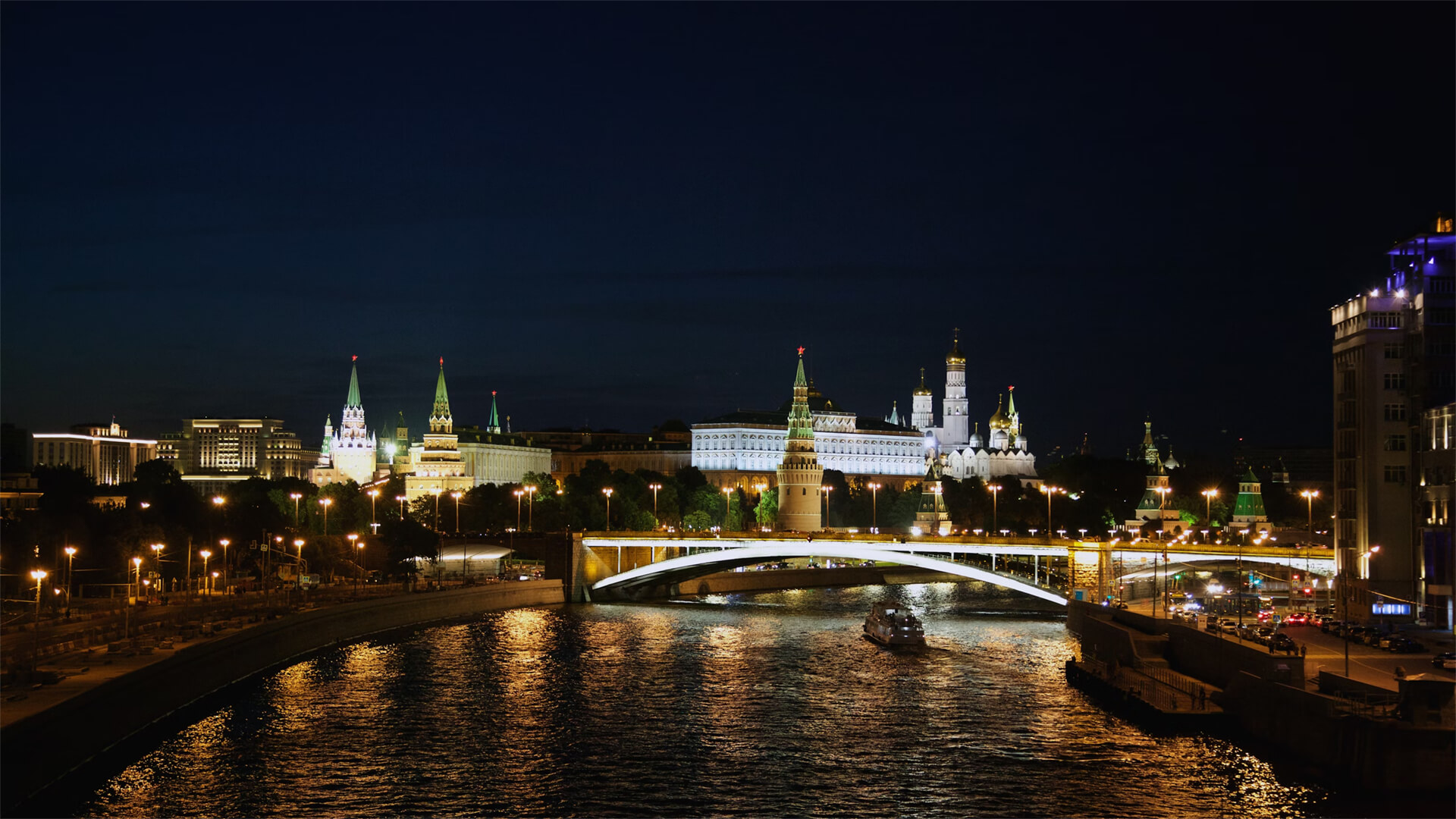
landscape of the kremlin in Moscow, Russia

More details have emerged about the March 22 terror attack outside Moscow. The information does not look good, with the biggest takeaway being the Russian government’s showcasing of a shocking incompetence in security matters. That will haunt this regime until the day it falls.

Here at Zeihan On Geopolitics we select a single charity to sponsor. We have two criteria:

First, we look across the world and use our skill sets to identify where the needs are most acute. Second, we look for an institution with preexisting networks for both materials gathering and aid distribution. That way we know every cent of our donation is not simply going directly to where help is needed most, but our donations serve as a force multiplier for a system already in existence. Then we give what we can.

Today, our chosen charity is a group called Medshare, which provides emergency medical services to communities in need, with a very heavy emphasis on locations facing acute crises. Medshare operates right in the thick of it. Until future notice, every cent we earn from every book we sell in every format through every retailer is going to Medshare’s Ukraine fund.

And then there’s you.

Our newsletters and videologues are not only free, they will always be free. We also will never share your contact information with anyone. All we ask is that if you find one of our releases in any way useful, that you make a donation to Medshare. Over one third of Ukraine’s pre-war population has either been forced from their homes, kidnapped and shipped to Russia, or is trying to survive in occupied lands. This is our way to help who we can. Please, join us.

Terror Attack at Concert Hall in Moscow Suburb

Late evening on Friday, March 22 local time, three gunman attacked a concert venue in a Moscow suburb, setting it ablaze and killing an as-yet-unknown number of civilians. Regardless of who the perpetrators are ultimately revealed to be, the attack cuts to the core of how the Russian Federation holds itself together.

Here at Zeihan On Geopolitics we select a single charity to sponsor. We have two criteria:

First, we look across the world and use our skill sets to identify where the needs are most acute. Second, we look for an institution with preexisting networks for both materials gathering and aid distribution. That way we know every cent of our donation is not simply going directly to where help is needed most, but our donations serve as a force multiplier for a system already in existence. Then we give what we can.

Today, our chosen charity is a group called Medshare, which provides emergency medical services to communities in need, with a very heavy emphasis on locations facing acute crises. Medshare operates right in the thick of it. Until future notice, every cent we earn from every book we sell in every format through every retailer is going to Medshare’s Ukraine fund.

And then there’s you.

Our newsletters and videologues are not only free, they will always be free. We also will never share your contact information with anyone. All we ask is that if you find one of our releases in any way useful, that you make a donation to Medshare. Over one third of Ukraine’s pre-war population has either been forced from their homes, kidnapped and shipped to Russia, or is trying to survive in occupied lands. This is our way to help who we can. Please, join us.

Russian Tech Transfers and Propaganda in the US

Photo of St Basil cathedral in Red Square, Russia

It should come as no surprise that the Russians love meddling around, so let’s see what they’ve been up to lately. We’ll be looking at tech transfers with Iran, North Korea, and China and Russian propaganda in the US.

Russia has promised satellite launches to the Iranians and North Koreans in exchange for Iranian Shahed drones and North Korean artillery rounds. In fact, the Iranian satellite was launched about a week ago. The Chinese are getting in on the action too, with naval technology and weapons systems changing hands.

Now with all that going on, you would think America could agree that the Russians are NOT our friends…sadly that’s not the case. The MAGA movement has fallen victim to Russian propaganda, which reaffirms Russia’s ability to disrupt American politics and sow discord (especially during election season).

Here at Zeihan On Geopolitics we select a single charity to sponsor. We have two criteria:

First, we look across the world and use our skill sets to identify where the needs are most acute. Second, we look for an institution with preexisting networks for both materials gathering and aid distribution. That way we know every cent of our donation is not simply going directly to where help is needed most, but our donations serve as a force multiplier for a system already in existence. Then we give what we can.

Today, our chosen charity is a group called Medshare, which provides emergency medical services to communities in need, with a very heavy emphasis on locations facing acute crises. Medshare operates right in the thick of it. Until future notice, every cent we earn from every book we sell in every format through every retailer is going to Medshare’s Ukraine fund.

And then there’s you.

Our newsletters and videologues are not only free, they will always be free. We also will never share your contact information with anyone. All we ask is that if you find one of our releases in any way useful, that you make a donation to Medshare. Over one third of Ukraine’s pre-war population has either been forced from their homes, kidnapped and shipped to Russia, or is trying to survive in occupied lands. This is our way to help who we can. Please, join us.

TranscripT

Hey everyone. Peter Zeihan here coming to you from Colorado, where we are recovering from Snowmageddon 2024. We’ve gotten about 40 inches of snow in the last 36 hours. pretty though. Anyway, the news today is that the Russians are making some adjustments to things. Number one, they’re starting to pay back countries that have helped them in the war with Ukraine.

So, for example, they’ve promised a satellite launch to both North Koreans and the Iranians. And the Iranian one launched in the last few days. So if you think of all of the operations where Iran has activities in Iraq and Syria and Lebanon, in Jordan, in Gaza, they now have the ability, at least in a limited way, to have a bird’s eye view of what’s going on, which is going to cause significantly more problems for anyone who happens to be on the other side of the ledger.

The Russians are doing this in exchange for the Shaheed drones that the Iranians have been providing. Those are the ones that are basically flying mopeds. They have a £10 warhead. The Russians have been using those targets in power centers. The North Koreans will be getting one soon as well. Of course, North Korea has been providing the Russians with about a million artillery rounds.

And for those of you who have forgotten, North Korea has intercontinental ballistic missiles. So getting satellite recon for any reason is something that vastly increases that threat. And then, of course, there are weapons systems being traded to the Chinese, things like naval technology, where the Chinese could use them to hurt the United States and any number of ways.

That’s kind of half of what’s going on. The other half is the Russians are in a celebratory mood because they’re discovering that they can widen, that the sort of propaganda that they spread in the United States and certain factions of the American political system, specifically the MAGA. Right. Because, I mean, here we’ve got the Russians providing aid and comfort to three countries, North Korea, Iran and China that even Mogga agrees are all bad.

But that doesn’t seem to be registering. They’re still thinking of Russia as a friend. Let’s see. The background of this, of course, happened during COVID, when the Russians were the most active peddler of anti-vaccine disinformation in the world, which resulted in the death of over a million American. You know, the kind of death toll that the Russians could have never achieved during the Cold War without some sort of horrible response.

But now they have enablers across this branch of the Republican Party. And so the Russians have started to diversify what they’ve been saying just to see how far they can push it. And last week, they were able to actually get Donald Trump to stop campaigning against the ban of Tik Tok, which is something that is broadly popular even among the American right.

So it’s going to be interesting to see how Donald Trump’s shift on this is going to now translate into Moscow’s opposition to Chinese issues. I don’t know how far this is going to go. The general breakdown in civics education in the United States is definitely having a very deep impact on our political system at home, but it’s providing a lot of opportunities for the Russians to drive wedges between the various aspects of American society.

So far, with minimal blowback. So this is something that is definitely on my worry list and not something that I have a very clear idea of how it’s going to go. There’s just too many pieces in play. I can tell you that because it’s an election season and because Donald Trump is defending himself from 90, I think, indictments, that there’s going to be ample fodder for the Russians to work with over the next several months.

This is definitely one of those things that’s going to get far worse before it even begins. Do you get a hint of better?

The Ukraine War Goes Seaborn

The Ukrainians have made some huge strides in the maritime theater and have poked some eyebrow raising holes in Russia’s naval capabilities.

The first thing of note is the sinking of a Russian patrol vessel by Ukrainian drones. This drone strike took place farther east than other attacks, bringing Russian detection capabilities into question.

The second incident was the sinking of a Russian landing ship. This further hampers Russia’s ability to reinforce Crimea and shows just how vulnerable Russian naval assets might be.

These attacks suggest a shift in Ukrainian strategy, targeting Russian naval assets with drones. While the war that on land has been a drawn out series of give and take, the maritime theater is heating up.

Here at Zeihan On Geopolitics we select a single charity to sponsor. We have two criteria:

First, we look across the world and use our skill sets to identify where the needs are most acute. Second, we look for an institution with preexisting networks for both materials gathering and aid distribution. That way we know every cent of our donation is not simply going directly to where help is needed most, but our donations serve as a force multiplier for a system already in existence. Then we give what we can.

Today, our chosen charity is a group called Medshare, which provides emergency medical services to communities in need, with a very heavy emphasis on locations facing acute crises. Medshare operates right in the thick of it. Until future notice, every cent we earn from every book we sell in every format through every retailer is going to Medshare’s Ukraine fund.

And then there’s you.

Our newsletters and videologues are not only free, they will always be free. We also will never share your contact information with anyone. All we ask is that if you find one of our releases in any way useful, that you make a donation to Medshare. Over one third of Ukraine’s pre-war population has either been forced from their homes, kidnapped and shipped to Russia, or is trying to survive in occupied lands. This is our way to help who we can. Please, join us.

TranscripT

Hey everyone. Peter Zeihan here coming to you from a snowy Colorado morning. There are two recent things that have gone down in the maritime theater in Ukraine that I think are worth stitching together. The first is that around midnight of March 4th, the fifth, a patrol vessel, Russian patrol vessel. The name escapes me was sunk by a bunch of waves, water, drones, basically.

The reason this matters is it happened a lot further away from the places where most of the drones have hit Russian water assets in the past. The Ukrainians really don’t have much of a coastline anymore. It’s really just far western Ukraine on the west side of the Crimean peninsula. And so when vessels are used to there, the they become in range of these UAV swarms that Ukraine have been launching with greater frequency.

But that’s not where this patrol ship was. It was on the far eastern side of Ukraine near the Kerch Strait Bridge. So that’s about 300 miles from any potential launch point. And that meant that the waves had to cruise by pretty much every naval asset the Russians had in order to get them to where they needed to go.

So either they’re getting quieter or there’s a lot of more holes all along the Russian detection perimeter or both. Also, it’s in the vicinity of the bridge. So if you want to say that this is a shaping operation in order to strike the bridge directly, you know, that’s a reasonable concern. The other thing that’s unique is this is a relatively new vessel.

Patrol ships are pretty small but designed for anti-insurgency, clearly not doing that job very well. And if there is a type of vessel that’s going to be decent at shooting down drones, it’s going to be something like this that’s relatively small in the first place so it can shoot down into the water. And apparently none of that worked.

The thing sank. The second vessel to go down, went down a couple weeks ago, I believe it was February 1415, and it was a landing ship. Now, landing ships are used to deliver military cargo to areas that don’t necessarily have excellent port facilities. The idea is you can just kind of pull up to the shore, drop off everything you need, and then take off again.

The reason that these are really important in any sort of operation is because it means you’re not beholden to civilian or military infrastructure. You don’t have to wait for a port slot to be available. And if you’re at a port slot, obviously the enemy knows where you are. Also, you know, you’re not talking about things like cranes being required.

You can just roll right off. The Russians brought a half a dozen of these into the Black Sea just before the war. This is one of the reasons why the folks in the military community were pretty sure the war was going to happen this time. And the Russians began with about a half a dozen in theater. So 12 total.

Now, this was the fifth one that was sunk. It was called the Scissor Hulk kind of politics for pronunciation. Anyway, well, when the seas are went down, they basically down to 50%. And with that, that means the Russians are dependent on either civilian transports, which do not do well in a war zone at all, or a single thread of supply coming across the Kerch Strait Bridge that is now no longer being transported by rail for the most part, mostly by truck.

You take these two together, the Russians are losing the ability to reinforce Crimea by the water and the Ukrainians are demonstrated that they’re able to strike targets in the vicinity of the bridge, which would inhibit the Russian ability to supply by land. And if Crimea loses the ability to supply them, this war changes very quickly, regardless of what happens with the Ukrainian army and the U.S. Congress.

Now, there’s obviously lots, lots, lots more going on there. And the fog of war remains, as ever in place. But it does seem that the Ukrainians have adapted to the lower flows of equipment from the United States by getting more creative with their military tactics and going after vulnerable targets, in this case, naval assets that no one before the war would have ever thought were the vulnerable side of the Russian war machine.

So we’re probably going to see more and more of this going on, because while the Ukrainians are having a hard time getting Howitzers, they’re having no problem getting jet skis. And basically they modified jet skis and things like them in order to make these maritime drones. So the pressure on the naval aspect of the Russian assault, as all of a sudden kind of surprisingly emerged as a critical component in the near term.

As for what’s going on on land, that is largely a function of the U.S. Congress, and we will address that in the next video.

Ukraine Drone Strike Hits Refining Complex Deep in Russia

Ukraine has been ramping up drone strikes and they just successfully hit another refining complex in Russia. The strike on the Nizhny Novgorod complex triggered a major fire and caused significant damage to storage units as well as other refining equipment. The pipeline network, however, remains intact.

This attack highlights Ukraine’s ability to strike Moscow and just how vulnerable Russian infrastructure is to drone attacks. Since the majority of the Russian population and infrastructure falls within striking distance, we could see major disruptions to Russian exports.

As Ukrainian drone strikes continue to ramp up, there will likely be far-reaching implications for Russian oil. We’ll continue to monitor this situation and release updates as needed.

Here at Zeihan On Geopolitics we select a single charity to sponsor. We have two criteria:

First, we look across the world and use our skill sets to identify where the needs are most acute. Second, we look for an institution with preexisting networks for both materials gathering and aid distribution. That way we know every cent of our donation is not simply going directly to where help is needed most, but our donations serve as a force multiplier for a system already in existence. Then we give what we can.

Today, our chosen charity is a group called Medshare, which provides emergency medical services to communities in need, with a very heavy emphasis on locations facing acute crises. Medshare operates right in the thick of it. Until future notice, every cent we earn from every book we sell in every format through every retailer is going to Medshare’s Ukraine fund.

And then there’s you.

Our newsletters and videologues are not only free, they will always be free. We also will never share your contact information with anyone. All we ask is that if you find one of our releases in any way useful, that you make a donation to Medshare. Over one third of Ukraine’s pre-war population has either been forced from their homes, kidnapped and shipped to Russia, or is trying to survive in occupied lands. This is our way to help who we can. Please, join us.

TranscripT

Hey everybody. Peter Zeihan here coming to you from outside of Nederland, Colorado. The news today is that the Ukrainians have taken some long range drones excuse me, and throw them in some Russian targets, some of which are over 1000 miles from the border. The ones that matter the most is a refining complex in the city of Nazi Novgorod, which is a couple of hundred miles east of Moscow that sits on a major pipeline nexus.

They haven’t damaged the pipeline system and you’re not going to probably not going to do that in any meaningful way for drones because they could be repaired so quickly. And so they went after some of the refineries. Now, if you’re looking for a Hollywood style explosion, you’re never going to see that in a refinery. There’s a lot of standoff distance and the stuff that’s flammable is usually not adjacent to other stuff that is flammable.

That doesn’t mean you can’t do a significant amount of damage. And in this case, it looks like they were going after some of the fractionation columns and at least a couple of the storage tanks, fuel storage tanks. At least one hit was significant to the point that it caused a major fire, that at the point that I’m recording this, at the point that I’m recording this about 8 hours after the attack is still burning.

Something to keep in mind, Russia is a big ass place. And as the Germans discovered during World War Two, they have to move things further and further and further from the western periphery in order to protect it from air assaults. But in the age of drones, this doesn’t matter nearly as much because these things have ranges in the hundreds of miles, which means that everything in European Russia, which is where 75, 80% of the Russian population live and most of the physical infrastructure is is potentially in range.

So while the Ukrainians can’t shut the country down, they can cause enough interruptions to the processing capacity that and maybe even pumping stations that make it difficult for the Russians turn export income. And the impact of that could be far more than what the West has done with sanctions on the Russians so far. We’ve seen this with a few port facilities in recent weeks, and now the Ukrainians are demonstrating the capacity to strike deeper and deeper and deeper into Russia.

And they have now almost been able to reach Tatarstan, which is the most important access point that the Russians have, because it sits on the infrastructure that connects European Russia to all of Siberia. And if for whatever reason, there’s meaningful damage there, you’re talking about something like a third of Russian oil exports go off line overnight. So that is what’s to watch for in the days ahead.

Stay tuned.

Russian Bombs Get an Upgrade

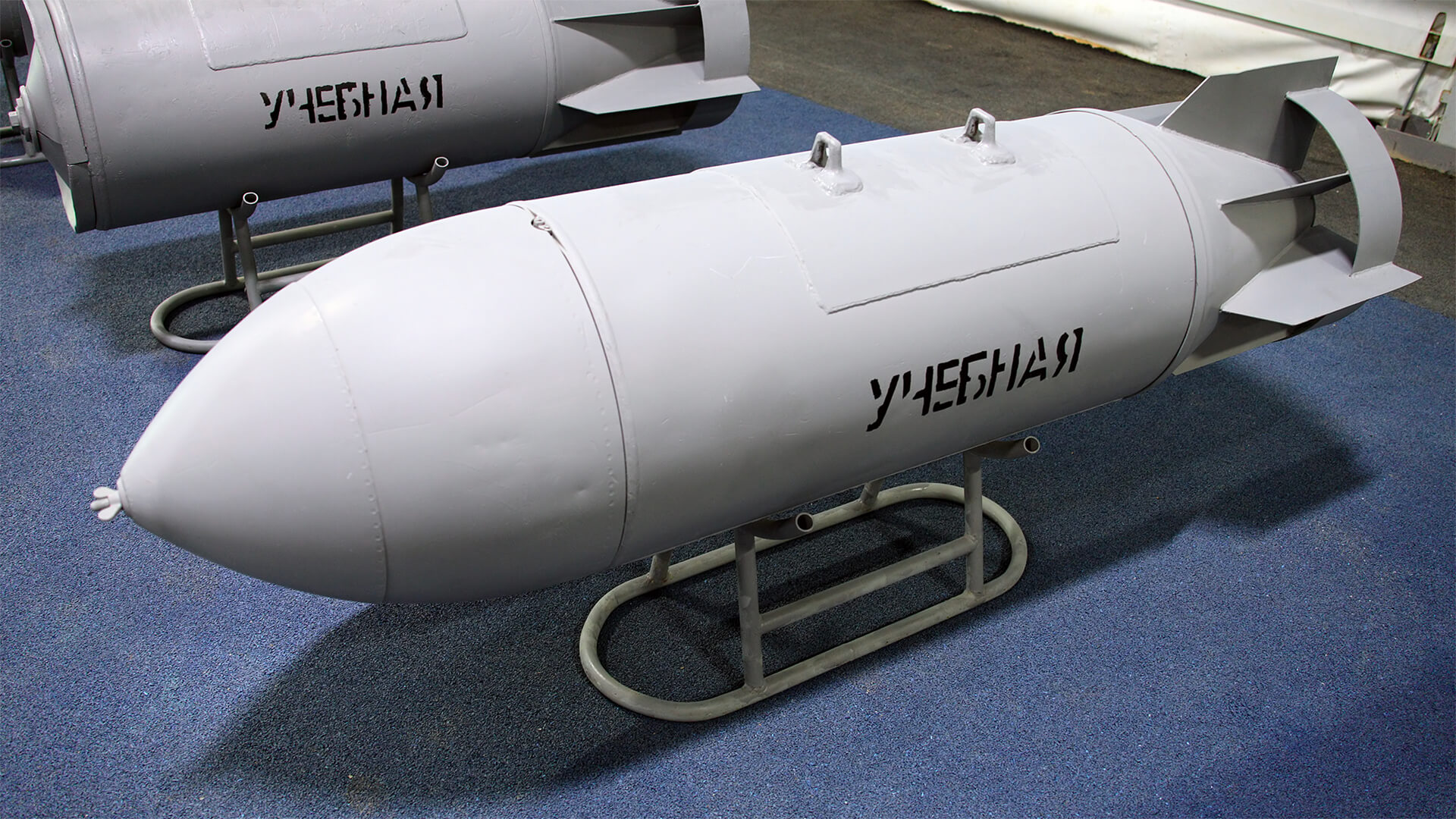
We’ve seen both sides of the conflict in Ukraine adopting and adapting new ways of fighting. While Ukraine has innovated with drones and satellite tech, Russia has modified its large FAB-1500 dumb bombs into glide bombs.

Russia has always fought (and won) wars through sheer numbers and volume, but the introduction of precision-guided systems is a new blend of innovative tech and the traditional Russian numbers strategy. Since Russia has so many FAB-1500 dumb bombs that can be upgraded, they’ll have a multi-decade supply of glide bombs.

This shift in Russian strategy should be setting off alarms for the rest of the world. With such a substantial transformation in Russian military power, global military strategies will need to be reevaluated and revised.

Here at Zeihan On Geopolitics we select a single charity to sponsor. We have two criteria:

First, we look across the world and use our skill sets to identify where the needs are most acute. Second, we look for an institution with preexisting networks for both materials gathering and aid distribution. That way we know every cent of our donation is not simply going directly to where help is needed most, but our donations serve as a force multiplier for a system already in existence. Then we give what we can.

Today, our chosen charity is a group called Medshare, which provides emergency medical services to communities in need, with a very heavy emphasis on locations facing acute crises. Medshare operates right in the thick of it. Until future notice, every cent we earn from every book we sell in every format through every retailer is going to Medshare’s Ukraine fund.

And then there’s you.

Our newsletters and videologues are not only free, they will always be free. We also will never share your contact information with anyone. All we ask is that if you find one of our releases in any way useful, that you make a donation to Medshare. Over one third of Ukraine’s pre-war population has either been forced from their homes, kidnapped and shipped to Russia, or is trying to survive in occupied lands. This is our way to help who we can. Please, join us.

TranscripT

Hey Everyone. Peter Zeihan here coming to you from Colorado, where we are having a 55 degree day in between snowstorms. We’re going to talk about some of the technological evolutions we’re seeing in the Ukraine war, specifically on the Russian side. I mean, the Ukrainians have got a lot of street cred that they have earned for new and innovative tactics and applying new technologies like drones and civilian satellite information to the targeting systems.

But the Russians haven’t been just sitting there taking it. They’ve been innovating and applying it across their entire post-Soviet arsenal. Or maybe more, I should say, Soviet arsenal and the weapons system in play is something called the Fab 1500, which is a 1500 kilo dead drop bomb that they’re now putting flight kits on that allow it to become a glide bomb.

Think of it as a very low tech missile that if you drop it from a sufficient height, can glide up to something like 50 kilometers or more. Based on circumstances in the battle that DEFCON that resolved back in February, the Russians used over 100 of these a day at some point, and the payloads end up making a bomb crater that in many cases is more than 50 feet across.

So just a huge amount of explosive developed with relative precision. The Russians are saying they have an accuracy rate of five meters. Let’s take them at their word or if you want to say they’re off by an order of magnitude 50 meters. Still, the concussive explosion of that kind of bomb is just devastating to any sort of emplacement, defensive installation.

And certainly troops. And we’re applying this now to the Soviet arsenal. One of the things to keep in mind. Well, actually, let me go back. So if this sounds familiar, putting like a glide kit on a dumb bomb, that’s because we’ve seen this before. Now, for those of you who are under age 45, think back to Desert Storm, where the United States was at war in Iraq the first time.

And we had something called the JDAM, the Joint Direct Attack Munition, where we took our Cold War arsenal of dumb bombs and put flight kits like these on them that allowed for accurate attacks very, very cheap, measured in the single or double digits of thousands per bomb for the adjustment, as opposed to, say, millions per missile. And it converted something that we had just an extreme inventory that allowed us to basically coast on that technology for the next 20, 25 years, a very significant development that transformed American air power.

The Russians are now on the early stages of doing that themselves and being Russian Soviet. They have a lot more of these in inventory than we ever did. And while their dud rate might be a lot higher than ours, you’re still talking about tens of thousands of bombs that they can apply this to. And they’re only in the very early days of it.

So if all they do is upgrade their dumb bombs, they have probably at current burn rates, 20 to 25 years of supplies of these sorts of things. And none of the countries that border Russia have anything like this. They may have had a few supplementary weapons that were left over from the Soviet period, but almost the entirety of the Air Force was concentrated into Russia proper.

And that’s where the industrial plant is to do the modifications. So there have been any number of reasons to think that it’s the Russians who at the end of the day will rely on numbers and sheer weight to win this war and prosecute the next one and the transformation of what has been to this point, a relatively useless weapon, which is just a dumb drop bomb with not a lot of accuracy.

And there’s something that’s more akin to what the United States developed back in the late 1980s. Now, that’s a very, very, very significant development. And the only way that the Ukrainians can really counter this is by getting a functional air force that can strike across the border and hit Russian aircraft before they can drop the weapons in the first place.

And even in the most aggressive estimates that I’ve seen for the transfer of things like F-16s to Ukraine, there just aren’t enough of them in order to make that sort of impact on a broad scale. So this is something that is going to reshape the battle space signature effectively until and unless the Ukrainians can disrupt the ground logistical systems that are supporting the Russian forces.

And even if the Kerch Bridge Group coach go down in Crimea goes from a springboard for Russian power to a massive sandbag that doesn’t affect the eastern front. So we’re looking at here at probably the most significant transformation in Russian military power in the last 30 years. And it’s now being applied to a hot war zone. This is far more significant than what the Russians have been doing with artillery strikes in urban centers or the Shaheed drones from Iran, which are basically war crimes of choice.

Was this something that has a very real, very deep, very lasting military implication that will affect the entire front line, especially in the east? And there is no good, clean, simple counter? one quick addendum in order to put this into a deeper context. The Soviets slash Russians have never, ever won a war based on technology. It’s always been sheer weight of numbers, and this conflict is no different from the ones that came before in that regard.

The reason why the United States fights the way it does is we’ve always been on the wrong continent for most of our wars. And so no matter where we go, we’re always going be outnumbered. So it’s all about precision bringing force in volume, but applying it precisely. So that’s why we’re in precision guided munitions and mid and long range missiles, air power guided artillery, all that good stuff.

We’re never going to be able to fight on the numbers, so we have to have a multiplier. It’s two very different design philosophies and two very different military strategies that are defined by the cultures in question and where they tend to fight. We tend to fight at a considerable remove. The Russians have always fought very close to where they actually live.

What is in play here with this new weapon system or the modified 1500, is applying a little bit of the American approach to precision, to the Russian approach for mass. So, for example, the the JDAMs, for the most part, the United States applies those to our old stock of £500 bombs, very effective the Soviets, because it was always about mass, don’t use £500 bombs.

It was 500 kilo bombs or in the case of the 1500, 1500 kilo bombs, very different scale. And if you can take a little bit of the American precision, even if it’s circa 1987 and apply it to the scale that the Russians can produce, then you have a very different war fighting capability, not just in Ukraine, but wherever the Russians go from now on.

And that makes for a very different regional and even global rival that will force the U.S. military into a ground up reassessment of everything that it does.