
Ukrainian drone attacks have effectively shut down Russia’s use of the Sea of Azov, which is a critical export route for southern Russia.
The sea connects the Volga River canal system to the Black Sea, allowing agricultural goods, coal, iron, and more to reach global markets. And with Russia’s rail network already overburdened, losing this waterway is devastating.
If Ukraine expands these drone attacks into the eastern Black Sea, the shadow fleet will face even further disruptions. With no quick solutions on the table, the Russian economy and war effort will be on its back foot for quite some time.
Transcript
Hey everybody. Peter Zeihan here, coming to you from just below Cupid Peak, above Loveland Pass. And over here we have Grays and Tories and Grizzly Mountain. Not going to be able to do those today because we got lightning moving in. Boo. But I’m still going to do a video for you guys. I just got back from Yosemite and still catching up on everything that happened.
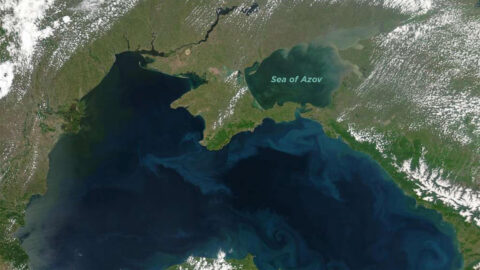
But one of the big things that happened in the Ukraine war is that the Sea of Azov is now offline. The Sea of Azov is a body of water to the east of the Crimean peninsula, that’s Russian occupied Crimean peninsula, and to the south of Russian occupied lands in southeastern Ukraine. It’s a waterway that freezes sometimes in the winter.
But the real important thing is that is the outlet for a huge amount of cargo. The Russian system is not well set up for shipping cargo. A lot of stuff has to go by rail, but the Russians are literally running out of ball bearings, so they’re hitting the max of what they can do, and they can’t replace the cars and the speed that they need to.
So they’re seeing reductions in throughput. That makes it much more important to ship things by water. The problem is, is that the Russian coast of the Black Sea doesn’t have any navigable river outlets. It’s somewhat rough and mountainous. And so what happens is you’ve got an inland waterway, the Volga, that goes near Moscow and snakes through Russia and empties into the Caspian Sea.
The problem is the Caspian Sea is a landlocked body of water. So what the Soviets did is they engineered a series of canals and locks that go from the lower Volga near the Caspian over some low ridges, and get into the Don River system. And the Don empties into the Sea of Azov. So, in essence, if you’re shipping coal or iron or especially agricultural products, you get it onto the Volga.
You go through a series of locks until you get to that connection. You take the canal over to the Don, to Rostov on Don, and then you get into the Sea of Azov, and from there you get into the Black Sea in the wider world. Well, while I was gone, the Ukrainians hit over 200 ships in like a week in their first big push and basically shut off the sea of his off completely.
So any of the cargo that used to use this waterborne export, which was one of Russia’s main ones, the primary one for southern Russia, suddenly has nowhere to go. They go onto the rails, but the rail system already overloaded and honestly starting to fall back. So a couple of things from this. Number one, we’ve got a lot of Russian cargo that is now just trapped.
It has nowhere to go and there’s really no quick fix here. The Russians have withdrawn a lot of their air defenses from places even like Crimea, to put it around Moscow, because Ukrainians have shown that any target that’s within roughly a thousand miles of the front is something they can in force. And that’s forcing the Russians to the air defenses that they have in places where they will serve political purposes.
Because of Moscow, came under heavy drone attack every single night for a month that might shatter the political coalition that holds the Russian system together. Right now. That’s one. Number two, Rostov on Don. This is one of the city’s one of the two cities in Belgorod that serves as nodes for transporting military gear to the front, and it has now lost all of its economic wherewithal.
It’s now just a military outpost, in effect. This is something that’s going to have a huge impact on the Russian economy and ultimately crimp Russia’s ability to get stuff to the front, because if that river is no longer available, if the canal system is no longer available, if the receipt of is of is no longer available, then one of the more wealthy cities in Russia just lost everything that made it work except for being a military depot.
And you should expect more tax there over and over and over again in the not too distant future. Third, now that the Sea of Azov is offline, next up is the Black Sea. It’s not that much further. The Ukrainians have loads of drones that are capable of taking the war now just across the Crimean Peninsula and into the ocean, and we’ve already seen dozens of attacks on things like tankers and Borchers, everything that’s in the shadow fleet.
So look for the Ukrainians over the next couple of months to repeat what they did in the Sea of Azov in the eastern side of the Black Sea, because no ships go there, really, unless they’re part of the Shadow Fleet. No one else wants to dock directly. And it’s not like they haven’t been warned if they decide they want to try.
The only real solution here that the Russians have, because air defense isn’t going to cut it, is to up their attacks on the Ukrainians to the point that it attracts the Ukrainians ability to do this. But since it’s from mobile launch sites with ever evolving drones and drones at the moment, the Russians haven’t figured out sorry about the wind drones.
At the moment, the Russians haven’t figured out how to replicate. That’s something that undoubtedly can’t happen this summer. This is going to be a problem for a year from now, or a potential solution for a year from now. And now we’re getting to India and I’ve got to stop so by.