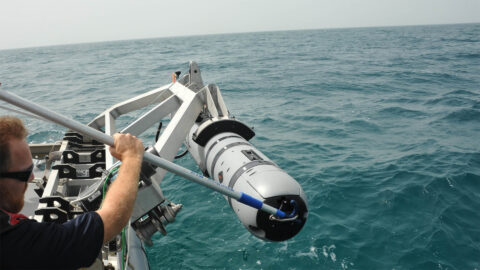

Drones have been all the rage in the Ukraine War, and they will continue to be one of the primary topics of warfare in the near future, but do underwater drones have any place in this conversation?
Underwater drones just don’t have the same use case that airborne drones have. Torpedoes have been around since the 19th century, so these underwater drones aren’t doing anything groundbreaking. Surface maritime drones are a different story. These remote-controlled jet skis strapped with explosives have been wreaking havoc on Russian vessels.
So, forget the underwater drones and focus on the surface-drone tech, especially if you’re in places like the Taiwan Strait or the Japan Strait. As these innovations roll in, we’re looking at a full restructuring of the global maritime shipping sector.
Note: This video was recorded last year during one of Peter’s backpacking trips.
Transcript
Hey, all. Peter Zeihan here. Coming to you from Lost canyon. Got a little interesting stuff. I’m gonna have to climb through tomorrow, but you know, that’s tomorrow’s problem. Today we are taking a question from the Patreon page, and it’s specifically about drones, specifically underwater drones. And the question is, as did globalization really kicks in, do I expect underwater drones to play a role in some of the major things that are coming, like the just incorporation of China or perhaps Korean unification?
Probably not. Unlike airborne drones, underwater drones are missing a couple key factors and its range and detection radius. The technologies that have allowed airborne drones to do their thing better optics, better power management, lighter materials really don’t change the math for an underwater, weapons platform, but can’t see any further than they did before.
The range is limited by the fuel type. It’s having a little bit bigger Battery isn’t going to do all that much of a difference. And being able to get things to where they need to go, probably not a very big play. The only way that underwater drones might make, might see bigger plays are, is if they were dropped off by submarines closer to their targets.
But, you know, we would call those normally torpedoes. We already have that technology, so we’re not really, doing much here. We’re just kind of reinventing the wheel. Now, that’s under water. Drone. So does it mean that maritime drones aren’t moving forward and don’t have a role to play? But it’ll probably be surface drones. One of the things that the Ukrainians have shown us is they can take a jet ski or a small motorboat packed with an explosives, basically strap a control system to the steering column and off it goes with five, six, 700 pounds of Boom-boom. And when it hits a ship, that ship has a big problem. And using water, drones, maritime drones, surface drones, Ukrainians have done an immense amount of damage to the Russian Navy because pretty much all of the weapon systems that are on traditional naval vessels are designed to shoot up at things like planes. They’re not designed to shoot down at things that are in the water.
And so we’ve seen the Russians basically have to defend their vessels with dudes on the deck with machine guns and RPGs, and it’s not a very effective thing. So if you take maritime drones and introduce them into constrained waters like, say, the Taiwan Strait or the Japan Strait, all of a sudden you do have a very different sort of system because these sorts of drones do have ranges of a few hundred miles, already.
And that’s just by retrofitting, platforms like jet skis that already exist. As soon as you start taking, the technologies that the Ukrainians have built and use them on a completely new chassis, you can have a lot more range. And then we’re talking about a fundamentally different system. And if you’re talking about defending a civilian vessel in that sort of environment, that’s going to get a lot harder.
At least naval vessels have the possibilities of having jamming and having things like a ready supply of RPGs. Now, this does bring us to another topic that we’re going to have to find out the hard way. And that’s the general militarization of cargo ships. Because it’s coming soon. There are not not not not enough military vessels on the planet, to be able to patrol the sea lanes to a degree that would be necessary for the type of security breakdown that we’re facing.
So the only way we’re going to be able to maintain even a modicum of globalized trade is if cargo ships, whether they’re container ships or, bulk ERS or tankers themselves, are able to mount their own weapons systems, and that will also most likely be airborne drones, because that’s the only thing that can get the radius and maybe the strike capacity to take out something like a surface drone before it gets to you.