
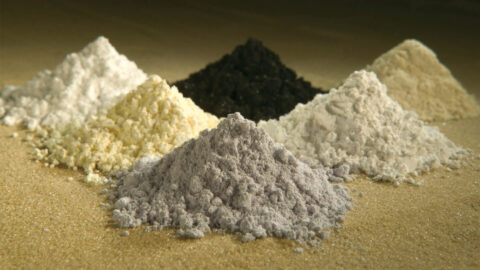

The Trump administration has announced a plan to create a $12 billion stockpile of rare earths. The goal is to create a buffer against any supply disruptions, but this is just a band-aid.
Depending on the metal and use case, this stockpile might give the US a five-month supply. But the core problem still exists: the US doesn’t have any domestic refining or processing. It’s not all that hard or expensive to extract and process this stuff; the US just hasn’t invested in the infrastructure to do so.
If the goal was to establish real supply security, this stockpile isn’t the way to go about it. But hey, at least we’ve got an extra five months.
Transcript
Hey all, Peter Zeihan here, coming to you from Colorado. And today we’re looking at a new initiative from the Trump administration to solve the critical materials issues. Short version. The United States doesn’t refine most of its materials these days. It relies on countries that have much lower pollution concerns, like, say, China or India, to do the processing. And then we buy the process material and do whatever with us.
What that means is, well, while you save a lot of money and you certainly clean up your own local environment, you subcontract all of this out to countries that, in the case of China, might not be the most friendly and then might cut off supplies at a later time, as the Chinese have done to a number of countries from time to time, including the United States.
Anyway, the idea is you establish a $12 billion stockpile. The U.S. government is going to be tapping the import export bank. And so the idea of using one government agency to finance the development of another, I personally find that delicious, but bygones. And the idea is you buy these processed metals, primarily rare earth metals, and then they are in the United States.
So you have a buffer. I don’t want overstate this. It’s a good step. It’s in the right direction, but it’s going to get crazy. $12 billion of critical materials for a country that is a $25 trillion economy is not going to last a long time, probably somewhere between 1 and 5 months, based on the specific material, because there are over 30 different materials that they’re talking about here.
It’s a step in the right direction. But if your goal is to really achieve a national security issue and economic self-sufficiency, you need to make these things yourself. Right now they’d just be buying them from China on the open market a little bit more than what we need, and put them into basically a safe. What you need to do is build up the processing.
The problem here is that there is no such thing on the planet as a rare Earth element mine or rare Earth element production line. Rare earth metals exist as small, small impurities in other mineral extraction, primarily things like silver, but also copper and zinc and a lot of other things, uranium, for example. And so what happens is you have your mine that produces X mineral.
You process that to get X refined mineral and then the waste material you then go through a separate set of steps that involves several hundred vats of acid. Basically with every step you concentrate the mineral that you’re after, whatever it happens to be. And after six months to a year of such processing through acid, you eventually get some refined metal rare earth metal that you can use, but it takes several tons of raw material to generate one ounce of the finished metal over months of steps, and hundreds of vats us and until the United States builds that infrastructure, which isn’t technically difficult. It’s chemically very tricky. Until you do that, you are never going to have independence from international suppliers. Now, there’s nothing about this technology that is new. It was developed back in the 19 tens and 1920s. The U.S. obviously can do it. It’s not even particularly expensive even if it is environmentally dirty.
But it does require space, and it does require capital and does require planning. It does require infrastructure. And at the moment, the Trump administration has not put a dime into that effort. If and when that changes, I will be there with bells on to sing and dance. That is not what is happening today. Today we are building the equivalent of a piggy bank that we still have to fill up.