
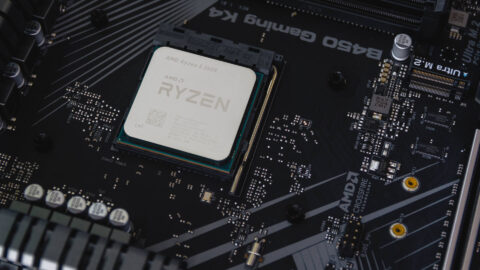

A poorly designed and destined to backfire tariff has just been announced; this time, the Trump administration has turned its focus to high-end semiconductors.
Putting tariffs on semiconductors is nearly impossible to do cleanly. There are thousands of types, production stages, and end uses. So, the Trump admin thought it would be a good idea to tariff them based on the end use, rather than where they’re made. The only problem is that most importers don’t even know the final use of the chips upon import, creating a legally and financially risky situation for everyone involved.
This tariff will likely freeze access to advanced semiconductors and choke the US tech and manufacturing sectors. There are a few ways around the tariffs, but those offer little relief to existing manufacturers. But hey, let’s just keep trying to jam this square peg into that round hole.rough strong alliances will struggle to survive. And the next generation of kids (however small that cohort might be) will be studying those countries in the history books.
Transcript
Hey everybody. Peter Zeihan here, coming to you from Iowa. Today is the 15th of January, and the Trump administration has at long last announced the first wave of semiconductor tariffs, specifically targeting high end semiconductors. There was always going to be a question as to how this was done and whether it was going to be a disaster.
It really matters because semiconductors are, for most intents and purposes, a commodity. They come in in thousands of forms and at thousands of different stages of production. There’s over 100,000 steps for high end semiconductor fabs creation. And they can come in as raw chips still attached to the disk. They can come in separated from those disk.
They can be put into intermediate products like motherboards or charging stations. They can be included into intermediate products. They can be incorporated into final products. And so whatever type of tariff regime you’re going to put in there is obviously going to be full of flaws, even if it’s very, very, very well designed. And commerce was never set up to manage this sort of system, much less, Customs and Border Patrol.
And that was before we had the personnel purges of last calendar year. So the questions were always, you know, how are you going to do this? Are you going to look like at a car? And the 1500 types of semiconductors that are installed within it have a different tariff rate for each one. Do you tariff the entire car tariff the chips independently?
You do it based on the intermediate products. Based on where the value added happens. Basically, you could get more paperwork for one tariff on one vehicle than all of the rest of the 30,000 pieces in a car combined. What the Trump administration has done with this round is instead of going by sourcing, which would make a degree of national security sense, even, it would be, logistically almost impossible.
They’ve decided to go on end use, which is, if anything, even more confusing, because now anyone who is importing these products has to decide what each individual chip is going to be used for. Declare that on the tariff form and the way that Customs and Border Protection enforces the tariff regime is to not check it on the front end, but to randomly check it on the back end and then really bring down a hammer in terms of fines and penalties.
The problem is if if somebody is important to, say, 10,000 of a specific type of chip, they’re not the ones who are probably going to use the chip. The chip is going to go on and get put into computers or cell phones or pacemakers or whatever it happens to be. And so who is responsible for it? So the person who is doing the importing has to go and gets a customer affidavit and assign them to each individual box, each individual chip that Customs and Border Protection can then go into later a year from now, three years from now, and attempt enforcement. So what we’ve gotten is something that will freeze the use of semiconductors at the high end, because no one is going to know how to do the paperwork on the front end. It’s difficult to come up with something that is going to chill American manufacturing more, because now simply accessing the pieces in the first place is not going to happen cleanly.
And you could open yourself up to legal liability simply from plugging a piece of typical technology into something that you’re working on, because you’re not the one who did the actual importing, but you’re probably legally liable. So we’re probably going to see a seizing up across not just the tech space, but the advanced manufacturing space in the United States, especially in places like heavy machinery, automotive and aviation, where these chips are used in the thousands in every single vehicle.
It’s going to be very interesting to see how this goes. The Trump administration says it’s going to do a review after 90 days where if progress has not been made and expanding the supply chain within the United States, then, more tariffs will be coming. One of the many exceptions, because there are a bunch is that if you’re using these chips to expand the construction of a supply chain, you get a pass.
But if you’re already have a supply chain, you do not. So this is a horribly designed tariff, absolutely the wrong tool for the job. And it’s going to become very obvious as this year rolls on, that it is actually going to poison most of what progress the US has made in its industrialization effort over the last decade.