
Just because the US intervened in Venezuela doesn’t mean that America will be abandoning its global military posture.
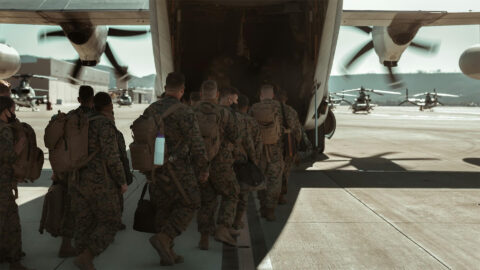
The US maintains military deployments in Japan, Germany, and South Korea. Don’t think of this as imperial overreach; think of it as a low-cost force multiplier that prevents bloodier conflicts down the road. Should the US withdraw from these positions, things would likely get ugly…and quick.
The US is the only country with the ability to project power globally, and these optimally-sized deployments help extend that reach.
Transcript
Hey everybody. Peter Zeihan here. Coming to you from Colorado, avoiding the crazy winds out there. Through with you inside. We’re taking questions from the Patreon crowd about the Venezuelan intervention and the rest of Nicolas Maduro, the former current. I’m not sure how that works out now. Venezuelan president. Anyway, he’s going to go in jail. We’ll never hear from him again.
The question is, is, is this a prelude to a general disengagement from the Eastern Hemisphere and closing down all the bases we have there? He’s like, oh, let’s let’s not get ahead of ourselves. First things first. The United States currently has fewer troops stationed abroad than at any time since the since World War two. We had a surge with the war on terror.
We’re back down to a pre, like the lows that we had in the early 2000. And it’s important to understand that the United States footprint globally is actually quite limited. Right now we have about, let’s called 100,000 troops abroad. Most of those are concentrated in three areas. You’ve got the largest contingent, which is in Japan. The second largest. which is in Germany and the third largest, which is in Korea, especially closer to the DMZ. All of these serve as force multipliers for the United States. Everything else is a very small contingent, maybe a naval base here and there that has a few hundred to a couple thousand people that are basically there to help the carriers operate.
But the way World War Two ended, we already have places like midway, for example, which is U.S. territory or access to the United Kingdom, which has their own naval bases that we just kind of rent. And so the, the need for the United States to maintain a far flung Imperial style military deployment just doesn’t exist. If you see the United States back away from the deployments we do have, it means that we have made a very clear strategic decision as a country to foment a war and so that we can participate in the next one.
And lose a few tens to hundreds, thousands of troops. So, for example, if we walk away from Japan, Japan is the anchor. And because of the way that the islands in the Pacific are position, it means that we basically give up the ability to influence the Asian mainland and the western third of the Pacific, which includes Japan and Korea and Taiwan and China and Singapore and Indonesia and Australia.
And if we decide to walk away from that, we’re basically saying that this whole area can evolve on its own, maybe generate a new hegemon, that we will then have to come back and deal with decades from now, basically setting up something similar to the rise of Japan in World War two. If we walk away from Germany.
Oh my God. Oh, God. Okay, so every time the Germans are responsible for making their own decisions, they start acting like a country or something. And as a large country, the largest of the European states by population, economy set in the middle of the continent, it will naturally try to influence the areas around it. And that is exactly what set everybody on the course to World War One and World War Two.
And so to do that deliberately, to set up a repeat of the world wars in Europe, strikes me as something that would not be in American interest. And that’s before you consider the fact that the Russians have been pointing nukes at US my entire life, and I’m now 50, 52 birthday coming up. That strikes me as immensely unwise.
One for the low, low cost of 30,000 troops stationed in bases that are nowhere near a front line. You can basically control the strategic destiny of a continent that’s cheap. Third, Korea, you draw those troops back. Forget about the likelihood of a war in the peninsula, which is would be very likely at that point. North Korea has nukes pointing at us, with the range to reach us.
So your permanently now putting Minneapolis, Denver, San Francisco, Los Angeles under a nuclear threat and defending against that would require an order of magnitude more cost, than simply maintaining 20 to 25,000 troops on the Korean Peninsula. So really, the three big deployments we have right now are there for very good reasons, mostly in terms of controlling the strategic environment, and because not having them there would require us to take a defensive position in our hemisphere, which would be extraordinarily more expensive and set up the situation for war down the road.
Okay, so that’s the United States. Now let’s talk about everybody else’s deployments.
Okay. That’s all of them. Here’s the thing that most people forget. Deploying troops in the thousands, much less tens of thousands a continent away, is very difficult, requires specialized logistics and decades of practice and infrastructure development. And so we are the only ones in the modern era that does that. The last time any countries did it at scale, it was before World War Two when we had the Japanese Empire, which we, to be perfectly honest, modeled some of our stuff, and the British Empire, which of course we modeled some of our stuff off besides that in the modern era, and nobody does it now.
Part of this is policy. The whole idea of the Cold War globalized system was that we will pay to create a world that keeps you safe is an exchange. You allow us to write your security policies. And that has been the basis of the American alliance going back to 1946. But the other part is just the sheer expense.
By creating a globalized system, we gave everyone access to the globe and all the economic goodies that come from that. And trade and access to commodities and markets the world over. And they didn’t have to have the military for it. So most of them never even bothered to try. And so the world’s second and third largest navies are the Japanese and the Brits, both of which work hand in glove with the United States.
And if we decided to withdraw from the Eastern Hemisphere, those two countries, as well as a number of others, would have no choice but to develop that capacity. Now, they wouldn’t do it in two years or five years. This is a generational thing, but eventually we’d have a half a dozen navies that had regional, maybe even global reach, and it would look a lot like 1929.
I would argue that’s something that we don’t want to do, because doing it the first time was really expensive in men and lives in the United States honestly got off cheap because it was most of the fighting was over there rather than over here. Okay, let’s talk about the the big countries, more specifically China. People keep pointing to the fact that they’ve got a large Navy unit, and they do and they do have about, 50 ships that are capable of operating more than 600km from the shore.
But even if you ignore the first island chain, which really hems them in, that doesn’t give them very much, because the Chinese don’t have basing rights in places that are useful to them. So when you look at the United States, we’ve got Japan’s second most powerful naval power on the world. Where we stage ships, we have midway, we have places that are allied in the North Atlantic basin, whether it happens to be Italy or Spain or the United Kingdom or Iceland.
We have global power projection, in part because of our territories and in part because of our allies. The Chinese have no allies, so they’ve gone out trying to build what they call a string of pearls model, where they develop friendly ports along the route that they want. And so they get along okay with Malaysia. They basically bought Cambodia.
And even though it has a coastline, they’re trying to build port there. They’ve got some friendly relations with Bangladesh and Myanmar, Sri Lanka and Pakistan. And so the idea is they can use their short haul ships to hop from base to base to get all the way to the Persian Gulf, where they, where the oil is.
And of course, everybody, because of pirate reasons, has a small base in Djibouti. But here’s the thing. If one of those gets broken in a hot war, every ship west of that is lost. The Chinese have tried to do it on the cheap, and that means it’s really easy to unravel. And so even if the United States were to find its vessels, say, stuck in the Indian Ocean, they have enough range to get out.
The Chinese don’t. And so I’ve never really been worried about the Chinese naval build out. Let’s talk about the Russians. The Russians aren’t a naval power. They’re not an air power. They’re losing their space capability. Within a decade. Pretty much everything that they have that’s not ground base is going to be gone. They just lost the manufacturing base to maintain it, much less expand it.
But they still have a large army, over a million men under arms. And every month, they’re bringing them another 20 to 40,000 men into the fight. That’s awful. If you’re on Russia’s border. And that’s the situation that the Ukrainians are struggling with right now. But if you’re not on Russia’s border, it’s actually not all that bad because you have standoff distance where you can use drones and air power.
If you’re another country back, you know, you really don’t have to worry about the tanks coming either. By the way, the Russians have almost run out of tanks, which is crazy. They started this war with 20,000 armored vehicles. They’re down to probably less than a quarter of that now anyway. Bottom line is that their their exposure is huge, but their ability to push back that exposure is very, very limited.
And their ability to use naval forces to protect power is basically zero. Now, they still have a handful of ships, but they’re split into four different bodies of water the Black Sea, where they can’t get past Istanbul unless the Turks allow them, and everything that does get passes. Relations with the Turks go south. That’s lost. They’ve got the Baltic Sea, but that is now completely a NATO lake.
At this point they’ve got the Arctic Sea, which is their their most powerful fleet is up there. But the problem is it’s a long way from anywhere. And they have to get by Norway and Iceland and Scotland and the United Kingdom, the United States, all of which are superior naval powers on that, but one that Iceland doesn’t have a military.
But everybody else could probably do it by themselves at this point, even without the United States. And then they have the Pacific Fleet that is based off of, Petrobras, which is basically a city you can only fly to on the peninsula. And of course, the Japanese are there. They could potentially be some things in the code Vladivostok, but that is literally surrounded by Japan, world’s second most powerful navy.
And even if all of the Russian ships were in the same place, the Japanese could still easily take them out because they’ve done that before. So the ability of the United States to project power is huge, in part because of its geography, but also because of its allies. The Chinese are blocked in by geography, the Russians are blocked in by geography, and neither of them have allies.
So we’re in this weird situation where the United States is considering a full scale withdrawal from everything, which will guarantee higher defense costs and longer, long term security challenges. This is one of the things that the people who are really pro isolation tend to miss the the footprint that we have right now is almost perfectly optimized to not have to spend money or lives.
As an added benefit, you also get to control the security architecture a huge part of the planet. You pull back all that goes away.