
Can the British Reopen the Strait of Hormuz?

Close up of the British flag

The British-led effort to reopen the Strait of Hormuz by forming a coalition without U.S. involvement is just unrealistic.

Most countries lack the naval power to do this, and even if the coalition could assemble the ships needed, countering Iran’s drones and missiles would be extremely difficult. Protecting shipping and reopening the strait would require naval escorts and control of vast stretches of the Iranian coastline…not something this coalition could achieve.

There’s no path forward without U.S. involvement, and any resolution will inevitably have to be political.

Transcript

Hey, everybody. Peter Zeihan here. Coming to you from Colorado. It’s the what, 2nd or 3rd of April kind of lost track. It’s been a weird year. Anyway, the news we’re going to talk about today is the Brits attempt to build a coalition without the United States to go to the Persian golf and force open the Strait of Hormuz. 

I heard that this meeting was happening. The first thing I did was get a good laugh. Problem number one, the way the global system was set up after World War two is the United States basically told everybody that you barely need a military, and you certainly don’t need a long range Navy. We will take care of all that stuff and allow you to trade with wherever you want in the world, which is something that only the major empires had ever been able to do, even in part before. Now everybody could do everywhere. If in exchange, we can write your security policies. And because of that, most countries gave up having navies at all. 

And while the Trump policy of basic denigrating all of the allies and now abrogating that deal means that they’re all going to be developing their own navies, developing your own navies and having a navy or two different things. And if they all start right now, it’s going to be before the end of the decade, before any meaningful results are generated. 

Which means that instead of looking at what people might want to happen, whether that be the Brits, Donald Trump himself or anyone else, we have to look at what hardware actually exists right now. What could it be? Use. And the answer is almost nothing. There are really only five navies in the world that are worthy of the name the United States, the United Kingdom, France, Japan and China. Of those two of them, France and China have very sharply limited range. Really, there are only three countries in the world with meaningful naval production capability that can reach the Persian Gulf from home. The United States, which is already there, Japanese and the French might be able to, but only if they can use Suez. And that introduces some logistical problems that I think would make it difficult. 

So, number one, if everyone had a navy magically could transform their strike cruisers or whatever else into deepwater platforms, and if they could all reach the Persian Gulf, even then, all of that combined firepower would probably be less than what the U.S. already has on station. So just the volume of ships, the type of ships, the number of ships, just isn’t appropriate for this specific task. 

Second problem. What do you do when you get there? The problem is that the Iranians have established a sort of toll system where ships check in, get their paperwork, stamps, pay their money, and then the kind of class escorted by the Iranians through the Iranian sector of the Persian Gulf, instead of using the normal international lanes in the middle of the Gulf. 

Ships that don’t do that risk coming under attack, but not by Iranian ships, because the Iranians don’t really have a navy, especially not after a month of war with the United States. So you’re talking about things like missiles and drones. Here’s the problem. A lot of these drones have a range of at least a couple hundred miles, the ones that you can actually micromanage. 

The ones that you know, our fire and forget, those are more like 600 miles. So if you’re going to have any sort of meaningful escort in a hot security environment, you don’t simply need to get ships on station to escort, of which there aren’t enough anyway. You also have to be able to either bombard the coastline and most likely occupy it so that there can’t be spotters that could identify potential targets. 

And the scale of that, I don’t think a lot of people have really wrap their minds around. Basically, imagine the coastline of the United States from roughly New York City down to Savannah. That is the length of the coastline in question here for the Iranian side of the Persian Gulf, where these ships are going through. The United States was to deploy its entire army to that zone. 

Might emphasis on the word might be, are you able to occupy enough of that coastline to prevent spotters and launchers? But even that would be a bit of a toss up. But everyone else? No, there just aren’t a lot of countries that have any sort of meaningful amphibious capacity. That’s, a land assault from the sea, at all. 

Much less enough to secure this. So if there is going to be a deal that removes the threat to shipping, it has to be a political deal with Iran. There really is no other option here. And even if there was, the rest of the world combined does not have the naval force to even pretend to enforce it. So we’re in one of those situations where every Joint Chiefs of Staff and every CIA director and every Defense Department secretary has warned every president since 1979 that if you do want to go to war with Iran, there’s a few things that are going to break that there’s really nothing we can do about. 

So make sure you’re okay with those consequences. But the Trump administration, Donald Trump, personally chose to ignore all of those warnings. And so we’re here in a situation where I’m laughing at the Brits for even pretending to have a meeting because there is not a military solution to this problem. The best scenario we have now is that Donald Trump decides, okay, we’re all done. 

We’re pull out of the region completely. And the Iranians just say bygones and move on. And I think we all know enough about the United States and about the Middle East to know that that’s not a particularly likely outcome.
The Strait of Hormuz Remains Open…For Iran

Despite the ongoing conflict in the Persian Gulf, shipping in the Strait of Hormuz remains open…sort of. The Iranians have taken control, requiring ships to get clearance for safe passage.

Basically, Iran has set up a protection racket. They’re earning more from transit fees and oil exports than before the war, and all the Chinese ships carrying drone parts and components heading to Iran remain untouched. Even with the significant U.S. military presence in the region, nothing is being done to disrupt these flows.

Until that stops, Iran’s military operations and economy will continue to grow stronger.

Transcript

Hey all, Peter Zeihan here. Still sick. Coming to you from Colorado. This is Loki. You may have heard him or seen him in videos in the past. Anyway, today I wanted to let you know about a little internal investigation that we’ve been running in the ER on war. 

Specifically, we’ve got questions here on our end, about why shipments are still getting through the Persian Gulf at all. 

Now, international insurance has basically been canceled for all ships in the area. Basically, once somebody starts shooting civilian shipping, all bets are off and the captains are on their own and if the ship takes a hit, oftentimes it’s the captain that is legally or financially vulnerable. If not the shipping company. And there’s no way to file a claim in that circumstance. 

So lots of ships are trapped inside the Gulf, and there’s a couple hundred waiting outside for things to clear, which isn’t going to happen anytime soon. And yet, there are still some ships coming and going, but all of them have gotten clearance from Iran. So under normal circumstances, there’s a six mile navigable channel that’s roughly in the middle of the Strait of Hormuz. 

Most of it is actually in Omani territory. Some of it does go into Iranian territory, and there’s a two mile channel for going one way, a two mile channel for going the other way, and then a two mile gap in the middle. That is not being used by anyone. That’s what’s completely shut down because of the attacks we’ve had so far. 

On the other side of the equation, you’ve got Iran basically processing ships, at the Imam Khomeini port, which is way up in Khuzestan, which is on the northern extreme of the Gulf, actually in the general vicinity of Kharg Island, if you know where that is. So for ships wanting to get passage approval from Iran, they have to sail all the way to the northern end of the port, basically under all the drone and missile attacks that are going back and forth. 

They have to dock at Imam Khomeini port. They have to basically get their papers, pay their bill, which comes out for a large ship to be like $2 million. And then they sail down the Iranian coast as close to the Iranian coast as they can. 

And instead of using that navigable pathway through the middle of the street, they hug the Iranian coast as closely as they can and sail through that way. 

And same for anyone who’s coming in. They have to sail all the way up to Khuzestan to basically get their papers stamped. So what has happened here is a clear example of the United States just being unable to process what’s going on on the front end. 

United States seemed woefully unprepared for anything happening in the Strait of Hormuz, during a war with Iran, which is just beyond ludicrous, because that has been the issue since 1979, and there was no meaningful preparation of all. Second, Iran has managed to set up a basically a protection racket, and cargo is still not just coming to and from Iranian ports, including Chinese, gear that basically is full of drone parts. 

They’re actually able to sail into the Strait of Hormuz all the way up and into the northern Gulf, not be molested at all. Docketed Iranian port, or take on cargo, pay their fees, and then sail all the way back down through the Persian Gulf, through the Strait of Hormuz, and out. And the United States is doing nothing. 

So the idea of that, the Iranian authorities, as they are at the moment, are under pressure is just mind bogglingly stupid because the economy of Iran is largely managed by the IRGC. And we have actually, in these circumstances, seen income for the IRGC go up because the not only are they getting these transit fees, but the core issues of economic smuggling still apply. 

And even though the US military is now more present in this region than it has been at any time in modern history, it is doing nothing to interrupt the commercial flows going to and from Iran, and Iran is able to increase the volumes of its exports to nearly 2 million barrels per day and garner the war surcharge. So they’re earning easily in terms of profits. 

Two and three times what they were earning before the war. And the U.S. military is doing nothing. Now, under normal circumstances, there are analysts at the military and especially at the Department of Energy who would point these things out to their chain of command, and it would go up to the department heads and eventually the president. But President Trump fired all those people last year. 

So it took people like me doing this little project on the side to figure out how everything is flowing. Someone please tell Trump because until this is interrupted in some way too big problems. Number one, the IRGC is giving them more money now than they did before, which reinforces all of the pillars of the Iranian structure that allows it to fight the war and encourages political cohesion. 

Second, they have no problem resourcing parts for missiles, and especially drones from the Chinese, and so they’re able to maintain their current pace of fighting more or less indefinitely. So yeah, someone please pass that along. Maybe it’ll make a difference.

U.S. Ground Troops Coming to Iran

Squad of Soldiers Running Forward and Atacking Enemy During Military Operation in the Desert | Licensed by Envato Elements: https://app.envato.com/search/photos/b369387a-4bc2-43d2-808a-0341aa11dbcc?itemType=photos&term=military+desert&sort=relevance

The U.S. is preparing for a potential ground operation in Iran. Marines from the USS Tripoli and Boxer, as well as elements from the 82nd Airborne, could be looped in. That’s roughly 8,000 troops, which is just a small-scale, fast-response force, but no matter the size, boots on the ground is a scary endeavour.

If Kharg Island is in fact the target, the retaliation from Iran would be massive. This is Iran’s main oil export hub, which means it’s the main revenue source as well; with that gone, Iran would unleash hell. And Kharg Island would be extremely difficult for U.S. forces to defend; they would be under constant threat of drone strikes, and quite exposed.

Another plan would be to use these troops for targeted raids along the Strait of Hormuz, disrupting Iran’s ability to attack shipping.

Transcript

Hey all, Peter Zeihan here coming to you on March 25th from inside the house in Colorado because, false alarm. I’m not getting better and sicker. Anyway, I’m going to talk about, Iran today, specifically what’s going on? Ground troops, which looks like they’re absolutely going to be used. This is a bad idea from any number of matters, but let me give you an idea of what’s in play and what it might be used for, and we’ll go from there. 

So, as you may remember, the USS Tripoli, that’s one of America’s amphibious assault carriers, carries a clutch of F-35 fighter jets, as well as 2000 to 2500 Marines. Relocated from the Philippine Sea and the ceiling through the Indian Ocean. Now, it will probably arrive in the vicinity of the Persian Gulf in the next day or two. 

We also have the USS boxer, which is another EU marine expeditionary unit. That’s basically what the Tripoli is, which has left San Diego. It will not be an area for probably close to three weeks, but the news from yesterday is that the 82nd airborne, which is kind of America’s rapid reaction force, troops that are run by the army, that are mated with permanent transport aircraft that can deploy to anywhere in the world in less than 48 hours. 

They were given the marching orders to move to the Middle East, last night. And we’ll probably. Well, they could be moving right now. You know, all hush hush classified. But when the, orders are given, it’s usually not too long until they’re on their way. Collectively, in three weeks. This means we have about 8000 troops in the region. 

And they’re really heavy hitters. Basically, unless you’re going to move into special operations, the Marines and the airborne are about as good as they get without having armor. And that’s something else that’s important to note. So this is not a traditional ground invasion where we’re driving tanks and using artillery. This would be a relatively light force that punches above its weight for what it is, but is not designed to take on another major force. 

Keep in mind that if the Iranians don’t have another major force, so that should be fine in that regard, they may have a million man army, but it’s apparently designed to shoot civilians rather than swarm over foreign countries. Now, the news is going on and on and on and on about something called Kharg Island. As someone has highlighted Kharg Island 15 years ago, part of me is like, yeah, you finally, but I really doubt that’s the target. 

Or more to the point, I really doubt that that should be the target. Kharg Island is a small facility off the western coast of southwestern Iran. It’s up in the northern Gulf. It doesn’t have a bridge to it. It was built by foreigners, and it has a subsea pipeline that basically carries all Persian Gulf crude to it, because the Persian Gulf Coast is really, really bad to accept tankers. 

It’s just very shallow and muddy. So they have this island out where they can accept tankers. And it is the point for plus of Iran’s oil exports. And what we’ve seen in the war so far is that the United States came in completely unprepared for the idea that something might happen to the Persian Gulf and really didn’t have the hardware or the positioning in place to protect ships in the Gulf, or make sure that the Iranians couldn’t attack ships in the Gulf. 

So everyone’s now focusing on Kharg. And the logic seems to be that Donald Trump wants to make another fucking deal. And the idea is that if the United States occupies Kharg Island, then Trump will have a negotiating card to play against Iran elsewhere. So we will give you Kharg Island back. If you stop attacking places in the Gulf, specifically if you allow the Strait of Hormuz to be open. 

I will tell you bluntly, in anyone who studies, the Middle East will tell you bluntly and, that that will not work, because that will remove Iran’s oil income and then the gloves will really come off. And as we’ve seen, when the Israelis attacked a natural gas processing facility last week, the Iranians had more than enough, weapons left to open up on infrastructure throughout the Gulf. And they did well over $100 billion of damage in a matter of hours. You would probably get something like that. In addition, Kharg Island, is not going to be easy to defend. 

one of the things the United States has been doing is its carriers haven’t even come in the Gulf. One has been off in the Arabian Sea, the other one has been off in the Red sea. 

They’ve been fighting Iran at a distance. If you’re going to put a few thousand troops in Kharg, you’re going to need close in support. And it is within 30 miles of the coast. And the Iranians will hit it with everything they have, because the ability hit several thousand American troops with limited defenses right up and close. Oh, man, they’ve been waiting for a situation like that the entire war. 

It would basically be putting them in the most vulnerable way you could imagine. And now, like I said, anyone who knows anything about this region or oil politics or how defenses work would have told president that this isn’t how things go. But the president isn’t being told anything. The people in the Department of Energy and the DoD who were responsible for studying things like chokepoints and, the Strait of Hormuz specifically, were all fired last year. 

And the same goes for basically any sort of strategic planning or think work. Pete Hegseth, the secretary of Defense, has been going on a crusade in his, Anything that does not actively support the warfighter is being cut out of the Department of the defense, and that removes all education that would allow people to make educated decisions about, say, what you do in war. 

So when I say that this is a Donald Trump plan, this is a Donald Trump plan. He’s no longer allowing information to reach him, with the possible exception of through Dean Cain, who is Joint Chiefs of Staff. And that’s about the only voice of caution he’s get. And so far, he has overruled Cain on really everything of substance. 

So if this is where we’re going, this is going to end in a bit of a debacle. The only other thing that I can think of were 8000 troops that are heavy on the insidious component might be of use, as in the Strait of Hormuz itself, if you put, Marines and airborne in that area, and enable them to do land strikes, rapid and then retreat land strikes up and down the Strait of Hormuz, you can probably limit the ability of Iran to launch attacks on civilian tankers. 

And since the United States doesn’t have the ships, doesn’t have the hardware to do a meaningful convoy system, this might be the next best plan. It’s not a great one, but I would find it much more viable than, say, going after Kharg. That’s my $0.02. Anyway, that’s where we are right now. The Tripoli will arrive within 48 hours, and the 82nd could be there at the same time. 

So if you only feel you need two thirds of these forces, you get going on it right away. If you decide you need the full 8000, you have to wait for the boxer to arrive. And that will not be until the second week of April. Anyway, pieces are moving so that these options are available. Whether they are used, of course, depends upon, what Trump feels, because that’s all that matters in this war.

How to Break Iran

A ripped grungy back wall of the Iranian flag

If the U.S. wants to force a meaningful change in Iran’s government, there’s only one path forward. They have to destabilize the Islamic Revolutionary Guard Corps (IRGC).

The IRGC has become the center of power in Iran. While leadership is divided into three groups, the IRGC is the military-economic network that controls industry and enforces domestic control. Given Iran’s fragmentation and ethnic diversity, internal stability is essential. Should the IRGC’s revenue streams fall in the war, internal fractures would form.

If the younger members begin seeking power over the older elites who control the wealth, a civil conflict would erupt. Of course, it would be extremely destabilizing not only for Iran but also for the region.

Transcript

Hey, all. Peter Zeihan here coming to you from Colorado. Sorry. Fever broke last night, so I’m better, but I’m still kind of weak. Where was I? Most of our coverage of the Iran war at this point is about what’s been blowing up the energy side of things. Strait of Hormuz, all that good stuff. Today, I wanted to go a different direction and talk about what might, might, might change in Iran that would end the war the way the United States would be really excited about, what I’m going to say isn’t necessarily how it’s going to go, but if we are going to break the Iranian government, it’ll look like this. 

So the Iranian government basically has three big chunks that matter. First, you’ve got your supreme leader and surrounding the supreme leader are all of the people who are in charge of the guns and the overall strategy. So the intelligence minister, the defense minister, the people who are in charge of the IRGC, that is the Islamic Revolutionary Guard Corps, which is a militia that controls most of the day to day operations and, the country and among these groups controls all of their overseas assets and their influences throughout the Middle East, whether that is militants in Syria, Hezbollah, Shia in Iraq or what have you. A lot of these people, at least at the top, have now been killed. The Supreme leader’s gone. The new Supreme leader was selected, but his parents is one of his kids, and his wife has been killed. 

The defense minister has been killed. And on and on and on. It’s not that this group is not functional, but it means that they’ve handed power down to the IRGC. More on them in a minute. The second group are the political and economic leadership that run the day to day operations of the country. The president, for example, the economics minister, the energy minister. 

For the most part, these people have not been targeted by the Americans and the Israelis because they’re not responsible for most of the policies that the Americans and the Israelis find problematic. So when you see Iran going up and mucking up the region, these aren’t the people responsible. These are the people, for the most part, stay at home. 

And they’ve been mostly left alone. But then you’ve got the IRGC, and that’s very different. A couple things to keep in mind. Number one, Iran is not a normal country. It’s all mountainous. And in each mountain valley you have a different ethnicity. And so how the Persians came to control this territory is they expanded out of their original mountain home in Persepolis and then went to the next valley over and conquered and intermingled with those people, and then to a third and a fourth and a fifth, and eventually did that a thousand times. 

So when people talk about the thousand nations of Persia, they’re not exaggerating. This is a multi-ethnic society that has been trying to slowly grind its minorities into amalgamation for several thousand years, and today they’re only about half completed. Only 51% of Iranians identify as Persians. Now all the others still identify as Iranian. I’m not suggesting that there’s like a really robust opportunity here for multiple fifth columns, but it does shape the decision making, and it’s pretty clear that it’s the Persians who are in control of all the major decisions, especially the IRGC, the IRGC, plus the military. 

Its primary job is to make sure that 49% of the population who are not Persian never get persnickety and rise up. So in many cases, the Iranian military force is primarily designed to occupy its own country. 

All right. That’s the background you need for us to get into the real stuff. Now let’s talk about what can happen. The clerical class that is part of those first two categories, the supreme leader chunk and the more technocratic chunk. 

That’s 10,000 people. And so if you wanted to destroy the political system of a country, that’s a lot of folks that you have to drop bombs on. And undoubtedly we’ve managed to do so for, for at least a couple hundred that were at the top. But there are always going to be more people waiting in the wings to step up and get into the big chair, even during a war. 

So grinding through that entire class, which was basically would be a religious war, going after all the priests, is something that just really isn’t viable unless you’re going to put 1 million or 2 million troops on the ground in Iran to go through a country that’s twice the size of Texas with three times the population and root out each individual one, not really viable. 

And then there’s the IRGC links to the clerical class, but more generally not of the clerical class. These are people about a quarter of a million to a half a million strong, based on whose numbers you’re using, who are also responsible for domestic pacification. 

So whenever there is an uprising the IRGC comes in and starts shooting people. They also have very good relations with, say, the Syrians and especially the Russians. And so the Russians provide them with technology to track down people who are using cell phones or Starlink and basically get them in their homes and then remove them from the equation. Not nice people, but where there might might be a weakness in the IRGC model, it’s not in the guns. 

Then the money. IRGC is self-funding. They control broad swaths of the Iranian economy from energy projects that they have forced private sector players out to the electricity system, which they control half of, to any sort of smuggled good. And since Iran is one of the most sanctioned countries in history, pretty much anything that is imported is smuggled at some level. 

And that means that they have a vast array of income streams that add up to the tens of billions of dollars every year, and that money train is what entices people to join the IRGC. So today, we’re in a position where the senior political leadership around the supreme leader has been neutered or is at least in hiding. And the IRGC, in many ways, is the face of the regime now, because power devolve down to them, because they control a lot of military assets, including the missile program, the nuclear program, the shadow program. 

And so when they see their interests get hit, waves of shitheads come out. So if you remember last week, Israel bombed part of a facility called the South Pars natural gas field, which is where the country gets the 70% of their natural gas. That natural gas is used to make power that hit the IRGC directly. 

So they sent out 50 different attacks into various places across the entire region, and in doing so, made it very clear that they were perfectly willing to burn down all the energy infrastructure in the region if their economic interests are hurt. But if you really do want to change the government, you have to break the IRGC. Now, since there’s over a quarter of a million of them, there’s no way, even with a ground invasion, that you’re going to go in there and root them all out. 

So you have to change the economic math here. It’s a generational issue. Ever since the Shah fell back in 79, there has been a baby bust and a consolidation of power among the people who were alive before that. And so we’ve seen the leadership of Iran, as a rule, get over and over and over. 

That doesn’t mean that there aren’t young people there just fewer young people than there are old people. And how the demographic issue is playing out with the IRGC is you have a lot of people in their 20s and 30s and maybe even into their 40s that have never really tasted power, and they see their elders absorbing most of the profits from the smuggling and the energy in the electricity sector and construction and everything else. And they’re beginning to wonder with the war, when is my time? 

Well, if the IRGC economic aspects get crushed in the war, then you might be able to generate this sort of uprising from within the Corps itself with the younger folks, the Young Turks, if you will, going against the older folks at the moment. That is the only path forward that I see where the United States might actually be able to change the regime in the country, forcing basically a civil war in the IRGC itself. 

It would not be easy. And every time you go after the IRGC economic assets, you know, they’re going to hit the economic assets of the broader Gulf. But at this point, we have at least another 4 or 5 weeks of the war before the batch of Marines that are coming in from California arrive. And in that time, we’re probably going to lose most of that anyway. 

So we’re already talking about the Persian Gulf being removed from the mechanics of global economics permanently. The question is whether or not you want to also try as part of that process to remove the IRGC. It’s an ugly way to do it, but at the moment, it’s the only real weakness in the way that Iran is set up that I think might be able to be exploited.

Aluminum Shortages Coming Soon

A rock of aluminum

Aluminum production in the Persian Gulf is going bye-bye. As Iran ramps up strikes on gas fields, pipelines, and power plants, the countries that depend upon cheap natural gas will no longer be able to run their smelters.

The facilities in Saudi Arabia, Bahrain, Qatar, the UAE, and Oman account for roughly 9% of global primary aluminum. This is going to tighten supply for many key global industries like construction, vehicles, and aerospace.

The U.S. will catch a break on most of this pressure, since it relies on recycled aluminum for much of its supply. However, global supply shortages, coupled with Trump’s tariffs, will still drive up prices.

Transcript

Hey everybody. Peter Zeihan here. Coming to you from Colorado, today we’re going to continue talking about the long term implications of what’s going on in the Persian Gulf. Economically, we now know that the strait is going to be closed for at least several months. And that’s a lot of opportunity for Iranian weapons systems to take out infrastructure on the west side of the Gulf. 

We now are in the position where we need to basically write off most of the 50 years of infrastructure that has built and built there. And so today we’re going to talk about metals, specifically aluminum. Aluminum doesn’t come out of the ground like copper. It comes out as an or called bauxite. 

it’s not like iron ore where one step of refining and then all of a sudden you have iron ore steel and. No, no, no, no, it requires multiple steps. First you take your bauxite and you basically put in a big batch of caustic soda, which is a strong base, sort of thing that’ll strip the flesh out of your bones, and that will remove a lot of the impurities and concentrated into a very, very white reflective powder called alumina. 

Now, alumina is produced in a number of places in the world, and the Persian Gulf is not a major producer. You do have some in there in the United Arab Emirates and in Saudi Arabia. But collectively you’re only talking about 3% of primary production, and alumina itself doesn’t have a huge number of, uses. I mean, you can use it for pigments for if you want, like a white, white, white paint kind of thing and a few other products. 

But most of it and over 90% of it is then basically put into a, a giant and that you stick a couple electrodes in it and you just electrify the shit out of it, and eventually it process itself into something called aluminum, the metal that we all know. Now, the aluminum market is a little odd, aluminum, more so than almost any material out there, is endlessly recyclable and is easy to recycle. 

All you have to do is melt it down, and all of a sudden you’ve got pure aluminum again. And so the global market, it’s about 70% primary production that goes through the base process to become aluminum electrification become aluminum. The other 30% is more traditionally recycled. 

There is a wind quality issue, some rerecording in the middle of this one. Okay, aluminum. We are talking about a system in the Persian Gulf where we have six major smelters working from north to south Saudi Arabia, Bahrain, Gutter, the United Arab Emirates, which has two, and then Oman. In all cases, the vulnerability is kind of the same. 

A drone hit on an aluminum smelter. I don’t want to say it’s not a big deal, but nothing’s going to explode because aluminum or aluminum, neither of them are flammable.  The problem is with the production cycle that is required to get there. You see, in the Persian Gulf, it is obviously oil rich. That’s what it’s known for. But it’s also natural gas rich. And oftentimes the natural gas comes up as a byproduct of the oil production. Now oil is easy to move. It’s a liquid. So you can easily put it into a tanker. And tankers coming out of the Persian Gulf is what the area is known for. But natural gas being a gas doesn’t work nearly as well. 

You can chill it down to like -280 degrees and liquefy it and put it into a specialized tanker and then ship it that way. But most countries don’t do that because the upfront cost is very, very high in the Persian Gulf. Only the Qatari do that and they do it at scale. World’s largest facility. but for everything else, they generally try to use the natural gas in another way. 

Typically they burn it in power plants for electricity, which means this region also has some of the cheapest electricity in the world. And the primary input for turning aluminum into aluminum is electricity. So you’ve got these six facilities. The vulnerability is Iran knows that attacking the aluminum plants really isn’t the way to shut it down. You just shut down the whole power grid. 

So either you hit the field where the natural gas is produced, the pipeline that takes it to a processing facility where they take out impurities so it can be used, or the pipeline that takes it to a natural gas burning power plant, or you hit the power plant itself. All of those are in the Iranian target set, and all of them have been hit at some degree during this conflict. 

And as the region runs out of interceptors, more and more will be struck. As for which facilities are likely to go down first and why? Let again, let’s start from the north. The Saudi facility is probably the one that looks the best or second best, because in Saudi Arabia they actually produce some bauxite. So this facility turns, bauxite into alumina and then alumina into aluminum all in the same place. 

And then they truck the metal out west to the Red sea. So they’re not dependent on things coming and going. But when you go down a little bit further south of Bahrain and gutter, they use local natural gas for their power. They import alumina from out of region. 

And so with the strait close, they can’t get their inputs in. Their power system is already been under extreme attack. And so both of these facilities are already operating at, well, less than half capacity. And it’s probably likely that they’re all going to be shut down, within a few days. And certainly no more than a couple of weeks. 

Move a little bit further south. You’ve got the United Arab Emirates. There’s a smelter in both Abu Dhabi and, and Dubai Emirates. The problem here is they’re on the same power grid. And because of the geography of the region, where there’s a wide swath of the UAE that faces Iran, there’s they’ve simply run out of interceptors. 

And we’re now seeing multiple drone attacks hitting hard infrastructure without interruption. So we should expect both of those to go down because of power issues in the next week or two. The final one is Oman, and it is actually out on the Indian Ocean. So, you know, it’s not directly affected by the Strait of Hormuz closure. But the Iranians have shown that they’re capable of striking things on the Indian coast already. 

They’ve already shut down the Emirati port of Fujairah, and it’s only a matter of time before they start going after the power infrastructure. Throughout both the UAE and Oman, which would be more than enough to shut this one down as well. So all of them are vulnerable in different ways. All of them will probably be going offline over the course of the next month. If this war continues. 

As for volume, these six facilities together and three of them are like the three biggest ones in the world. Produce roughly 9% of the world’s aluminum finished primary metal. The reason I’m kind of, on that is that the Chinese keep lying about their numbers, so we’re not quite sure. So if you peel the Chinese out, they’re probably 15 to 20% of the global total. 

And in a world that desperately needs to expand its industrial plant, aluminum is one of the primary limiting factors there, and we’re about to lose a lot of it. 

What this means for the United States, it’s kind of a mixed bag. In the United States, we’re kind of a flip because of policies that were decided mid-last century. 

The United States is actually uses recycled aluminum for 70% of our demand, and we only use new aluminum for about one third, 30%. So the impact on the United States is not as big. But we’re also in an environment where the Trump administration has decided that aluminum is one of those things that has to be protected. 

And so there’s a 50% tariff on imported aluminum. So we’re in a situation where we’re looking at a primary price increase because of the shortage on the international markets, on top of the 50% increase that the Trump administration has already, thrown in. And that specific tariff was not one of the ones that the Supreme Court over ruled a few weeks ago. 

So there’s an option for some price relief here for the United States if that tariff goes away. But overall, on a global basis, the, rising shortages are going to be pretty horrific. Aluminum is used in aerospace and automotive and construction and electrification and all kinds of things. And the world’s single largest user and producer of finished aluminum is China. 

And, well, they’re never getting this stuff back ever.

Marines, Uranium, and a Symbolic Win?

Claims that the U.S. will end the war by seizing Iranian assets make no strategic sense. Targeting Kharg Island or removing the uranium from Isfahan with ground operations is just too risky.

These narratives are likely just a reflection of the U.S. searching for a symbolic win, rather than a practical military plan. But this conflict could be pushing Iran closer to nuclear armament. Iran’s ability to quickly build a bomb wasn’t enough deterrence, so building a bomb appears to be the only option left.

As the war escalates and moderates are sidelined (or killed), the Iran war will grow less coherent and much more dangerous.

Transcript

Hey, everybody. Peter Zeihan here coming to you from the San Antonio airport. Today it’s the 17th of March, and there’s a lot of stuff going on in the news related to the Iran war that I find a little concerning. So I wanted to lay out what a few things are and are not, and hopefully some clarity will come out of this. 

So there’s a lot of talk in US media, especially, being leaked out of the administration deliberately, like straight from the white House, that, in order to conclude the war, they need to remove the enriched uranium from the equation. And the idea is that this meu that’s a marine expeditionary unit with the USS Tripoli that is currently enroute from East Asia to the Persian Gulf, is doing so in order to participate with that. 

So the two dominant theories are that the United States wants to put boots on the ground in a place called Kharg Island, which serves as the destination point for about 90% of the crude that Iran produces. It’s the sole loading facility that they have for super tankers. 

It’s on the northern part of the Gulf, about 30km off the coast. The second theory is that they want to remove they being the United States government, wants to remove the enriched uranium that Iran has from contention. That stuff is in a place called Isfahan, which is about 40 miles inland. Neither of these really match the facts. In the case of Kharg Island, there’s a single pipeline. 

There’s no bridge. So actually, if you wanted to take this out of the equation, you dropped one bomb on one pumping station on shore, and you cut it down with minimal damage, and it would be easy repair later. So there’s no need to put boots on the ground and car gets off. All that would do would be to open you up to potential counterattacks from the shore. 

Now, the Iranians couldn’t, like, surge across the street then with ground troops, but they could continually attack any American forces there with drones, for example. And if you were going to have a ship supporting Marines on card, all of a sudden you’ve given them a big, fat, easy to shoot target. That was stupid, just monumentally stupid. But so would going after for harm because it’s behind one is one of the first places that we hit during the war. 

We also hit them in July or sorry, June of last year. Sorry. It’s angry that time. I guess it is. You have been, This farm is under hundreds of tons of rubble, and it’s 400 miles inland. So the 2500 Marines that are with the Tripoli, there’s no way that they could land moved to his farm, somehow, magically excavate hundreds of tons of debris and then move the canisters of enriched uranium back to the coast. 

That’s assuming that the canisters are over 90% purified already, which is highly unlikely. so the hardware that is now moving in, the conversations that are being deliberately had publicly just don’t match the facts on the ground. I wish I had a clearer idea of what was going on here, but it’s pretty obvious that the administration is looking for a way out and looking for a way to manufacture a success. 

Just keep in mind that the position of this administration, and by this I mean the Iranian administration going back 35 years, has always been that if we get a new goal, we will be attacked. So we want a nuclear program that can create a nuke in a short period of time. You know, six months, but we don’t actually want to get the bomb. 

So the idea is that the deterrent is the program, not an actual weapon, or at least that’s what they believed. Until June of last year and in June of last year, Israel, the United States attacked anyway. And so the conversation then was basically, do we now need to have the bomb? So we have an actual turn? 

And regardless of how that conversation worked out over the last several months, this month with the new attack that killed, among other people, the Supreme leader and the conversation has changed. And now it’s like, of course we need a nuke. And everyone that the United States has are so far coming. I as assistance most recently Larijani all of these people by Iranian standards were moderates who favored negotiation with the United States as opposed to nuke. 

So pieces in motion, not a lot of it makes a huge amount of sense strategically right now, but not a lot of how God makes a lot of strategic sense either.

Russia’s Ukraine War Lessons Are Hitting the Gulf

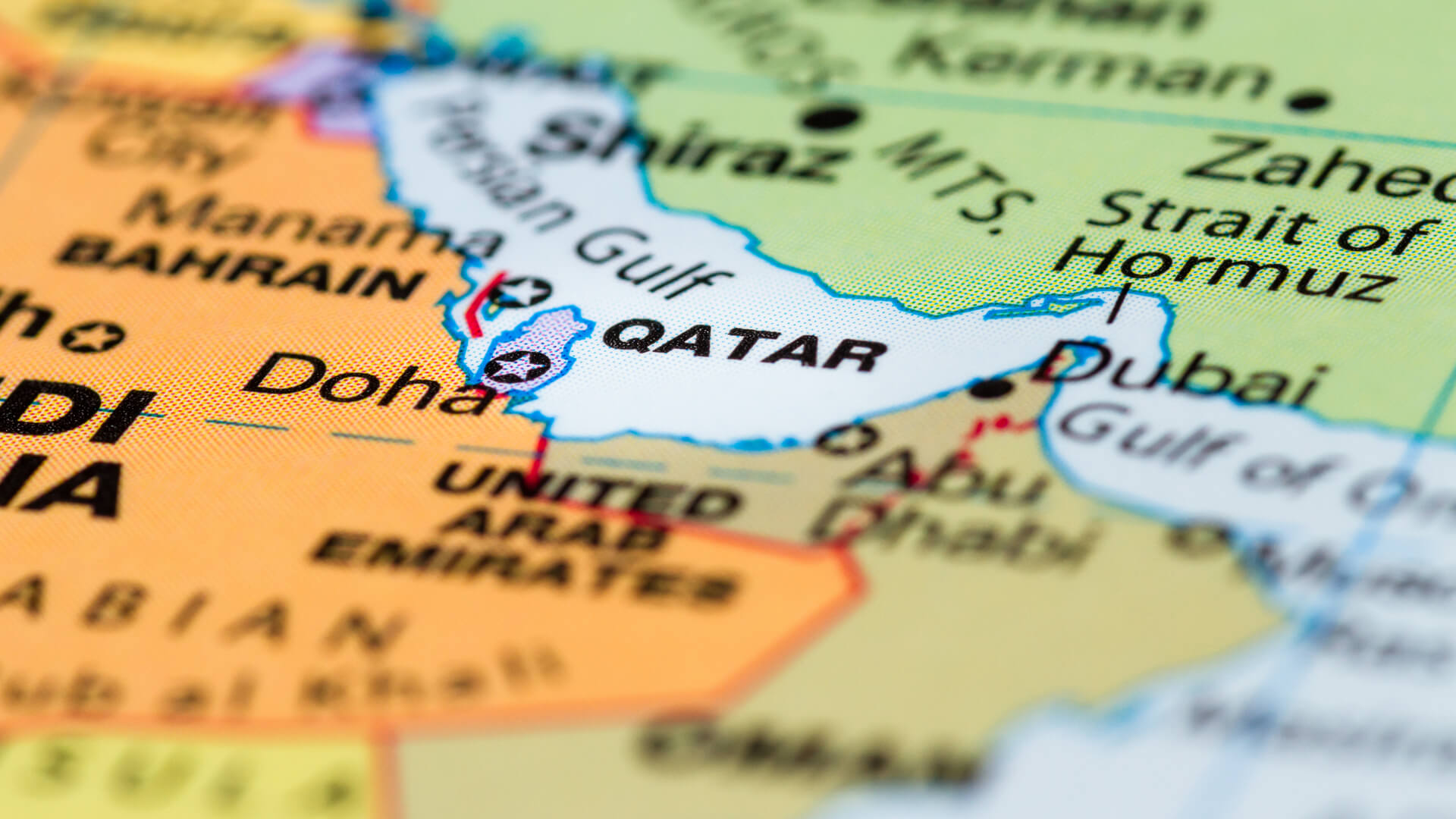
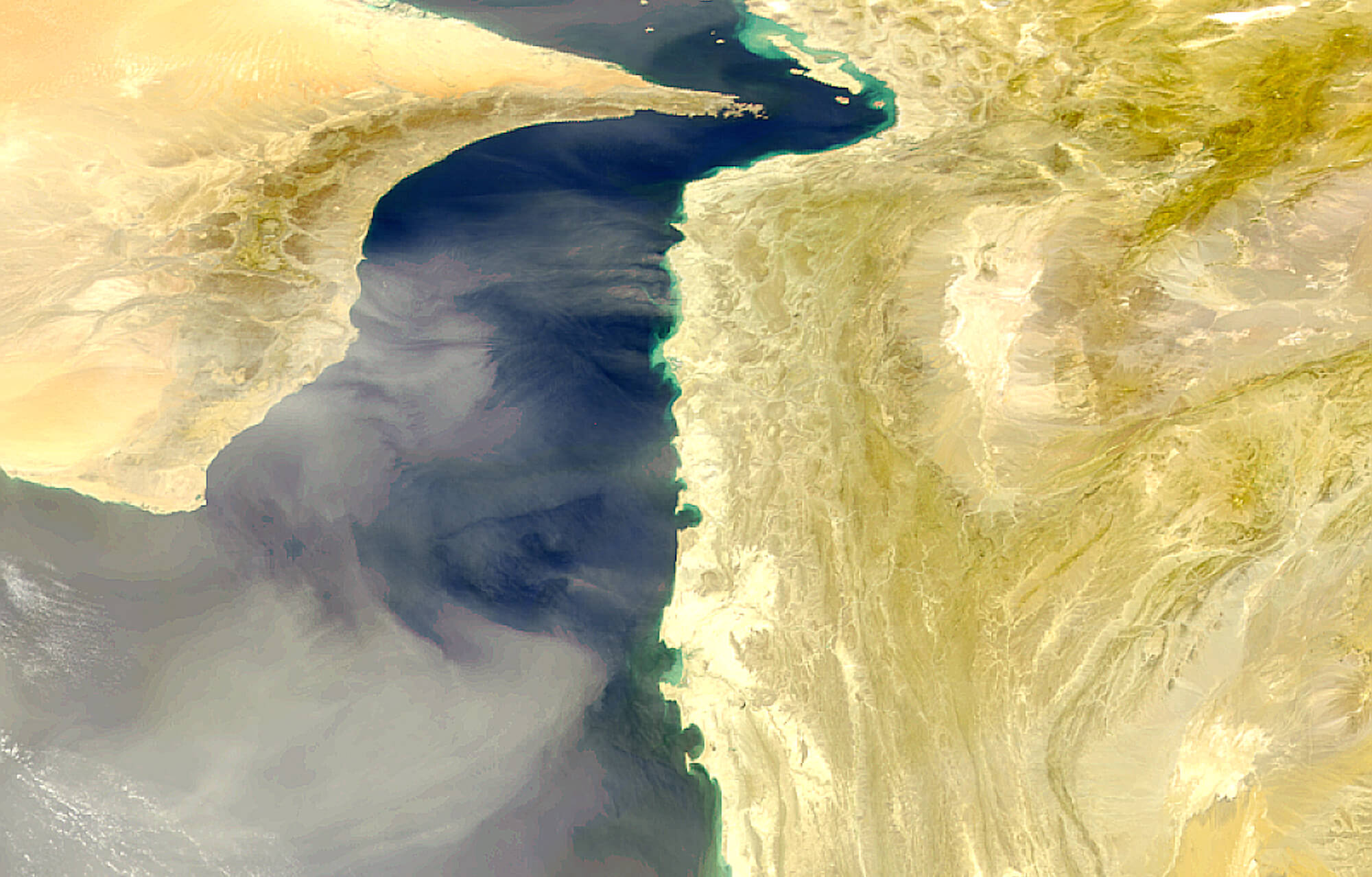
Qatar and Persian Gulf Region on a Map | Photo licensed by Envato Elements

Russia is taking what they’ve learned on the battlefield in the Ukraine War and sharing that with Iran. This is not a new strategy for the Russians, but it is already spelling trouble for the US.

Iran’s Shahed deployment and targeting are improving, thanks to tactics like launching swarms of drones with varying flight paths. These strategies are rapidly exhausting missile defenses in the Persian Gulf.

Transcript

Okay. Today we’re going to talk about drone targeting specifically in the context of Iran. And there Shaheed. So last week we learned, you know, shocked anyone who’s been paying attention that the Russians have been providing the Iranians with targeting information since the beginning of the war. The Russians have been providing all of America’s foes with targeting information, going back to the early days of the war on terror. 

That’s not a surprise. But what’s come out in the last 24 hours, roughly, is the degree to which the Russians are sharing their war lessons that they’ve learned at the expense of the Ukrainians in the Ukraine war. So the weapons system in play is an Iranian shaheed. It’s a really stupid drone where you have a small Nand chip that’s a slow memory chip that doesn’t necessarily require power to hold on to its memory. 

You program in a preset parameter preset flight route and it flies from A to B following the course you’ve identified. And then if it’s a really advanced shithead and most of them are at it, then can execute a very limited decision tree. Like is this a car or is that a boat? Is that a tree or do I want to hit and it’ll try to hit one of those things. 

Otherwise it just kind of angles down and crashes into something. Well, what the Russians have learned is that if they take their heads and fly them in groups in batches, that, not only ensures that one of them will get through air defense, it makes it actually harder for the air defense to pick out an individual target. So oftentimes you have to fire more interceptors than you would if they just came at you one at a time. 

The additional thing that the Russians are sharing is kind of a weave strategy, because you can preprogram in the route. What you do is you preprogram in a slightly different route for each head. So they kind of weave in and out of formation up, down, left, right, whatever it happens to be. That makes it much harder for air defense to kind of get a lock. 

And you have to use even more interceptors. And we now know that that specific strategy that they developed for dealing with Ukrainians has now been applied to Iranian showerheads that are being used against American and allied targets in the Persian Gulf. The issue here, of course, is pretty straightforward and short term. The western Gulf is running out of interceptors, and anything that forces the defenders to use more and more of them while the shitheads just keep coming, means that the time where they actually run out of Anti-drone weaponry is coming upon us very, very quickly, perhaps as little as a week or two. 

We don’t know the specific number because the Western Gulf is are consider the number of interceptors they have used and the number they have left to be national security secrets. So it’s kind of a just a guessing game. But there were only about 2000 of them total at the beginning of the war. Or it’s been going on for two weeks. 

And we know that the Iranians have fired at least 2000 shitheads at this point, probably closer to 3000. And they just keep coming. So we’re very close to the point where the Western Gulf is going to run out of defensive firepower and courtesy of the Russians, they’re going to have pretty good targeting information. Just come on in and hit whatever they want.

The Iran War: Enter Sting Interceptors

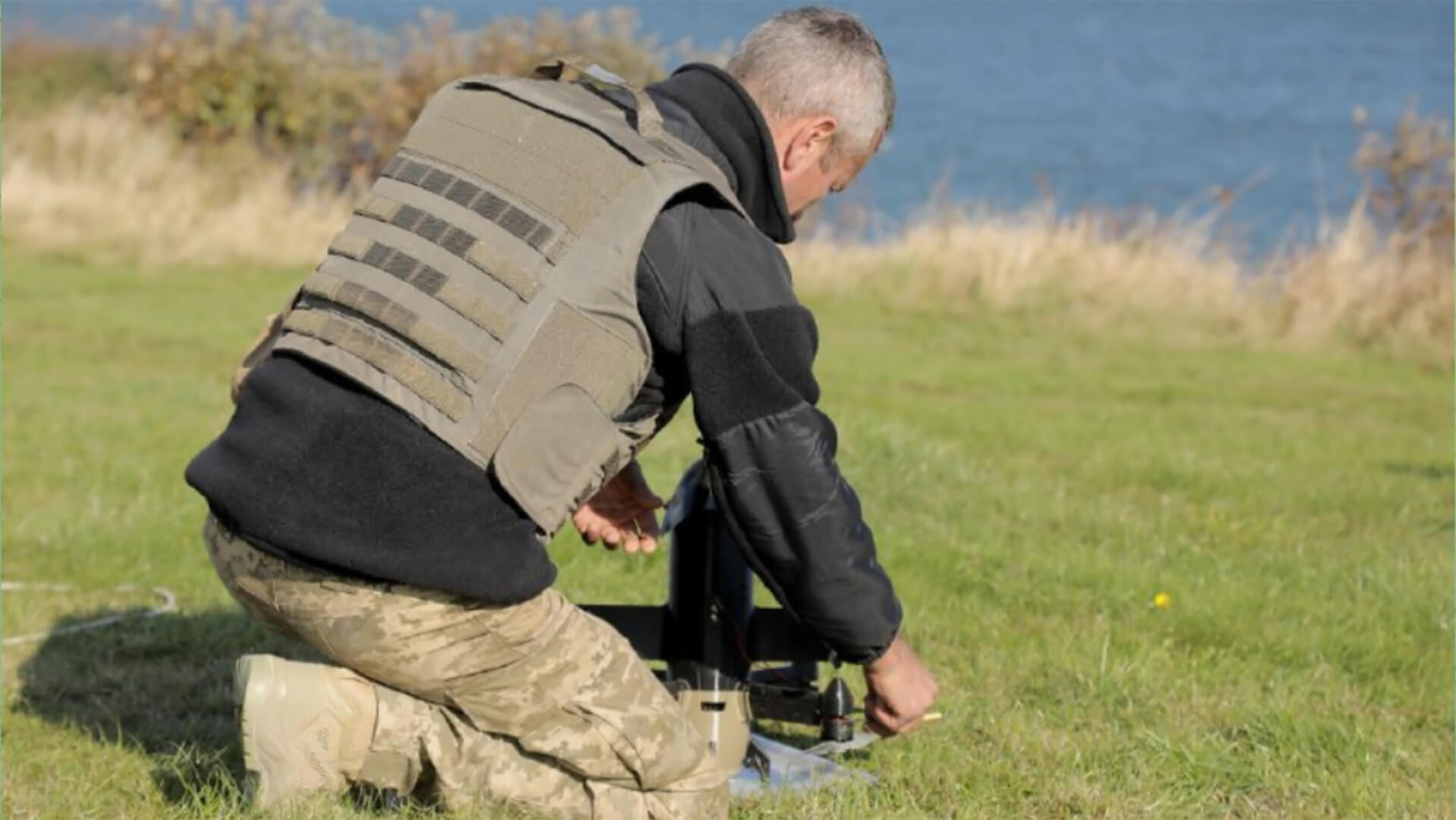
Drone-intercepting Sting drone being prepared for launch | https://commons.wikimedia.org/wiki/File:Sting_drone-interceptor_being_prepared_for_launch.png#/media/File:Sting_drone-interceptor_being_prepared_for_launch.png

Defenses in the Persian Gulf are collapsing as Iran continues large drone attacks, but there’s a country that already has the answer. Enter Ukraine’s Sting interceptor.

Transcript

Hey, everybody. Peter Zeihan here coming to you from Colorado. It is late on the 15th of March, giving you an idea of what’s happened over the weekend in the Iran war. A few big developments. Number one, it’s very clear that Kuwait and the United Arab Emirates are almost entirely out of interceptors. And we’re seeing more and more shots getting through to that. 

And the Iranians have warned citizens of the UAE in the vicinity of military facilities and ports to move, because it is the Iranian intent in the next few days to basically destroy all of them. Judging from the number of drones that are still coming out, I don’t think they can destroy all of them in that kind of timeframe, but they can certainly wreak immense damage, especially to the energy infrastructure. 

So we’re now at the point we’re seeing the act of disassembly, if you want to use a less horrible term, of the physical infrastructure up and down the Gulf. And when they’re done with the UAE and Kuwait, they will obviously focus on gutter. In Saudi Arabia. We’re also seeing reports that Israel is almost completely out of, interceptors as well. 

And the United States does not have a replacement stock to help with any of the countries, the Trump administration, Donald Trump personally, I should say, has, taken to Truth Social to start demanding that other countries start sending warships to attack Iran. Gone is the bluster that, oh, the war is completely over, and it’s just a matter of tying this up. 

I mean, that was always really stupid. Now it’s being peeled back for the ridiculousness that it is. Specifically, Donald Trump has called upon the Japanese and the Koreans to send ships. A few things here. First of all, the Koreans don’t have the range, so it’s going to be very easy for them to ignore that one second. 

Japan does have the range and like the bar for us getting involved in a war that somebody else has started when we don’t have really the military capacity to appreciably, help. It makes it a bit of a stretch. But more to the point, there’s just the time, these are not countries that maintain navies on a wide ranging global patrol like the United States. 

Nobody does. And so if the Japanese did decide to send a meaningful contingent, they would not arrive in the next two, three weeks. That’s assuming they were ready to go right now, which is an open question. So you can just take that little bit of American propaganda and shove it to the side because it’s irrelevant. 

The other big thing is Ukrainian President Zelensky has said that he has provided the United States with definitive proof about how Russia is assisting Iran in the war with the United States. Specifically, he says it’s a combination of Intel programing and hardware, at the moment. 

the white House has been silent about that. And anyone who knows anything about this region of the Russians is going to know that. 

Of course, that was going to happen because the Russians have been doing it for the last 30 years. And just because we’ve had a change in president, that doesn’t mean that the Russians or the Iranians see the United States any different at all. 

What will probably happen is unless we have a significant shift in attitude out of Donald Trump personally, we will probably see the Ukrainians providing that information to the countries in the Persian Gulf that are actually getting hit so that the Kuwaitis, the Qatari, the Saudis, the Emiratis and everybody else understand exactly, how the United States has screwed this up. 

Once that happens, I would expect the Arab states of the Persian Gulf to start spending just immense amounts of cash in Ukraine to massively expand their capacity to build counter, drone weaponry interceptors. There’s something called the Brave One, which is about a foot long. It and its entire launcher fits into a duffel bag. 

According to the Ukrainians and some countries that have bought some, you can make these things for somewhere between 1 and $3000 each, whereas a shithead costs in the 35 to $55,000 range and a Pac three interceptor, the one to the United States is running out of are 4 million a pop. 

In addition, the United States can only make about 700 PAC threes in a year, whereas the Iranians pre-war could make 700 shitheads in a week. And the Ukrainians can probably make several thousand, brave ones a week as well. But they need industrial infrastructure and plant expansion in order to up their production, both for their own defense as well as for any sort of export sales. 

Say what you will about the Kuwaitis, the Qatari, the Emiratis and the Saudis. They’re not particularly good at anything that involves the military, but they have a lot of cash sitting on hand. You got over $2 trillion in sovereign wealth funds, and we will probably now, within days, see a fairly substantial chunks of that dedicated to investing in Ukrainian infrastructure in a way that we just haven’t seen from the Europeans, much less the United States, in the last year. 

That changes a lot of the math of what is possible and impossible in Russia, in Ukraine, in Europe, in Iran, in the Persian Gulf. We’re now in a position where the best chance for preserving the infrastructure to prevent some sort of global calamity, ironically, runs through Kiev, and Riyadh and Doha and Kuwait City. And the rest are going to come to that realization, probably in the next 48 hours. 

One quick correction on today’s video. The name of the drone right here that the Ukrainians are producing that is in high demand is called the sting, not the brave one. Brave one is the tech incubator that Kiev has set up to facilitate innovation across the entire drone and general defense space. So brave one is the institution. The sting is the actual piece of hardware that everybody is after.

The U.S. Helps India and Russia Helps Iran

An oil tanker in the ocean sailing

There have been two major developments involving India, Russia, and the Iran war being conflated. These are two separate issues altogether.

The first involves Trump granting India a temporary waiver to import Russian oil. This was done to prevent a severe energy or economic shock in India. This is a pragmatic move, rather than a pro-Russia policy shift. The second revolves around Russia helping Iran with targeting information. This is a longstanding Russian strategy of undermining the U.S. globally.

Although some U.S. policies toward India appear to be improving, a major shift is unlikely unless and until some of the Russian sympathizers in the current administration are removed.

Transcript

Hey, everybody. Peter Zeihan here, coming from a snowy Colorado, finally got a big storm. Oh. Anyway, today we’re going to talk about something that a lot of people are conflating that deals with Iran and the oil trade and Russia and India and sanctions and terrorism, blah, blah, blah. A lot of people are tying this all together with a nice big bow. 

It’s not quite that neat. So the two big things, number one, the Trump administration has granted India, a series of waivers, right now, courtesy of the Trump administration. We have sanctions on a few Russian oil companies and, Donald Trump managed to cut a deal with the Indians, about how six weeks ago, I think it’s been now, where the Indians would stop, importing Russian crude. 

I definitely had my doubts about that at the beginning, but it seems like it’s actually sticking because, there’s now this waiver, the issue is that the Indians had been grabbing oil in excess of a million barrels a day. Really? Since the Ukraine war got going, and it was one of the big financial lifelines. 

And now that the Trump administration has put sanctions on Russian companies, they have slowed, not stopped, but slowed. But now, with the Persian Gulf being closed for I believe we are in day ten now, the Indians only other source of crude was from the Persian Gulf, and that has functionally gone to zero. So in order to keep the Indians on board, the Trump administration has granted this waiver, allowing the Indians to bring in, temporarily, at least for a month. 

Russian crude. That’s piece one. Piece two is we’ve had a number of leaks from the international community, especially from the American intelligence services and also from Congress, that the Russians are actively assisting the Iranian government with, targeting of American troops. Which is definitely true. The people that are deeply anti-Trump are, conflating the two saying that, Trump is basically Putin’s, sex toy. 

And so therefore, Trump has been looking for any opportunity to, cut the Russians a deal and absolutely anything. While there may be a little bit of truth behind the thrust of that, linking these two events is not correct. Let’s start with the Indians. If you’re going to split the Indians off from the Russians, if you’re going to have a better relationship between American India, causing an economic depression is not a good way to do that. 

So once the United States started the war in Iran and the Persian Gulf got shut off, your choices were either to try to somehow force India to have, an energy induced depression and then still be pro-American, which would have been a very, very tall order or issue these temporary waivers. So the temporary waivers make a lot of sense. 

I’m not a big fan of the Russians having any market, but if you took the Russians out of the equation at the same time you took the Persian Gulf out the equation, you’re talking like 25 million barrels a day of global oil production that has nowhere to go and can’t get anywhere. And that would have been disastrous if it was all focused on India. 

If you want to focus on China, it’s different conversation, different video. Okay. So that makes sense. The second one, the Russians have maintained links to basically any group that has ever targeted the United States, whether that is various derivatives, Al-Qaeda, Iran, or more specifically, the group in Iran that is calling most of the security shots, which is the IRGC. 

And of course, they’re continuing to provide targeting information just like they did for the 20 years of the war on terror. Anything that keeps the Americans bottled down anywhere else in the world gives the Russians the free rein to do whatever they want in their neighborhood. That is a time honored Russian tradition, going back all the way to the czars. 

So of course, of course, of course they’re doing this, which puts, the Trump administration and Donald Trump personally and kind of an awkward spot. The information is coming from so many sources, international domestic, military intelligence, congressional that, there’s a lot of texture and detail to the accusation. Specific cases have been noted. So of course it’s true. 

And that puts Trump in that position because he is basically giving Putin the benefit of the doubt in everything regarding global affairs and the Ukraine war, and specifically. And now we have his most recent, crown jewel in his foreign policy, Iran, that has been actively undermined by the Kremlin and Putin personally. Does this mean that we’re about to see Donald Trump turn over a new leaf? 

That’s a lot more realistic when it comes to the Russians? Let’s not get ahead of ourselves. Remember, that surrounding him, you’ve got Wyckoff, who was maybe the dumbest person Western civilization, who was the prime interface between Putin and Trump. And all he does is regurgitate Putin’s propaganda in Trump’s presence. 

Number two, you’ve got the vice president, JD Vance, who is a not so closeted white supremacist who thinks that the Russians are the great hope for the white race. And third, you’ve got, the director of national security or national intelligence, Tulsi Gabbard, who basically has stood against the United States on any meaningful foreign policy position for the last 15 years and has been very, very pro-Russian from the very, very beginning. 

The key thing about Tulsi Gabbard is that she controls the daily presidential brief that the intelligence community puts together for the president. So I would be shocked if details about what the Russians are doing even made it into the document in the first place. So this basically has to grind on. We’ve already had a half a dozen Republican senators, and a number of Republican House members go public in the last 72 hours screaming at Trump to finally, finally, finally fix this and get rid of people like Tulsi Gabbard and Steve Woodcock and actually have a foreign policy that is worthy of the United States. 

But as we all know, Trump, really doesn’t care what anyone else thinks. And he’s really not even concerned about the midterm elections because, he’s already a lame duck. And even when he controlled both the Senate and the House, he’s really never bothered going to Congress for anything. So why would he care what Congress looks like? 

Anyway, things are slipping. Bit by bit in the right direction for more realistic foreign policy versus the Russians. And things are kudos to Donald Trump slipping in the right direction for more productive relations with the Indians, as well. I was very doubtful that the Indians would abide by any sort of ban of Russian products. But yet here we are, and the market is proving it. 

Russian Urals crude sold on the Indian market has actually now risen above the Brant benchmark. That is kind of the global standard. And the only way that would be happening is if we had a sudden surge in purchases because of the waiver. And that’s exactly what’s going down. So a lot of moving pieces here, and I’m not trying to convince anyone that we’re about to have a dramatic change in foreign policy. 

That would be more realistic. But we do finally have multiple vectors moving in the same direction at the same time. You will not see a meaningful change in policy, however, until Wyckoff and, Gabbard are gone. I don’t see that as imminent. But then again, Kristi Noem finally got let go after six months of horrible mismanagement at DHS. 

And again, the Republicans in Congress are not so quietly celebrating, in media. So, you know, there is hope here. Let’s just not get overexcited until we actually see the backsides of some of these people who functionally work for the Russians.

The U.S. LUCAS Rivals Iran’s Shahed

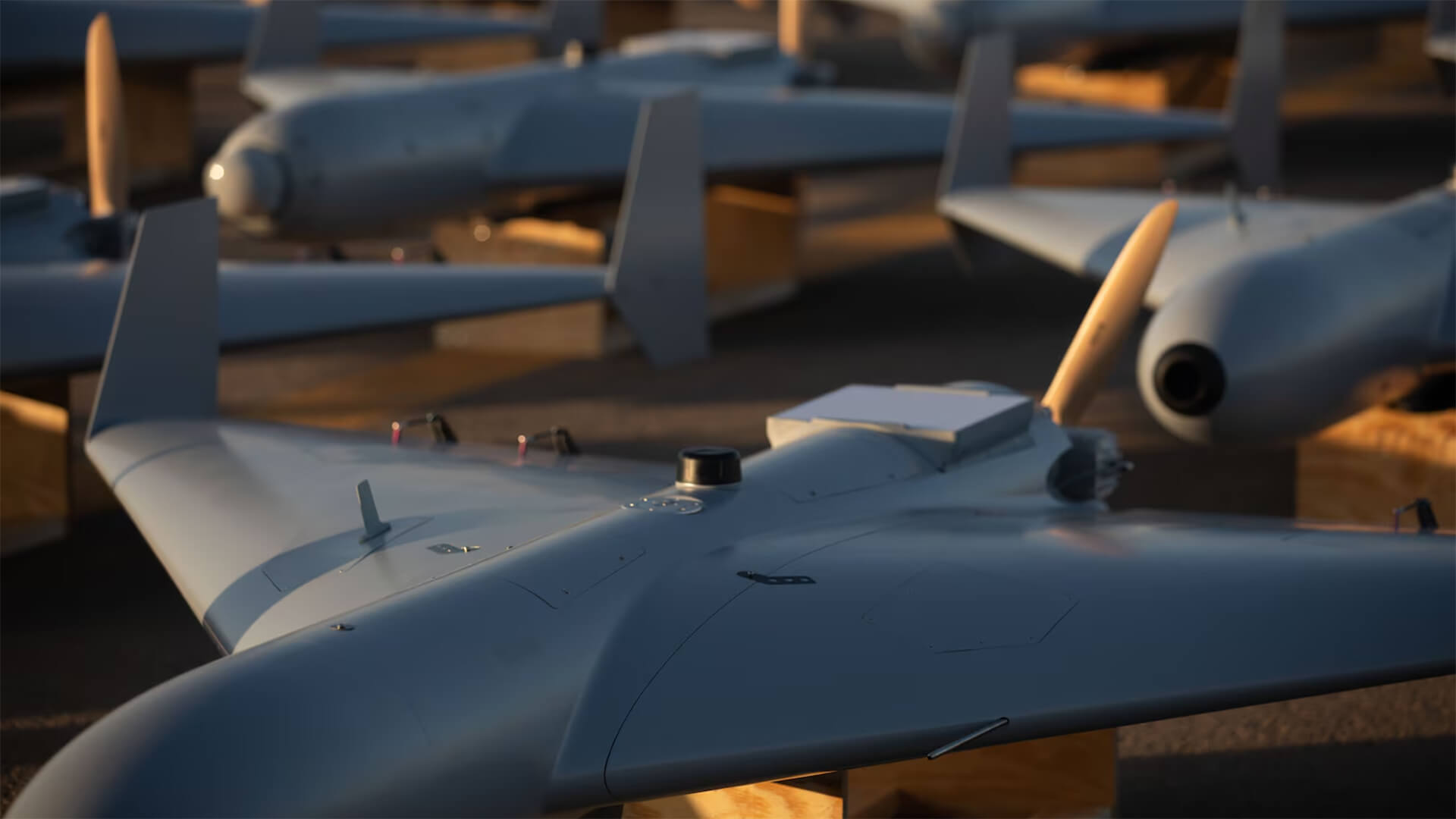
A photo of LUCAS drones courtesy of US Central Command: https://www.centcom.mil/MEDIA/PRESS-RELEASES/Press-Release-View/Article/4347030/us-launches-one-way-attack-drone-force-in-the-middle-east/

The U.S. has a drone that punches in the same (financial) weight class as the Iranian Shahed. Everybody, meet LUCAS.

With a range of ~500 miles, a price tag around $45,000, and modular capabilities, this is the U.S. military’s first step towards scalable and affordable drone warfare. This is still in early phases of production, but plans are in place to ramp that up by 2027.

These systems have already been used to strike Iranian targets, but the extent of the damage is unclear. LUCAS might not shift the trajectory of this war, but with widespread deployment over the next few years, the math of modern warfare could shift drastically.

Transcript

Hey, everybody. Peter Zeihan here. Hello from Dallas. Today we’re going to talk about drone warfare, specifically, a new weapon that the United States has introduced in the Iran war. It’s called the LUCAS, which is short for a very long item. That basically means really, really cheap drone. In fact, it’s modeled off of the Iranian Shahed, which has a cost probably in the 30 to $55,000 range. 

Right now, what has been released indicates that it’s in the middle of that range, right around 40, 45,000. It’s a modular drone, so you can decide whether you want a warhead, a jamming pod control, a variety of other things. Anyway, this is the United States first entrance into low cost drone warfare. The idea is you’ve got a drone with a decent range 500 miles, which for an autonomous system is pretty good. 

And because it’s made by the United States and not a country like Iran that doesn’t have much of an industrial base, things are being produced at scale. Or at least that’s the intent. And the modularity means that you can mix and match while you’re in deployment mode. So either on an aircraft carrier or by some Marines who happen to be on a beach somewhere. 

You plug in what you want and then send it off. We know that they have been used already in the Iran war to ironically, target drone manufacturing capacity. The Shaheds, it’s unclear whether or not, the targeting just went after the barracks or the depots or the actual manufacturing floor. We just don’t know that. And Centcom has talked a lot about the targets they’ve taken out, but they haven’t yet to mention the manufacturing capacity at all. 

So far, the estimate is that 1500 of these things have been built. And the intent is by at some point in calendar year 2027 for annual production to exceed 10,000 units. Compare that to how many patriots, the anti-missile systems that the United States is known for, can be made that comes out to about 600, maybe 700 a year right now. 

They’re hoping to get that up to over a thousand over the next five years. Here’s the thing about drones. You have a couple of options. You can either have a fiber line, which means you can’t be too far away because you basically have it on a cord, or you have to realize that there’s going to be jamming. And if there’s jamming, you lose control of it, or you program in a decision tree imprinted onto something like a Nand chip, that’s, the memory in your computer that holds when your computer is off, and then it just kind of goes to that specific location, looks around for something that matches its targeting priority, and then drops. 

That’s basically what the Shaheds are with the United States, though, you have a different option because the United States typically has air superiority where it operates and a satellite network. So you can put something like, say, a Starlink transceiver on it, and you can micro adjust it the entire way. And since these things have a range of 500 miles and a lot later in time, about six hours, that really expands your options. 

Now, in this specific war with Iran, there just aren’t enough of them at the moment to make a difference. 1500 total. Not a big deal. The United States hit over 1200 targets in the first 48 hours of the war. But if you fast forward this 2 or 3 years, when a typical American naval asset can have a few hundred of these bad boys on station in any given time, then you’re talking about a very, very different sort of math. 

One of the weapon systems that I was a big fan of that ultimately did not get built was the Arsenal ship. The idea you have something that’s smaller than a destroyer that basically carries a bunch of cruise missiles, 5000 of them, and you just send it out there and blah, blah, blah, blah, blah, blah, blah. This achieves that basic concept at a fraction of the cost, assuming it works. 

Right now we know they’ve been used. We don’t know how well they’ve done, but these are exactly the sort of weapons that we need in this transition phase from going from an old, very, very high cost system to whatever the future of drone warfare happens to look like. And as soon as I find out more, I’ll let you know.