Bolsonaro Flees Brazil Following Election Loss

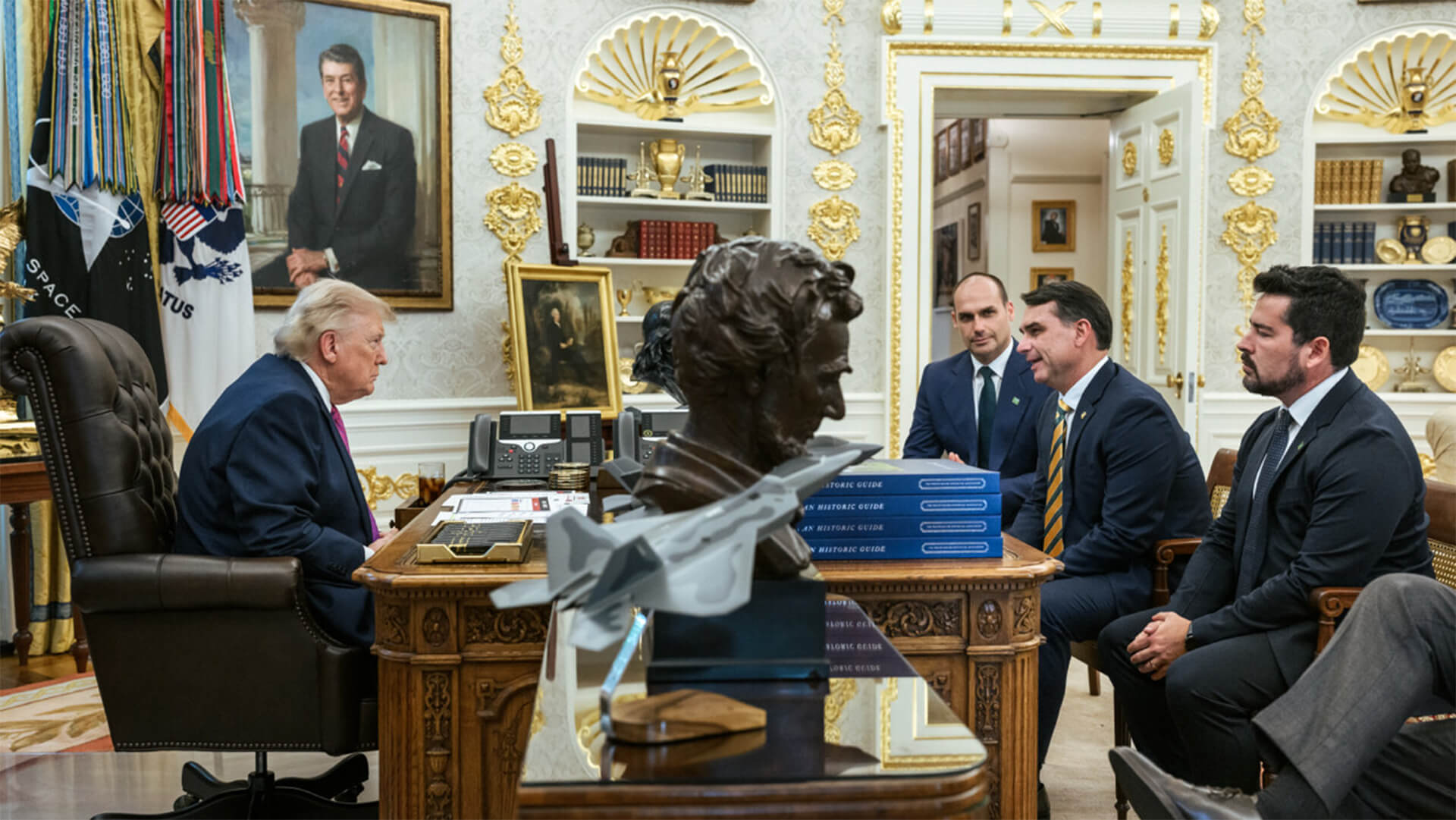
Bolsonaro with President Donald Trump in May 2026 | Photo by wikimedia commons: https://en.wikipedia.org/wiki/Fl%C3%A1vio_Bolsonaro#/media/File:Donald_Trump,_Eduardo_Bolsonaro,_Fl%C3%A1vio_Bolsonaro,_and_Paulo_Figueiredo.jpg

Brazil just wrapped up its elections with a presidential victory for Lula over Bolsonaro. And if those names sound familiar, it’s because we’ve seen Lula and the Bolsonaro family duke it out for decades.

The latest matchup has escalated the rivalry, with members of the Bolsonaro family seeking refuge in the United States. Brazil, a relatively young democracy, is showing signs of institutional fragmentation. Given its importance as a global supplier of food, energy, and raw materials, these political vulnerabilities extend far beyond Brazil’s borders.

Transcript

Hey everybody, Peter Zeihan here, coming to you from Colorado. And today we’re gonna talk about what’s going on in Brazil. They’ve recently had a new election, and the guy who lost immediately fled the country, which is generally not a good look. There’s a lot of drama here. It’s Latin America. So let me try to outline what’s going on. 

First things first. The guy who won Lula, this is his fourth term as president. In the past, he’s been in jail for corruption. In fact, in one of his recent election campaigns, he campaigned from jail. So, you know, we’ve got that going on for the clean side. On the other side, we’ve got the Bolsonaro clan, which is where most of the drama is today. Jair Bolsonaro is the guy who has been president. And when he lost to Lula, who was campaigning from jail, he moved to the United States and tried to arrange for a January 6th style overthrow of the government. This is honestly not very controversial, even in Brazil, that he did this. Keep in mind that Brazil is a democracy that only dates back to the 90s, so a lot of their institutions are relatively fragile compared to some of the more advanced countries out there. Anyway, when he returned home, he was convicted and he’s in jail now. The next generation down. His three sons have basically used a lot of their political heft to try to take over the government and free their father. One of them Eduardo, went so far as to go to other governments and get them to put sanctions on specific members of Brazilian courts, as well as general economic sanctions in an attempt to put pressure on the Brazilian government. And if you happen to like the Bolsonaros, you can understand why he would do that. But if you’re willing to take a more broader view, can you imagine what happened if that was in the United States? Like, let’s imagine for the moment that Joe Biden was in jail for something and Hunter Biden went to, I don’t know, China to lobby the Chinese to put sanctions on specific court justice of the Supreme Court and then economic sanctions on the United States, and then touted that they won’t be coming off until such time as his father is released. That’s basically what went down with Brazil, just that the country on the other side was the United States, which means it’s been wrapped up in MAGA drama in the United States. Anyway, the case against him is very strong, although I can’t say that he’s 100% guilty because the court systems in Brazil work differently from the United States. There’s kind of this merger between attorneys general and the court, so the judges actually can lead investigations. Anyway, he is now living in self-imposed exile in the United States, and if he returns, he’d probably be arrested pretty quickly. The next son down is Flavio. That is the one who ran for president this most recent time. His corruption allegations are a little bit more pedantic. They involve corruption, money laundering and private business issues. Again, the case is under a degree of judicial lock and key, so all the information isn’t there. But he clearly felt that he needed to flee the country within hours of losing the election. And he is now in the United States as well. Let’s see, who does that leave us with, Eduardo, Flavio, Carlos. Carlos Bolsonaro. Still in the United States. He’s an elected senator in the Brazilian government. And his supposed charge is that during his father’s administration, he used and directed the intelligence systems in Brazil to actively monitor the personal communications of a lot of opposition lawmakers. There is no argument on either side that that happened. The argument is the degree to which Carlos directed it personally, because, you know, this is a public institution. So the records are there. They know it was done. Carlos is just saying, oh, it just happened to happen. It wasn’t me, you know, bullshit. But anyway, bottom line is we’ve got this family of people who was trying to manipulate the system for their own political needs, which doesn’t absolve the other side at all. I just have to underline that if this had been flipped and Lula had three kids that were doing this, we’d probably be just doing the same video with different names. 

The reason I wanted to bring this all up is two things. Number one, this is wrapped up in the Trump administration right now. Trump has had a long, brutal series of domestic and foreign policy defeats, and he’s scrambling for anything that makes him feel good. We’re really at that stage now. And because Trump has been manipulating Brazil on and off for the last couple of years with help from the Bolsonaros, this is now rising to the level of front page news in the United States as well. Second issue. As I mentioned, Brazil’s political system as a democracy is relatively new, only goes back to the 90s. They have done a pretty good job until about ten years ago of finding their way forward as a young democracy. But now this blood feud between Lula and the Bolsonaros has basically become a Hatfield-McCoys sort of situation. And it’s brought in the courts and it’s brought in the intelligence system, its broad and foreign affairs, and we are looking at a top to bottom fissure in the capacity of the Brazilian state to function in an in a nonpolitical manner. That’s a real problem because Brazil is the second largest country in population in the Western Hemisphere. It is right up there with Mexico in terms of its overall economic heft, and it is a global producer of pretty much everything that the world needs right now, whether it’s food or energy derivative products or mining products, you know, the sort of things that you really need if you need to expand industrialization because we’re going to lose globalization. What happens here really matters to a great number of people. And right now, because of this blood feud, it looks like the whole system is starting to crack. I don’t want to say they’re going to fail. We’re nowhere near that. And they had a really strong track record until 10-15 years ago. But Brazil has absolutely entered the danger zone of states that are fracturing under pressures, internal and external. And no matter how that goes, it’s going to matter to a great number of people, including us.

Attacks on Russian Data Centers: It’s Not About Bots

A bunch of blue wires connected to a server

If you thought some Ukrainian strikes on data centers could stop the Russians from interfering with the U.S. midterms, you are sorely mistaken. These strikes pose a much greater threat to the Russian economy than to its online disinformation apparatus.

Bots on social media platforms require very little computing power, which means posts can be rerouted through other systems. The real concern is about impacts on essential digital services. Since Russia only has around 200 facilities, it wouldn’t take much to disrupt everyday business operations like transactions, telecommunications, and logistics.

Transcript

Hey all, Peter Zeihan here, coming to you from Colorado. Today I wanted to clear up some confusion about what’s going on in the Ukraine War, specifically with Russian attacks on data centers. Most coverage is about the amount of spam and hate bots that have kind of vanished from the system. And people aren’t really talking about the real issue here. 

So first of all, there has not been a meaningful decline in hate bots by the Russians. We all know that the Russians do a lot, a lot, a lot, a lot with disinformation. And with the US midterms coming active, they’re certainly pulling out all the stops to support or more likely, denigrate the candidates they don’t want. But we haven’t seen any meaningful restriction in that. The way internet traffic moves is automated things like that can just go to the next node and they get sent out. And the amount of data processing that that is required to do a social media post is minimal. So yes, seven of the largest data centers that Russia has have been hit and probably will not reopen anytime soon, months at a minimum. But that hasn’t affected their ability to tinker with the political space. 

What it does, however, is for things that require more processing and especially are more important for time on target. So, for example, when you swipe your credit card, you want it to go through in a second, maybe five seconds if you’re really slow. But all of that gets processed through data centers. The same with cell phone calls. It requires a live connection, second by second by second. And so when you start burning through data center capacity, a lot of these things that we just associate as background information in our everyday lives, start to fail. And unlike the United States, which literally has like 20,000 data centers, the Russians only have 200 and only about a dozen are bigger than about 50MW, which from an American point of view, is not a particularly large one. And seven of those have now been hit, which means it doesn’t take a very big campaign by the Ukrainians against the digital infrastructure in Russia to cause some catastrophic changes to every day normal life. 

We’re going to link back to a video here of all the things that data centers are used for, and obviously anything on your computer, anything that requires communications, things like ordering food for grocery stores, maintaining logistics, you know, these are all critical things. And what people forget about the Russian situation is that the Russians jumped over a couple of stages of development. If you go back to the 1980s Russia, they were basically using 1960s American technology that even have a fax, because the fax were illegal. And then in the 1990s, and going into the financial crisis of 2008, the Russians just got hammered, hammered, hammered, hammered, hammered. After 2008, they started importing large amounts of semiconductors and building their first data centers. And that has accelerated in the 15 years since. Because, remember, most of the technology that goes into most data centers is not restricted in any way. So even when the Russians have been under sanctions, they’ve been able to get in what they need. They can’t make any of it themselves, but they can certainly maintain a data center that other people provide the equipment for, which means that if their data center sector goes away for whatever reason, they don’t slip back to where they were in the 2000s, because where they were in the 2000s was basically the 1960s. So if you were to wave a magic wand and all the American data centers went away, it would it would suck. We’d have to be doing everything by fax again, and we’d have to go back to landline phones, which a lot of houses don’t even have any more. But if you’re in Russia, that intervening technology that the Americans, that the West was using in the 1970s and 80s 90s and 2000s 2010s. That doesn’t exist. So you’re talking about them going back to, from an American point of view, relatively early industrial communications technologies, and then you’re talking about something that, at a minimum, would probably result in the economic equivalent of a depression. Not to mention that the political effect of that sort of massive step backwards would be horrendous, because in the United States, if we went back to faxes, it would be it would suck. We would we would be angry, there would be protests, but we could function. It’s not clear that the Russian system could, because, remember, the Russians don’t have a lot of skilled labor left. Their demographic bomb went off in the 70s, and they stopped collecting meaningful data in the 2000s. So they don’t even really know how bad the situation is. But as a rule, skilled labor, especially in things like it, costs more in Russia than it does in the United States because there’s just so little supply. So if you pull the plug on that, send them back 40 years or more, you get some catastrophic outcomes. That’s what’s going on in Russia right now with Ukraine war.

What’s Behind the French Protests

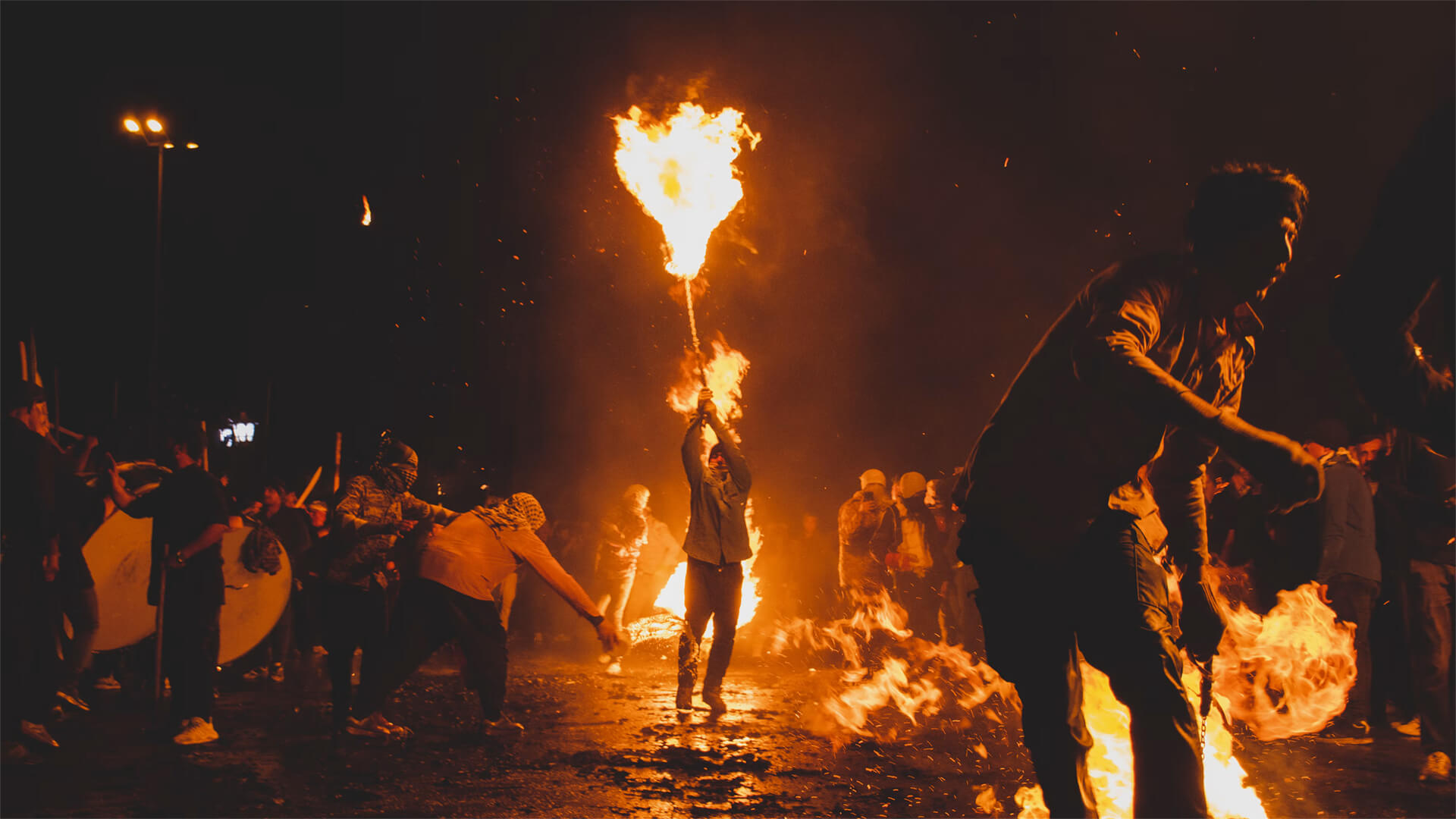
Men in the streets rioting and lighting fires

It seems that everyone is dead set on banging their drum about the French protests, but here’s what is actually happening.

Sure, the French have longstanding challenges with integrating immigrants from former colonies, but these protests are largely separate from that issue. The main driver is government cuts caused by France’s growing budget deficit and an aging population. And of course, when day turns night, these protests take on a different form, but that happens everywhere.

Transcript

Good morning from Colorado, where it’s, of course, sunny and a little foggy because mountains. Today we’re talking about what’s going down in France. We’ve had a lot of people write in with a lot of theories, and I just kind of wanted to give you an idea of what’s actually going on. One of the dominant theories is that all of the violence, and we’ve seen a lot of violence in the last couple of weeks, complete with billions of dollars of property damage, is caused by illegal migrants. That’s the preferred story among the US administration and people on the hard right in the United States. That is not correct. To be perfectly blunt. France really doesn’t have an illegal migration issue at all because it’s fairly easy to get citizenship in France if you are coming from a former French colony. So France’s problem is not an illegal migration problem. It’s a legal migration problem. 

Because while the French like to think that they’re very open minded, I dare say that most of them are a lot more racist than Americans. And so they’ve basically created a system where they can bring in black Africans and Arabs, and a lot of them live as second class citizens, most notably the Arabs from Algeria. See, part of the problem is legal and structural. When the First Republic was formed in the aftermath of the revolutions of the 1700s. There was a lot of ethnic bloodshed. And so the people who came together to form the First Republic said, no more. We are going to enshrine in the Constitution that legally, everyone who is in the territory of what we recognize as France is French, regardless of your ethnic background. And for the thousand plus years before that, that is definitely not how things worked. We think of France as being populated by the French, and that is true. But it’s also full of Alsatians and Basques and Britons and so many others. So this decision was made that we are all culturally French, nationally French, regardless of what our ethnic background happens to be. And if you play that forward to the 20th century, you have to admit it’s been wildly successful. But it wasn’t updated. The strategy was not updated for the colonial era, where all of a sudden the French have far flung colonies around the world. And now all of those people are legally entitled to citizenship. So you get a huge amount of racial diversity in France that is enshrined in the Constitution is fully legal, but they’re definitely falling into the class of second class citizens if the roots of their ethnicity are not from metropolitan France. That’s problem one. 

Problem two is that the French constitution actually makes it illegal to ask what your ethnic background is, because we’re all the same. So the French government doesn’t really know what the ethnic breakdown of the country is overall, or province by province or city by city. There’s a lot of educated guesses out there, probably that 15% of the population are not from ethnicities that were born in the metropolitan zone, but it’s really just a guess. Okay, so that’s two. 

Third, what’s actually gone on with this protest, because it really has very little to do with any of that. I mean, there are areas in France where crime is higher. There are areas where ethnicities of various flavors are more concentrated. But that’s not what this was. There is a two part play to these protests and this violence. The first part was that the French government is now running one of the biggest budget deficits in the world as its population ages, pension costs are going through the roof, and as a rule, people who are older are more reliable voters than people who are younger. And so the state has made the decision time after time after time, to cut programs that benefited the young as opposed to the old. It’s a lot more going on than that, but that’s kind of the nut. And so young people are far more likely to protest than older people. So people who were raised on this idea that the French system has a generous social welfare model, cradle to grave, are seeing some of the earlier benefits of that cut. And they’re upset. And so whether it’s public safety or education, you have protests in the hundreds of thousands, sometimes in the millions, that from the point of view of most governments, France included, is completely legitimate as long as it’s peaceful. And then the sun goes down. And just as we’ve seen with protests in the United States, when the sun goes down, the people with kids and strollers go home and a different crowd comes up. 

When you see people dressed in black with face masks, those are not illegal migrants protesting. Those are people who are going to cause some political damage and some physical damage and ransack and attack the police, as we’ve seen now multiple times, if this was in the United States, you would probably point to groups like Antifa. But this is France, and it’s not that Antifa is an alien ideology or anything like that, but that’s really not the form it takes in France. It’s anarchism which has been part of the French political order, pre-dating the time of the First Republic and the revolutions in the 1700s. Now, antifa and the anarchists do have some commonalities when it comes to rejecting state authority, but ultimately their stated games are somewhat different. Antifa says it’s anti-fascist and in their mind, justifies violence. Anarchists are opposed to government on principle. Basically, they’re libertarians. All caps, if you want to think that way. And so the concept to an anarchist that a shop owner owns, what’s in the shop is something that they ideologically reject, whereas Antifa is just kind of more thuggish. 

Anyway, that’s the cause of most of the violence. These two movements have a lot in common. They certainly exchange techniques, and they certainly plan their attacks for maximum effectiveness, but they’re not quite the same. And then, of course, against that backdrop, once you have civil breakdown because of these protests, then you just get plain old looters and they can be of any flavor.  

Anyway, hope that is of some use. Everyone out there is trying to beat their own ideological drum and point at France and say see, see, see, see. But for most of them the facts don’t match the ideology. But you know what’s new?

France and the UK Choose the Nuclear Option

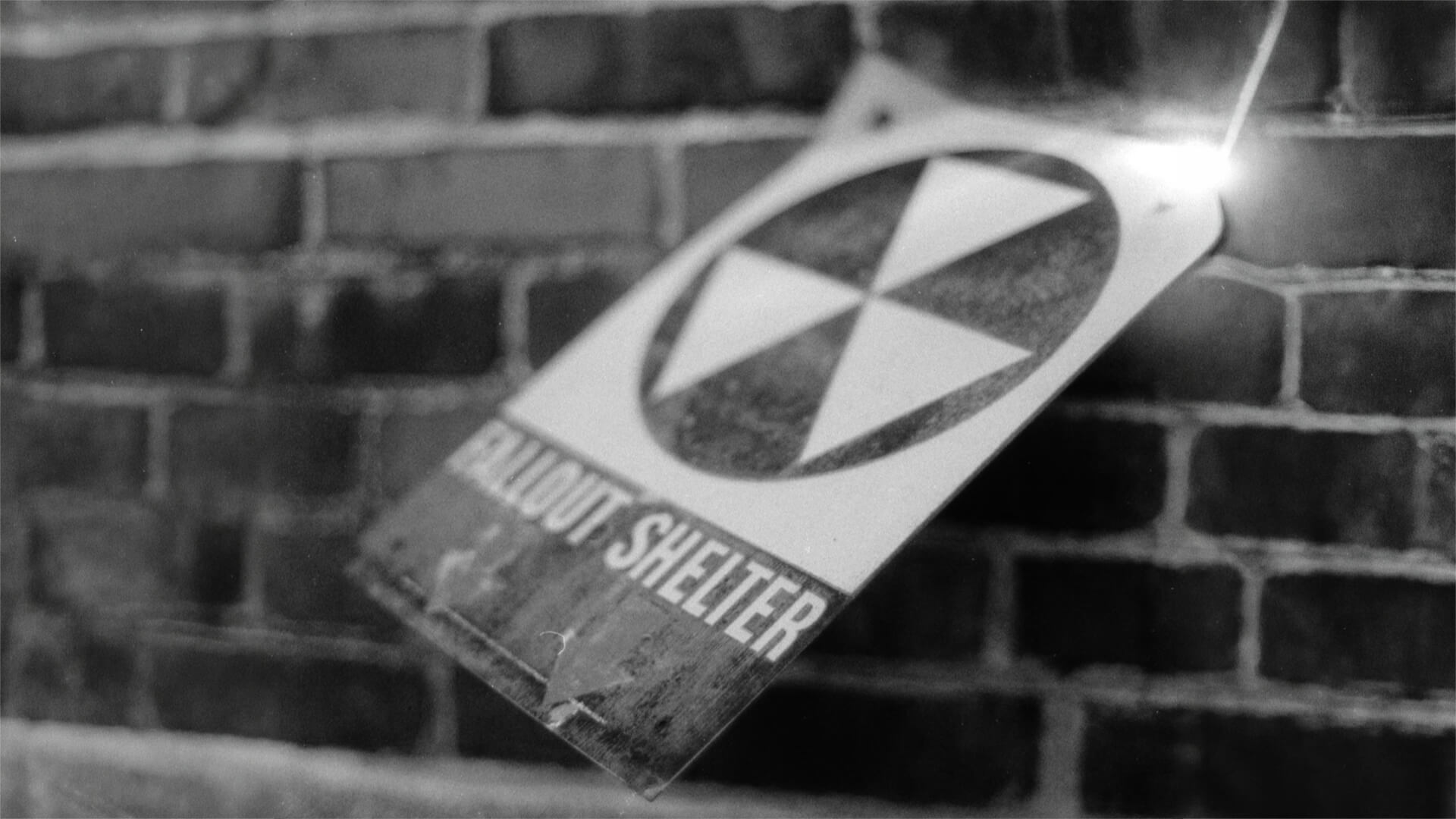
Black and white sign against a brick wall reading "Fallout shelter"

The United Kingdom and France are conducting joint nuclear weapons delivery exercises, but they’re not the only countries eyeing nukes. Faced with Russian threats and dwindling American support, Europe needs to figure out how to protect itself. Conventional forces aren’t the right tool for the job, so they’re going nuclear.

Transcript

Hello, everybody from a breezy Colorado. I think I found a place out of the wind. Today we’re talking about something that happened on the 20th of October, although it wasn’t revealed until 3 or 4 days later. The Brits have confirmed that they have already completed nuclear weapon delivery drills with the French. France and the United Kingdom are the only two countries in Europe that have nuclear weapons, although that is probably going to change very soon and go, why they did this. 

So first the strategic backdrop. Then we’ll talk about the specific situation. With the Russians literally on the warpath and regularly threatening nuclear armageddon against the European capitals. We are in the midst of a broad scale rearmament throughout Europe. And that is before you consider that the Trump administration has basically backed away from supporting Ukraine and the Europeans in general. So whether it’s because of the Russians doing what they’re doing or the Trump administration not doing what the Trump administration is not doing, a lot of European countries feel they have no choice but to build significant military deterrent capabilities. This takes two forms. The first is to build a conventional weapon system that includes fighters and tanks and all the rest. But that can take literally decades to establish the industrial capacity and then build it out and then train the people and all that good stuff. They don’t have that kind of time. They’re thinking that they need to have meaningful results in months to single digits of years. Drones help fill that gap. But to be perfectly blunt, nukes are better. Doing it this way, which is really their only option. Also means that the American Alliance is, for all practical purposes, already over. Because in the time that it’s going to take them to use or to build out these new capabilities, whether they are nukes or drones, is they’re going to be building a hybrid military that is very, very different from what the United States has used and is very, very different from what NATO has been in the past, which means that the Europeans are going to have to develop their own doctrine. And even if post-Trump, the United States decides to merge again with the allies, their military structures will be radically different, and they might be able to go in the same direction, but certainly not in lockstep. That’s kind of collectively piece one. 

Piece two is just the scale of this. When you’re talking about nukes, you’re talking about technology that dates back to the 40s, so 80 years old. It’s not that hard from a technical point of view. And so the countries that are actively considering going nuclear. Sweden, Finland, Poland and Romania have the capacity have the technical capacity to do all of it. And with the exception of Poland, all of them even already have the nuclear materials, because all you need is a power reactor. A power reactor generates plutonium under normal operations as a waste product, and the chemical process of separating that plutonium is not particularly complicated. And these countries can all easily do it. But there’s another country that, of course, the Brits and the French are eyeing warily, and that is Germany, because there is no way in a world with a resurgent Russia and absent America and a nuclear Sweden, Finland, Poland and Romania, that the Germans are going to feel secure without their own nuclear deterrent. And that changes the math in London and Paris a very, very great deal. 

So what the French and the Brits are thinking here is if they can convince the rest of Europe that there already is a European deterrent handled by a country within the European Union and one not in the European Union, then maybe, maybe they can put enough of a lid on this proliferation issue that the Germans don’t feel the need to act and build out their own deterrent, because if you get a Germany that is economically in trouble and militarily under pressure and feels that it has to rearm and as they say, build the largest army in Europe and have nukes, then all of a sudden we’re back in the bit of a pressure cooker that defined Europe through the 1800s, right up until the end of World War Two. And if you’re a Brit or a Frenchman, that is something you’re trying to avoid at all costs.

The Paris Accords Can’t Stop Climate Change

satellite view of Earth in a ring of fire

The climate thresholds established in the Paris Accords are looking less and less achievable. While developed economies are reducing emissions, the rest of the industrializing world still depends upon fossil fuels to keep things moving.

Given the current state of renewable technologies, rising energy insecurity, and deglobalization, climate targets are growing increasingly difficult to achieve. Without far more extensive basic research measures, global temperatures will rise faster than previously believed.

Transcript

Good morning, everybody. Peter Zeihan here, coming to you from a chilly Colorado morning. And today we’re going to talk about a new report that’s come out from the UN Environmental Program, basically talking about the status of the world and complying with the Paris Accords, which was an agreement that was signed. Geez. It’s been ten years ago now under the Obama administration, to reduce global carbon emissions so that the world never slides past two degrees centigrade temperature increase. Basically, we just hit about 1.5, or we’re going to hit 1.5 in the next few years. A couple of things here. 

Number one, I would argue that the Paris Accord was never going to work. Anytime you bring together countries as varied as the United States and Malawi, it’s going to be really hard to find a common ground and if you can find a common ground, you’re never going to find a matched industrial policy that achieve something like that. We have seen significant carbon reductions in a lot of the advanced world, most notably Europe and Japan. But everyone who’s trying to industrialize needs energy, and energy requires carbon. Lots of people like to talk about solar and wind, but solar in particular requires so many inputs that its mid-term carbon imprint is actually higher than what you would do with things like natural gas. Longer term it might work, but only in places where the sun is really bright. And as the Europeans have proven over and over and over and over again, most of Europe just isn’t very sunny. So getting all the transmission systems in place to bring the solar energy from where it’s sunny to where it’s not, is yet another cost and yet another delay. And ten years on, the effort to do that has been pretty low. The bigger problem, of course, is that if you want the developing world that is industrializing to have low carbon energy. You got to pay for it. And really, you need to develop a new technology first. That is lower carbon in the first place. And that still hasn’t been done so anything like the Paris Accords. That doesn’t come with a couple trillion dollars for basic research. I’ve always been dubious. So that’s kind of collectively piece one. We just don’t have the technology that’s necessary in most places to make this work. And places where it does work in Europe are because they’re deindustrializing, which means they’re just using less energy anyway. Okay. Lots of caveats in that, obviously. 

Second problem that is significantly worse is that in any world where hyper globalization is not a factor, you’re looking at the world kicking out more carbon. Because if you start breaking down normal trade lines, then people have to make do with what is local. For supply chains, for things like solar and wind and batteries, that means you just can’t make them, because solar specifically is the second most complicated supply chain in the world after high end semiconductors, with thousands of steps that touches dozens of countries. You just can’t make them at all in a world that is not fully integrated. But a bigger problem is that when you have conflicts like what’s going on with Ukraine, like what’s going on with Iran, you disrupt the flow of the low carbon fossil fuels like oil and natural gas. The Greens like to talk about oil and natural gas as the big boogeyman, but they’re really nowhere near the worst. Because once a country gets a taste of electricity, they will do pretty much anything in order to keep that electricity. And if and natural gas become interrupted, they will use other sources of energy in order to get the power. And oil and natural gas are generally traded internationally. But lots of countries have deposits of things like coal at home or very close. And not just any coal, lignite, which is about 20% water by weight and is the highest carbon output fossil fuel. Or even worse, wood, which kicks out more carbon than even lignite. So what we have seen in calendar year 2026 is a lot of countries, for energy security reasons, stopping to import oil or liquefied natural gas from, say, the Persian Gulf or wherever else has gotten so expensive, and turning to local fuel supplies. And so of course, the carbon output has gone up. 

So at the time that I looked at this for the first time in a really, really deep way, it was when I wrote the book, the End of the World Is Just the Beginning. That book came out in 2022. At that point, the global civilization had already gone up 1.1 degrees from the baseline at the beginning of the industrial age, 1.1°C. We’re now around 1.2-1.3, and we’re probably going to hit 1.5, assuming no significant changes in 2030 to 2035. That was an assessment, that was before the events of calendar year 2026. We’re probably now going to hit that at least a couple of years early. And as you break down globalization moving forward, we’re going to skid right by that two degree number that the Paris Accords wanted to hold it at. And we’re going to go and skid right by three and four as well. And by the end of the century, we need to be starting to consider things like five and maybe even six. So whatever your views are on climate change, I don’t much care. It’s real. And a lot of the things that we have to deal with it just don’t work yet. And the mitigation that we’re going to have to do in 10, 20, 30 years is really going to be extreme. So, you know, buckle up.