U.S. Sanctions on Iran Take a New Approach

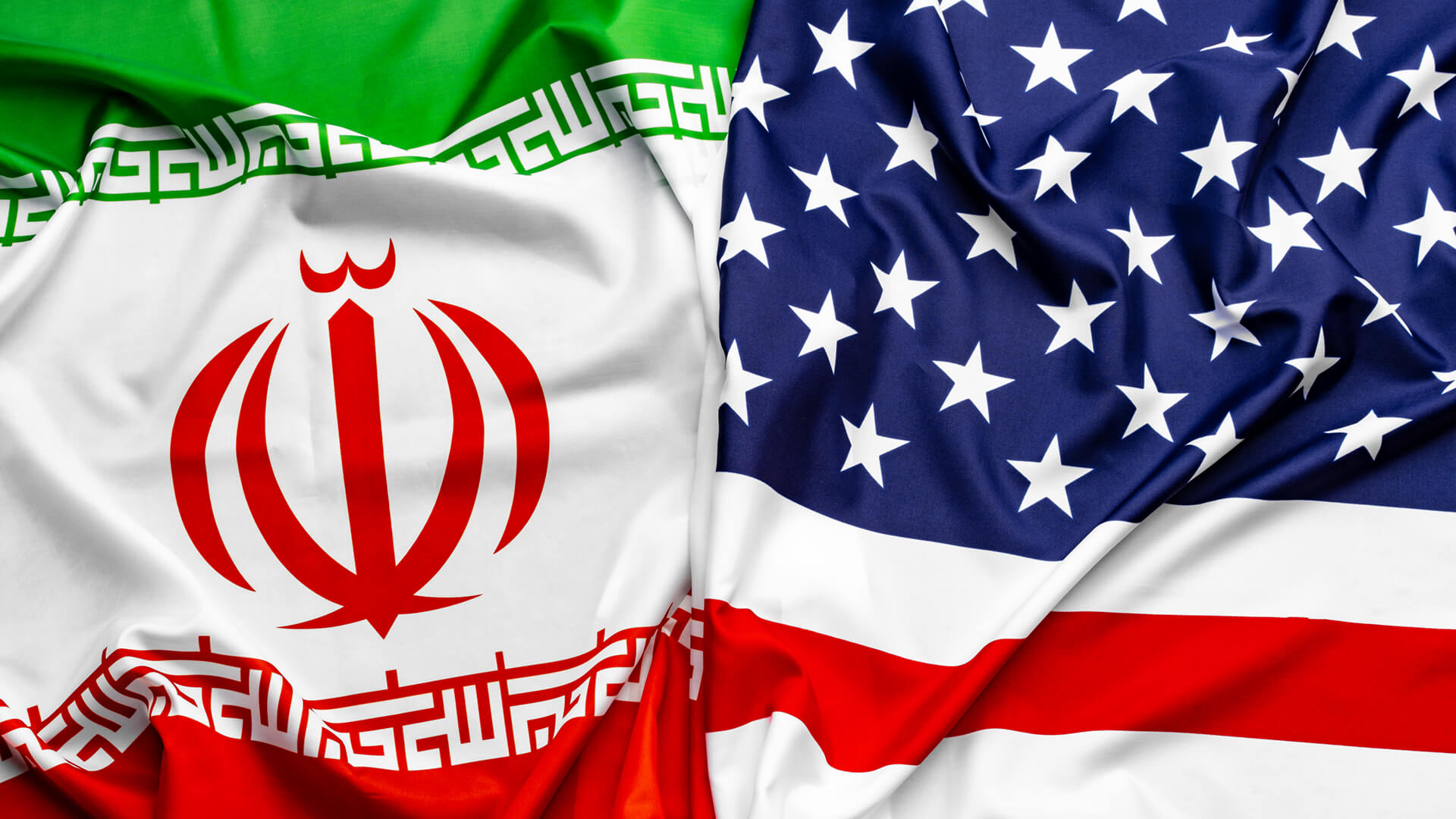
Flags of the United States and Iran blending. Licensed by Envato Elements

The U.S. has just announced that it will remove any company or country caught servicing Iranian-owned aircraft from the U.S. dollar system. But these sanctions don’t target the IRGC or regime; instead, they impact everyday Iranians in the hope of stirring up a rebellion against the regime.

While regime change is unlikely, the effectiveness of these sanctions will largely depend upon Chinese adoption. Without Chinese goods, Iran would be in quite the pickle. And we might even find out China’s stance in the coming days, as Trump and Xi Jinping meet in Washington.

Transcript

Hey everybody. Peter Zeihan here, coming to you from Colorado. Today is the 22nd of September. You’ll be seeing this on the 23rd. The news today is the U.S. Treasury Secretary Bessent, has just announced new sanctions on not specifically Iranian aircraft and airlines, but anyone who might do business with them. Basically, if an Iranian owned aircraft lands anywhere in the world, anyone who provides assistance with ticketing, with boarding, with air traffic control, with fuel, with maintenance, anything is immediately purged from the US dollar system. 

The intent is basically to deny all access. Now, this is not a sanction that is designed to pressure the regime because the regime can always, you know, jump on somebody else’s aircraft Chinese, Russian, whatever. And most of them don’t leave the country anyway because….they’re not nice people. This is about targeting the population. We’ve seen a lot of measures like this over the last couple of months, as the Trump administration has come to the conclusion that pretty much everything that can be sanctioned on Iran has been sanctioned for the better part of the last 40 years. And they’re coming up dry with efforts to find other ways to put pressure on Iran overall. So the theory now is let’s try to make life as difficult for the Iranian population as possible so that they will rebel and overthrow the government. That’s a very tall order. Not only has it failed so far this year, with several attempts, complete with the Iranian government killing several tens of thousands of their own people as a result. But the stack is really high. The Iranian military combined with the IRGC, which is the paramilitary arm of the government, has well over a million people under arms, and it’s not designed to invade their neighbors. It is designed to occupy their own country to prevent the various groups of Iran from rising up. Keep in mind that even after thousands of years of ethnic consolidation, only about 50% of the Iranian population is actually Persian. The rest is Kurds and Balochis and other things. So internal security has always been first and foremost the concern of the Iranian government and Persia before it going back to antiquity. We’ve only had a half a dozen regime changes in human history in this part of the world. And to trigger another one is going to be really, really difficult. 

We’ve seen lots of other measures that the US government has done in the last couple of months. My favorite one is graduate standardized testing. You can’t take the GRE in Iran anymore, but it gives you an idea of how few levers there are if you actually want to change the government. 

Anyway, the real open question here is whether or not every country in the world is going to agree to do this. So far, most companies and most countries have already signed on, maybe grudgingly. But the real outside question is, of course, China, which is the primary source for most of the manufactured goods that flow into Iran. Up to and including the parts that they need for their drones. 

Now let’s see, I’m recording this on the 22nd. You’re going to see it on the 23rd. On the 24th. Chairman Xi Jinping of China is going to actually be in Washington for bilateral talks with Trump. And the technical term for what’s going to happen here is a shit show. On the American side, the Trump administration has systematically gutted all of the institutions that helped the president make decisions. So whether it’s the CIA or the State Department or the NSC, their staff was gutted last year. They were never rebuilt. And so all of the normal things that the American president would get on economics and culture and the political maneuvering within China, he’s not getting. Keep in mind that this is not just a China thing. Over half of the world’s country don’t have an American ambassador right now. China does. But the point is that Trump is coming into this as the least informed president for any summit in American history, and that will obviously color what comes out of it. But don’t get overly excited because Xi is not in much of a better position. Because Xi purged all of these systems a decade ago and has been operating in the dark in most international affairs, basically just working off of propaganda. So we’re going to get two of the most powerful people in human history who are also among the least informed leaders in human history, trying to hash out the details when they don’t have any of the details in Washington in 48 hours. It’s going to be a delightful negotiation, which means that the Americans are roughly unaware of what’s going on in China. The Chinese are roughly unaware of what’s going on in the United States. And if you happen to be someone in the middle like Iran, you might just manage to slip through unnoticed because it’s not up to the teams, because there aren’t teams. It’s just these two really arrogant and increasingly isolated men, pretending that they know what’s going on. 

Wow. There’s going to be a show.

The AI Race: U.S. vs. China

The letters "AI" on a blue cyber background

The AI race is in full swing. China is chasing digital sovereignty, but there’s a glaring hole in that plan…it doesn’t have the advanced manufacturing capabilities to achieve it. Here’s the real kicker: nobody does.

China might be a bit more flexible with its ethics and data manipulation, but that means nothing without the advanced chipmaking equipment. China can produce less efficient chips, but has incredibly low yields on leading-edge chips. To produce the highest-level chips, there are roughly 65 countries involved in a complex supply chain.

Which means that not even the U.S. could go out and do this on its own (unless it underwent a 20+ year tech ecosystem rebuild). America’s real advantage in the AI race comes from the broad coalition of allied countries all working together to produce high-end semiconductors.

Transcript

Hey everybody. Peter Zeihan here, coming to you from the top of little Castella, taking advantage of a break in the wind to answer a question from the Patreon crowd. Oh, by the way, that’s an ash mountain over there. And all of that is the Turner Ranch. Ted Turner, I guess, is a state, is a single largest landowner in the country. 

And that’s where he used to party. Anyway, the question is, is how is China’s artificial intelligence program coming along? They clearly don’t have any of the ethical restrictions that the United States has. And is that given them an edge? Is this something we need to worry about? Number one, I would argue that if you’re comparing the tech bro culture of Silicon Valley to China and the idea that one of them is morally superior, you need to do a little research. 

Silicon Valley, and especially the folks that are involved in AI, really don’t give a rat’s ass about your personal privacy and are perfectly willing to pillage your data in any possible form. In fact. Hey, I got a little visitor here. Hey, buddy. Yep. Never mind. He’s gone. Anyway, point being that if you are on Facebook or what is it now? Meta, whatever, any sort of social media whatsoever, all of your data is being mined actively in a way that the Chinese honestly sometimes have trouble keeping up with. And while the Chinese certainly do it with a little bit more flair, the AI Kings in the United States, the data kings in the United States have no problem getting all of the information that they need from you already. 

So the info influx really is not much of an issue. There used to be a moment when things had to be manually entered in, and the Chinese had an advantage of that for the numbers, but now AI has reached the point that it can self process. So again, that’s gone away too. So the structural issues really are not relevant. 

It really comes down to hardware. Now the Chinese are under export restrictions, so they cannot import the hardware that is necessary to make high end semiconductors, specifically the extreme ultraviolet machines that come from the Dutch company ASML. And without those, there’s no way they can make anything that’s really under seven nanometers reliably. That means that the reliant on importing chips and their export restrictions on anything coming out of the United States or Taiwan or Japan or Ireland, or any of the countries that make high end semiconductors, that limits them to approximately a 4 to 5 nanometer ceiling. Now, it’s not that those are bad chips at six nanometers. 

I mean, they’re fine, but if you want to do AI, it’s all about the number of computations you can crunch per chip and the power that takes per computation. And right now, in the rest of the world, the high end chips are in the 2 to 4 nanometer range, and we are now starting to get ships that were designed with coolant topography in mind. let me spell that out. What that means for an operational if you have a one gigawatt hyperscale data center, you probably have about a half a million GPUs on top of that. Lots of CPUs, lots of Dram, lots of Nand, different sorts of processing capacity, lots and lots of hardware. 

But the 500 GPUs or the core of it because large models. And when we’re talking about AI today, that’s what most people are discussing. Use those chips almost exclusively. And the better they are, the more computations, the more energy efficient per computation. The Chinese don’t have access to those 2 to 4 nanometer chips. Sometimes they can import some five and especially six nanometer chips. 

But they have made the decision that for sovereign control reasons, they don’t want to depend upon anyone’s imported chips. If they can make anything that’s even partially functional themselves really cool in. But there’s a middle ground. There’s a gray area because while the Chinese can’t import those high end chips in that high end equipment, they can still import a lot of equipment and a lot of gear. And they do that. They imported deep ultraviolet, DUV machines that are still pretty good and that are the basis for a lot more mature nodes. 

And they have used these to successfully make nodes as small as seven nanometers. Now I have to emphasize this. These chips kind of suck. They you generate about one third the computations per chip compared to what comes out of Asme and Taiwan. They generate about twice as much power, probably closer to three times as much power. Once you consider that the rest of the engineering of Chinese data centers, is that just that much worse? 

So you’re looking at overall one ninth efficiency compared to the leading edge stuff. On top of that, the yields for these seven nanometer chips is awful. It’s typically less than 30%. And as a rule, anywhere else in the world, any yield rate below 95% is something that wouldn’t be considered because it’s just such a massive waste of resources. 

China does the math differently, and they’re concerned with digital sovereignty and keeping them with the United States. But what it means is they need to build nine data centers for everyone in the United States in order to get an equal number of compute, and that is assuming the hardware can run the software that is required to do things like large language models. 

Bottom line, the Chinese are doing everything they can. They are sparing no horses, and they’re not even remotely close. They have tried over and over and over and over again for the last four years, to try to push past that seven nanometer limit, and they have succeeded in making a few emphasis on the word few chips, the meter level using technology. But it’s highly inefficient. And you’re talking about yields that are below 5%, nowhere near enough to supply a single data center, much less a raft of them. But before I laugh in their face, I have to say that the technology of AI is changing day by day, week by week, one by month, and the hardware is always two years behind. 

So I don’t want to rule it out there. Certainly motivated, if that’s the right phrase. But when it comes to the domestic manufacturing of the hardware that is required to do this, no, they’re just not even in the same game. Now, before anyone goes and toots America’s horn, the United States can’t make these chips either. Neither can Japan or Korea or Taiwan takes a team effort with 65 countries and 100,000 manufacturing supply chain steps and almost 10,000 companies. 

It really does take everyone. And if anyone is actually trying for real digital sovereignty, they’re going to fail unless they rebuild the entire tech ecosystem. And that is not something you do in less than 20 years. So are the Chinese going to fail at this by the rules of the game, as I understand them? Yeah. Are the Americans going to fail at this by my understanding of the rules of the game? 

Yeah, but the United States is part of a coalition of like minded countries that implement these technologies together. That’s how we do AI. And if the US decides to go it alone, it’ll be at best in China’s position.

The Diesel Shortage Hits America

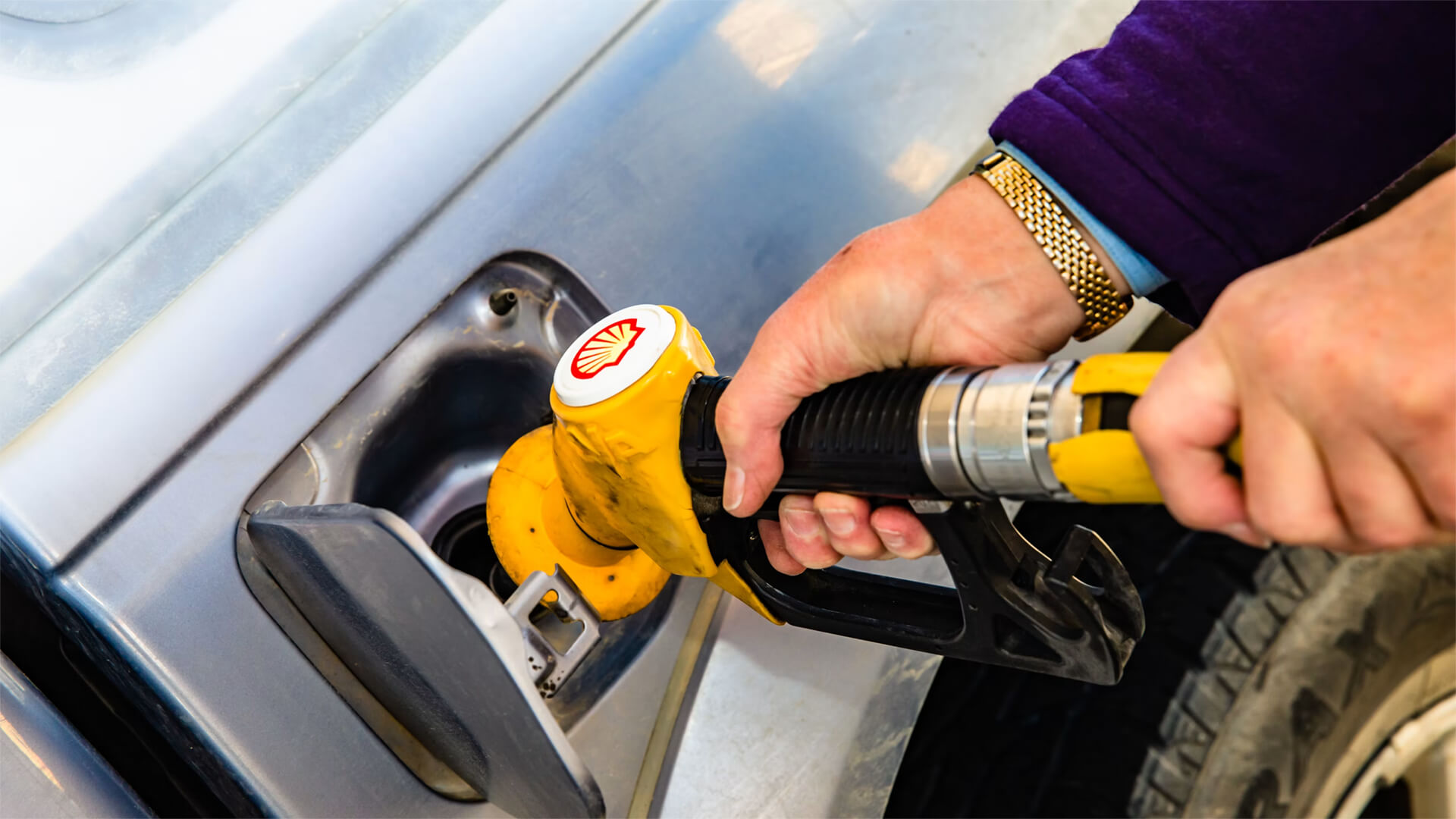
Hand shown pumping diesel fuel with a Shell logo on nozzle

With Ukrainian attacks limiting Russian refining capacity and the Persian Gulf conflict restricting exports through Hormuz and the Red Sea, a diesel shortage is imminent.

While the U.S. should be able to weather this storm without issue, the poorly connected domestic distribution system will be a major source of problems. Unless the U.S. can move away from its heavy reliance on diesel trucks for shipping, the next 18 months will be full of shortages and rising transportation costs.

Transcript

Hey everybody. Peter Zeihan here, coming to you from a drizzly Colorado today. We’re going to talk about diesel and what is almost certainly going to be diesel shortages in the United States, which is going to reverberate through the entire American economy for months. 

Okay. So on the front end, the approximate causes are two fold. Number one, we’ve got the Ukrainians basically taking out Russian refining capacity. Russia used to be the world’s largest exporter of diesel. And now it is a net importer pulling from the United States, India, South Korea, lots of places. That is not going to change anytime soon. Even if the Ukrainians were to stop attacking, the Russians no longer have the capacity to repair all of this infrastructure in a short period of time. And so they will probably be net importers at least through the remainder of the year, probably through the remainder of next year. And that assumes that Ukrainians stop attacking, which is highly unlikely. Number two, of course, is the Persian Gulf conflict. We now have the Saudis basically largely removed from oil markets. We’re probably near the very end of their ability to use pre-positioned crude on the Red sea to export that direction, because the pipeline has been taken offline. It’s a bypass pipeline that used to bring crude from the eastern part of the country, where the oil fields are to the western part of the country. That is not dependent on Hormuz, but it’s been bombed. So who knows how long that’s going to be offline, and it can always be bombed again. In addition, the Strait of Hormuz remains mostly closed. At the best, in the last three months, we’ve seen maybe 20 ships go through a day, down from what used to be about 150. And as of Wednesday, only three ships came through. So the ability of the Iranians to shut that on and off is pretty, pretty strict. And that means we’re looking at roughly 20 million barrels of crude that can’t get out. And that’s going to hit energy at every level, including diesel. 

Anyway in the United States, we’ve got a couple of things going on. First of all, it’s bringing this to my attention. So there have been a lot of social media posts in places like California and Texas of gas stations saying that they’re just out of diesel. I wouldn’t worry too much about that at the moment. Having weekly outages here and there. Throughout the country is a normal thing. And the number of outages is not of a number that suggests that it breaks from the norm. The problem is price, because now we’ve got this pressure in the international system, and every time somebody exports a cargo of diesel from anywhere in the world, everybody is trying to buy it. So that is putting upward pressure, even on domestic prices here in the United States, even though we are diesel exporters. But there’s also a regional breakdown issue. The Californians, for example, have closed most of the refineries. So the only way that they have to get diesel in is by ship. And that’s typically a Jones Act certified shipped from Texas. So in the United States, we’ve got this incredibly stupid law on the books that dates back to the 1920s, called the Jones Act, or the Interstate Commerce Act, which says that any cargo that is going to be transported between any two American ports has to be on a boat that is built in America, owned by an American, captained by an American, and crewed by Americans. And as a result, the cost of maritime transport in the United States is increased by a factor of five compared to the world average. Which is just idiotic. Anyway. So we’ve got that restriction. There’s only a limited number of Jones Act vessels, and they have to take the stuff all the way from the Gulf Coast, through Panama, on up to California. So the entire West Coast, California specific is facing what is about to be just astronomically high diesel prices. It’s not much better on the East Coast. They do have something called the Colonial Pipeline that goes from the Gulf Coast, Texas/Louisiana area and sends fuel directly into the American northeast. But the volume isn’t sufficient for the needs. So they also use Jones Act. Go further down the Atlantic coast into places like South Carolina, Georgia and Florida. You’re talking purely Jones Act or truck. Trucks use diesel, so you’re using the thing you’re running out of in order to ship the thing that you’re running out of to places that can’t make it themselves. In the middle, you’ve got the Rocky Mountains, the Mountain West and the Midwest, who for the most part produce most of the diesel that they need. And we’re not seeing any shortages there. And then, of course, the place with the surplus is the Gulf Coast, Texas, Louisiana. And that’s where most U.S. exports come from as well. The problem is these various regions are not linked together very well. There aren’t a lot of pieces of infrastructure like colonial, and so most of the stuff has to be shipped by truck or by train, both of which use diesel. 

All of that combined means regional shortages are pretty much guaranteed. And that’s before you get to the real problem. Because of the Jones Act, the United States a century ago made the unconscious decision to move away from water transport and even rail transport to truck transport. Now, trucks have certain advantages. They can go to places where you couldn’t run a rail line because it’s too steep, important in the mountain west, but they cost a lot more and trucks use diesel. So by ton mile, the majority of U.S. cargo is shipped by truck. You see the problem here? 

Nearly unique in the world, the United States has the best maritime transport system possible, but has instead opted for the most expensive transport system possible. Shipping things by water costs less than one tenth of shipping them by truck. And so we should be using our water network to the fullest extent, which would also minimize our diesel demand. Instead, we’ve done the opposite. And now with shortages on a global basis, guaranteed even in the United States, which is a net exporter, even in the United States, which is the largest net exporter of refined product, we’re going to be facing problems in our transport system, which will affect every single thing that has to be moved throughout the entire country for at least the next 18 months.

The Venezuela Oil Deal Is Just the Start

A chevron Gas sign against a dark night

The recent series of U.S.-Venezuela oil deals is not quite as significant as it was made out to be.

The main highlights are Chevron’s investment and the U.S. putting its stamp of approval on NABEP. While NABEP lacks much of what it takes to expand production, U.S. backing gives the company credibility to attract outside investment.

This is just the beginning of a long road to recovery, but it’s better than nothing.

Transcript

Hey everybody. Peter Zeihan here, coming to you from Colorado. Today we’re going to look at something that happened while I was away at Yosemite. The oil deals between the United States and Venezuela. There’s been a lot of hyperbolic conversation about them. The reality is much more muted. 

We’ve got three things. First of all, Chevron, which is an American company that never left Venezuela, has announced a series of investments with the aim of increasing output by 300,000 barrels over the next five years. This is probably the upper level of what Chevron can do. Not that Chevron’s not capable, but that the crude in Venezuela, as a rule, is very difficult to work with. You basically have three regions, one in the East that has some more conventional crude, one in the west around Maracaibo that’s heavy crude. And then down in the south in a place called the Orinoco Belt, where it’s super heavy, crude and is actually a physical solid at room temperature, and it has to be heated up and mixed with other liquids in order to be able to put into a pipeline. Anyway, Chevron has operations throughout the area. They’re basically taking the fields that they already have, putting in some more money and trying to increase recovery rates. So really not doing anything new. So 300,000, that’s about all you’re going to get. 

The second one is Americas Hunt Oil, which is taking over two small fields in the east of the country…that are small. And if they do really well, you know, maybe they’ll get 100,000 barrels out of that over ten years. Again, not very interesting. Remember, this is a country that at the height was producing 4 million barrels a day back in the 1980s and 1990s. And then Chavez and Maduro, it just…..until it fell into under a million barrels a day, where it is now. 

The third one. The third deal is the one that’s getting really interesting with a company called NABEP and NABEP is the successor that has been renamed a few times, for a firm that started operating back in the 20 tens that at the time was called Petrozamora, run by a guy by the name of Alejandro Betancourt López. This guy is somebody who is tightly affiliated with the Russian government. And when the United States put sanctions on the Chavez-Maduro regime, the Russians basically came in to do what they could. But Russian technology sucks in the type of fields that Venezuela has. So Betancourt was able to basically bring in a few people from outside the Russian sphere and actually operate a few fields. But then when you get to 2020, if you remember back to 2020, you know, Covid year, it was kind of rough in Venezuela as well because they had elections and it looked for a hot minute like this guy from the outside was going to take over. He never did. But Betancourt sided with him, and it came to light that he had also been embezzling a lot of money from the Venezuelan state oil company, and so he got kicked out of the country. And Petrozamora (fell apart) until it was only producing like 100,000, maybe even 50,000 barrels a day. Well, fast forward to calendar year 2023. And a woman by the name of Rodriguez, who is now the acting president of Venezuela, brought him back in because the oil sector in Venezuela had just tanked in the intervening three years and started bringing the company back. I think it produces about 200,000 barrels a day right now. Anyway, this new deal with the United States is with the successor to Petrozamora, with Betancourt personally. They’ve renamed the company NABEP, and they’re basically taking all of the Russian concessions and all of the Chinese concessions and giving them to this new company. Now, this new company does not have the staffing, much less the expertise and the volume and the drilling rigs that are necessary to operate all these fields. You probably need about 90 rigs to really make it all work. They’ve got two. In addition, the United States has taken a theoretical not not actual theoretical share in NABEP and has theoretically the ability to assign people to their board. And theoretically, if the U.S. Defense Department specifically wants to take the crude that NABEP produces, it gets rights of first refusal, the first 20% they get at a huge discount, basically production cost and the other 80% they can get at market costs. But all of this is in theory. Unless and until someone else comes in and provides the funding and the staffing and the equipment, NABEP really isn’t going to go anywhere. The point of this deal, however, is for the U.S. government to put a stamp of approval on this one firm so that others who are willing to take more risk can come in, invest in the firm, and then maybe turn it into something that can turn Venezuela’s oil fortunes around. It’s a necessary first step. I don’t begrudge the U.S. administration or the acting Venezuelan government for that. But there’s no money here. There’s no skill transfer here. There’s no equipment coming in at yet. The Chevron deal really is at the moment, the only one that matters at all. And that’s 300,000 barrels over five years. Not a big deal. 

But if if if if if if all of those things happen, then you are talking about the very, very beginning of a renaissance in Venezuela. You still have to change the laws, because right now foreign ownership is an issue. You still have to change the reparations route, because right now it’s not clear how the money gets to the investors. But at the very minimum, we now have at least one entity operating in Venezuela that actually has the right to develop fields, that isn’t the state. That is a step in the right direction. But let’s not get too crazy. Let’s not get ahead of ourselves.

My Two Cents on the AI Debate

ChatGPT logo with a synthetic brain hovering above

Hear me out…everyone has been yelling about AI the past few days, and the reality is that everyone is probably right, but it probably doesn’t really matter anyways. Let me explain.

When every industry leader raises concerns about a technology potentially becoming dangerous, it’s probably a good idea to listen. At the same time, both sides of the political aisle are making fair arguments for pumping the brakes or stepping on the gas. And you know the last time we’ve had a unanimous desire to discuss a new technology? The automatic loom.

So, yes. It’s a good idea to discuss the consequences of a transformative technology before it fully arrives, but supply chain issues will likely make this a moot point until the 2040s anyways. But hey, we love a good head start.

Transcript

Peter Zeihan here, coming to you from Colorado. A lot of folks on the Patreon page have written in with questions about the artificial intelligence debates that have been happening in the last several days, so I thought I would put my two cents in. I don’t have a firm position. I’m kind of a weird belief that I think everybody is right, if that makes sense. 

So let me just kind of go through it. Number one, we’ve had some whistleblowers come out recently and say that within the artificial intelligence companies like Anthropic and ChatGPT. There is an understanding right up at the top that what they’re doing is dangerous and could be used badly and could get away from them. I have no reason to doubt those statements, and it would be very strange if this wasn’t a concern within the industry anyway. But keep in mind that this is something that has never happened before. And so predicting what path it’s going to follow is very, very thin. And so that’s all I have on that. 

Number two, there now seems to be a general agreement in public among the leaders of these companies that maybe we should slow this down a little bit for safety. But as the Speaker of the House said, we can’t really do anything with that because they all have different opinions on what the problem is and what should be done. Agreed. 

Third problem. Trump has basically said fuck all to the idea that we’re going to slow down at all because the Chinese won’t follow anything anyway. He’s got a point. Keep in mind that the United States spends about ten times as much on hardware, for the stuff that is necessary to run AI then the Chinese do, and then several times as much on the actual software. In terms of software, the most generous assessment I’ve seen of the Chinese is that they’re six months behind American companies. It’s probably more like 36 months. But when it comes to hardware, there’s no contest. The Chinese cannot make chips by themselves that are better than 28 nanometers. And you’re not going to run even a sloppy AI engine on something that is worse than, say, 14 or 15. And almost all the stuff that’s being done in the United States is on stuff that it’s five nanometers and smaller. So it really is night and day. And so from the Chinese point of view, they’re not close to where the United States is. So any sort of broad international agreement to hobble AI in any way means that they get stuck several generations behind American companies. So they would reject that out of hand. 

You put all this together and, you know, honestly, it’s not that I don’t see the concern. It’s that I actually see something really positive. You know, the last time the United States actually had an open, honest conversation about the effect of a technology….It was the loom, the electric loom. Back in the 1700s, Ben Franklin was the one who led that conversation. Since then, new technologies come along. They remake our culture and our society in the aftermath, we’re like, oh, wow, that was that was kind of rough. It was. Maybe we should have discussed that first. And so the fact that this is a hot button issue at really every level of society on both sides of the political aisle, I mean, hell, we’ve got Steve Bannon and who’s that freak from Vermont, Bernie Sanders. Basically joining hands to talk about artificial intelligence. This this is weird, but it’s good. 

So I’m not at the point yet where I’m really concerned at all. And then, of course, in the background of my mind, this is probably all moot anyway, because we’re going to lose the ability to maintain the supply chains that make these chips in the first place. And then we’ll have 4 to 6 years where the AI chips, capable chips that are in data centers will basically run, and then they’ll burn themselves out, and then we have to start all over. 

So this is a conversation that honestly doesn’t need to bear fruit until, say, like the 2040s when we rebuild those systems. And until then, I just think it’s really good practice. So, you know, great.

The Geography of… Bear Attacks

A Grizzly bear running in a field

Everyone is always so worked up about bear attacks while I’m out backpacking. The problem is that people are referencing the rise in bear attacks in Japan, as if it’s the same here in the U.S. The reality is that unless you come across a grizzly without your bear spray, you’ll probably be just fine.

Transcript

Hey everybody. Peter Zeihan here, coming to you from the Canadian Rockies in Alberta. Just out for a morning stroll. Today we’re going to do kind of a public service announcement slash question from the Patreon crowd. And it’s, do I worry about wild animals when I’m out backpacking for extended period of time, specifically bears, because there have been reports of hundreds of attacks of bears throughout Japan, especially in northern Japan this last year, which I think is more than what has happened in the decade previous. Short version is no, I don’t. And a couple of big reasons that separate the North American experience from the Japanese experience. 

So first, the physical human topography. In the United States, even in small towns, you tend to have an urban core surrounded by a suburban zone, surrounded by an exurban zone. And then outside of that, ranches and farms. That’s not the Japanese experience. Japan is a very rugged archipelago. So in many cases, the mountains come right down to the small enclave that is home to the urban zone. So the bears are used to being right up against the edge of human habitation, even in the best of times. Second, the Japanese physical footprint for humanity has evolved quite a bit in the last 30 years as their demographics have failed. Keep in mind that Japan, demographically, is the oldest society right now, with the highest proportion of senior citizens, and the population has been shrinking for the last 20 years. And as you age, you live differently. So, you know, your 20s. It’s all about hostel vacations. In your 30s, it’s all about single family homes so you can raise your kids in your 60s. It’s all about starting to downsize. And by the time you hit your 70s and 80s is where the population bulge in Japan is, you’re starting to need to live closer to one another in order to get services. And so the elderly tend to move out of the farms and the ranches and out of the exurbs and even out of the suburbs into the city core, where there’s a communal living facility where they can get assistance. And so what we have seen over the last 20 years is the steady abandonment of the outer edges and even kind of the outer core of a lot of urban zones throughout Japan. And that has left the bears with new territory to claim. Bears tend to be pretty territorial. Even if you relocate them a couple hundred miles, they’re likely just to run back within a week. 

So in the United States, when bears come across a human settlement, there’s progressively more noise and more activity and more alien environment. With all these artificial constructions and above all else, humans to scare them away. Human activity, whether it’s a car or some guy just yelling at them, that doesn’t happen in a lot of northern Japan anymore. This is the part of the country that has faced the steepest demographic crisis. A lot of young people have relocated to major cities like Osaka or Tokyo. And so the Outer Rim, which comes right up against the mountains, has been abandoned. And the bears, bit by bit, explore this new zone, claim it as their own. And so when they do run across a human, they don’t see the human as an alien environment. They see it as an intruder and attacks can happen. The bears also have no problem breaking into a house, and there’s been plenty of examples of bears breaking into find the pet food and then eating the pet to, that just doesn’t happen in the United States. In the United States, interactions between bears and humans have usually ended with the bear being scared off. Black bear, you basically make yourself big and loud and they run off. That doesn’t work as well with an Asian bear. Which brings us to the third thing. There’s different species. American black bears are basically big raccoons. They’re primarily scavengers. That’s why they call them trash pandas in Colorado. So if you keep your trash in your garage and you have a locked trash box, you only put it out the day that gets picked up, you’re more or less going to be fine. Oh yeah. Fun. Random fact black bears love baby diapers. Very strange. Anywho, the bears in Asia, in Japan are called Asian bears. Different species, a lot more aggressive. Making noise, especially in an area that they don’t feel threatened in, is more likely to trigger an attack than it is to make them run away. Of course, there are lots of different kinds of bears around the world, so, for example, the bear you should worry about in North America is the grizzly bear range starts in Wyoming and works north throughout the Canadian Rockies. They’re much bigger. They’re much more aggressive. They’re still omnivores, like all bears, but they’re perfectly capable of hunting. And if you come across a grizzly bear in the wild, the best thing is to stop, look down and slowly back away and just hope that it’s not interested in you. If you do get charged, don’t make yourself big and loud. That’ll just piss it off. Don’t shoot it with a gun. That’ll just piss it off more. I mean, these things are half a ton, the small ones, so that’s not going to stop at all. Your best bet is bear spray, which is basically a capsicum spray that stuns them because they’ve got really sensitive eyes and noses. Like I was saying earlier, the Grizzlies are Wyoming North, so there’s actually a really dense concentration of them right where I am right now. 

And, and I don’t have any bear spray on me. So, you know, maybe, maybe this is a good time to turn around.

China’s Hold on Congolese Cobalt

%) cobalt chips, electrolytically refined, as well as a high purity (99.8 % = 2N8) 1 cm3 cobalt cube for comparison | Photo by Wikimedia COmmons: https://en.wikipedia.org/wiki/Cobalt#/media/File:Kobalt_electrolytic_and_1cm3_cube.jpg

Cobalt is critical for modern batteries, but with over half of global production coming from the Democratic Republic of Congo, it represents one of the great geopolitical vulnerabilities.

China controls most of the Cobalt mining in the Congo through coercive labor systems, so if China’s system continues on its current path…Cobalt production will crash. Filling China’s shoes in Congo is no easy feat. Foreign stabilization and oversight are difficult and aren’t likely to come from Western governments. So, Cobalt supplies will collapse.

Either the world will find a way forward with less Cobalt, or we’ll get really good at recycling it. The scariest piece is that Cobalt isn’t the only critical material that’s vulnerable, so the era of easy tech advancement powered by cheap, abundant inputs is coming to an end.

Transcript

Hey everybody. Peter Zeihan here comes from the Caribbean. Sorry about the sound quality. It’s a little breezy here. Today we’re taking a question from the Patreon page. Specifically, what do I think the future is going to be for cobalt? Out of Congo? Cobalt is a critical material that is used in batteries, primarily cell phones, things like that. 

And it’s really the only battery chemistry we have that has a decent, weight and size, ratio that allows it to be mass used. If you use lithium by itself, it’s not nearly as effective. It degrades a lot faster. You really do need the cobalt in order to stabilize the system. The problem is it really only comes from one place. 

Over half of the world’s production comes from the Democratic Republic of Congo. And the Chinese basically run it like a slave state. That actually makes the Belgian Imperials of old, blush. How it works is the Congolese basically go and dig out all the ore by hand, and the Chinese control the camps, they control the feed thrus, and they basically buy everything up at pennies on the dollar and then ship it abroad for processing back home. 

And so the Chinese control that entire network. You have about 5 to 10% from other places like Canada and the Philippines. little bit from the United States. But the real bulk, if we want to do anything with batteries, especially if your goal is to electrify anything, you have to have this one thing, and it really only comes from one place. 

So, what happens to China? Because we are nearing the point in a few years where the Chinese system is going to collapse for demographic reasons. That assumes there’s not a war, that’s assumes there’s not a trade war, all of which could bring the end date faster. What happens to the structure? Because it’s something that most countries in the world just find morally repugnant. It’s modern day slavery, enforced with a gun. Well, it’s not going to be a pretty picture. Part of the problem is the nature of the Democratic Republic of Congo itself. Part of the issue here is that Congo doesn’t really have a functional port. 

Congo River is only navigable a few miles from the coast. Can Sasha, the capital, is near that head of navigation. But it has the capacity to handle large ships. So for a foreign force to come here and stabilize it, you basically have to come in skiff in and take over a city of a few million people. Can Sasha, and then somehow project power over a zone where there’s no navigable river, no real roads, largely by air, into a zone several hundred miles inland? 

That is hot jungle. And to be perfectly blunt, white people don’t do well in that sort of environment. The reason the Chinese do well is because they’ve cut a series of deal with all the warlords, whether they’re the former warlords who run the government or the ones who happen to be local. And they are really how shall I say this? 

Morally uncaring about the details in a post Chinese collapse scenario, it’s difficult to see a government in Europe or North America jumping into that role. So we would probably be talking about some sort of, arm’s length management system where you partner with consortia and you basically let them do the atrocities. That allows a degree of structure to be imposed. 

It’d be very, very, very, very, very ugly. More likely, we’re just not going to get nearly as much cobalt as we need. And that’s going to change the technological curve of where where you’re going. So if you’re into computers or cell phones or green tech, you have to re fabricate your products with significantly less cobalt and or redesign your products so that the cobalt at the end of the day is recyclable and you can break the system down and reuse it. 

One of those two options is pretty much how we have to go, because we’re not going to have the flows that we’re going to need. About the only good news here I have is that there aren’t a lot of materials in the world that hit that category, specifically micro materials that are critical. Unfortunately, one of the other ones is something called tantalum, which is used for similar purposes, which also is in Congo and is produced in almost exactly the same matter. 

So we’re going to lose a couple of things that are very important here. The third one is tungsten. And that primarily comes out of the Chinese border region of what, in the state of Myanmar. That’ll probably be a little bit better. Myanmar is been in and out of civil war now for these 50 years, almost. 

And the Chinese run war, well, they run the mines in WA more or less the same way that they do in Congo. But in a post Chinese environment, you’re probably going to have a stronger central government in Myanmar, whether or not you like what that looks like, it does suggest that there is a path for the tungsten to still come to the market, and there’s not nearly the market concentration for tungsten in Myanmar that there is for tantalum and cobalt in Congo, where it’s over half of the global total, tungsten is a little bit more varied. 

So so bottom line is that for a number of materials, including these three, we’re going to have to learn how to get by with less. Maybe that’s recycling. Maybe that’s if we get lucky new sources. But more likely the business as usual of tech advancement that we’ve become used to is simply not going to fly, and we’re going to have to get by with less.

Prize Courts Revived for Iran Seizures

A court gavel on marble stone

The U.S. military has been seizing Iranian shadow fleet vessels at the instruction of the Trump administration. But until now, they couldn’t do anything with that seized cargo. Fear not, the prize court system is here to save the day.

Prize courts have not really been used in over a century. So, setting them up takes some time to get the military, logistical, port, and legal infrastructure in line. Despite it being legally required for Congress to have declared war on Iran for prize law to apply, I wouldn’t expect anyone from Iran to show up to argue on behalf of the shadow fleet…

Transcript

Hey everybody. Peter Zeihan here. Coming to you from above. Barney Lake in the Hoover National Wilderness. Today, I want to talk about something that I saw in the news while I was on the plane to this trip, and that’s that the Trump administration is in the process of setting up a prize court, which is kind of cool. Prize court basically makes legal rulings on products that are seized by the US military, sold on behalf of the US government, and the proceeds go to the Treasury. And basically, they are getting ready to go after every aspect of Iran’s shadow fleet. And I find this fascinating. 

Okay, a couple things to keep in mind. Number one, a lot of people are going to say that. Why didn’t they do this earlier? Is this because the Trump administration is incompetent? Let’s put the incompetent thing to the side. On this issue, I’m going to side with the Trump administration. No one’s done this in a long time. Prize courts were set up. God. Maybe 1800s. The last time the US used them was in World War two against Japan and Germany. And really, the last time was really used was in the Spanish-American War, specifically the operations around in the Caribbean, around Cuba and Puerto Rico. So, there’s no one alive today who did any of the case law. So while the laws have been on the books for well over century, there’s no one with practical experience. 

So to make this work, you need three things. Number one, you need a military that has changed its training a little bit so it can land on ships in the open ocean, seize them, and then sail them somewhere else. That’s a lot harder than it sounds. Number two, you need a port that you can go to unload the cargo. And as we saw in the Indian Ocean, when the Trump administration grabbed a couple Iranian tankers, they kind of just sat there for two weeks because the order had been given from the top. But the military didn’t know what to do with these things. And the Indians were like, you know what? If you’re going to just start seizing things, you might seize hours so you can’t come here. Third, you need that court. You need a legal ruling to say that this is cargo that has been legally seized under U.S. law, so it can then be sold to someone else. And in the case of oil, that means you have to go to a port with a refinery. 

So this court, this prize court system is being set up in the Southern District, which includes Houston, because Houston is one of the world’s great petrochemical hubs. Now, there are a couple of things that you should probably be aware of. Number one, according to the law that was passed in the 1800s. You have to be at war. Not only has Congress not declared war on Iran, but the Trump administration, despite six months of hostilities, still hasn’t gone to Congress even for a temporary authorization. So a defendant could say you’re not at war. Therefore, prize court law doesn’t apply. Perfectly reasonable argument that they would probably carry the day. But number two, that argument will probably not be made because these are shadow vessels ultimately owned by the Iranians. And so the Iranians are not going to show up in a Houston court and submit to American jurisdiction because they be arrested on site. So basically, the US government will be arguing to an empty chair, and the judges will be like, well, you know, this is a little wobbly, but no one is standing up for the defense. So rule for the plaintiff. 

So this could mean that the rest of this year is going to get really interesting. And the only real loophole is Congress, for the reasons I’ve mentioned before. And the fact that it’s been six months still hasn’t gone to Congress. Anyway, that’s it for me. I’ll see you guys at the next lake, bye.

Can AI-Driven Robots Save Japan?

A face of a humanoid robot, side view on black background

Japan has long been a pioneer in methodologies and technologies to save society from a demographic crisis. Japan’s next endeavour is developing AI-powered robots for industrial, agricultural, healthcare, and logistics applications.

They plan to take Nvidia’s newest GPUs to train an AI model that combines vision, language, and physical action, allowing autonomous operation without constant connection to a data center. This won’t happen overnight, but given Japan’s aversion to immigration, this is an early test case of just how far AI-driven robotics can carry an aging population.

Transcript

Hey, all, Peter Zeihan here, coming to you from Colorado. And today we’re going to talk about Japan. The Japanese government just announced a program to develop its own model for industrial and agricultural and health care robots. In essence, they’re buying a new breed of GPU called a Reuben from Nvidia, which is the American company that is like $1 trillion company or 18 trillion. I don’t know, it’s big. In order to generate their own model. So they’re buying these chips, about 28,000 of them. They’re going to put them in a customized data center that they’re building right now, that’s on the small side, only 140MW. Nothing like the giant hyperscalers we have here in the United States. Anyway, the goal is to iterate a new model that connects vision and language with action so that you can have a robot in an industrial setting or healthcare setting, or an agricultural setting, or a logistics setting that can operate autonomously. So they develop the model, they condense it down, they pack it onto a robot with different hardware and simpler hardware, and then it operates without any sort of oversight from the data center. So starts its life a little bit like a large language model, but with something that is designed to generate a package that you can take and then put into something else, whereas a large language model just goes goes goes goes goes goes goes. Uses the same sort of hardware that the hyperscalers are using. And that’s part of the problem, because the hyperscalers like we want a million of these chips. And so Japan is in line behind all the hyperscalers which have the biggest orders and the deepest pockets. And so Nvidia designs their hardware for the hyperscalers and everybody else, like the Japanese, has to just see what’s on offer and adapt their own systems accordingly. 

Now, what is this probably going to look like? First of all, don’t get too excited about time. The Japanese aren’t going to these chips soon. The first chips only started to be produced in June. TSMC only kind of hit their stride in July, and its first real deliveries aren’t going to happen to this fall. And the Americans are in line first, so the Japanese probably won’t get their 27,500, I think, is the number, probably until the second quarter of next year. By then, most of the data centers should be built, and they can begin meaningful operations before the end of next year, but they probably won’t finish the model until right around New Year. So we’re already talking not just 2027, but 2028 before they might be able to start putting this thing into robot brains. And at that point, well, then we can reevaluate. Japan is the world’s oldest society. It’s no longer to the fastest aging, but it’s expecting a workforce shortage of more than 11 million workers as soon as 2030. Now they have a robot strategy in the country, and they’re pretty good at automation already. So they’re starting from a level in this project that is well ahead of everybody else in the world. But that’s because the need is so huge. If Japan is going to continue to be an industrialized, advanced country, they have to find a way to substitute for labor. Now, in the United States and in a lot of other countries, you could always tap the global talent pool and bring in high tech workers. 

Japan, however, is one of the world’s most racist societies. So they like robots, but they don’t necessarily like Filipinos or Indians or even Americans. So doing this AI approach is the only one. 

Once this is set up, if it works, the robots will probably still have a digital tether back to the data center, but not for operations, because they’re going to have to make decisions right there in front of them. And if they have to wait for the lag, like, you know, when you program something into Claude or ChatGPT, there’s that lag before you get the answer won’t work. All has to operate on site, but it will still be generating training data to go back to the data center to update the model. And then of course, you have software updates like you had with any other hardware. 

It’s a very promising project, merging what the Japanese have been doing for the last 40 years with the frontier tech that is being developed only just today. And if it works, we may, may, may, at least in one situation, have a partial, partial solution to what is turning into a global labor shortage, as the population of 100 plus countries is honestly just aging out to the point that we won’t have enough workers to do what we need to get done. 

But Japan, they’ve been working on this for a while. They’re using new toys. It looks pretty promising.

What Is Zelensky’s Political Future?

Volodymyr Zelensky’s historical legacy is still being written. Sure, he’s remained highly popular as a wartime leader and would likely be reelected if elections were held tomorrow. But a lot of his legacy depends upon the outcome of the Ukraine War.

Zelensky has overseen a major transformation in modern warfare, and he’ll undoubtedly receive the credit for it. However, his legacy won’t be determined by how many fancy drones were made, but rather by victory or defeat.

Transcript

Hey everybody. Peter Zeihan here. Coming to you from Yosemite. Just finishing up the Buena Vista Crest. And I just wanted to show you this. It’s one of my favorite little hiddy-holes in the park. Check out this copse of trees behind me. There’s about a dozen big ones that just just just just keep going. Anyway, we’re gonna walk around a couple times and through it for this video. 

Taking a question from the Patreon page and specifically is what do I think the political future of Zelensky, the president of Ukraine is going to be? He’s genuinely popular, for being a wartime leader. And if fresh elections were held, I have no doubt that he would win reelection. But that’s not the question. The question is, how is history going to view this guy? And history is being played out right now. 

So the smart play four years ago was that the Russians were going to win this war. And they actually sent a Chechen hit squad to assassinate the guy in Kyiv, in the opening days of the war. 

Okay, this is a little claustrophobic, even for me, but isn’t that neat? 

Anyway, obviously the Chechens failed, and since then, the Chechen forces have suffered significant damage, and most of them have relocated back to Chechnya, where their leader, the leader’s name is here: Ramzan Kadyrov. He’s a psychopath, but I can’t remember. Anyway, And because of that, Zelensky got a lot more notoriety than he would have for, you know, a normal wartime leader. For years on, we’re now seeing a significantly different type of war that involves many, many, many, many, many, many, many new technologies that are being developed under his watch, which he will get credit for historically. Basically, we’re going through the second revolution in military affairs at the moment, which is digitizing warfare. Some people call it AI, but really it’s just using the hardware we already have in slightly more aggressive and novel ways. His name is going to be on all of that. So really it comes down to one of three things. Number one, if the Russians win, then Zelensky’s a dead man because they will make the handing over of him the contingency for any sort of normal relations with the European countries. Number two, this war enters a permanent stalemate until both Ukraine and Russia fail demographically, which is something that’s going to happen the next 30 or 40 years regardless. And at that point, he will be known as the guy who launched the new technological revolution that’s redefining what war means. The third possibility, I’m not saying it’s any more or less likely than the other two, is that the war is won. Ukraine manages to reclaim that most of the territory that is lost, and does so convincingly enough that the European Union and may even NATO admit Ukraine. And if that happens, not only will Zelensky be revered as the founder of the modern nation of Ukraine, regardless of what happens after that, but he will go down in history as one of the great Europeans, right alongside people like Helmut Kohl, who helped stitched together the continent into an entity that is at peace with itself and unified and free. Obviously, a lot of wiggle room among those three. But like I said, history is still playing out on this specific question, and we are not going to get an answer this year or next year or the year after that.