The Future of Drone Tech: Naval Strategies

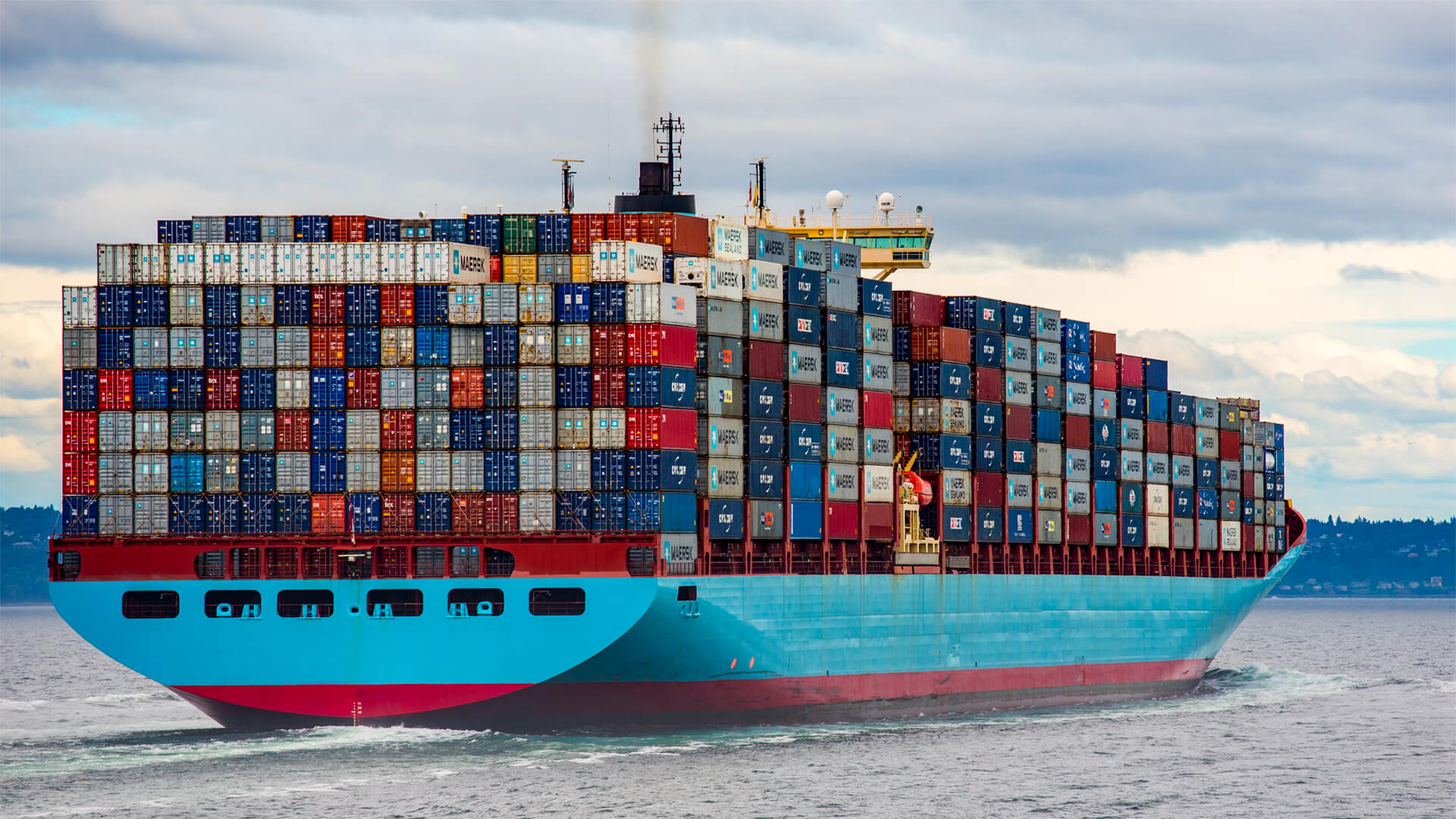
Cargo ship with containers

Ukraine can strike anywhere across the Black Sea thanks to its Sea Baby naval drones, and since jamming is less effective in open water, Ukraine can remotely guide them toward targets.

Take a shadow fleet vessel, for example. Ukraine can use satellite and transponder data to determine targets and then strike the engines and propulsion systems of these ships. With few effective counters, Russia’s ability to protect shipping in the Black Sea is steadily eroding.

If this current trend continues, Russian exports of all kinds, including oil, grain, fertilizer, timber, and more, could be lost.

Transcript

Hey everybody. Peter Zeihan here coming to you from Pike National Forest, from the southern slopes of Mount Silverheels. Behind me is the Colorado Intermountain, which is home to fair play, among other things. Anyway, today we’re going to talk about something that’s very mountain, you know, naval drones. So in the Ukraine, where we’ve seen several models and the ones we were to talk about today are the sea Babies. 

These are things that the Ukrainians have basically taken motor boats, put a bomb on the front, automated them, and off they go. They are typically always first person drones because when you’re dealing with water, there’s really no option for doing a meaningful fiber optic line. There’s usually not going to have a lot of guidance because there are no landmarks. 

So while there are certain things you can do with maybe a little bit of memory to provide a targeting suite, really these are things that have to be piloted by a person, and the terrain, such as it is, works to that pretty well. You see, jamming is something that the Russians are very good at electronic warfare in general, but you can’t really do it over the water. 

I mean, if you’ve got a warship, maybe, but if you’ve got a warship, then all of a sudden the Ukrainians are going to be sending aerial drones against you to that have the memory to target specific things on the boat. But when you’re talking about, say, shadow fleet vessels, well, you’re not going to put a jammer on a Shadow Fleet vessel because it’s technically not a Russian ship. 

And the Russians just don’t have that many of them to go around. So what happens is the Ukrainians now have these sea babies that have a range of 1500km in east to west. The Black Sea is only 1100 kilometers long. So it’s not just that the Ukrainians can hit any ship on the Black Sea, It’s they can go out there and loiter for a while. 

So what the Ukrainians do is they pull down commercial imagery. SA is the type of synthetic aperture radar, and it basically lights up everything in a strip. And that strip can cover as much as 50,000km, which is a good portion of the Black Sea. And then they just go to a commercial website and see what ships are around. 

You see, every ship in the world has a transponder except shadow fleet because they turn them off in order to avoid sanctions. So basically, you get this sheet satellite data that is accurate to like a quarter of a meter, and they then play forward and map out all the legal ships that have transponders. And anything else is a Russian shadow vessel. 

And if they’ve got a sea baby near it, off they go. It’s also pretty predictable because there’s only 3 or 4 ports for the Russians on the Black Sea. Places like an overseas. And unless they’re going to a specific Turkish port, they’re all going to the Turkish straight to get out of the Black Sea and get to the wider world. 

And that’s a straight line sail. So what we’ve been seeing in the last couple of weeks is these sea babies, which have like half a ton of explosives on them, basically getting in close to a commercial vessel, approaching them from behind and blowing the shit out of the engine room and the propeller. We’re not to the point where it’s had a huge impact yet, but again, these tactics are just like a month old. 

Now, normally what you would do when you’re dealing with something like this on the defensive point of view is you’d fight these things off with helicopters. Small arms fire from the top of a ship really doesn’t do much, and battleship really doesn’t have the ability to lower their guns to the point that they can fire at something in the water and small arms fire. 

Just so you use a helicopter. Now, number one, you don’t base a helicopter off of a commercial vessel. And in a few times when the Russians have had a military vessel nearby, or the Sea Babies have been sufficiently close to the coast that a helicopter from land can interdict. The Ukrainians really learned fast. Okay, we’ll just put an anti-air missile or two on this. 

And they scored many hits. And so Now the Russians aren’t even doing that. 

There’s really no good counter here. Helicopters were really only it, and the Ukrainians are now fielding more and more of these things. And as the Russians basically lose control over Crimea because they can’t have fuel. Even using Crimea as a base for helicopter is disappearing. What this means is probably by the end of the year, we need to start thinking about not simply the Russians losing access to the Black Sea for purposes of shipping out all and oil products, which is 1.5 to 2 million barrels a day. 

Big deal right there. But also shipping anything wheat, fertilizer, timber, whatever it happens to be. Basically, the whole Black Sea is starting to become a no go zone. And again, the Ukrainians have only been doing this for about 4 to 6 weeks at this scale. They keep ramping it up just for a couple more months. There’s not going to be much left of the Shadow Fleet in the Black Sea at all.
South Korea Goes All-In on Drones

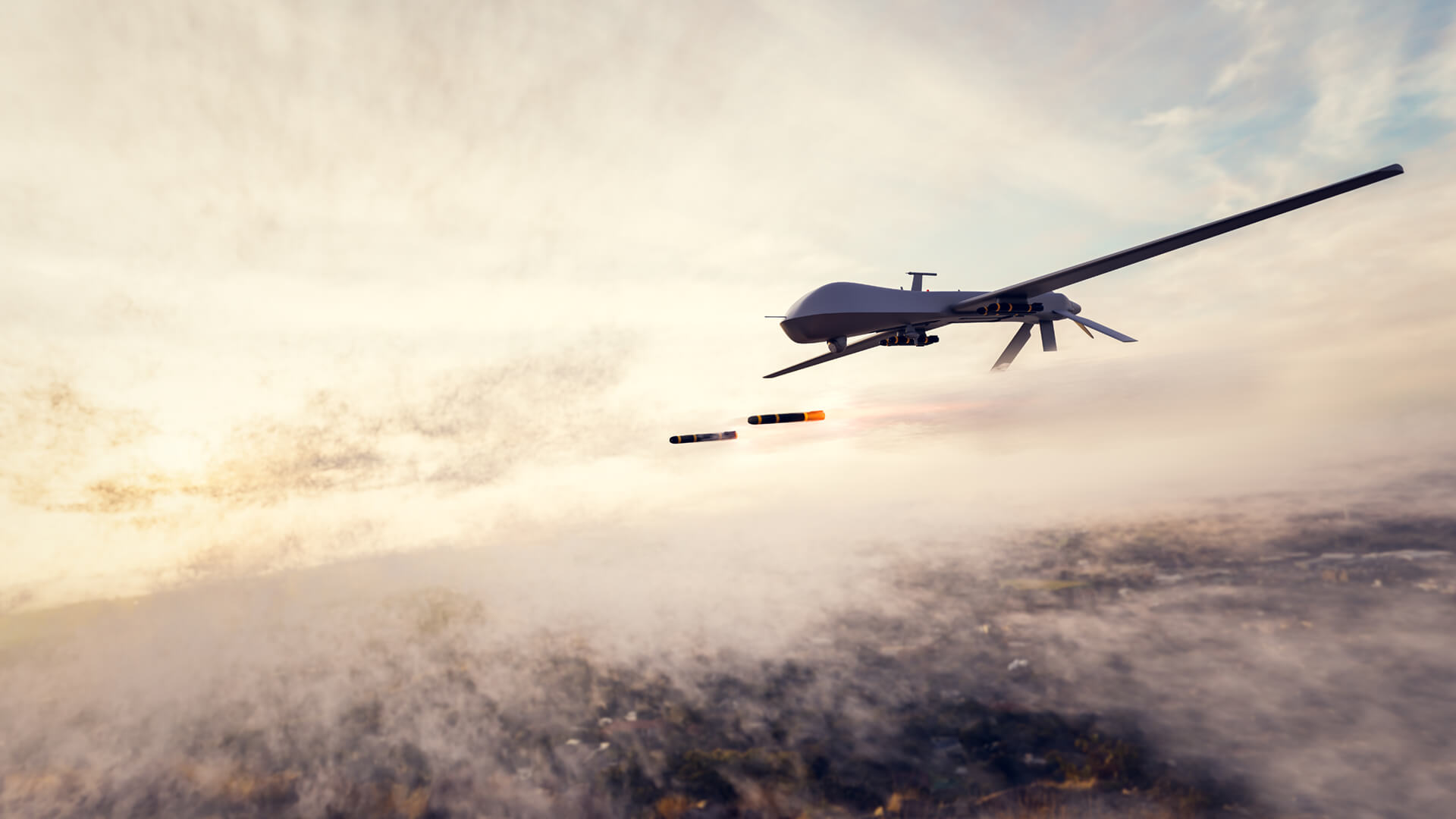
Drone Aircraft Dropping Bombs over Misty Landscape | Photo licensed by Envato Elements: https://app.envato.com/search/photos/c058515b-6f36-40c6-837a-4f0644a0809e?itemType=photos&term=military+drone

The South Koreans are going all in on drone warfare, announcing that every soldier will be trained to operate drones. This is a relatively inexpensive way to offset the challenges facing South Korea.

South Korea has shown time and again that it can pivot on a dime. So, incorporating drones into its military strategy to remedy demographic decline is a natural progression. And since they already possess a large industrial base, producing these drones at scale in the coming years isn’t a stretch. South Korea is also facing increased threats from North Korea and weakening U.S. security guarantees, so the case for drones is even stronger.

While the drone warfare of today will likely look far different in ten years, South Korea is well positioned to lead the next generation of military drone technology.

Transcript

Hey everybody, Peter Zeihan here coming to you from Colorado. Today we’re going to talk about South Korean defense policy. Specifically in June, the Koreans decided that they’re going to make every soldier competent. Drone operator. Five big things come from this. Number one, why they needed to do it primarily is a demographic situation. Korea has been one of the great success stories for turning a backwards agrarian economy into a forward looking technocracy. 

Doing it really in just a generation, generation and a half fastest infrastructure build out in human history, and a fast urbanization rate that was surpassed only by the Chinese couple of decades later. Anyway, you combine that with the heavy drinking male culture and women deciding that, you know what, maybe there’s an option for me other than the home and you’ve got a high divorce rate, a low marriage rate, and arguably the lowest birth rates in the country. 

And so this has been going on for over half century. And so the Koreans now have more people in their 60s and their 50s and the 40s and the 30s and their 20s and 30s and kids complete inversion of the demographic pyramid. So a normal military structure is to take a lot of young men in their 20s and put them on the front line. 

That’s that’s just structurally not an option for the Koreans anymore. And so they’ve been exploring new possibilities. Drones appear at the moment to fit the bill. Second problem, of course, is North Korea, the North Koreans, while there’s their economy, is a shriveled raisin compared to the robustness that is the South. Something like a third of GDP goes to defense spending, not to mention a not insignificant nuclear arsenal, but more importantly, somewhere between 10 and 15,000 artillery emplacements within range of Seoul. 

So in the case of a war, by the time the first shell hits Seoul, there will be tens of thousands in the air already, and there simply is no conventional or even nuclear solution to that. But maybe with drones there might be. We’ll see. Third problem is the United States. The United States is in the process of ripping up all of its alliances. 

And for countries like South Korea that have faced artificial restrictions put on them by the Americans on what sort of military technologies they can develop, that really puts the Koreans in a bind. So, for example, one of the ways you might be able to counter the North Korean nuclear program and all that artillery to develop your own ballistic missile program, the Americans flat out have barred that since 1955. 

And so the Koreans are now coming into this period where the Americans have become unreliable to absent, and they just don’t have the tools of statecraft or military craft that are necessary for the strategic environment which they find themselves in. Drones offers a cheap and fast way to move into something new. Maybe we’ll see. These technologies are still being developed. 

And that brings us to the fourth thing the industrial plant. Most countries who are moving into drone warfare are discovering that almost all of the parts come from China. And since China is the primary sponsor with Russia of North Korea, the South Koreans definitely don’t want to become dependent upon that. But unlike other countries that have been starting to move into the drone space, the Koreans are already a premier technological manufacturing power. 

And you don’t have to do a lot of creative thinking in order to convert what the Koreans already have and things like aerospace and weapons and automotive and turn it into a drone industry, everything right down to the microchips and the the batteries. So when the Koreans say they’re going to be producing millions of drones a year within a few years, I tend to believe them because they have a lot of the base industrial plant already in place. 

It just requires modification. Now, as the plan stands and it is very early in development. The idea is you make everybody a drone controller and with the technologies of literally yesterday, that makes a lot of sense. But that’s not the technologies that are likely to be used on the battlefield in two, three, four, five, ten years. You see, at this point, most of the drones that have been used by the United States, the Russians and the Ukrainians have been what are called first person view drones. 

Basically, you have a live telemetry fee to your drone. You can see through its optics and you can direct it manually. And that works in any number of circumstances. But it faces two problems when you’re dealing with, say, North Korea. Number one, that link can be jammed. And while there are fiber optic drones with ranges upwards of 50km now, which is nuts, that’s not enough to get all of the potential artillery that could target Seoul. 

So some decision making has to be put into that drone. So it’s not simply unmanned, but it’s to at least a degree autonomous. The way you’ve been doing that to this point is with something called Nand, which is flash memory, cold memory. Think of thumb drive. Nand memory can hold a short decision tree. So you can tell your drone to look for 4 or 5 things and select a target among that list. 

And once the target has been selected, there’s nothing can be jammed because the decision was made on board. You then have to kinetically intercept the drone, which is a lot harder. But there’s another generation of memory beyond Nant. It’s called Dram dynamic random access. Hot memory much faster can hold a much larger decision tree instead of 4 or 5 steps, maybe several thousand steps. 

You’re trained on pilot data, which the Ukrainians have been generating in mass. And the Koreans. South Koreans tend to like the Ukrainians because the Ukrainians are fighting North Koreans. Now, North Koreans have sent troops to assist the Russians in the war. So the South Koreans have become one step removed anyway. The the Dram approach is a different sort of drone with a lot more autonomy. 

And it’s better at, say, following a roadway until it finds a train and then targeting specific parts of the train, for example. Now this is new technology. It is not being used in Ukraine yet. It’s in the process of being invented, quite honestly. But the prototype, the first generation drone, Zeta Zidane is a South Korean product. It’s not militarized yet. 

It’s still in the kind of advanced testing stages of the prototypes, but it already exists. And once you modify those drone brains, for lack of a better term, to a more of a combat chassis, then you really are opening up a new phase of warfare. It’s not swarm intelligence, it’s not a eye where you can throw anything at them and they’ll be able to interpret. 

We don’t have that hardware, but it is a significantly large enough decision tree to in many ways mimic full decision making capabilities. And guess what? Remember I said that South Koreans are already a technological economy? About 90% of the world’s high end dram comes specifically from South Korea. So what’s likely to be the next phase of the drone revolution is something that the Koreans are already the world leader at. 

You put it all together, and by 2030, the Korean military is going to look very, very different. The only question is to the degree to which they decide to go all in on drones. Because if you take one of the world’s top ten manufacturing economies and apply these technologies and the strategic need, which is very, very real and very present, and the Koreans have proven time and time again that they can change direction on a dime and build huge amounts of functional product in a matter of months. So we’re going to see a significant shift, not just in the way that drone warfare happens, but in a number of strategic environments around the world that appear to have been locked in stasis for decades. 

The DMZ and the Korean Peninsula probably being at the top of that list.

The Future of Drone Tech: Ukraine’s Innovation

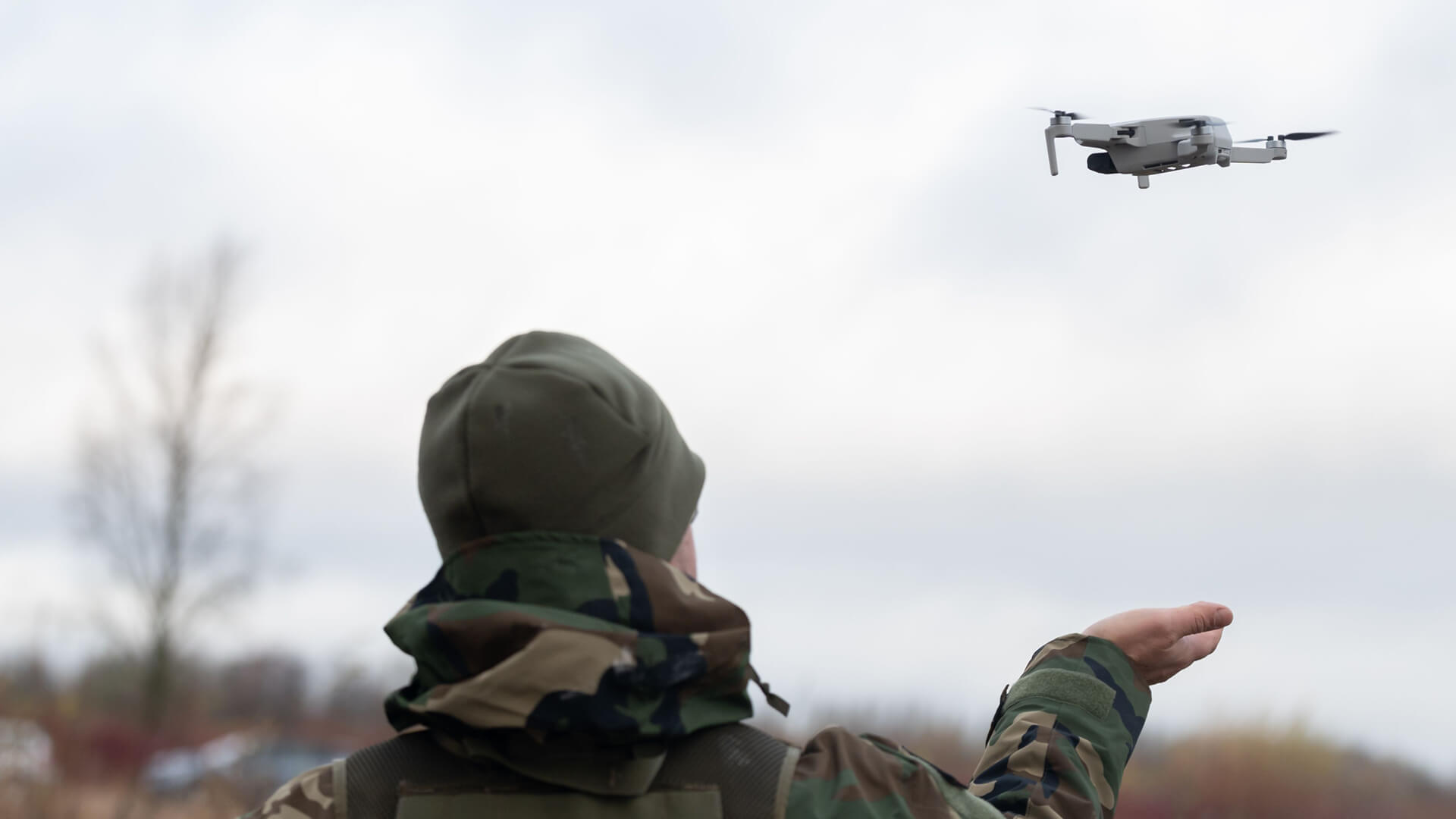
Camo clad man flying a drone outdoors | License by Envato Elements

The U.S. has finally secured its first contract to manufacture Ukrainian-designed drones, but don’t go celebrating quite yet.

The F10 drone that will be produced is a small FPV quadcopter built entirely from non-Chinese components. This is a big step for the U.S., but it’s not nearly the crème de la crème of Ukrainian tech.

The facility where these drones will be made is yet to be built, so even this initial order of 2,000 drones will take several years to complete. Regardless, this is a step in the right direction that will hopefully lead to further cooperation down the road.

Transcript

Hey all. Peter Zeihan here. Coming to you from Colorado. Today is the 1st of July and the news is good news. We have our first contract granted by the Department of Defense to have a US manufacturer produce Ukrainian drones under license. There’s not a lot of information out at this point. It’s all super secret, but I’ll share what I know and give you a couple of guesses based on what we know what that means. 

So step one, the American company involved is called Ukrainian Defense Drones. Catchy name. And the Ukrainian company on the other side is called F drones. F drones is one of the big boys in Ukraine for producing ever more innovative policies and doctrines and designs and getting them to the front their F7 drone from last year, 2025, yeah, was basically voted the drone of the year for how good it was against emplacements and vehicles. 

The new drone that the United States is going to be producing is called the F10. We know it’s 100% non-Chinese parts, and aside from that, we just know that the ten means it’s ten inches across, which means it’s a quadcopter and it is a first person drone. So you’re going to have a dude with a controller relatively close to the front line that suggests from its size that it has some range limitations, probably only 25 to 40km, and it probably can only carry a warhead that’s 3 or 4 kilos. 

That’s probably not enough to take out a tank, but more than enough to wreck the day of, say, an artillery crew and go after personnel or trucks. That’s the good news. The bad news is there’s no sign at the moment that the F10 is one of the drones that has the terminal guidance that the Ukrainians have been starting to introduce across the front and across the entire drone fleet this past year. Those are the things that load a decision into the drone, so that when it gets over its target area, it can actually look around and pick a target for itself. And once it does that, it can’t be jammed. Now, this is just a contract. It’s part of the American program to try to get 200,000 drones in active service before the end of 2027, just next year. 

But this is going to be a late bloomer in that, because the facility that has been tagged to build these drones in Ohio hasn’t begun construction yet. We only got go ahead for the construction last week, and they’re not expecting to finish construction until December of 2029. So three and a half years from now, and then they’ll start building out the first packet of drones. 

And they’ve only ordered 2000 of them and at a rate of, say, 650 to $700. You know, these just aren’t particularly sophisticated drones, which is fine. The key thing is that for the first time, we have a direct contract from DoD for Ukrainian equipment, which is something we’ve been desperately to get in this country. I would argue, even though all of our Western allies and Middle Eastern allies are way ahead of us on this front, because they know they can’t rely on American hardware, there’s a lot of things can still go wrong. 

For example, the reason we don’t have a contract until now is that Donald Trump personally despises President Zelensky of Ukraine. And it’s entirely possible at this moment that Trump is unaware that this contract even exists. And as soon as he finds out, he may well squash it. But hopefully it is the first of several thousand contracts to come that it would allow the United States to take advantage of the war zone in Ukraine, to help test an entirely new set of weapon systems and take advantage of the Ukrainian skill sets, which were by far the most advanced in the world when it comes to the designing and the use and the development of doctrine for these new types of hardware. Early days. Once this facility is constructed, it’s supposed to be producing a wide variety of defense equipment, of which Ukrainian drones are just one tiny little piece. So it’s a step in the right direction regardless. And I just hope that’s a small step all around a very long path of tighter partnership. 

That’s probably just wishful thinking from me, but at least we have the first step.

Why Nobody Came to Help the U.S. in Iran

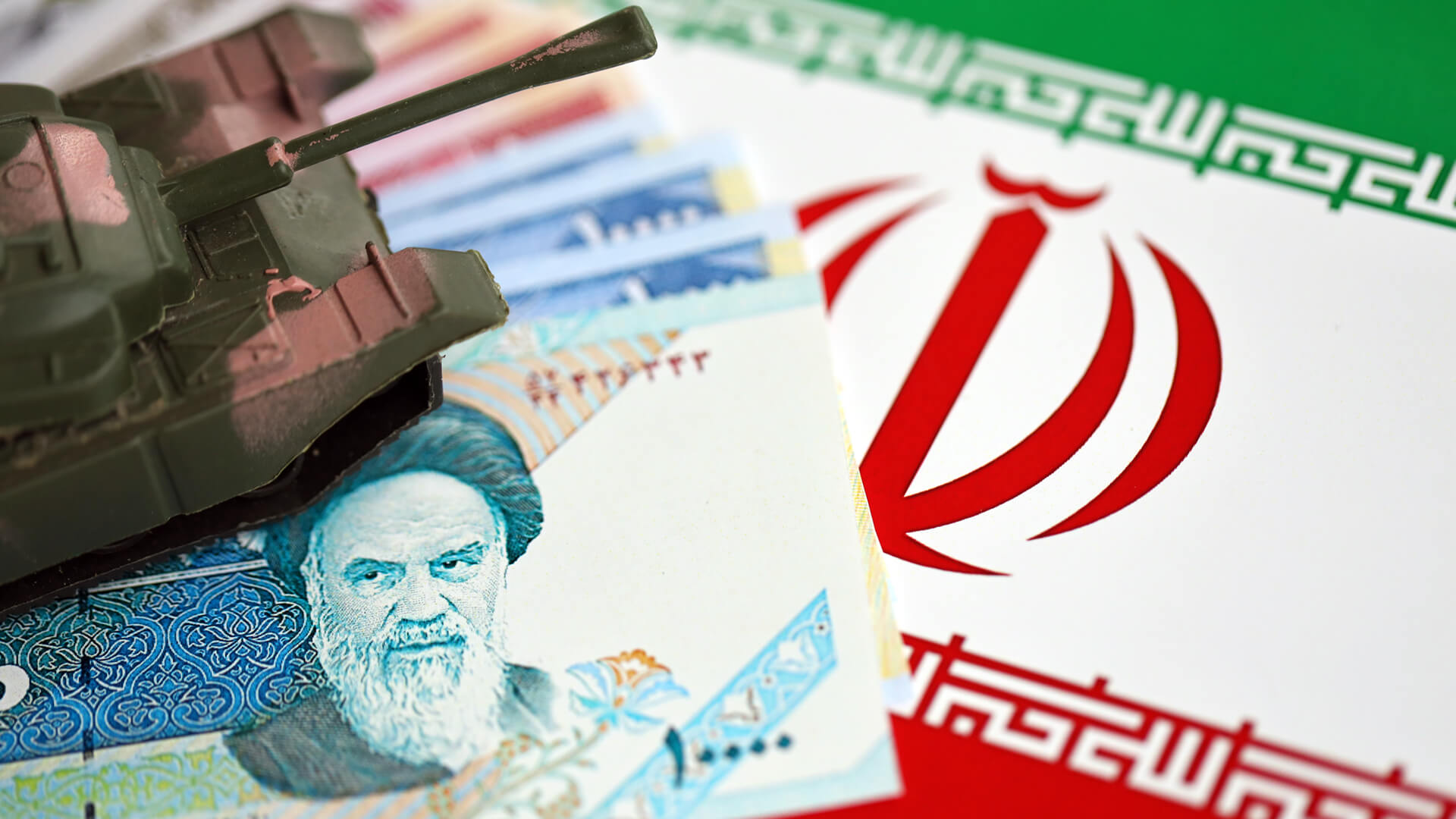
Toy Tank Atop Iranian Currency and Flag | Licensed by Envato Elements: https://app.envato.com/search/photos/3abc94ac-73db-4912-ae0d-3e507dd11191?itemType=photos&term=iran+war

Despite the large rolodex of U.S. allies, nobody has pulled up to the Persian Gulf to support the U.S. There are several reasons for this, though.

Part of the post-WWII deal was that the U.S. would provide global maritime protection, so nobody else had to; as a result, few powers could help out, even if they wanted to (like Japan, the UK, and France). It doesn’t help that the U.S. launched this operation without consulting anybody, but even if they had, most allies wouldn’t touch a Persian Gulf conflict with a ten-foot pole.

Transcript

Hey everybody. Peter Zeihan here coming to you from Colorado. Today we’re taking a question from the Patreon crowd, specifically considering how dependent countries like to Pan and the countries of Europe are upon energy imports, specifically from the Persian Gulf. How come they haven’t been helping out with the conflict? Well, let’s look at it. First of all, not a lot of countries maintain naval forces that are capable of rapid projection. 

You basically have them on a degree of standby until something big happens and then everything has to be spun up. So, for example, unless you’re the United States very special case, everybody’s navies are pretty much limited to coastal patrol. So if you do have a long range ship, it’s probably just sitting in dock until it’s needed. And then it’s going to take a few weeks to a few months to get it ready to go. 

That’s one. Number two. The deal that we struck with everybody at the end of World War two was that we will patrol the global oceans and keep the ceilings open for everyone. If in exchange, you allow us to control your security policies. And part of us controlling your security policies is we don’t want you to have any long range power projection, because if you have a long range power projection, you’re going to use your long range power projection. 

You might use it in ways that we don’t want. So with the exception of Japan, which is an island nation and has the second largest navy in the world, and the United Kingdom, which has a bit of an imperial hangover, the only other country in the world that maintains really any long range capability that’s independent is France, and that specifically. 

So it has an independent capacity. So really we’re talking here about three countries. No one else could have even helped if they had wanted to. Which brings us to number three a burden sharing intelligence, sharing whatever you want to call it on February 11th. Netanyahu, Benjamin Netanyahu, the prime minister of Israel, came to the white House, made a pitch to Trump for the United States and Israel to jointly attack Iran. 

He said the war would be over in four days. We can kill the leadership because you know where they are. There will be a revolution. They’ll probably rename the capital to Trump Obelisk, and you will go down as the bravest and most capable American president in history, and you will do something that all the cowards before you refused to do. 

And Trump looked around the room and everyone who knew something about foreign policy, for example, Secretary of State Rubio and the Joint Chiefs of Staff Dean Cain said, Mr. President, this is an horrible idea. We’ve been hearing some version of this for 30 years, specifically from Netanyahu, who has tried to convince multiple American presidents to fight his war. 

For him, the math never checks out. The Strait of Hormuz will be wrecked. But, Mr. President, it’s your call. And then the people who knew nothing about foreign policy, notably Pete Hegseth at defense, said, do it. 

The carrier sailed later that day. So normally when the United States goes to war, we compare intelligence with our allies. That never happened this time. And we now know, even from within the white House four months later, that there wasn’t any intelligence. This was just a pitch deck from Netanyahu, who has been chomping at the bit to get the United States to fight his war for a long time. 

So normally we’d like consult with NATO, especially with the Japanese and the Brits, and we’d arrange for a coalition to put at least a veneer of internationalism on top of whatever it was that we felt we needed to do. None of that happened. So the war began a couple of weeks later. Just just the amount of time that it took to sail to get there. 

And then about in week four of the war, when the Trump administration realized it wasn’t going well, which was difficult because DoD was only showing him like strike footage, because any time they tried to give him an accurate assessment of how this was not going well, he’d kick him out of the room. Well, by four weeks on, it was starting to come at him from all angles that it wasn’t going well. 

And that is when he started yelling at the allies to send forces. But as I’ve mentioned, no one else has forces to send, and the few that might certainly in a hot situation are not going to be sending things through Suez. So even if like, say, the French and the Brits had snapped to at that instant, unlikely they would have needed a month or two to get their forces ready to deploy, and it would have been over another month before they would have actually arrived. 

And in the meantime, you know, Iran went the way Iran did. And we’re now in a situation where we get final point is that nobody outside of Trump and Netanyahu wanted this war in the first place. We now know unequivocally that Iran’s drones are more than capable of taking out every piece of physical infrastructure throughout the Persian Gulf, which can trigger a global energy induced depression. 

We now know that their monitoring of the entirety of the Strait of Hormuz is strong enough that they can even take occasional shots at ships that are hugging Omani waters on the southern side of the strait. And really, even with the US Navy concentrated on the Strait of Hormuz in the Persian Gulf, there’s not a lot it can do, because if those ships stay still, then they become targets to. 

So we’re in this never ending negotiation where negotiations aren’t actually happening. Because this is just horrible. Normally when you’re having a real negotiation, you have your headliners who do the real talks and what are called technical folks do the technical talks so that when the headliners show up, there are only real things to discuss. 

Well, Trump has shut the Department of State to the side and refuses to deal with that at all. Even that’s where most of the policy experts are. 

He made Secretary of State Rubio be in charge of all that because he doesn’t like Rubio either. So all you Rubio fans who think that he might be the successor to MAGA, think again. He also doesn’t like the National Security Council. That does kind of have all the deep thinking as opposed to the diplomacy. 

Not so it could be more efficient in the way that Kissinger did it, but to shove it all to the side. So there were no negotiations with the allies on the front end, and there’s no technical talks happening with the Iranians on the back end. So the last time that Trump’s preferred negotiators, Jared Kushner and Steve Whitcomb, went to Doha this past week, they got to Doha and the Iranians like, yeah, not this week. 

We have technical talks to do. And so there’s still nothing happening. There have been no technical talks since this whole thing started in February. Anyway. If you’re an ally and you’re looking at this, you’re like, why would I develop a military capability that the United States has until now, said I should not have in order to use it to prosecute a war that hurts my economy. 

And then we are at the mercy of a diplomatic situation that doesn’t have diplomats. So, yeah, no, the allies haven’t done anything here that is untoward. We’re just in a bit of a trap caused by a man who refuses to surround himself with anyone but sycophants and is very, very easy to manipulate so long as you’re willing to lie to him, which is not what a good ally does. 

All right, that’s it for me. Until next time.

A Canadian Pipe(line) Dream

Flag of Canada waving in the wind

The Canadians are fed up with being dependent on U.S. markets for their oil exports. So, they’re looking to diversify their export options.

The Canadian government has backed a pipeline project that would allow Alberta’s oil to reach overseas markets. With global demand rising, this project makes a lot of sense, but there are a few problems. No export terminal has been selected since all the potential sites face significant logistical challenges, and even on the most optimistic timelines, construction wouldn’t be completed until 2034.

Transcript

Hey everybody. Peter Zeihan here, coming to you from Colorado. And today we’re going to talk about energy in Canada. Most of the energy production in Canada comes from the province of Alberta. And most of that is heavy, sour crude that has a limited market in the wider world. At the moment, most of it is transported by a combination of pipe and rail to the United States, specifically to refineries in the American mid-continent and down into Texas that were designed to run on heavy sludge. 

Most advanced refineries in the world, some of the worst crude in the world. However, Canada has always been frustrated. Alberta has always been frustrated with the price that they get because when you sell primarily via pipeline into a closed market, you’re kind of a price taker. And so there have been a number of times where while Burton Crude has sold it not just a discount, but sometimes like $25 a barrel. 

That’s before we have the diplomatic falling out between the Canadians and the Trump administration. And now Canadian-American relationships are at the worst since the arguably the War of 1812. So the Canadians are desperate to find any other outlet. The problem is, is that Alberta is landlocked, and not anybody else really wants Albertan crude, because they would have to retool the refineries. 

But there’s there’s a definitely beggars can’t be choosers situation going on in the world right now because with the Persian Gulf still majority offline and Russian crude and danger in Venezuelan crude questionable, any fresh crude source, no matter what it is or where it is, we’ll find a buyer if you can get the crude to them. So. Just last week, Prime Minister Kearney of Canada has dusted off a plan and says that there is now state backing for a 35 to $45 billion pipeline that will export crude from Alberta to the west coast of Canada in British Columbia, and then allow it to be sold wherever it happens to be. 

Now, there is already one of those pipelines in place, the Trans Mountain. It’s less than a million barrels a day. This new one is intended to be even bigger. But aspirations do not make policy, even though it has been announced by the Prime Minister. At the moment there is not a route. They have tried six different ports where this might technically be done. 

None of them worked out, so they just have a placeholder of a place called Delta, which is just to the south southeast of Vancouver. So if you were to export the Delta, you’d have to actually run the pipeline through the most densely populated part of British Columbia, including Vancouver proper, which is not exactly a conservative bastion. All that to get to a port that is not deep enough to handle a fully loaded supertanker. 

So at the moment they don’t have a port, they don’t have a destination. What they do have a state backing. And since you’ve got a prime minister who used to be a central bank chief who’s pretty good at the math, this is going to move a lot faster than previous projects, but they still have to worry about all the niggling details about how to get it to wherever they’re going to get it. 

This is still early stages. Best case scenario, they hope to begin construction in 2027. Best case scenario, they hope to finish construction by 2034. So if everything goes perfectly, this is an issue for the middle of next decade. Until then, Albertan crude stays mostly trapped within North America with all the negatives that come from that. And now I think you might be seeing why the Albertans keep talking about independence, because if they can get a different relationship with the United States, then all of a sudden a lot of that mechanical stuff just disappears. 

Anyway, that’s it for now. Take care.

The U.S. and Ukraine Make a Drone Deal

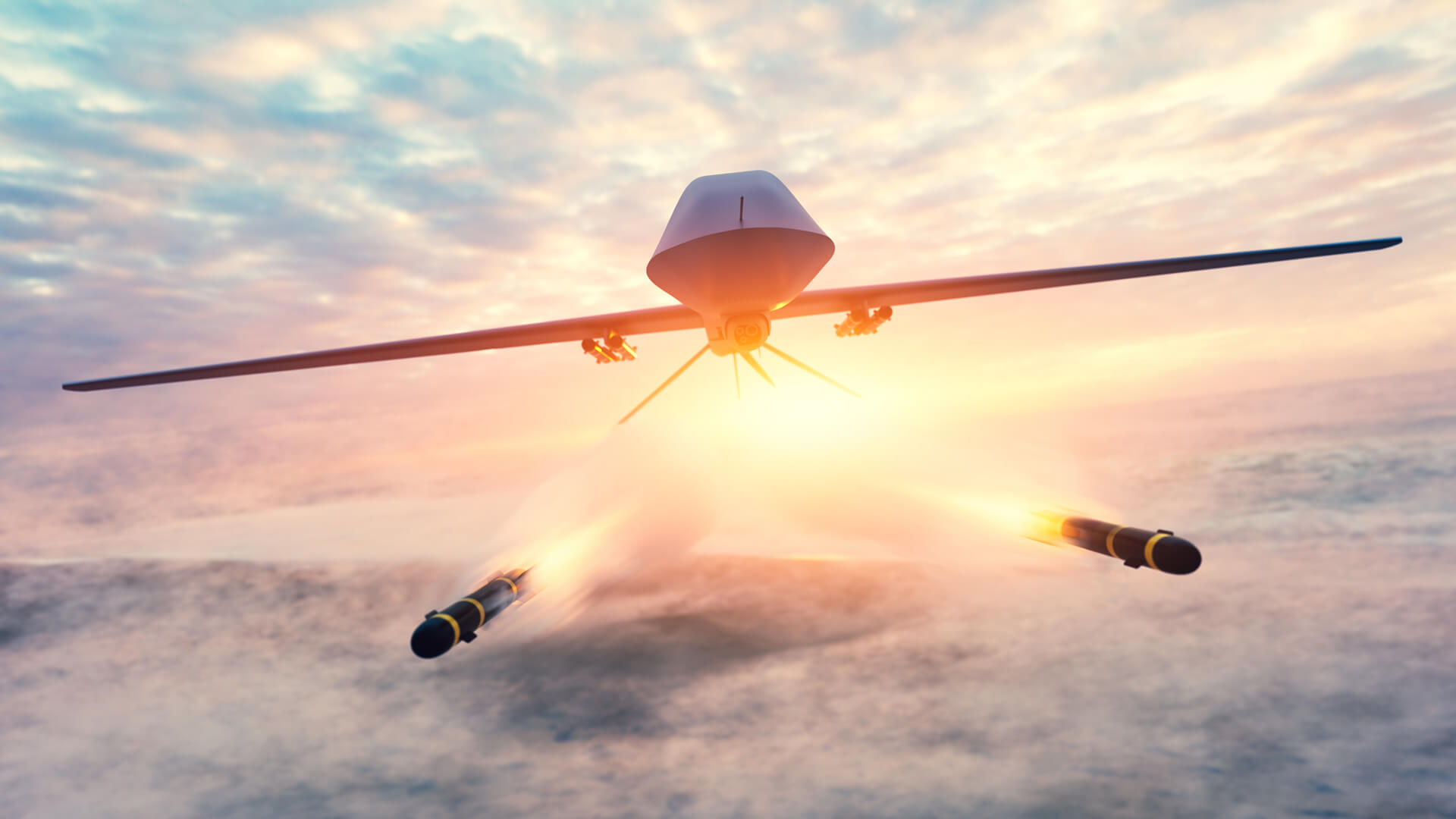
Image of a drone firing missiles

The U.S. has finally secured its first contract to manufacture Ukrainian-designed drones, but don’t go celebrating quite yet.

The F10 drone that will be produced is a small FPV quadcopter built entirely from non-Chinese components. This is a big step for the U.S., but it’s not nearly the crème de la crème of Ukrainian tech.

The facility where these drones will be made is yet to be built, so even this initial order of 2,000 drones will take several years to complete. Regardless, this is a step in the right direction that will hopefully lead to further cooperation down the road.

Transcript

Hey all. Peter Zeihan here. Coming to you from Colorado. Today is the 1st of July and the news is good news. We have our first contract granted by the Department of Defense to have a US manufacturer produce Ukrainian drones under license. There’s not a lot of information out at this point. It’s all super secret, but I’ll share what I know and give you a couple of guesses based on what we know what that means. 

So step one, the American company involved is called Ukrainian Defense Drones. Catchy name. And the Ukrainian company on the other side is called F drones. F drones is one of the big boys in Ukraine for producing ever more innovative policies and doctrines and designs and getting them to the front their F7 drone from last year, 2025, yeah, was basically voted the drone of the year for how good it was against emplacements and vehicles. 

The new drone that the United States is going to be producing is called the F10. We know it’s 100% non-Chinese parts, and aside from that, we just know that the ten means it’s ten inches across, which means it’s a quadcopter and it is a first person drone. So you’re going to have a dude with a controller relatively close to the front line that suggests from its size that it has some range limitations, probably only 25 to 40km, and it probably can only carry a warhead that’s 3 or 4 kilos. 

That’s probably not enough to take out a tank, but more than enough to wreck the day of, say, an artillery crew and go after personnel or trucks. That’s the good news. The bad news is there’s no sign at the moment that the F10 is one of the drones that has the terminal guidance that the Ukrainians have been starting to introduce across the front and across the entire drone fleet this past year. Those are the things that load a decision into the drone, so that when it gets over its target area, it can actually look around and pick a target for itself. And once it does that, it can’t be jammed. Now, this is just a contract. It’s part of the American program to try to get 200,000 drones in active service before the end of 2027, just next year. 

But this is going to be a late bloomer in that, because the facility that has been tagged to build these drones in Ohio hasn’t begun construction yet. We only got go ahead for the construction last week, and they’re not expecting to finish construction until December of 2029. So three and a half years from now, and then they’ll start building out the first packet of drones. 

And they’ve only ordered 2000 of them and at a rate of, say, 650 to $700. You know, these just aren’t particularly sophisticated drones, which is fine. The key thing is that for the first time, we have a direct contract from DoD for Ukrainian equipment, which is something we’ve been desperately to get in this country. I would argue, even though all of our Western allies and Middle Eastern allies are way ahead of us on this front, because they know they can’t rely on American hardware, there’s a lot of things can still go wrong. 

For example, the reason we don’t have a contract until now is that Donald Trump personally despises President Zelensky of Ukraine. And it’s entirely possible at this moment that Trump is unaware that this contract even exists. And as soon as he finds out, he may well squash it. But hopefully it is the first of several thousand contracts to come that it would allow the United States to take advantage of the war zone in Ukraine, to help test an entirely new set of weapon systems and take advantage of the Ukrainian skill sets, which were by far the most advanced in the world when it comes to the designing and the use and the development of doctrine for these new types of hardware. Early days. Once this facility is constructed, it’s supposed to be producing a wide variety of defense equipment, of which Ukrainian drones are just one tiny little piece. So it’s a step in the right direction regardless. And I just hope that’s a small step all around a very long path of tighter partnership. 

That’s probably just wishful thinking from me, but at least we have the first step.

Korean Exports Skyrocket Thanks to AI

Two Korean flags in front of a building

Korean exports are up roughly 70% year over year, surpassing $100 billion in a single month. So, what’s causing this extreme growth?

It’s all thanks to AI. Korea dominates the global market for advanced DRAM, accounting for ~90% of global high-end memory. As long as the globalized supply chain supporting the AI ecosystem holds, countries like Korea will continue to reap the benefits.

Between chip design, manufacturing, raw materials, packaging, and testing, there is a fragile international AI network that won’t last forever. And no single country can do all of this alone.

Transcript

Hey everybody, Peter Zeihan here come to you from smoky, Colorado. We are at the 1st of July, and we just got good data out of the Koreans for their exports. And they set not just a record, but an insane record topped $100 billion for country with 150 million people in one month. And that is a 70% increase from just a year earlier. 

You heard that right, seven 0% increase. And really, almost all of the increase has to do with artificial intelligence, as everyone who’s not brain dead is aware, there is an AI boom going on around the world, most notably in the United States, China and Southeast Asia. And there are three big components that go into the hardware that makes AI work. 

The first, the most famous, the one that gets the most press time, is the graphics processing unit. These are high end chips that are typically etched with extreme ultraviolet technology comes out of a company called ASML that’s based out of the Netherlands. And most of these high end chips are fabricated in Taiwan. About 80% of global supply. 

I’d argue right now the balance is mostly the United States. This is where the happens. 

This is the processing that is the core of what makes a large language model. And AI models like Llms work. So number one. Number two, you’ve got something called Nand, Nand which is cold memory. And so when you’re not using your computer or your data center is not using whatever the memory is, things are stored in Nand even if the power is off, Nand will keep its memory. 

And you have a lot of that sitting on the board in the general vicinity of the GPU just to absorb things that are not an act of play. And then third, you’ve got something called Dram, Dram, dynamic random access memory. And this is the hot memory. And so as data is going back and forth and back and forth and back and forth from the GPUs to other things, it’s usually the Dram that holds it temporarily. 

And it can be in two forms. You have your independent Dram stacks off to the side, and you have something called high bandwidth memory, which is basically a stack of Dram right next to sometimes even attached to the GPU. Anyway, the Koreans don’t do much, if anything at all with the GPUs, and Nand is an old technology where they’ve discovered because it doesn’t generate heat, you can stack the chips on top of one another. 

And so it’s not particularly advanced. The Koreans do a lot of it, but that’s not the groundbreaking stuff. What the Koreans excel at is the Dram, the dynamic access memory, the the hot memory, and they produce about 90% of the world’s high end dram. So three things from this. Number one, if you want to dominate your own computer supply chain system GPUs, which is what the Biden administration of the Trump administration are obsessed about, or only one part of the process. 

Computing is a lot more complicated than rocket surgery, and there are thousands more pieces that go into it than in any other manufacturing sector. So I would say it’s a fool’s errand to try to concentrate it in your country. But if you’re going to, you have to throw a lot wider net that we have in so far. Number two, memory is every bit as important as GPUs and especially the architecture of the memory and integrating it with the GPUs. 

And this is something that Chinese can’t do and the Taiwanese can’t do and the Koreans can’t do. This is something the US already does. So I’d argue that from a value added point of view, the United States already dominates the part that’s most important designing the system. So the geometry of the chips actually does what we need it to do. 

Third, and most important, I think in the midterm is that the same technologies that I have identified over and over and over again, the silicon processing, the carpet processing, the EUV system itself, all of the logistics and the supply chains and the inputs and the testing and the packaging, all of these things that require 50 odd countries in order to get the GPUs also, for the most part, applies to the Dram. 

So we’re existing in this little window where the world is technologically advanced enough and integrated enough that we can get the designs out of the United States and the logistics managed by the United States, and the photographs managed by the Japanese, and the copper out of Chile, and the rare earths out of China and the silicon out of North Carolina, and the GPUs out of Taiwan and the Dram out of Korea. 

And all just works right now. But you lose even one of those pieces, and this all stops. So if you’re into AI or you like the Koreans, enjoy this moment. It’s a good moment. Build everything you can, because very soon that’s not going to work. And we’re going to have to take a decade or three off from AI and its sister technologies. 

And till such time as we can rebuild the bulk of the supply chain in a more geopolitically sustainable manner.

Status Update on the Persian Gulf

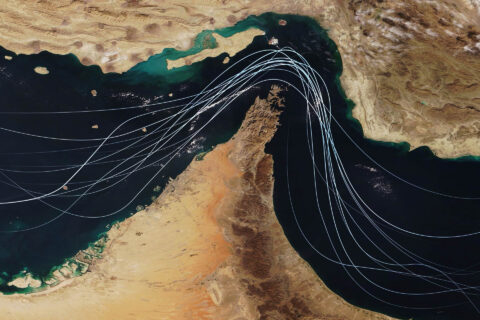
Aerial View of Persian Gulf with Digital Paths | Licensed by Envato Elements: https://app.envato.com/search/all/photos/07ea8bb2-6848-46ea-8372-ec4f58d701a6?term=persian+gulf+satellite+

All right, time for a status update on Persian Gulf shipping. Tanker traffic is slowly resuming, and Gulf producers are gradually restarting exports…but let’s not go counting chickens quite yet.

Global energy flows remain constrained, and exports won’t fully recover for some time. Most of the traffic is the previously stranded cargo flowing out, rather than new tankers entering. And Iran has emerged from this new arrangement with greater influence over the Strait.

Transcript

Hey all, Peter Zeihan here. Coming to you from Colorado. It is the 29th of June, and let’s chat about the status of the Persian Gulf, because so much depends upon it. We’ve had on again, off again violations of the steel by both the Iranians and the United States. One of them hit something and the other one hit something or retaliation. At the moment, they’ve both agreed to disagree and not shoot at each other. 

So technically, the Strait of Hormuz is open if you’re the Americans and it is closed if you are the Iranians. As a result, cargo movements have been very, very slow to pick up. We’ve probably had about 20 tankers a day on average this past week leave, and that is starting to finally drain the stranded ships that are within the Persian Gulf. 

Keep in mind, there were over 1000 that were stranded when the war began and had been there for three months, and that has meant that a fair amount of crude, maybe 35 million barrels, has gotten out. In addition, a number of the Gulf states are incrementally restarting oil exports. The most progress has been made in Saudi Arabia, where there are at least four tankers as of the weekend that were loading successfully. 

Gutter is more of a question mark, and in the case of the United Arab Emirates continuing to use their report, which is actually outside of the Strait of Hormuz on the Gulf of Oman, Kuwait influx, no real information and Iraq doesn’t look like its movement at all. Some people are saying that, okay, look, we’re getting back to normal, but but not really. 

You see, the the Saudis have a bypass pipeline that they cranked up well above design specifications, and it made up for over 90% of their previous exports. And so they were shipping things out through the Red sea. So shipping things now from Ross Tonnerre on the Persian Gulf is just taking some of the stress the off of that transit line. Is that not actually adding any new crude? 

The same more or less is going for the United Arab Emirates. We are getting this one shot deal from the stuff that was locked up that can get out, but very, very few tankers are coming in for what I’ve been able to sell over the weekend. You’re talking about less than 15 ships transited into the Persian Gulf, and only about half of those were tankers. 

Keep in mind that before the war, somewhere between 100 and 150 ships transited each way each day, which means, as a result of the peace deal, the only country that is currently sending ships back and forth through the Strait without restriction is Iran. And I can’t underline enough about how this deal so lopsided serves Iran’s purposes. The Iranians are talking openly now about the regimen, about how they’re going to charge fees or tolls or whatever you want to call it to what’s going on. 

And even Oman, which is, you know, technically not. Iran is talking about how they’re looking forward to coordinating with the Iranians to make that happen. So the most important waterway in the world for energy flows is right now only fully open for business. If you’re Iranian. And the Iranians and others now are working on how to charge everyone else for the pleasure of using it, with that deal supposedly being enforced by the US Navy. 

So this is an ongoing, catastrophic economic and strategic event for the world as a whole, for the United States specifically. 

And we still don’t have a good read on when the fields in the region are going to be getting back up to full production. Probably not this year. All right. That’s everything for me. See you tomorrow.

U.S. Oil Export Restrictions Coming Soon

An oil tanker in the ocean sailing

If global energy supplies remain constrained, the U.S. government will prioritize U.S. consumers over international markets. This would take the form of export restrictions.

These restrictions could take several forms. The first would be halting U.S. crude exports, which would keep more oil at home, but would also strain storage capacity and hurt shale producers and refiners in the process. The more likely option would be taxing exports of refined products, which would lower domestic prices and push the burden onto global markets.

Transcript

Hey, everybody. Peter Zeihan here coming to you from above the valve at all in New Mexico. We’re coming up on golden hour, so I’m just going to sit here for a little bit. Anywho, today I am taking a question from the Patreon page. Specifically, do I think that the United States government is going to restrict energy exports in order to keep prices under control, as the international system basically loses energy?

And absolutely, absolutely, absolutely. The question is how there are a few options. None of them are great and all of them have side effects. But let’s start with the basics. As of the third week of June, we have somewhere between 1 and 1.3 billion barrels of crude that were never produced and delivered. That has drained global inventories to record lows.

And even if the strait were to open tomorrow, it’s going to be years before Persian Gulf producers can be producing again. So we’re going to have to have some demand destruction. That will probably involve a protracted, sharp price spike. And there is no way that a president is populist, as Donald Trump is going to let that pass without doing something.

So two options. The first one, the legal option is probably the least clean back under the Obama administration, Congress granted the president the right to end all oil exports just by saying so. That would trap the crude in the United States and probably send crude prices in the United States. Negative, because there’s just not enough storage. Well, Let me back up and take that back a little bit. Storage is running really low in the United States because of what’s going on in Iran. So step one would be to fill up all of that storage. And the question would be whether or not the shale wells, which fall off pretty quick, would fall off before the storage was filled.

You see a shale well, it can be brought online in just a few weeks, but half its lifetime production is produced in the first year. So if it takes, say, three months for the storage to fill up and nobody drills at all during that time, things might work out kind of kind of. I don’t want to. I don’t want to ever play that.

If not, prices are going to go negative because there’s just no where to put it. We had the negative price situation for a while in Covid, if you remember. That was all kinds of fun. If you were an oil producer. Anyway, what that does is it floods the system with crude. And if you are a US refiner, you now have basically a bottomless supply of light, sweet crude to shove through your refinery and make product.

However, US refineries don’t like light, sweet crude. They were designed for a different world where we imported a lot of cheap, heavy, sulfur laden crude. Ever since the shale revolution really got going back and say 2010. I mean, we got our first production back in

2007, 2008, and then it just exploded after that. US refineries have been changing their refineries.

Bit by bit by bit. But it’s been very slow. They’ve been fighting it at every step of the way. And in this circumstance, the ones that have basically been dragging their feet would be hosed, because you can damage your refinery if you run the wrong crude through it. And at a minimum, you’re going to have a really high refinery loss anyway.

That’ll go for a few weeks and then we’ll see basically an implosion in the shale fields, because nobody is going to want to produce if they can’t export. A lot of infrastructure is added, especially in Corpus Christi in the last decade to facilitate those exports. And if they go to zero, they go to zero. So probably you’re looking at at another one, maybe one and a half, maybe, if we’re really lucky, 2 million barrels per day of product, of which they will try to make more gasoline and diesel and jet fuel.

So that might, might be half of it, but that’s it. And everything else that’s in the surplus basically gets shut down because there’s nowhere to send it. So it would give a moderate boost to consumers over the mid and long term. Refiners would just be besides themselves with the damage to the refineries and producers would go out of business.

That’s option one. That’s the legal option. Option two is to do something to restrict fuel product exports. Right now, the United States exports about 5 million barrels per day of refined product, which is more than any other country on the planet has ever even exported of crude. And if you were to do something that it would strike that and trap that in the country, that would have an immediate effect on prices and an immediate effect on supplies to the global system, just like shutting off all exports would.

The problem here is that Congress has granted the presidency that power. And there’s a lot of questions as to how you would do it. Probably the most effective would be to just put a really fat export tax on it. I think that would play to Trump’s preferences. It would still result in higher prices in the United States, but nothing compared to everywhere else.

And we wouldn’t have a supply shortage anyway. Those are the two options. Probably find out within a couple of months which one the Trump administration is considering, because we’re getting really close.

Say Goodbye to Kazakhstan Oil

Flag of Kazakhstan

The Ukrainian strike on the Orenburg natural gas processing complex could impact more than just Russia. Unfortunately, Kazakhstan’s energy industry is highly dependent upon that facility.

Natural gas, propane, and oil from the Karachaganak field all flow through Orenburg. As these strikes continue, more and more of the energy projects that foreign companies have invested in throughout Kazakhstan will be threatened.

Russian infrastructure and transit networks remain critical to Kazakhstan’s energy industry. If these strikes continue, there are few viable alternative routes for Kazakh exports, which could end Kazakhstan’s ability to get energy products to global markets.

Transcript

Peter Zeihan here, coming to you from Colorado today is 24th of June. In the news is the Ukrainians have just blown up part of the natural gas processing center at a place called Orenburg, which is in southern Russia, hard up on the Kazakh border. Now, Orenburg is not something that’s industrially central for the Russians, but it is for Kazakhstan. 

You see, when the Soviet system ended, there wasn’t a lot of oil or natural gas production in Kazakhstan proper. And as nobody wanted to go into Russia in the 1990s, Kazakhstan seemed a lot more stable. So ExxonMobil, ConocoPhillips, Chevron, all the big major companies and since then the Indians, the Chinese and others have all poured into Kazakhstan because they just find it easier to work with the Kazakhs than the Russians, because the Russians are always insisting on bribes and their infrastructure isn’t maintained, and the rule of law is weak. 

Not that Kazakhstan is, you know, Delaware or anything. It’s probably more like new Jersey, but it’s better anyway. Infrastructure was built out,bit by bit, while pipelines, wells, all that good stuff. But it can take decades to really build out a mature natural gas and oil industry, especially when some of the fields are more complicated. So across the border from Orenburg is a place called Karachaganak, which is one of my favorite words ever. 

It is a sour gas wet gas field that produces liquefied petroleum gas like propane as well as natural gas as well as. But all of it is really, really rich and sulfur. So you can’t just put it into a normal pipeline. So what they do is they put it into a cluster of short pipelines that go across the border to Orenburg in Russia, where the existing infrastructure from the Soviet period is already in place and it can pull the sulfur out of all the products. So once you do all the math, it comes out to about a quarter of a million barrels per day of crude and about 1,000,000,000 cubic feet of natural gas that get processed in Orenburg and then are shipped through the Russian network to the rest of the world. And now it’s on fire. 

What the Ukrainians are doing is basically systematically destroying any infrastructure that’s within about 700 miles of their borders, anything that gives the Russians any sort of economic wherewithal. And so what has been happening between Orenburg and Karachi is very simple. Crutch wouldn’t be viable without the Russians. And so the Russians take the lion’s share of the profits, because it has to go through their processes and facility and their infrastructure get to wider world. 

And honestly, almost all Kazakh and oil and natural gas output falls into that category. Foreigners do the investment, the Kazakhs own it technically, but most of the benefit goes to the Russians because they’re the interface with the wider world. Well, the Ukrainians have now decided that program no longer works. And so Orenburg is in flames, assuming for the moment that the Americans and the Europeans and others do not convince the Ukrainians to not do this, and so far everyone’s been silent, you should expect to see more and more attacks like this on Russian infrastructure that largely exists to serve Kazakh needs, and the single largest place where the Ukrainians can have an outsized impact is going to be something called the Caspian Pipeline Consortium, which takes crude oil from places like Tengiz and cash again on the Caspian Sea, ships it through Russian territory to export facilities on the Black Sea. And while as is only a quarter of a million barrels per day, Tengiz alone is over a million. And so we’re talking about secondary hits on Kazakh production that really has nowhere else to go. 

And that, more than anything that the Ukrainians have done to Russia direct, can just have a huge impact, because all they have to do is take out the pumping stations or section of the pipeline, or if they’re getting really chunky, some of the port facility in places like Novorossiysk, which they’ve already been hitting over and over and over. 

Bottom line, Kazakhstan’s oil and natural gas output was never going to last long term. It’s depended on too many pieces and too many countries and too many basins, because once the crude actually hits the Black Sea, it then has to go out of the Black Sea, through the Turkish Straits, through the Red sea, right by all the pirates in Somalia, across the entirety of the Indian Ocean basin to get Asia. So, you know, none of this was ever going to last. But the Ukrainians are proving that it can stop it almost right at the starting point. And we should see a lot more attacks like that in the days and weeks to come.