The Fire Hose of Chaos: Housing Problems

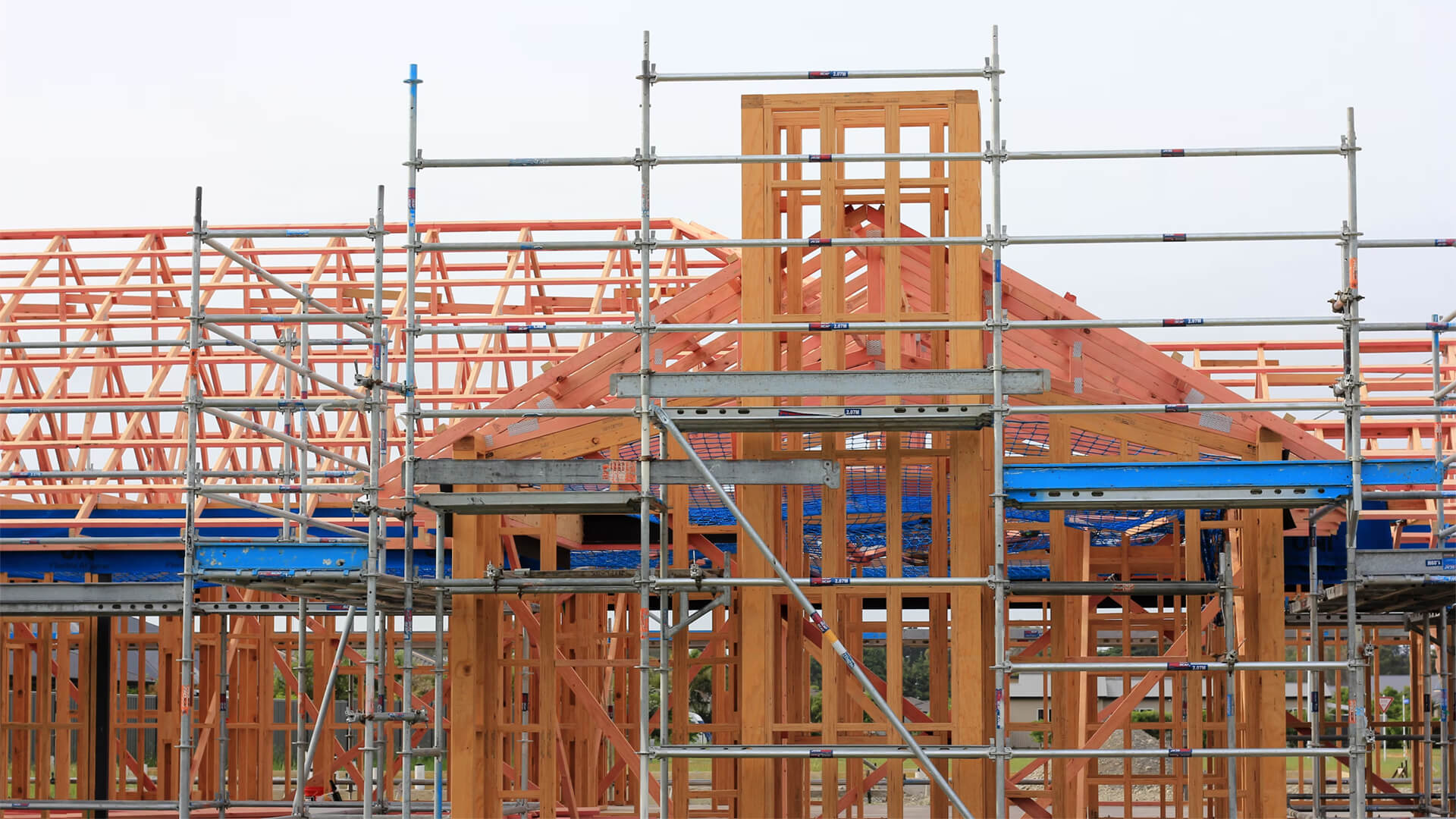
Construction of a home

Does everyone remember that bedtime story about the Three Little Pigs and the Big Bad Wolf? Well, the Trump administration is doing its best wolf impression and trying to blow the entire housing industry down. (We’re running out of metaphors for this administration, so cut us some slack on this one)

There are a lot of things hurting the US housing industry. The labor shortage will only worsen as more undocumented workers are deported. Material costs are on the rise, thanks to tariffs. All the stuff that goes into a home, whether you’re furnishing it or renovating it, is now more expensive due to tariffs. Mortgage rates are at 20-year highs and available capital is shrinking. Insurance companies are taking a hit. Not a fun time…

The pressure is on for the housing market, and it’s only a matter of time before the foundation cracks. What was a relatively healthy market just months ago is now the problem child in the US. And if that doesn’t worry you, we’ll talk about the recession tomorrow.

Transcript

Hey, all. Peter Zeihan here. Coming to you from New York City, near Rockefeller Park. That’s like new Jersey or something over there. We’re gonna look over here, Trade Center and, Lady Liberty’s over there somewhere. Yeah, there. Anyway, today we’re going to continue our firehose series about how the Trump administration’s domestic and international policies are affecting the American economy. 

And today we’re going to tackle housing. Now, there’s a lot of inputs that go into a successful housing industry. But generally you’re looking at the big four. The first one is going to be labor based on where you are in the country, seasonality, all that good stuff, somewhere between 20 and 40% of the cost of a house is just from labor. 

And as a rule, somewhere between 25% and 35% of that labor is immigrant labor, with that number going to 40 to 50%. If you’re in California or Texas. So if you do what the Trump administration says it wants to do and deport 5 million illegal laborers, you can imagine what that’s going to do to housing costs, because there simply aren’t enough people in the country to fill those jobs. 

And that’s before you consider that immigrants play an outsized role in the trade. So carpenters, electricians, that sort of thing. Plumbers. So you can see that turning housing into a very expensive proposition just right off the bat, the next raw material inputs, which again, 20 to 40% were based on where you are, what kind of structure you’re building. 

And these fall into a bunch of different categories. First, most obviously is wood for framing. The second largest source comes from Canada that now has a 25% tariff. Next up are steel and aluminum, which are used for framing, flashings window frames, structural support, nails, that sort of thing. Right now, again, 25% tariff on both of those items. 

Next up is one that people don’t think about very much. And that’s copper. But you know, if you don’t have copper, you’re not going to have electricity. Now, most of the world’s copper, or at least mostly copper that comes to the United States, is either from Canada or the United States or Mexico or especially Chile. But that’s the raw copper. 

Once you turn it into wires and electrical outlets and all that other assorted stuff, most of that stuff is going to be coming from China. And now there is a 145% tariff, which basically means we stopped shipping stuff from China for this product category. About a month ago. And even if we were to flip the switch back on today, we wouldn’t get new shipments for another two months. 

It just takes that long for everything to spin up and cross the ocean. Then there’s things like tile and stone. Most of that comes from the Mediterranean. That’s another 20% tariff. So for all of the things that go into the physicality of the House, we’re looking at significantly higher rates of cost. Assuming you can get the stuff at, oh, the third category is what you put into the house. 

Once you buy the house, for anyone who’s a homeowner, you know, you’ve just started to spend your money. You then have to put things into it, whether it’s furniture or washer dryers, refrigerators, or you have to do an overhaul. As a rule, in the United States, for every 3 to $4 we spend on the primary purchase of housing, we spend another dollar or two on add on costs to fill it up with stuff, or to overhaul it, or put in new drywall doing additions, whatever it happens to be. 

All of that has gotten more expensive to and then forth finance between the baby boomers retiring and liquidating their savings, and the Trump administration planning to increase the federal budget deficit by $1 trillion a year, the availability of financing for the private sector has shrunk precipitously. And we’re only at the beginning. Now, in, the end of you see, you’ll probably see this May 1st. 

We’re only be beginning to see the increases of what that’s going to do. The financing costs. Right now, mortgages are at about a 20 year high. Expect that to get significantly higher. Now if you look back historically, like back to the 70s when mortgage rates were like 15% or more, we’re nowhere close to that yet. But we’re getting there pretty quick because of the problem and the discombobulation between supply and demand. 

And that’s before you consider Trump’s tariffs, which and Trump’s financial policies, which are only going to drive financing up more. And then finally, something that’s not technically a housing cost, but we all have to have if we’re gonna get a mortgage insurance, because as much as construction is going to become more expensive, it is nothing compared to what’s going to happen to re construction. 

Whenever there is a national disaster, a storm, a hurricane, a forced fire, and you need to rebuild, all of a sudden you need to rebuild lots and lots of things in exactly the same spot, which means that the cost for the repairs and the recovery are significantly higher than what happened before. Which means the insurance guys are getting hit on all sides. 

All of the input costs are going up. Insurance guys, basically take your premiums and invest them into the market in order to generate capital that they’re going to need to pay out claims while the markets are tanking because of Trump’s policies. In addition, you have a real problem with foreign access of capital because that money is going away. 

Maybe referenced the finance video we did a couple of days ago. I would not want to be the insurance. Right. Because between the level of populism and Trump government and the popularity of populism, the American political scene right now, the normal thing that the company would do would be to raise premiums and to reduce payouts. But populism isn’t going to allow that to happen. So we will have federal action to grind away the insurance companies in a way that is designed to benefit the consumer. 

And the only way that insurance companies can deal with that is by stopping to offer coverage. Boy, so this all adds up to a housing sector that all of a sudden, from being an actually pretty good space four months ago, is looking to be the sector that is potentially most damaged by the mid and long term trends that are coming together. 

And that’s really just the beginning, because we’re also about to have a recession. We’ll talk about that tomorrow.

The Fire Hose of Chaos: Steel and Aluminum

Photo of Steel pipes stacked

The Trump administration has given us a masterclass on how to set supply chains ablaze using tariffs. While some supply chains are smoldering, others are raging wildfires. So, let’s look at two that are in the thick of it: steel and aluminum.

Given the industrial growth and manufacturing buildout that the US has set its sights on, these two materials are essential; however, the US does not currently have the domestic capacity to produce the amount of steel and aluminum needed for what is coming.

That means the US will still have to import a good chunk of these materials…but it will cost 25% more than it would have previously. This throws yet another wrench into the US industrial buildout, especially for industries like construction and housing.

Transcript

Hey all, Peter Zeihan here coming to you from Denver International. Today, we’re going to do the most recent in our host of chaos series about how the domestic and international policies of the Trump administration are affecting the American economy. And today, we’re going to dive into those two base materials on which everything runs. And that’s steel and aluminum. 

There are similarities within the markets, but I think it’s best to just kind of break down what you do with these things and how you get those things, and then we’ll go into the broader impact. So let’s start with steel. Roughly 75% of the steel that the United States uses is actually recycled. Steel is one of those wonderful materials that you can recycle at once, or a thousand times, and it’ll still work. 

But that doesn’t mean that all steel is equal. Recycled steel tends to be kind of ugly. And so you use it in places where you need strength, car frames, I-beams for construction, that internal skeleton you see in high rises, ships, that sort of thing. But if you’re going to do something where it needs to be pretty or where it needs to regulate electricity, you need something different. 

Basically, there’s two kinds of steel you’ve got hot rolled, which is the ugly stuff that is usually recycled, and you’ve got coal, which is virgin steel made from iron ore and coke. And cold rolled steel can be used in more advanced applications, specifically in manufacturing and in the world that we’re in now, where most manufactured steel products aren’t about strength, they’re about regulating electricity. 

You have to have something called grain oriented or non grain oriented steel. Different types of those things regulate electricity flows at different speeds and different insulation levels, and that really needs to come from virgin steel. The complication is something called a roller—when you pull the steel out of the molten mix and you’re really hot bars? 

You then push that through a roller because the way the steel cools determines the crystalline structure, which determines how well electricity does or does not conduct through it. Now you can take recycled steel and put it through a roller, but rollers are big and expensive, and you only usually put that on a very large foundry. And only the very large foundries are making virgin steel, recycled steel, hot rolled steel typically is made locally because you basically you take down a building in your state and then you’ve got a local facility that can turn it into hot rolled steel. 

If you wanted to get it to a roller, you’d have to get a completely different facility that operates on a different scale. Well, the United States needs to roughly double the size of its industrial plant. That means a lot of industrial construction. That means a lot of that ugly, high rolled steel. And while the United States is the world’s greatest steel recycler, there just isn’t enough to double the size of the industrial plant on anything less than a two century time scale, which means we just need more and more, more and more. 

And if you’re to get more and more, more and more and more, you’re probably going to be important. And if you want to go into manufacturing, you need a lot more cold rolled steel. And if we’re going to triple the amount of steel products that we put in the manufacturing, we need more and more, more and more and more. 

If you want to do this with foundries, you’re talking about a ten year buildup. If you want to do with imported steel, you could do it now. And what the Trump administration has done is put a 25% tariff on anything that is imported, which has brought construction and manufacturing costs up while decreasing the flow through of the input that we need to make any of this work at the base level. 

So everything is now moving more slowly, at a higher expense at a time. We just need more. The second metal, of course, is aluminum. There is somewhat similar policy, about 45% of what we use. We produce ourselves. And almost all of that is recycled. But just as with steel, if you want to manufacture something that is pretty, that has the combination of corrosion resistance and light weight and strength and flexibility, then it’s probably going to have to be from virgin materials. 

And the United States just doesn’t have the raw material here. The raw materials, bauxite, you basically mined that you dissolve in sodium hydroxide. You get a white powder called alumina, and then you electrocute the crap out of it to turn it into aluminum metal. And just as with steel, you can use recycled steel for construction things like window frames, for example. 

But if you’re going to do high end work like, say, I don’t know, airplanes, you’re going to want the Virgin stuff in the US just doesn’t smelt much of the Virgin stuff itself. And again, just as with steel, we need to use 2 or 3 times as much as we have yet to get the smelters on line. And so this is an ongoing problem with all of the Trump administration’s policies. 

The CART has been put several steps before the horse. We’ve raised the cost of imported steel and aluminum, but we have not. First built out the capacity of the US economy to smelt or foundry more of the stuff itself, so we get lower supplies at a higher cost when we need huge increases in the volumes that we use to in order to build out the industry, as the Trump administration says it wants to. 

And so everything’s just slowed down and got more expensive. But there’s no sector where this is more true, where it’s more of a problem than construction and especially residential real estate. And that’s what we’ll turn to tomorrow.

The Fire Hose of Chaos: Finance

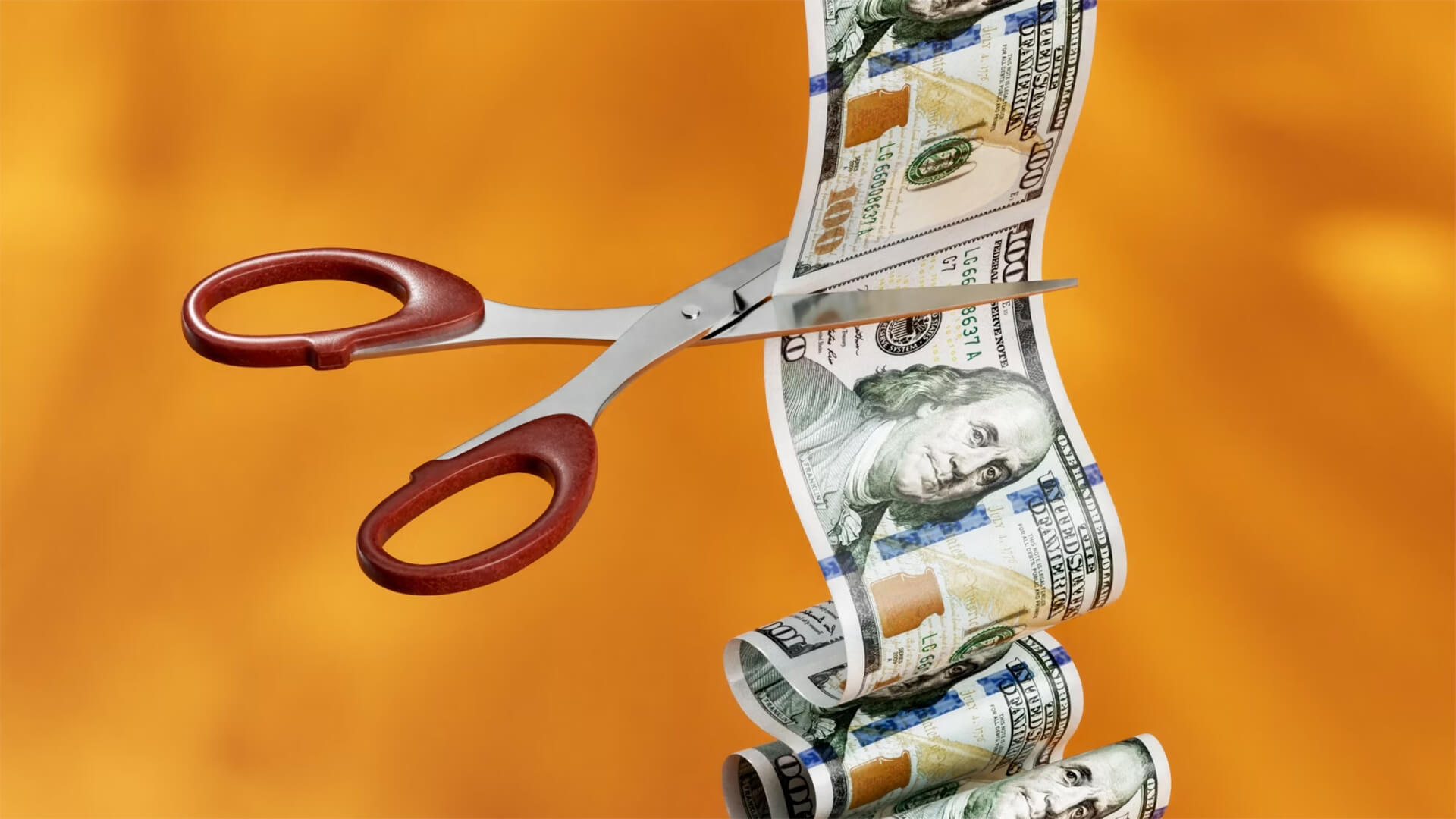
Money being burned

The US has known that a capital crunch was inbound for decades now. With the Baby Boomers retiring and Trump’s trade policies hitting at the same time, these financial woes might sting a bit more than we thought.

The retirement of the Boomers was always going to cause a capital supply crunch; it’s just what happens when people retire and begin shifting their investments to safer things. So, the cost of capital was already on the rise. Now mix in Trump’s rapid-fire tariffs and aggressive foreign policies…and you magically begin losing capital inflows into the US, exacerbating the US capital problem.

Transcript

Hey all. Peter Zeihan here coming to you from Colorado. We are continuing our Firehose of Chaos series today about how various Trump administration policies are causing negative effects for the American economy. And today we are going to tackle finance. Now there’s a lot that’s going on in finance. On any given day, the bond market, the stock market, corporate bonds, municipals, blah, blah, blah, blah blah. 

But the bottom line is that it’s ultimately an issue about the supply of capital. The more supply you have, the cheaper that capital is, the faster the economic growth is. And we even before Donald Trump got into office, we’re already facing an adjustment period. And the issue is retirement. When you retire you liquidate your savings. You go from stocks and bonds into T-bills and cash, because if there’s a market crash or a currency adjustment, you have lost out, you haven’t locked in your savings and you no longer have an income to recover. 

So, for example, for those of us who are not retired, we’ve seen the markets drop by somewhere between 10 and 20% over the course of the last three weeks, and we are all feeling that, but we’re all young enough to continue to do contribute to our portfolio. So there’s hope that will emerge on the other side in a better position. 

If you’re over 65, there is no hope because there is no income. So if you had not liquidated, you would be looking at a permanent loss in your portfolio. Even as you continue to draw income out of your savings, which would put you in destitution a few years down line. So if you’re a baby boomer and you hadn’t liquidated your savings already, you’re in trouble and you did everything you weren’t supposed to do. 

Anyway, the issue for the economy writ large is the balance between the number of people who are turning 65 every year and the rest of us. So in the case of this current situation, the issue is the baby boomers, because the baby boomers, the largest generation we have ever had, are already two thirds moved into retirement and the remaining third are going to retire over the next 4 or 5 years. 

As a rule, 70% of total global private capital originates with people who are doing this saving for retirement, people who are over age 55 but have not yet turned 65. Well now the number of people who are over age 65 is rapidly expanding, while the number of people age 55 to 65 is rapidly shrinking. 

And that split has caused most of the movements in the credit market in the last few years. So I would argue that we’ve seen roughly a quadrupling of costs of credit writ large. I’m not talking about any specific credit product, but writ large over the last four years. And while there is a little bit of fed in there, there is a little bit of trump. 

There is a little bit of Biden. It’s mostly just the baby boomers doing what you do when you retire. We expected this. We’ve anticipated this coming for 30 years. And really, no one got ready for it. Certainly not in government financing. But now we’re here and we’re living through it and we’re having to deal with it. So that’s that’s piece one that has nothing to do with the change of administration at all. 

But the second piece does, we have now had 97 official tariff policies in the last 55 days, which is, you know, two orders of magnitude more than we normally get in that sort of time frame. And no one knows what the rules are. In addition, Donald Trump keeps changing his tune every day. It’s either we’re not going to be even going to have a memorandum of understanding with countries that we’re negotiating within six months, or we’re gonna have a finished trade deal in four weeks, both of which are kind of silly. 

We’re not going to get any new manufacturers out of the plants for the first two years. Or maybe it’s going to be ten years. We’re going to have new tariffs on agriculture. Or maybe we’re not. We’re on drugs, or maybe we’re not, or in shipping or yes, we did, but then we didn’t. But then we decided to do port fees. 

The point is that no one knows what the rules of the game are. So no one is doing anything to prepare for whatever the future is, because we don’t know what the future is going to look like in terms of industrial construction, to build the industrial plant that we’re going to need to live in a high tariff world that actually has gone to zero under Donald Trump, because no one knows what is going on. 

On top of that, Trump keeps threatening other countries and not just with tariffs. He’s threatened to invade Canada, make it the 51st state. He’s threatened to invade Greenland, which is a NATO ally. He’s threatened to pull everything back from Ukraine, which is encouraging the Ukrainians, the Romanians, the poles, the Swedes, the Finns and the Germans to all get nuclear arsenals. 

The bottom line is he’s shattering everything that worked and has yet to provide a vision or preparation for whatever might be next. And in that sort of environment, no one really trust the United States. Now the US dollar is the global currency. I don’t mean to suggest that that is in danger. And the US Federal Reserve stands ready to step in to save the government bond market, to prevent a run on the bonds, to prevent a financial catastrophe in this country, because that’s part of its job. 

I don’t worry about those kind of headline disasters, but there’s a lot on the margin that is measured in trillions of dollars. In any given year. We have about $2 trillion of capital flight from the rest of the world to the United States. Now, that comes for its own reasons. And Europe, it’s because the countries of the eurozone are aging out, and you just can’t get a good return in Europe. 

In China, it’s because you have an over financial situation system where capital is considered a political good and you can’t get a good return on it, and the government restricts where you can put your money. So people try to get their money out of these systems and into other systems. And while Canada looks great, it’s not enough. There is only one country that has the liquidity and the depth of capital markets to absorb this sort of capital flows, and that is only the United States. 

And so this is where most of that cash goes, $2 trillion a year, and as we move into circumstances that are more problematic, Europe getting closer to its demographic cliff, China facing a trade war with the United States. Those flows can often increase. So, for example, at the height of the subprime crisis, after an initial shock, we were probably seeing three, $3.5 trillion of capital flight into the United States. 

Now, this helps out the United States in any number of ways. It puts more strength into the real estate market. It keeps borrowing costs down for everybody, especially the federal government. But when you have the United States as the source of the geopolitical uncertainty, and when you have the white House is the single largest source of regulatory uncertainty in the United States, all of a sudden, putting things into US financial assets doesn’t look nearly as attractive. 

And so what we’re seeing is some of that money is no longer coming and some it’s being reversed. So let’s go around the world real quick and see what that looks like. First of all, the Middle East, the Middle East has been desperate to build some sort of alternative financial system that doesn’t work on interest based functionality like the Western system does. 

And that requires basically applying a degree of Sharia law to their financial sector and having their own financial systems to, at a minimum, serve as a bulwark and an intermediary between the Middle Eastern savers and the United States. They’ve been somewhat successful at that. And that has made places like Dubai to be pretty robust financial centers. But what we’re seeing now is the limits of that approach. 

People are realizing that if you put your money into a middle eastern financial center that doesn’t allow interest, you don’t earn interest, and it’s starting to lose some of its shine. And so people are looking for other alternatives. On top of that, most of the oil Emirates in the Middle East, up to and including Saudi Arabia, have vastly overspent their income and simply don’t have money to send abroad at all. 

So, for example, Donald Trump is trying to get Riyadh to invest a few hundred billion dollars in the U.S. and they don’t have the money to do it. They’ve wasted a lot of things on their own white elephant projects. They’re spending a lot more on social programs at home. There’s no money to send to the United States. So what used to be a relatively robust partner is going somewhere else or is shrinking in on itself.  

And, you know, that’s several hundred billion dollars a year. Second is East Asia. Japan has been a big source of capital for the US for decades. China more recently, largely because both of these systems treat capital as a political good. I actually don’t think that this is going to change because the Japanese, the Chinese have known for a very long time that if you keep the money at home, it just can’t do very much. 

The only reason we should expect countries like China and Japan to send less money to the United States is if they figure out that they can build industrial plant for their export industry somewhere else, and there aren’t a lot of good options. What? There are some options in Southeast Asia, but those are under U.S. tariffs as well. So we might see a little bit of weakening, but nothing compared to say what we’re going to have in the Middle East. 

The big movement though is out of Europe. The Europeans have basically started to treat the United States like a security threat, because that’s exactly what the US under Donald Trump has evolved into. They realize they’re going to have to take their militaries in a completely different direction. They realize they’re going to fight on their own. For many of them, that means they have to have nuclear weapons. 

And that means why, why, why, why would you ever send capital to the United States? So what? Until recently, and by recently, I mean January. It was about $1 trillion of capital flight from the eurozone to the United States. Every year has probably gone very close to zero, and in fact, is probably going in reverse as people liquidate their holdings. 

Yeah, that all up. And we’re looking at capital flight into the US financial markets probably dropping by a little bit more than half. And if you put that on top of what’s happening with the baby boomers, it means capital costs are going up as well. And that’s before you consider that the US currency has dropped by about 10 to 15% in the time since. 

All that adds up for significantly more expensive financing, regardless of who you are. If you’re the federal government and you’re issuing T-bills, you now have to pay more money. If you’re looking to buy a car, your car loan is now more expensive. If you want to refinance your mortgage, that goes up as well. 

And it all adds up to slow economic growth across the entire American economic space.

The Fire Hose of Chaos: Corruption

Photo of a bronze trump doll on stacks of 0 bills

The Trump administration has introduced a level of chaos that can only result in one thing: corruption. I’m not talking about starting a cryptocurrency or manipulating the stock market, this is deeper.

Trump’s arbitrary tariff policies are destabilizing the US economy and eroding the rule of law. The ever-changing nature of these policies makes it impossible for importers to plan for or comply with. And in a broken system, corruption is bound to seep in. And since the US relies on self-reporting tariff obligations and has very few guide rails in place, businesses will likely turn to bribery to keep their goods flowing smoothly.

This is reminiscent of 1990s Russia, or even what happened in Argentina, which aren’t the best examples to be compared to…

Here at Zeihan on Geopolitics, our chosen charity partner is MedShare. They provide emergency medical services to communities in need, with a very heavy emphasis on locations facing acute crises. Medshare operates right in the thick of it, so we can be sure that every cent of our donation is not simply going directly to where help is needed most, but our donations serve as a force multiplier for a system already in existence.

For those who would like to donate directly to MedShare or to learn more about their efforts, you can click this link.

Transcript

Hey all, Peter Zeihan coming to you from Colorado. Today we’re going to do the most recent in our Firehose of Chaos series, looking at the economic impacts on the US from corruption that is being imposed upon the system by the Trump administration. And we’re not talking about here corruption at the top, like when Donald Trump forces foreign dignitaries to stay at his hotels, or when he starts a Bitcoin program to basically scam people, or when he does pump and dump systems with the entire stock market. 

That’s a separate topic. And we’re not talking about a more traditional corruption that happens in a federal bureaucratic environment when bureaucrats basically pad things like invoices and take a cut themselves, not the Chinese style. We’re talking here about corruption that is being imposed by the Trump administration on the broader economy, where it can have a much bigger, deeper impact and really start eating away at the cultural advantages that we have of the United States, including rule of law and all has to do with the rapid, rapid, rapid changes in economic policy, most notably tariff policy. 

I’m recording this on tax day, April 15th, and we have now had 94 tariff policies in 44 days, all coming from Trump himself. This is not counting the policy suggestions that are coming from cabinet secretaries or the back and forth that’s happening within the administration is they’re trying to come to grips with whatever. The most recent thing to come out of Trump’s mouth is. 

This is just hard. Trump tariffs. And in that sort of environment, it is impossible for companies who are doing importing to really know what to do because there’s a process for collecting terrorist. I mean, think about the volume here. It’s roughly $3.8 trillion in goods imports every year. That’s over 62 million container units. And we have no none, zero staff at US ports to collate those things, to understand what the value is of the product. 

And so therefore what the terror should be, the way tariffs are collected in this country is the importer self-reports what is coming as it crosses the border and into the port of entry, and then pays the taxes electronically. And in that sort of environment, clarity is absolutely critical. And having 94 tariff policies in 44 days and knowing that much, much, much more is coming down the pipe means that no one’s really sure what to do. 

Because oftentimes we get multiple tariff policies in a single day. We’ve had two days already where we got six tariff policies within an eight hour period. And so even if you are attempting to follow the rules to the letter, you can’t because you never know what is going to come out of Trump’s mouth. These tariffs happen instantly, or maybe with a 48 hour lead in. 

And then it’s just a question of enforcement and there is no enforcement. So take for example auto tariffs on May 2nd. We’re supposed to get a new tariff that’s 25% on all auto parts. If you have a container of auto parts coming in on a truck from, say, Ontario, when that hits the border, you need to know each an individual part that is in there and then report it. 

But what if it’s something that is dual use, like say, wiring? Is it an auto part? Is an electronic part, is it a welding part? Is it something else. So the administrative cost of that goes through the roof and probably is going to be higher than the part is in the first place. The other problem, let me give you another example is what’s going to happen with electronics, over a two week period starting on April 2nd. We had tariffs going up on China. We start with 20%. We went to, I think 54%. Then we went to 80 something percent, down 104%, then 125% and finally 145%. 

So everything coming in from China had that kind of scale going up, and the importers didn’t know what to do. Now think about electronics, a specific subset over $100 billion of electronics coming from China every year. Well, what we did originally was 145% tariff. That’s why I bought my extra phones and my extra computer. 

And then about April 11th, Trump said, just kidding, they’re in abeyance. In fact, we’re not even going to charge our 10% base tariff on electronics products. So it used to be relatively simple, relatively, where every container in just had a flat 145% tariff. Now they had to do a carve out for electronics the next day. Coward, like the Commerce secretary said, this is temporary. 

Don’t get used to it. So they started putting it back on again the next day, Trump said, no, it really is off. And so they started peeling it off again. And then the next day Donald Trump said, actually, no one is going to get an exemption. We’re just going to have a different bucket for computing and electronics products. 

It’s going to be part of our semiconductor tariff. So what now? We’re going to have an additional tariff on every thing that has a computer chip in it. Well, that includes everything from backyard grills to white goods to your fridge. No one knows what the system is, so no one can choose to follow it dutifully because the rules keep changing, they’re not clear. 

And instead of being built up by the bureaucracy who puts this all into the public register where anyone can follow it, it is literally, often nothing more than a Trump tweet. So where does that leave us? Well, it’s a question of how do you administer these things? There’s two problems there, too. Number one, Donald Trump fired all those, fired all of the temporary workers in the federal system. 

Imports and exports don’t flow in the same, scale on for the same products every single day. So we have a lot of temporary workers who work in the ports to help out with the work, as it needs to be done specifically for border Patrol. Those people have either been fired or directed to other tasks, and so they’re no longer is a staff to do it. 

So, for example, on April 11th, when the software for this entire system failed, we just didn’t collect tariffs that day. Oh, there’s also the issue at the upper levels. There’s no one to interpret what Trump says. Remember that the top 1400 positions across the federal bureaucracy were basically cut when Trump cleared out everyone, including the people who are typically not fired between administrations because they have the all the organizational knowledge and technical skills, they’re all gone. 

So there isn’t a cadre of people at the top that are loyal to Trump that also have the ability to design these programs. And even if there was, you know, they’d have to do it hour by hour. Well, we have seen this before. This reminds me a lot of Argentina, where the Peronist government, through the 2000 to the 20 tens, kept changing the rules over and over and over and over and over again for personal, political or ideological reasons. 

And it became easier for everyone to just find ways to avoid them. See, the problem is, is when you make the rules impossible to follow, the only way that business people can function. Is to have a personal relationship with the people who are enforcing the rules. The way tariffs work, you self-report and then there are spot checks. We have set up the perfect system that will, for force American importers and businesses to bribe the people who do the spot checks, and that is something that will corrode out through the broader system. 

This is very Russian 1990s right now. We’re setting up the stage where we’re telling our business community that they have no choice but to violate the rules if they’re going to function, because the rules are almost designed to not be valuable. Is that even a word? Anyway, it would be nice if this all settled down in the near future, but Trump has promised us in the next few weeks we’re going to have tariffs on sector products. 

So agriculture, car parts, semiconductors, medications and so on. As with everything, there is no one in the upper echelons of his administration who knows much of anything about these economic sectors. So it’s all going to be arbitrary, it’ll all be based on the ideas that Donald Trump is having at the time, based on whatever data point he happens to find egregious. And there will not be a rules creation system. 

It’ll simply be imposed by tweet. No one will know how to follow it, and it will set us up for an erosion of rule of law throughout our corporate world. Bye.

The Fire Hose of Chaos: Bye-Bye De Minimis

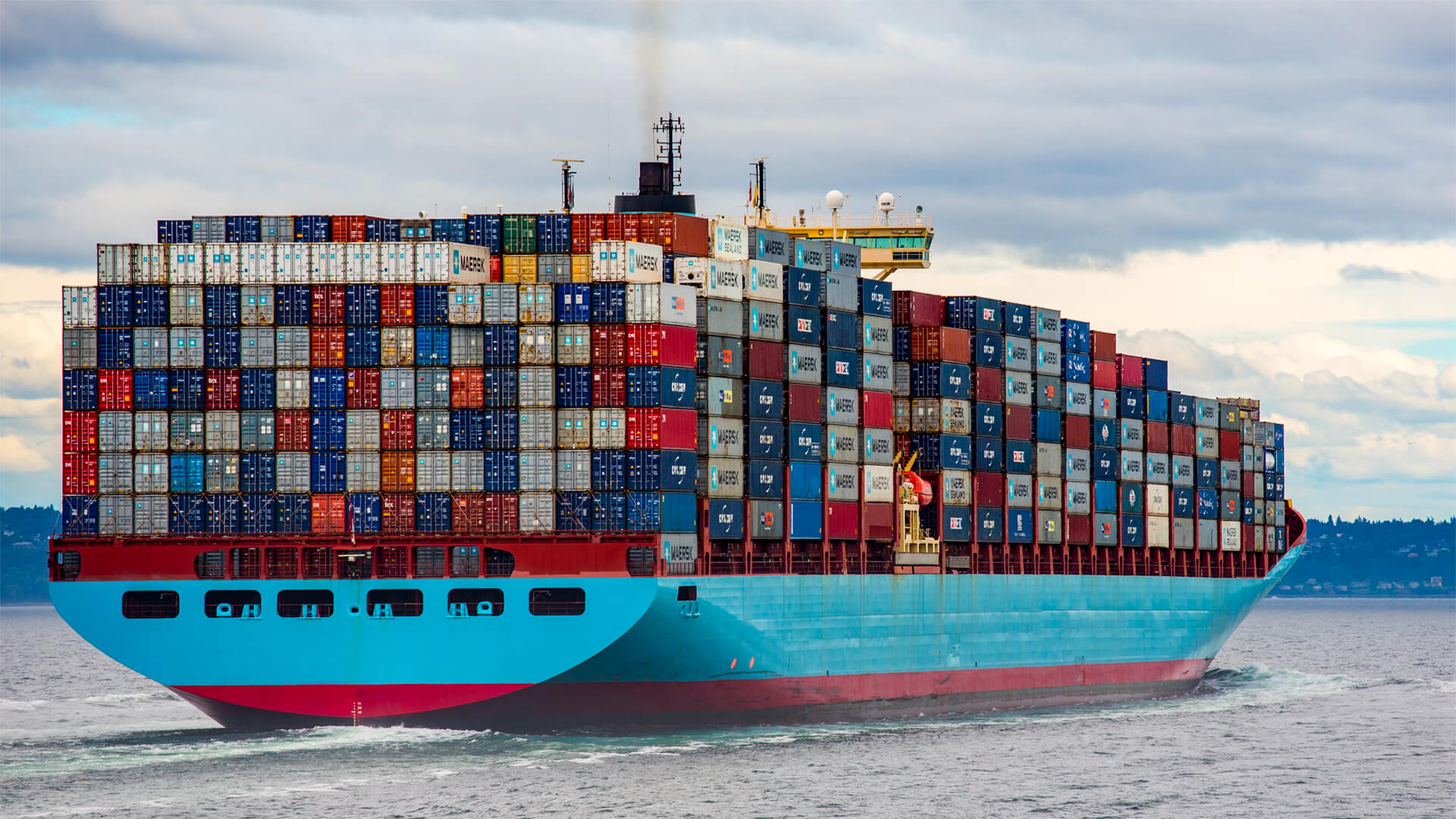
Cargo ship with containers

The US is plugging a loophole in the trade system called “de minimis” which allowed imported goods under $800 to bypass tariffs and traditional customs processes. This system will end on May 2, and these small packages will now face a 90% tariff and $75 minimum fee.

Many Chinese businesses will take a hit from this, but the biggest fish in the pond is the disruption of the fentanyl trade. Since shipments of drug precursors were abusing this loophole, the flows from China/India –> US –> Mexico will be disrupted. No this isn’t going to eliminate fentanyl, but it will slow things way down.

There haven’t been too many tariff policies to get excited about lately, but we’re going to slot this one down in the ‘win’ column.

Here at Zeihan on Geopolitics, our chosen charity partner is MedShare. They provide emergency medical services to communities in need, with a very heavy emphasis on locations facing acute crises. Medshare operates right in the thick of it, so we can be sure that every cent of our donation is not simply going directly to where help is needed most, but our donations serve as a force multiplier for a system already in existence.

For those who would like to donate directly to MedShare or to learn more about their efforts, you can click this link.

Transcript

Hey all. Peter Zeihan here. Coming to you from a Colorado morning. We are going to talk today about something called de minimis, which is how shippers around the world get stuff to the United States to avoid tariffs. Basically, you make it small. If the declared value of any package is below $800, you don’t have to register. You don’t have to pay customs. 

You don’t have to tell people what is in it, aside from like a one word description, which does not have to be accurate because it’s almost never checked. That ends on May 2nd. On May 2nd, the Trump administration’s tariff expand to the de minimis system. And it used to be as long as the declared value was under $800, you were in the clear. 

Now there is a minimum 30% tariff, which has to be a minimum of $25, which basically ends most a minimum shipping. And then by June 1st, that will increase to a minimum of $50, which will definitely put a bullet in its head. Turkeys. Two things come from this. Number one closes a loophole. 

I mean, there’s there’s not a lot of income here. The de minimis exception with the word minimis, I hope kind of communicates that as it most of these tariffs are just considered too small to be worth collecting. And by putting a system into place, the Trump administration is basically ending the practice, which means that most people aren’t going to ship things like that at all. 

And that’s, you know, a minor issue. I mean, if you get a lot of stuff from TMO, it’s a big issue. And and for China, this means a lot of small companies just lost their primary source of income. So it’s a problem over there more than it is over here. Over here the single biggest impact is going to be fentanyl. 

Right now what happens is, chemical plants in primarily in China but also in India produce the pre precursors and the precursor materials for fentanyl and then ship them in the US post to the United States, where they are repackaged into larger packages and then shipped down to Mexico for processing into fentanyl. And then the finished drugs are sent back. 

It’s all covered under de minimis. So basically, the Post Office has been the single biggest contributor to the drug trade in recent years. And this will pretty much kill that, which is great. Comes at an economic cost, but most of the cost is over there, if a little bit more inflation over here, which used to be a minor issue, but with the rest of the tariff war going the way it is, you know, every little bit hurts. 

This doesn’t solve fentanyl. I don’t I gotta underline that. I mean, while this stuff is currently sourced from mostly China, a little bit from India, and comes in through the post office, anyone with a chemical sector could source this, and the volume of stuff that is required is very little. Best guess is that all of the fentanyl that was produced in Mexico last year, all the pre precursor materials would be about the equivalent of under 100, drums, like oil drums. 

If you only got one deals that would be enough for everything. So it doesn’t take a huge amount of volume to get this going. And we’ll definitely be seeing things coming from other directions. It’ll probably go in a little bit more informal direction, like meth, where the pre precursors are actually synthesized at the labs. And that does increase the friction. 

That does slow the process. That does require a little bit more technical skill than what happens in fentanyl. And these are all good things. But this will drive up the cost of fentanyl, drive down the supply, at least in the midterm, and it’ll probably take 2 to 5 years before the fentanyl labs figure out good workarounds. Just keep in mind that once we’re to the other side of this, it will resemble the meth industry a lot more, with a lot more fabrication happening right here in the United States. 

Because once you get the precursors, the rest of it is really easy. You don’t even need a college chemistry experience to do this stuff and volume. And if you have college, chemistry experience, you can produce a huge amount of stuff. We’re talking hundreds of thousands of doses every week, so step in the right direction. Believe it or not, comes at a cost. 

Everything does. But for once, we have a tariff policy. This actually addressing a problem, and I’m going to take that as a win. 

Never mind. The tariff is not going to be 30% on de minimis items. It will be 90% with a minimum of a $75 charge. Everything else stands for now. 

The Fire Hose of Chaos: Don’t Expect Many Trade Deals

Photo of a bronze trump looking at a globe

The Trump administration can put out as much trade deal fluff as they want, but the reality is that the internal dysfunction and unpredictable nature of this admin will impede most deals from ever making it out of an email chain.

Trade negotiations are complex and take years to develop. Given the state of organizational paralysis, there’s just not enough people to handle most of these talks. All of that back and forth, up and down, and dragging through the mud has left a sour taste in most countries’ mouths. And with no real beta on how to successfully approach these trade deals, what’s the point in trying?

So, take those official claims that ‘progress is being made’ and ‘real trade talks are happening’ with a truckload of salt.

Here at Zeihan on Geopolitics, our chosen charity partner is MedShare. They provide emergency medical services to communities in need, with a very heavy emphasis on locations facing acute crises. Medshare operates right in the thick of it, so we can be sure that every cent of our donation is not simply going directly to where help is needed most, but our donations serve as a force multiplier for a system already in existence.

For those who would like to donate directly to MedShare or to learn more about their efforts, you can click this link.

Transcript

Hey all, Peter Zeihan here. The fire hose of chaos continues. And today we’re gonna talk about trade deals and why you really shouldn’t expect many. First of all, let’s talk about the organizational side of things. Usually it takes the United States about six months of consulting with industry and consulting with Congress just to build its general position on a trade talk. 

And then you go into talks with the other side, the fastest trade deal the United States has ever negotiated with Singapore. It took about 18 months. Most of them take the better part of a decade because there are so many pieces in motion. Even the Treasury secretary says that meaningful talks aren’t going to begin for another five weeks, and the first results aren’t going to happen with six months. 

Even that is just a grossly optimistic time frame. And what you normally do is the trade talks reach a point of stagnation down the road. Then you start throwing around the threat of tariffs. By doing it in the front end, everybody’s kind of on the wrong foot. And to be perfectly blunt, the United States isn’t ready to have these talks. 

Part of that is also organizationally, when the Trump administration came in, he came in with a much smaller Cordray than most presidents do. It’s really just the cabinet and a few senior aides. The Trump administration then proceeded to gut all of the departments of everyone in the top, several echelons, and then never staffed those positions with anyone but loyalists. 

And so there really aren’t a lot of people who even know how to negotiate in the first place, much less do a trade deal. So there’s really only four people in the US administration that are capable of holding the talks. You’ve got Jamison Greer, the US Trade Representative Office. You’ve got Howard Slotnick Commerce. You’ve got Scott percent at Treasury. 

And then, of course, the president himself. That’s four. And all of them have other things to do. Normally you would have literally hundreds of people taking care of all the technical aspects of the talks. And so when another country reaches out to the United States to do exactly what Donald Trump says he wants them to do. Open conversations on all of the topics. 

There are no people at the lower levels to carry on those conversations. It’s just the four at the top, and all of them are very, very busy doing everything they do with their normal day job. On top of several dozen trade negotiations. And so we’re hearing reports left, right and center from even larger trading partners that messages are going on responded. 

And any offer that they make is just met with silence for their part. The Trade Representative’s office says that it’s sending the things on to the president that he thinks are worth the president’s time. But everything just snarled up because the president is doing other things. That’s kind of piece one. Piece two is much more visceral because of the way Donald Trump has approached these things. 

There isn’t a lot of trust. So consider the situations of our top four trading partners outside of China. So first, Canada, Canada took a hard line position of resisting what the Trump administration did in its early days. And as a result, it got slapped with tariffs that haven’t come off. Mexico decided to bend and give the Trump administration everything it wanted. And as a result, it was slapped with tariffs. So with our top two trading partners, no one knows what the approach should be because the result is the same as for the Europeans. It’s a security issue. Trump administration came in, basically withdrew support for Ukraine. Ukraine is fighting Russia. Russia is the only reason that NATO alliance exists. 

It was created by the United States to contain the Russians. And so the Europeans quite rightly see the United States as a security threat. And anything that happens on the trade front, as a subsidiary to that. And the Trump administration doesn’t want to talk about the security situation at all unless the Europeans buy lots and lots of weapons. 

But still do everything the United States says. And so we’re getting a split in the security identity of the entire Western civilization. Because of this disconnect between the two, what the Trump administration says it wants, what it’s doing. And then throwing the tariff situation into the mix. And so the Europeans really don’t see a benefit to discussing anything with the Trump administration until such time that the NATO situation is untangled. 

And then finally, you’ve got Japan. Japan has tried to take a relatively low profile in this, and it’s mostly one of, it’s kind of a combination of betrayal and disgust that they’re feeling. 

During the first Trump administration, Shinzo Abe, the Japanese prime minister, specifically came to Washington, cut a humiliating deal specifically to get in with Donald Trump so that whatever the future of the United States would be, whatever the future of Japan would be, the hard work would be done, and they could proceed together. 

So the deal was negotiated by Trump, was signed by Trump, was enforced by Trump. And in the last month, the Trump administration has basically abrogated the deal and told the Japanese to start over. And the Japanese position is, if you want, honor your own deals, why in the world should we bend over backwards to negotiate another one with you? 

And so the official story is that everyone is reaching out to negotiate, and lots of good deals are being made. But the bottom line is, none of our trade partners really see the point in doing this, because everything is so erratic today is April 16th. Today, the Trump administration announced its 95th tariff policy in 45 days, raising the tariff rate on many Chinese products to 245%. 

As long as everything is so erratic, there is no point in having a conversation with the United States. Even if you can get someone on the phone because the rest of the world just doesn’t know yet what this administration actually wants. The goalposts are changing on a daily basis, sometimes an hourly basis until that settles. 

Trade talks. Real trade talks can’t even begin.

I Hope You Didn’t Want to Buy a Home

Photo of a home in the United States

Trump’s endless tariff policies will likely hit just about every corner of the American economy, but the US housing industry is poised to take a devastating blow.

Mortgage rates are higher, there’s a labor shortage, and material costs are on the rise, which all make the concept of homeownership less attainable. You would think that the aging population would help free up some of that real estate, but the boomers are aging in place, rather than downsizing or going to a retirement home.

So, if you already own a home…good for you! If you do not…I hear Van-life is all the rage right now!

Here at Zeihan on Geopolitics, our chosen charity partner is MedShare. They provide emergency medical services to communities in need, with a very heavy emphasis on locations facing acute crises. Medshare operates right in the thick of it, so we can be sure that every cent of our donation is not simply going directly to where help is needed most, but our donations serve as a force multiplier for a system already in existence.

For those who would like to donate directly to MedShare or to learn more about their efforts, you can click this link.

Transcript

Peter Zeihan here, coming to you from Florida, doing kind of an open ended series now on the effects of the tariffs on the US economic structure. And today we’re going to talk about housing. It is probably the sector that’s going to get hit hardest, with the exception of electronics imports. Both from the point of view of supply and from the point of view, of course. 

So let me just run through it real quick. First of all, if you want to buy a house, you have to get a mortgage, unless you’re incredibly lucky and mortgage rates are going up for a couple of reasons. Number one, if the Trump administration does what it says it wants to do, it’s going to increase deficit spending by roughly 1 trillion US a year, which will put pressure on the debt market hugely. 

And all those ten year Treasury bills the Treasury Department is going to have to issue, are going to add up and raise the cost of a mortgage because it’s based on the ten year Treasury. That’s number one. Number two, we were moving in this direction anyway. Most of the free capital in a system comes from a population of people aged 55 to 65, who haven’t yet retired but are preparing to. 

Their incomes are very high, their expenses are low, and the difference between those two generally gets shoved away for the future because they know when they retire, they’re going to have to basically cash out of their high velocity investments. So stocks and bonds become T-bills and cash. Well, as of January of this year, two thirds of the American baby boomers, the largest generation we have ever had, have retired. 

That liquidation has already happened. I’d argue that most of the reason we’ve seen a quadrupling in capital costs across the overall economy these last five years hasn’t been Covid. It hasn’t been Biden or Trump or the fed. It’s just been the boomers doing what you do when you retire. Well, that hits mortgage rates as well. And then we have Trump’s more specific policies, basically liquidating the migrant workforce. 

Trump says he wants to send about half of at home, roughly 5 million people. Well, the industry that migrant workers are most likely to work in after agriculture is construction. In addition, we have tariffs on steel and aluminum, which are two of the four biggest components that go into home building, the other two being copper and wood, which are also under sanctions. 

So all of the inputs that are necessary to build a house in the first place are seeing their prices go up even as finance goes up. And there’s one more angle to keep in mind if something happens to your car, if something happens to your housing, if you draw upon your insurance policy for rebuilding, you still need labor and steel and aluminum and copper and wood. 

While you might not need wood for the car, but the rest of it. And so insurance premiums are probably going up 20 to 30% just this year, specifically because of new policies out of the federal government. Finally, the boomers themselves, unlike the generations that have come before, who move into smaller units when they retire, whether it’s an apartment or assisted living or something like that, boomers are far more likely to stay in their home and age in place. 

And there’s nothing wrong with that. But what it does mean is the single largest concentration of homes that owned by the boomers is not getting freed up as part of this demographic turnover. And so if you are a millennial and especially, a member of generation Z, the quantity of housing simply isn’t there. The older generation is staying in place. 

The newer construction costs more. The home insurance that you have to get to get the mortgage costs more. And the mortgage mortgage itself costs more. You add it all up and housing is just expensive and only going to get more. So we cannot build it fast enough. And even if we could, the components that go into it are more expensive than they have ever been relative to the average income in American history. 

So if you happened to own your house, of course, this is all great news because we’re entering a higher inflationary environment, which will eat down the cost of your loan relative to your income. So if you were in a position where you have already established yourself, this is great. If you’re trying to get going. This is awful. And that is one more problem that we’re going to have with inequality down the road.

Is Trump Playing 4D Chess?

Photo of a chess board

If you’re like me, you’ve probably sat at your computer for hours on end, reading tons of articles, watching countless interviews, and you still have one question…Does Trump have any strategy at all?

Here’s the most recent example as to why my answer is no. The Treasury Secretary hinted at a plan to unite US allies first, then confront China – that makes a lot of sense. Trump, however, has taken the approach of threatening and pissing off all the US allies – that doesn’t make a lot of sense.

Relations with China are in shambles, there is no leadership in the government, multi-country negotiations are laughable, and there are no clear goals or an end in sight. If you still think that Trump is playing 4D chess, I hope for everyone’s sake that you’re right.

Here at Zeihan on Geopolitics, our chosen charity partner is MedShare. They provide emergency medical services to communities in need, with a very heavy emphasis on locations facing acute crises. Medshare operates right in the thick of it, so we can be sure that every cent of our donation is not simply going directly to where help is needed most, but our donations serve as a force multiplier for a system already in existence.

For those who would like to donate directly to MedShare or to learn more about their efforts, you can click this link.

Transcript

Peter Zeihan here coming to your Denver airport. And, in the aftermath of all the back and forth on tariffs, specifically with China, it’s worth asking the question, is there a strategy here? We’re all looking for our own world, desperate to find one. And by we, I mean Americans in general in the wider world. 

Everything at the white House seems completely chaotic, and it may well be, but we did have the Treasury secretary. Mr. Bassett mentioned that, the specific goal was to box in China. In his words, we’ll probably strike a deal first with our allies that they’ve been good military allies and plus good economic allies. And once we have that deal in place, then we were all together. 

Go and confront the Chinese. And for someone like me who plays in the world of big geopolitics, that’s really sexy and really attractive and is probably potentially a very effective way to do it. But there are a few problems. I mean, the first and most obviously, that is not how it’s happened so far. The Trump administration. 

Well, actually, let’s be honest here, Donald Trump has threatened all of the allies, some with military invasion, and that’s usually not the sort of activity you want to do if you are going to then try to build a coalition. There’s also the leadership issue and the coordination issue. The Trump administration, again, Donald Trump personally gutted the upper tiers of every department, including defense and state as well as commerce. 

So there simply aren’t a deep cadre of staff that can carry out multiple negotiations at the same time. It’s really just Donald Trump himself. And even if you believe that he’s the best negotiator in human history, still just one guy and he’s got other things going on. So the idea that he can build a coalition of several dozen countries and then lead them in negotiations against the power, that definitely flies in the face of what your lying eyes are seeing on a regular basis. 

Third, the value of the tariffs. We’re now up to 125%, I believe, is the current number for the tariff level with China. That’s enough to freeze commerce between the two countries, with the notable exception of a few things that we can’t get from anywhere else, which will just kind of suck up the cost. Trade is basically going to collapse already, and that’s before you consider that on April 17th, Chinese shipping companies and Chinese ships are going to face an additional fee on top of everything else when they hit an American port. 

There’s not a lot of room here for negotiation and putting the Chinese in a box. While I do enjoy seeing it, is not really conducive to having a meaningful negotiation relationship. And then, of course, there’s the little Intel thing. As I’ve started doing pieces on the tariff issue, I had people from the administration contacted me from time to time. 

And the most enlightening 1 or 2 of them, number one, was a guy who’s deep in MAGA world who said that the morning of the tariff announcements on April 2nd, that they still haven’t started putting together. And if you remember, the tariffs that were adopted on, April 2nd, the reciprocal tariffs were nothing of the kind, rather than looking at what everybody’s tariff levels were and what non-tariff barriers such as currency manipulation might have been, all they did, all Trump did was take the trade deficit and divide it by what we export. And that was the number, no basis in fact, no basis in reality had nothing to do with trade policy whatsoever. 

It was just a fabricated number. So nobody knows what it is that the Trump administration is actually after. So there is no way to position yourself for meaningful talks because you don’t know what success looks like. Canada has definitely been on the receiving end of this in the worst possible way. Trump originally said it was about fentanyl, but the U.S. sends a couple of orders of magnitude more illegal narcotics north than comes south. 

And he said it was about illegal migrants. The U.S. sends more illegal migrants north and south as well, again by an order of ten. He said it was about dairy, but we don’t send them in enough dairy to even qualify for their terrace level. So now it’s about Canada becoming the 51st state, and that really doesn’t leave a lot of basis for negotiations, negotiations. 

It’s not just about providing people with a method of meeting you part way, but you have to let them know what it is you actually want so they can actually think about giving it to you. And we haven’t established that relationship with anyone yet. So the more likely outcome is we just get a direct clash between Chairman XI of China and Donald Trump of the United States, and that goes on a lot of very interesting and particularly dangerous directions. 

Now, again, this is all great for me. Chaos and dysfunction are my jam. But in the meantime, the world’s largest economy and really everybody else’s economy are hanging by a thread in the meantime. And we’re looking at a recessionary stagflation area environment until this is resolved one way or another, assuming it is resolved at all.

Of Tariffs, Manufacturing and PSAs

Photo of man working in a manufacturing shop

The tariffs on China are now effectively 145% and penalties tied to Venezuelan oil could raise that to 170%. Trump’s tariff policies are nearing the triple digits, so the level of uncertainty filling every board room is chilling.

While the idea of moving manufacturing away from China is an attractive idea, Trump is trying to brute force his way through this obstacle. When you do that with one of the most complex and developed global trade systems, it’s not going to be a fun process. And there’s no safety net to this. With allies like Canada and Mexico under the pressure of their own set of tariffs imposed by Trump, who is going to pick up the manufacturing? Or help with the industrial buildout?

Needless to say, we’re heading down a very painful road. My piece of advice – you may want to pick up an extra phone or laptop while it’s still (somewhat) affordable.

(Well, that lasted for a bit…)

Here at Zeihan on Geopolitics, our chosen charity partner is MedShare. They provide emergency medical services to communities in need, with a very heavy emphasis on locations facing acute crises. Medshare operates right in the thick of it, so we can be sure that every cent of our donation is not simply going directly to where help is needed most, but our donations serve as a force multiplier for a system already in existence.

For those who would like to donate directly to MedShare or to learn more about their efforts, you can click this link.

Transcript

Hey all Peter Zeihan here coming to you from Florida. And while I was on my way here, the Trump administration issued a clarification of the tariffs on China that they’re actually not 125%, the 145%, because some of the tariffs that were on earlier are stuck with the ones that are here now. And that’s before you apply, the tariffs for China using, Venezuelan crude, which would take it up to 170. 

So I thought it would be useful to give a little bit of a technical update. Paired with a bit of a public service announcement. So the whole goal for what Donald Trump is trying to do here, which I broadly agree with, the goal is to bring manufacturing away from the Chinese space and into the US space. The problem is that, you don’t do that overnight, especially for more technical things. 

So when you see the Commerce secretary saying nonsense about having Americans work in factories screwing iPhones together, I mean, that’s just stupid, because that’s not how it works. The iPhone, for example, has 1100 supply chain steps, and they’re scattered across East Asia with about 90% of them either starting, ending, or being centered in China. So it’s not like you move one factory, you move 1100 plus all of the logistical and labor support that goes with it. 

And before you say the US can do this quickly, keep in mind that it took Apple 25 years to develop the iPhone and then another 20 years for it to turn into the product that it is today. Those supply chains are the end result of 40 years of breakneck industrialization and industrial development that was ultimately funded by debt driven investment funds, that it’s a combination of capturing all of the spare savings of the population over the course of the last 50 years, combined with a huge amount of currency printing. 

You’re talking about a combined industrial plant in China of roughly 40 trillion U.S. dollars equivalent. Even if the United States was to put $2 trillion of federal spending towards this project a year at the soonest, you would be expect the United States to be able to build an iPhone. It’s somewhere around 12 to 15 years from now, which means that no matter how high the tariffs get under the 45 right now, you should not expect to get meaningful American manufacturers with the next two years. 

In fact, Trump has said himself personally that we should see the first fruits of this project within two years. Two years is when we start to see the benefits. And honestly, that assumes that we have partners in this in Mexico and Canada. That is very clearly not clear right now because the Canadians and the Mexicans are under tariffs just like everybody else. 

So no one even wants to start building the industrial plant until there’s some clarity. And the announcement today that said that China is now up to 145. That is the 92nd tariff policy that we have had in this country in the just the last six weeks. And until things settle down a little bit, I don’t expect anyone to start investing hundreds of billions of dollars. 

Now what else? What we’ve been seeing in the last six years, roughly, is an evolution in the understanding of manufacturers about how reliable China is as a place to manufacture. So during Covid, everyone started diversifying away from China. They called it a China plus one strategy. And then about 18 months ago, well before Donald Trump had even won the primaries, there was a realization that China is no longer the low cost producer. 

There’s the sunk cost of the industrial plant, and that is a massive motivator. But Chinese labor now costs roughly two, two and a half times as much as Mexican labor, and it’s not as highly skilled. So we were going from a China plus one strategy to an anything but China strategy. Well, in the last six weeks, what Donald Trump has achieved has gone from an US only strategy for consumption to a US plus one strategy in the mind of all of the world’s major global manufacturing companies. 

So until we get clarity on the regulation, on what federal support might look like on the power grid, on the ability of the United States to produce the base materials like steel and aluminum, copper and wood and all the rest. No one’s putting anything here for the last two years, we have set regular records for industrial construction spending in the United States as part of the diversification away from China and the reshoring from China. 

But because we’ve had policies changing, oftentimes hour by hour, everyone is just stalled. And for the first time since Covid, and for the second time since World War two, industrial construction spending has basically gone to zero. Until we have clarity, that’s where it’s going to stay. Now, if I can take a flight across the country and we don’t get a new tariff policy by the time we land, then we can start the conversation about how we can begin the 12 to 20 year process to achieve what Donald Trump really wants, which means that your average low end iPhone is going to cost a shade under $3,000 if it’s originating in China, because while China may not be the most advanced manufacturing power, they are the assembly power. 

And so all the parts circulate around East Asia, are centered into China and then shipped from China to the United States, all of them qualifying for that 145% tariff. Which means that effective. Now, if you want electronics, you want your iPhone, you want your computer. Without that massive markup, you have to buy something where the inventory already exists. 

In the United States, because anything new coming in has that price markup. So Apple flew apparently 60 tons of product into the country a couple of days ago to get in under their wire. And that’s all that’s left. So you want to save a few thousand bucks, buy your new computer, buy your backup computer, buy your new phone, buy your backup phone. 

Now, I bought three of each.

Stopping Trump’s Tariffs with A New Trade Act

Photo of Congressional interior chamber

It’s hard to equate Trump’s tariff policies to much of anything, but the movie “Unstoppable” where Denzel Washington needs to stop a runaway train might be the best I can come up with. And just like in the movie, there is a quickly approaching curve that the train is going to fly off (the curve in this analogy is stagflation, recession, and a hindrance of US industrialization).

All standard measures of stopping this ‘train’ are gone. Both political parties are fractured, Trump has surrounded himself with loyalists, and the traditional policy influencers have been sidelined, while the judiciary doesn’t typically intervene in trade policy, Congress does have constitutional authority over tariffs. While this power was ceded to the president through the Trade Act of 1974, a new bi-partisan effort called the Trade Act of 2025 could reclaim it. This bill would require congressional approval for tariffs to remain in place beyond 60 days.

Even if this did make it to Trump’s desk, it would be sent back to the Senate and require a veto-proof majority, which isn’t going to happen any time soon. It’s probably going to take red states feeling some significant economic impacts before we can entertain the idea of slowing, much less stopping, this train.

Here at Zeihan on Geopolitics, our chosen charity partner is MedShare. They provide emergency medical services to communities in need, with a very heavy emphasis on locations facing acute crises. Medshare operates right in the thick of it, so we can be sure that every cent of our donation is not simply going directly to where help is needed most, but our donations serve as a force multiplier for a system already in existence.

For those who would like to donate directly to MedShare or to learn more about their efforts, you can click this link.

Transcript

Peter Zeihan here. Coming to you from Colorado on a bright, sunny, shiny, snowy morning. Anyway, taking a question from the Patreon crowd today, and it’s with all this terror fun and games that’s going on in Washington at the white House. Is there any institution? Is there any person? Is there anything in the United States that could make it stop and maybe unwind it? 

So we aren’t in a stagflation era environment so we don’t face down a protracted recession, and that we can actually keep the industrialization that we already have. It doesn’t look great. We’re at a time of political transition here in the United States, where both of the political parties have broken down. The Democrats basically collapsed in the last election, and it’s reasonable to think that they won’t come back. 

And the Republicans have been so subsumed in the cult of Trump that all of the business leaders and national security leaders and so on. That used to be the bedrock of the Republican Party. How are I best being called rhinos at worst, are being called Democrats or something else? Anyway, so the normal political things that could, shape a president’s behavior are gone. 

In addition, Donald Trump is a nonstandard president, and he’s made sure that there is no one in his circle who knows anything. His chief manufacturing trade adviser has never manufactured a thing in his life. His commerce secretary is craven, and there is no one in the upper echelons of any of the departments that really knows anything about their purview, because Trump fired everyone and replaced them with political lackeys. 

So he only accepts into his circle the information he wants. And one of the few bodies that actually has access to that circle are the Russians. And anything that destroys American long term economic vitality is something they’re going to be enthusiastic about. So you can expect a steady drip of that sort of misinformation going right to the top. 

As for the other levers of government, the judiciary never touches trade, or at least only obliquely. So there’s no one you can sue in order to get a court ruling that might make this better. The only body that matters, the only body that has really ever mattered when it comes to hemming in a president who’s gone off the rails is the Senate. 

And I’m not talking here about impeachment, although that is obviously, something that they’re famous, infamous for based on your politics. But, the Constitution very, very clearly lays out that interstate, intrastate and tariff policy is a congressional purview, not one of the executive branch. The executive has no native powers to regulate international trade at all. What happened is we had something called the Trade Act back in 1974 that gave the president tariff authority. 

So this is power that has been granted to the president decades ago, a half century ago. And so if Trump is going to be stopped or reined in or mollified or something, it has to come from the Senate basically initiating a repeal of that act. And that process has begun. Something called the Trade Act of 2025, which a couple of senators, one Republican and one Democrat, have co-sponsored, and it’s starting to get traction. 

If it were to pass, however, it would still then have to pass the president’s desk, and he would undoubtedly veto it. So it would have to pass by a veto proof majority. We’re nowhere near the political forces that be shifting in that sort of direction. We will have to have a more severe economic downturn than just a stock market crash like we’ve seen in the last few days. 

We’re talking about something that puts a lot of people out of work in a lot of red states. Keep in mind that Republicans have 53 of the 100 and Senate seats. You would need at least 67 senators to vote against the president for this to work. And even then, we’re just at the start of the process. Then we have to unwind a lot of stuff. 

Anyway, the person to watch is, the senator from my home state, Iowa. Chuck Grassley, he’s the senior member of the Senate now, I believe he’s like 185,000 years old, almost as old as Biden and Trump. Anyway, he’s been in the Senate for 35, 40, 60 century since the US was founded. Years. Long time. Anyway, what Chuck Grassley is known for more than anything else is he’s a rule of law fanatic. 

And while he has gone along with Donald Trump’s plans on pretty much everything, he’s done so with a wince, the whole way, because he knows that these are not conservative values. These are not good for the United States. But the party has shifted, and he feels he has to shift with it. 

But he was one of the co-sponsors for this bill that would repeal, presidential Tariff Authority, basically, if, if, if, if the bill in its current form were to become law after 60 days. You have to convince the Senate, that, the tariff is a good idea, otherwise it goes away. 

So you can use it as a negotiating ploy, but it doesn’t make it into policy. Whether that’s good or bad or indifferent is really not the point. The point is, is that the, the champion of rule on the Senate has been roused, and things are starting to move nowhere close to a resolution. But the process has started.