The Revolution in Military Affairs: Artificial Intelligence

ChatGPT logo with a synthetic brain hovering above

AI is working its way into just about every aspect of modern life. I mean, who didn’t fall for that video of the bunnies jumping on the trampoline. But artificial intelligence might not be the game-changer in warfare that you think it is…at least not in the short term.

AI promises faster processing, targeting, and decision-making, which all sounds great, until you throw in the wrench of deglobalization. As the globalized world collapses, the semiconductor supply chain will fall apart. The most advanced chips will not be able to be created anymore. Between the bottlenecks of EUV lithography and the countless single points of failure, we’ll be stuck with what we currently have (or yesterday’s tech).

When you factor this into military applications, it means older systems like cruise missiles and smart bombs will be mainstays. Fully AI-enabled systems will be severely constrained and reserved for the really important stuff.

Transcript

Hey, all. Peter Zeihan here come to you from Cassidy arch. And where am I? Capitol reef National park. Sorry, it’s been a busy week. Today we are going to close out the series on the revolution in military technology. As advances in automation and digitization in materials science and energy transfer come together to remake how we fight. 

And we’re going to close out with something that you probably don’t need to worry about. And that’s artificial intelligence in war. The whole idea of AI is it can process faster than we can’t make decisions faster than we can, and potentially target with lethality faster than we can. 

I don’t think it’s going to happen. The problem is that the semiconductor supply chain for the high end chips that are capable of doing AI, and as a rule here, the cutting edge is going to be three nanometers and smaller, simply isn’t going to be able to survive the globalization age. So any chips that are not made in the next relatively short period of time, no more than a single digit of years, are really all we’re going to have for a good long time. 

And that means that the machines that are going out and doing the fighting have to rely on something that is older, that is not capable of processing and has to be linked back to something back home, either via wire or telemetry or some sort of radio communication. And that makes for a very different sort of beast. 

There are roughly 30,000 manufacturing supply chain steps that go into semiconductors. The high end stuff. And there’s about 9000 companies involved, and about half of those companies only make one product for one end user. There’s literally thousands of single point failures, and it only takes a few of them to go offline for you to not be able to make the high end chips at all. 

But the place that I think it’s going to be most concentrated, the place where we’re all going to feel like the place where is going to be obvious is going to be with the lithography. Specifically, we are currently using something called extreme ultraviolet, which is done by a company called ASML out of the Netherlands. And they are the world leaders in all of this. 

There are other companies that do the fabs other than TSMC and Taiwan, but the lithography can really only be done by the Dutch. And it’s not like this is one company. This is a constellation of hundreds of companies, and every time one of them either has a generational change or goes public, ASML basically sweeps them under the rug, absorbs them completely, puts the staff in different areas and puts it all under referential lockdown so there is no way to duplicate what they have. 

And so if you take this gangly supply chain that wraps the whole world and any part of that breaks, we can’t do EUV at all. And that means functionally, no chips that are worse than or better than six or 7 or 8 nanometers based on where you draw the line, we can still do something called deep ultraviolet, but extreme ultraviolet. 

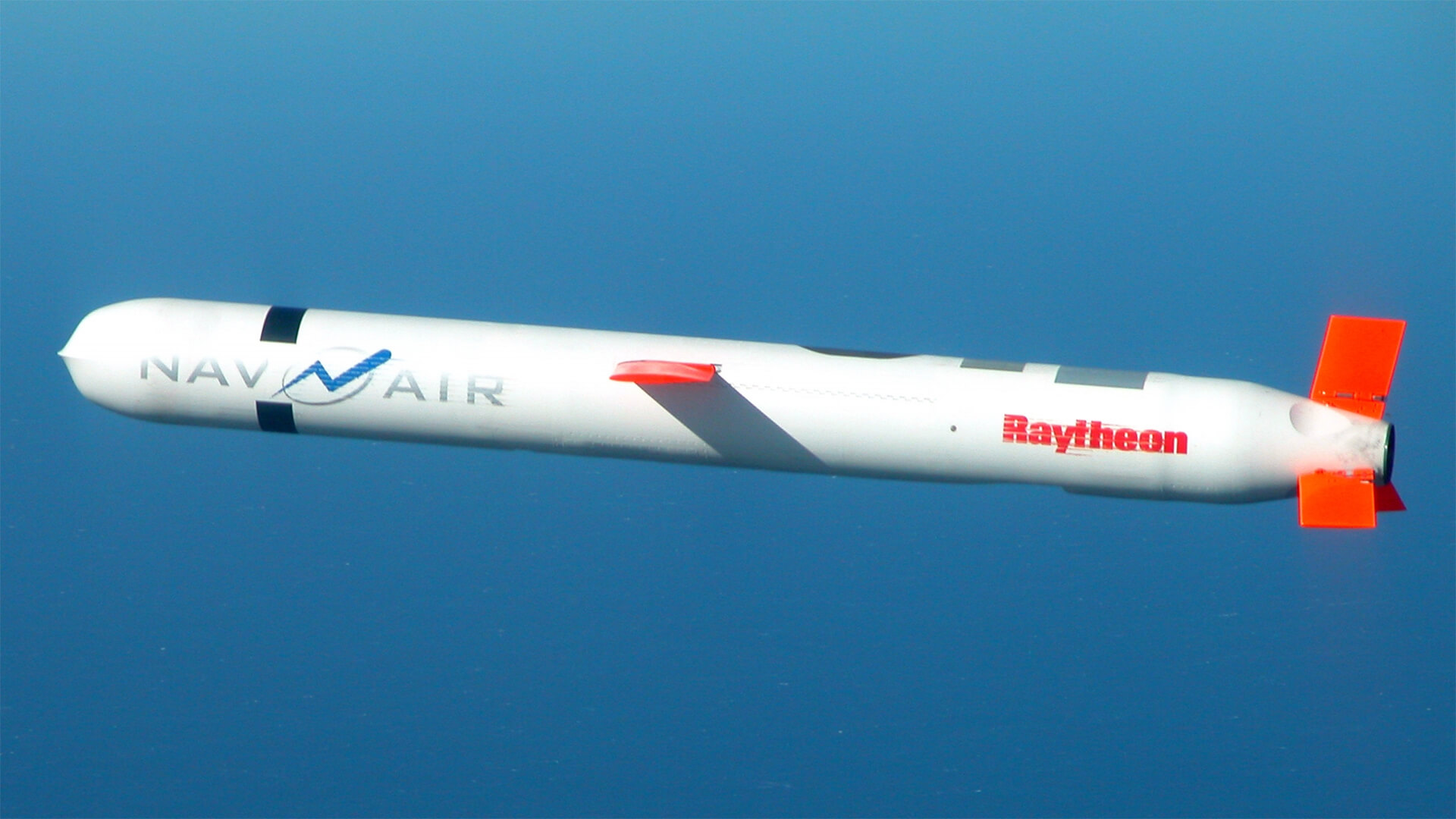
It just becomes impossible. And that means that the best chips that we will have ten years from now are going to be very similar to the best chips we had ten years ago. And that limits what we can do with any sort of technological innovation. For the purposes of the military, it becomes very, very truncated. Old weapons like smart bombs and cruise missiles actually don’t use very sophisticated chips. 

20 year old chips are just fine. It’s the high end, the thinking, the processing, anything that’s more than guidance and requires a degree of decision making, that is what’s going to be off the table. So while I applaud all of us for having these conversations about the implications of AI, what it means for the workforce, what it means for culture, what it means for morality and legality. 

These are great conversations. It’s very rare that we get ahead of the technology in discussing what it can and can’t do, and start thinking about the implications for us as people, but I think we have some extra time because once this breaks, it’s going to take us 15 to 20 years to rebuild it. And that was back before everything accelerated with the Chinese fall and the Trump administration. 

Now it’s probably going to take longer. So have these discussions. I think that’s great. But it’s really probably going to be a problem for the 2050s.

The Revolution in Military Affairs: What’s Ahead

Photo of a soldier pointing to a tech screen

Before we close out this series on military tech, let’s discuss what military advances are on the horizon (and our last episode will cover something we don’t need to worry about).

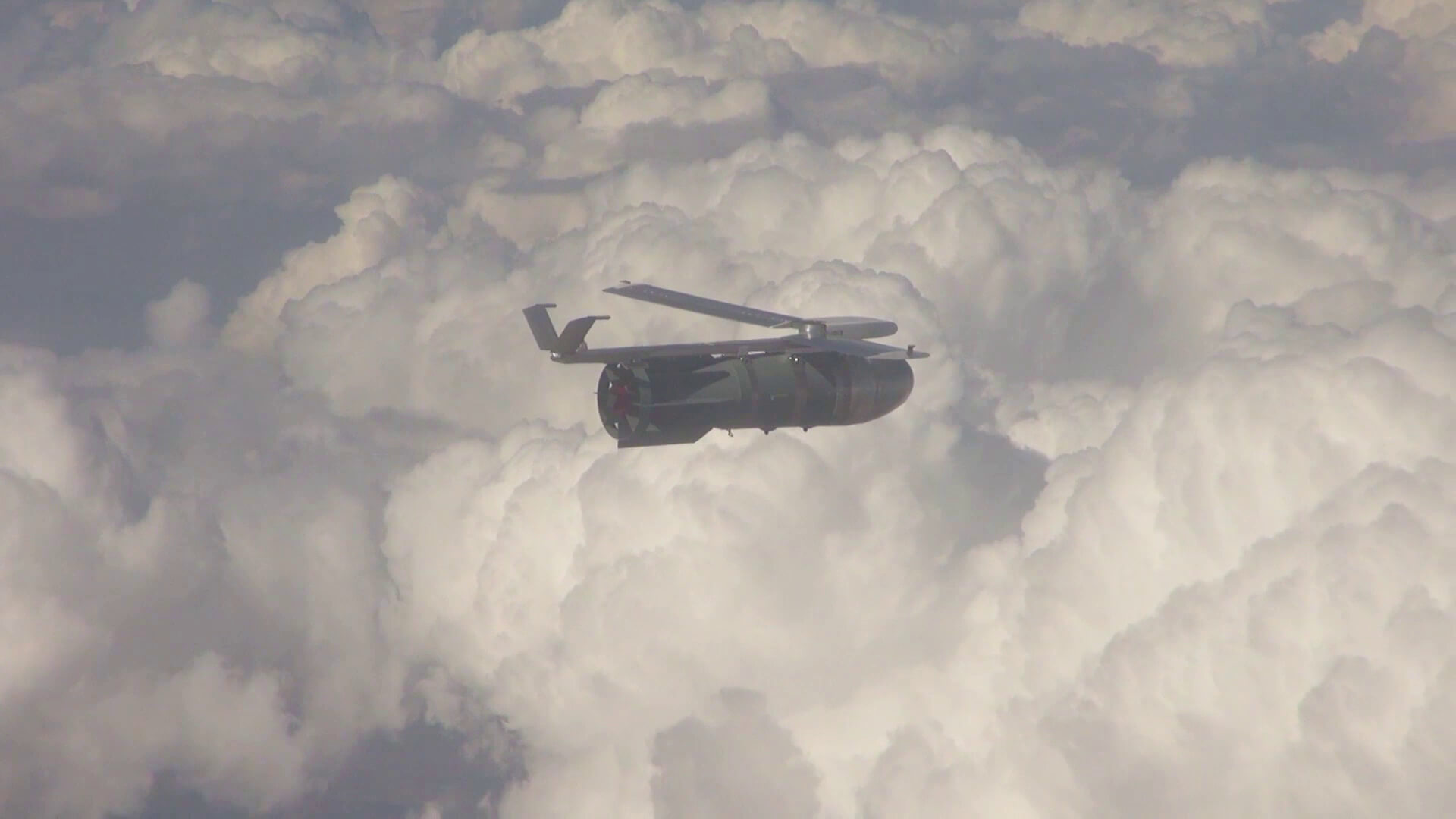
Many of the larger evolutions coming down the pike are related to drones. Whether it’s strikes, surveillance, detection, or deadly jobs…drones will likely be taking it on.

These technologies are just the beginning though. As battery science improves and more advances are made, the battlefields will be going through countless iterations.

Transcript

Peter Zeihan here coming to you from a foggy Colorado today. We’re do another in our Military Revolution series how changes in Materials Science and Data Transfer and Energy storage are shifting, the way the military works, and some of the new things that will be seen in the not too distant future. Today we’re going to talk about some edge cases that are likely to move into the mainstream in just the next few years. 

And these kind of fall the two general categories. First, you’ve got the topics where humans just aren’t the best tool for the job. These are things where they’re either dangerous, or expensive, we have to train someone up to an extreme level to do a job that then has a high mortality rate. 

You know, things you don’t want people doing. And the first one of those is saving other people, search and rescue in a combat environment uses a huge amount of resources to cover a large amount of land to save 1 or 2 people. It doesn’t matter if it’s a fighter pilot, it’s been shot down or someone who’s been shot out of the field having drones do this not only builds up your combat awareness for the field in general, but also allows you to provide, say, targeted supplies and of course, guide the real force in to pull the person out of trouble. 

The general topic of recon, something that is starting to be called perch and stair. Basically, you have a recon drone, but rather than flying around at altitude, it finds a place at, say, a quarter of a building and just parks and stays there. Maybe it has solar panels on its back so it can extend its battery life and it just looks around. 

It’s a mobile sensor that, for the most part, isn’t mobile. You know, you might call this a spotter or a spy in another condition, but if you can automate that, and instead of having one guy in one place that might be able to move around, you can have hundreds if not thousands of mobile sensors that can extend their life to span by just not flying the whole time. 

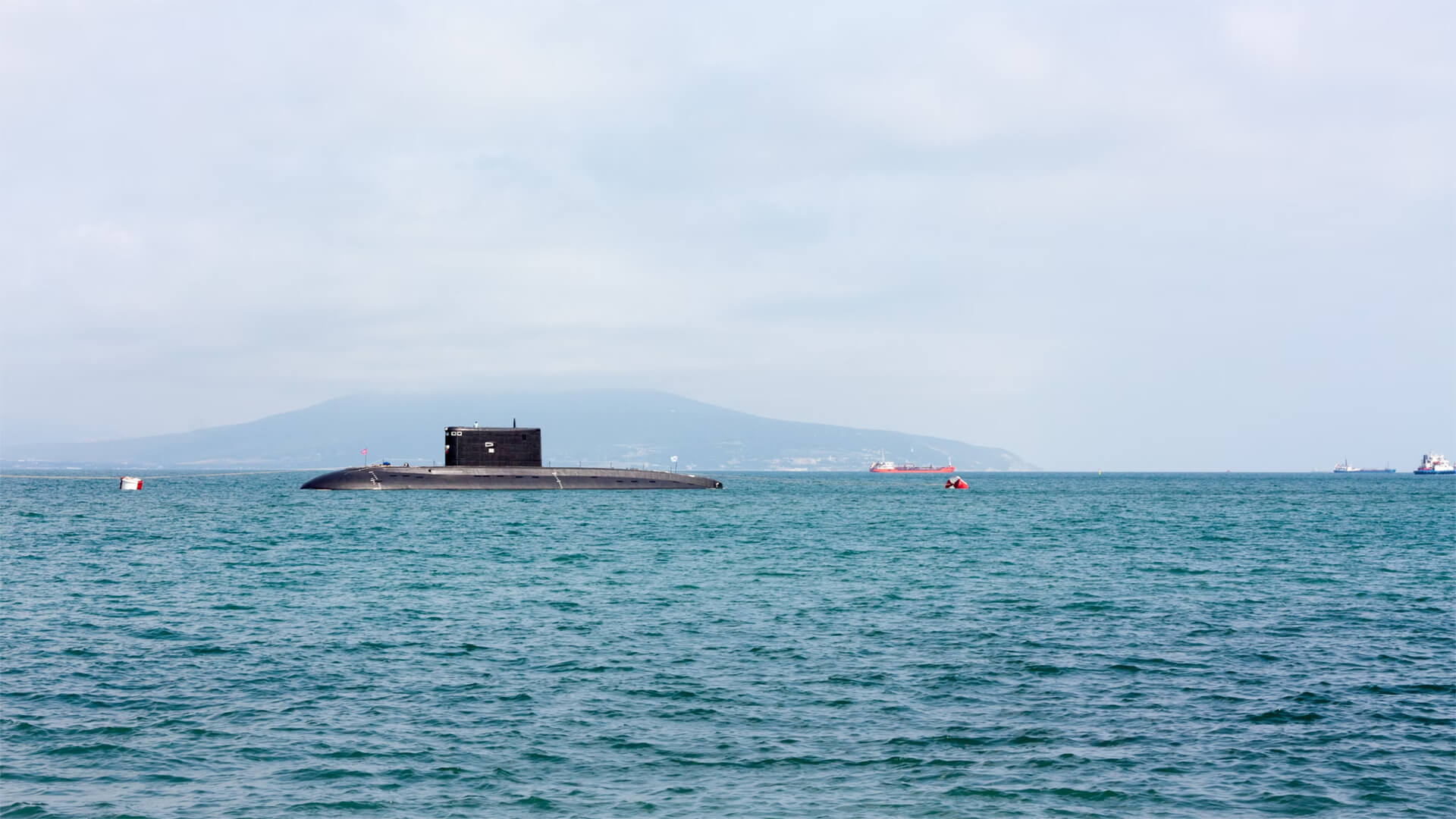
And third is something called an underwater swarm. Submarines are among the most expensive things that most modern navies can float. And if you can throw a few dozen things into the water, not only do you get some excellent acoustic collection for purposes of locating them, you know, you put like a one kilogram charge on each one. It doesn’t take a lot of those to take a multimillion dollar sub completely out of action forever. 

So these are technologies that you apply them to. What we know we need. And all of a sudden they really are game changers in terms of efficiency. Now the second category are things that we used to do and maybe even used to do well, but we haven’t done it for a long time. Keep in mind that the US military has not been preparing to deal with another peer adversary until just a few years ago. 

And the immediate post-Soviet era. We thought of the Russians no longer as an enemy. And so we stopped preparing to fight a global conflict with them. We then spent 20 years in the war on terror, focusing on counterinsurgency. That means going against the Taliban. And that means you don’t really need air power. You really don’t need air defense. 

And so certain aspects of our military were allowed to atrophy just from lack of use. And the two biggest ones are air defense suppression and hunting mines, whether land mines or sea mines. The general idea was, you know, if there is no big force out there fielding things you need to shoot through, then why would you maintain an entire arm of your force doing things that are just going to sit around? 

So, for example, we really only have a couple of minesweepers left, but naval minesweepers that are drones are a great idea. In essence, you have a drone that’s hooked up to your ship as it’s puttering around at a relatively low speed doing a sonar capture. You locate the drones and you send out a suicide drone to take it out. 

They’re already doing this in, say, Romania in the western part of the Black Sea. You can use aerial drones with radar to triangulate metal signatures in the soil and locate landmines before anyone can step on them. 

And for air suppression. Back in Vietnam, we had this thing called a wild weasel. Basically, it was a bunch of suicidal maniacs on a plane who would fly into Vietnam ahead of the bombers to activate air defense. Well, do that with drones. Don’t do that with a manned plane. In fact, do that with drones backed up by other drones so that by the time the real bombers get in the air, defenses are already gone. 

Same basic concept holds for coastal patrol. Now, the United States has never really been good at coastal patrol because we have oceans between us and everybody else. But this is one of those technologies that everyone else is going to find really useful. Again, in the post-Cold War world, everyone slimmed down their military spending, with navies seen as just something you would never need again. 

History was over. It was a world of commerce. Why would anyone shoot at anyone’s commerce? Well, that’s gone, but the time it would take to build up a coastal fleet and coastal patrol capability is going to be measured not in years, but in decades. Or you can just have a fleet of drones. It basically flies patrols out on your coast and then, if necessary, a more robust naval vessel can go out to take care of whatever the issue happens to be.  

So these are all things we’re going to see in probably just the next five years, certainly the next ten. And this is just the leading edge. These are things that me as a nonmilitary guy can kind of just think of based on the gaps in the system right now as the military technologies continue to evolve. We’re going to see radical applications of all of these. 

And keep in mind that drones are really just the leading tip of this. We don’t know what our material science is going to be in the next five years. Maybe we’ll get a new battery chemistry that allows for longer loitering, that generates an entirely new field of military tech. We’re just at the beginning here.

The Revolution in Military Affairs: Water Wars

Water sloshing from a cup

Today, we move onto the backbone of civilizations, the lifeblood of (most) meaningful empires—water. Will future wars be fought over it?

The short answer is that it’s unlikely to happen. Water is a pain in the ass transfer, making it impractical for long-distance or military-scale operations. Water doesn’t make sense if you need to move it, you must settle, build, and expand with water in your backyard.

Of course there are some exceptions to the rule. The Nile will become a heavily disputed resource between Egypt, Ethiopia, and Sudan. Over in Central Asia, diversions of water from the Soviet-era have drained the Aral Sea and countries like Uzbekistan may have to invade neighbors to secure dwindling water supplies.

Water scarcity is real, especially in these hotspots, but water wars are not likely to become a global threat.

Transcript

Hey, Peter Zeihan here. Coming to you from Colorado. Today we are taking a question from the Patreon page specifically about water wars. Do I expect the distribution of water to be the source of military conflict in the future? Short version is this is something I usually don’t worry about, for the simple reason that water is really hard to move and it’s pretty corrosive to any system that you’re going to use to move it. 

So, for example, if you just spill some water on your countertop and touch it, you’ll notice how it clings to your finger in that weird drop. That’s something called hydrogen bonding. It’s an atomic feature that a small molecule that has some very strong positive and negative aspects tends to link together without actually forming. See ice. That hydrogen bonding basically causes a cling between water and everything, including itself. 

So pumping water outside of a municipal environment is very, very difficult and very, very expensive. So if you are going to move large volumes of water from one place to another, you’re generally not going to do it by pipe. You’re going to use gravity. And that means basically digging some sort of canal and allowing the, the world to do the work for you. 

There are some exceptions, of course. Whenever you have a municipal situation, you obviously need water treatment and distribution. That is all done by pipe. But again, it’s very, very energy intensive. And you will always have some places like, say China who work going to let something little like physics or economic rationale get in the way of national unity. 

And so the Chinese are in the process of basically diverting several of their rivers in order to ship water from the south, where it’s more humid and more jungly to the north, which is more heavily populated and more arid. But this comes at a huge cost environmentally and economically. What that means is it’s really difficult to imagine a situation where people will go somewhere to get the water and bring it back. 

If they’re going to get the water, they’re going to go there and they’re going to stay. And that is also very hard as a rule. Economic development follows, the same track. You start with water. You use that water to grow food. You use the food to expand your population. You use the capital from that population growth and then agricultural sales to establish a tax base and eventually an industrial base. 

You then use that industrial base to build a military. And it is all rooted in having water at the very start. If you don’t have that water, you’re never going to get the industrial base that is necessary to have a projection based military. And so if you look out throughout history, while you do sometimes have dry cultures that conquer wet ones, the only ones who then become meaningful cultures that can project power in the future are those that then stay, conquer, assimilate, wipe out the generation that they’re conquered and then move on. 

It’s just the technology that is required for the industrial age just doesn’t allow it to go any other way. So, are there exceptions? Of course. Every rule has exceptions. Let me give you the two big ones. The first one is the Nile region. Most of the rain that fuels the Nile River falls in the highlands of Ethiopia. 

It then flows down through the tributaries of the Nile, through Sudan, before eventually entering Egypt and becoming the riverine culture that we all know from history. Well, the water falls in one place, passes through another place, and is ultimately used in the third place in the existing treaty systems that date back to the colonial era say that Sudan, and especially Ethiopia, aren’t supposed to tap the river at all. 

It’s all for Egypt. Well that’s breaking. And we’re seeing the Ethiopians and the Sudanese starting to take more and more water from the river for irrigation purposes in order to stabilize their populations and have economic growth. Hard to argue with them, but that does mean there’s no longer enough flow coming down into Egypt to sustain Egypt long run. 

So sooner or later, something is going to crack. Either we face an economic and ecological collapse in Egypt, or the Egyptians, get creative with military power and go up river with the intent of blowing up the dams, preferably in a way that does not trigger a fresh biblical flood in Egypt. No easy solution, but there’s certainly not enough water for everyone to come out on top. 

The second big issue is in Central Asia, where the premiers provide the headwaters for a couple of rivers called the AMA. When the sphere and those two rivers flow through Tajikistan and Kyrgyzstan, Turkmenistan and Uzbekistan before dead, ending in the Aral Sea. Well, during Soviet period, cotton plantations were planted throughout these areas, most notably in Kazakhstan and especially Turkmenistan and Uzbekistan. 

And now most of that water never even makes it to the Aral Sea. So it’s become desiccated. And right now, what’s left of the arrow, the little bits that are left are only about 10% the volume of what existed there. Back when these diversion systems were built, back in the 1960s. So the entire area is gradually drying out. 

And after having a few decades of agricultural runoff get into those rivers, they’ve basically polluted what is now the open salt plains of the formal Aral Sea bed. And hotter, drier conditions mean more winds, which means those salts are being whipped up in storms and dropped several hundred miles away and are causing health issues for everyone in Southeast Asia. 

So sooner or later, one of the downstream states, if it has the capacity, is going to invade the upstream states to control what little of the water there still is. Of the five stand countries, the one with by far the most military capacity is Uzbekistan, and it is very close to the physical borders of Kyrgyzstan into Guestand, which control the headwaters. 

So expect a hot fight there, with the Uzbeks moving in with the intent of taking over. And unlike the situation that we have, say, with Egypt and Sudan, there isn’t a big giant chunk of trackless desert to serve as a barrier. These population centers are all on top of one another. So for water, that’s what you’re looking at pretty much a local issue. 

We still obviously have issues with distribution in the United States, but it’s very rarely cross-border issue. And where it is, it’s really just limited to those two locations.

The Revolution in Military Affairs: Recruitment

Cadets marching in the military

Most of the conversations in this series will revolve around technology, but recruitment is a large component of keeping a military productive. We’re not talking about the high school pull up competitions that the recruiters do, but more of the systemic ideology around recruitment itself.

As military technology evolves, we’re seeing the equipment on the battlefield change overnight. However, finding the people to operate this tech and fill out the ranks needs a refresh as well. Considering that 2/3 of the American population are not straight white dudes, the DEI conversation is about to get a new angle.

Transcript

Hey, all Peter Zeihan here. Coming to you from Capitol Reef National Park. We are continuing our series on the future of military technology. And today we’re going to talk about staffing and recruitment. What is the United States or really any country need if it’s going to succeed in this changed era of warfare? 

Well, the short is that we really don’t know yet because we haven’t invented the future. 

What we know for sure is that the military is going to have to be more flexible. And if you look at the Ukraine war, it’s easy to see why, as little as a year ago in the Ukraine conflict, it was all about fighter jets and bombers and artillery and tanks. But in that time, it’s evolved completely, with most of those platforms no longer being able to hold their own against evolutions in drone technology. 

And drones are just leading edge of this revolution that combines new types of digitization and energy transfer material science to completely new packages. We now have, for example, our first rocket drones, which have a range of over a thousand miles that can easily take out a refinery. The world is changing. What we do know is that the old style of doing war, which is basically throwing a bunch of bodies at something else and see who comes out on top, isn’t going to work. 

One of the biggest problems that I have with the current administration, most notably Defense Secretary Pete Hegseth, is he doesn’t seem to understand how the numbers work. Hegseth is on a roll, basically on the warpath against something that he calls Dei diversity, equity, inclusion and the idea that one group should have favoritism over the other. I agree is silly, but in the military context, that’s not how Dei has ever been implemented. 

Dei in the military is a recruitment tool based on how you look at the numbers. At most, 30% of the American population are straight white males, and on average, straight white males are older than the average American population. 

So no matter what your definition is of what a good soldier, marine sailor, airman happens to be. The bottom line is, if you’re drawing from a small pool that it’s getting smaller and you’re fighting a war of numbers, by your own definition, you’re going to lose and lose badly. And that’s before you consider the changes that are coming to the technology. 

We need better skill sets embedded within the system, and that means recruiting people there in a different way than how we do it now. right now we generally bring in people in the age bracket of roughly 17 to 25, and we break them down. 

We indoctrinate them into the system, train them on systems that have existed not for years but for decades. Well, that’s not going to work when the technological time to target is measured in weeks to months. We also need to change procurement. The idea that the military goes out there and says what it wants, and then private military contractors go out and design the system, basically parade it in front of the military to see what works. 

And then years from now, we get a prototype, and years after that we get mass production. That won’t work because this all has to go from the point of imagination to the point of deployment in less than a year. So everything about how we fight right now needs to evolve, 

And that means a broader skill set with as wide of a diversity of backgrounds as possible. 

And so why, while we’re going through these transitions, will you tell anyone in the United States who is a woman or who is black, or who is Hispanic, or who is gay, that they have limitations on how they could choose to serve their country? It just doesn’t make any sense from a strategic point of view. 

About the only argument that I have seen that argues for a different direction in order to maintain power is basically the Elon Musk approach, which is to basically go out for everyone who is a white, straight male who has employees go out, sleep with 12 of them and start generating a new white race. 

Well, you know, I don’t know if you knew how math works, but if that all happens today, you’re not going to get your new crop of your new race for 18 years. And we will be on the other side of this military transition by then. We need to work with what we have, and that means using the skill sets of absolutely everyone who has an interest of being in the US military.

The Revolution in Military Affairs: Wars Without People

Image of a drone firing missiles

Unless we figure out how to make wights from Game of Thrones or find the Dead Men of Hunharrow from The Lord of the Rings, we’re going to have to figure out how to fight wars without (living) people.

As populations shrink and demographic structures grow top-heavy, military strategies will have to shift. We’re seeing drone tech control the battlefields in the Ukraine War, but defensive tools are limited to jamming or hoping someone makes a lucky shot on the damn things.

This has created huge swaths of uninhabitable marches; areas too dangerous to live in, but too contested to control. As drone tech proliferates and new wars breakout, these marches will likely become the new standard. Wars will be less about holding ground and more about denying function. That is, until the tech evolves again.

Transcript

Hey all, Peter Zeihan here. Coming to you from an aspen glade in Colorado where it’s definitely hiking season. So I’m out and about. Today we are taking a question from the Patreon crowd that’s also going to apply to our drone series, A Future of Warfare series. The question is, in an age of terminal demographics, how does that shape military strategies and tactics? 

That goes perfect with the military? Revolution? We’re experienced with drone technology as new technologies, information transfer, energy transfer and digitization and material science combined to enter a completely new world of warfare. But before we talk about where we’re going, let’s talk about where we’ve been, because it’s really instructive. So if you dial back the clock like, really dial back the clock to the late dark ages, early Middle Ages, when the Mongols were starting to boil out of the eastern Eurasian steppe and sweep across the world, the new technology of the day massed cavalry charges and cavalry, information transport and cavalry driven trade, gave the Mongols a degree of speed, lethality that no one had experience in the human condition to that point. And over the course of a few decades, they just absolutely rampaged across, China and eastern Russia and eventually knocked off the Russian government in Moscow itself, as well as all of the areas in the step to the south. The issue was pretty simple. A bunch of dudes on horse, if they know what they’re doing, can go fast and free over the plains, come in, raid, kill a bunch of people and take what they want, and then gallop away and be over the horizon before any sort of interpretive infantry or archer force can ever do anything. 

So they do this over and over again, through over government, after government, after government, and eventually discovered that they could pack a little water with them and actually cross short periods of desert and attack from directions that no one had seen before. And there just weren’t any good defensive technologies to counter them. Well, eventually, after they killed enough people and destroyed enough governments, including what was the Russian government of the day, people started to develop counters, by hook or by crook? 

By accident. The first one was developed by the Russians, and that was basically just going to hide in the forest, because if you’re in a forest, it’s really hard to get a good straight line for a cavalry charge. The people would have to dismount. And since there were never more than a few tens of thousands of Mongols in the entire space of the former Mongol Empire, any time they did dismount to pursue people into the woods, they were always wildly outnumbered and wildly hated. 

And they didn’t last. So we got this zone where the Russians had retreated. Some of the Russians, the true Russians, if you want to use that term, had retreated north of Moscow into the Tay guy, where they were basically living off of lichen for three generations, and the Mongols, who controlled the open flats by the time the Mongols got to Europe proper, a different strategy, had been developed. And that was to be perfectly blunt. Fortifications. Doesn’t matter how fast your horses, doesn’t matter how good you are with a boar or a lance, if someone is behind a stone wall, you’re kind of out of luck and they’re just raining arrows down on you. So Europe entered their fortification era initially in Poland because of the Mongols or other reasons to have fortifications. 

But in this sort of system, you basically developed feudalism where everyone would run into the fortification when the Mongols or some dudes on horseback or bandits would show up, you’d wait them out, and then you’d go out, back out to your house and tend to the fields. And so everyone tried to store about a year of grain within the fortification so they could wait out a siege. 

That was the technology, the offensive versus defensive development of the day enter a world of demographic decline. And we are literally running out of people aged 50 and under who can say, pick up a rifle or a base plate in a mortar and march out into the field and do things. One of the problems when it comes to military technology is what happens the next day after the battle. 

And if you have a long, grinding conflict like most conflicts are, you have to be able to hold the ground and protect the civilian infrastructure that is necessary for the civilian population to exist. Otherwise, there’s no point in having a military in the first place. So back in the day, people would live in the forests. Not a great option, but the Russians have lower standards. 

Or you would run into the fortifications. In today’s world, the new horses of the plains are drones which can, on a tether, go ten kilometers out from launch point or without a tether can go maybe a thousand, even 1500. Those numbers will only go up. And if you have an opposing force that is in range of you, that has a lot of drones, they can basically make your terrain completely unlivable. 

So we’re probably going to see a resurrection of an old term that dates back to Roman terms, the march, areas that are on the edge of your terrain that you cannot reliably protect. But the opposing force coming in cannot reliably occupy. They’ll become a no man’s zone. 

We already have extensive territories like this in eastern and northeastern Ukraine, where the Russians have basically made it impossible for people to live or farm or maintain basic civic services. 

And the Ukrainians lack the manpower that’s necessary to reoccupy these lands to provide a buffer for the civilians. And so we’re getting an ever widening band that is becoming unlivable. Some version of that is in our future, unless and until we develop a better defensive technologies. Now, at the moment, if you want to take down a drone, your only option is a really good rifle shot, good luck or jamming, which generally only has a range of a few hundred meters if that. 

So we are very early into this transition, and the combination of less manpower to establish that buffer, combined with an insufficient defensive envelope to provide passive cover for that buffer, means that more and more territory across the planet is simply going to be unlivable because of conflict. You think that’s not going to come to a town near you? 

I hope you’re right. But keep in mind, we’re already seeing the echoes of the Ukraine war technology percolating throughout the European militaries across Africa. And really, the laggards here are everyone in the Western Hemisphere, where we haven’t had a meaningful war in well over a century. And honestly, we’re a little out of practice when it comes to actually protecting terrain. 

All of the conflicts that the United States has been involved in since World War One have been on a different continent, and that means we have prepared for different sorts of things. We have been the functional Mongols. We have been the ones that been writing fast but not really bothering to protect very much, with the exception of nuclear cover during the Cold War, which is a very important exception. 

But what it does suggest is that the state, the power of the state, is going to become significantly more potent as the ability to man an army becomes less capable. It’s going to be more about denying the other side the ability to function. Then it’s going to be about protecting your own until the technologies change again.

Xi Purges Chinese Military of Corruption…Kinda

Photo of Chinese military marching

Xi Jinping’s ongoing anti-corruption campaign has just found and purged its eighth CMC member, General Miao. And while the Chinese military is quite corrupt, this effort is more about consolidating political control than anything else.

China’s Central Military Commission (CMC) has the combined power of that of the US Joint Chiefs, Secretary of Defense, and President. The Chinese military is run by party loyalists, rather than experienced strategists; this, along with the constant purging of leadership, shows just how deep the instability runs.

I’m not saying that the US should just ignore the Chinese, but maybe we should take their military capabilities with a grain of salt.

Transcript

Hey all, Peter Zeihan here. Coming from Colorado. Today we’re gonna talk about something that went down in China on the 27th. That was last Friday. We have had a arrest of General Miao. Am IA0, I think that’s pronounced Miao. Anyway, you know, he was one of the leaders on China, US Central Military Commission, which is kind of a combination of the Joint Chiefs of Staff, but also throw in the defense secretary and the American president. 

If you were put them all in one body, that’s the CMC. It’s a six person body. Yao is the eighth person that has been, arrested and fired, for nominally corrupt. And now the Chinese leader, XI Jinping, has been operating what he calls an anti-corruption purge now ever since he became premier back in 2012. Most of it isn’t actually about corruption. 

Most of it is about political control. Basically going through the system, getting anyone, who might theoretically stand against him. He started with political rivals and then just went into anyone who might eventually show the potential. And now that the CMC has basically been gutted over and over and over and over again, I think it’s worth pointing out two things. 

Number one, in the Chinese military, the anti-corruption angle might actually be a little bit more legitimate than it is with all of his other political purges. China’s military is one of the most corrupt parts of the society, and he actually waited until just 2 or 3 years ago to really start going after it. That doesn’t mean there isn’t a political angle. 

Of course, there’s a political angle. The CMC is not an independent state body. It is part of the Communist Party. The party runs the military, which brings us to the second point. It’s like you can imagine how effective I think the Chinese military is. I mean, number one, when all of the decisions are made by party ideologues as opposed to people with military experience. 

You know, there’s your first hint, second, when the ruling body of six people, which includes the chairman, has had eight people purged from it, it tells you what you need to know about the quality of the leadership. So I’m never going to tell the U.S. military to not take the Chinese threat seriously. 

All I want to do is kind of underline that when the leadership is this bad and rotates this much and is purged of this thoroughly, this often the idea that the Chinese order of battle actually matches what the Chinese state is capable of is kind of a stretch.

The Revolution in Military Affairs: Ditching Artillery

Military vehicle shooting artillery

Next up in our series on the changes in military tech, we’re looking at artillery.

Gone are the days of endless artillery barrages. The Russians have relied on this tactic for years, but drones and acoustic detection are changing that. When a cheap drone is capable of quickly spotting, targeting, and eliminating artillery, something clearly needs to change. And no, a “shoot and scoot” strategy isn’t sustainable.

There’s still a case to be made for artillery, but it is quickly waning. In future conflicts, new systems that prioritize speed, precision, and decentralization will be essential.

Transcript

Okay. Peter Zeihan coming to you from Arches. We’re continuing the Revolution military affairs series, and today we’re going to talk about artillery. Artillery has been one of the three most important military breakthroughs of the last couple of centuries because it allows, a force to assault another force from literally miles away. The artillery that the Russians, for example, areas in Ukraine generally has a range, between 10 and 20 miles based on what piece of hardware they’re using. 

But you throw drones into the mix where a single first person pilot a drone costs less than an artillery shell. You change the math. So I am no artillery expert here. And the technology is changed very quickly. So the purposes of today’s video is basically just to talk out loud through what we’ve seen and where it might lead. 

Countries that rely on artillery really do fire on it. The joke in the military is that Russia is an artillery force. It just happens to have some tanks. Hold on. 

Okay. Where were we? Right. Russia. So in the Napoleonic Wars, France, which had the most technologically advanced military at the moment, invaded Russia, made it all the way to Moscow. And the Russians kind of got their asses handed to them. And if it wasn’t for some very stubborn defense and Partizan attacks, and especially a very, very rough winter, Moscow probably would have fallen. 

And the Russian lesson from that was that they needed to do an upgrade for their military. However, this is a country that was basically entirely serfs. There were no technical skills among the population. They didn’t have much of a intelligentsia from a technical point of view. And so they settled on artillery because aside from the guy who was like pointing and aiming, everything else was just kind of like looking around. 

And that Russian serfs could do and that the Russian, Crown would trust them with. Because artillery is really not the best weaponry for. So, you know, taking on Red square. Anyway, so they invested heavily in that and that is basically dominated Russian and then Soviet military planning ever since. Very low value added soldier base and just focus on obliterating anything in front of you from miles away. And don’t advance until there’s nothing but rubble. 

So the problem the Russians are facing now is that it’s not that the artillery is irrelevant. It’s just it’s incredibly vulnerable. And they basically have to do something that called shoot and scoot, because between, acoustic detection and radar, they really can only get one shot off before counter battery fire starts. 

The Ukrainians, in order to detect drones coming in, basically built an acoustic detection system around the perimeter of the country and all over the front lines so that as soon as the drones are coming in, they can translate the sounds for what kind of drones are coming on, what vectors, so they know what air defense to activate. 

It works for us as artillery too. So it used to be that once an artillery shot fell, you’d use radar to basically track it back and then shoot back. But now with the acoustics, they can figure out when it fires and so the kind of battery fire can actually happen before the shell is even hit. So artillery an order of magnitude less useful than it used to be. 

So the Ukrainians and the Russians are discovering that what they were trained on during the Soviet periods is no longer how war works, because the technology has left the artillery piece behind for the most part. This won’t necessarily be true everywhere. When you consider things like the Paladin system, for example, that the US has, not only is it self mobile, but it can fire multiple shots at different angles and then hit the same target at the same time. 

It’s kind of cool, mobile being the key thing there. But for most artillery, you know, it’s in the past, it’s no longer cost effective for what it can do. Which brings us to a different sort of problem. So a big attraction, for artillery, for the Russians. Was that anyone, any idiot, any village idiot could operate? 

Most of it because it’s just lugging stuff from point to point with drones. It’s first person shooter. You basically have to fly it manually and direct it, and that’s all. Well and good. And that doesn’t require a huge amount of skill either. Outside of, you know, the Tendo, the problem is in manufacturing, you can produce, artillery shells and artillery back in your industrial plant and then send to the front line. 

And you need a limited source because, you only make a few of the tubes and you make a lot of ammo. Well, with drones, the Russians and Ukrainians are both using thousands of these things a day. So it’s a very different workforce. It is much more technically skilled. It needs to be an a lot larger number. In Ukraine, which was the heart of the old aerospace industry back during Soviet times, this has not been too heavy of a pull. 

And based on whose numbers you’re using, the Ukrainians have gone from producing about 5 to 20% of the parts for their drones at home to now 70 to 90% based on the style. The Russians are nowhere near that good, because the Russians don’t have anywhere near that sort of technical skill within the country. And most of the people with those skills left, either in the 1990s or the 2000 or more recently to avoid the draft. 

So they’re bringing in talent and technical skill from places like Iran and North Korea, and especially China, where you can use the Chinese industrial plant to produce the parts that then flow into Russia and then make it to the front line. Anyway, bottom line of all of this is this is very much a work in progress. We’re only three years into the war. 

have a secondary power. Russia fighting a tertiary power, Ukraine. And the rules are changing every week, every month. So to think that we have a firm idea of how this is going to play out is silly, but to think that the weapon systems that we’re used to seeing on the battlefield are the weapons of the future is also silly.

The Revolution in Military Affairs: USS Nimitz

The aircraft carrier USS Nimitz. Photo from Wikimedia: https://en.wikipedia.org/wiki/USS_Nimitz#/media/File:USS_Nimitz_(CVN-68).jpg

This video was recorded back in April of this year, hence the snow.

The Nimitz is making its final voyage (with a recent detour to the Middle East), before it’s set to be decommissioned and replaced by the more advanced Ford-class carriers. However, a shiny new toy isn’t enough for the US to maintain global influence.

While these massive carriers are a significant component of US power projection, the true strategic advantage lies in the global alliance network. This network provides basing rights all around the world, enabling the US to get around quickly and affordably. If the US continues this current trajectory, the logistical backbone of US power projection would go limp.

Transcript

Hey all, Peter Zeihan here coming to you from snowy Colorado. And today we’re going to talk about a major change that is going to come to the U.S. armed forces and most notably the Navy in the years to come. It all has to do with the USS Nimitz, which was the first of the Nimitz class, a super carriers, of which ultimately we have ten and have been the backbone of American military power projecting throughout the world for really since the 1960s. 

But it’s been a hot minute, Anyway, at last, Bremerton, Washington, on the 28th of March for what is intended to be its last sail. The Nimitz are being replaced by a new carrier class, the Ford class, which are larger, can carry more, planes, can launch and recover them faster. All that jazz? Definitely superior platform. 

Not that the Nimitz is anything to sneeze at. Anyway, the whole idea is these things have been in service for well over a half a century, and it’s time to start taking them out of circulation. As technologies change, and we can move to a military force that is more lethal and faster, and that is not going to happen. 

One of the things that people forget when they start talking about how we don’t need this country or that country is arguing the single greatest advantage that the United States has right now is its alliance network, and not necessarily because in a fight, we get to take over their armies and navies and control them ourselves, although we do have that, and that is a big deal. 

But it’s basing rights. The United States is one country, and part of our security comes from the fact that we have oceans between us and everyone else. But that means if we want to influence things somewhere outside of North America, we have to get there first. And that means a long logistical chain linking up, not just soldiers and sailors and ships, but tanks and men and ammunition and supplies and diesel all around the world. 

And with the basing network that we have right now, there are very, very few spots on the planet that we can’t reach in a very short period of time with a lot of firepower, but if the United States leaves NATO like it sounds like it’s going to if the U.S. breaks the alliances with the Japanese and the Koreans, which it looks like it’s going to, then America alone has a very different force posture. 

And one in which it can’t get much of anywhere. So what we’re going to see is, on a very large scale, the recreation of a tactic that the United States use during the early months on the war on terror. We needed to get to Afghanistan, but we didn’t trust the Russians and we didn’t trust the Pakistanis. So what we ended up having to do is take one of our older carriers, the USS Kittyhawk, and park it off the Pakistani coast and use it as a mobile base. 

It was by far the most expensive way we could have possibly done it. But in the early days after nine over 11, it was considered worth the cost. Well, with the direction that the Trump administration’s foreign policy is taking us now, any time we want to deploy anywhere, we’re going to have to do something like that. And that easily cost ten times as much as simply having an ally with a patch of ground that we can squat on. 

When you lose your alliances, you lose the ability to project power cheaply. And yes, we spend a lot on our military, but it’s nothing compared to the budget line. Items were going to be seen in the future, as we have to take things like the Nimitz and repurpose them from being some of the world’s best warfighting assets and basically being floating rafts.

The Revolution in Military Affairs: Naval Advances

Photo of a US Naval Carrier

Trying to predict the long-term future of naval warfare may be futile, but we can examine some of the weapon systems emerging in current conflicts.

The war in Ukraine has demonstrated that naval vessels are becoming expensive floating targets. From jet skis packed with explosives to other low-cost drones, the closer a ship gets to shore, the easier and cheaper it becomes to destroy. However, when naval assets remain offshore, they lose much of their tactical effectiveness.

Two technologies will be at the forefront of this shift: detection and jamming. Identifying threats through drones, satellites, and radar systems will be essential. And the ability to operate at extended ranges with greater flexibility will define the future of naval power. There’s still much to figure out, but one thing is becoming clear—the era of close-shore naval operations is coming to an end.

Transcript

Hey, all. Peter Zeihan here. Coming to you from Arches National Park in Utah. And today we’re doing another episode of our Future of Military Technology series. Basically, we’ve had a series of breakthroughs in energy transmission and data processing, digitization, materials science that are basically opening up a whole new wave of military technologies that we’re inventing as we go. 

So anyone who says that they know what’s going to be the weapon system in five years, ten years, 20 years, whatever. We’re kind of making this up as we go. Don’t be too harsh. But what we know now from the Ukraine war is that. Wow. If you have a conventional military warship that requires to be within 160 miles of the coast, you’re going to lose that ship. 

Basically, if it can be seen, it can be targeted, and it can be targeted with weapons that you might not be able to detect until they’ve blown up the size of your vessel. The Ukrainians in particular, have taken motorboats and jet skis and things like them, loaded up with, equipment and with bombs and either gone out and used them to shoot down things like planes and drones, or simply ram the ships on the other side. 

And naval vessels are among the most expensive things that a military can field. So to be taken out by a jet ski is kind of embarrassing. From both, strategic and political and of course, a financial point of view. But that’s just where we are now. The question is, how far out does the range have to go before a naval vessel is safe? 

And if you’re talking about a military asset being safe because it has to be so far back that it can’t function, it’s no longer really serving the purpose anymore. At the moment in Ukraine, 100 miles is absolutely the death zone for any Russian vehicles. In addition, the Ukrainians have shown on multiple occasions that they can strike much further away sometimes, as much as 350 miles, if they know where the target is. 

And that at the moment means that we can’t be a mobile target. So they can say attack ports at places like Novorossiysk, with limited effectiveness, certainly anywhere in the Crimean peninsula. But they can’t necessarily go after a ship just because it’s out there. So the whole World War Two story of sending destroyer squadrons out to find the other guy’s aircraft carriers, that is not what we’re talking about. 

Or at least not with today’s technology. Ten years from now, who knows? Which means that in this interim period, while these technologies are still being developed, detection is going to be the big thing, and that is going to be a combination of service radar, satellite recon, in a sense, and a network of drones that can go out at distance and network their information together. 

Just keep in mind that at the moment, getting a clear signal from your operator to your drone is the limiting factor in drone warfare. One of the reasons why those fiber optic spools that can go out several miles are so important because they can’t be jammed. Put any jamming out. However, in a drone that’s a hundred miles from shore, it’s just going to fall into the sea because it can’t report anything. 

It can’t be directed, you can’t see through its eyes. So we’re going to see this kind of arms race with two technologies when it comes to naval issues. Number one detection. And that can combine the old with the new. And number two jamming. And the question is how powerful the jammer can you fit onto a naval asset? 

I don’t have an answer for that. Like I said, these are being invented as we go, but the old days of being able to do easy amphibious landings. When I say there’s nothing easy about an amphibious landing or patrolling relatively close to the coast, that those are pretty much in the past now. And any country that has naval access that is somewhat constrained. 

So basically, if your ports are within, say, 500 miles of anybody else, those ports are no longer functional for military assets in the world. We’re in. That includes every port in Russia, that includes every port in Saudi Arabia, that includes every port in China. And we need to start thinking of naval power in a completely new way. 

That is a lot more flexible and has a lot more range.

The Revolution in Military Affairs: Europe’s Future

Last time we chatted about the misalignment between American weapons systems and European needs. So, what does the future of Europe’s military strategy look like?

A growing threat from Russia means European countries are rearming, and quickly. Between Polish conscription, Swedish and German defense budgets climbing, and everyone else preparing infrastructure at home, there’s a lot happening. The big question on everyone’s mind is who/what can replace the Americans and their weapons systems?

European jets are too limited in supply, so a different direction is being pursued. Think drones and jamming systems. After seeing success in Ukraine, the rest of the Europeans are treating these options as viable way of fighting wars and defending themselves. And they’ll get some tech and help from Ukraine.

While there are still capacity and infrastructure issues that will have to be dealt with, this is solid alternative to relying on the Americans. Obviously, there’s still a need for infantry, navy, and manned aircraft, but this is the first step in shifting Europe’s military future.

Transcript

Hey, all. Peter Zeihan here coming to you from Colorado. Today we’re going to continue our open ended series on the future of military technology. And we’re gonna look specifically at Europe. The Americans under the Trump administration have gone from being Europe’s security guarantor to perhaps even a security threat. And everyone in Europe is trying to figure out if there’s any pieces of the relationship that can be salvaged. 

And in the meantime, laying the groundwork for whatever is next. The problem, of course, is the Europeans know in their bones that the Russians are coming for them. And if Ukraine falls within 2 to 3 years, they’re going to be fighting on European territory. So we already have the poles, which have basically reestablished something equivalent to the draft for all men of potential fighting age. 

The European Union is encouraging its people to build basically prepper kits that allow them to deal for three days on their own minimum, without any sort of government services. The Swedes are announcing a tripling of their defense budget. The Germans are doing something similar. And on and on and on. But the common refrain and all of these things are two things. 

Number one, the Russians are coming. We have to get ready now. And number two, the Americans can’t be relied upon. And that includes American equipment. Historically speaking, since World War two, about half of all European military procurement has come from American firms, and most Europeans are basically looking to drive that number down to zero as quickly as possible. This isn’t necessarily a political issue from the European issue. It’s a practicality issue. 

Legacy systems like fighter aircraft can take decades to design, years to build out the industrial plant, and then you get only a certain flow through of production per year. So if you look at the options that are in front of the Europeans right now, there’s really only four. First is the American F-35, which is by far the best in terms of overall capabilities, but it has a couple giant, flaws in it. 

Number one, it’s over $100 million in airframe and then triple that addition over the lifespan of the vehicle. So, you know, the Europeans just don’t have that kind of money. But the other options Europe has designed for themselves don’t look great. 

The best one is probably Sweden’s Gripen. They can make about 25 of those a year. That’s great for Sweden, but it’s not enough for anyone else. The French have the rifle, which they can also do about 25 a year. Again, because the French have been maintaining an independent defense. Identity for decades. That might might be enough for just France, but there’s no more for anyone else. 

And then you’ve got the Eurofighter Typhoon, which is kind of the European equivalent of the F-35, but older technology, which is of questionable use in a lot of situations. It’s designed the industrial plant is designed for 60 year, but it’s really never run more than 20. So the idea that you can spin this up is a question mark. 

But the bottom line is, you know, if you’ve only got 2 to 3 years and you’re talking about needing about a thousand airframes, there’s just no version of traditional fighter jets that works for you at all. And so the Europeans have to turn the page on military technology and try something fundamentally new. 

Consider the system in Germany, which is kind of emblematic of what’s going on and what will be going on. They’ve invested nowhere near enough for the defense industry to be self-sufficient on any stretch of the imagination. And me personally, the idea of a relatively unarmed Germany. I consider this a plus from a security point of view personally. 

Anyway, now that the Americans are proving to be a little whacko, the Germans have to do their own thing. And so they’re looking at the legacy systems that they’ve invested in. After the Ukraine war began in 2022. The Germans decided to belatedly sign up to the F-35 program that the Americans run, on the condition that the manufacturing for the German airframes actually happen in Germany. 

So the Americans basically worked with the Germans in 2023 and 2024 to build a facility that can handle the construction, but it’s not happening fast enough. I mean, the first plane began manufacture in 2024. It won’t be finished until 2026. First deliveries to the German Air Force won’t happen until 2027, and the 35 airframes that the Germans have ordered won’t be completely built into around 2040. 

And it’s only 35 frames for a country the size of Germany, that is almost pointless. But the cost of these planes is, you know, 100 to $110 million in airframe. It’s a waste of money, especially for an airframe that is not appropriate for the German strategic needs. So why did the Germans do it at all? 

Well, two reasons. First, that implicit security guarantee you get from the Americans because you know, you’re using their hardware. Trump administration has shown that that is absolutely worthless. So that logic has gone away. And second, they want to learn the technology. And so what’s going to happen in Germany is because what’s going to happen a lot of places, assuming they continue with the F-35 program at all, it’s just so that they can do it long enough to master the technologies involved. 

Then they’ll, under the contract, walk away and use those technologies to build something that they actually have a use for. And at the moment, the only thing that looks sufficiently promising to replace ground strike air power, is a combination of air defense and drones. And in that the Europeans do have a couple things going for them. First is resources. Drones cost a lot less. The most advanced rocket drone that the Ukrainians have fielded so far only costs about $1 million, compared to a $110 million for an F-35. Smaller drones that are used on the battlefield to go after tanks are an order of magnitude less. 

And the anti-personnel drones that the Ukrainians have been kicking out in the millions because two orders of magnitude less. There’s also a range advantage of the shaheen’s that come out of Iran, much less the Ukrainian and the Russian. Duplicates of those technologies have the same range as the J35, and you can send them out in the thousands if you want to, which means that any sort of forward positioned air facility is going to have to have great jamming, because if a few of those suckers get through, you’ve lost airframes that you simply can’t replace. 

So the Europeans are terrified, and rightly so, because they have to turn the page on the technological book that they’re used to, but they have to do it because there’s no way they can build out the industrial plant that is necessary to generate what they need in time. There are only a very few countries in Europe that have been able to even try this, and it’s ones that started years ago, specifically mentioning the Swedes and the French, who have always had an independent defense identity and maybe mentioned poles, who have been working with the South Koreans to build out their capacity. 

They brought in a couple hundred tanks. They’re building out construction facilities right now with the intent of starting mass production next year. But even that might not be soon enough. So it’s drones, drones, drones, drones, drums. And if you look at what the Europeans were planning on spending on the F-35 program, it was supposed to be about $80 billion for procurement and then about another 220 to 250 billion for, life cycle. 

You know, that’s a lot of money that you can put in other things. And so the Europeans are going to be doing just that. So resources probably not going to be an issue because the technologies are much more appropriate to the needs the Europeans have than what the Americans would have sold them otherwise. 

The second issue provides even some more, hope and that’s Ukraine. Ukraine, out of necessity, has become the world leader in drone based technologies. And it’s got everything from those small first person drones that have a range of a few kilometers to fiber optic drums that are immune to jamming, that have a range of upwards of 60km long range ones like their rocket drones and their version of Shaheed, which can go 600 to 1000km. 

And increasingly, we’re seeing the manufacturing being more and more components that come from Ukraine itself right now. Probably, when they started, it was like 10 to 20% of the components were made in Ukraine. Now it’s closer to 70 to 80%. The biggest challenge of the Europeans are going to have is building out the industrial plant that’s necessary to build these parts. 

Right now, a lot of this stuff just comes from the United States of China, off the shelf. They’re gonna have to build that themselves. But the Ukrainians have shown, with a relatively strict budget on a tight timetable while under air assault, you could actually make a lot happen. So if you start doing this in, say, Belgium, while you’re in a very different security situation with a lot more money, that you can throw these problems. 

But perhaps the best advantage that you have of working with Ukraine? Well, there’s two of them. Number one. This is where the things are going to be used. And every drone that is used in Ukraine against the Russians is one that doesn’t have to be used in Germany, against the Russians. That provides you a lot more flexibility. Not to mention an amazing testbed. 

But second. The Ukrainians have promised to fully share all of their drone technology with any country that is willing to put boots on the ground in Ukraine, either as part of a peace agreement, as for on training, or to fight the Russians directly, and for the Europeans who are watching the Americans exit stage right. That’s a really attractive offer. 

Now, will this work? Revolutions and military affairs caused by changes in technology. These are tricky things. You don’t know what’s going to work until it comes up against its equivalent on the other side and up against legacy systems on the other side. 

the determining technology that I have identified at the moment. And keep in mind that, you know, anyone who makes these guesses is just that. 

It’s just a guess. It’s jamming. Because if you can prevent the drones from functioning, then they really can’t target anything. Now again, the Ukrainians have become the world leaders in electronic jamming technologies and the most expensive jammer they build right now is only $5 million. That’s like 1/20. The cost of what comes out of the United States. And the Ukrainian system is far, far, far superior. 

The American systems really can’t jam drones at scale. So you basically get the Europeans looking to bankroll Ukraine’s military industry with the hope of copying and advancing as much of it as possible as part of Europe’s own defense matters. Now, this doesn’t solve everything. They’re still gonna have to figure out infantry. They’re still gonna have to decide if they’re even going to have a navy. 

And at the end of the day, there are certain missions that you need manned aircraft for that drones can’t do. But that is today. If you had told me three years ago there’d be something called a rocket drone with a range of almost a thousand miles that was basically immune to jamming. I would have laughed at you. But necessity, invention, all that good stuff. The Europeans are operating under necessities lash.