AI Drama: DeepSeek, Nvidia, and China

A Chinese firm, DeepSeek, claimed to develop an AI model at a fraction of the cost used to develop competing models. This has caused quite the stir, but what is actually going on?

China’s domestic chip manufacturing is dated and their attempts to catch up have fallen short. I’m always skeptical when approaching topics involving Chinese tech claims, but if the DeepSeek breakthrough is true, it would mean a massive AI leap has occurred. This would reduce the reliance on high-end chips and drastically mitigate supply chain vulnerabilities.

Nvidia had designed downgraded chips for China, but even those were banned by the Biden administration in late 2023. So, even if DeepSeek’s breakthrough turns out to be real, the Chinese will struggle to fully capitalize on the opportunity due to hardware restrictions and access. And Trump could make those restrictions even tighter.

But again, I’m doubtful that we’re getting the full picture out of DeepSeek and I suspect we’ll know what actually happened very soon.

Here at Zeihan on Geopolitics, our chosen charity partner is MedShare. They provide emergency medical services to communities in need, with a very heavy emphasis on locations facing acute crises. Medshare operates right in the thick of it, so we can be sure that every cent of our donation is not simply going directly to where help is needed most, but our donations serve as a force multiplier for a system already in existence.

For those who would like to donate directly to MedShare or to learn more about their efforts, you can click this link.

Transcript

Hey everybody. Peter Zeihan here. Coming from Colorado. Lots of people have asked me to comment about recent things that are going on with artificial intelligence from a market point of view. Let me begin by saying I never comment on market movements, and this is not going to change today. What is going on is we’ve had a bit of a rout in the United States for a company called Nvidia, which designs the ultra high end GPUs, as are graphics processing units, which are the advanced chips that are used in almost all artificial intelligence training and applications. 

Specifically, a Chinese company called Deep Seek says that it managed to generate an artificial intelligence model, at 1/20 of the cost of what Nvidia has been able to do or what companies had been able to do with Nvidia chips. And in doing so, we basically saw more market value, bleed off of Nvidia in about eight hours than most countries have economies. 

It was ridiculous. It’s also probably completely fabricated. Keep in mind that almost anything that comes out of U.S. high tech is proprietary. So the information is circumspect, and almost anything that comes out of China has a degree of fraud involved. And if you’re using either of these two things to color your trading decisions, I can’t help you at all. 

But what I can do is talk about where this leaves the industry and what it would mean one way or another. So let’s assume for the moment that this is all fraud, in which case this just all blows away really quickly. And a lot of people who have been trading money and trading stocks feel really stupid in the not too distant future. 

I think that’s the most likely outcome. But let’s assume for the moment that it’s real. And this Chinese firm working with subpar chips has been able to make superior, large language model trained AI systems to what the American bigwigs like OpenAI can do. 1/20 of the cost with dumber chips. That would be significant. One of the big problems that we have with the chips right now is the supply chain is so grossly vulnerable that it doesn’t take much of a disruption anywhere in the world to break the ability of the world to make these high end chips at all. And if that happens, then we’re going to have to decide how to ration our chip usage. If you can drop the cost of training these new models by 95%, obviously, that makes, that concern a little bit less of a problem. 

But even within that, there’s going to be some very clear breaks geopolitically. So again, assuming that this is for real, let’s look at the chips that were used. The high end chips that are basically three, four and five nanometers that provide the backbone of most AI operations. The ones that we think could be used for training AI models are all under sanctions as of 2022, and the chips that were used by deep seek to do their operation were custom built chips, basically. 

Nvidia looked at the sanctions, said that they still wanted a market in China. So they worked with the Chinese company Deep Seek to design a chip that would comply with sanctions, and they dumbed it down, if Deep Six announcements are true. Clearly Nvidia did not dumb it down enough, but the Biden administration, in one of its last actions, decided a couple months ago that, Nvidia has not been playing in good faith and basically banned all of these chips as well. 

So if deep secret was able to do this with the dumb down chips, those dumb down chips are no longer accessible to the Chinese economy writ large anyway. Moreover, the most advanced GPU that the Chinese system is capable of manufacturing is about a 14 nanometer. So you’re talking about a dozen generations behind where we are right now? 

It’s worse than it sounds, because even to make those 14 nanometers, they have to use imported equipment and a lot of imported labor to do the quality checks. Yes. Yes, yes. We have had a couple Chinese firms make something in the seven nanometer range, but it’s been really clunky. It’s been a massive power hog. They get something only like a 20% success rate. 

And most commercial chips, if they’d have anything less than 90%, are considered failures. So if they push and push and push and push and push and throw in an exorbitant amount of resources into it, they can make a chip that is still half a dozen generations behind what would be necessary to do an AI model. So if if Deep Seek is not lying, then we would have a breakthrough in AI that the Chinese would be utterly unable to participate in, and that would generate a very interesting world. 

But we’re going to know how this is going to go either way in the not too distant future, because everything that Deep Six says that it did is open source. And we’re going to be able to try to recreate it, in any number of companies, in any number of countries in the not too distant future. One other reason that I’m really doubtful the DPC actually did this. 

There are basically two ways you train AI. You basically you teach it like in school, like, you know, x plus two equals y three plus four equals seven. And once you’ve done that and built this kind of catalog of basic information, and you then let it loose on bigger problems, what deep seek is saying is they just skipped the first step, saying that you don’t need to teach basic math to the computers. 

You can just set them loose on calculus, if that’s true, which I find exceedingly unlikely. This can be replicated in a matter of weeks to months, not years. So we’re going to know, in the not too distant future, just what actually happened and how many people in the financial world jumped the gun. In a really silly way or not? And even in the, you know, worst case scenarios, the right term, even in the situation where deep secret really, really did generate a bit of a revolution, everyone’s going to be able to play except for the countries that can’t get the chips. And if there’s one thing that we understand about the Trump administration versus the Biden administration, is they have no problem taking sledgehammers to specific companies. 

So if it is the understanding of the Trump administration that Nvidia has been playing fast and loose with sanctions, you can count on Nvidia having much bigger problems than simply a Chinese company coming up with an a more efficient model.

Trump’s Political Capital Bonfire

*Tired of getting week old videos? Join the Patreon and get access to all the latest videos, news digests, and more! If you join the Analyst tier today, you’ll also get access to the Live Q&A on Friday.

Trump has used up a lot of paper in his first 10 days in office, but he hasn’t spent much time working with Congress to make his executive orders stick.

Since President Trump doesn’t have the power to raise or reallocate funds, his executive orders are mostly symbolic. He’s also using his available resources on things that might not be the best place to put them, but without an inner circle that would warn him of these mistakes…it will continue to happen.

Many of these executive orders are questionable anyway; like an “Iron Dome” system that doesn’t make sense or freezing federal grants without clear guidelines. Oh, and these aren’t just impacting us domestically, a freeze on foreign aid has disrupted diplomatic and strategic influence abroad.

The main point of all this is that Trump is burning through his political capital at an alarming rate, and it risks the long-term effectiveness of his administration. But hey, no one said that this presidency wasn’t going to be chaotic.

Here at Zeihan on Geopolitics, our chosen charity partner is MedShare. They provide emergency medical services to communities in need, with a very heavy emphasis on locations facing acute crises. Medshare operates right in the thick of it, so we can be sure that every cent of our donation is not simply going directly to where help is needed most, but our donations serve as a force multiplier for a system already in existence.

For those who would like to donate directly to MedShare or to learn more about their efforts, you can click this link.

Transcript

Hi it’s Michael. I’m in for Peter, who unfortunately, is feeling a little under the weather and has lost the use of his voice. You all were about to watch a video of that Peter recorded earlier today about the executive orders that the Trump administration is issuing. The order in question that is the main focus of this video has in those two hours since been rescinded. 

But we are going to continue to share this video because we think that the analysis and conclusions in it ultimately stirring. True. And, the the potential for chaos and confusion that Peter highlights obviously was shared by enough stakeholders, both inside and outside of the government, that the white House, has decided to reevaluate their approach. So if that feel better, Peter, and, we hope you enjoyed the video. 

Hey, everybody. Peter zine here, coming to you from Colorado, where I am rapidly losing my voice. We’re about ten days into the new Trump administration, and, well, it’s been. Shall we? But it’s not clear to me that anything has really changed. Donald Trump has issued, dozens are we have to hundreds. Now, I’ve kind of lost track of short executive orders, claiming a lot of stuff, asserting a lot of stuff. 

But not once. He’s actually asked for anything from Congress. And keep in mind that the US presidency cannot raise funds or really even transfer funds, from one agency to another so he can squeeze the blob a little bit. But without congressional action, not a lot can happen. But in doing so, Donald Trump has picked a lot of fights that didn’t need to be picked. 

And he’s really gone after the core of what a lot of people to consider to their political identity, to be, without a lot of immediate payback. So let me give you an example of this. Donald Trump’s made a very big deal about going after illegal migrants, especially those with criminal records, which I don’t think, especially in the criminal records thing anyone has a real problem with. 

But from talking with agents that are within, Immigration and Customs Enforcement, there’s no one who money that comes with these directives. What has happened is other law enforcement branches of the federal government have been to redirect to assist, Ice in whatever they’re doing and going after these people. So you get folks from, like the Bureau of Tobacco and Firearms or the FBI or whatever. 

Now collaborating, cooperating with Ice in their roundup operations. And that’s all well and good, but keep in mind that anyone who’s helping Immigration and Customs Enforcement is going after illegals is not doing what they were doing before. So they’re not investigating financial fraud. They’re not investigating smuggling. So the blob has been squeezed and we have more resources going to a specific task, and it has generated a few thousand requests, but it’s come at the cost of everything else just kind of flying by the wayside. 

Now, any any middle school adviser to Donald Trump would have been able to warn him that this is exactly what was going to happen. But over the last four years, rather than build up a legislative block that he wants to push through in order to generate a real durable change in the American system, he has since instead purged himself of anyone who might not just tell him no, but yes, but, and as a result, he’s got this shell of dense incompetence around him now where no one will tell him anything other than exactly what he wants to hear. 

And so we get these scads of just very, very brief, executive orders that really don’t move anything. Another example is recently Donald Trump signed another brief executive order, to establish an iron Dome system around the United States. Now, Iron Dome is the missile defense system that the Israelis used to protect themselves from mortars and rockets. 

Keep in mind that, Israel’s about the size of new Jersey, and the weapon systems that are being launched at them are very, very, very short range ballistic, nothing like what the United States has to deal with in the mainland. So if we were to spend the approximately $40 trillion that it would take to build up a nation wide Iron Dome system, all it would do is protect Detroit from Hamilton, Canada, and San Diego from, Tijuana. 

Everything else is too far away. It’s the wrong weapon system. But of course, there’s no money behind this because it’s an executive order, so it just looks really silly to anyone who knows anything about missile defense at the border. 

And Trump’s picking a lot of fights with a lot of people that don’t need to be picked. We had a we had a two page executive order from Trump a few days ago that shut down the distribution of all grants, about $3 trillion of funds, most of which are distributed through the states or through private organization or nonprofit organizations. 

And this is everything from the small small Business Administration to Meals on Wheels. And according to the directive, until such time as everyone can indicate that they’re complying with the new regulations and attitude, was the right word. 

 Orientation, I think, is the word, that Donald Trump is trying to establish. The money can’t be distributed. But it’s a temporary hold of three months. Well, there was no guidance in that. Two pages to basically regulate $3 trillion of distribution. And so it’s all been shut down, which means in the not too distant future, you’re looking at like, you know, dead old people because Meals on Wheels isn’t working. I mean, these are unpicked fights. 

These are unforced errors. But Donald Trump is making a lot of them and burning a lot of capital to do it very, very quickly. There could also be damage on an international scale because he’s done basically the same thing with an executive order. Very short, very brief, very few details, shutting down any foreign aid that requires dollar transfers, which is, with the exception of some military assistance, almost all of it. 

So we’ve seen the US global position diplomatically and strategically basically frozen. And we’ve seen the U.S. domestic position when it comes to the interface between the population and the government in anything except for entitlements basically frozen, with no clear guidelines as to what’s next or what the parameters might be. And Congress has yet to be involved at all. 

These are not the sort of mistakes that a second term president should be making, but they are being made by the dozens. And it’s unclear on the other side of this how much Donald Trump’s political capital will remain, because he’s going through it at a pace that I have never seen by any leader in any country in modern history. 

But I got to admit, there’s a show and it’s entertaining.

What’s the US Housing Market Doing?

Photo of a home in the United States

The US housing market has been through a lot, so what does this current chapter look like? We’re going to be looking at several factors impacting the trajectory of the US housing market.

The road to recovery from the subprime crisis, coupled with limited new housing construction during the pandemic, led to record-high housing prices. People shuffled about during COVID, driving down available stock.

Years later there’s a surplus of homes on the market, but sales have tanked. Mortgage rates are through the roof, thanks to massive federal deficits under recent administrations. The capital shriveling from the Baby Boomers retiring has begun, and more and more homes are being put back on the market as this older generation passes away.

Here at Zeihan on Geopolitics, our chosen charity partner is MedShare. They provide emergency medical services to communities in need, with a very heavy emphasis on locations facing acute crises. Medshare operates right in the thick of it, so we can be sure that every cent of our donation is not simply going directly to where help is needed most, but our donations serve as a force multiplier for a system already in existence.

For those who would like to donate directly to MedShare or to learn more about their efforts, you can click this link.

Transcript

Hey everyone coming to you from Wanganui Inlet in the northwest coast of the South Island. I am on a big low tide beach that has dramatic walls. It needs a name and we call it Peter Beach because you never know it’s going to be here the next day. Anyway, folks at Patreon have been asking me about the housing market of late, so let me give you the quick rundown. 

We have emerged from Covid, we have emerged for the subprime crisis. And so for several years, we had record low numbers of new builds, both because we were recovering from oversupply and because, Covid, we thought was going to last longer than it did. So nobody built anything because they thought nobody was going to move. And that drove prices through the roof. 

And turns out with Covid, people wanted to move someplace where they could have quality of life outside of a city. So we saw actually record housing sales and a huge drop in available housing units. You put those together, prices go through the roof, people get a little egg road. And if you’re in your 20s, it’s really hard to get started because you can’t afford anything that is now behind us. 

We’ve seen, well, new house builds hasn’t actually changed really at all in the last several years, but the amount of stock on the market has increased almost by a, a factor of two. At the same time, that house sales have dropped by about 40%. So we’ve kind of got two things going on here. One political, one economic. 

Let’s deal with the political first, because there’s something for everyone to hate on this one. The mortgage rate in the United States, the 30 year mortgage rate is largely subsidiary of the cost that it takes the government to borrow money, specifically the ten year Treasury note. So the tighter the fiscal control that the federal government shows, the more money there is available for other things like housing. 

Conversely, if the government spends money like it’s going out of style, spends money it doesn’t have, the opposite happens in borrowing costs for everybody. Rise. What we’ve seen is we had Barack Obama, who ran the most prolific good fiscal situation we have had in peacetime in modern American history, Donald Trump, refusing to be outdone, doubled the fiscal deficit under his first term. 

Joe Biden did it again. And if Trump 2.0 decides he’s going to follow through with his campaign promises, we will once again have the biggest federal deficit in American history. We’re talking Argentinean, Venezuelan, Greek style budget deficits here. Just absolutely massive amounts of red ink that will drive up the costs of everything for everyone. And so we have seen mortgage rates since the first day of the first Trump term already, roughly double. 

You should expect, based on the fiscal situation the federal government that to increased. Again, if Trump does what he says he’s going to do. Second issue has nothing to do at all with politics. It’s all about demographics. You see, when you are roughly age 20 to 45 and you’re raising your kids and you’re building your home, you’re a net absorber on a customer of credit because you’re borrowing to do all these things. 

Your income isn’t very high. And then later on, as you get older and your kids move out, you pay down your house from 45 to say, 65. You become a net contributor to the credit market because you’re not borrowing anymore. Your income is high and actually you’re saving for retirement and some of the money that you save eventually works back into out into the system through investments to be left. 

Let other people. Well, the baby boomers have gone through both of those phases. So when they were all young adults back in the 60s through the early 80s, we saw credit rise, credit costs rise because they were gobbling it all up. And when they were mature adults, late 80s through roughly 2010, 2020, you saw the opposite happen. 

And all of a sudden they’re providing credit to the system. And so credit costs collapse. You put all that together and it shapes how we have seen the credit market, especially for housing. Well, once again, the baby boomers are the primary culprit for the changes in the market. Two things. Number one, two thirds of Marty retired. So they’re liquidating their savings. 

And that capital is no longer available to the degree that it was. So the entire capital market, regardless of what the sector is housing including, is getting a little starved. Second, while two thirds of them are retired, the leading edge of Boomer, the oldest boomers, the ones who were born in the late 1940s, have already started to die, which means that their houses are becoming available to the boomers did something that no one else in American history had done is they retired. 

They didn’t move out. They didn’t move in with her family. They didn’t, consolidate. They didn’t go into nursing homes if they could help it. They just stayed in place. And in doing so, they shrank the volume of housing that was available for the rest of us. Well, that is finally, finally, finally starting to loosen up a little bit. 

And that housing is now coming back into the market, but it’s coming back into the market at a time when credit is getting progressively more expensive. So we have seen, as you would expect, credit costs go up, mortgage rates go up at the same time that available housing stock has gone up as well. So it’s more expensive to get a house because of the credit costs. 

But there’s also more houses available which are pushing down the cost of housing writ large, including purchase prices. So a lot of crosscurrents and never, never, never, never, never, never forget that. What I’m saying here is true on average, more than all other markets out there, real estate is a local industry. So what is true in Las Vegas is not true in Nebraska. 

In the rural zones. It’s certainly not true in Boston. So this is kind of a broad guide. What’s going on in your own backyard is probably just as relevant, because if there isn’t housing in the zip code that you’re interested in, you’re going to follow a different set of market guides. Okay. That’s it. Until next time, everyone.

Wind Energy Deserves Some Love

Photo of multiple wind turbines

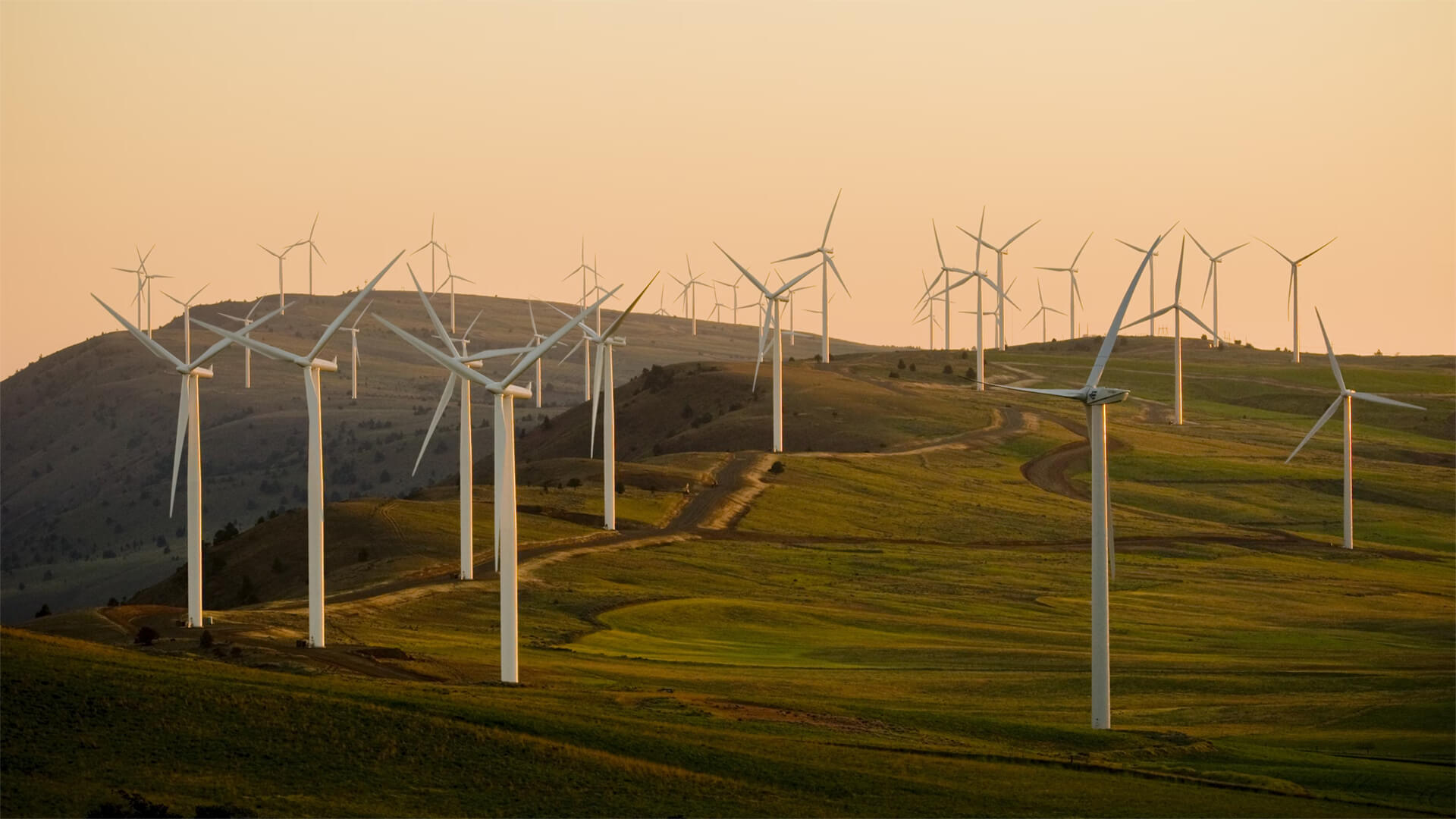
I’ve bad mouthed solar power enough times for people to know where I stand, but why am I taking it easier on wind power?

Solar power has a few glaring issues. There are high energy and carbon costs associated with solar panels, it’s intermittent, and it’s often installed in suboptimal locations (thanks to tax credits from the Inflation Reduction Act). Combine all those and you have an energy source that’s just not very reliable. Sure, there are ways to improve upon some of these pieces, but wind energy is a much more reliable alternative.

Wind turbines can generate baseload power thanks to new tech giving access to more stable air currents. They also use more widely available materials and have a simpler production process, which contributes to cheaper energy generation. And these turbines are only put where the wind blows…I know, what a crazy concept.

Here at Zeihan on Geopolitics, our chosen charity partner is MedShare. They provide emergency medical services to communities in need, with a very heavy emphasis on locations facing acute crises. Medshare operates right in the thick of it, so we can be sure that every cent of our donation is not simply going directly to where help is needed most, but our donations serve as a force multiplier for a system already in existence.

For those who would like to donate directly to MedShare or to learn more about their efforts, you can click this link.

Transcript

Hey all, Peter Zeihan here coming to you from just outside of Kingston, New Zealand. This is Lake Wakatipu. Today we’re going to take an entry from the Patreon page, specifically. Let’s see if I can get this quote right. You’ve talked a lot of shit about solar power and the green transition. That’s a quote. But you’ve never really talked badly about wind. 

Why is it something we should be worried about? This is something that we should be aware of. Short version of why the green transition is problematic. And my point of view is that most of the equipment that has been put down to this point hasn’t been in the right places. Most advanced countries tend to be in temperate zones with big swings between summer and winter. 

Which means that things like solar are always going to be a disadvantage because they can’t provide baseload. You know, sun goes down. Yes. Problem number. Number two, winter is a problem. And places that are very, very sunny, like, say, Sicily, are either too mountainous or too far from population centers. So if you’re going to put solar panels up and say Berlin, you will never pay down the carbon cost, much less the economic cost that it took to install the things in the first place. 

There’s also a problem with raw materials. The processed silicon that goes into PV cells is one of the most energy intensive things that can be done by humans in the town. Per pound, it’s something like 35, 40 times as carbon intensive of making steel. And a lot of that is done by slave labor in Zhejiang, in China, on top of that. 

So, you know, fun. Wind doesn’t have most of these problems. I mean, yes, there are obviously places in the world that are windier than others. And the geography of green power still matters. But in terms of raw materials, they do require a lot. But they require copper, which it’s difficult for me to envision a world where there’s a huge copper shortage. 

Zinc, which is spread around the world in terms of production and processing. So that doesn’t go away. And then chromium, which is not something that is particularly rare either. It’s not that there aren’t some sticking points, but there’s nothing like you would have when you’re looking at, say, electric vehicles or battery technology where just so much of the core material is relatively rare and in geographically concentrated positions. 

Second, there’s the issue of improvement in the technology. Yes, solar has gotten incrementally better. Year on year for the last 30 years, and that is great. But wind who, when they’ve discovered that if you make a turbine tall enough, it doesn’t even matter if it’s windy on the ground. So we now have turbines going in that are 800ft high and higher, and with that sort of range, you can actually tap into currents that are much stronger and far more reliable than what you would get closer to the ground. And so in places like West Texas and Iowa, we have for a couple of years now, already seen significant baseload power coming from wind. Baseload versus intermittent. Let me explain that real quick. So baseload is, you have it pretty much all day and, you know, the wind blows at night, whereas intermittent means that when the wind stops, you don’t get power anymore. 

Wind used to be a primarily intermittent power source, although you could get some at night. Solar will always be intermittent because you can only get it when the sun’s out, and you can only get it when it’s not cloudy. So whether it’s a geography issue, a materials issue, or just the mechanics of what greentech is, wind looks a lot more stable. 

And then finally there’s a labor issue. Solar panels and all of the attendant things that go with it require fingers and eyes for their manufacturing, especially assembly. Wind is oversimplifying here. A big turbine and a bunch of big blades. And then you’re done. And those blades are typically some sort of carbon fiber, which is something that’s not particularly difficult to manufacture. 

So no matter what happens with the green transition, no matter what happens with the world of electricity moving forward, wind is a far more durable component of our future. And that’s before you consider that it also generates a lot more electricity per dollar. So for every dollar that you put into generating, say, solar power, you’d actually get twice as much electricity coming from wind. 

And that means in places such as the wind belt in the United States, the Great Plains wind has long been the cheapest source of power and has been driving other sources of power out of business, especially once they started to address the intermittency issue. So wind looks good no matter where it happens to be. Some places are better than others. Try to move there if you can, or at least get a wire that takes the power to you. 

Oh, one more quick thing. Why you haven’t heard this before is simply due to a combination of the Inflation Reduction Act and personal preferences. You see, the IRA provided cash for anyone who credits tax credits for anyone who could put up green tech. And while not everyone can have, say, a wind turbine at their house, anyone can put up solar panels. 

So wind turbines very rarely go to places that are not windy, whereas solar panels often go to places that are not sunny because individuals could do it. So, for example, the state in the United States was the highest penetration per capita of solar panels is Vermont our least sunny state. And so just like Berlin, they will never generate enough electricity to pay down the carbon cost, much less the economic cost of installation. 

With wind, you don’t have that problem because, you know, you’re not going to put one of these turbines that’s 800ft tall on your roof.

The End of Bipartisan Foreign Policy

After four consecutive presidents adopting a neo-isolationist mentality, the era of bipartisan globalization is coming to an end. So, what will the future of US foreign policy look like?

US foreign policy once sought to prevent any Eastern Hemisphere power from becoming too strong, but all semblance of strategic coherence has gone out the window. This is reminiscent of the pre-WWII era, where each administration adopted a new foreign policy. This is likely leading us down a path where a dollar diplomacy-esque system will return.

Along with all these changes, the US military’s global influence is declining, and foreign policy is in a state of flux. I suspect we’ll see more erratic and reactive policies in the coming years, as the US military is used to play checkers instead of chess. Hopefully all those alliances and infrastructure that have been developed will stick around for future iterations of US foreign policy.

Here at Zeihan on Geopolitics, our chosen charity partner is MedShare. They provide emergency medical services to communities in need, with a very heavy emphasis on locations facing acute crises. Medshare operates right in the thick of it, so we can be sure that every cent of our donation is not simply going directly to where help is needed most, but our donations serve as a force multiplier for a system already in existence.

For those who would like to donate directly to MedShare or to learn more about their efforts, you can click this link.

Transcript

Peter Zeihan here coming to you from the urns. Lord Glacier. Today we are taking a question from the Patreon page. Specifically, what do I think is going to happen with U.S. foreign policy as this age of bipartisan policy comes to an end? The bipartisan policy is loosely referred to as globalization. The alliance structure, the Bretton Woods system. 

However you want to put the specifics on it. The idea is the United States has some very core national interests that are involved in the wider world, specifically, if unsaid, making sure that no single power in the Eastern Hemisphere ever becomes powerful enough and united enough across the territory to then float a navy that can challenge the United States. 

In the Western Hemisphere, it’s seen as an interventionist system in order to prevent an attack in the long term. And to that end, the U.S. tries to dominate security arrangements in the Eastern Hemisphere and prevent singular large countries from ever forming. This was the basis of the entire Cold War structure, and in bits and pieces. We’ve been moving away from it ever since the Berlin Wall fell. 

Now, with the election of four neo isolationist presidents in a row Obama, Trump, Biden, Trump. Again, we’ve largely moved away from that system. And the argument now is what pieces of this should we bring with us into the future and why? And since the Democratic Party basically imploded in the last election, and since Trump kicked the entire national security conservative group out of the Republican Party, the discussions are happening that what I would call a preschool level on both sides. 

So have we been here before? Oh my God, yes. If you look at the entirety of American foreign policy from the end of the War of 1812, right up until the Second World War, every time we got a new president, we had a new foreign policy. And because of that, the interests of the coalition that surrounded each incoming president basically made up stuff on the fly. 

There was very little institutional knowledge, and what was there tended to be denigrated by the other side. Sound familiar? And so we moved into a system where we had roving military and interventions that matched the political and economic ideologies of the ruling clique at that time, and then four years later, or eight years later, it would change more or less completely. 

It generated a foreign policy that was far more interventionist than anything that we had during the Cold War, because there was no agreement across the country as to what the overall broad, reaching strategic goals for the country happened to be. I think the most aggressive period that I can point to, and the one that I think is going to be most accurately reflected in this next phase of the United States is something called dollar diplomacy. 

In the aftermath of reconstruction, the United States had finally pulled itself together, but it was an ongoing process to achieve full economic and political integration. During that time, the U.S. largely decommissioned its military, and its foreign policy became a subset of powerful individuals, whether they were driven by ideology, religion, economics, corporate greed, you name it, they would go out and interface with the world. 

And when they saw an opportunity or when they got into trouble, they would call their friends in Washington who would then deploy troops or maybe naval forces. And we saw any number of interventions throughout the world, most aggressively in Latin America, but also throughout the entire East Asian rim, participating, for example, in some of the civil wars before the formation of modern China. 

That version of events is likely to be where we go now. I wrote about this in The Absolute Superpower to give you a lot of specifics. If you want to dive into it. What has changed in the ten years since I wrote Absent is that the view in the United States of the military has evolved. During the war on terror, the military was generally portrayed as the most positively received arm of government by the citizenry. 

But with the rise of Donald Trump, we have seen the new conservative coalition that is the Republican Party pushed that entire wing out of power. And so now, as a rule, the further to the right you are on the American political spectrum, the more hostile you are to the US military, which is one of the reasons that the Donald Trump administration is in the process of nominating a guy to run the Defense Department who has minimal defense experience, and he’s just designed to go in there and rip up woke policies, which is not a great national security strategy. 

But it doesn’t mean that the Democrats are much better. Yes, Joe Biden used the military as an arm of the US government. He’s much more trusting of government power than Donald Trump is. But there was no recalibration of strategy from the Biden administration, aside from supporting Ukraine in the broader conflict with the Russians, which I happen to think is a great idea, because it’s definitely the cheap way to fight someone who points nuclear weapons at you. 

But that’s not a normal alliance structure. That’s not a grand strategy. And it is difficult for me to see, with the evolution on both sides of the American political aisle, us coming up with anyone anytime soon, because the people who have the skills and the knowledge in this, the folks who are in the military, the national security community, the intelligence community, they are now completely on the outside. 

And we’re probably going to have to start this over from scratch. I just hope that unlike the last eight times we did this, we don’t decommission the military before we then start the work. Hopefully some of the work we’ve done in the past 80 years will still be relevant, along with the personnel, the equipment, the alliances and the bases that are necessary to implement whatever we come up with next. 

But between now and then, expect a lot more erratic and kinetic American foreign policy as the military becomes the tool of the moment rather than the tool of strategy.

The Two-Sided Coin of Russian Sanctions

Image of Russian flag with a lock on it

*This video was recorded before Peter left on his New Zealand trip*

Western sanctions against Russia aim to restrict revenue flows by barring access to Western shipping, banking and insurance…but there’s one more step that could be taken to put the final sanction nail in the Russian coffin.

Russia has been operating in the shadows, using old, unsafe ships and creating state-owned insurance to bypass these sanctions. If Western forces began targeting the “Shadow Fleet” and cutting off access to the Black Sea and Baltic Sea, Russian exports would fall by two-thirds. Should the West choose to do that, we’d be looking at a slew of new issues that would pop up: the global market for oil, wheat, fertilizer, and more would all be disrupted. And then there’s the issue of how ships are registered, which no one is quite prepared to take on.

So, while there could be some more measures taken to ensure the sanctions against the Russians are being optimized, there would be some significant fallout to deal with.

Here at Zeihan on Geopolitics, our chosen charity partner is MedShare. They provide emergency medical services to communities in need, with a very heavy emphasis on locations facing acute crises. Medshare operates right in the thick of it, so we can be sure that every cent of our donation is not simply going directly to where help is needed most, but our donations serve as a force multiplier for a system already in existence.

For those who would like to donate directly to MedShare or to learn more about their efforts, you can click this link.

Transcript

Hey everybody. Peter Zeihan here coming to you from Chihuahua City in Chihuahua, Mexico. Today we’re gonna take another entry from the Ask Computer forum on the Patreon page. And that specifically, if I was to redesign Russian sanctions, would you need to do in order to make them hit harder? And the answer to that is very simple. 

You go after the Shadow Fleet. The Western sanctions against Russia are designed, or at least the intent is to limit, the Russian ability to generate income from their sales of natural gas and oil and fertilizer and everything else, but without actually impinging on supply. And that’s the problem. If you really want to hurt the Russians, you have to actually go after the supply itself. 

Now the western areas are trying to have their cake and eat it too. By saying that you can’t use Western ships, you can’t use western banks, you can’t use Western insurance. And so what the Russians have done is to build up an alternative supply system and an alternative transport system using ships that were about to be decommissioned or already had been, as well as generating their own state owned insurance. 

So the ships tend to be old, they tend to be leaky. And we’re just kind of lucky that there hasn’t been some sort of catastrophic accident thus far. 

But if you were to, say, use Western naval assets to say, limit the ability of the Russians to leave the Black Sea or the Baltic Sea, then all of a sudden, roughly two thirds of what the, Russians send out would be shut off within a day. 

Now, that has consequences. Obviously, you can’t just remove a few million barrels per day of crude from the market, can’t remove one of the largest supplies of wheat from the market, largest splitter, fertilizer and bauxite and all the other things from the market without massive outcomes. And that is the reason why the Europeans have chosen to not take that step. 

Also, it is if you were going to go that route, you’re going to change the way the ship registries work in the world right now, there is absolutely no link between what is the owner of the vessel, what is the cargo of the vessel, what is the origin or the destination of the vessel and how it’s registered? 

And so as a result, most ships are registered in places like Panama, Guinea-Bissau or something like that. Because it’s cheaper if you’re going to start going after shipping for whatever reason, you need to start linking where the ships are registered. The countries have actually have naval forces so that they can actually protect those ships. 


And at this point in time in the world, there is no country, even the United States, that has the naval firepower and reach that is necessary to protect a substantial percentage of the world’s shipping. The world’s shipping has evolved over the last 80 years from the concept that the seas are free and anyone can use them at any time, for any reason. 

If you start to impinge upon that, we go back to a system that predates World War Two, where all of a sudden military force is necessary to keep the your sea lanes open. And since the United States has a super carrier heavy fleet, we don’t have enough to protect the tens of thousands of ships that ply the world’s waters every day, or even the proportion that is going to or from American shores. 

So if you pull the trigger on this, we are on a new world overnight, and most countries are not ready for that.

The Failure of Chinese Real Estate

Most of us think of real estate as a solid investment, and a good chunk of the Chinese population thought the same, but things aren’t always what they seem.

There’s a massive housing bubble in China, the kind that makes the ’08 housing crisis in the US look like child’s play. There’s not a whole lot of options for Chinese citizens to invest, so real estate saw a huge boom. All that money flooding in was great, but declining population growth and urbanization slowing has led to a collapse in demand. So, now there’s way too much inventory, no one to live there, and complex ownership arrangements make liquidation nearly impossible.

This got started in the 80s, as local governments began to rely on the national government for funding…naturally they started lying about their populations and economic status to ensure they secured more funding. On top of that, local governments started selling land to fund themselves, which fueled the real estate bubble. As these revenue streams dried up, it revealed the consequences of all this fraudulent activity in the form of ghost cities.

Now take all those local issues and add in the macro trends throughout China, like demographic collapse, global trade challenges, debt crisis, and more, and the Chinese have a very scary decade ahead.

Here at Zeihan on Geopolitics, our chosen charity partner is MedShare. They provide emergency medical services to communities in need, with a very heavy emphasis on locations facing acute crises. Medshare operates right in the thick of it, so we can be sure that every cent of our donation is not simply going directly to where help is needed most, but our donations serve as a force multiplier for a system already in existence.

For those who would like to donate directly to MedShare or to learn more about their efforts, you can click this link.

Transcript

Hey, everyone. Peter Zeihan here coming to you from the Kepler track in New Zealand. Today I’m going to tell you a story in three parts about one of the disasters that is waiting China in the months and years to come. Let’s start with, yeah. Let’s start with how private folks save their money. This isn’t like the United States, where you have a wide variety of stocks and bonds and go international. 

No, everything’s pretty tightly regulated, and the money can really only go easily into the big state banks. The reason for this is this is how the Chinese government maintains social cohesion. If the big state banks have access to the entire deposit base, they can then shove below market rate loans well below the level of inflation into whatever company they want, in order to make sure that there’s enough capital flowing through the system to employ everyone. 

It doesn’t matter if it’s productive, just matters that people have jobs so they don’t protest. By doing this, they maintain full employment. But it means that people get very, very, very low rates of return. So people are always looking for other ways to get their money into something more productive so they can make an investment for themselves. 

So from time to time, there’s a fad. From time to time, there’s a way to get money out of the country, whether it is foreign direct investment or Bitcoin or some sort of weird bond or gold, and you see money surging to these things until the government figures it out and then they clamp it down. But about ten years ago, Chinese people found something that the government didn’t mind, and that was real estate. 

You could buy yourself a condo, put your money into it. And because the country was rapidly industrializing and rapidly urbanizing, there was always going to be demand for more housing. You could see upward of price appreciation. So this continued on for a while and prices did great. 

And the people who were early investors did great. But eventually, people started buying second homes. Now most people in China can’t afford a second home. So what happens is they get together with their friends, their relatives, their neighbors and people they’ve never met, and they pool their capital to purchase a unit. And then sometimes they sell slivers of that unit to someone else. 

Now, anywhere else in the world, we call this asset backed securities. And this is one of the many things that triggered the 2007 financial crisis in the United States. But in China, it’s pretty par for the course. However, it’s done at the private level, for individual savers, as opposed to corporations or banks. So, you know, no fiduciary responsibility involved there. 

Well, you play this forward to today. And what’s happened is that the story’s changed. There are no longer people in the countryside who can come to the cities. There is no population growth. In fact, with the exception of a handful of top tier cities, every major urban area in the country has seen significant population decline since just 2020, much less 2010. 

The reason for that? The birth rate has now been so low for so long. There are no longer enough people in China under age 40 to have kids that we’re seeing a collapse in population, which means a collapse in housing demand. How bad is it? Don’t really know. There’s no good data. The Chinese government stopped collecting data on this topic years ago because they were afraid that chairman G wouldn’t like the results. 

So they’re kind of flying blind private analysts who are not subject to the CCP’s whims. The Chinese Communist Party’s whims estimate that there’s probably sufficient spare housing to house more people than Brazil has. About 180 million people, government folks who are estimating say that the real number could be more than ten times as high, perhaps enough to house 3 billion people. 

Bottom line is, you can’t break these things down. You can’t really sell the properties because they’re not owned by just one person and they’re not owned by the same consortium of people. So just finding the ownership network is kind of strange. You can’t just knock them down, even though there’s just such huge excess supply. And a lot of people think that, you know, maybe when the economy turns, demand will come back, but there are no longer people to generate the demand in the first place. 

So probably most real estate in China is worth maybe $0.10 on the dollar. And in terms of even the controlled limited pricing signals that we have in China indicate that officially, prices have already dropped by about one sixth in just the last five years, which in any market. But China would be a disaster. But here, the numbers don’t necessarily mean the same thing. 

So that is part one. Part two is a real doozy. 

Okay. Part two. Still on the Kepler. I’ve got, hanging value on my right and some cosmic death on my left. Okay. Where were we? Oh, yes. Part two. So another story. The Chinese government is, extraordinarily paranoid. And that’s not just the Communist Party that rules the place. Now that has been true since the time of the emperors of old. 

The problems geographic, China’s a huge swath of territory, and any policy that is set in the center is going to be. How should we say, loosely interpreted by the time you get to the frontier? And so China has always flipped back and forth between two extremes. 

Centralization, where the emperor or the chairman of the CCP, basically says everything has to go his way. And if it doesn’t, everybody dies. That’s, for example, the attitude that killed over 20 million people in the Cultural Revolution back in the 60s, 70s, recently. That was Mao or, the territories. The provinces grab too much autonomy and go their own direction and generate their own militaries, and warlord ism erupts. Which is the story through the vast majority of Chinese history. 

Chinese like to talk about how they’ve got a continuous history stretching back millennia. But in terms of actually being united in more or less its current borders, with the government that is actually functional. Actually, they have less than 300 years of experience, and half of that was under Mongol occupation. So, yes, the Han Chinese are an ancient, ethnicity. 

But, let’s just say they’ve never managed to hold themselves together into a meaningful government or be a meaningful power until, the Cold War, when the United States basically took all the foreign powers off the deck and allowed the Chinese to export themselves to wealth for the first time. Anyhow, back and forth, back and forth over unification, over regionalization. 

That’s the needle that the Chinese government is trying to thread. So after a series of reforms in the 1980s, the central government under Xi’s ding, I believe, basically realized that, Mao was and that was a fuck. And so they needed to unwind everything that he had done while still leaving his poster on the walls. 

Yes. This video will totally get banned in China. Anyway, so what they did is they centralized revenue generation. So all tax authority rests at the national level. But they regionalized spending on the day to day things like, you know, infrastructure, public works, income support, their equivalent of Social security, all that good stuff. And in doing so built a split system. 

The idea that Deng was after it was try to avoid the over centralization while also avoiding the over regionalization. Unfortunately, they did this without rooting out the fraud that is endemic in the Chinese political and economic system. And so the local governments just basically started lying about everything. Generating statistics that indicated faster economic growth than they were really having. 

Generally, statistics said they have more population than they were really having. And if you remember, the one child policy started not too much longer, actually, by about the same time that this split happened. And so we have had almost 50 years of a disconnect in reality between what China’s population really is and how the funds get appropriated. 

So that’s problem one, that we have a half century of bad data about how many people there really are in China. According to the official statistics, it’s somewhere between 1.3 and 1.4 billion. They have recently revised that down to between 1.1 and 1.2 billion. Most independent estimates put it 100 to 200 million below that. And there are a lot of private ones that say it’s 2 to 300 million below that, something in the realm of 700 and 800 million. 

I don’t really have a number that I swear by. But, you know, it’s obviously bad. All right. So if you’re a local government and you’ve been lying through your teeth for decades to get more money out of the central government, you’re trying to justify getting more money. And so you have to come up with new ways to get it in order to do everything from building railroads to having more mistresses. 

And so what you do, since you can’t tax, is you borrow, the two main revenues are you take loans from state banks, the same ones that are oversaturated with capital because the private citizens don’t have anywhere to turn or you sell land, and if you sell land, you get a nice little pop. Also, if you sell land to, say, a development company and the development company puts up houses, or more likely, high rise condos get a pump from that. 

So I think you’re starting to see the problem here. A level of government whose entire existence is based on a degree of fraud has now established a vested interest in encouraging real estate investment in order to generate more income for itself. You play that forward to the current day, and two things have happened. Number one, they’ve so encouraged this in places where no one ever had any intention of living. 

That you’ve got, ghost cities or ghost suburbs. It’s probably better to phrase it in every major Chinese city. With, as a rule, as you move down the tiers. So not so much Shanghai and Beijing or even, Chongqing, but, much smaller places. That only have a population of a few hundred thousand or a few million have entire swaths of their skyline that are occupied by entirely empty residential high rises. 

Second, the Chinese population bomb is now so advanced that no one will ever move into these places. And third, the development companies whose interests have kind of been in lockstep with the local governments for the last couple of decades, no longer have anyone to draw upon. There aren’t enough young people coming up to provide the seed capital to generate a new wave of investments. 

And, since most of this was built in a pyramid scheme style, we have a whole wave of recently started condos within the last three years that will never get finished, because there’s no longer enough people coming into the system to generate the capital to provide, what’s necessary for the base of the pyramid. So we’re stalled, and we’ve seen home sales in China dropped by somewhere between 70 and 80%, again, using Chinese data. 

So take it for what it is. Over the last 18 months. So that is that’s phase two. So book one here, we’ve got an economic system that is wildly built on, how should I put this as yet unrealized losses? As the population moves into collapse and people haven’t yet quite realized that the investment that they’ve put every cent they have into, is dead. 

And we’re talking here 70% of private savings is involved in residential real estate. So and then second, we’ve got a level of government at the local level that’s based on fraud. That has been encouraging that bubble that no longer can encourage it and has no way of generating income because, you know, you can only sell land once and you can only sell it if there’s somebody who wants to build anything and the land has all been sold in the cities, and nobody wants to build anything anymore. 

So next phase three. 

Okay. Phase three. I’m guessing some of you might be able to see where this is going, but anyway, so we’ve got a housing bubble that is in the process of popping and that popping is going to take out the 70% of private savings that is locked up in real estate. And we’ve got a local government system that provides all the services that everybody needs to survive that is utterly bankrupt. 

And we don’t even have a really good feel for just how bankrupt. Best data available, which is wildly incomplete, suggests that the total debt for local governments is about 90% of GDP. So roughly the same for just local governments in China as the entire American federal debt. In relative terms of that, about half is money that they have borrowed through something called a local financing vehicle or local government financing vehicle. 

If you want the full acronym, which is murky, to say the least. And most folks have even stopped collecting data on it because the central government and the local governments have been trying to obstruct it. So if you happen to be, lending money to the Chinese local governments in that you’re never getting any of that back, sorry. 

So what has happened now is we’re entering into a fundamentally new structure internationally for the last 25, 35 years. The Chinese have done well in mobilizing their workforce, which was the world’s largest to sell product, processed, low end manufactured goods for the most part, to the wider world. Basically, they bring in the inputs, process them, add a little value, send it back out. 

Well, that’s no longer an option. The steadily decreasing birthrate means that they no longer have a labor advantage. So labor costs in Mexico are now less than half what they are in China. And Mexican labor is over twice as qualified for whatever they’re doing. And the Chinese are, on average. That’s before you consider that courtesy of the Ukraine war, we’re likely to have some problems with shipping internationally in the not too distant future. 

And since the Chinese are completely dependent on freedom of the seas to get their raw materials in and the product out, that’s a problem. And then third, the entire world, and especially the United States has turned sharply protectionist versus the Chinese specifically to the point that under the Biden administration, we saw a massive ramp up in tariffs on top of what Trump did in his first term, with electric vehicles and green tech being, the more recent things added to that list. 

And with Donald Trump coming in, who says that the word tariff is the most beautiful word in the English language and is threatening a 60% tariff on day one? Some version of a tightening of restrictions on Chinese exports is sure to happen. And since there’s really no one left in China under age 40, there’s not a lot of consumption left in the system. 

So all of this is happening at once. But the real cherry on this cake. Is that the new news is that so many development companies are going bankrupt, that they’re trying to pay off their outstanding debts with finished and partially finished apartments that no one’s ever lived in. And a lot of these end up eventually in the hands of local governments who have started to accept them as a sort of secondary currency, and they’re starting to use them to pay off debts. 

So you’ve got you’ve got this completely bloated market where most of the products are probably only worth $0.10 of the dollar. They end up in the hands of a local government who can no longer raise capital by borrowing or, what’s nice can no longer race. I’ve got a nice little spring here. I can no longer raise capital by borrowing. 

That jig is up. It can no longer brings capital by selling land. There isn’t any left. And now that the demographic situation is so obvious, they are having a harder time lying to the central government about what their populations are. So we’re seeing a freezing, slowing, declining ability of the local governments to provide basic services, which only encourages more people to move out, which only puts downward pressure on the property markets, which only pushes down the cost of all this stuff in the first place. 

So we are at like step two of a really nasty, vicious cycle with every bit of bad reinforcing the next. And under normal circumstances, which probably never applied to China, you could look to national government, to come in with a bailout, take some of these apartments off the market level, some buildings. 

But because of the deliberately complex nature of ownership. Anything that you take out, especially in a building that has a few occupants, is going to completely destroy the life savings of a not small number of people. So there’s no really clean way out of this. The bottom line is that the local governments have gone from something that serves the needs of the Chinese nation and the Chinese state to something that’s just simply dead weight. 

And now we’re looking at private savings and local governments basically breaking more or less at the same time that we have a national economic catastrophe because of the degrading trade situation. So lots of fun will be had in the months and years to come. I’ve been saying that by roughly, 2034 that this is all going to be over, that there won’t be, China. 

But this situation has gotten so out of hand and so big that it’s entirely reasonable for me to bring that timeframe forward. I’m not going to do that because I don’t have good data to work with the situation at the federal level, and China is now not deliberately suppressing data that’s been collected, but suppressing the people who would have collected the data. 

So it’s never collected in the first place. So this is becoming ever more of a black box and little glimpses that we get like this with, the secondary market for, apartments as a mode of local governments paying off their debts. Just show how much rot is in the system and how deep it has gone. Okay. 

I’m done. 

The Geopolitics of Climate Change

Photo of a tree withered in dry land

With a glacier as the backdrop for this video, I figured it only appropriate to discuss resource exploitation, Arctic shipping, and agriculture as it relates to climate change.

Places like Canada and Greenland hold immense resources, but extraction isn’t straightforward. Given the harsh conditions (an ice sheet in Greenland and permafrost in Canada), these resources will remain where they are until some new tech comes along or some drastic changes occur. The use of the Arctic Ocean as a shipping route is another hot topic. Given that the Arctic won’t be ice-free in the winter for a while, this route poses some big challenges: lack of icebreakers, infrastructure limitations, and demographic issues in the countries that could make this happen.

However, a more immediate impact will be felt on global agriculture. Wheat thrives in extreme conditions and depends upon globalized supply chains for fertilizers and irrigation. These supply chains will weaken in the coming years and could even collapse, leading to widespread famine in several places.

Sure, there will be some new opportunities tied to climate change, but the crises that will follow should be of much greater concern.

Here at Zeihan on Geopolitics, our chosen charity partner is MedShare. They provide emergency medical services to communities in need, with a very heavy emphasis on locations facing acute crises. Medshare operates right in the thick of it, so we can be sure that every cent of our donation is not simply going directly to where help is needed most, but our donations serve as a force multiplier for a system already in existence.

For those who would like to donate directly to MedShare or to learn more about their efforts, you can click this link.

Transcript

Hey everyone. Peter Zeihan here. Coming to you from New Zealand at the Earnshaw glacier, Ernst falls. Ernst. Ursula mountain. You get the idea. Considering the location and considering the popular request, I’m going to use this as an opportunity to talk about the geopolitics of climate change. Everyone, including team Trump, is now talking about the effect that it’s going to have on the system. 

Of course, everyone is dealing with their own way. The Trump administration, the incoming Trump administration, is of the belief that as seaways and minerals become available, the United States preemptively reach out and grab the relative in territories. Ergo, a lot of the talk about Greenland and Canada specifically, but it’s not that clear cut. And it’s not that short term. 

Well, the Ursula Glacier here, like almost all in the world, is in rapid retreat. It’s still going to be around for a few decades. And when you look at things like the permafrost in northern Canada or the ice in Greenland, you have a much more durable climate zone. So, for example, in the permafrost, it’s a mess. In the summer it’s a swamp, it’s mushy, it’s hard to build things on. 

And there is only one road leading from mainland Canada, where populated Canada up above the Arctic Circle to Yellowknife. Actually, that’s not even above the Arctic Circle, I don’t think. I’m not sure about that. Anyway, one road open seasonally. Anything north of that is a mushy frozen mess. And they basically, if they’re going through mineral extract, they have to build a runway with things that the air drop in and then fly in supplies. 

And there aren’t a lot of materials on the world that you can produce and then fly out because there’s a processing step. So meaningful climate change, it allows for the exploitation of northern Canada isn’t going to take years or even decades. It’s going to be a couple of centuries. Greenland, maybe a little bit faster there. You’ve got an ice sheet that’s over a kilometer thick. 

For those of you on the Americans, that’s point six miles. It will probably be well over a century before technology exists to go after it, or for the ice to slow off. By then, the West Antarctic Ice sheet will probably already collapse. We’ll be in a functionally different sort of situation anyway. So are there minerals up there? 

Undoubtedly. Are they accessible in a human lifetime with today’s technology? Absolutely not. And anyone else is trying to sell you some snake oil or is just dumb. Okay. Second shipping. The idea is that as the ice retreats on the seas in the Arctic Ocean, you could then open up a direct route from Northeast Asia to Western Europe. 

But let’s be honest about what we’re talking about here. This is a China play. So the theory would be that the Chinese are going to build infrastructure along this multi thousand mile coastline, so they can then open the shipping route. Well let’s talk timing. If you want to do that you have to wait for the Arctic to be ice free in the winter. 

That’s not ten years. That’s not 20 years. That’s 60 or 70 years. Most likely because the Eastern navigation will be gone every single time the moving sea ice comes through. Far more importantly, 

It’s all Russian territory that is on that sea bridge. And I don’t know if you knew this, but building roads in Russian Siberia is just as difficult as building them in Canadian tundra. 

So there is one, exactly one road that goes from populated Russia north of the Arctic Circle to the city of Murmansk. That’s it. And that’s all the way at the northwest part of Russia, almost to Norway. The rest of the coastline is either unpopulated or unlinked to any physical infrastructure. So once again, you have to wait for summer to get things in there. 

So things, simple things like search and rescue just can’t happen. Also, newsflash two problems. Number one, the Russians are dying out. And when it comes to the point where they have to choose what to abandon, the Arctic will probably be at the top of the list because there’s not a security threat from the Arctic. Second newsflash the Chinese are dying out, and China as a country won’t be long gone before the Arctic is ice free. 

And one final point on the maritime transport issue. Do you want to patrol the Arctic Ocean? You either have to wait for it to be ice free decades from now, or you need an icebreaker fleet that can handle moving sea ice that’s thick. There are only a handful of ships that can do that in the world. Most of them are Russian. 

They’re nuclear. Oh, but a surprise. The Russians can’t build them anymore. They need parts from the West. And surprise the equipment they need to try to assemble. Everything just sank in the Mediterranean about a month ago. That just leaves Canada, which has icebreakers that are decent, but it’s not enough to control their own territory. 

You want to do this for real? You not only are subsidizing the Chinese, you have to build dozens of ships that are purpose built for one thing and have no use anywhere else in the world. We only have a 300 ship navy. You’d need at least 50 of these things cruising around the Arctic Circle if you want to do anything meaningful. 

And there’s nothing meaningful to do. 

Good thing that we’re going to steal first from climate change isn’t about transport, and it isn’t about minerals. It’s about agriculture. Because right now, the single largest calorie crop in the world for human consumption is wheat. And wheat is a weed. It grows anywhere. The places that are too hot or too wet or too dry or too cold for anything else. 

You can still grow wheat. But in a globalized system where you can access things like fertilizers and industrial irrigation. What we have done over the last 80 years is progressively push wheat to the margins, in places where only wheat will grow, and everywhere else we grow. Everything else that is worth more money. Citrus, avocado, soy, cannabis, you name it. 

So if we had a globalization scenario with or without climate change, you can count on those supply chains that provide us with all the raw materials and all the machinery and all the logistical support that allows us to grow wheat in places. Nothing else will grow to break. And large portions of the world that today grow wheat won’t be able to anymore. 

The places I’m most concerned about Kazakhstan, Russia, China and those are three of the big six producers. So we will see famine long before we see meaningful traffic on the Arctic Ocean, long before we see meaningful mineral extraction from Canada or Greenland. Yeah, that.

Trump, Cartels, Terrorism and…Increasing Migration

Photo of man in gloves opening cocaine package

Trump had a fat stack of executive orders waiting to be slammed down onto his desk as soon as he took office. One of those was his designation of Mexican cartels as terrorist groups, which will have some unintended consequences.

This new designation does little to address the networks which smuggle drugs into the US, and is largely irrelevant to the deepening fentanyl crisis. But perhaps the biggest hmmm of Trump’s order is that certain victims of terrorism can qualify for asylum in the US, which means millions of Mexicans and Central Americans could now immigrate. Legally.

This kind of “oopsie” is nothing new for Trump, as his border wall inadvertently facilitated illegal immigration by creating new routes to access the US. While Trump claims one thing, his actions may be doing the exact opposite of what he intended (TBD whether it’s deliberate ignorance or incompetence). As we all expected, Trump’s time in office will be nothing short of a wild ride…and I’m going to need some more popcorn.

Here at Zeihan on Geopolitics, our chosen charity partner is MedShare. They provide emergency medical services to communities in need, with a very heavy emphasis on locations facing acute crises. Medshare operates right in the thick of it, so we can be sure that every cent of our donation is not simply going directly to where help is needed most, but our donations serve as a force multiplier for a system already in existence.

For those who would like to donate directly to MedShare or to learn more about their efforts, you can click this link.

Transcript

Hey, all. Peter Zeihan here, coming to you from a Lake Wakatipu in Queenstown, New Zealand. It’s a 21st locally, which means it’s the 20th in the United States, which means that Donald Trump was just inaugurated. And we’ve had several dozen, executive actions, quickly thrown in there. There’s a lifetime of material for me to work with in there, but I’m going to focus on the one that I think is actually most significant to how most Donald Trump supporters view the world. 

And it has with, designating the Mexican cartels who traffic illegal narcotics into the United States as terror groups. 

Okay. Let’s talk about what it does. Let’s talk about what it doesn’t do, and let’s talk about where it’s going to lead us. So what it doesn’t do is strictly loosen the tools of the US military can use on foreign soil, because Mexico is not a country that we are at war with. 

So designating the cartels, sponsors of terror doesn’t really do much unless you also designate the Mexican government as a sponsor of terror. What it does is allows the US government to very easily move against any entities who are associated in any way with the cartels, especially from a financial point of view, especially if they’re victims. So, like if there’s a 

Taqueria in Mexico City that pays protection money to the cartels, this action would target them because of the financial transfers, but it’s not actually going to encourage us Apache helicopters to be flying south of the border and blowing shit up. Keep in mind that, the number one drug that is of concern from my point of view is no longer cocaine. 

It is fentanyl. And fentanyl as a synthetic has a very different supply chain. What happens with cocaine is it starts in Colombia. It’s turned into a leaf. It’s pressed into a brick, it’s refined with gasoline. It’s turned into the white powder that we all recognize. Well, hopefully we don’t. All cocaine is bad. Don’t do cocaine. Anyway, it is smuggled by plane, train or automobile north and eventually makes the jump by water or air to Central America, where it gets on land and it goes into Mexico and up north. 

So interrupting cocaine flows. This is a good thing. We like this. That is not what we’re dealing with. We’re dealing with fentanyl. Fentanyl is a synthetic. And what happens is in China, you get a chemicals company that makes a precursor, which is then processed into another precursor. That precursor is put in the mail and is mailed to the United States. 

And then it is smuggled south across the border to a mom and pop shop that processes a few kilos of this stuff a month, and then that stuff comes north. That is where the money is. That is where the danger is. And this does nothing for that, because the mom and pops aren’t big enough to justify classification as terror groups, because there’s literally thousands of them, as opposed to just a few, cartels anyway, so it’s going after the wrong thing. 

More importantly, when you identify a group as a terror group, you have also identified the people that they prey upon as victims of terrorism. Right? We all agree with this, right? Well, if you identify someone as a victim of terrorism, then they automatically qualify for asylum status within the United States. So what Trump has done with this designation is designate 130 million Mexicans and 50 million Central Americans as automatically qualifying for U.S. immigration protection. 

Now, if you dial back 4 or 5 years ago, I said that Donald Trump will long go down in history as the most pro illegal migrant, president in American history because by building a wall, what he has done is built 50 roads, construction roads that bypass the most robust natural barrier on the North American continent, the Chihuahuan and Sonoran Deserts. 

And lo and behold, it came to be true. And we eventually got 2 million illegal migrants a year. What he has done now is generated the largest inflows of illegal migration of the asylum clause of any American president in American history. Now, normally I would argue that this would mean the end of him, because his supporters will immediately abandon him because he’s done exactly the opposite, or achieved exactly the opposite of what he said he was going to do. 

 But this is Donald Trump, and he defies convention all the time. But it will set the stage for a very different conversation in the United States. And I can’t wait to see how that comes out. 

Oh, one more thing that I would be remiss and saying, this is my last day in New Zealand. I have been drinking, I’ve been doing some wine tastings, and this is not what I would call great analysis. There’s nothing that I just communicated with you that would be any sort of secret to the national security community, the law enforcement community, the folks who are interested in immigration at Pro or Con, or anyone interested in generally security of the border in general. 

But clearly the new president, the president is unaware, otherwise he would not have done it. Because this is going to generate exactly the sort of crisis that he says he wants to solve. The reason for this is very simple. Donald Trump has made sure that there is no one in his inner circle who is capable and competent in the issues that really matter. 

And his cabinet nominations reflect that, the only other two leaders in modern history that I can think of that kind of fall into this category of deliberate blinders, reshaping of China, who is rapidly leading his country into a full out national collapse, and Barack Obama, who hated having conversations with other people to such a degree that he basically hermetically sealed himself into the white House for his eight years. 

Donald Trump now joins those other two as one of the three most deliberately unaware leaders in modern history, which means that of the dozens of executive orders that were just handed down, there is undoubtedly more that fond of his general category of going directly against what Donald Trump says that he stands for, which means that we are in for an incredibly interesting period over the next four years, as, Donald Trump’s leadership or more accurately, the lack of competence in his circle leads to some wildly interesting outcomes. 

And I am here for it.

It’s time for an update on the war in Ukraine

Photo of Ukrainian soldier in front of flag

There are two primary trends that continue from this past summer: the Ukrainians are maintaining their offensive in the Russian region of Kursk, while Russian troops are continuing their slow slog toward the Ukrainian city of Pokrovsk. Kyiv has also intensified its attacks against Russia’s oil industry—particularly refineries and storage depots, and by extension its broader petrochemical industry. The Biden administration’s resistance to directly targeting Russia’s export capacity seems to have vanished along with his chances at reelection.

Outside of Ukraine, the Americans and Europeans have announced further sanctions on Russian crude exports, targeting Russia’s fleet of shadow tankers. While Chinese and especially Indian refiners have indicated that they will be abiding by sanctions…at least for now.

Closer to the front line, NATO—led by the Northern European states—has intensified naval patrols in the Baltic Sea. Sweden and Finland are new members of the alliance but old hands at stymying Russian interests within their maritime neighborhood, and have already started taking Russian and Chinese ships to task.

Here at Zeihan on Geopolitics, our chosen charity partner is MedShare. They provide emergency medical services to communities in need, with a very heavy emphasis on locations facing acute crises. Medshare operates right in the thick of it, so we can be sure that every cent of our donation is not simply going directly to where help is needed most, but our donations serve as a force multiplier for a system already in existence.

For those who would like to donate directly to MedShare or to learn more about their efforts, you can click this link.