
Venezuela’s End: Peter Goes Squirrel Killin’

squirrel laying on a log

Following the capture of Venezuelan President Nicolás Maduro, I’ve had a ton of theories and ideas flood in. So, it looks like it’s time for a good old-fashioned squirrel killin’.

Some of the theories (aka squirrels) that we’re going to be killing today are: Venezuela was a credible drone/military threat to the US, Russia was waiting for an excuse (like this) to attack the US, China might use this as justification, and that this was just a warm-up for Iran.

As you can see, no shortage of squirrels here.

Transcript

Hey everybody Peter Zeihan here coming from Colorado. It’s above 50 degrees, so I think we would go for a hike. Anyway, a lot of folks have written in with a lot of questions about what’s gone on in the aftermath of Venezuela. For those of you who have been in a coma over the last weekend, Delta forces went into Caracas and grabbed the president, Nicolas Maduro, and brought him to New York to face arraignment, where he is facing, narco terrorism and conspiracy charges that date back over a decade. 

We’ll never hear from him again. Anyway, lots of people had lots of questions about what this means. So the point of this video is to do what I call squirrel killing. So coming up with these arguments that people think might be have something to them, show why they really don’t what the real issue is. So let’s start with the big one. 

And that’s the idea that part of the reason why the US, went after Maduro is because of the fear that, Venezuela could be used as a military base to attack the United States, particularly with drones. Short version is. No, first of all, there are very few drone systems on the planet that have the range that is necessary to cross the Caribbean. 

You’re talking over a thousand miles here and hit the United States. Of the ones that could, most are American. But the Russians don’t have models like that. The Chinese don’t have models like that. Ironically, the Ukrainians now do. Pretty sure they’re not going to want to attack the United States. That just leaves Iran, which has the showerheads, which the newer ones do have probably barely the range that’s necessary. 

What they lack is decision making capability and real guidance. 

And so when you program a showerhead, you have to tell it what routes to follow and where to drop its payload. And in the open ocean, there’s nothing to follow. So technologically, there really isn’t a weapon system that is set for this task. And even if there was, the first city that you’re going to hit, the only one of size that you’re going to hit is Miami. 

You know, we all have our opinions about Miami, but I don’t think any of us like, oh, Miami. That’s militarily critical. Yeah. No. So, you know, blowing up some hotels on South Beach is not the sort of thing that the United States is going to be intensely concerned about. What it would do, however, is trigger an adverse reaction in the American political system, which would lead to massive American counter strikes on whoever was behind it. 

Because clearly, the Venezuelan government, the Venezuelan economy can’t make a biplane, much less a drone. So not that one. What’s next? 

The Russians have been itching to have an excuse to attack the United States. And this is it. No, the Russians are locked down in a war that has been moving incredibly slowly. At the pace they’re going. They’re not going to conquer Ukraine, this century. And they need to really finish it up before they run out of troops in just a few years. In addition, the Ukrainians recently have been on counter attacks and have reclaimed a number of cities, including, you ask, and there just isn’t any Russian spare capacity to do anything else anywhere. They’ve even pulled a lot of troops out of not just the Far East, but off of the NATO border in order to focus them on Ukraine. And if if they were stupid enough to think that they could do otherwise, let’s say they stage some weapons in Cuba, for example. 

Number one, the Cubans would not go for it after Venezuela. And the Cubans are pretty sure that they’re next, and they’re desperate to find a way to avoid an American attack. Staging Russian weapons all 1963, much less launching them, would guarantee the end of their regime because the Soviet Union is no longer exists, and post-Soviet Russia, in its current form, really can’t do a thing to protect any of its allies, whether that is Iran or Venezuela or Cuba. So no. And if if that were to happen, I can guarantee you that the president not just Donald J. Trump, any American president, would then make ending Vladimir Putin at the very, very top of a very short list of things to do once Cuba was neutralized. And if there’s one thing Vladimir Putin values above all else, it’s his own skin. And every time in the past he has been personally threatened, he has backed down, especially when it comes to relations with the United States. So No. 

One more thing on the Russians. You know, it says doesn’t react well to threats, especially if the threats actually make us bleed a little bit. So if you think back to, say, Sputnik or the Cuban missile Crisis, the US massively overreacted and it caused the Soviet Union a series not just geopolitical defeats, but global humiliation in their inability to counter what the United States did. 

And Putin doesn’t just know this. Putin has lived this, so he will never do something that is intended as a direct strike on the United States. You always work through third parties. He will always work to turn us against one another. That’s one of the reasons why the Russians intervened in the elections. That’s one of the reasons why they both support Trump and oppose him. Russian propaganda is very active on all sides of all ideological debates and especially the culture war. So, you know, careful where you’re sourcing, no matter who you are. And the goal of the Putin administration is very simple to get the United States to lash out, to get it to react badly, to get it to attack, but not Russia, to get them to do someone else. Which is one of the reasons why Greenland is featuring so hot and heavy right now, because the Russians are actively working now to get the Trump administration to attack a NATO ally. Don’t do it. All right, what’s next? 

Okay. Next. Squirrel. The idea that the Russians, the Chinese and maybe others will use, the United States grabbing of Maduro to justify military action in their own theaters. Can’t rule out what people will say, but this is certainly not going to nudge them in a direction. Be purely rhetorical. Let’s start with the Russians again. They’re in a full fledged war where they’ve redirected all of their military assets to one theater, and they’re not doing all that well. 

Also, we’re talking about a war where the Russians have literally set up rape camps and establish a cabinet level officer to assist and coordinate the mass kidnaping of children in the thousands from the occupied territories. We have over 100,000 documented war crimes. It is difficult for me to wrap my mind around what else the Russians feel they need justification to do in the Ukraine war. 

So, you know, it might make it out in a press release, but it’s not going to move any decision that they’ve already made. The second one is China, of course, gets a little bit squirrely, but still, I don’t think it’s going to change their meaning. If the Chinese thought they could do a lightning raid overnight and overthrow Taiwan, they would. 

But that’s not how advanced technocratic democracies work. Also, if they thought they could do it, they probably would have done it already. Keep in mind our discussion of military deployment capability before the Chinese don’t have it. The Russians don’t have it. No one really has it, except for the United States into a much, much, much, much lower degree. 

The French and the Brits, who mostly focus their deployments on territories they already control part of their other colonies of their empires, if you want to call them that. So, keep in mind that every war that the Chinese have fought on land since 1949 comes down to just two basic conflicts. One with the Russians, over an island and one with the Vietnamese where they had their asses handed to them. 

I’m not suggesting that the military of China is incompetent today. I will point out, however, that it is in the process of being massively purged and to think that their order of battle actually matches what they can do is a bit of a stretch. But the bottom line is that, vitriolic, rhetoric against Taiwan is bread and butter to the Chinese Communist Party, especially these last eight years, as she has basically purged everybody in the country. 

So if they start using some North Korea style rhetoric and not only wouldn’t be new, but it also has not shaped strategic policy to this point. Basically, these are authoritarian, expansionist, neo imperialist powers who are not constrained by rule of law or allies. They don’t need justification from anyone to attempt what they want to try to do. 

Their only constraints are physical, of which they have many. What’s next? 

The new president, Rodriguez of Venezuela, said that this was all Israel and the Jews……..What’s next? 

Okay. What else? That Venezuela is a warm up for the real country. Iran, which is clearly next. Probably not now. Cuba. Cuba’s probably next, and we’ve already dealt with that in a previous video. But Iran’s a very different situation. Well, the United States certainly has the military capability of interfering in Iran’s oil shipments, because you could either stop them at Kharg Island, where everything is loaded, or the Straits of Hormuz, which is a narrow passageway out of the Persian Gulf that everything has to pass through. 

That’s a lot different from taking up the political leadership. See, Venezuela wasn’t exactly a one man show, but it was definitely a strongman system with a tight cluster at the top that helped him loot the country. And then very little below. There may be a mass movement, of chavistas, but they’re not organized in the way that say, the Democratic Republican Party is. 

So, like, if someone were to take out the American leadership at the top, even every member of Congress, there’s still the states and localities, and there’s 2 million elites in the United States in the political class. That’s not the case in Venezuela. You had a couple dozen. And that’s certainly not the case in Iran. Two big reasons why Iran is probably not next. 

Number one is that elite, probably 10,000 mullahs are part of the clerical class, and it’s going to take a lot more than some Delta forces guys or a bad flu season to take them all out. So even if you could get the Supreme Commander, you wouldn’t be able to exercise the regime. The second problem is geographic. 

Tehran is definitely not coastal in the way that Caracas is just a few miles from the water. So you’re talking about inserting over a couple hundred miles of desert mountains? No. I’m sorry, I shouldn’t say desert mountains. A lot of these are not desert. It’s populated. 

And as the United States found out back in the 70s during the Carter administration, that if you try to send a bunch of helicopters to pull people out, there’s a really good chance that it’s all going to end very badly, just like it did with the hostage rescue back in 1979, I think. So much more durable regime. Much harder to get to. And I just don’t see that working. Doesn’t mean that there can’t be an angle for American policy on Iran that’s going to evolve because of this and become much more muscular and threatening. All of that is absolutely possible. But this isn’t a dress rehearsal in any way 

It’s a very different economic, political and strategic challenge to go after Iran.

Why on Earth Would We Take Greenland?

Town of Aasiaat (Greenland) during winter season

Taking Greenland is worse than pointless both economically and strategically. As importantly, Denmark is arguably America’s most earnest ally, and for decades has given the United States anything it has asked for.

Transcript

Hey, all Peter Zeihan here coming to you from a very snowy Colorado. We’ve got about seven inches, so far in about three. More is on the way. Because of everything that’s been going on across the world, and everyone’s talking about what the Trump administration is getting next. And because Greenland keeps coming up over and over and over again, I thought it would be a good time to explain why the United States taking Greenland is one of the dumbest ideas that I have heard in my life. And if you think back in the last 30 years, there’s been a lot of dumb, let’s just go through what the people who say it’s a good idea why those things are all wrong. Number one, we need it for defense purposes, because there’s Chinese and Russian ships everywhere. 

The Russian Navy has been in a not so slow disintegration now for 30 years. And because of Ukraine, where they’ve basically lost one of their entire fleets, now their Arctic sea fleet is the best one that they have. But it is a pale shadow of what it was 20 years ago, much less 40 years ago. And the Russian ability to project power to the North Atlantic simply does not exist. And for that, the United Kingdom is a better counter. 

And we already have naval bases there. Number two, have we in militarize that we can protect power? No, 80% of the country is under permanent ice. Another 5% is moving glaciers. The other 10% is, kind of the climate of, say, the Aleutian Islands, but with a worse winter. No good ports at all. So any sort of infrastructure you’re going to build, if you’re trying to project power, is going to have to be some sort of floating platform off the coast, kind of like what the United States tried to do with Gaza, which was a disaster. 

But you going to be doing this for military vessels? There’s also the question of what would that achieve? Some people say that if you control Greenland, then you control at least part of the Arctic Ocean. Right? The ship between Asia and North America. And while that is true, you’re talking about $1 trillion investment to encourage the Chinese to dump product in the United States. 

That’s a really weird value proposition. And then third is money. People like to talk about rare earths, and they say that Greenland has loads. Well, First of all, no one has, prospected functionally in Greenland yet. So anyone who says they’ve got a lot is just making shit up. 

Second, again, 80% of Greenland is under an ice cap, not a glacier, an ice cap. And even if the most extreme version of global warming happens, you will not be able to meaningfully operate in that zone this century. So you might be able to poke some things on the side that is fair. But again, rare earths aren’t rare. They are byproducts of other mining. It’s not like you can go sink a single shaft to the ground and start pulling up your lanthanides or whatever else you want. No no no no no no no no no no. You need a massive complex to process whatever else is there bauxite, copper, silver, whatever. And because this is a country country with under 100,000 people and none of them live in the places that are probably mineral rich. 

Wow. I’m really getting covered here. You’re now talking about either building $1 trillion of infrastructure just to process metals that you can get somewhere else at a 10th the cost, or shipping all the aura, which would mean a mammoth piece of infrastructure to to handle that kind of cargo. There’s nothing about this that is cost effective. 

And then there’s the issue of what we’d be able to get that we don’t need to have, because Denmark is such a firm ally, they allow us to do whatever we want in Greenland pretty much whenever we want. During the Cold War, we had a few dozen, maybe about 30 or 40 facilities there. 

We have slimmed that down to one, just the station at through. They have made it very clear in Trump two that if we want to go back and reopen any of those facilities or build new ones, they’re happy to help. They’re happy to help pay for it. So there is nothing that we would get from direct control that we don’t already have, except for the headache of managing a remote territory that someone else is already managing better. 

All it would do is wreck the United States’s alliance with the country that argue, has been the most loyal and enthusiastic ally we have ever had. Denmark isn’t like the United Kingdom or France, where they have delusions of their own strength. It isn’t like Australia, where it’s kind of remote. This is a country that’s in the heart of where the North Sea meets the Baltic Sea, and has been the plug that has kept the Russians from having a functional navy for decades. And every time we have called upon them, they have answered, you wreck that relationship. 

And it’s difficult to imagine that we have any alliances where we would still be seen as a trusted partner. And then you’re talking about the U.S. going that alone and having to do everything on the global scale by itself, and large scale excision of American power from Europe. And if you know your history, the last couple of times we decided we didn’t want to work with Europe. 

We ended up going back with several hundred thousand men, a lot of whom didn’t come home. So no, not worth it.

Colombia Avoids War with the U.S.

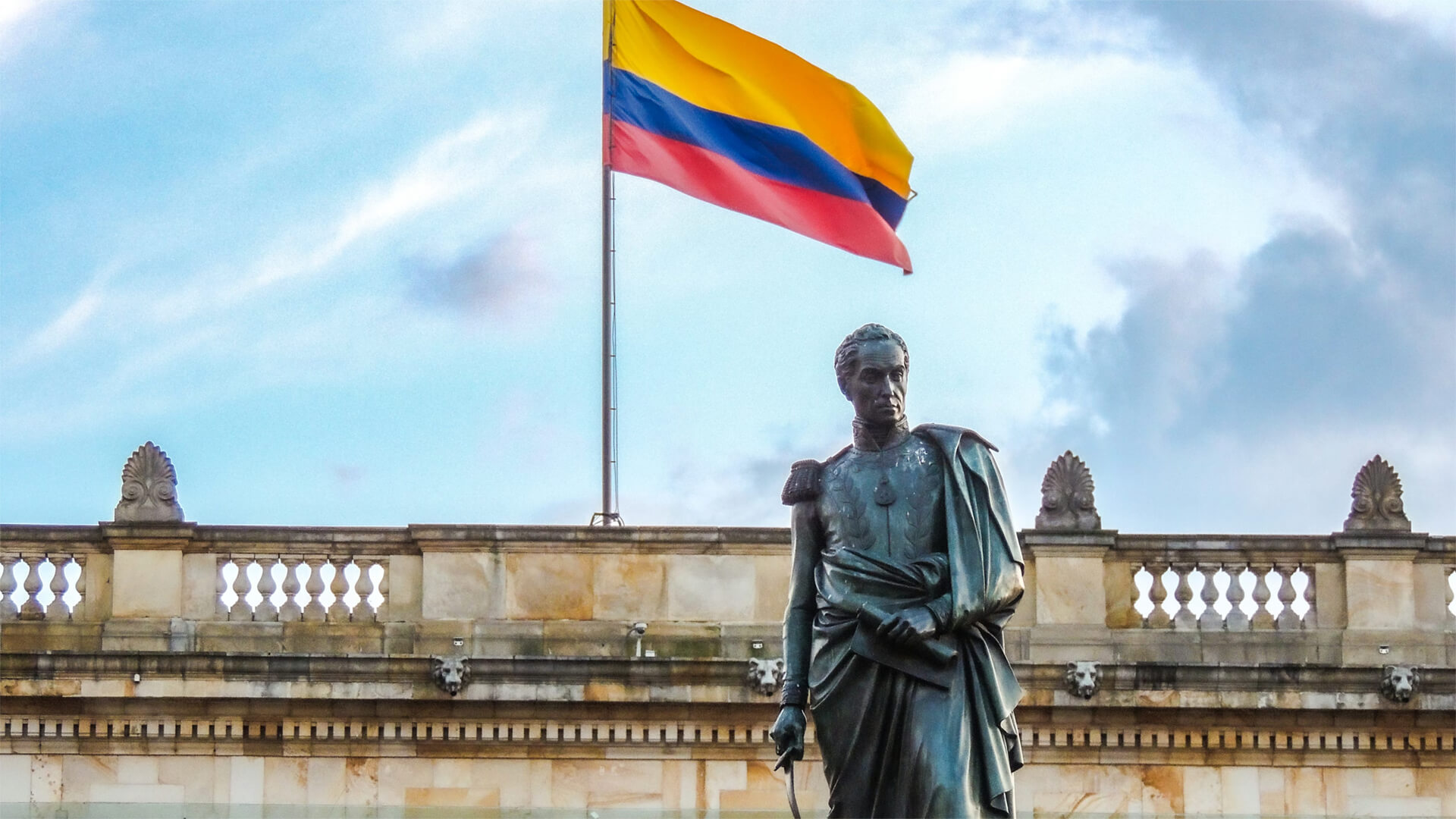
the statue of Simón Bolívar standing before Colombia’s National Capitol, with the flag waving

Colombia looked like it was in the hot seat following Maduro’s capture, but tensions seemed to have eased following a call between Trump and President Gustavo Petro.

Colombia has been America’s most reliable partner in Latin America for decades, thanks to shared security interests. So, it’s looking likely that cooperation between the countries will continue.

With the civil war wrapping up and a free trade agreement in place, Colombia is poised to integrate more deeply into the North American economy moving forward. As long as they can resolve the drug violence and infrastructure issues.

Transcript

Hey everybody. Peter Zeihan here. Coming to you from a snow day in Colorado. It is the 8th of January, and the news looks like the United States is not going to invade Colombia, so. Hooray! In the aftermath of the United States moving into Caracas with special forces and snagging Venezuelan President Nicolas Maduro, the Trump administration, Donald Trump himself. 

Rubio, who is the secretary of state, Hegseth, who is the secretary of defense, and several others all started opining openly about what the next steps would be with topics like Cuba coming up. And the president specifically brought up Colombia. Now Colombia’s President Petro and Trump, they, well, they just absolutely loathe one another. They’re both populists, just one from the left and one from the right. 

And Trump has on multiple occasions accused Petro of being a drug lord, which, of course, is ridiculous. But, you know, we have a nonstandard president here and they have an non standard president there. But yesterday, apparently the two of them had a direct phone call for about an hour and it was all smiles. And it ended with Trump actually inviting Petro to the white House to discuss issues of mutual concern. 

And you usually don’t do that for someone you actually hate. Is there room for a deal, to put it in Trump’s parlance? Of course. Colombia has been the country in the Western Hemisphere that the United States has gotten along the best with for the last 60 years. And that’s for a mix of reasons. So let’s start with the, strategic, then go down to the economic. 

So strategically, it abuts Panama. It separates the Caribbean basin in the Atlantic from the Pacific. And as such, any sort of power based in Colombia has the opportunity of mucking around in both basins, just like the United States does. Because of the cocaine situation, the United States has worked with government after government, after government in Bogota to try to contain cocaine situation and tamp it down. 

The folks in Bogota have been thrilled for this because they don’t much care for the cocaine either. The problem is it’s smuggling issue. You see, Colombia is not like a normal country. It doesn’t have a large chunk of flat land that the Colombians are from. Everyone lives on the sides of mountains, so they can be high enough to be out of the tropics, but not so high. 

They’re up in the tundra. When this makes infrastructure very difficult, makes national unification rather difficult. And it means that if you’re in an area that has the climate to grow cocaine like Colombia has, you’re always going to have an undercurrent of rebellion. That rebellion has traditionally identified itself as more leftist or even communist. And so you’ve got cocaine, communists, basically, that have been running around the country since the 1950s. 

And then their primary market is the United States. So Bogota doesn’t like those people. The United States doesn’t like those people. And there’s always been that degree of alignment. Also, because Colombia has lived in a degree of civil war for the bulk of the last three quarters of a century, the population is significantly more conservative on security issues than anyone else in Latin America, because the rest of Latin America hasn’t seen a real war in over a century. 

These are people who understand that guns are sometimes necessary. As a result, they are the odd man out throughout Latin America, where you generally get more pendulum like activities in their politics, swinging between the extreme right and the extreme left. Not in a social sense, like the way we think of it here in the United States. But in a land sense, people who own the land versus those who don’t. 

That pulse is not nearly as strong in Colombia as it is everywhere else. And as a rule, until very recently, it’s been the center right, that has ruled the country. And so, again, tends to get along better with the United States more recently economically. 

As part of a reward, a couple of administrations go under. George W Bush, I believe, decades long cooperation with the United States was rewarded with a free trade agreement. And the Colombians, in bits and pieces, are working on operationalizing that agreement. The reason it’s been so slow is because there was a civil war, and it really only ended about a decade ago. And the country is really in the process now, today of defining what it wants to be in the future. But the fact that the hard work on the negotiations has already been done, and there’s already a free trade agreement in place, bodes very, very well. 

The issue, for both sides and the opportunity is Mexico. Mexico has become so successful over the last 30 years because of NAFTA that it’s moved up the value added scale to the point that the Mexico of today needs a low cost manufacturing partner that looks a lot like Mexico in 1990. And that’s exactly where Colombia is. 

So you’ve got a country with an above average education level and worker quality, for their income level, who now also has a trade deal with the United States. And basically we’re probably going to see if relations don’t blow up in the next decade. Is Colombia being formally or informally folded into the North American trading bloc, which is something that would benefit everybody hugely. 

Are there obstacles? Of course. But if we get the politics right, the obstacles are primarily geographic. Like I said, most of the population of Colombia lives on the sides of mountains. That means building road and rail infrastructure is difficult. But a couple things to keep in mind. One of the few navigable rivers in the Southern hemisphere is actually the Magdalena, which cuts right through the middle of that V. 

So if Colombians can snake down to that river, they have an easy access to it. And they can ship things out to the Caribbean basin and to Houston, Miami, beyond. So there’s a lot to work with. And as the Civil War is now over and we’re entering a new phase of drug interdiction, hopefully the Colombians and the Americans can continue to work together. 

The current picture of the cocaine situation is undoubtedly a little ugly. The issue is that during the Civil War, the government couldn’t fight everybody. So a lot of militias formed up that were loosely allied with the national government, while Fark, that’s that’s leftist communist druggie thing when a different direction and tried to basically run an independent state. Eventually fark was disabled, disarmed, and is no longer really a factor. 

But then those right wing paramilitaries that used to be allied with the government are now basically becoming their own insurgent groups on their own smuggling groups. So it’s ironically allies of Bogota that Bogota once armed, that the United States, once armed, that are now at the core of the drug problem doesn’t mean it can’t be combated, just means it has to be done differently.

Venezuela’s End: Was a Deal Struck?

Two hands shaking in agreement

There’s been speculation that a deal could have been struck between the US and a power like Russia or China that allowed the US to move on Venezuela. Let’s put that one to rest.

What could either of those powers have to offer the US in the Western Hemisphere? Russia is tied up with Ukraine and doesn’t have any meaningful investments in Venezuela. China might have some economic holdings in Venezuela, but they can’t project power far enough to disrupt the US.

So, no. There was no deal. The US acted unilaterally because, well, because it can. And I expect to see the US continue to dismantle Russian and Chinese influence out West in the coming year.

Transcript

Hey everybody, Peter Zeihan here. Coming from Colorado, it’s, like 60 mile an hour winds outside. So we’re into this one inside. Ever since Nicolas Maduro was captured by the United States over the weekend, I’ve been getting a lot of questions about some of the details. And one that keeps coming up over and over and over is whether this is some sort of deal with the Russians and the Chinese, where the Americans get their way in Venezuela, and in exchange, the Chinese get their way in Taiwan and the Russians get their way in Ukraine. 

Short version is no, that’s not how the United States works. Not that the United States is not willing to make a deal. Not that the Trump administration, of course, likes to make deals. But for it to be a deal, there has to be something that the other side can give you in the in this case, with China and Russia, there isn’t, neither country has the ability to impose any sort of security reality, really, outside of the realm, near abroad, the military’s are very limited. 

The Chinese navy really can’t operate more than a couple hundred miles from her own coast. The Russians may need months in order to surge troops to a place on their border, and they have never demonstrated the ability, even at the height of the Soviet period, to operate outside of hemispheres in meaningful way. So when you look at, say, the Russians like, what is it that they can potentially hand to the United States and Venezuela? 

And the answer is absolutely nothing. I mean, at the height of Soviet power vis-a-vis American power, they were able to put some missiles in Cuba, which generated the Cuban missile Crisis, which is was a massive strategic defeat for Moscow. And they’ve never risen back up to that level again, certainly not in the post-Cold War era. And that’s before you consider that their entire military is now committed to Ukraine, and they just don’t have the ability. 

Now, the Russians did have some investments in Venezuela that is fair, but Venezuela’s oil company was more technically advanced, even after 30 years of degradation and looting than Russia’s oil companies are today. So that investment has gone nowhere. Basically, you had the Russians putting some money in to cover some of the expenses. The Venezuelans or the Americans did the work. 

Chevron specifically. And the Russians got a cut of the profits and some of the oil to some international markets. That’s gone to zero. There is nothing to trade. China sounds like a more productive player in the Western Hemisphere, but everything that they have done is based on investment, basically investing in ports and infrastructure in order to bring raw commodities, whether it’s soy, iron ore out to the coast and then on to East Asia. 

But again, that is something that they can’t do themselves, not that they don’t have the money. Of course they have the money. But the Chinese Navy, well, has almost 600 ships, really can only operate in a very limited distance about 10% of their ships can maybe sail more than 1000km from the coast and operate to a degree that they have been battle tested. 

Very important. But they’ve got foes in Japan and Taiwan and Korea and Indonesian and Singapore. They can’t get past the first island chain. Even if they could, they then be cut off from the whole island. And every ship that did that work would then be destroyed in the Pacific. The Chinese can’t operate in Latin America at all unless the US Navy is providing freedom of the seas for everyone. 

Now, ever since 1992, the US has been moving bit by bit away from that for a mix of military, strategic and political reasons. We haven’t hit the hard break yet where the United States is actively undermining the system. But wow, are we close because we now have the United States going after, say, for example, ships of the shuttle fleet that are working with Iran and Russia and of course, Venezuela. 

So it’s entirely possible that this is the magic year where that all breaks, in which case the entire Chinese position globally goes from being overextended to just be broken. We’re not there yet. That’s a conversation for another day. But for purposes of this question, was there a deal? No, because the United States, now, if it wants to, has proven they can just completely dismantle the entire Chinese position in the hemisphere with minimal military effort. 

And I expect we’re going to see a lot of that over the course of the remainder of this calendar year.

Venezuela Offers Trump an Oil Bribe

oil barrels stacked

Venezuela’s pseudo-newish-kinda leader, Delcy Rodríguez, just offered President Trump 30-50 million barrels of Venezuelan oil. Let’s just call a spade a spade, because this is an overt political bribe.

Rodríguez is trying to earn Trump’s stamp of approval, so her seat at the table is secured (spoiler alert: she’s no different than her predecessors). But this bribe has some logistical motivation as well. You see, the embargo on Venezuelan oil exports has left storage tanks full. And with nowhere else to store the crude, they either have to get rid of it quick or shut down production.

The US has a legal nightmare on its hands, because isn’t this still sanctioned oil? Are the refineries allowed to accept the stuff? Regardless, this oil bribe can either buy Venezuela some time (and secure a new leader’s seat) or mark the end of Venezuela’s status as an oil producer.

Transcript

Hey, all on here come from Colorado. Today we’re talking about the bribe of the Donald Trump announced last night. I think there’s no other way. There’s no other word for it. Are you one on Truth Social and said that Venezuela was going to give or sell? Details were a little fuzzy. Somewhere between 30 and 50 million barrels of crude to the United States to be sold in the US markets, to be accepted, U.S ports to be processed by U.S refineries, and that he personally would manage the sale and, handle the proceeds personally. 

As the president of United States for the benefit of Venezuela and the United States. Details TBD. 

Two things here. Number one, it’s really weird to have a sitting president be really proud of a bribe. But, you know, here we are. It’s a weird, weird world these days. Second, the mechanics of why this is happening. The new president of Venezuela, Rodriguez, is attempting to flat out bribe the American president. 

This is not the first time she’s tried this. She came back in 2019. Remember? She’s also the oil minister and tried to give money to his election campaign. Didn’t work then. Now seems to be working. But she is trying to get the American stamp of approval that she is the thug in charge. She is not any better than Nicolas Maduro or Hugo Chavez. 

She simply is bending with the political winds. Right now, she’s established a far tighter crackdown in just the last three days. The Nicolas Maduro never did, even at the height of the elections. She wants everyone to realize that she is in charge and she has trumps behind her. For her new reign of tyranny. And of course, she was selected because she was very good at looting the system. 

So it’s a really interesting, political bedfellows, whether it will work or not depends on a thousand different things that I can’t predict right now. But let’s talk about that oil. The way oil systems work is you have a production. Well, it goes into a pipeline, it goes to a refinery, the refinery processes it, and then it goes on you typically by truck, train or some other method of transport to end users. 

And the trick is you have to maintain a flow all through there. Because if you have a hang up at one step, the pipeline will then have to divert its shipments off into, say, a storage tank. And storage tanks can only use so much. And for a country like, say, the United States, where we use something like 17 million barrels a day, you’re talking about a lot of flow through. 

Well, if you’re an exporter, you don’t necessarily refine your crude. It’s even more important then, because there’s no place to offload, there’s no local demand center that is strong enough to absorb a lot of the raw crude. So your only options then are tanks. And that’s the situation that Venezuela is in. Now. You see, a couple weeks ago, the Trump administration announced a full embargo on basically anything that wasn’t Chevron. 

And in doing so, tankers stopped arriving in Venezuela. So they had to start diverting all of their export flows to storage tanks. Now Venezuela has more storage tanks than most exporters, mostly because it’s not the exporter it used to be. They used to export 3 million barrels a day. Now it’s less than one, which means they actually had a fair number of tanks. 

But after two weeks, those have basically become full. And we’re now in the point that in the next day or three, if they can’t release that crude onto tankers to take it away, they’re going to have to shut down production because there’s no place else to put it. That’s the 30 to 50 million barrels. Gives you an idea of how little control the Venezuelans have over the intellectual property of their own system. 

They don’t know if it’s 30 million or 50 million. They just need someone, anyone, to take it in any price. Otherwise they have to shut everything down. And here is Donald Trump. So Rodriguez offers Trump the bribe. Trump seems very grateful. And we will find out in the next 48 hours whether or not the tankers will actually take it and carry it to the United States, and whether U.S refineries will accept crude that the president has very explicitly said is still under sanction. 

There’s a lot of legal questions there. And the people who would help untie those legal questions are the experts and, the people who basically do ethics investigations, the United States government, and they have all been fired. So a lot of people going to have to make a lot of really difficult decisions on legal liability very, very, very soon. But that’s the nuts and bolts of the issue. If this doesn’t work out the way that Rodriguez and Trump have identified, then the tankers don’t come. The oil stays in the tanks, and the entire Venezuelans oil sector basically shuts down, with the exception of what they can refining themselves, which is less than a quarter of a million barrels a day. 

So this could buy them some time to figure out something else. Or we could be at the end of Venezuela as an oil power right now.

Venezuela’s End: Next on the Chopping Block

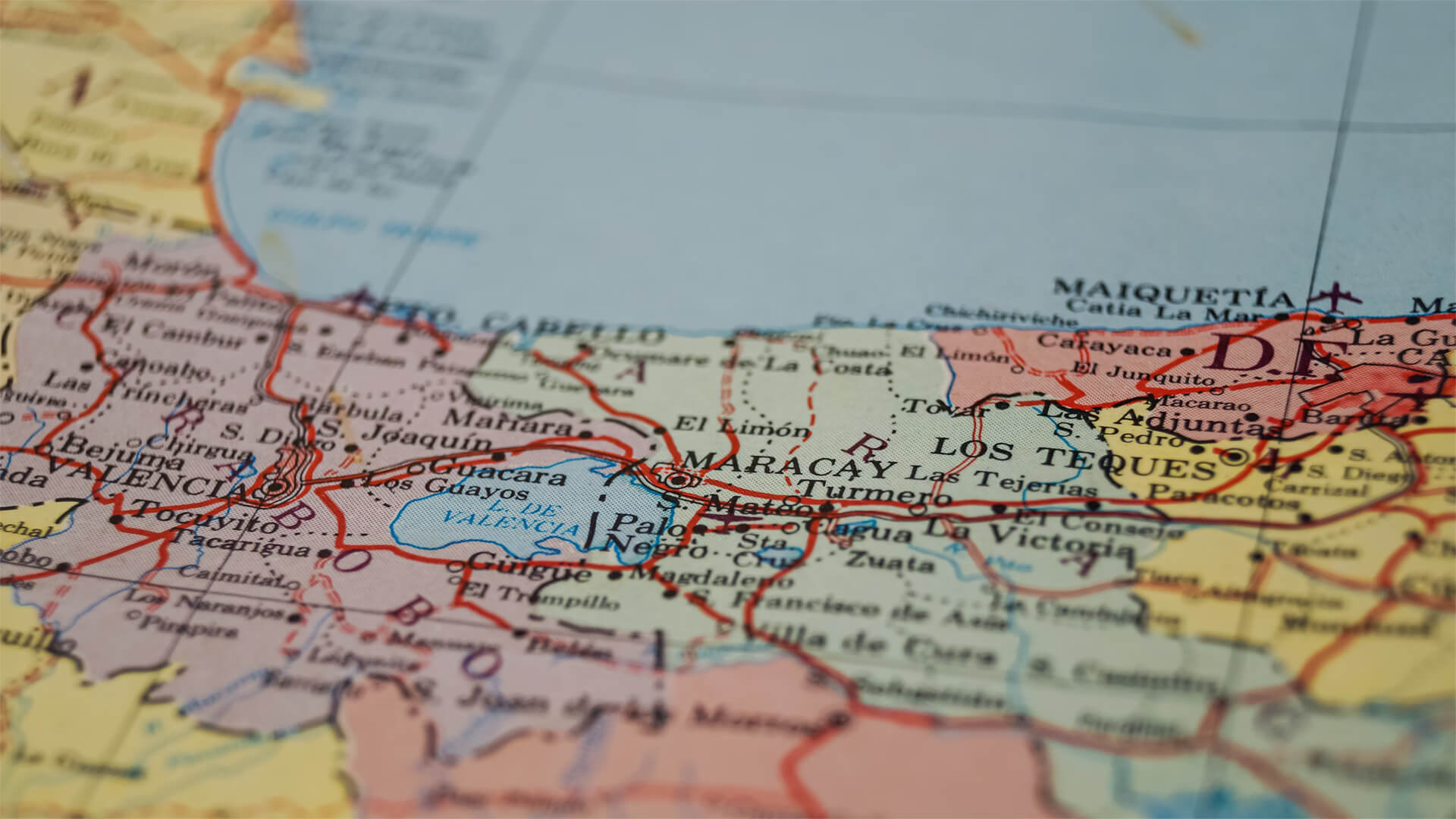
Map of a bay of Venezuela

With renewed American activism in the Western Hemisphere, Venezuela has become just the first to get some “extra attention.” So what countries could be next on the list as the US reasserts regional dominance?

Blocking outside powers from gaining regional footholds will be a main priority, and countries like Cuba, Brazil, and Honduras all have their names in the hat.

The issue, of course is the destabilizing a government is the easy part. The real issue is what comes next. We’re talking massive time and personnel commitments to achieve any semblance of functional states…something the US has not prepared for.

The objective with all of this is security; keeping out Eastern Hemispheric powers and preventing them from establishing footholds in the region. And there are plenty of options outside of capturing presidents and military occupation to achieve that.

Transcript

What is next? So, because this isn’t just about Trump, because this just isn’t just about Maduro or Caracas or Venezuela. The bigger picture is that the United States is going to start intervening in a lot of places in the Western Hemisphere. For a more detailed version of what this all looks like, Absent Superpower, my second book deals a lot with what I call dollar diplomacy and how that’s going to unfold. 

But in the midterm, we are looking at probably three main targets. The first one, of course, is Cuba. The personality that was most responsible for this policy change in the Trump administration is Marco Rubio. Rubio is the secretary of state and the national security advisor. In the first part of the Trump administration, he was largely shut out of the white House because Trump didn’t trust anyone who knew anything about international affairs, and he wanted his own people like Steve Wyckoff, who knew absolutely nothing about international affairs and bragged about it, was proud about it. 

He wanted them to take over. Well, after nearly a year of what cost? Trump has been made to look stupid over and over and over and over and over again in the eyes of not just the allies, but the Russians and the Chinese. And he’s found himself outmaneuvered on really every issue that matters. So Rubio was able to weasel his way back with all this way. 

That makes it sound bad. Anyway, start to do his job. Trump started to let him do his job again. And Marco Rubio is a descendant of a Miami Cuban family. So the Cubans were the Miami Cubans were largely ejected when Castro took over back in the 60s. And they’ve run, like in Caracas, basically a kleptocracy that calls itself socialist, that he’s not a really fan of. 

So when he had the opportunity to get control of foreign policy to a degree, which is, you know, what Secretary of state national security is supposed to do, he started getting the Trump administration more on board with taking action against Maduro in Venezuela. Well, Maduro and Venezuela, going back 25, 30 years, have been subsidizing the existence of Cuba with cheap, gasoline products and oil that now goes to zero. 

Cuba was already facing economic catastrophe because they’ve run their system into the ground as well. And those oil imports just subsidized oil imports were really the only thing holding the country up. And now that is gone. So the American administration doesn’t necessarily need to intervene militarily in order to tear Cuba down, basically just needs to up the economic blockade a little bit more. 

And it’s really difficult for me to see, without intervention, the Cuban system lasting more than a couple years at this point, throw intervention in. And, you know, of course, that can go any number of directions based on the type of intervention. The last time the United States tried to militarily intervene, it was the 60s. It was the Bay of pigs invasion, where we basically armed a bunch of Cuban nationals to go and take over their own country. 

It was a disaster because these people weren’t trained. But as we’ve seen with Caracas, if you include U.S. Special forces, the math changes. So I’m not saying that we’re about to hit Havana. What I’m saying is there’s going to be broad spectrum pressure on the entire Cuban system to break it. What happens the next day is a different topic. 

The next country to look at is Brazil. It’s not that Brazil and the United States really cross paths economically or strategically. It’s just that it’s the second largest, country in the hemisphere from a population and landfall interview. And, we’re on the other side of the Amazon and the other side of the Caribbean from one another. 

It’s actually faster, generally, to fly to Europe than it is to get to populated Brazil. But it is a major power. It does have a lot going on, and in a world where the United States is taking a more active role in the region, Brazil is going to have to find some way to basically make the Americans happy, because the Americans hold most of the cards here. 

One of the reasons why a regeneration of Monroe is so easy for the United States is we built our Navy for the Eastern Hemisphere, and it is more powerful than every navy in the Eastern Hemisphere combined by a significant margin, probably by a factor of 5 or 7. Right now, no one in the Western Hemisphere, except for the United States, even has a Navy that’s worthy of the name, which means the United States can choose the time and the place in the nature of any sort of conflict, whether that’s going to be military, economic or otherwise. 

Brazil has a long coast. Most of the population lives in enclaves on that coast that are loosely connected to the rest of the country. It is child’s play. If the United States wants to muck with internal Brazil to do so. And if you want even current politics into the situation right now, the Trump administration really doesn’t like the current Brazilian administration, because it’s passing a lot of laws that basically block the right to lie, and it’s trying to intervene in Brazilian politics. 

So that’s political allies who I have said nice things about Donald Trump, rise back to power. It’s gotten to the point now that the guy that’s of most concern Bolsonaro, who’s the former president, who’s currently in prison for trying to throw a coup against the current president, the Trump administration has tried to get him out of jail and preferably back in power. 

So there are thousand ways that this can go, because there’s a couple hundred million people in Brazil, and it’s a big place. But the degree that Washington is going to be in pressure on Brasilia is going to be huge. Probably not to the same degree as Havana. But it’s something that is probably going to be designed to break the country as a functional unit. 

And we’re going to see that not just with Trump, but with whoever is next. Third up, here’s a weird one. Honduras. So Honduras is a Central American country that used to be run by a drug runner. Well, that drug runner was arrested, was sentenced, convicted and put in prison here in the United States. And he said some nice things about Trump. 

And so Trump pardoned him. So we now have the United States actively intervening in the politics of a Central American country to attempt to resurrect a drug lord and put him or his allies back in power. That is going to be a shit show. But once you strip the Trump and the drugs out of it, the idea that the United States is going to start treating Central America as a region that will install personally hand-picked leaders, we are going back to the 1800s because that’s what we used to do then. 

Now, will any of this work kicking over the ant hill? That is really easy. Reconstructing something on the other side that is stable, that is almost impossible. We’ve tried to do it in rock. We’ve tried to do it in Yugoslavia, we’ve tried to do it in Afghanistan. There is an argument that we’re trying to do it now. In Syria. 

It usually doesn’t work unless you’re willing to put at least 100,000 troops on a country that’s the size of Venezuela, maybe 50,000, in the case of Cuba. I don’t think we have the troops. That would be necessary for a place like Brazil. And if you want to do it in Central America, keep in mind there’s not just one Central American country. 

It’s a strip. And if you just do it to one, you really haven’t fixed anything. So you have to do it from Panama all the way to Guatemala. And most of these places are broken states, making them look like Wisconsin is not an option. And the effort of doing something would be something that would be more involved than Vietnam and Korea and Afghanistan and Iraq combined. 

So at some point, Washington will have to come up with a plan that is more realistic. But as we have seen from the last several decades of American foreign policy making, not just this administration, Americans tend to bite off more than it can chew when it comes to reconstructing or nation building an area, and it never ends well, that doesn’t mean it still won’t work for American policy. 

Because remember, the primary goal here is to prevent eastern hemispheric powers from having a foothold. And while it would be nice to have economically successful countries that are political democracies aligned with the United States, the first and foremost concern is security and economic penetration. Which brings us to the last target that the United States is going to have, and that’s China. 

China’s entire geopolitical plan is for the United States to ultimately underwrite its geopolitical success. Its navy may be large, but it’s largely coastal. It can’t project power. Its population is dying out, literally. And their whole economic model is to make product with technology that stolen from the rest of the world and then exported to undercut other, potential competitors and shove products into their market and have the United States strategically underwrite the entire thing in Latin America, it has been partially about market access, but it’s mostly been about, resource access. And that is put Chinese footprints all over the region. The United States was always going to act against that. It looks like it’s starting now. In the case of Venezuela, most of the crude eventually ended up at teapot refineries in the greater Shanghai and Shandong region. 

That’s going to obviously end. So basically you should look at any investment that the Chinese have on the ground in Latin America now as circumspect and likely to be a target because the Chinese have nothing that they can do to protect it. 

And the United States has lots and lots and lots of options shy of kidnaping. The president in order to get rid of it.

The New Ukraine Proxy War

Russia is rapidly depleting its stock of prewar vehicles and losing soldiers faster than population growth can replace them, thrusting it closer and closer to military exhaustion.

Ukraine has its own set of problems, but at least it has stronger nationalism and a growing European military-industrial base behind it. As Europe steps up as the primary aid provider for Ukraine, we’re entering a new era of proxy wars. We have Europe backing Ukraine and China backing Russia.

This is reshaping global military technology. Europe vis-à-vis Ukraine is now leading drone and counter-drone innovation. China is advancing alongside Russia. And guess who is getting left in the dust…

Transcript

Hey, all, Peter Zeihan here coming to you from Colorado early in the new year. We’ve had a lot of information drop out of the Russian Ministry of Defense. Ukrainians. A lot of folks on both sides of the conflict in Ukraine that study the war. And we’ve seen a few interesting patterns emerge in just the last four months that I think it’s worth spending a little time talking about. 

The short version is we’re, to a degree, seen a deindustrialization of the war effort, specifically on the Russian side of the equation. The Russians started this conflict with a massive advantage in armored vehicles and tanks, something like 20,000 or so that they had left over from the Soviet period. The Ukrainians had a lot left over as well, but not even a quarter. 

The amount probably closer to a 10th, actually, by most measures. But the Russians go through equipment like they go through men. They run it hard, and they put it into situations that are perhaps not the best. And their doctrine isn’t very good. And everything gets shot up. And that’s before you consider the climactic and, geographic situation in Ukraine, where for large, portions of the year, the area is just really muddy. 

And if you put a tank into mud, it doesn’t move very well. And it’s really easy prey for a drone. And so bit by bit over the war, vehicles have become less important and drones have become more important. But for the Russians, who actually have to bring equipment to the front, vehicles are always going to be more important for them than it is for the Ukrainians. 

Well, it seems that they’ve run out, pretty much all of their pre-war battle tanks are now gone and their ability to replenish them, it is something like 2 to 3% of what they had before. They’re only able to make a few tanks a month. In addition, things like APCs and armored vehicles, they’ve pretty much run out of. 

And now they’re even running out of civilian vehicles and things like golf carts to the point that we’re actually seeing horse charges starting to pop up on the front again. Because horses are available and cars are not, this is really led to a change in Russian tactics, obviously, because if you don’t have the equipment to move your men, you have to move your men differently. 

And so some of the new strategies that we’re seeing on the front is instead of sending a thousand men or 100 men or ten men, it’s sending 2 or 3 men to try to infiltrate a zone. And you do that with 2 to 3000 men over the course of a month. And eventually, hopefully, you have enough people that have infiltrated the zone that they can make it untenable for the Ukrainians to maintain their positions. 

Can this work? Yeah. And it’s probably was used, in places like Cuba and areas, in the Donbas. But the pace is incredibly slow. And the casualties are incredibly high. And more importantly, you have a much higher percentage of casualties that turn into actual fatalities. So best guess is that at this point in the conflict, the Russians have lost between 1 million and 1.4 million men, with somewhere between 200,000 and 400,000 of those being dead. 

And the casualty rates have increased from the 750 to 1000 people per day in calendar year 2024, to probably something closer to 1500 to 1600 people by the time we get to the new years of 2025, 2026. I said about I think it’s two years ago now, that if the Russians keep losing men at the rate they are, they’re not going to be able to mount a military force of any size in 6 to 8 years, which, when I said that would have put us at somewhere around 2030, it now appears that that date has been moved forward because the Russians are suffering casualties faster than Russian boys can be born. 

On the Ukrainian side, the situation isn’t exactly great either. Keep in mind that any battle in which the Ukrainians do not inflict at least a 4 to 1 casualty ratio is a battle that probably, in the long run, the Russians have won just because there’s so many more Russians. But the Russians are now getting to a situation where they are running out of people who are not ethnically Russian. 

All of the various ethnicities that make up the Russian Federation, that are not that ethnically Russian, they’re basically running them dry. And the Chechens are almost tapped out at this point, which is something I never thought I would see. Ukraine doesn’t have that kind of problem. Everyone pretty much who’s fighting in the Ukrainian side of the war is Ukrainian. 

So there’s a much stronger nationalism factor going in. And we are seeing the, weapons systems, in the military industrial complexes of the Europeans spinning up, in order to continue providing arms for, the Ukrainians. Keep in mind that the Ukrainians have given, excuse me, keep in mind that the Europeans have given the Ukrainians significantly more military aid, than the United States has. 

And and we’re almost a factor of three more economic aid. So if the Trump administration changes its minds on a few things, obviously, that will affect the war effort one way or another. But the bottom line is that the European military complex is becoming more capable of supporting the war. As the Russian military complex is becoming less capable. 

So we really are seeing this turn into a proper proxy war with the Europeans on one side and the Chinese on the other side. Most of the hardware that is coming into the Russian system now is originated in Chinese factories. And we’re getting this weird little proxy fight between two countries that are two regions that haven’t really been involved in a direct geopolitical conflict. 

That has a lot of impacts in a lot of ways. Number one, the Europeans are much more amenable to talking to the Trump administration about trade sanctions on the Chinese, because their leaderships are now recognizing that they’re in a direct head to head with Beijing. But it’s also leading to a reorganization of how global military technology works. 

The United States, by stepping back, has seen its pace of technological innovation slow considerably because you have a technical revolution happening in Ukraine that the United States, for the most part, is not participating in. But the Europeans are rearming at a pace that is forcing these sorts of changes into their everyday structure, how that will play out in the years ahead. 

Way too soon to tell. But the United States is no longer clearly at the forefront of either drone technology or drone jamming technology. Those are European concerns. Mostly Ukrainian and the Chinese are now getting it on the back side of this, moving from first person drones to something else, things that are getting incrementally more sophisticated. 

How this will play out. So many of the rules of war have changed in the last 24 months. It’s really hard to tell. But the one country that seems to be going out of its way now to not keep pace is the United States.

No Immigrants & Negative Growth = Canada’s Economic Tipping Point

Man holding a small canadian flag against a misty background

Canada sharply restricted immigration and scored itself a 0.2% population decline. This flips the script on a long-running strategy of lax immigration to offset low birth rates and prevent pension/workforce collapse.

Slamming the door shut quickly has triggered demographic decline; should the door remain shut for too long, they risk restarting a long-term economic hollowing-out. However, the severe housing shortages, affordability crises, social backlash, and rise of nationalist politics make a good case for curbing inflows.

Canada is facing a rough economic outlook in the coming decades, unless it can figure out the people problem or negotiate more favorable trade integration with the US.

Transcript

Hey, all Peterson here coming to you from not Canada, but Colorado. But we’re gonna talk about Canada anyway because, you know, it’s snowing. Okay, so the big news in Canada is that they have had population drop this year, 8.2%, their first drop in cheese quite sometime. So a few decades at least. What does this mean for them? 

Why did it happen? Where is it going to take them? So if you dial back to 15 to 20 years ago. Canada was in a population bomb situation that is very similar to what’s going on in Germany and Italy. They basically the birth rate had dropped, for decades, and they hadn’t had, rising birth rates since really almost World War two. 

And it was really starting to cause some problems for them. They knew that in the next ten years, which would bring us to, you know, five years ago, that they would be facing pension collapses, more people in their 70s and 60s and 50s and 40s and 30s and so on. And there was really no hope. 

Very little hope, anyway, that they would ever have a domestic regeneration of their population structure because there just weren’t enough people under 30 to have kids in the first place. So under the previous, previous, previous, Prime Minister Stephen Harper, who was a conservative from the province of Alberta, which is basically the Texas of Canada, started opening the doors to immigration. 

Now, Canada had always had a relatively egalitarian view towards immigration compared to everybody else in the world. But it was always, an issue of a race. The problem is, is when the migrants come to the United States back in the pioneer days, they could go out and become small, hold farmers and be exporting grain to the wider world in a matter of months. 

And the wealth came really easy in Canada. Not so much. The prairie provinces did have that option, but they were drier and they were colder and they were less reliable. And if you start going into interior, say, Quebec and, Ontario, you’re on a chunk of geography called the Canadian Shield, which is a bunch of uplift that had been scraped, cleared by the, glaciers. 

And so there just wasn’t much soil to work with. And the soil was very poor. And of course, it gets a little cold for most of the year. So they never had the pioneer experience that the United States had. And that took Canada in a different direction, and means that most of the population isn’t just massed on the southern border for warmth, but clustered into cities for warmth. 

About 85% of the population of Canada lives in the major cities. It’s a very different dynamic economically and socially than what we have in the United States. Socially. It makes it really easy to bring in other groups because it’s already a polyglot. Economically it means and unless you keep that cycle of people coming in, you start to age out really quickly. 

And that’s what happened back in the 1990s. So Harper opens the doors, immigration doubles, triples, quadruples, and they bring in enough people who are in the age bloc of roughly 30 to 45 that they can pay into the system enough in taxes, before they retire, that it doesn’t break the bank. The downside of that plan is that once you start that policy, you can never stop, because if you bring in someone who’s 40, ten years later, they’re 50, ten years later, they’re 60, and all of a sudden they’re, retiring. 

So where is the United States? People can walk here from the South. And so we tend to get migrants that are under 25 in Canada, they typically have to fly there. And so they tend to get migrants that are over 40. So once you open the door, you have to leave it open and you bring in hundreds of thousands of people every single year. 

You do that for 20 years, and you start to change the political and the ethnic makeup of the country. Now, in large parts of Canada, that’s not a problem. I mean, if you’re in Toronto, it’s a polyglot. If you’re in Montreal, as long as the people are coming in are French, it’s fine. And, you know, a lot of French ethnics from France came to Montreal in the aftermath of the European financial crisis and never left. 

But they were close enough ethnic mix that it wasn’t too much of an integration. I mean, people from Montreal eventually discovered that the French can be kind of pricks. But, you know, that’s a French inter French problem for the rest of Canada. 

It was a much more diverse crowd, a lot of South Asians, but really people from everywhere and eventually it reached the point that Canadians who had been born in Canada, regardless of their ethnic affiliation, were starting to lose connection with the place that they were consider themselves to be from. So there’s a cultural issue, but the bigger one was much more economic. 

Everybody has to have a place to live and so when you bring in a half a million or more people a year into a country that only has about 30 million people, you start changing the dynamics of the housing market very, very, very quickly. And many cities in Canada, most notably Vancouver and Toronto and Montréal, but also the secondary cities like Regina, and Saskatoon, suddenly became unaffordable for people who had lived there all their lives. 

And I’m not talking like the bottom 10% on the socio dynamics. I’m talking like 80% of the population. It hit a break point two years ago in calendar year 2023. Back then, Justin Trudeau was still premier, and he realized that it was shifting the entire country, not necessarily on the left or right spectrum economically, but on the left right spectrum socially and the far right. If we were in the United States, we would call them MAGA. 

Started to rise up and agitate and became very politically potent. And so he realized that unless his great centrist liberal experience was going to be threatened, that he needed to dial it back. And in the course of about 12 months, the TRO government basically shut almost all possibilities for illegal migration to Canada. And since the borders between Canada and the rest of the world, aren’t really the walkable type. 

That pretty much it was it. And so this last calendar year calendar 2025, we actually had a population decline. Now, under normal circumstances, that wouldn’t have been enough. And under normal circumstances, Justin Trudeau’s Liberals would have lost horribly in the general election that they had last year. But enter Donald Trump, who started agitating against all things Canadian, started calling Canadians nasty. 

And we got this big nationalist upwelling for whatever candidate it looked like Trump was not supporting. And so the liberals were able to eke by with a new government once Trudeau resigned. 

Where does that leave us now? Well, Canada has now closed the door, and with that door closed, the demographic time bomb starts ticking again. And if they leave it closed for any more than five years, we’re going to be looking at a hollowing out of the entire economic fabric of what’s left of the country. 

What I wrote 15 years ago when this was just starting up was that without a massive change in demographic structures, we were within just ten years of the country going to a position where Alberta was basically paying for everything, because that’s where the oil is. We’re back in that situation again. The difference this time is that globalization has failed, and is now basically going through the process of dying and Canada, luckily, was never really globalized. 

They basically traded with the United States and very few other places, over 80% of their trade. If I remember correctly. Gum South, that hasn’t changed. What has changed is that today there is an impulse in North America for a massive re industrialization program to build up the manufacturing plant that we need here to replace what we used to depend on from the Eastern Hemisphere. 

There is definitely a role for Canada play in that. Now they have aging infrastructure, they have an aging workforce. They’re heavy regulators. nowhere near going to benefit as much as Mexico has and will. But via the existing connections between Auto Alley and Detroit and the province of Ontario. They’re far more integrated into American automotive manufacturing, the really other part of the world, except for the possibility of Mexico versus Texas. So there’s plenty to work from. 

There’s plenty to work with. And since we’re only talking about a country here of 35 million people, of whom like a third are already retired, you don’t have to have a lot of breakthroughs for Canada to really benefit on the aggregate, but it does require a very different approach to policymaking, not just in Ottawa, but also in Washington. 

And we’re probably not going to get that in the next three years. Now, NAFTA negotiations renegotiations happen in calendar year 2026. How those talks go will determine what is possible for Canada for the next 15 to 20 years. And if they’re not going to allow large scale immigration, that is really the only game in town. So it’s going to be very interesting to see how the Canadians come to terms with higher nationalism versus the Trump administration, versus the need to just suck it down and put up with the Trump administration in order to get what they need on trade, because they can only do one of the two. 

Whoops. I said that backwards. They have to do one of the two.

“Death to the Dictator” Protests in Iran

A placard calling for regime change in Iran

Happy New Year from the team at Zeihan on Geopolitics! Thank you for your continued support as we head into 2026!

“Death to the dictator” chants have broken out during the protests in Iran, indicative of the broader economic and political strain throughout the country.

Oil revenues that used to fund domestic stability and prop up Iran’s regional influence have collapsed. Leaving the clerical regime weak. But does that mean a revolution is imminent? Well, Persian history says no. There have only been six major regime changes over 2,500 years. Although two of those changes have happened in the last century, indicating the current system is struggling to adapt to the industrial era. But a powerful state and a large military help control its population via repression and slow cultural integration.

Venezuela’s End: The Oil Question

Photo of black oil barells

Venezuela only has one realistic path forward: Oil. That doesn’t mean it’s a sure thing, though. So, let’s lay it all out.

Most production comes from the Orinoco Belt, but it’s complex and expensive crude. Without foreign investment and involvement, this is a no-go. The Lake Maracibo region offers lighter, easier-to-refine oil, with better export access and infrastructure. However, this is a bit of a lawless region, so it would necessitate lots of troops in addition to any investment.

Russia and China come out of this as clear losers, but some US refiners are going to take a hit, too. This isn’t the energy-security play that the US is looking for or needs. Venezuela has likely seen its last days as a major energy producer.

Full 12 minute analysis available exclusively on Patreon below:

Transcript

Hey, all Peter Zeihan here coming from Colorado. Today we’re going to talk about Venezuela. But from perhaps a positive scenario point of view. The core issue is oil. That’s where all the money comes from. And if you’re going to reconstruct the country in any form, that’s where it’s going to be able to pay for itself. I really don’t see the Trump administration dumping $100 billion and regenerating the infrastructure. 

So let’s talk about what’s necessary and why and how it might might happen. Venezuelan crude falls today into two general categories. The first chunk, the chunk that is responsible for about 80% of the production is a place called the Orinoco Belt, which is down in the Amazon. It is not crude in the technical term. It’s something called Bitterman, which requires incredible amounts of energy and steam injection to liquefy it enough that you can bring it to the surface, and then you run it through something called an upgrader, which is kind of like a refinery, just to make it liquid enough to be stable for shipment. 

And then you have to inject something called diluted into it. So again, it can flow, and then you pump it north to the coast, where it’s loaded for export. This makes it the most expensive crude in the world per barrel produced and requires incredible technical acumen to function. Historically speaking, most of the work on the Upgraders, has come from US multinationals a little bit from, say, total in France. 

Schlumberger, Baker Hughes, all of those, oil services firms were heavily involved in the development of the program. And eventually they trained at PDVSA, which are PDVSA, which is the state oil company, to do a lot of the work. But that kind of came to a crashing halt back in 2002, when we first had a political coup against Chavez, followed by kind of an economic resistance against the professionals within PDVSA. 

When that process was over and Chavez re consolidated control over the country, he purged PDVSA. And what we found out was basically everyone who had an engineering degree didn’t like the guy and joined in the coup, and so he got rid of all of them. And since then we’ve had a steady degradation of what PDVSA can do. It’s no longer one of the most capable oil companies in the world. 

It’s barely holding together. And if it wasn’t for the presence of U.S. super major Chevron in some of these projects, most of them probably would have shut down, in order to get the Orinoco back up to what it could be. So it’s producing one 2 million barrels a day. You’re talking about investment, at least in the tens of billions, probably closer to 200, because there’s several stages to this process. 

Think of it kind of like what the Canadians do with oil sands, but remove easy capital access, remove the skilled labor, remove the rule of law, remove the physical pipeline linking it to the world’s largest consumer market. They have to do this all in the Amazon, more or less by themselves, without cash, but still bringing in foreigners. 

Very, very expensive projects. And I think the most likely outcome is that this is going to eventually fall down to zero, because they’re simply not going to be able to maintain it. The second part of the Venezuelan oil complex is a little bit more interesting from a functional point of view, if not a chemistry point of view, and that is the Lake Maracaibo region. 

Now, Lake Maracaibo is a large bay in the western part of the country and Zulia State that is connected to the Caribbean that has a mix of onshore and offshore production. If you go back to the mid 1990s, it was producing somewhere between 1.5 and 2 million barrels a day, which was the majority of Venezuelan oil production. And it is kind of a medium light mix instead of the Biderman that exists over in, southern Venezuela. 

As a result, produce production is a lot more basic. The geography is a lot more friendly, and most of the physical infrastructure to process the crude actually exists locally. There’s a large complex that technically could process about a million barrels a day, whereas Venezuela barely processes anything of that of the stuff that comes out of the Orinoco. But most importantly, you know, the Orinoco is basically asphalt, and so getting asphalt out of the ground is a bit of a bitch. 

Whereas the stuff in Orinoco again, light, medium, sweet, much easier to process. And the export options because it is on the water are much easier as well if there’s a solution here. For Venezuela, it lies in the Maracaibo region. A couple reasons. Number one, there is a line of the Andes that cuts the Maracaibo region and Zulia from eastern and central Venezuela. 

And so there’s always been kind of a semi secessionist view of the world compared to Caracas. So Caracas is a Republican project that was formed after the collapse of the Spanish empire, very anti-colonial, very pro-independence. But Zulia and Maracaibo are more like a post-imperial remnant who never really fully bought into the Caracas project. And while they’re not secessionist in the traditional sense, they definitely feel that they’ve been robbed blind by Caracas government, not just under Maduro and Chavez, but all the governments have come before, all the way back to the Spanish breakup. 

So I can easily see a devolution of the state of Venezuela or Western. Venezuela under Maracaibo kind of goes one way and Caracas goes the other way. Caracas falls apart, Maracaibo is more stable. And that’s before you consider things like the United States getting involved, because if you are an American energy company, the Mark region is a far more friendly environment to operate in than the Orinoco. 

You don’t have to deal with the jungle. You don’t have to do the interior. You don’t have to deal with the capital. You don’t have to deal with, you know, to fight the geography. Everything’s just easier. But easier is not the same thing as easy. Because this is a region that has been denigrated by Caracas for decades. 

Centuries, almost. It’s not a great place, especially right now. Civil control and law enforcement has largely collapsed. You have organized crime, gangs running rampant through the area. The Trump administration said that the Caracas government was facilitating drug shipment to the United States. 

Maybe that was true, but there’s a lot more going through, more Acabo. Maracaibo also has literal pirates like Arg and Eyepatch, that basically raid the entire area. All the time. So if, if, if you’re going to have an economic renaissance in Venezuela or even just one in Maracaibo, in Zulia, first thing you have to do is secure the area and reestablish law. 

And because Venezuela is not a naval power, you’ve got Maracaibo city on the far north side of Lake Maracaibo and the rest of the population of Zulia on the south side. You’re now basically talking about occupying, stabilizing two disconnected sections. So you’re talking about tens of thousands of troops. If you want to make this happen. But that is still the low hanging fruit in this question. 

So much easier than Orinoco, even with all those complications. So let’s talk winners and losers. Most likely this isn’t going to work. Most likely we’re seeing the beginning of the end of Venezuela as an energy producer at all. First loser is, of course, Russia. The Russians bring no technology whatsoever to this fight. Basically their presence was geopolitical. 

To stick it to the Americans, that goes down to zero. They’ll lose absolutely everything that they put in. Second biggest loser is China. China has spent the last 25 years expanding its refining complex to run crude, different kinds of crude from different parts of the world, including Venezuela. The idea being that eventually they’re going to have a fight with the United States. 

And the more diversity they have for options, the better. And so they have sunk tens of billions of dollars into Venezuela to basically prepay for crude. And right now they are owed about 15 to $20 billion in Venezuelan crude. That is now all complete right off. In addition, the refineries that they have built in Shandong and near Shanghai to specifically process Venezuelan crude, they have now lost their only source of crude. 

They will not get it back. So this has been a huge risk for the Chinese that now is being manifested as a complete loss. Other big losers. It really depends upon what happens with the oil sector. If I’m right and this all goes away, then the biggest loser is probably the refineries in the US Gulf Coast region. 

A lot of them were designed to run on this sort of crude, and it’s just going to stop. They can still use, Canadian crude, but the price differential is not going to be as favorable if Venezuelan crude falls off the market altogether. So even if they can replace all the barrels they need, the cost per barrel is going to rise, and that’s going to force them to take a more diverse type of crude. 

And that means less heavy and more sweet. Keep in mind that the U.S shale industry produces exclusively super sweet, super light. So we’ve been in this weird position in U.S. refining for the last several years, where the refiners on the Gulf prefer to take Venezuelan Canadian crude and the United States exports its light sweet to the rest of the world. 

All we need to do is switch that so that we process our own. But that’s easier said than done. If you’ve spent a few billion dollars upgrading your refinery to run the heavy stuff. Heavy crude is typically used for things like asphalt, industrial products and diesel, whereas light sweet crude is usually used for gasoline consumer products. anyone who’s in refining will tell you that is the short story and hides a lot of nuance. I agree, but this is not a video about that. Winners in that scenario, of course, are Canada, because one of the problems that Canada has been having is it sells most of its crude into the American market. 

The American market is the most super saturated energy market in the world. And anything coming out of the Caribbean, Venezuela goes to the US Gulf. So they’ve basically been selling at a massive discount, but sometimes it’s $25 a barrel that now closes and should allow the Canadians to get a better leg up. And that’s before you consider that they have a pipeline that’s kind of sort of working, shipping crude to their West coast now. 

All right. What am I leaving out here? This isn’t an energy security play for the United States. I know a lot of people said that the United States was doing it for oil. And Trump is all about oil. United States is the world’s largest producer of crude. We export 5 million barrels a day of refined product, which is significantly more in refined product than Venezuela ever, ever exported in terms of raw crude. 

So while there might be an economic play here for Exxon and Chevron in the rest, if if the country stabilizes the investment required to make it stabilized and you have to do that first is massive, then you have to go in and physically reconstruct infrastructure that has been dilapidated for decades. And in most cases, just needs to be ripped up and replaced wholesale. 

The one possible exception is Maracaibo, where in theory, in five years you could get output up from its current 200,000 barrels a day to maybe a million. And in theory, the refining complex there, while massively outdated, is still broadly functional and could be rehabilitated without a complete reconstruction. But you are still talking about investment on the front end in tens of thousands of troops, and on the back end in tens of billions of dollars. 

That is not something that I think the American population will support. That is not something I think the Trump administration is interested in. And that’s not something that I think the American super majors are going to get involved in it anyway, considering that there’s so much more crude and other places that are so much easier.