
Aluminum production in the Persian Gulf is going bye-bye. As Iran ramps up strikes on gas fields, pipelines, and power plants, the countries that depend upon cheap natural gas will no longer be able to run their smelters.
The facilities in Saudi Arabia, Bahrain, Qatar, the UAE, and Oman account for roughly 9% of global primary aluminum. This is going to tighten supply for many key global industries like construction, vehicles, and aerospace.
The U.S. will catch a break on most of this pressure, since it relies on recycled aluminum for much of its supply. However, global supply shortages, coupled with Trump’s tariffs, will still drive up prices.
Transcript
Hey everybody. Peter Zeihan here. Coming to you from Colorado, today we’re going to continue talking about the long term implications of what’s going on in the Persian Gulf. Economically, we now know that the strait is going to be closed for at least several months. And that’s a lot of opportunity for Iranian weapons systems to take out infrastructure on the west side of the Gulf.
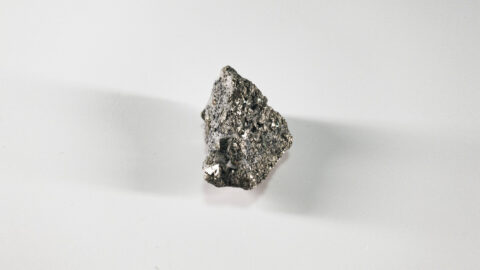
We now are in the position where we need to basically write off most of the 50 years of infrastructure that has built and built there. And so today we’re going to talk about metals, specifically aluminum. Aluminum doesn’t come out of the ground like copper. It comes out as an or called bauxite.
it’s not like iron ore where one step of refining and then all of a sudden you have iron ore steel and. No, no, no, no, it requires multiple steps. First you take your bauxite and you basically put in a big batch of caustic soda, which is a strong base, sort of thing that’ll strip the flesh out of your bones, and that will remove a lot of the impurities and concentrated into a very, very white reflective powder called alumina.
Now, alumina is produced in a number of places in the world, and the Persian Gulf is not a major producer. You do have some in there in the United Arab Emirates and in Saudi Arabia. But collectively you’re only talking about 3% of primary production, and alumina itself doesn’t have a huge number of, uses. I mean, you can use it for pigments for if you want, like a white, white, white paint kind of thing and a few other products.
But most of it and over 90% of it is then basically put into a, a giant and that you stick a couple electrodes in it and you just electrify the shit out of it, and eventually it process itself into something called aluminum, the metal that we all know. Now, the aluminum market is a little odd, aluminum, more so than almost any material out there, is endlessly recyclable and is easy to recycle.
All you have to do is melt it down, and all of a sudden you’ve got pure aluminum again. And so the global market, it’s about 70% primary production that goes through the base process to become aluminum electrification become aluminum. The other 30% is more traditionally recycled.
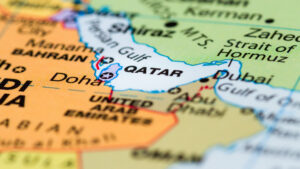
There is a wind quality issue, some rerecording in the middle of this one. Okay, aluminum. We are talking about a system in the Persian Gulf where we have six major smelters working from north to south Saudi Arabia, Bahrain, Gutter, the United Arab Emirates, which has two, and then Oman. In all cases, the vulnerability is kind of the same.
A drone hit on an aluminum smelter. I don’t want to say it’s not a big deal, but nothing’s going to explode because aluminum or aluminum, neither of them are flammable. The problem is with the production cycle that is required to get there. You see, in the Persian Gulf, it is obviously oil rich. That’s what it’s known for. But it’s also natural gas rich. And oftentimes the natural gas comes up as a byproduct of the oil production. Now oil is easy to move. It’s a liquid. So you can easily put it into a tanker. And tankers coming out of the Persian Gulf is what the area is known for. But natural gas being a gas doesn’t work nearly as well.
You can chill it down to like -280 degrees and liquefy it and put it into a specialized tanker and then ship it that way. But most countries don’t do that because the upfront cost is very, very high in the Persian Gulf. Only the Qatari do that and they do it at scale. World’s largest facility. but for everything else, they generally try to use the natural gas in another way.
Typically they burn it in power plants for electricity, which means this region also has some of the cheapest electricity in the world. And the primary input for turning aluminum into aluminum is electricity. So you’ve got these six facilities. The vulnerability is Iran knows that attacking the aluminum plants really isn’t the way to shut it down. You just shut down the whole power grid.
So either you hit the field where the natural gas is produced, the pipeline that takes it to a processing facility where they take out impurities so it can be used, or the pipeline that takes it to a natural gas burning power plant, or you hit the power plant itself. All of those are in the Iranian target set, and all of them have been hit at some degree during this conflict.
And as the region runs out of interceptors, more and more will be struck. As for which facilities are likely to go down first and why? Let again, let’s start from the north. The Saudi facility is probably the one that looks the best or second best, because in Saudi Arabia they actually produce some bauxite. So this facility turns, bauxite into alumina and then alumina into aluminum all in the same place.
And then they truck the metal out west to the Red sea. So they’re not dependent on things coming and going. But when you go down a little bit further south of Bahrain and gutter, they use local natural gas for their power. They import alumina from out of region.
And so with the strait close, they can’t get their inputs in. Their power system is already been under extreme attack. And so both of these facilities are already operating at, well, less than half capacity. And it’s probably likely that they’re all going to be shut down, within a few days. And certainly no more than a couple of weeks.
Move a little bit further south. You’ve got the United Arab Emirates. There’s a smelter in both Abu Dhabi and, and Dubai Emirates. The problem here is they’re on the same power grid. And because of the geography of the region, where there’s a wide swath of the UAE that faces Iran, there’s they’ve simply run out of interceptors.
And we’re now seeing multiple drone attacks hitting hard infrastructure without interruption. So we should expect both of those to go down because of power issues in the next week or two. The final one is Oman, and it is actually out on the Indian Ocean. So, you know, it’s not directly affected by the Strait of Hormuz closure. But the Iranians have shown that they’re capable of striking things on the Indian coast already.
They’ve already shut down the Emirati port of Fujairah, and it’s only a matter of time before they start going after the power infrastructure. Throughout both the UAE and Oman, which would be more than enough to shut this one down as well. So all of them are vulnerable in different ways. All of them will probably be going offline over the course of the next month. If this war continues.
As for volume, these six facilities together and three of them are like the three biggest ones in the world. Produce roughly 9% of the world’s aluminum finished primary metal. The reason I’m kind of, on that is that the Chinese keep lying about their numbers, so we’re not quite sure. So if you peel the Chinese out, they’re probably 15 to 20% of the global total.
And in a world that desperately needs to expand its industrial plant, aluminum is one of the primary limiting factors there, and we’re about to lose a lot of it.
What this means for the United States, it’s kind of a mixed bag. In the United States, we’re kind of a flip because of policies that were decided mid-last century.
The United States is actually uses recycled aluminum for 70% of our demand, and we only use new aluminum for about one third, 30%. So the impact on the United States is not as big. But we’re also in an environment where the Trump administration has decided that aluminum is one of those things that has to be protected.
And so there’s a 50% tariff on imported aluminum. So we’re in a situation where we’re looking at a primary price increase because of the shortage on the international markets, on top of the 50% increase that the Trump administration has already, thrown in. And that specific tariff was not one of the ones that the Supreme Court over ruled a few weeks ago.
So there’s an option for some price relief here for the United States if that tariff goes away. But overall, on a global basis, the, rising shortages are going to be pretty horrific. Aluminum is used in aerospace and automotive and construction and electrification and all kinds of things. And the world’s single largest user and producer of finished aluminum is China.
And, well, they’re never getting this stuff back ever.