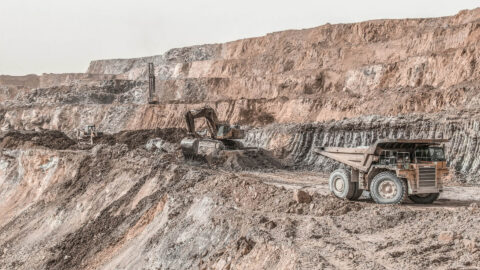

With how important semiconductors are for the future, can the US use the high-purity silicon quartz mine in North Carolina as leverage for negotiations?
While the quartz from this mine can be used to make semiconductor-grade silicon and the ultra-pure crucibles needed to grow silicon crystals, this isn’t the kind of leverage that’s going to have everyone else bending the knee. The US is already a leader in this space, but given the complexity of semiconductor supply chains, no single country controls a majority.
The US and allies dominate the high-end stuff, but none of this works without all 30,000 inputs and 100,000 steps. So, does it give the US some leverage? Sure. But that doesn’t change the fact that we still depend on a fragile, global supply chain for semiconductors. We’d need about $20 trillion and 40 years if we wanted to do it on our own…
Transcript
Well, it’s definitely officially winter here in Colorado. Peter Zeihan here. Today we’re taking a question from the Patreon page, specifically about semiconductors. This person says that he recently learned about a mine in North Carolina that produces high end silicon quartz.
And it’s essential in semiconductor fabrication. So could the US use this in trade negotiations in order to cut a deal with countries around the world? Certainly. Quartz is used for two things. Number one, it is the source of the silicon dioxide that eventually goes into the crystals that are grown in a vats to the size of cars, to be sliced into the wafers that are the core of every semiconductor.
And so product from this mine can be used for that. But what this mine is really good for is the ultra, ultra, ultra pure silicon dioxide, which you use not for the semiconductors themselves, but you use to make crucibles that are used to melt and purify other silicon dioxide. So you need really pure stuff in order to make the crystals, and you need super duper pure stuff in order to make the crucibles and the US is a world provider of both.
So yes, U.S could absolutely use this as leverage. But that implies that the United States is looking for leverage, that we need leverage that we don’t have leverage. And that’s just not true. You see, one of the things that people forget is that there are so many pieces of the semiconductor supply chain, 30,000 independent inputs, 100,000 supply chain steps, and no country controls a majority of any of them.
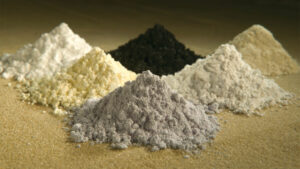
The United States does things that no one else can do. And when it comes to the material side of the equation, we have a lot more going on than one silicon dioxide mine. You see, what happens is you need things like indium and gallium and copper and arsenic and bismuth and all these other things. And yes, the Chinese dominate the processing.
All of those materials, but only up to the point because the Chinese tech base is, well, it’s still a developing country by most measures. And so they can’t get to the purity that’s required to make mid-grade semiconductors much less high end. So what happens typically is, say, copper. The raw copper ore comes from Chile. It’s partially processed in something called red copper.
Where all but 2% of the sulfur has been cooked off. Then it gets sent to China, where they cook off the rest and purified as much as they can. And that’s good enough for, say, you know, the wires in most electronics, but it’s not good enough. So for semiconductors. So the copper then comes to another country, typically the United States or Germany, Japan and Korea, where it’s turned into something called eight and copper or nine and ten and 11 and, and that’s the number of nines of purity.
So an eight and copper is 99.999999% pure. 11 would be three more nines. Parts per billion in terms of contaminants can sometimes be too much. And the Chinese can’t do any of that. So yes, they dominate the low end processing. They do the grunt, they do the dirty work, but they can’t do the high end. So all of these materials round trip multiple times from the country where the ore comes to China to do the primary processing somewhere else to the finish processing, and then the Chinese re-import the ultra purified components that are the basis of their semiconductor industry.
So yes, silicon dioxide out of North Carolina is a major geopolitical pressure point. It is something that gives a lot of leverage, but it implies it’s the only thing. And there are dozens of points on just the material side of the equation, where the United States or its allies have a de facto monopoly and the Chinese have nothing.
That’s before you consider the real high end work that deals with design, or the mid work that deals with packaging.
The Chinese are doing their best to catch up, but they literally have to catch up in over 2000 subfields and they’re not closed in very many of, them at all. The most advanced one, of course, are the etching machines themselves, the extreme ultraviolet machines that come out of the Dutch from ASML.
But ASML itself has over several thousand suppliers around the world, the single largest component of which are in the United States. So anyone who tells you that the Chinese can overtake us in this industry is ridiculous. But also anyone who tells you that we could do it ourselves is ridiculous. This is the most sophisticated supply chain system that humanity has ever created, and if we decided we want to do every part of it in the United States, that is easily a $20 trillion project that will take 40 years to complete.
Don’t let anyone tell you otherwise.